Historical Descriptive Writing
A free social sciences worksheet ready for your classroom. Open in Kuraplan to grab the print-ready PDF, customize it for your students, or generate a fresh version in seconds.
Historical Descriptive Writing
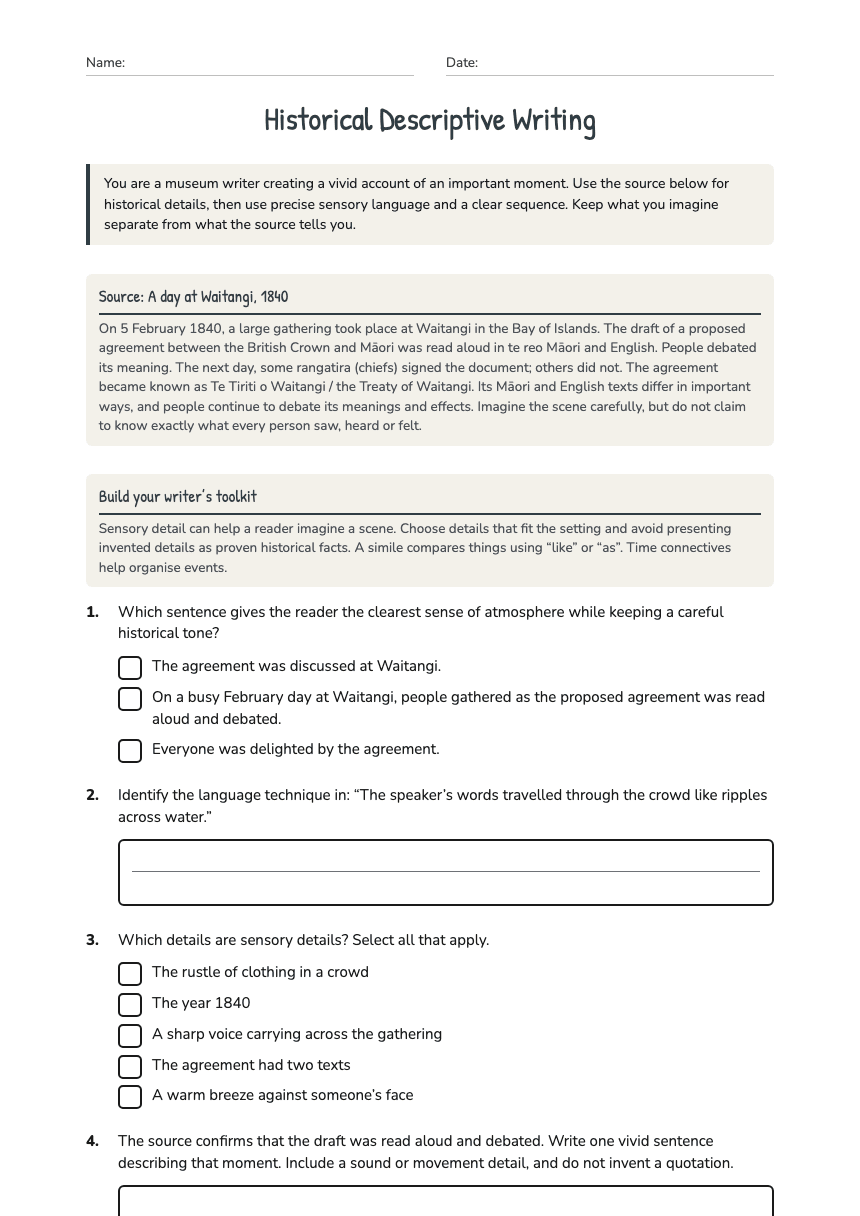
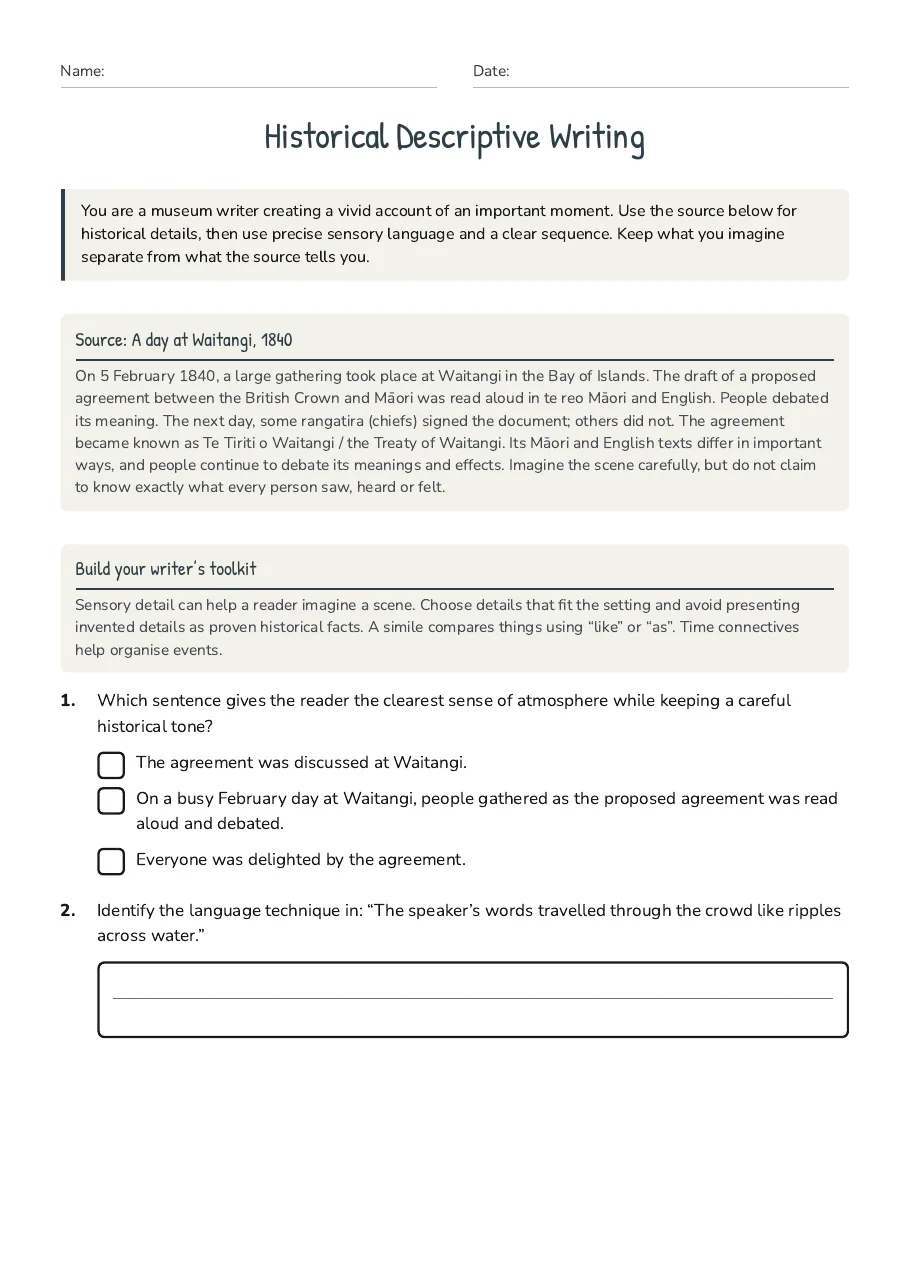
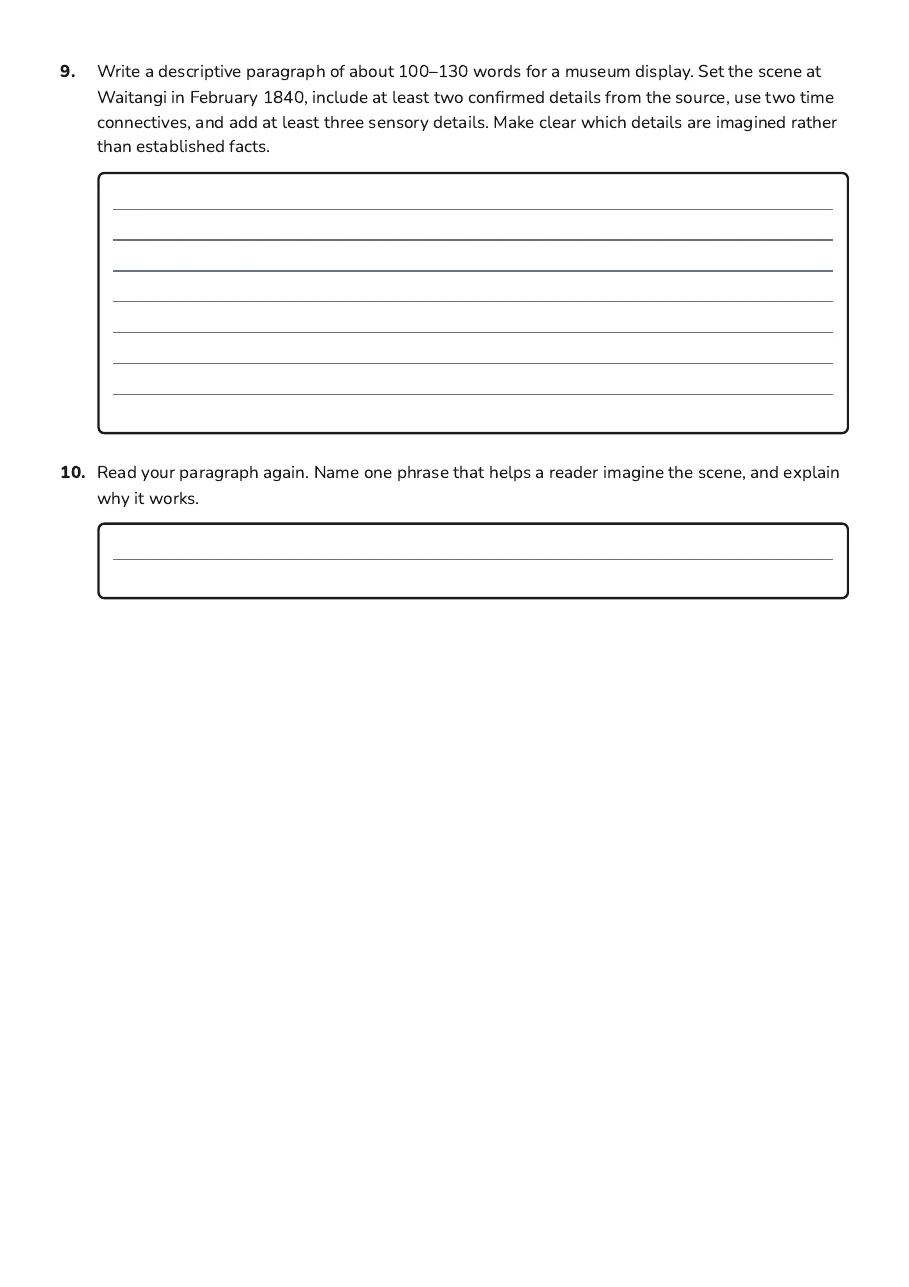
Source: A day at Waitangi, 1840
On 5 February 1840, a large gathering took place at Waitangi in the Bay of Islands. The draft of a proposed agreement between the British Crown and Māori was read aloud in te reo Māori and English. People debated its meaning. The next day, some rangatira (chiefs) signed the document; others did not. The agreement became known as Te Tiriti o Waitangi / the Treaty of Waitangi. Its Māori and English texts differ in important ways, and people continue to debate its meanings and effects. Imagine the scene carefully, but do not claim to know exactly what every person saw, heard or felt.
Build your writer’s toolkit
Sensory detail can help a reader imagine a scene. Choose details that fit the setting and avoid presenting invented details as proven historical facts. A simile compares things using “like” or “as”. Time connectives help organise events.
- The agreement was discussed at Waitangi.
- On a busy February day at Waitangi, people gathered as the proposed agreement was read aloud and debated.
- Everyone was delighted by the agreement.
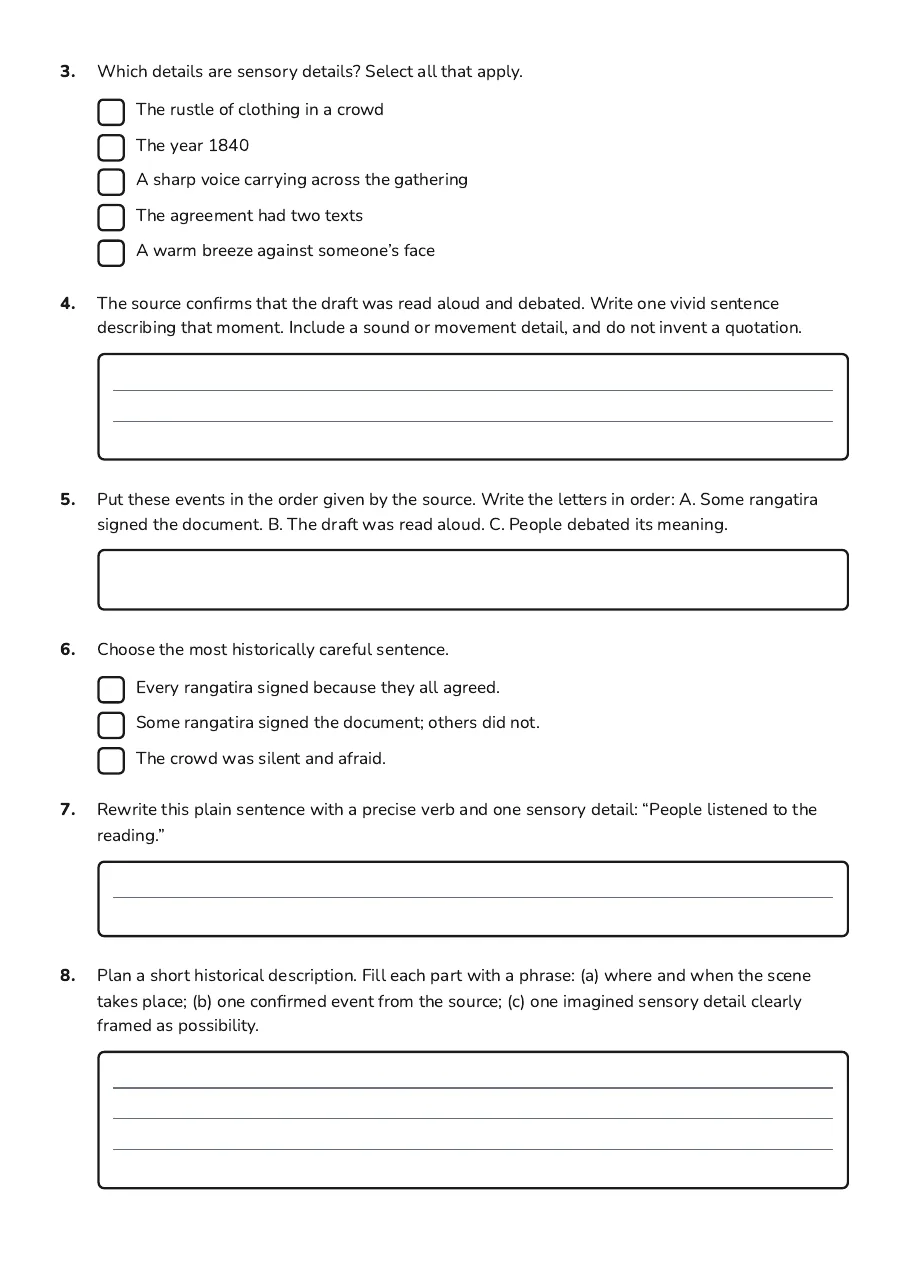
- The rustle of clothing in a crowd
- The year 1840
- A sharp voice carrying across the gathering
- The agreement had two texts
- A warm breeze against someone’s face
- Every rangatira signed because they all agreed.
- Some rangatira signed the document; others did not.
- The crowd was silent and afraid.
3 printable pages
Page 1
Page 2
Page 3
About This Worksheet
Free in Kuraplan
Sign up free, grab the PDF, and customize it for your class.
Print-Ready
Formatted for standard paper. Clean layout, easy to read.
AI-Generated
Created with Kuraplan's AI, designed for real classroom use.
For Teachers & Parents
Use in classrooms, for homework, tutoring, or homeschool.
Need a custom version of this worksheet?
Kuraplan's AI generates custom worksheets in seconds — differentiated for every learner, aligned to your curriculum.
Generate Custom Worksheets — FreeMore Social Sciences Worksheets
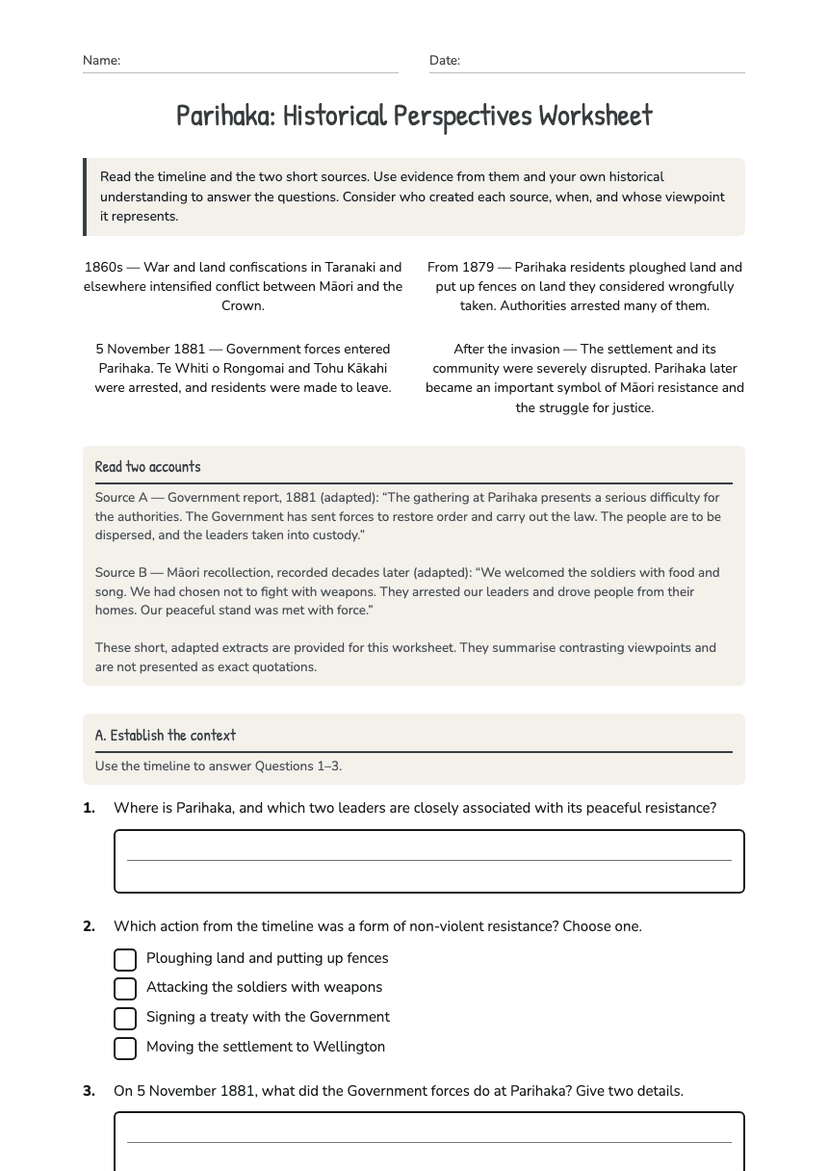
Parihaka: Historical Perspectives Worksheet
Free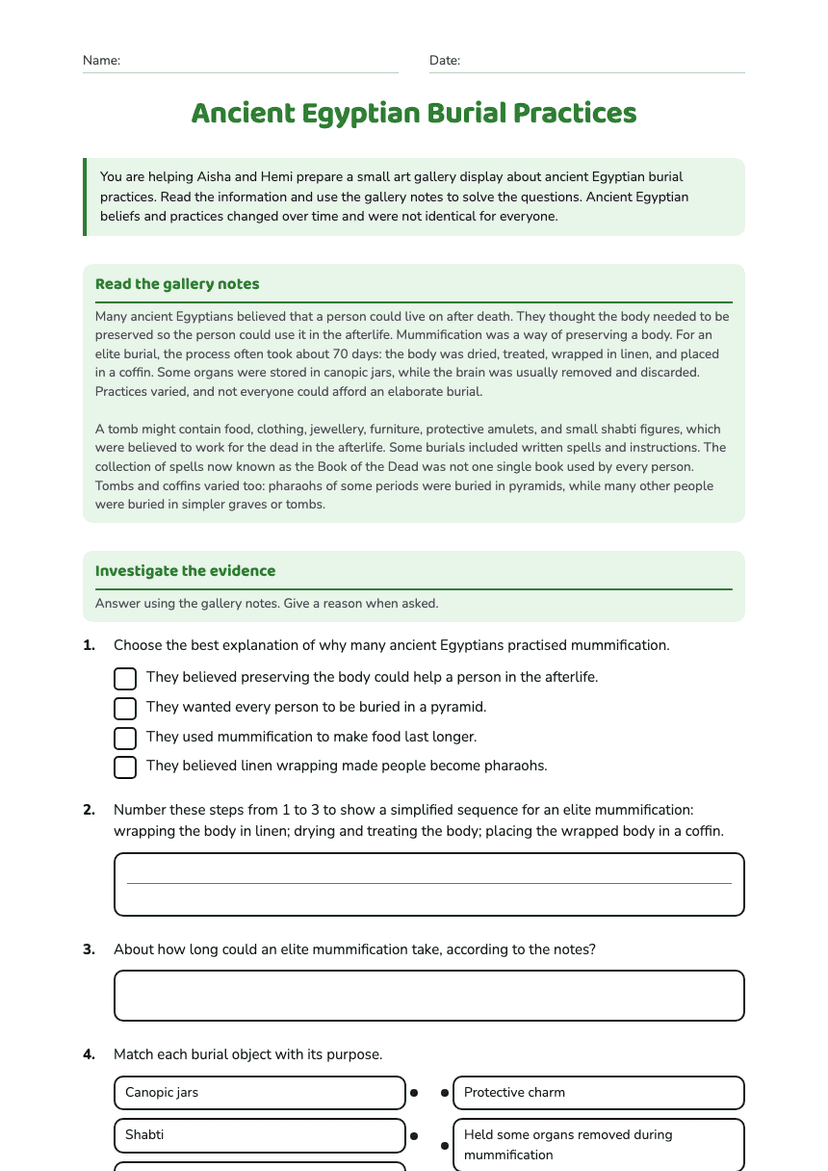
Ancient Egyptian Burial Practices
Free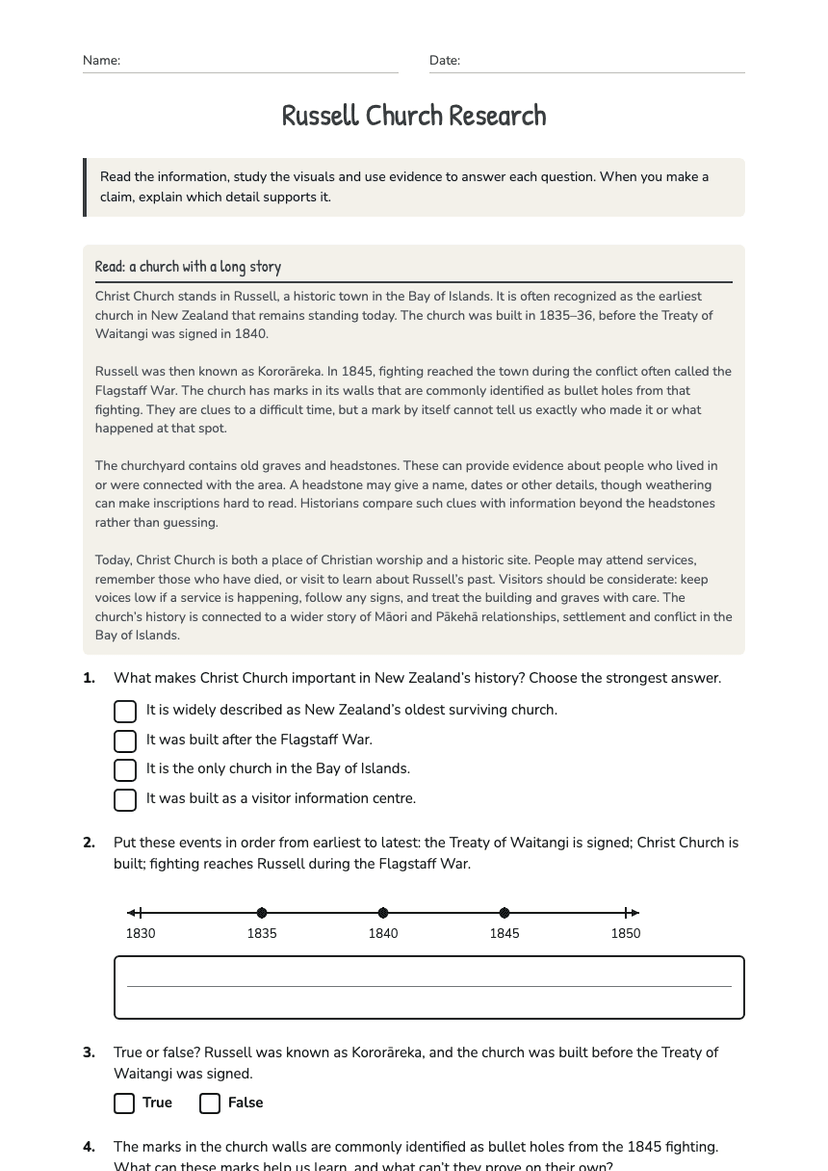
Russell Church Research
Free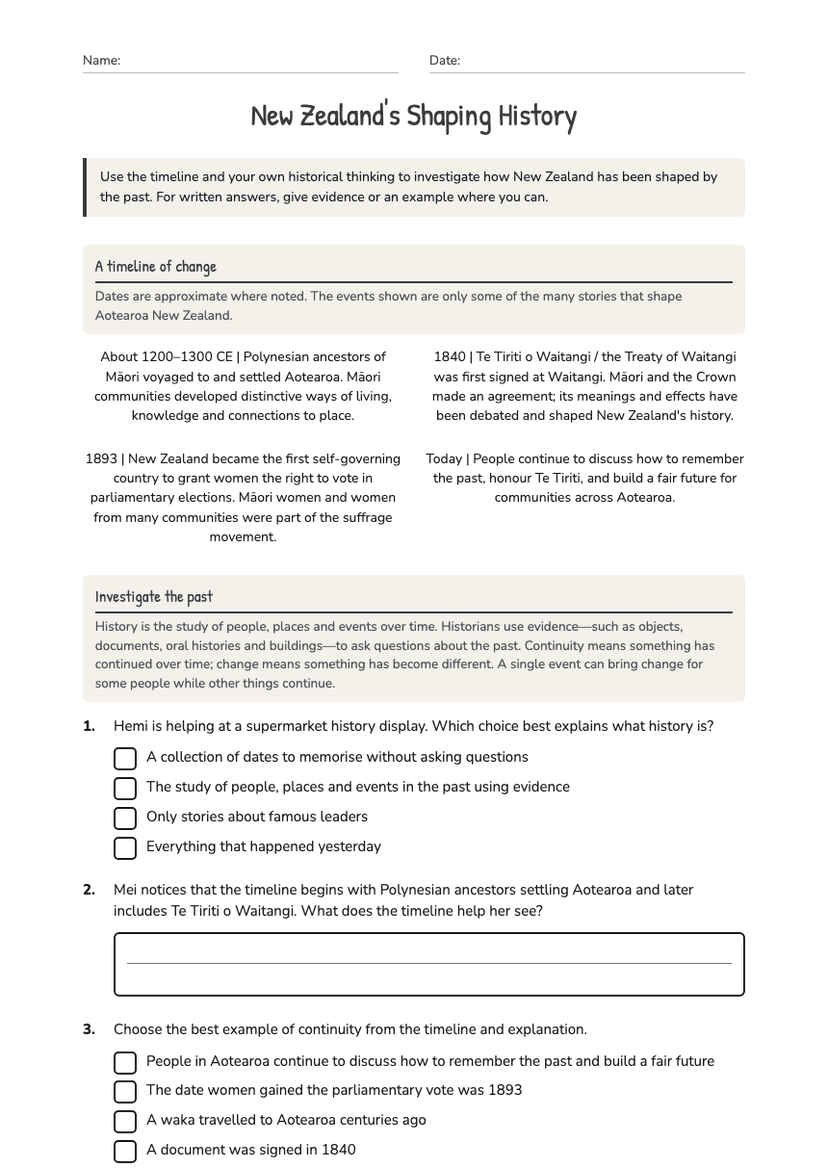
New Zealand's Shaping History
Free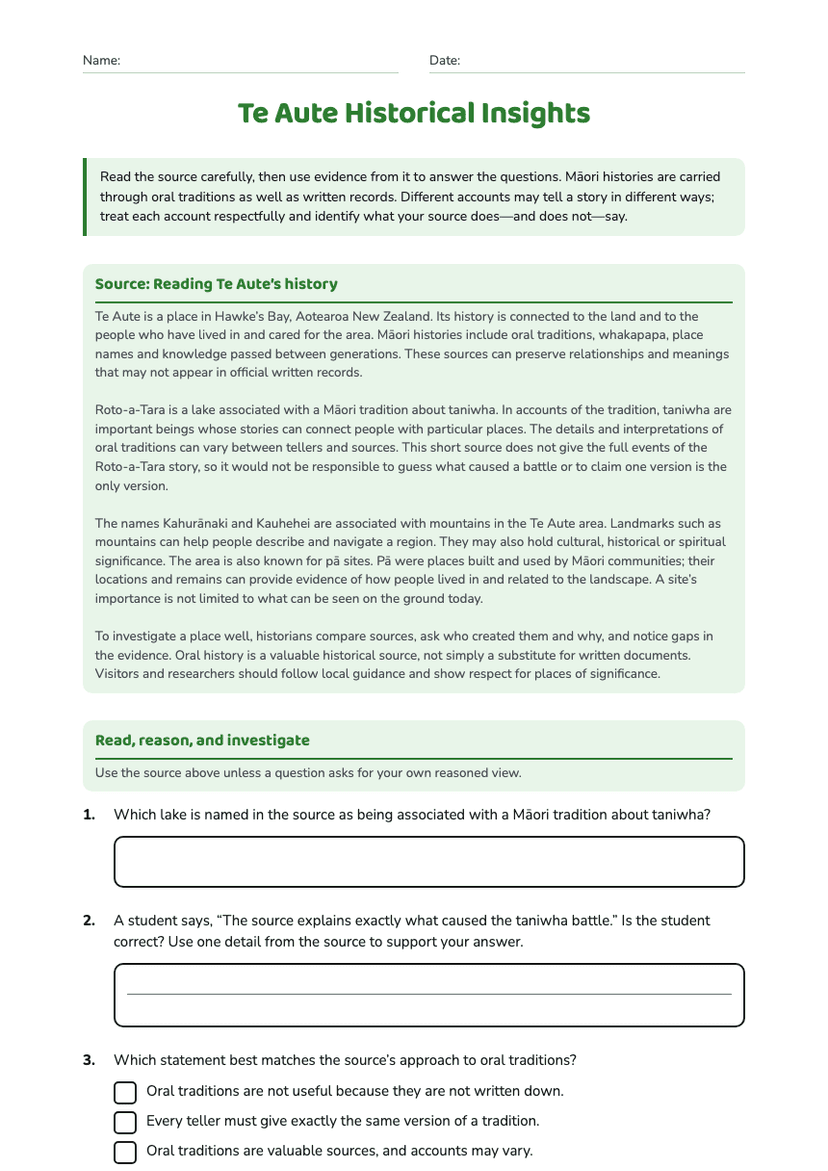
Te Aute Historical Insights
Free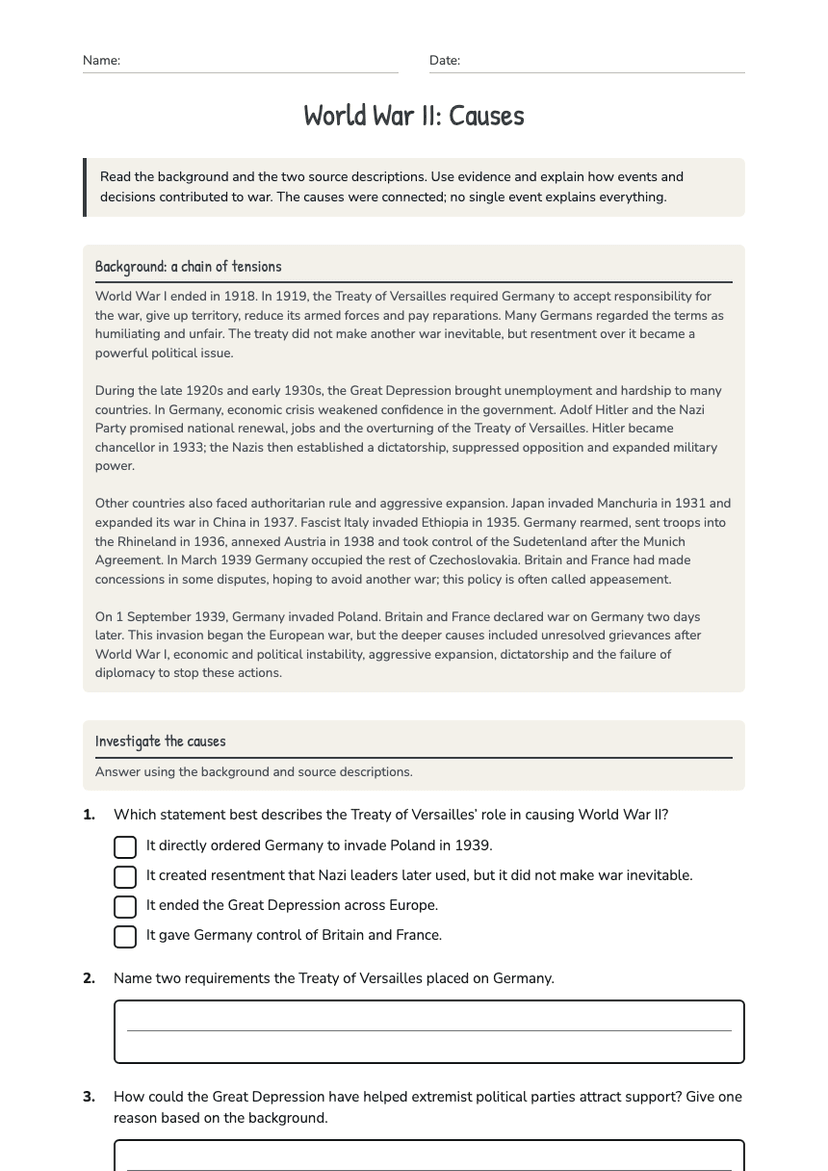
World War II: Causes
Free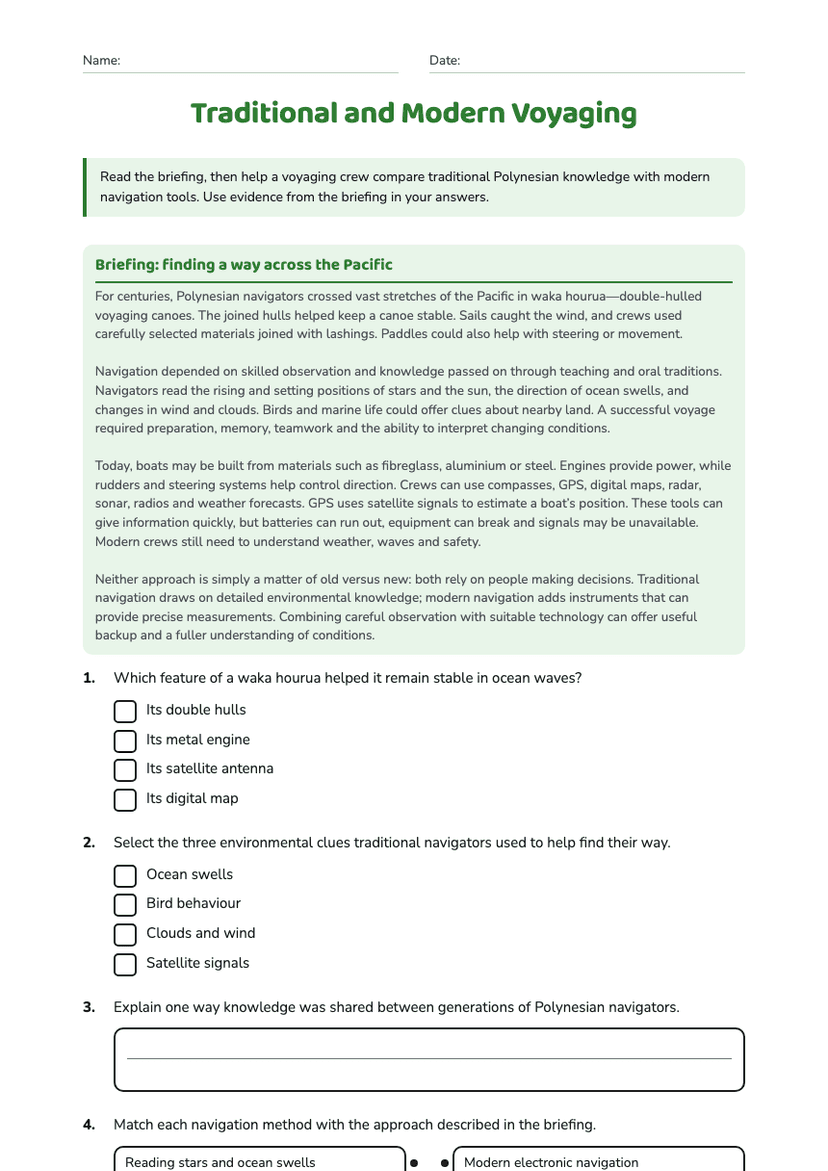
Traditional and Modern Voyaging
Free