Karakia and Māori Culture
A free te reo māori worksheet ready for your classroom. Open in Kuraplan to grab the print-ready PDF, customize it for your students, or generate a fresh version in seconds.
Karakia and Māori Culture
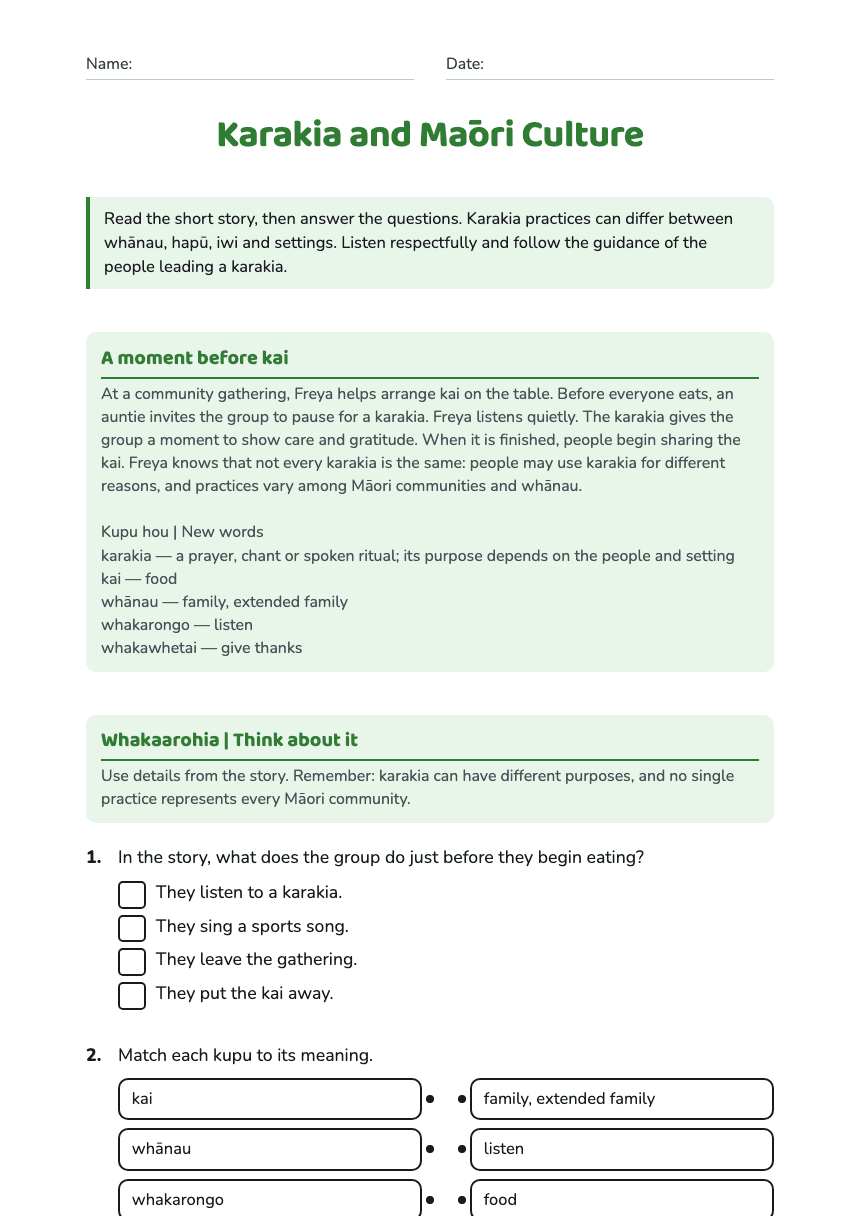
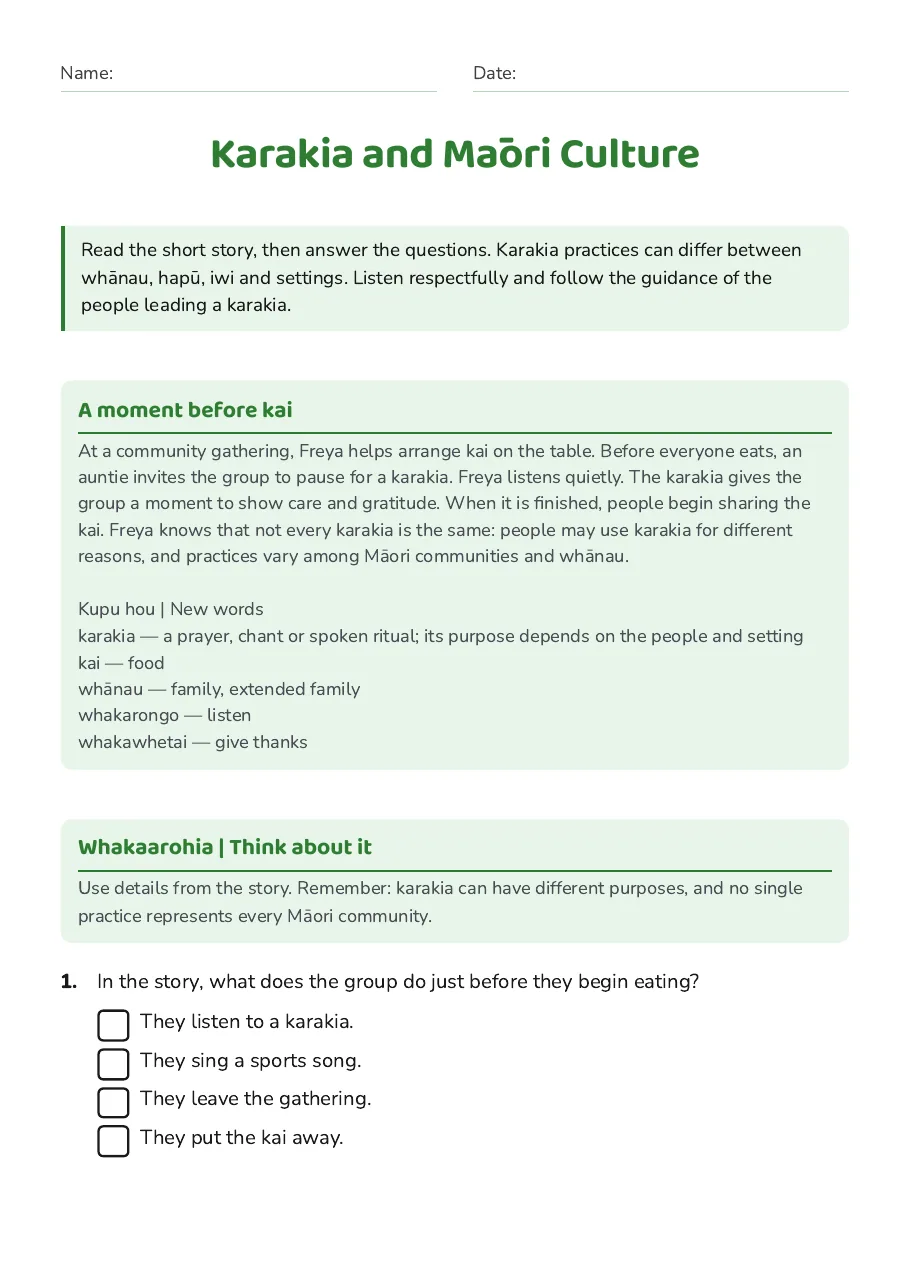
A moment before kai
At a community gathering, Freya helps arrange kai on the table. Before everyone eats, an auntie invites the group to pause for a karakia. Freya listens quietly. The karakia gives the group a moment to show care and gratitude. When it is finished, people begin sharing the kai. Freya knows that not every karakia is the same: people may use karakia for different reasons, and practices vary among Māori communities and whānau. Kupu hou | New words karakia — a prayer, chant or spoken ritual; its purpose depends on the people and setting kai — food whānau — family, extended family whakarongo — listen whakawhetai — give thanks
Whakaarohia | Think about it
Use details from the story. Remember: karakia can have different purposes, and no single practice represents every Māori community.
- They listen to a karakia.
- They sing a sports song.
- They leave the gathering.
- They put the kai away.
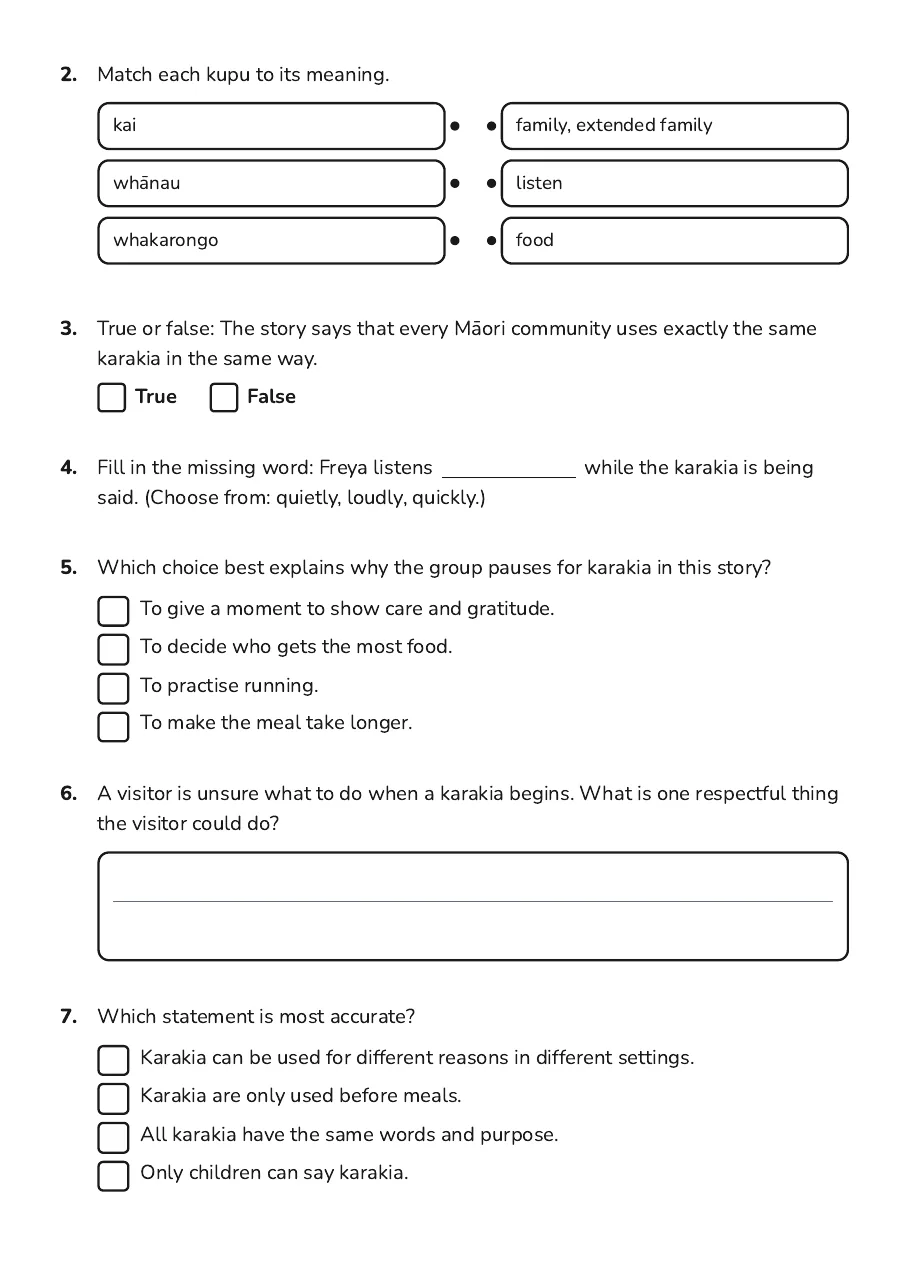
- kai
- whānau
- whakarongo
- family, extended family
- listen
- food
- To give a moment to show care and gratitude.
- To decide who gets the most food.
- To practise running.
- To make the meal take longer.
- Karakia can be used for different reasons in different settings.
- Karakia are only used before meals.
- All karakia have the same words and purpose.
- Only children can say karakia.
3 printable pages
Page 1
Page 2
Page 3
About This Worksheet
Free in Kuraplan
Sign up free, grab the PDF, and customize it for your class.
Print-Ready
Formatted for standard paper. Clean layout, easy to read.
AI-Generated
Created with Kuraplan's AI, designed for real classroom use.
For Teachers & Parents
Use in classrooms, for homework, tutoring, or homeschool.
Need a custom version of this worksheet?
Kuraplan's AI generates custom worksheets in seconds — differentiated for every learner, aligned to your curriculum.
Generate Custom Worksheets — Free