Light Properties Investigation
A free science worksheet ready for your classroom. Open in Kuraplan to grab the print-ready PDF, customize it for your students, or generate a fresh version in seconds.
Light Properties Investigation
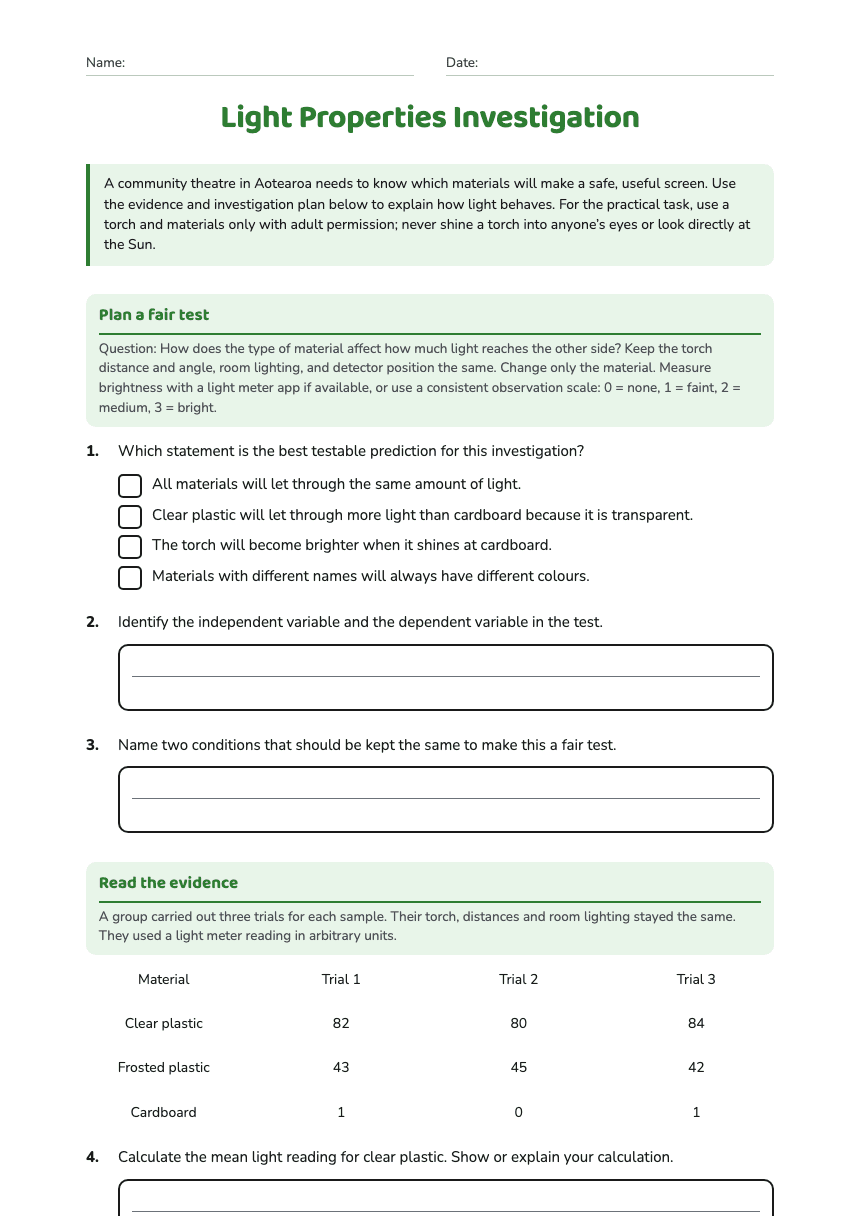
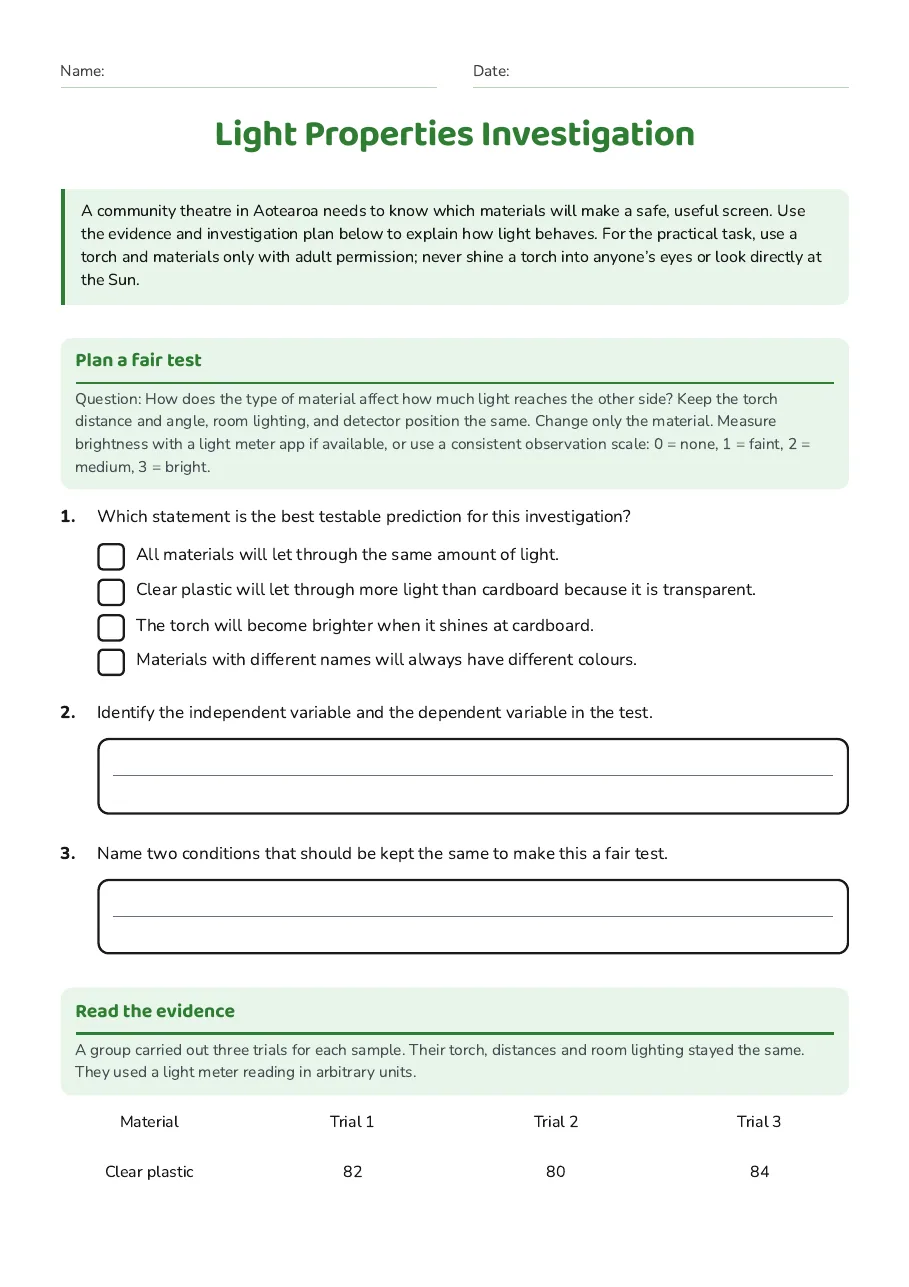
Plan a fair test
Question: How does the type of material affect how much light reaches the other side? Keep the torch distance and angle, room lighting, and detector position the same. Change only the material. Measure brightness with a light meter app if available, or use a consistent observation scale: 0 = none, 1 = faint, 2 = medium, 3 = bright.
- All materials will let through the same amount of light.
- Clear plastic will let through more light than cardboard because it is transparent.
- The torch will become brighter when it shines at cardboard.
- Materials with different names will always have different colours.
Read the evidence
A group carried out three trials for each sample. Their torch, distances and room lighting stayed the same. They used a light meter reading in arbitrary units.
Material
Trial 1
Trial 2
Trial 3
Clear plastic
82
80
84
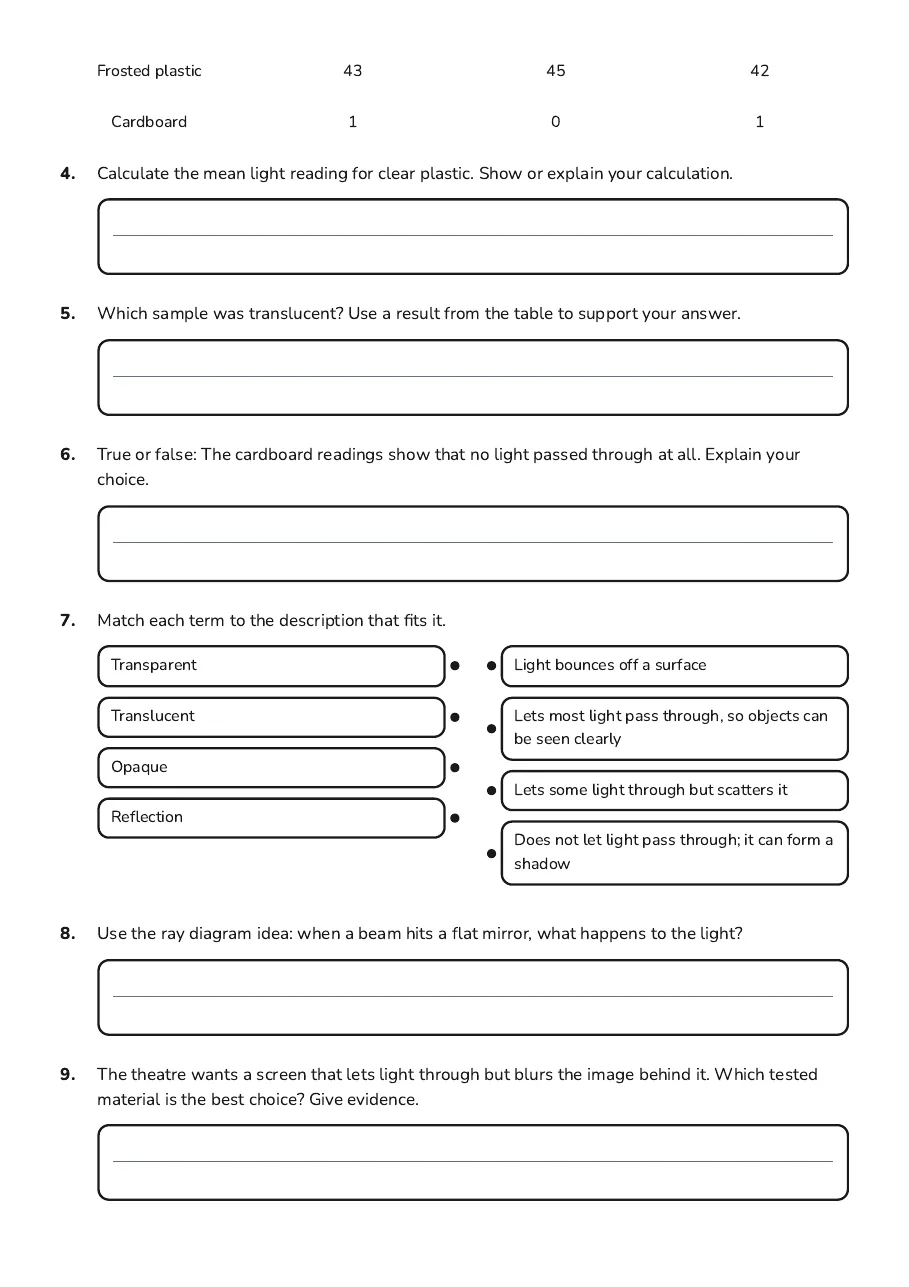
Frosted plastic
43
45
42
Cardboard
1
0
1
- Transparent
- Translucent
- Opaque
- Reflection
- Light bounces off a surface
- Lets most light pass through, so objects can be seen clearly
- Lets some light through but scatters it
- Does not let light pass through; it can form a shadow
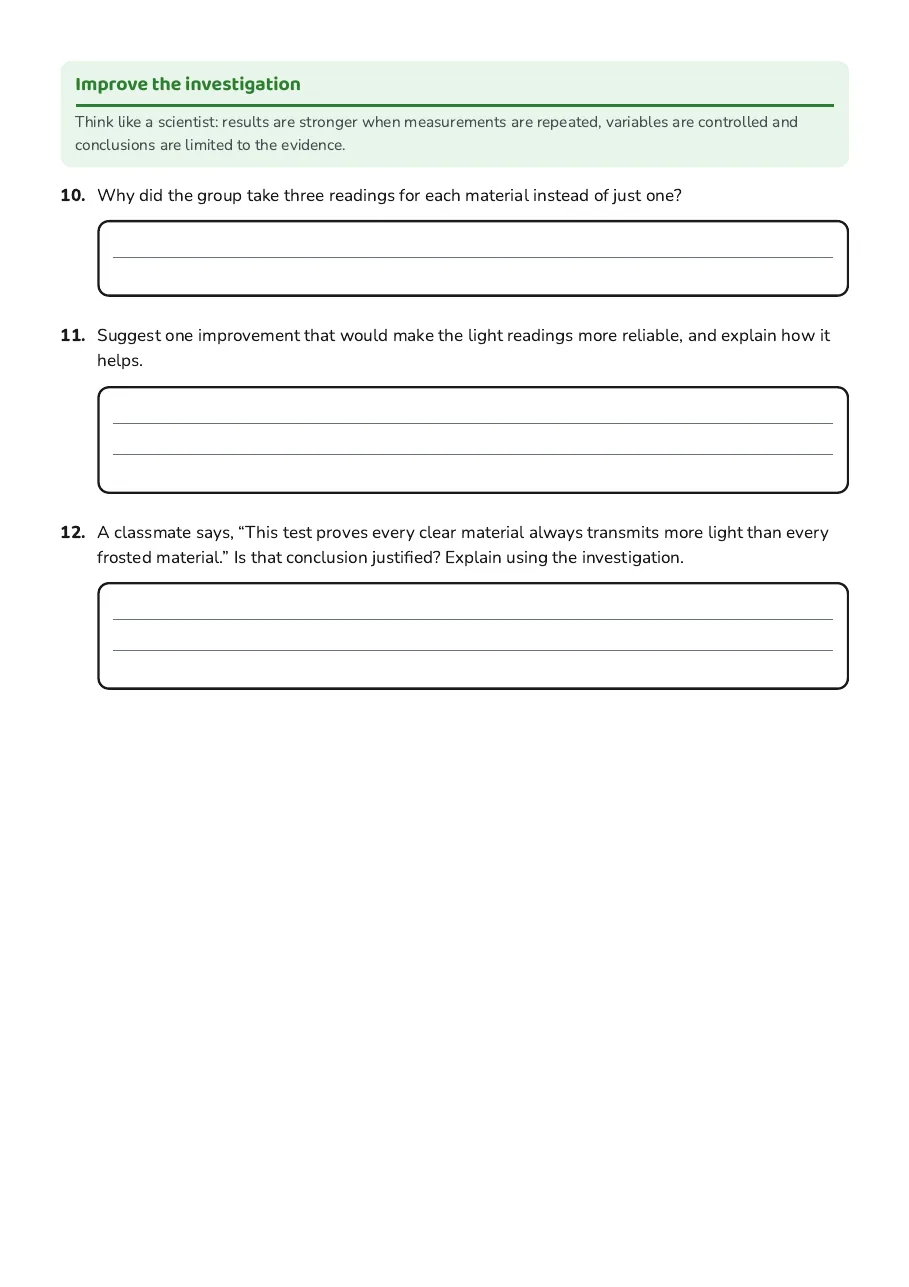
Improve the investigation
Think like a scientist: results are stronger when measurements are repeated, variables are controlled and conclusions are limited to the evidence.
3 printable pages
Page 1
Page 2
Page 3
About This Worksheet
Free in Kuraplan
Sign up free, grab the PDF, and customize it for your class.
Print-Ready
Formatted for standard paper. Clean layout, easy to read.
AI-Generated
Created with Kuraplan's AI, designed for real classroom use.
For Teachers & Parents
Use in classrooms, for homework, tutoring, or homeschool.
Need a custom version of this worksheet?
Kuraplan's AI generates custom worksheets in seconds — differentiated for every learner, aligned to your curriculum.
Generate Custom Worksheets — FreeMore Science Worksheets
Magic Milk Experiment Worksheet
Free
Dissolving and Separation Investigation
Free
Dancing Raisins Investigation
Free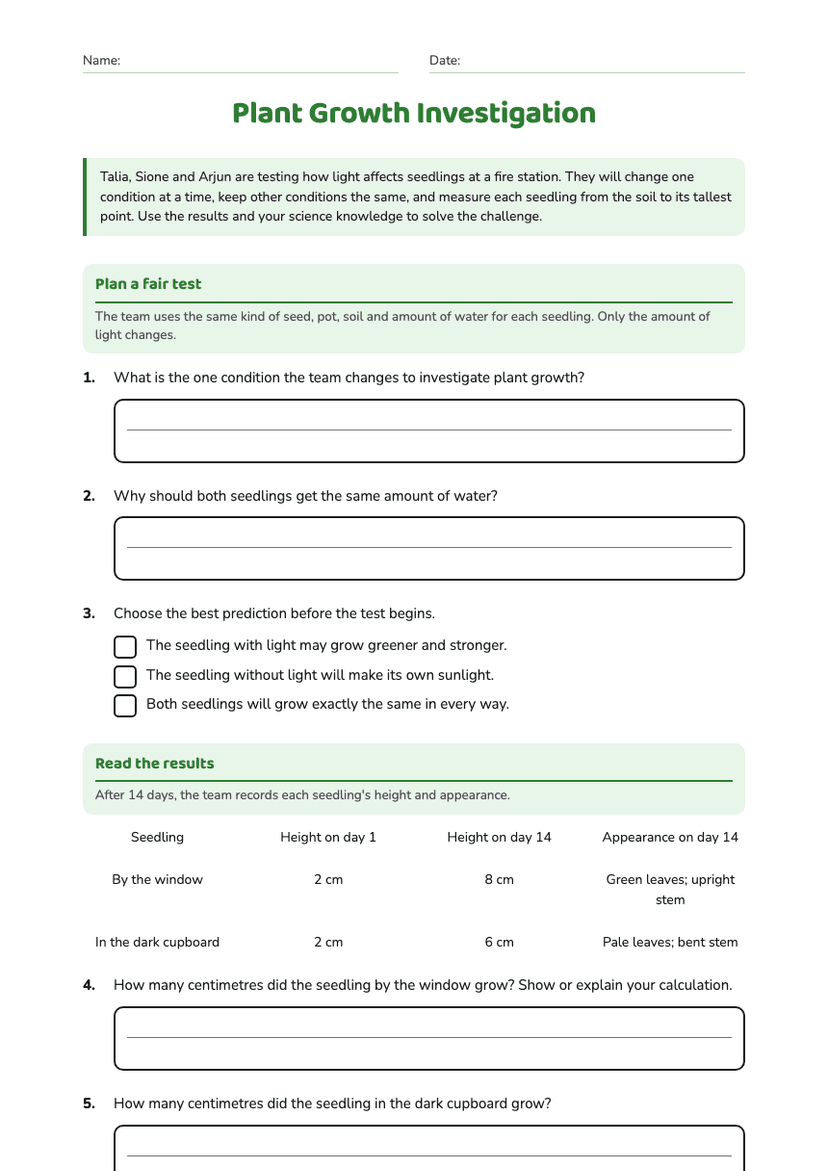
Plant Growth Investigation
Free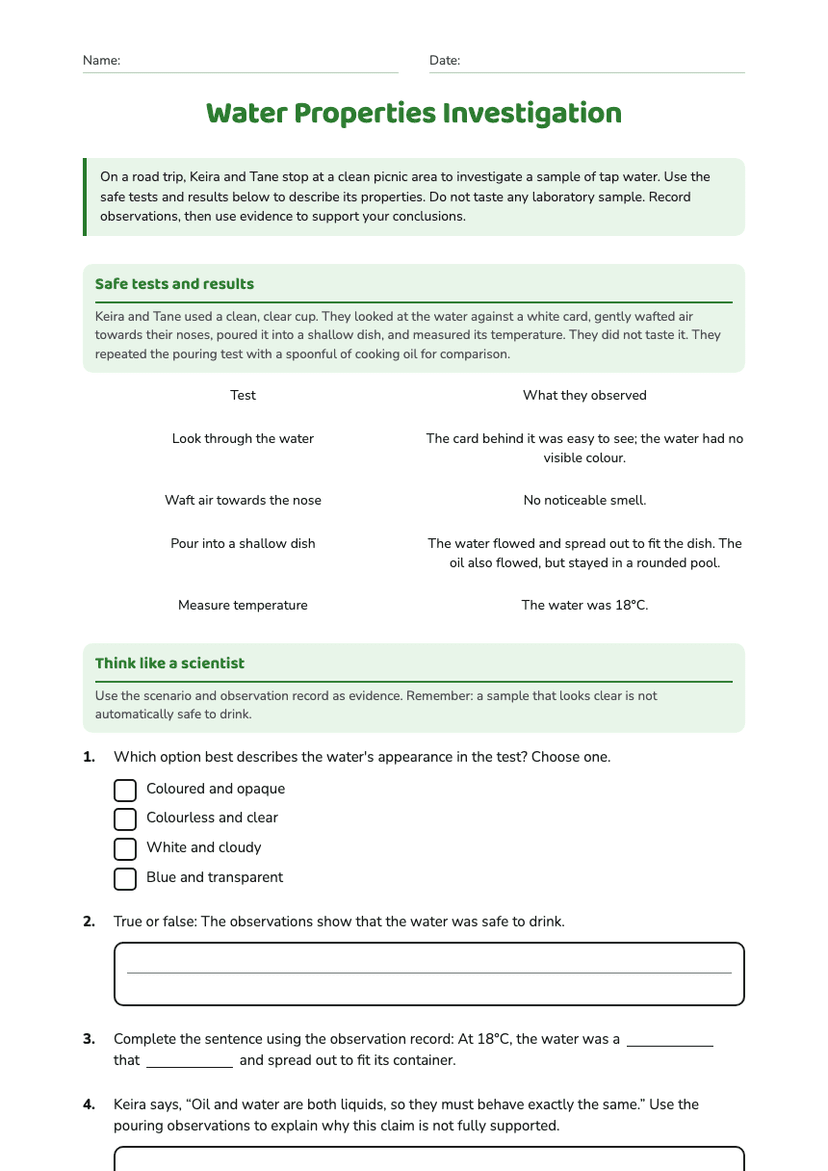
Water Properties Investigation
Free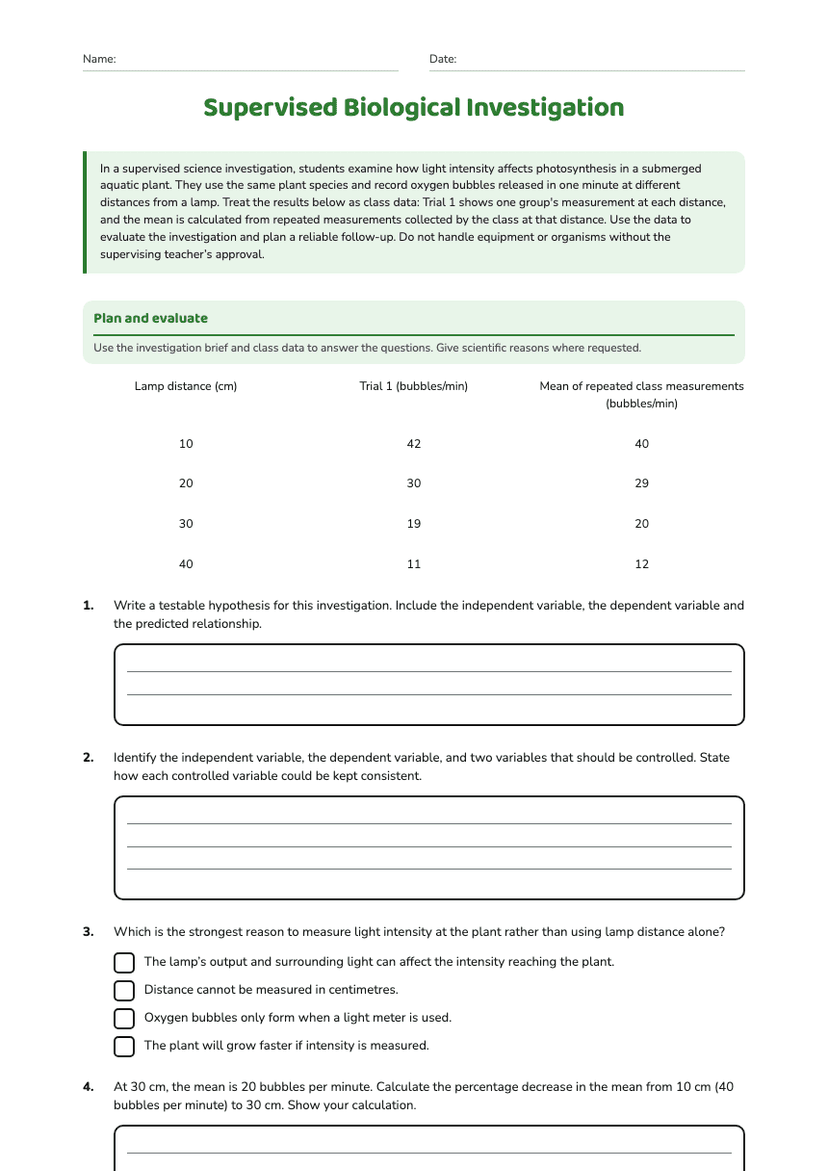
Supervised Biological Investigation
Free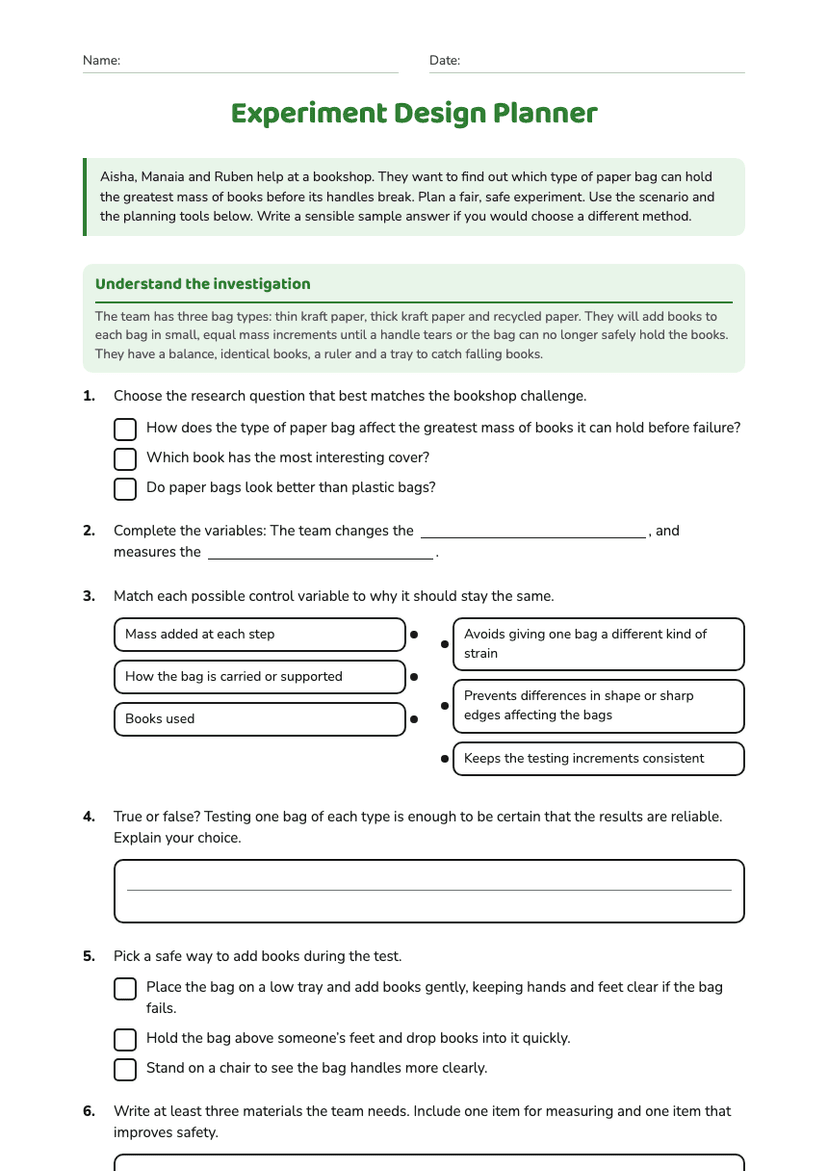
Experiment Design Planner
Free