ScienceFreePrintable
Mixture Separation Techniques
A free science worksheet ready for your classroom. Open in Kuraplan to grab the print-ready PDF, customize it for your students, or generate a fresh version in seconds.
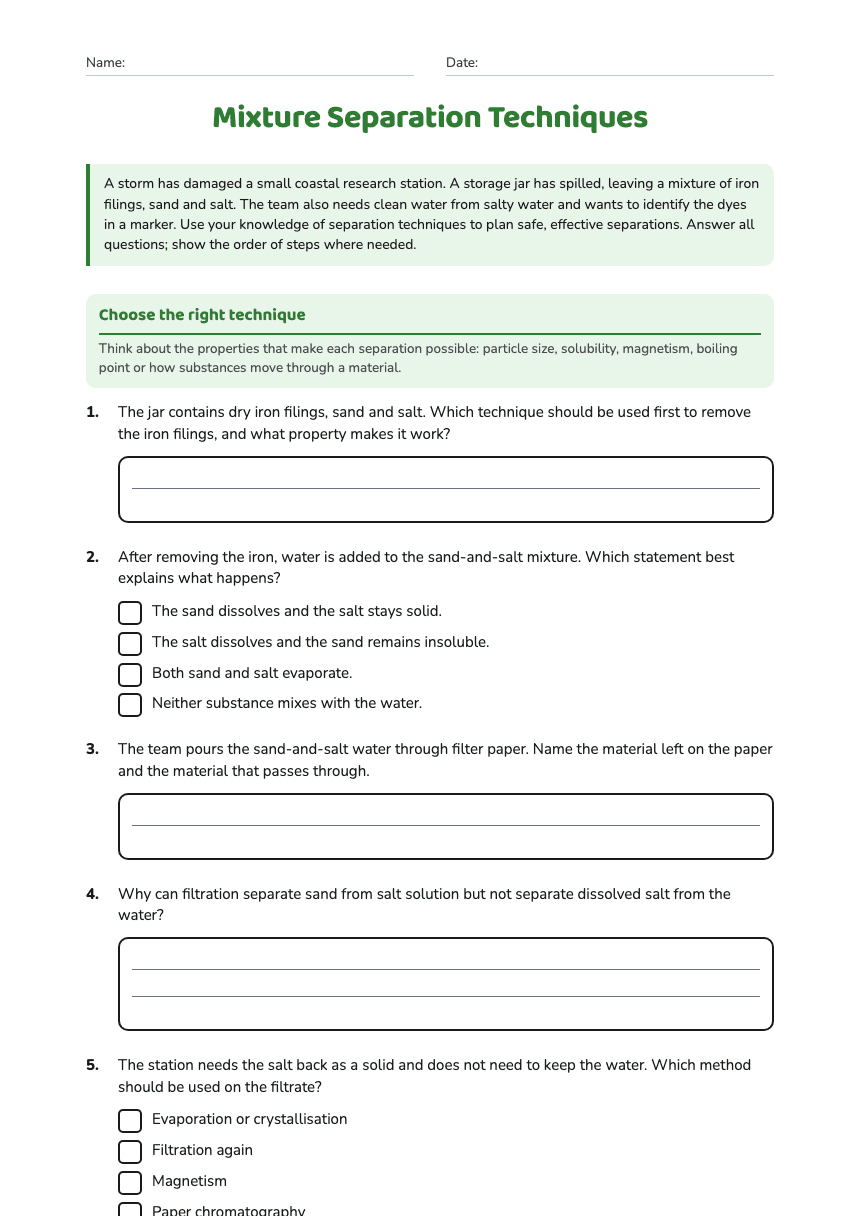
Name:Date:
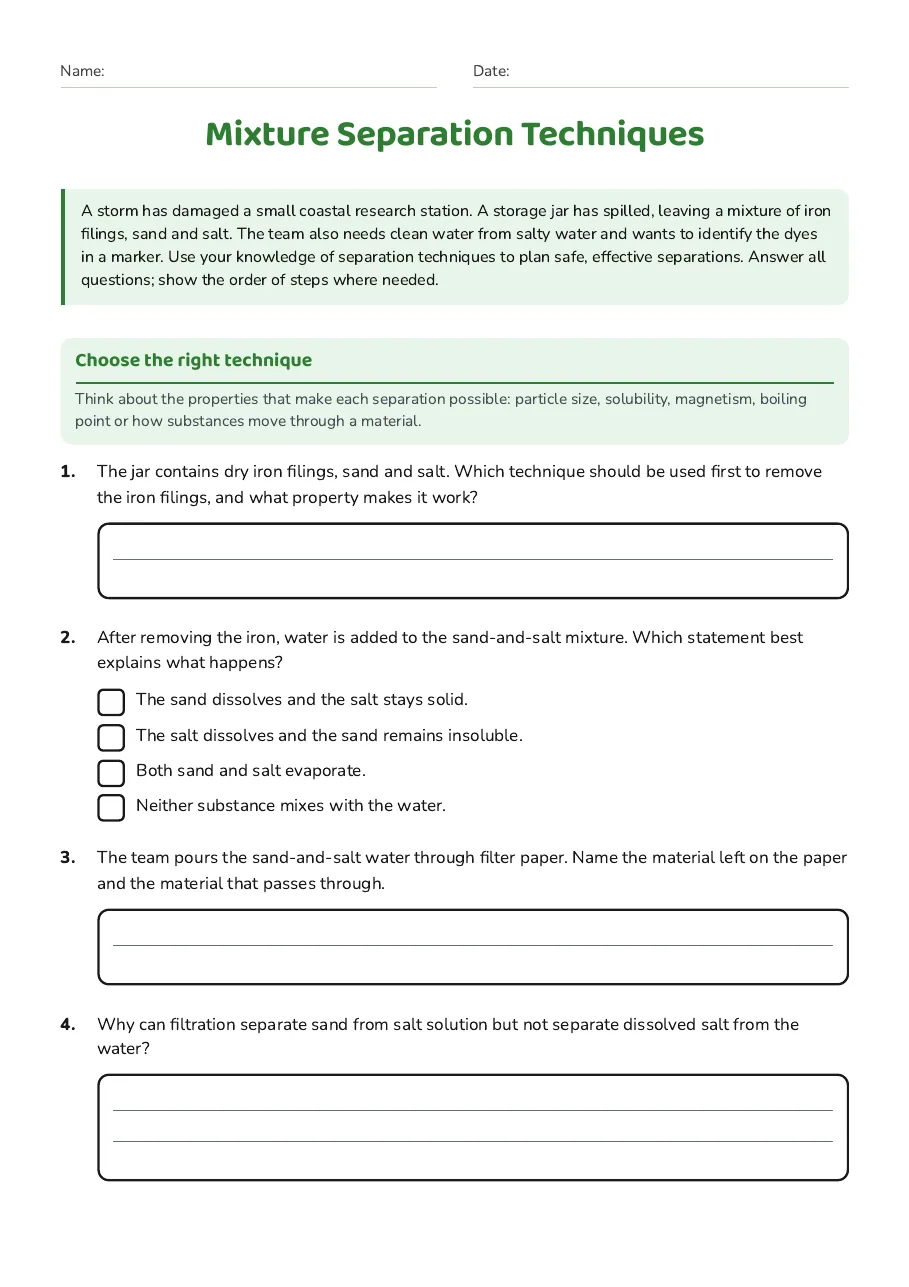
Mixture Separation Techniques
A storm has damaged a small coastal research station. A storage jar has spilled, leaving a mixture of iron filings, sand and salt. The team also needs clean water from salty water and wants to identify the dyes in a marker. Use your knowledge of separation techniques to plan safe, effective separations. Answer all questions; show the order of steps where needed.
Choose the right technique
Think about the properties that make each separation possible: particle size, solubility, magnetism, boiling point or how substances move through a material.
1.The jar contains dry iron filings, sand and salt. Which technique should be used first to remove the iron filings, and what property makes it work?
2.After removing the iron, water is added to the sand-and-salt mixture. Which statement best explains what happens?
- The sand dissolves and the salt stays solid.
- The salt dissolves and the sand remains insoluble.
- Both sand and salt evaporate.
- Neither substance mixes with the water.
3.The team pours the sand-and-salt water through filter paper. Name the material left on the paper and the material that passes through.
4.Why can filtration separate sand from salt solution but not separate dissolved salt from the water?
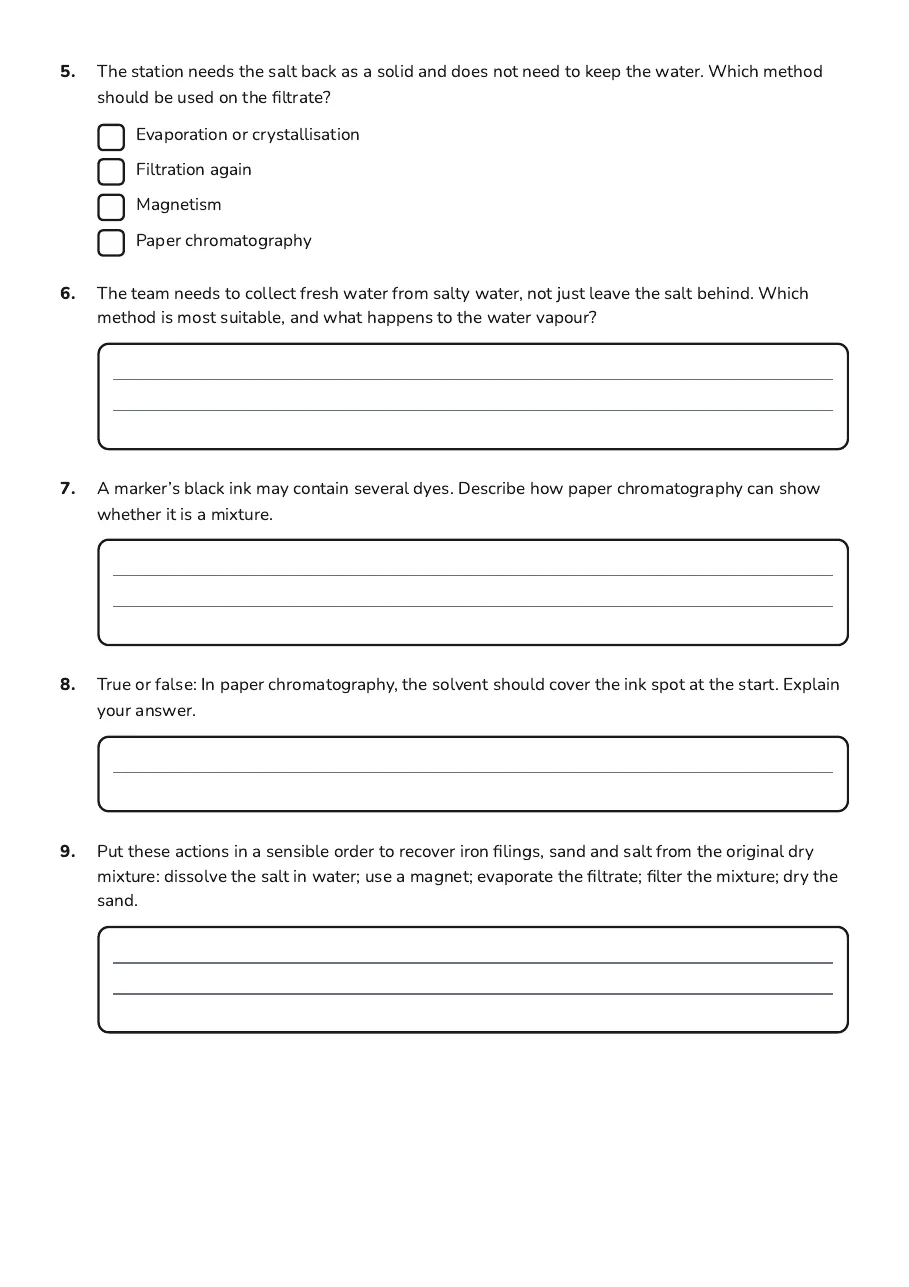
5.The station needs the salt back as a solid and does not need to keep the water. Which method should be used on the filtrate?
- Evaporation or crystallisation
- Filtration again
- Magnetism
- Paper chromatography
6.The team needs to collect fresh water from salty water, not just leave the salt behind. Which method is most suitable, and what happens to the water vapour?
7.A marker’s black ink may contain several dyes. Describe how paper chromatography can show whether it is a mixture.
8.True or false: In paper chromatography, the solvent should cover the ink spot at the start. Explain your answer.
9.Put these actions in a sensible order to recover iron filings, sand and salt from the original dry mixture: dissolve the salt in water; use a magnet; evaporate the filtrate; filter the mixture; dry the sand.
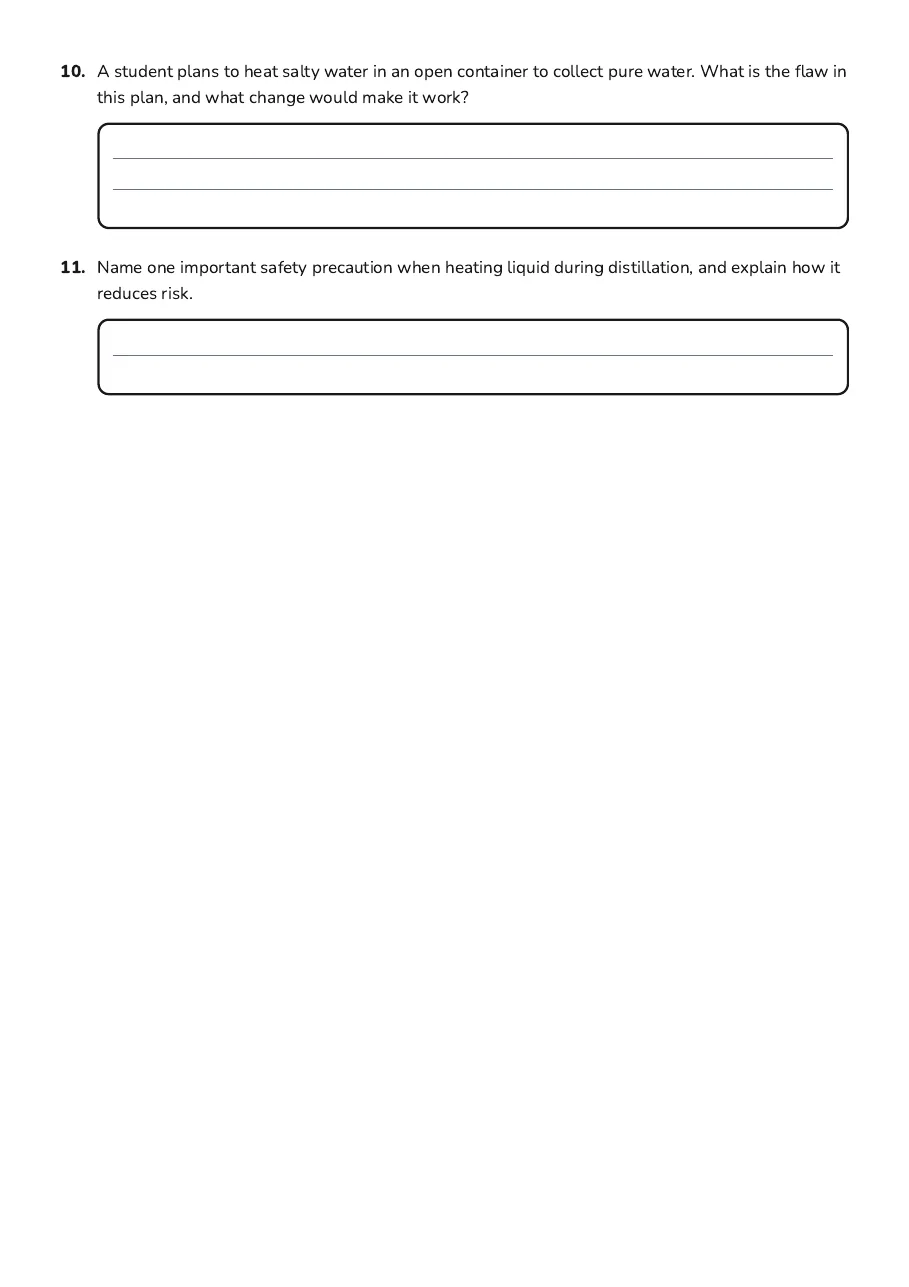
10.A student plans to heat salty water in an open container to collect pure water. What is the flaw in this plan, and what change would make it work?
11.Name one important safety precaution when heating liquid during distillation, and explain how it reduces risk.
3 printable pages
Page 1
Page 2
Page 3
About This Worksheet
Free in Kuraplan
Sign up free, grab the PDF, and customize it for your class.
Print-Ready
Formatted for standard paper. Clean layout, easy to read.
AI-Generated
Created with Kuraplan's AI, designed for real classroom use.
For Teachers & Parents
Use in classrooms, for homework, tutoring, or homeschool.
Need a custom version of this worksheet?
Kuraplan's AI generates custom worksheets in seconds — differentiated for every learner, aligned to your curriculum.
Generate Custom Worksheets — Free No credit card Curriculum-aligned Under 60 seconds
More Science Worksheets
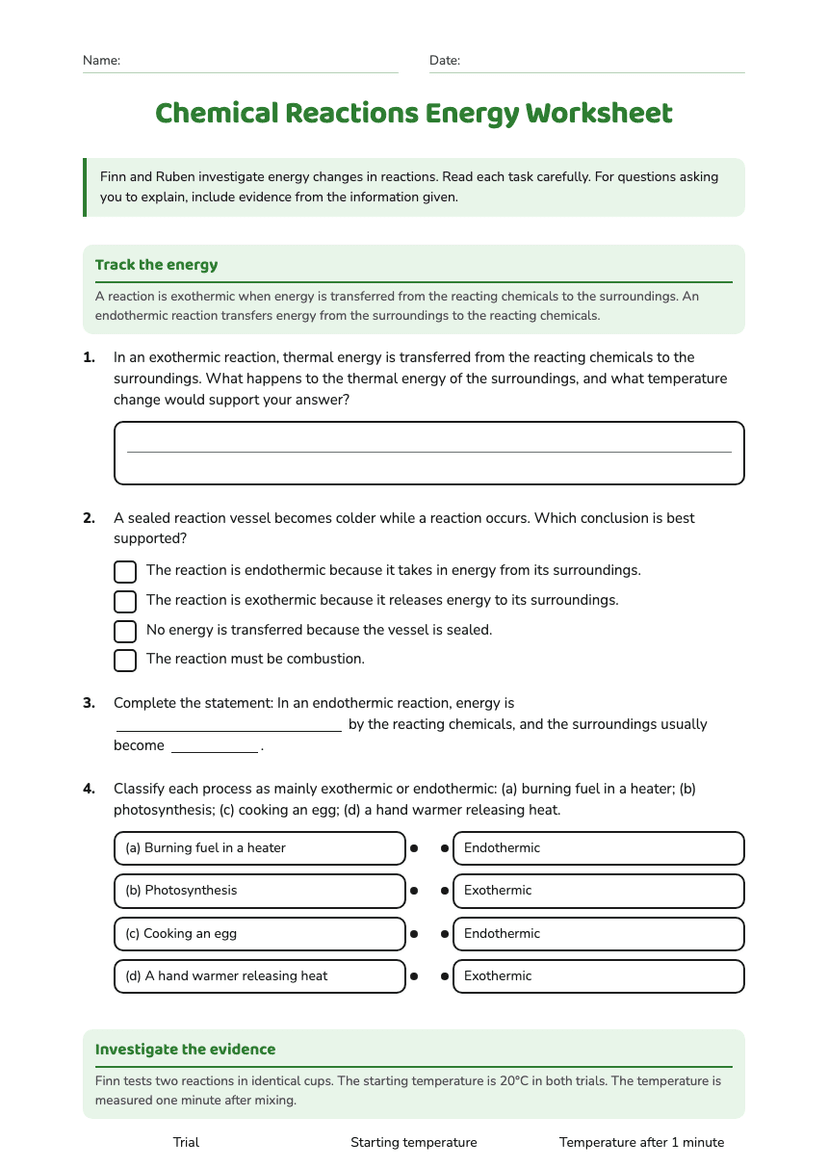
Chemical Reactions Energy Worksheet
Free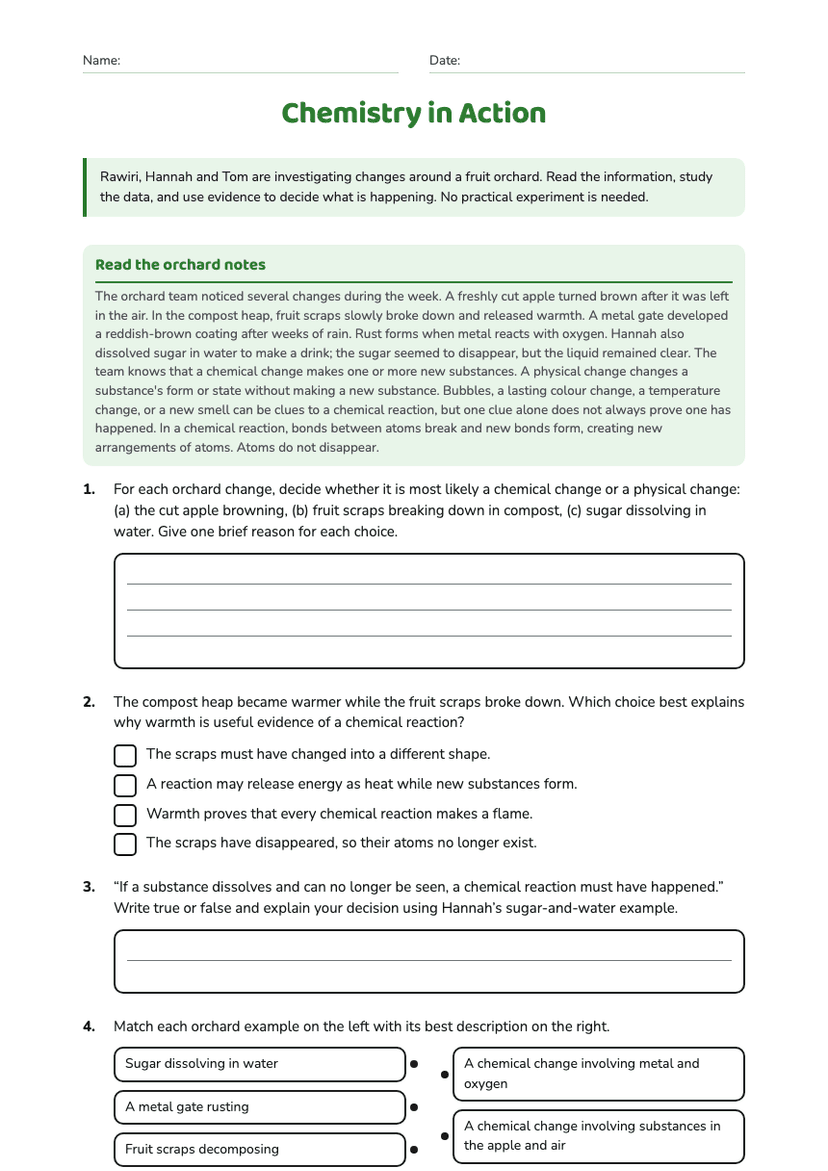
Year 7
Chemistry in Action
Free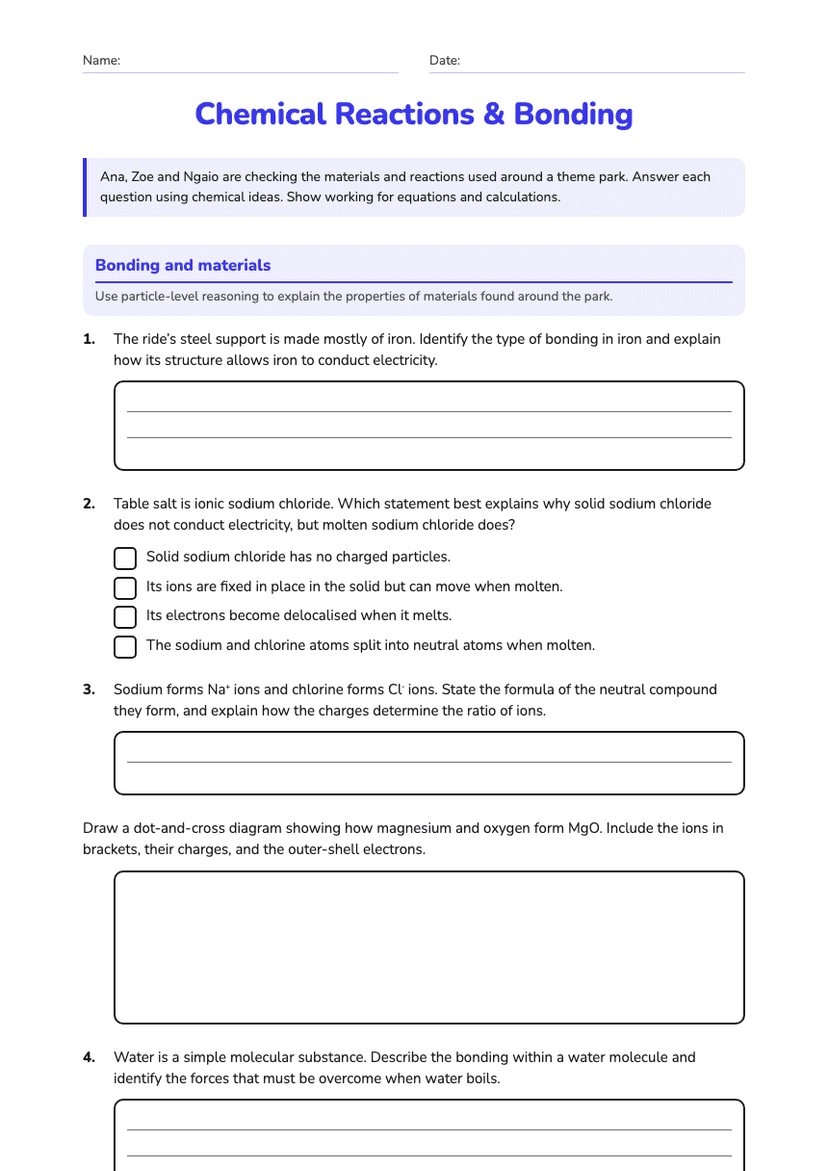
Year 11
Chemical Reactions & Bonding
Free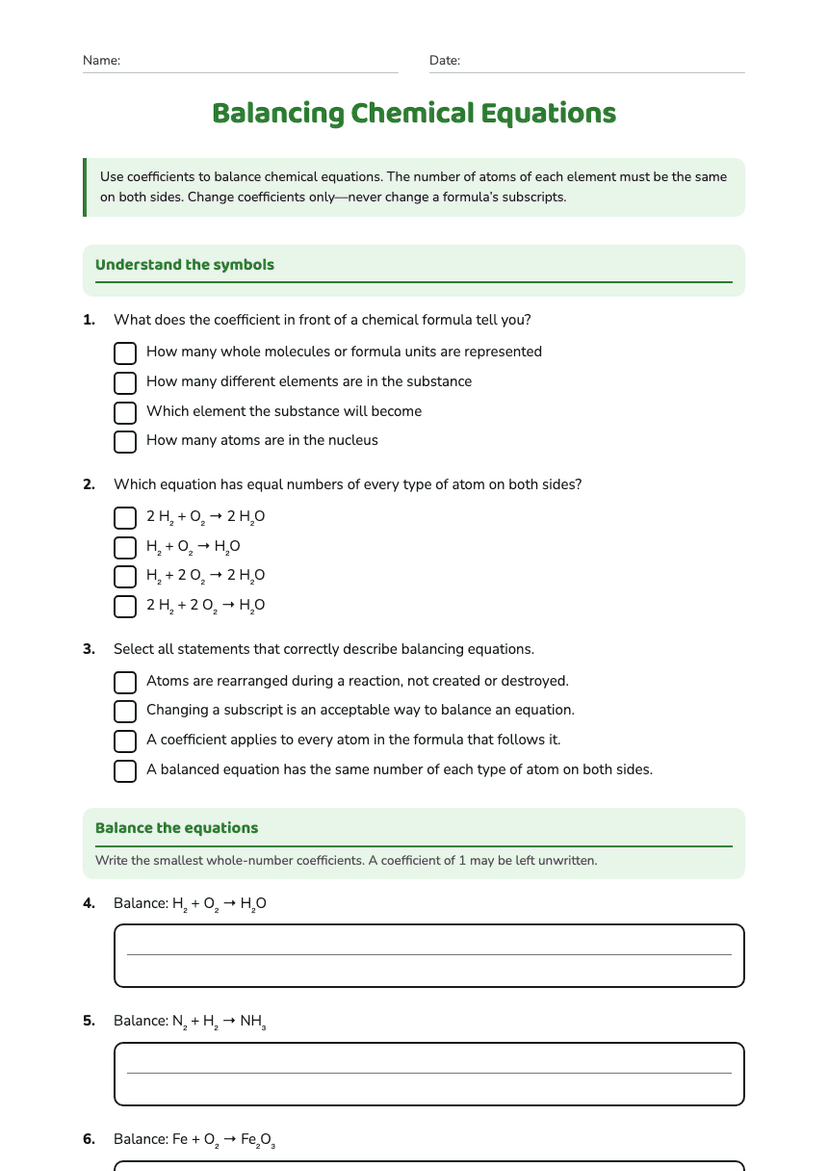
Year 7–8
Balancing Chemical Equations
Free
Year 2
Kitchen Chemistry Adventure
Free
Year 11
Chemical Reactions Introduction
Free
Year 9
Element Flashcards Worksheet
Free
Year 7–8