Odyssey: Xenia and Nostos
A free social sciences worksheet ready for your classroom. Open in Kuraplan to grab the print-ready PDF, customize it for your students, or generate a fresh version in seconds.
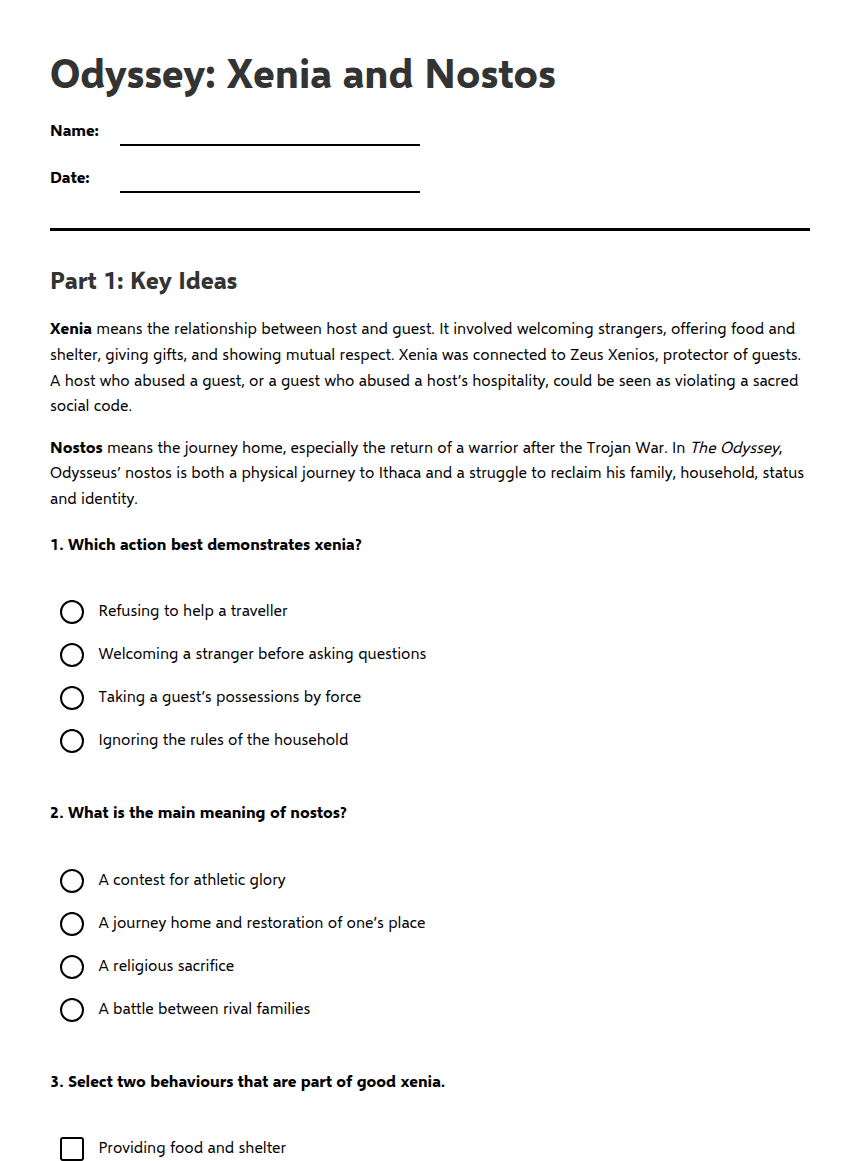
Odyssey: Xenia and Nostos
Part 1: Key Ideas
Xenia means the relationship between host and guest. It involved welcoming strangers, offering food and shelter, giving gifts, and showing mutual respect. Xenia was connected to Zeus Xenios, protector of guests. A host who abused a guest, or a guest who abused a host’s hospitality, could be seen as violating a sacred social code.
Nostos means the journey home, especially the return of a warrior after the Trojan War. In The Odyssey, Odysseus’ nostos is both a physical journey to Ithaca and a struggle to reclaim his family, household, status and identity.
Part 2: Evidence from the Epic
Use specific episodes to explain how Homer presents xenia and nostos. Name the character or episode in each answer.
Part 3: Analysis
About This Worksheet
Free in Kuraplan
Sign up free, grab the PDF, and customize it for your class.
Print-Ready
Formatted for standard paper. Clean layout, easy to read.
AI-Generated
Created with Kuraplan's AI, designed for real classroom use.
For Teachers & Parents
Use in classrooms, for homework, tutoring, or homeschool.
Need a custom version of this worksheet?
Kuraplan's AI generates custom worksheets in seconds — differentiated for every learner, aligned to your curriculum.
Generate Custom Worksheets — FreeMore Social Sciences Worksheets
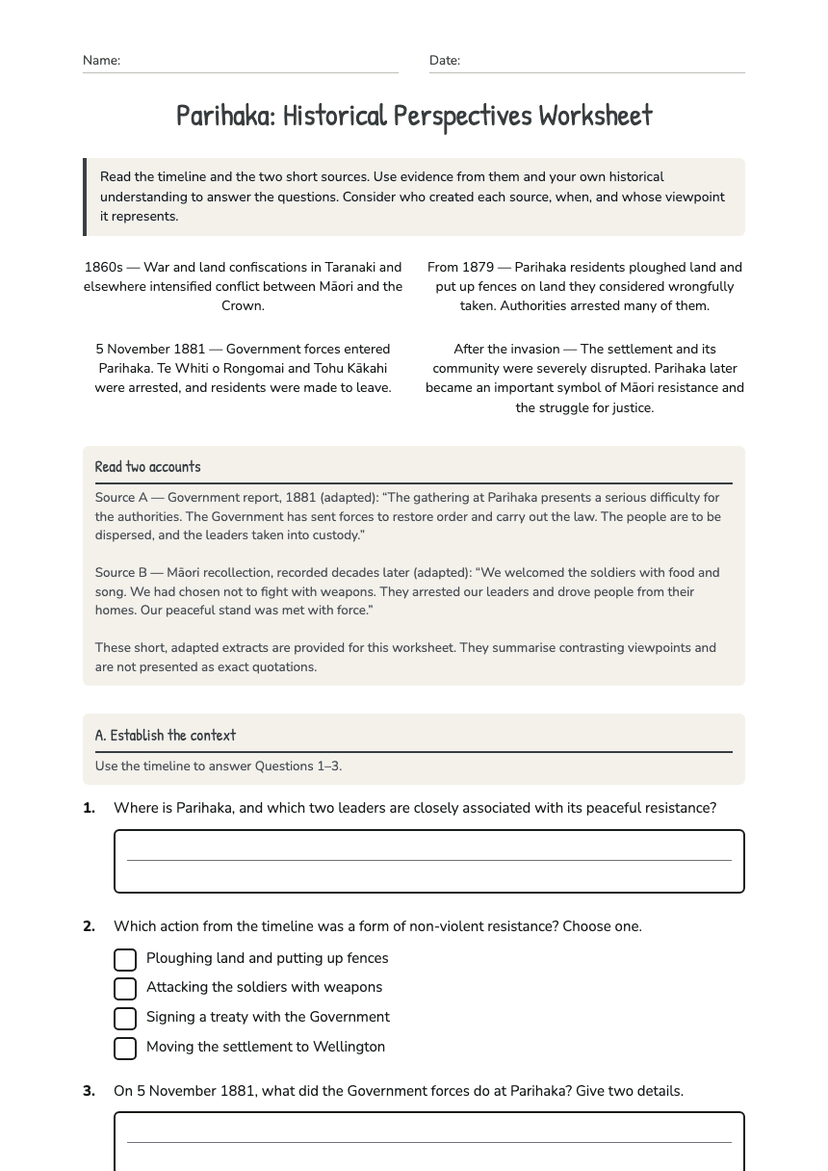
Parihaka: Historical Perspectives Worksheet
Free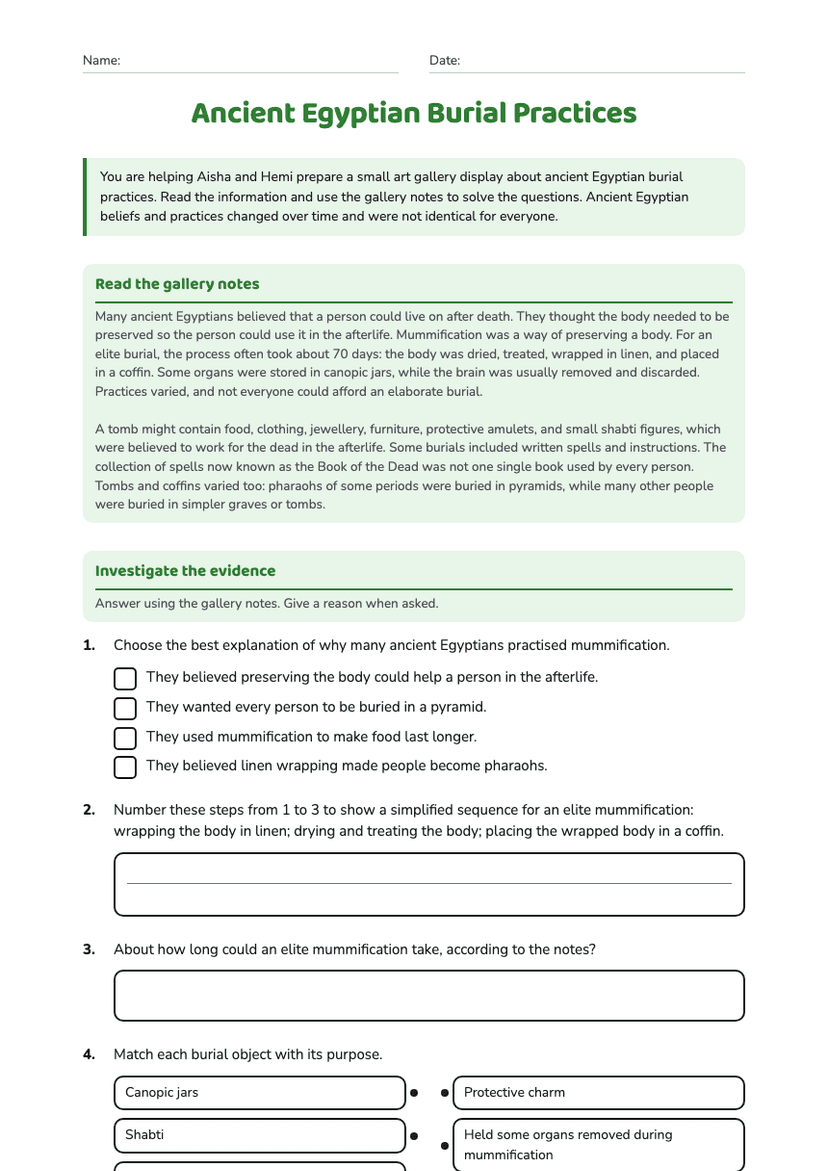
Ancient Egyptian Burial Practices
Free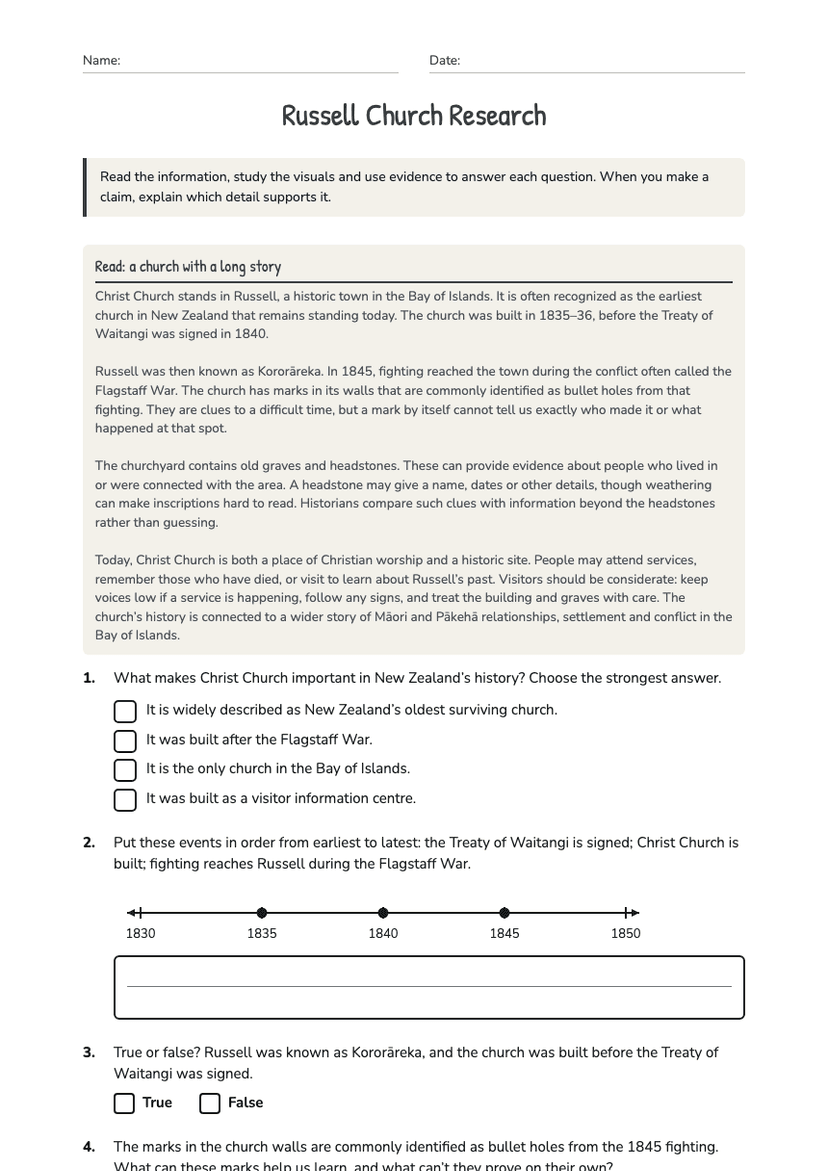
Russell Church Research
Free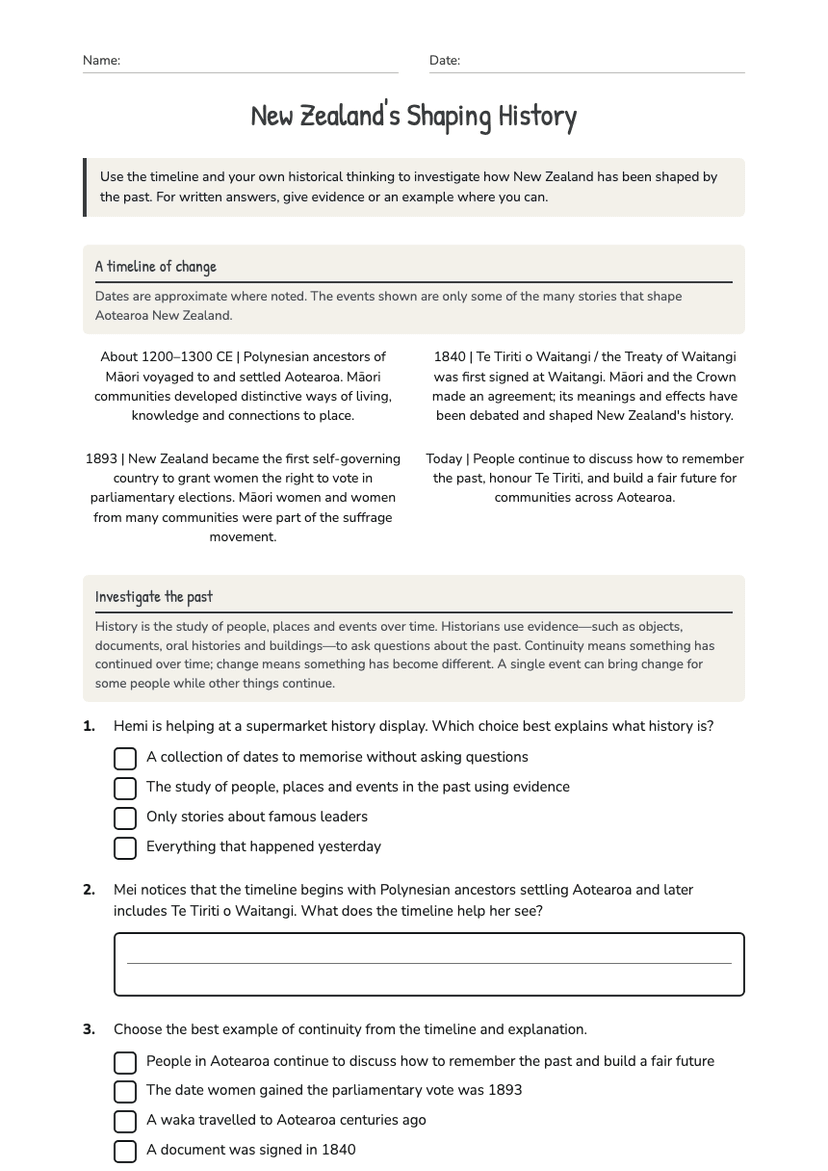
New Zealand's Shaping History
Free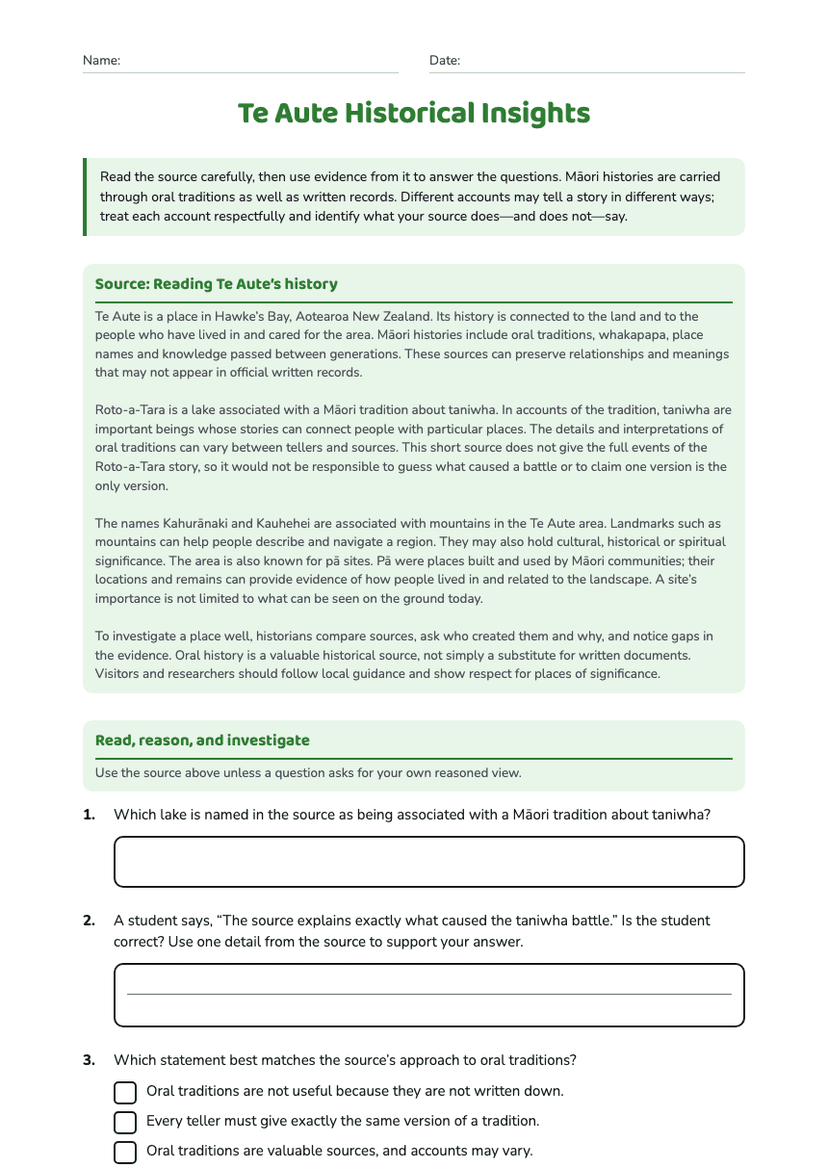
Te Aute Historical Insights
Free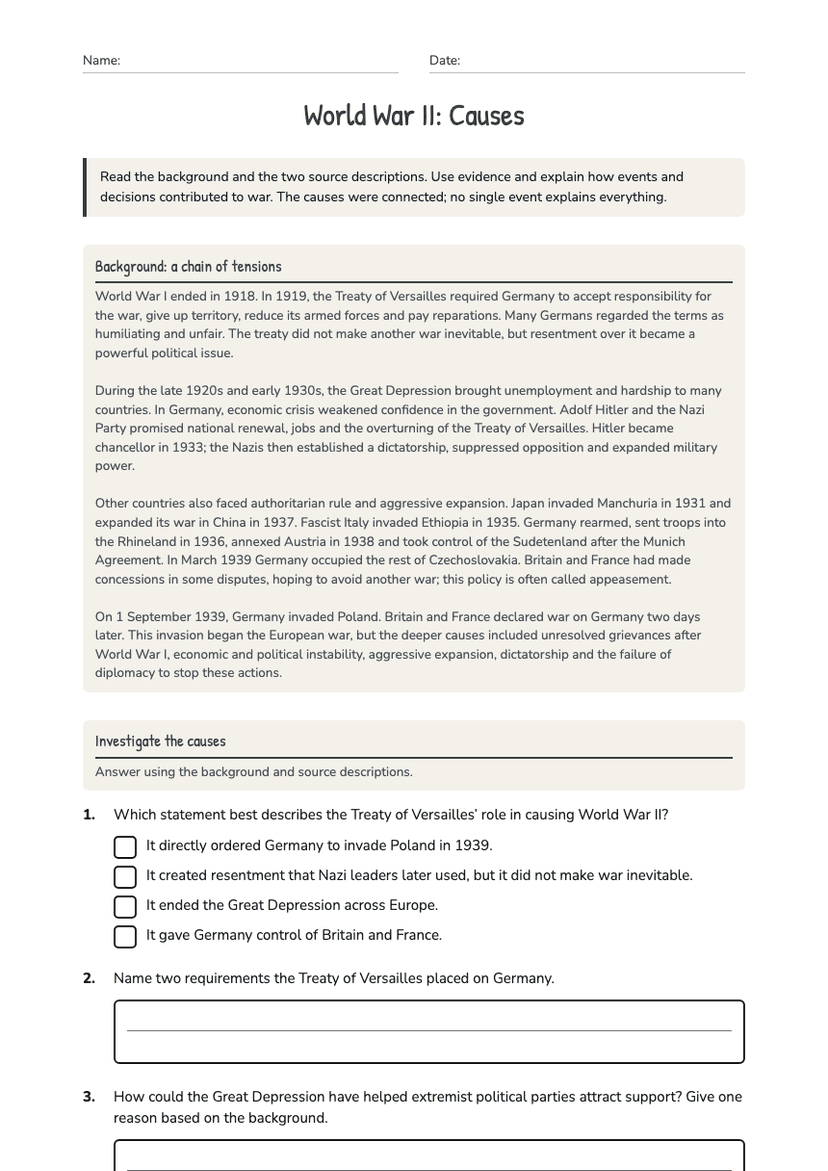
World War II: Causes
Free
Traditional and Modern Voyaging
Free