Reading and Vocabulary Unpacking
A free english worksheet ready for your classroom. Open in Kuraplan to grab the print-ready PDF, customize it for your students, or generate a fresh version in seconds.
Reading and Vocabulary Unpacking
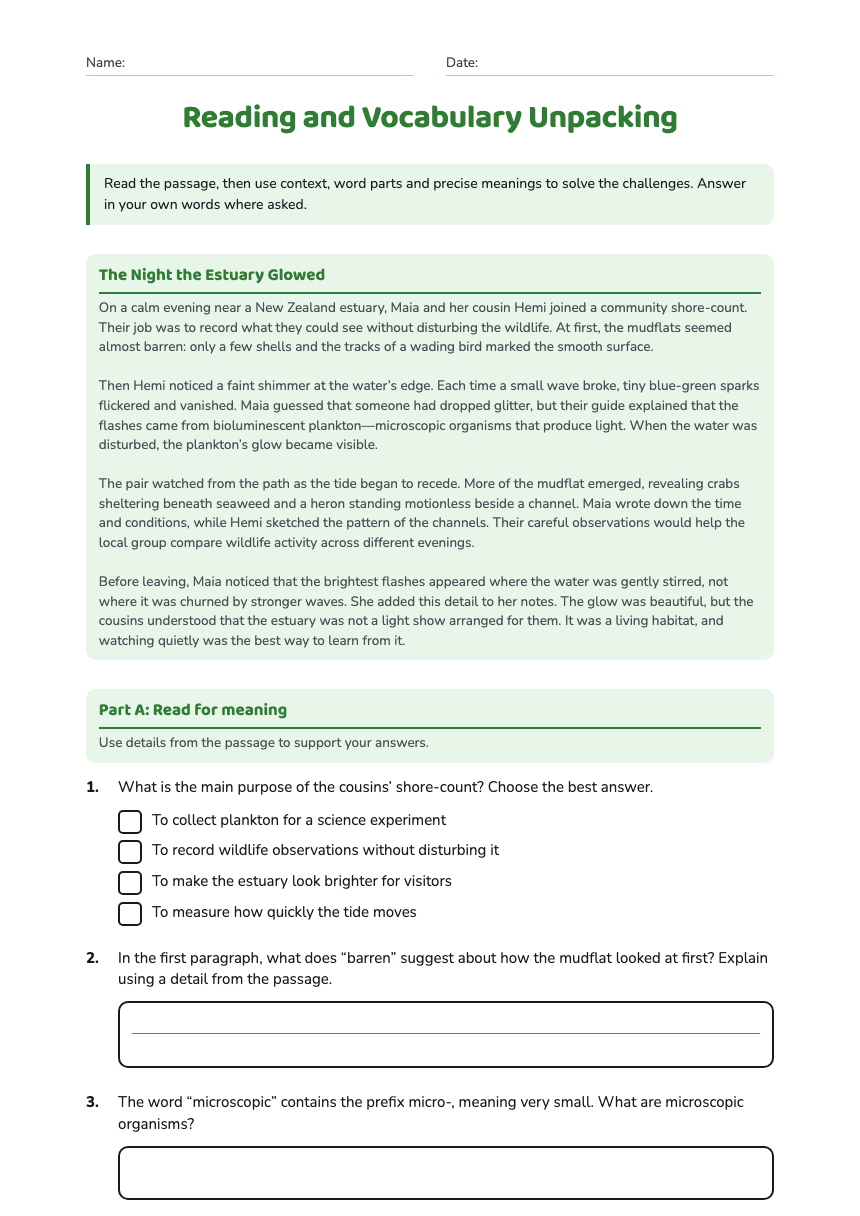
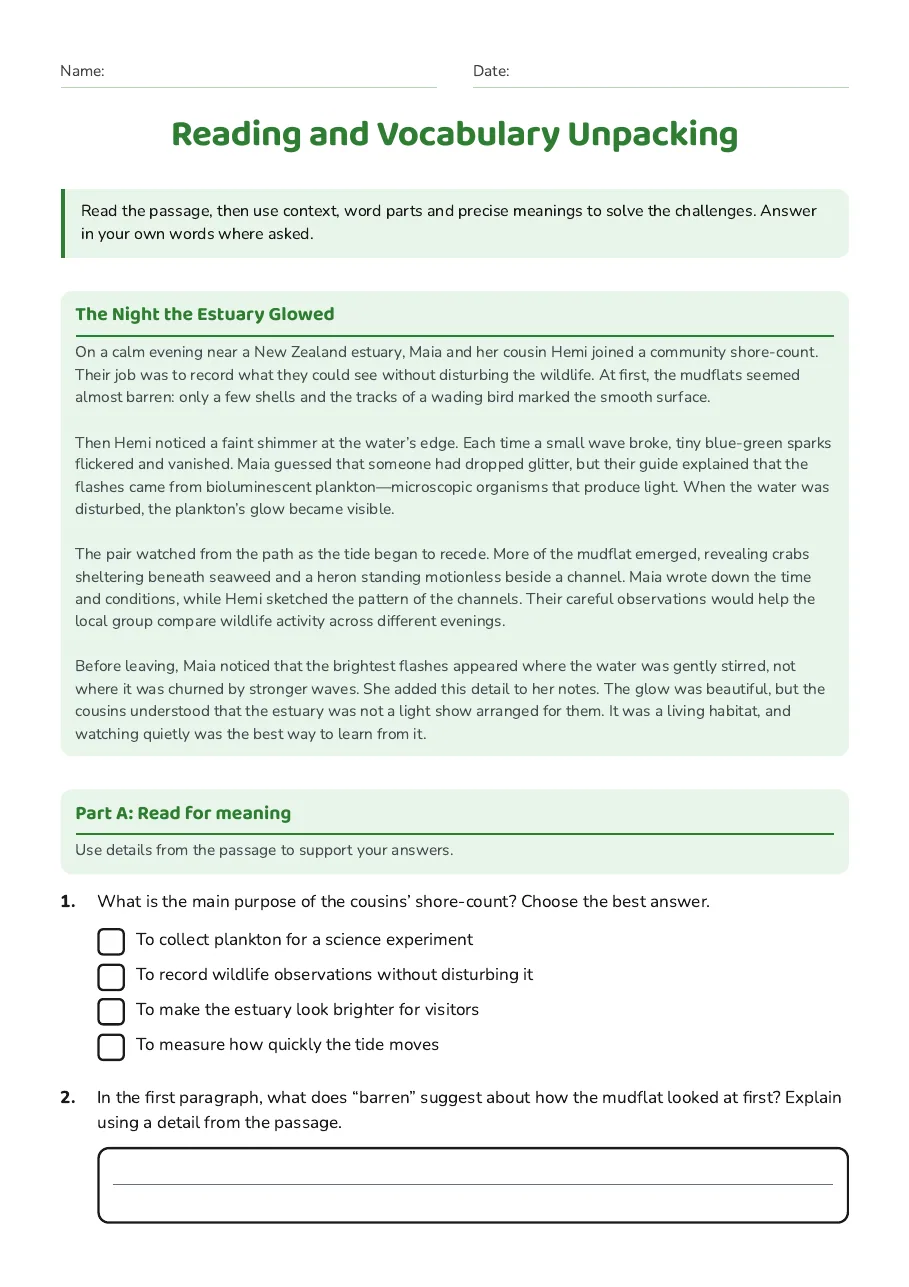
The Night the Estuary Glowed
On a calm evening near a New Zealand estuary, Maia and her cousin Hemi joined a community shore-count. Their job was to record what they could see without disturbing the wildlife. At first, the mudflats seemed almost barren: only a few shells and the tracks of a wading bird marked the smooth surface. Then Hemi noticed a faint shimmer at the water’s edge. Each time a small wave broke, tiny blue-green sparks flickered and vanished. Maia guessed that someone had dropped glitter, but their guide explained that the flashes came from bioluminescent plankton—microscopic organisms that produce light. When the water was disturbed, the plankton’s glow became visible. The pair watched from the path as the tide began to recede. More of the mudflat emerged, revealing crabs sheltering beneath seaweed and a heron standing motionless beside a channel. Maia wrote down the time and conditions, while Hemi sketched the pattern of the channels. Their careful observations would help the local group compare wildlife activity across different evenings. Before leaving, Maia noticed that the brightest flashes appeared where the water was gently stirred, not where it was churned by stronger waves. She added this detail to her notes. The glow was beautiful, but the cousins understood that the estuary was not a light show arranged for them. It was a living habitat, and watching quietly was the best way to learn from it.
Part A: Read for meaning
Use details from the passage to support your answers.
- To collect plankton for a science experiment
- To record wildlife observations without disturbing it
- To make the estuary look brighter for visitors
- To measure how quickly the tide moves
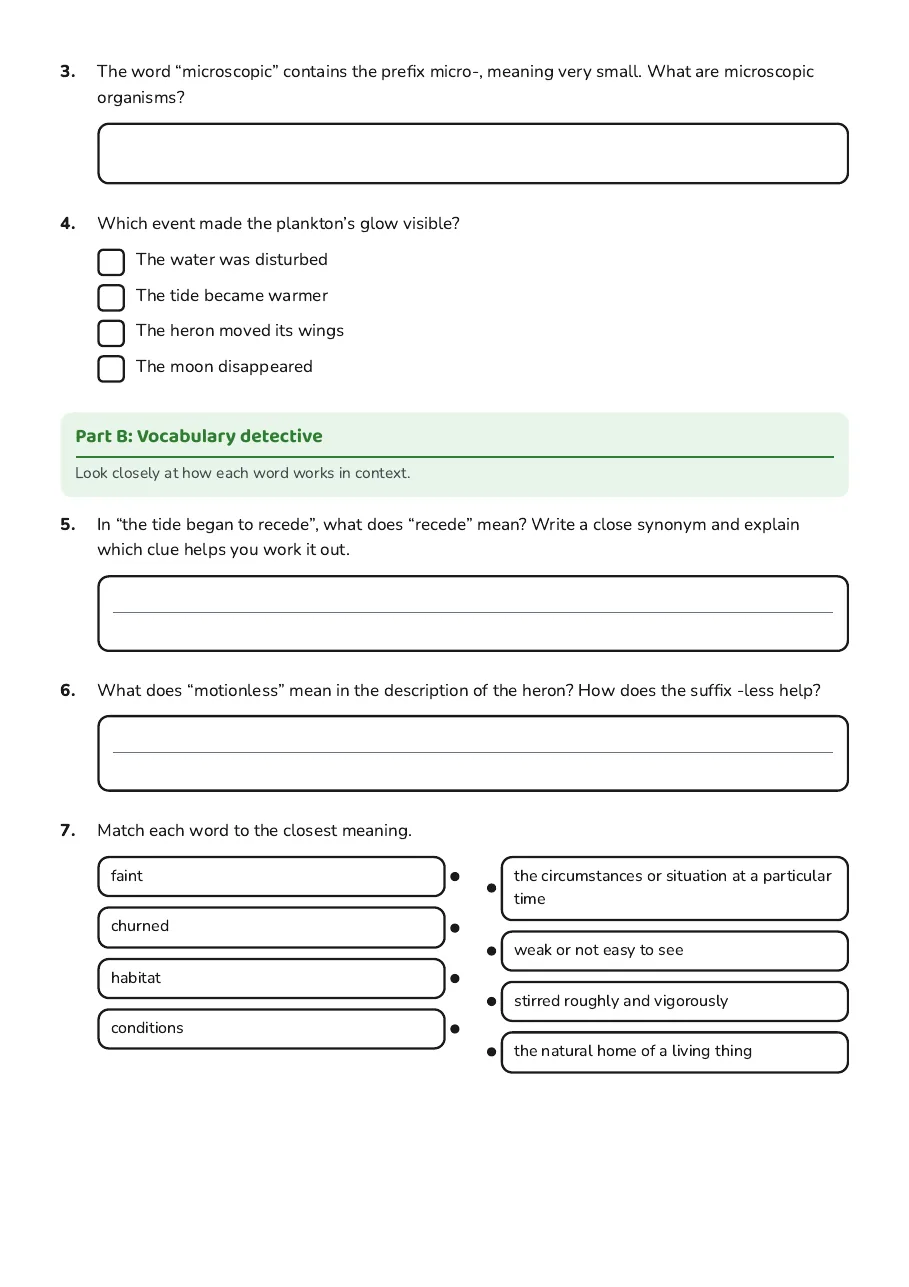
- The water was disturbed
- The tide became warmer
- The heron moved its wings
- The moon disappeared
Part B: Vocabulary detective
Look closely at how each word works in context.
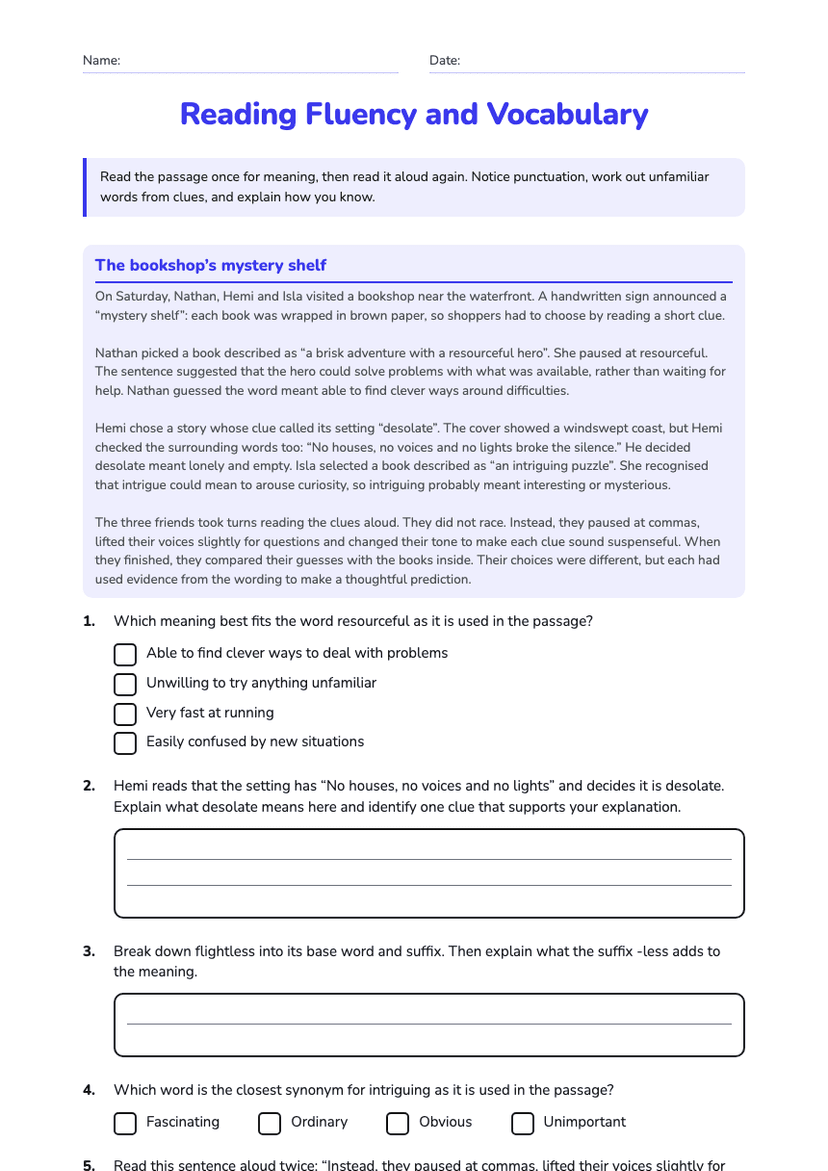
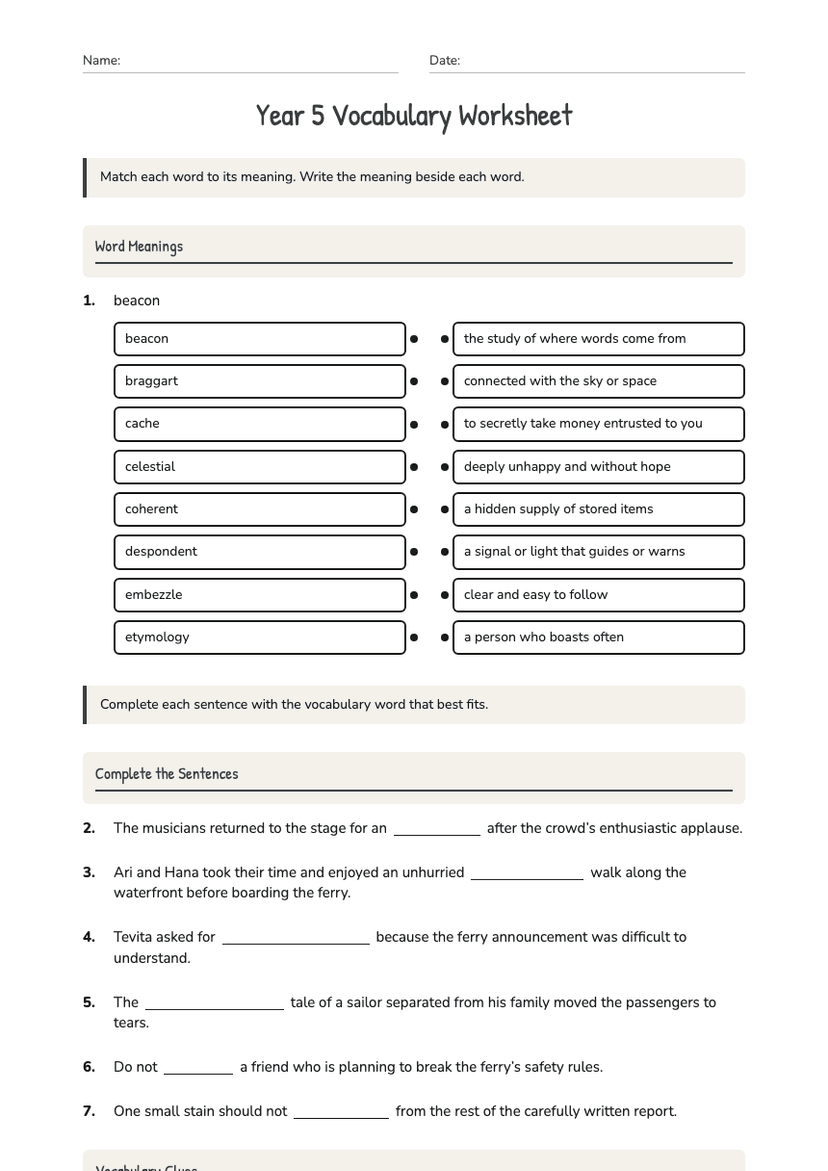
- faint
- churned
- habitat
- conditions
- the circumstances or situation at a particular time
- weak or not easy to see
- stirred roughly and vigorously
- the natural home of a living thing
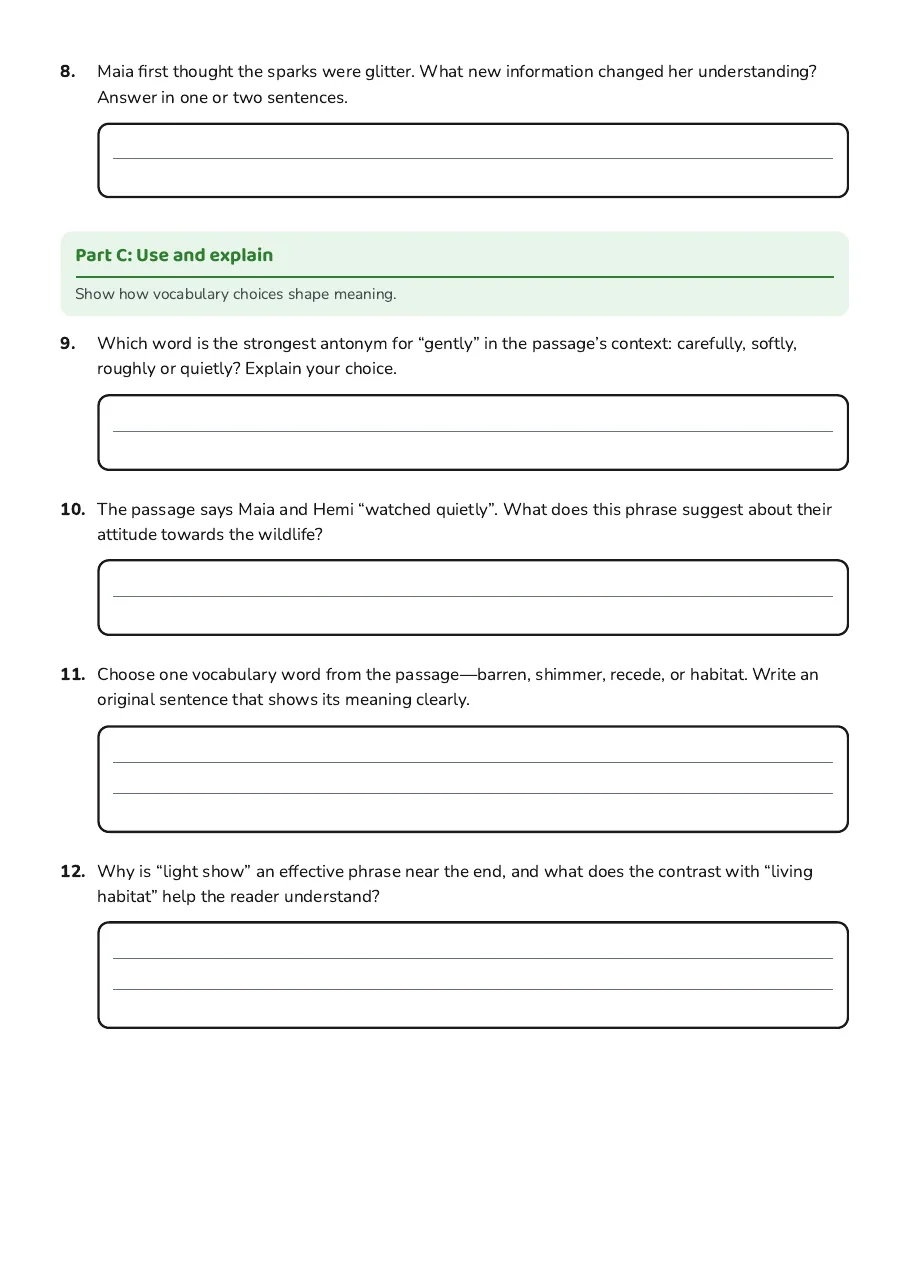
Part C: Use and explain
Show how vocabulary choices shape meaning.
3 printable pages
Page 1
Page 2
Page 3
About This Worksheet
Free in Kuraplan
Sign up free, grab the PDF, and customize it for your class.
Print-Ready
Formatted for standard paper. Clean layout, easy to read.
AI-Generated
Created with Kuraplan's AI, designed for real classroom use.
For Teachers & Parents
Use in classrooms, for homework, tutoring, or homeschool.
Need a custom version of this worksheet?
Kuraplan's AI generates custom worksheets in seconds — differentiated for every learner, aligned to your curriculum.
Generate Custom Worksheets — Free