EnglishFreePrintable
Reading Comprehension Worksheet
A free english worksheet ready for your classroom. Open in Kuraplan to grab the print-ready PDF, customize it for your students, or generate a fresh version in seconds.
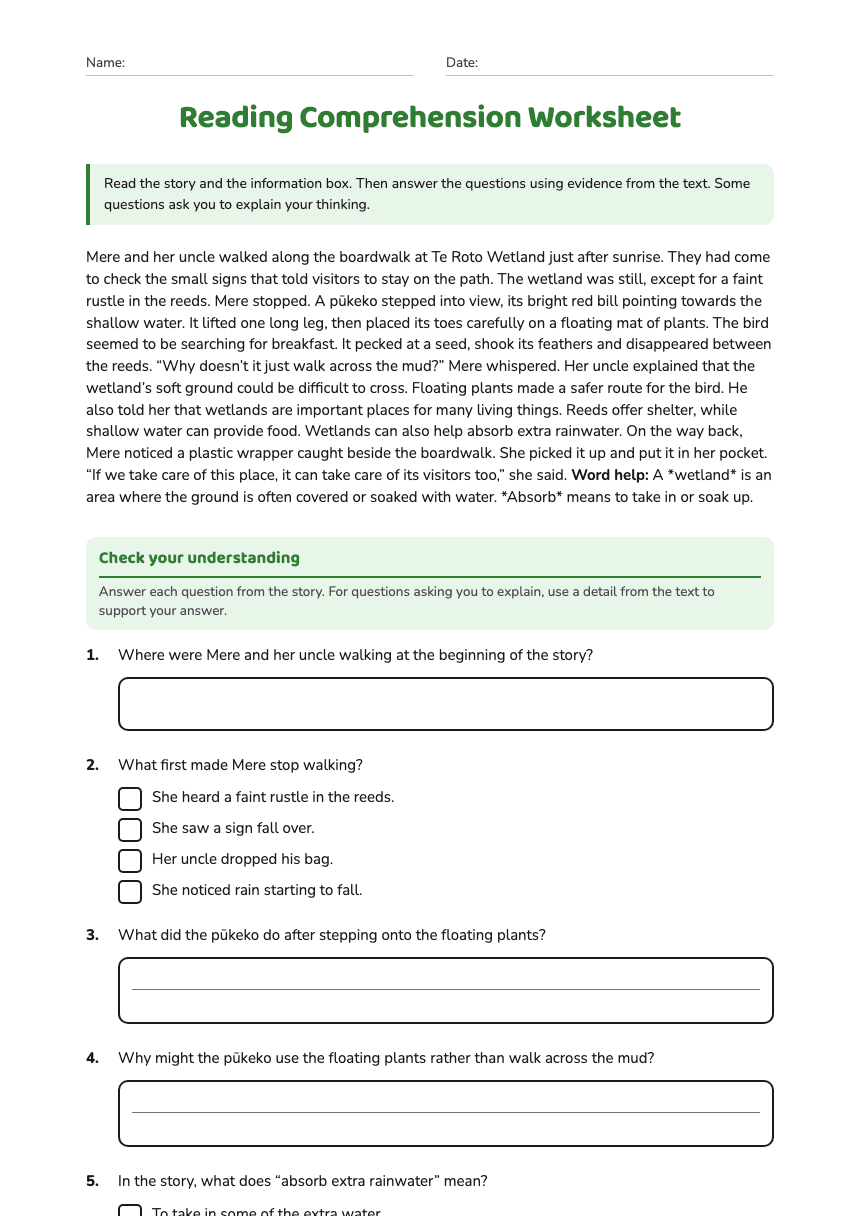
Name:Date:
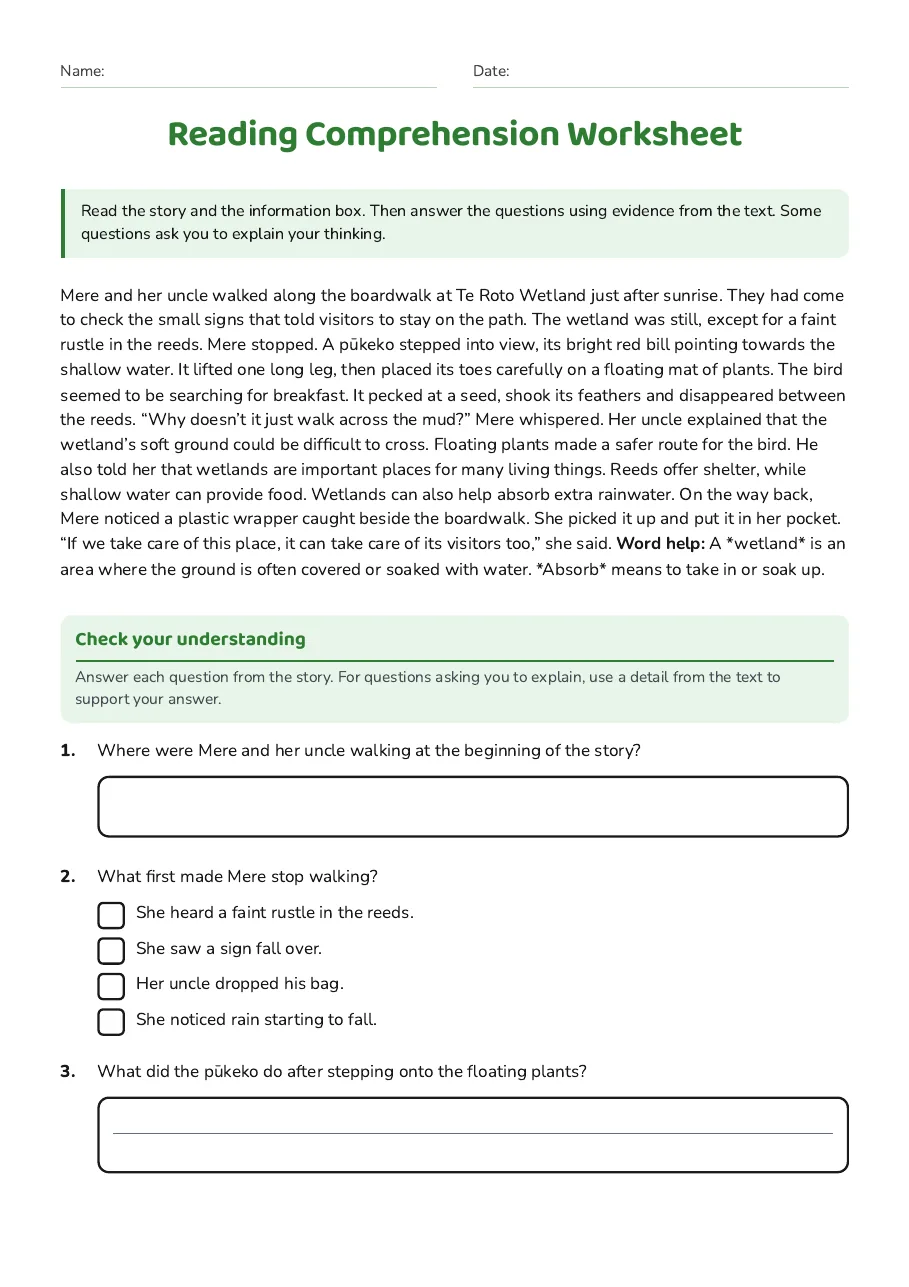
Reading Comprehension Worksheet
Read the story and the information box. Then answer the questions using evidence from the text. Some questions ask you to explain your thinking.
Mere and her uncle walked along the boardwalk at Te Roto Wetland just after sunrise. They had come to check the small signs that told visitors to stay on the path. The wetland was still, except for a faint rustle in the reeds.
Mere stopped. A pūkeko stepped into view, its bright red bill pointing towards the shallow water. It lifted one long leg, then placed its toes carefully on a floating mat of plants. The bird seemed to be searching for breakfast. It pecked at a seed, shook its feathers and disappeared between the reeds.
“Why doesn’t it just walk across the mud?” Mere whispered.
Her uncle explained that the wetland’s soft ground could be difficult to cross. Floating plants made a safer route for the bird. He also told her that wetlands are important places for many living things. Reeds offer shelter, while shallow water can provide food. Wetlands can also help absorb extra rainwater.
On the way back, Mere noticed a plastic wrapper caught beside the boardwalk. She picked it up and put it in her pocket. “If we take care of this place, it can take care of its visitors too,” she said.
Word help: A *wetland* is an area where the ground is often covered or soaked with water. *Absorb* means to take in or soak up.
Check your understanding
Answer each question from the story. For questions asking you to explain, use a detail from the text to support your answer.
1.Where were Mere and her uncle walking at the beginning of the story?
2.What first made Mere stop walking?
- She heard a faint rustle in the reeds.
- She saw a sign fall over.
- Her uncle dropped his bag.
- She noticed rain starting to fall.
3.What did the pūkeko do after stepping onto the floating plants?
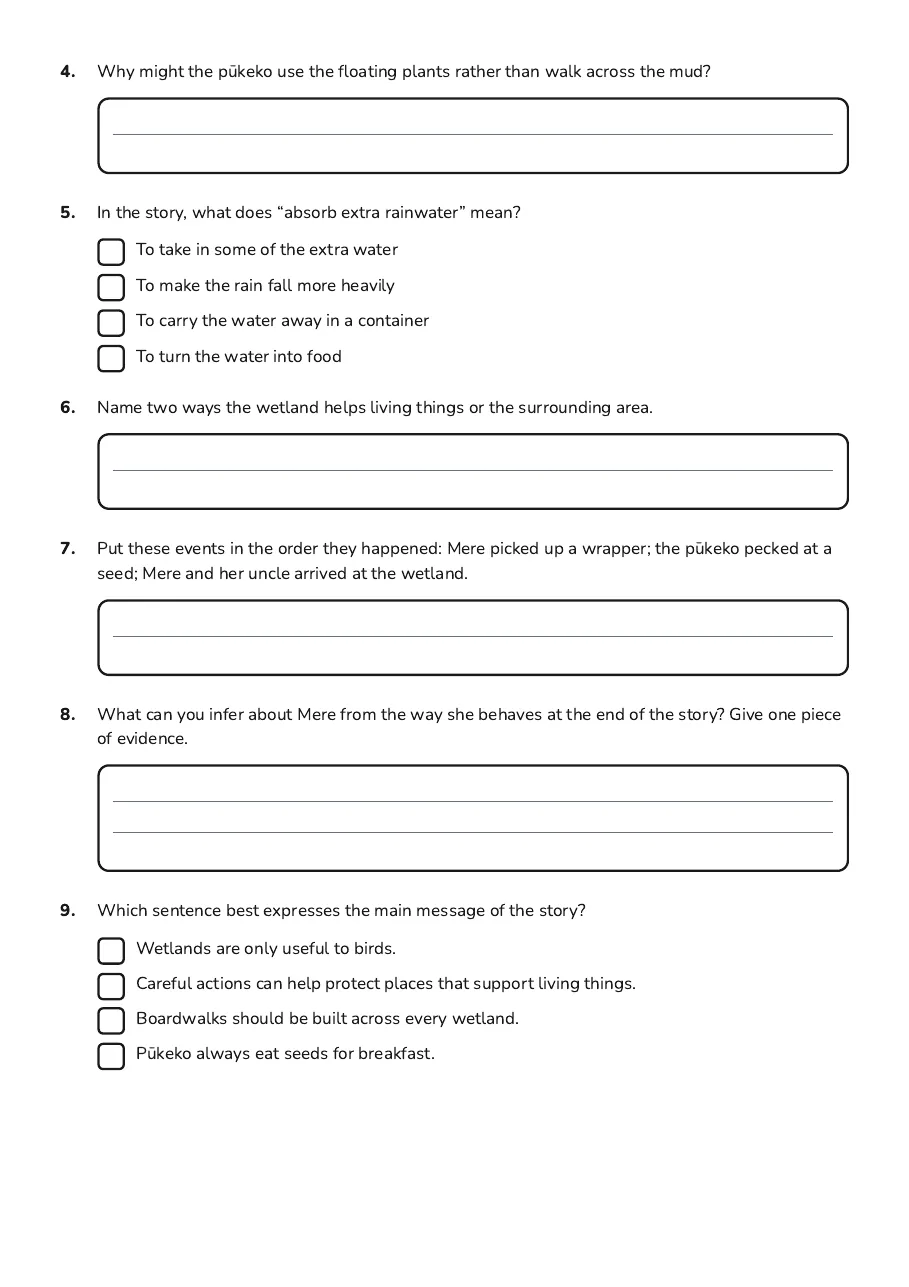
4.Why might the pūkeko use the floating plants rather than walk across the mud?
5.In the story, what does “absorb extra rainwater” mean?
- To take in some of the extra water
- To make the rain fall more heavily
- To carry the water away in a container
- To turn the water into food
6.Name two ways the wetland helps living things or the surrounding area.
7.Put these events in the order they happened: Mere picked up a wrapper; the pūkeko pecked at a seed; Mere and her uncle arrived at the wetland.
8.What can you infer about Mere from the way she behaves at the end of the story? Give one piece of evidence.
9.Which sentence best expresses the main message of the story?
- Wetlands are only useful to birds.
- Careful actions can help protect places that support living things.
- Boardwalks should be built across every wetland.
- Pūkeko always eat seeds for breakfast.
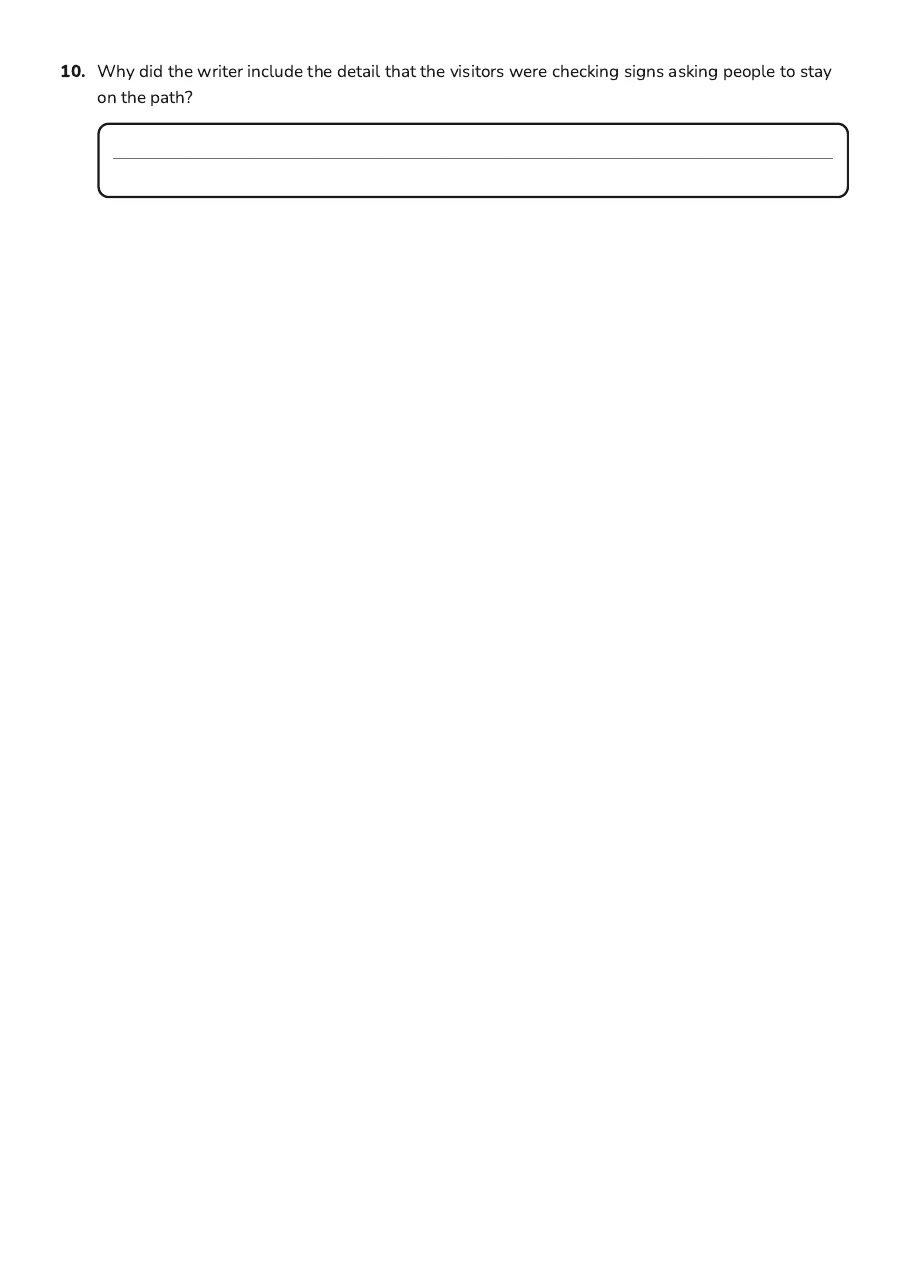
10.Why did the writer include the detail that the visitors were checking signs asking people to stay on the path?
3 printable pages
Page 1
Page 2
Page 3
About This Worksheet
Free in Kuraplan
Sign up free, grab the PDF, and customize it for your class.
Print-Ready
Formatted for standard paper. Clean layout, easy to read.
AI-Generated
Created with Kuraplan's AI, designed for real classroom use.
For Teachers & Parents
Use in classrooms, for homework, tutoring, or homeschool.
Need a custom version of this worksheet?
Kuraplan's AI generates custom worksheets in seconds — differentiated for every learner, aligned to your curriculum.
Generate Custom Worksheets — Free No credit card Curriculum-aligned Under 60 seconds