Reading, Writing, and Debate
A free english worksheet ready for your classroom. Open in Kuraplan to grab the print-ready PDF, customize it for your students, or generate a fresh version in seconds.
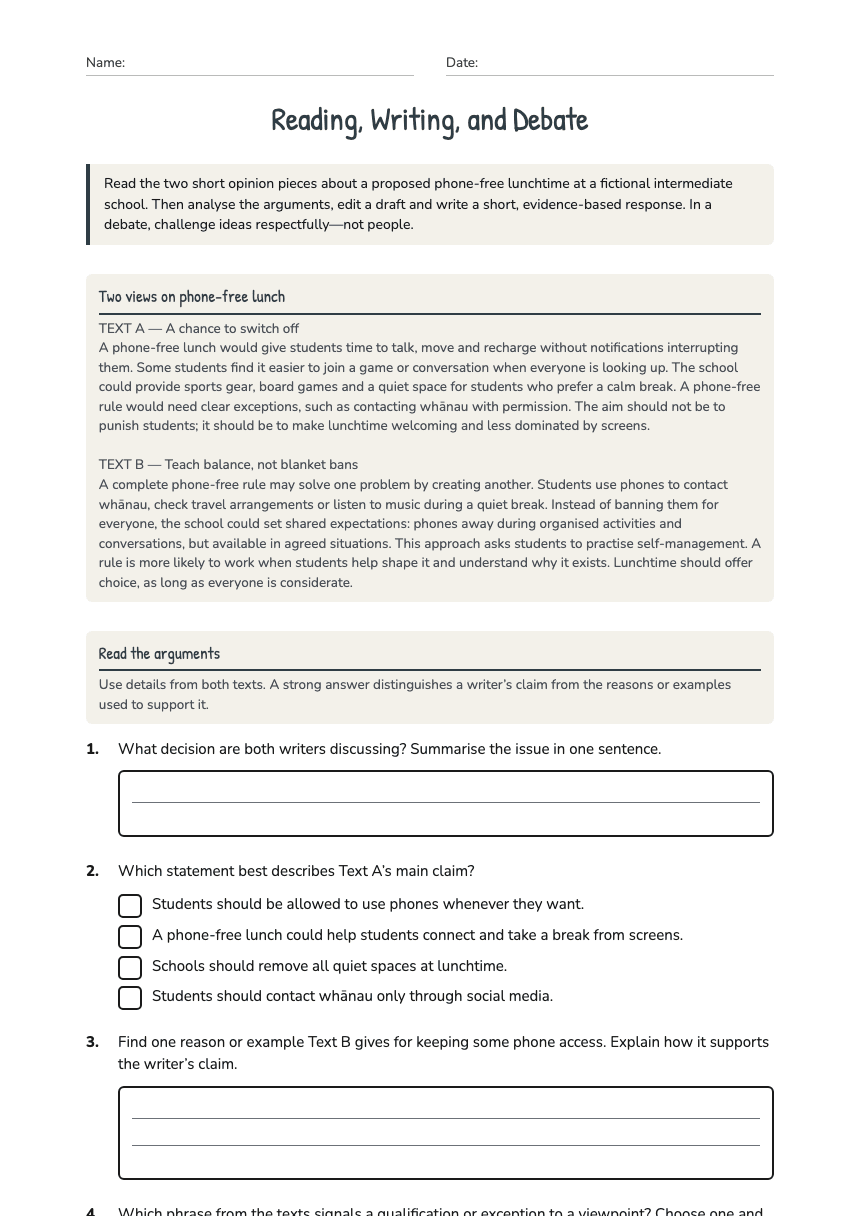
Reading, Writing, and Debate
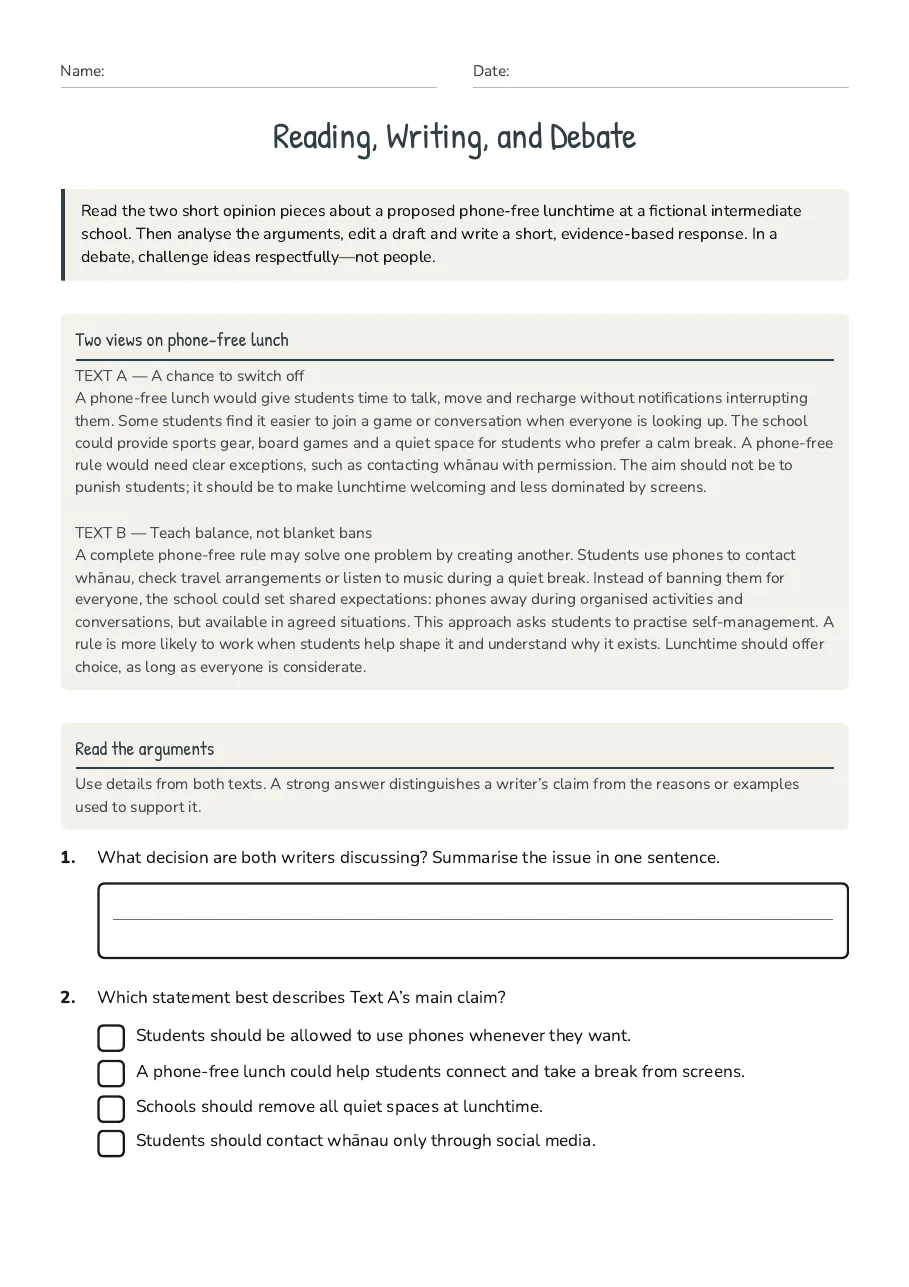
Two views on phone-free lunch
TEXT A — A chance to switch off A phone-free lunch would give students time to talk, move and recharge without notifications interrupting them. Some students find it easier to join a game or conversation when everyone is looking up. The school could provide sports gear, board games and a quiet space for students who prefer a calm break. A phone-free rule would need clear exceptions, such as contacting whānau with permission. The aim should not be to punish students; it should be to make lunchtime welcoming and less dominated by screens. TEXT B — Teach balance, not blanket bans A complete phone-free rule may solve one problem by creating another. Students use phones to contact whānau, check travel arrangements or listen to music during a quiet break. Instead of banning them for everyone, the school could set shared expectations: phones away during organised activities and conversations, but available in agreed situations. This approach asks students to practise self-management. A rule is more likely to work when students help shape it and understand why it exists. Lunchtime should offer choice, as long as everyone is considerate.
Read the arguments
Use details from both texts. A strong answer distinguishes a writer’s claim from the reasons or examples used to support it.
- Students should be allowed to use phones whenever they want.
- A phone-free lunch could help students connect and take a break from screens.
- Schools should remove all quiet spaces at lunchtime.
- Students should contact whānau only through social media.
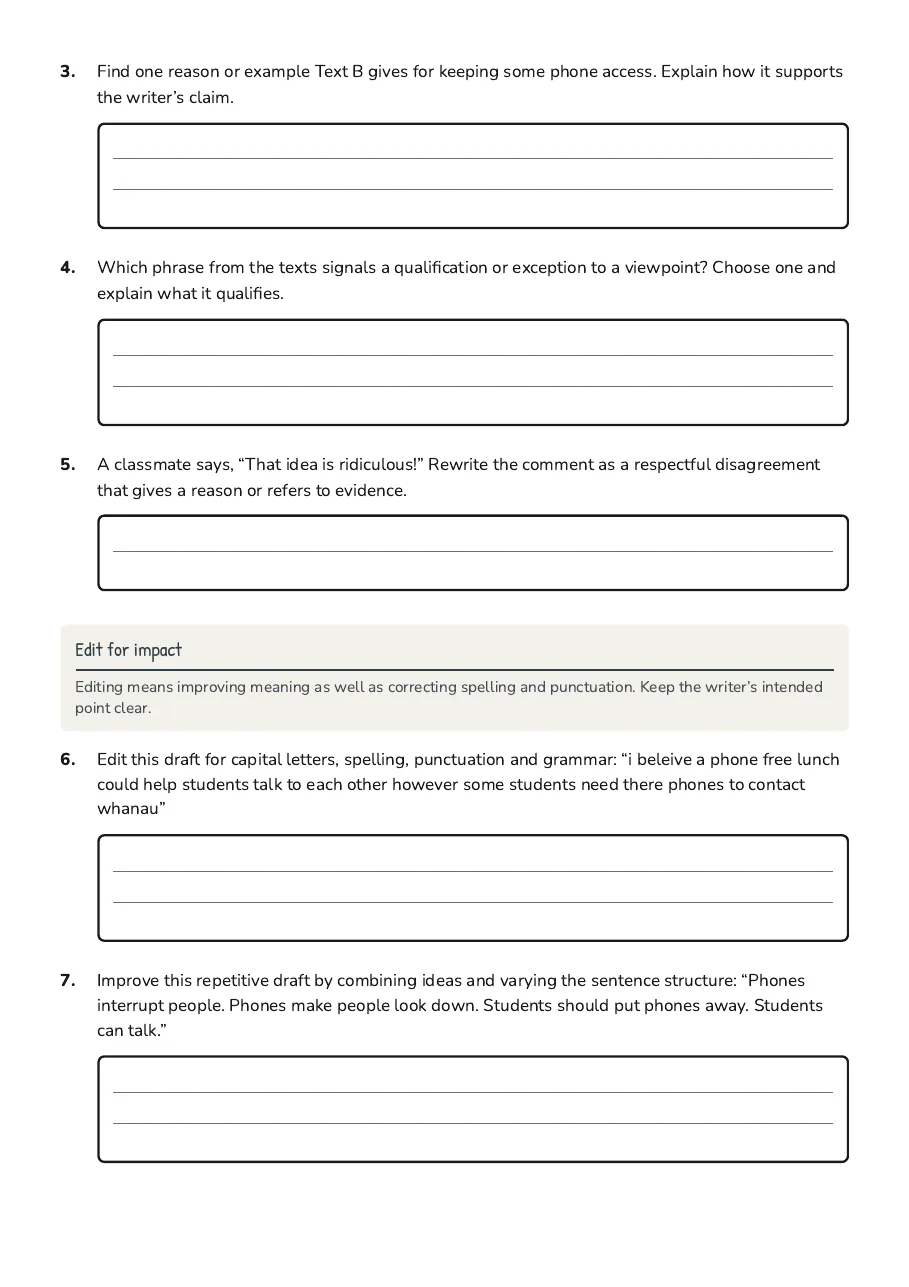
Edit for impact
Editing means improving meaning as well as correcting spelling and punctuation. Keep the writer’s intended point clear.
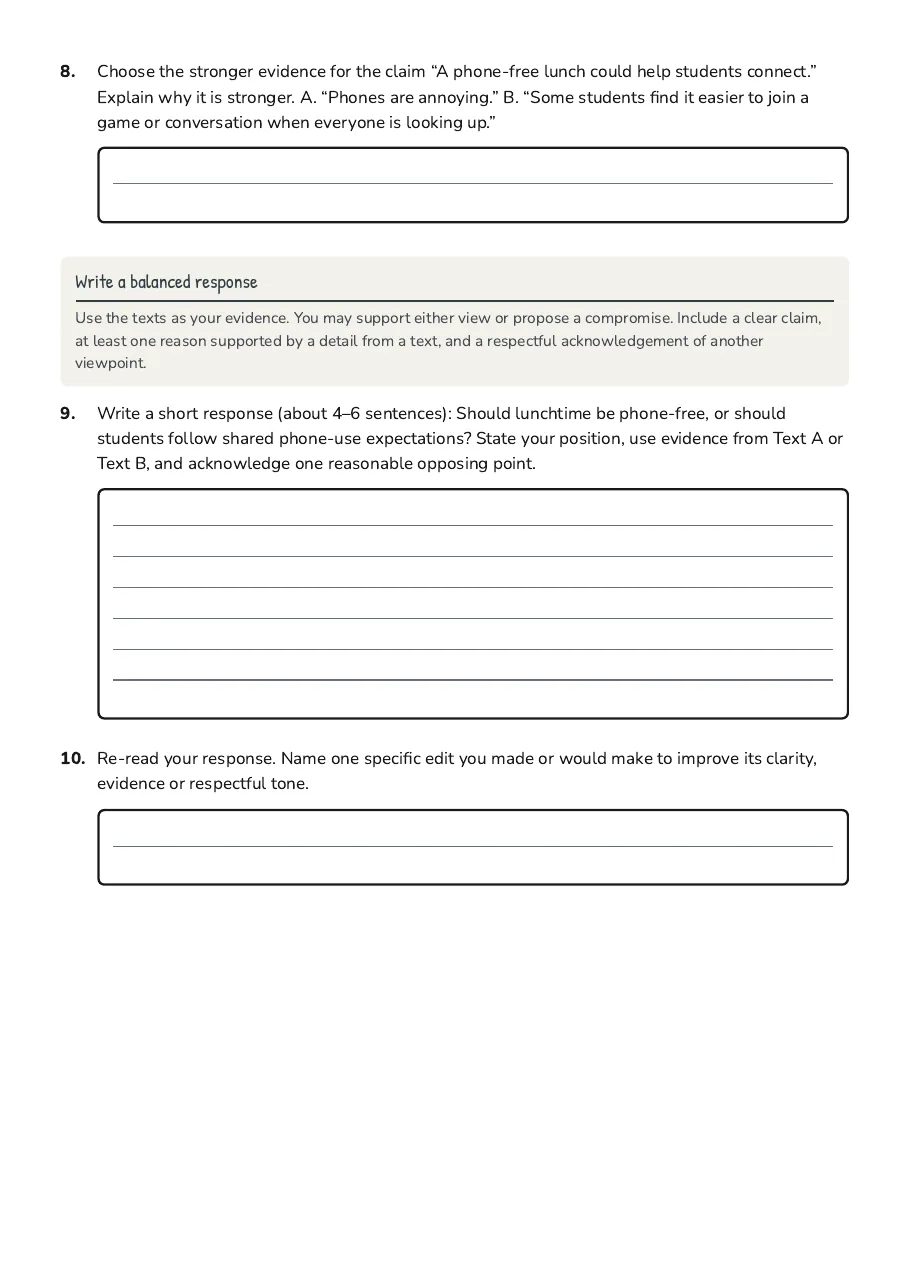
Write a balanced response
Use the texts as your evidence. You may support either view or propose a compromise. Include a clear claim, at least one reason supported by a detail from a text, and a respectful acknowledgement of another viewpoint.
3 printable pages
Page 1
Page 2
Page 3
About This Worksheet
Free in Kuraplan
Sign up free, grab the PDF, and customize it for your class.
Print-Ready
Formatted for standard paper. Clean layout, easy to read.
AI-Generated
Created with Kuraplan's AI, designed for real classroom use.
For Teachers & Parents
Use in classrooms, for homework, tutoring, or homeschool.
Need a custom version of this worksheet?
Kuraplan's AI generates custom worksheets in seconds — differentiated for every learner, aligned to your curriculum.
Generate Custom Worksheets — FreeMore English Worksheets
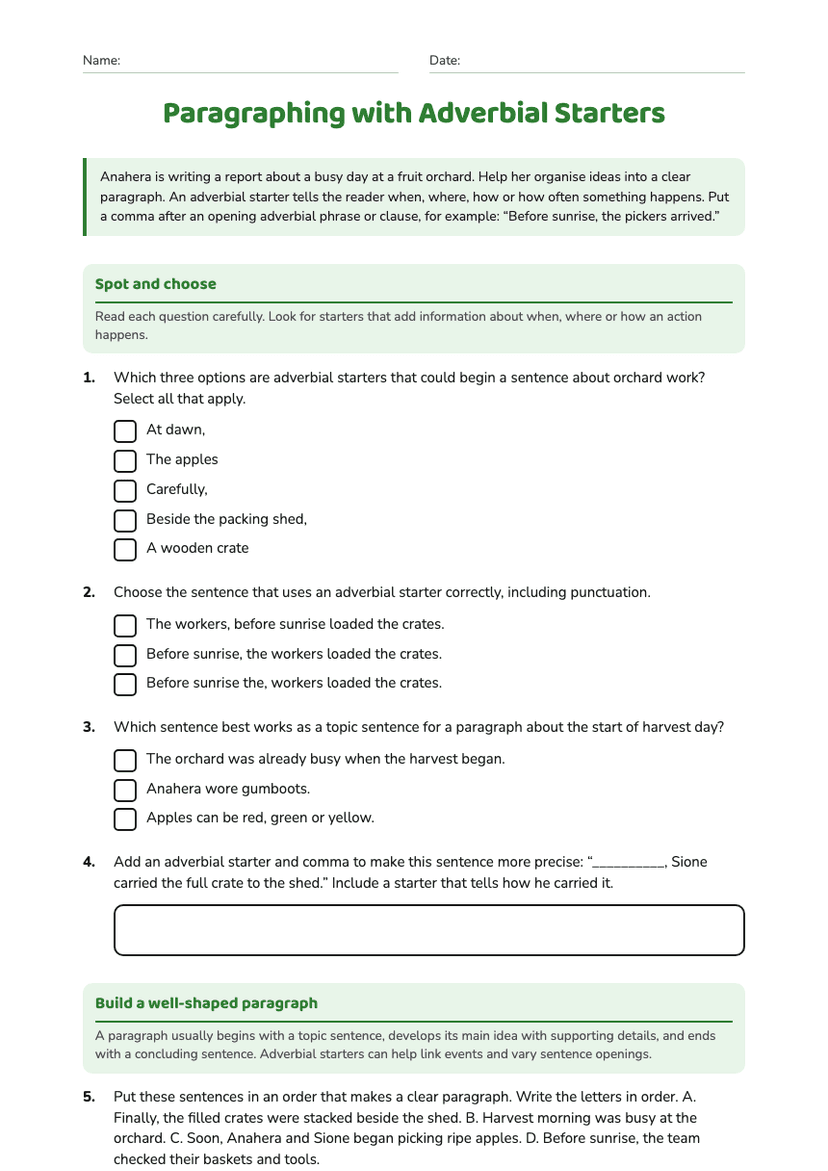
Paragraphing with Adverbial Starters
Free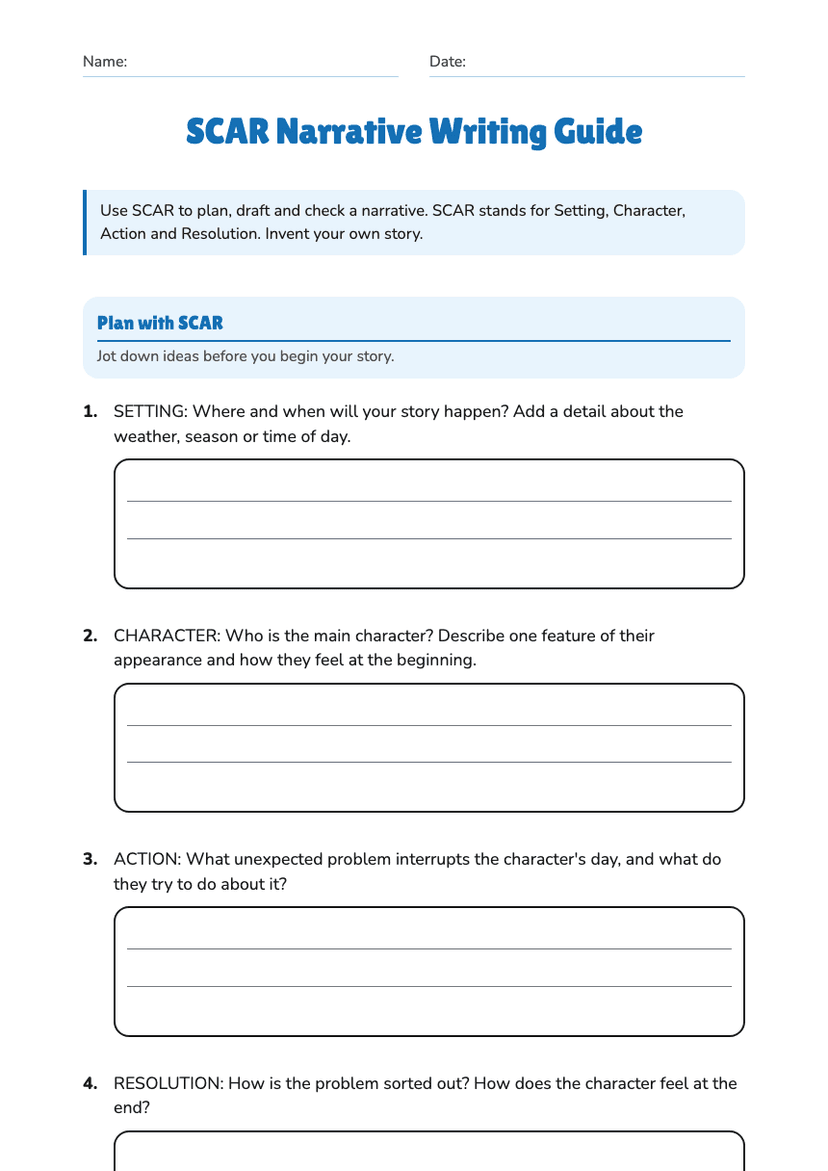
SCAR Narrative Writing Guide
Free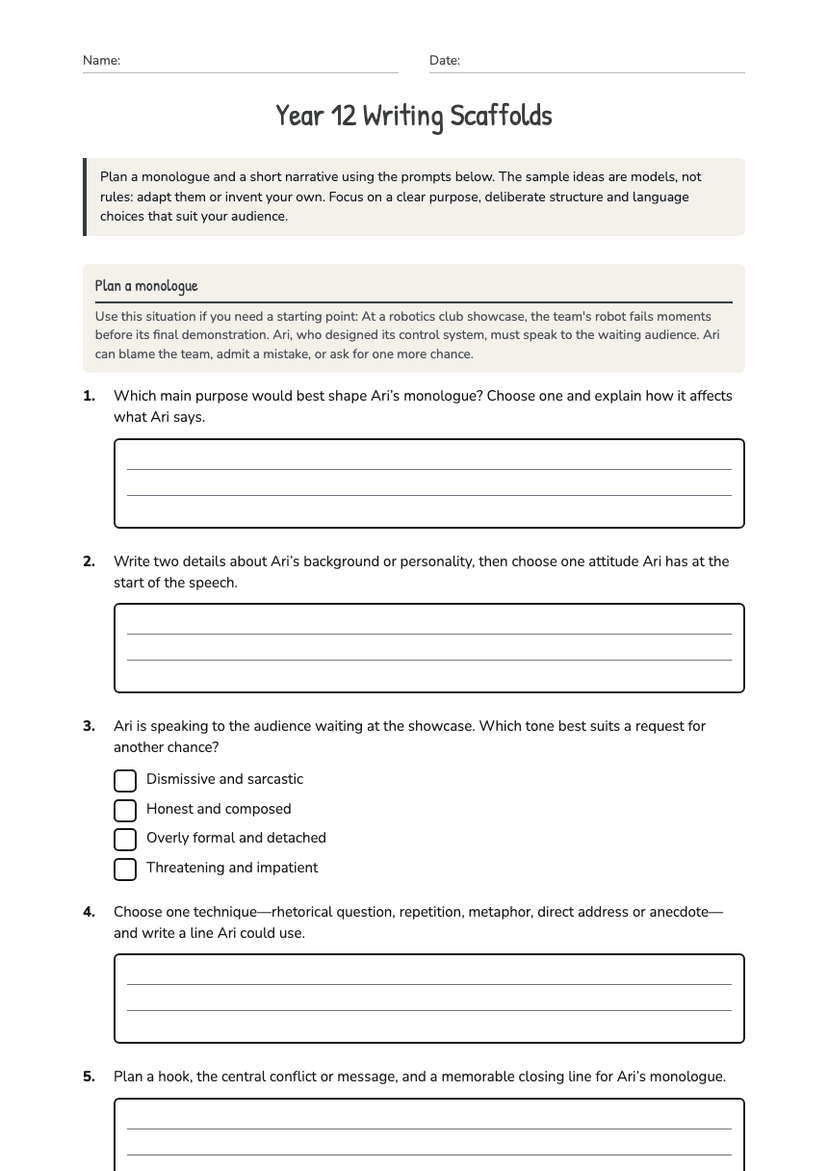
Year 12 Writing Scaffolds
Free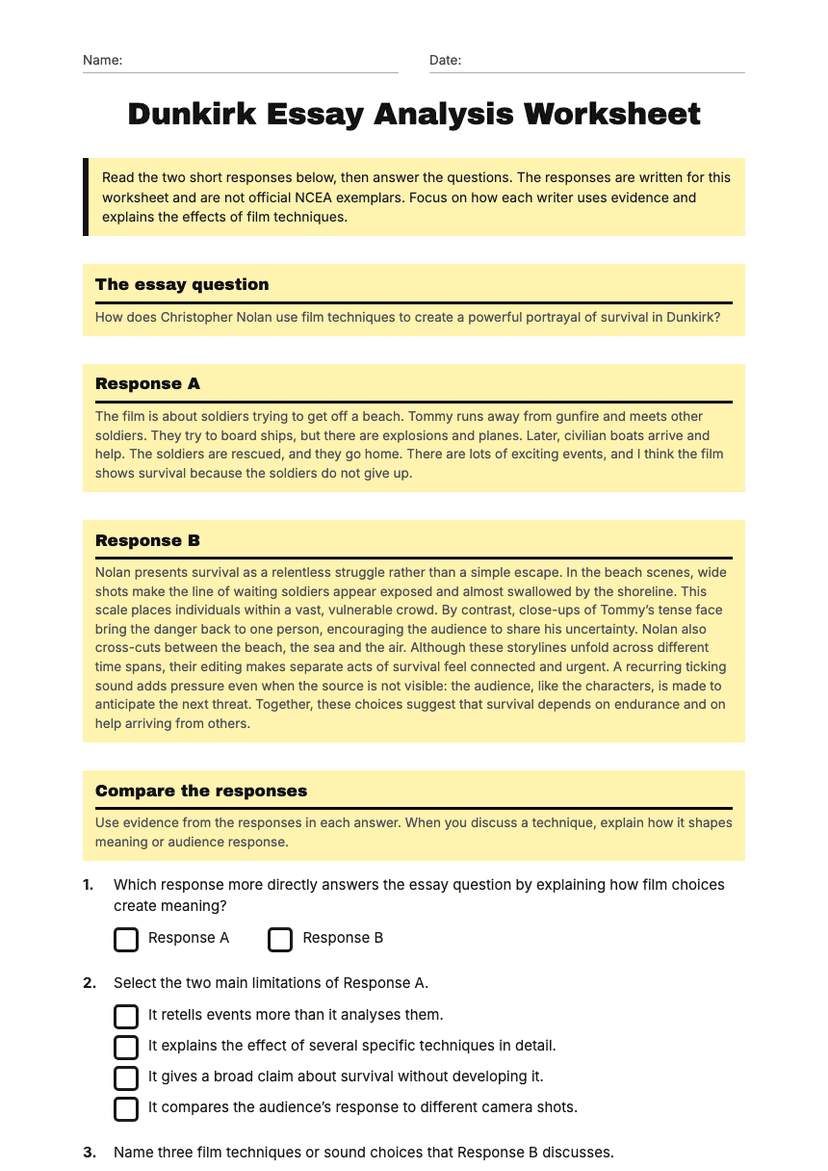
Dunkirk Essay Analysis Worksheet
Free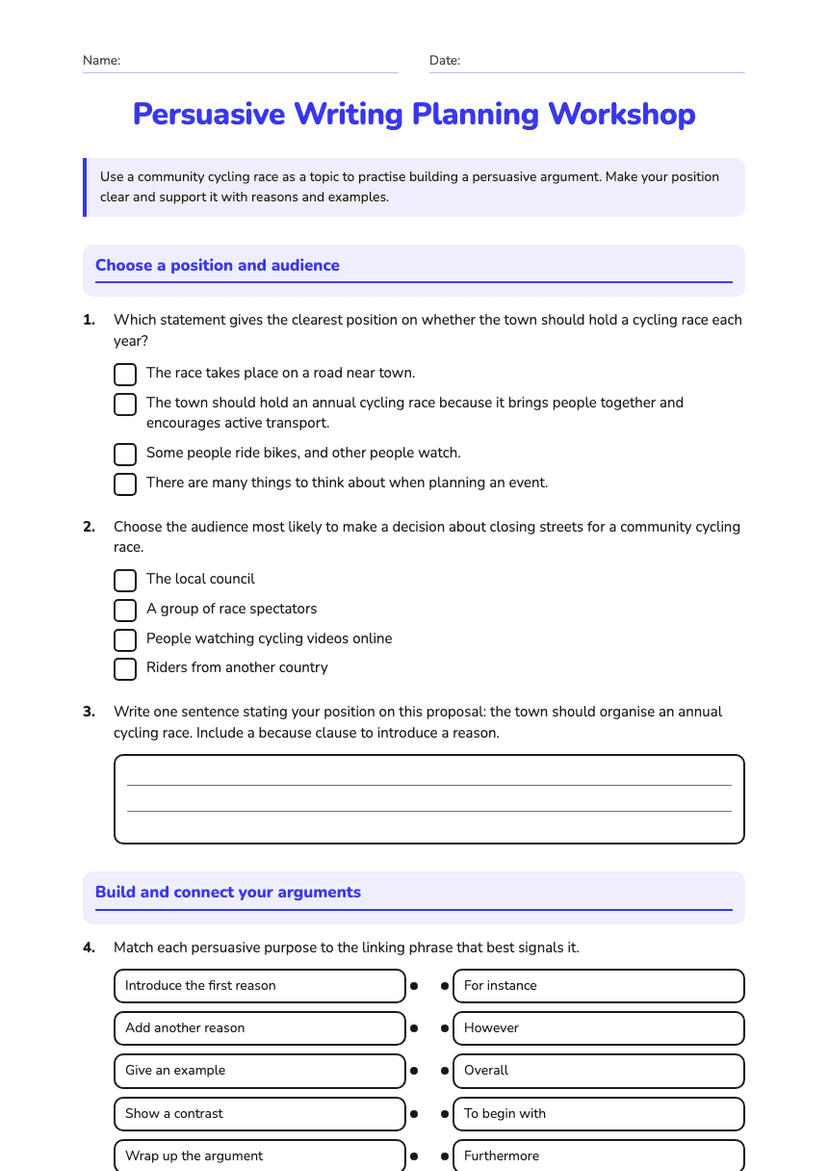
Persuasive Writing Planning Workshop
Free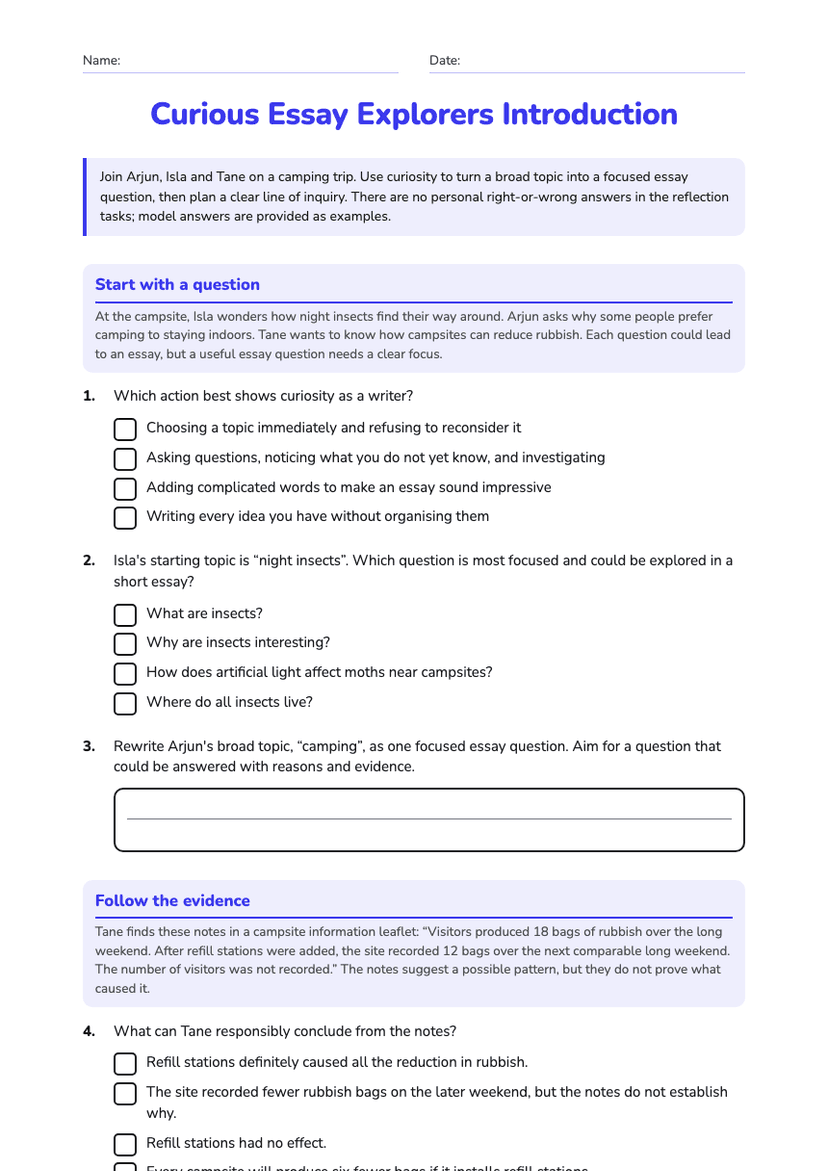
Curious Essay Explorers Introduction
Free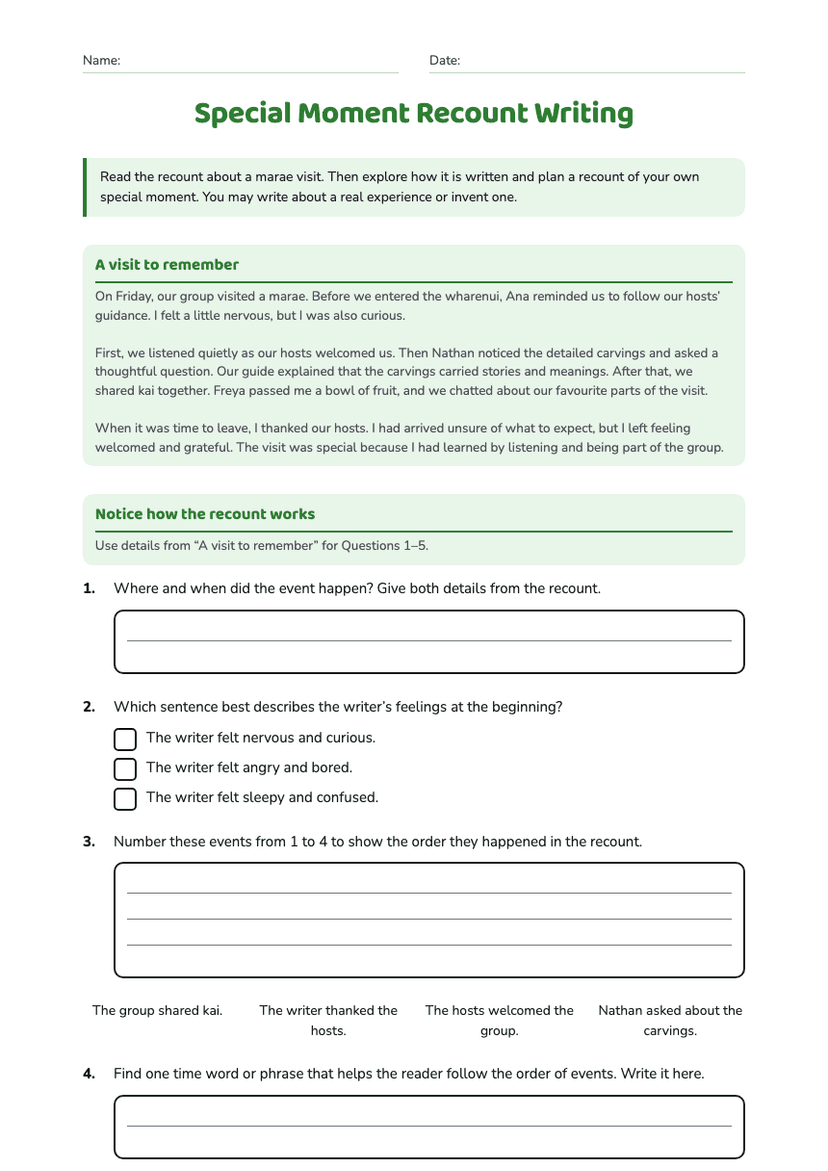
Special Moment Recount Writing
Free