Report Writing Basics
A free english worksheet ready for your classroom. Open in Kuraplan to grab the print-ready PDF, customize it for your students, or generate a fresh version in seconds.
Report Writing Basics
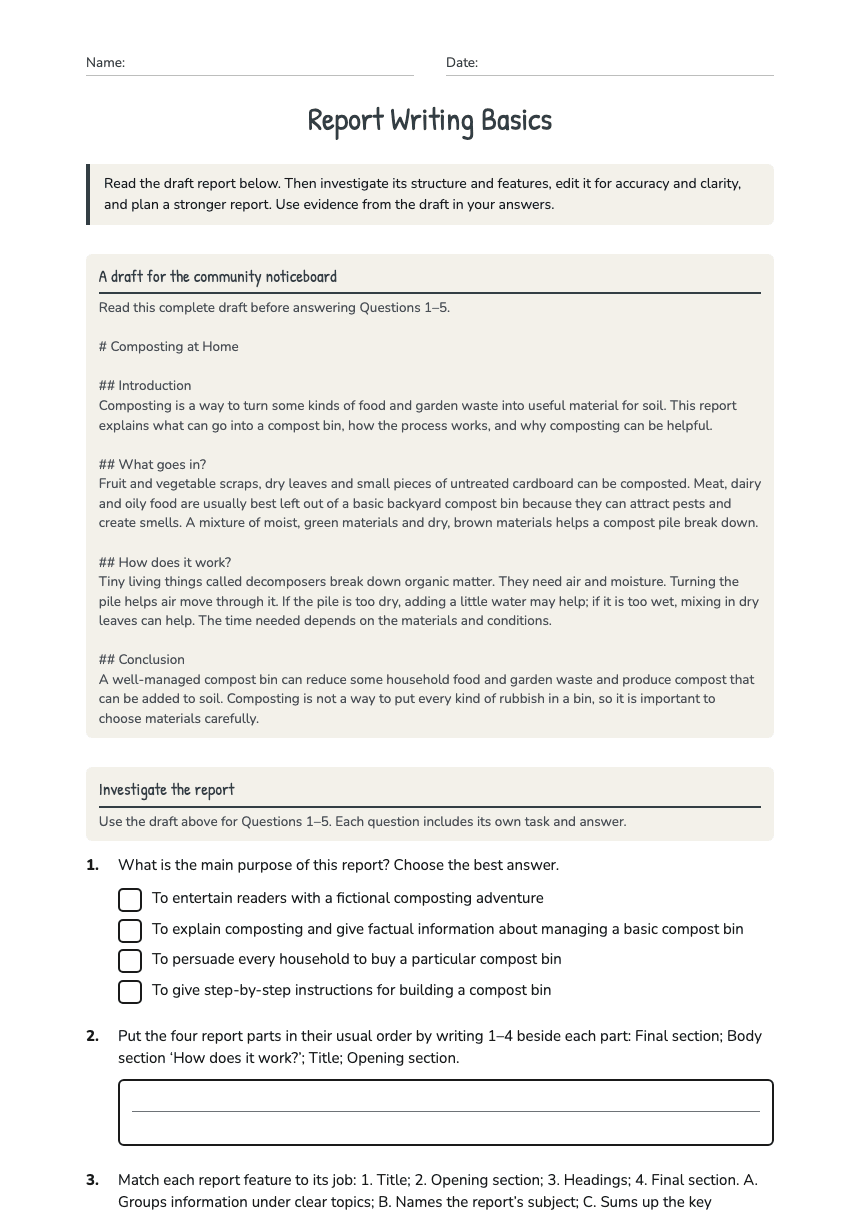
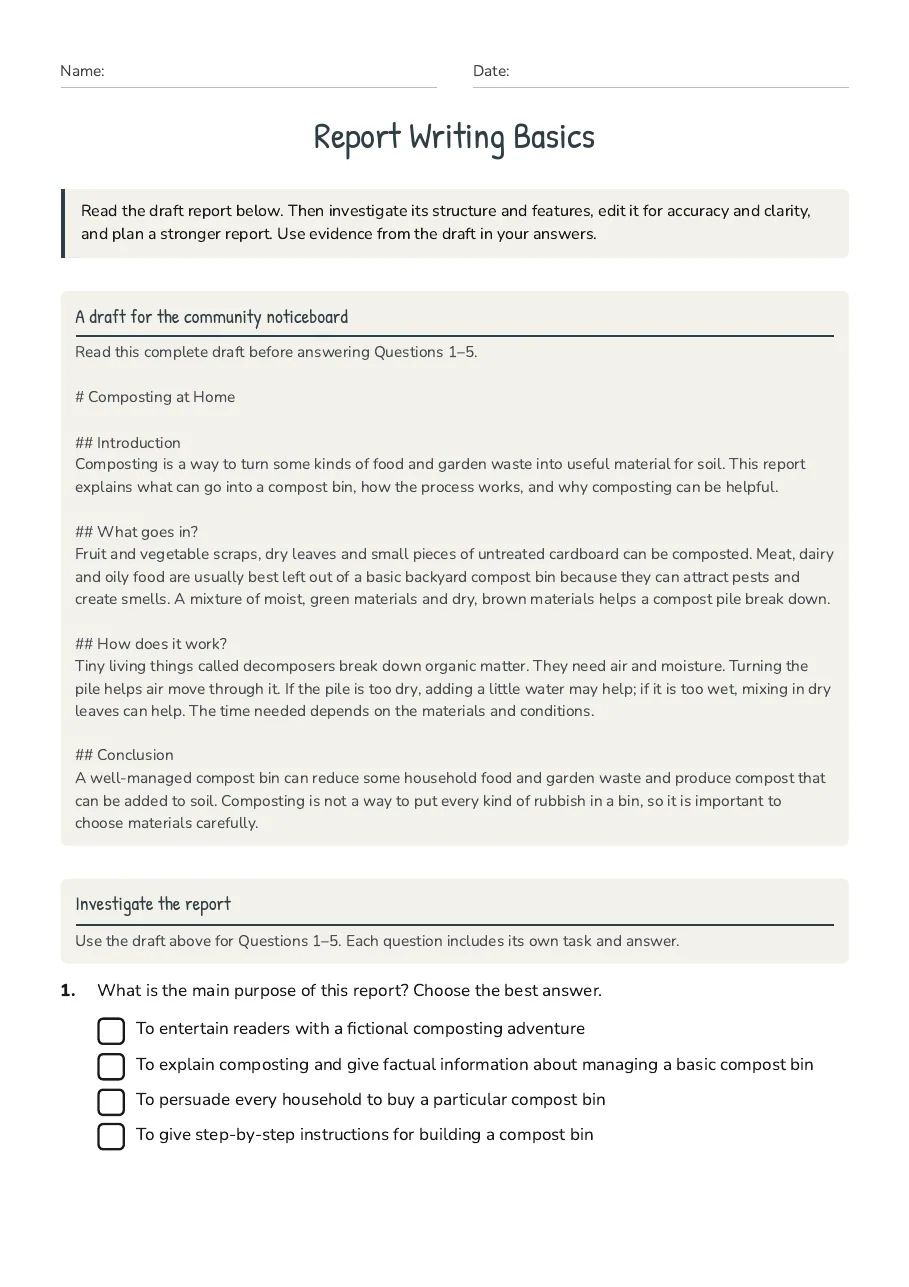
A draft for the community noticeboard
Read this complete draft before answering Questions 1–5. # Composting at Home ## Introduction Composting is a way to turn some kinds of food and garden waste into useful material for soil. This report explains what can go into a compost bin, how the process works, and why composting can be helpful. ## What goes in? Fruit and vegetable scraps, dry leaves and small pieces of untreated cardboard can be composted. Meat, dairy and oily food are usually best left out of a basic backyard compost bin because they can attract pests and create smells. A mixture of moist, green materials and dry, brown materials helps a compost pile break down. ## How does it work? Tiny living things called decomposers break down organic matter. They need air and moisture. Turning the pile helps air move through it. If the pile is too dry, adding a little water may help; if it is too wet, mixing in dry leaves can help. The time needed depends on the materials and conditions. ## Conclusion A well-managed compost bin can reduce some household food and garden waste and produce compost that can be added to soil. Composting is not a way to put every kind of rubbish in a bin, so it is important to choose materials carefully.
Investigate the report
Use the draft above for Questions 1–5. Each question includes its own task and answer.
- To entertain readers with a fictional composting adventure
- To explain composting and give factual information about managing a basic compost bin
- To persuade every household to buy a particular compost bin
- To give step-by-step instructions for building a compost bin
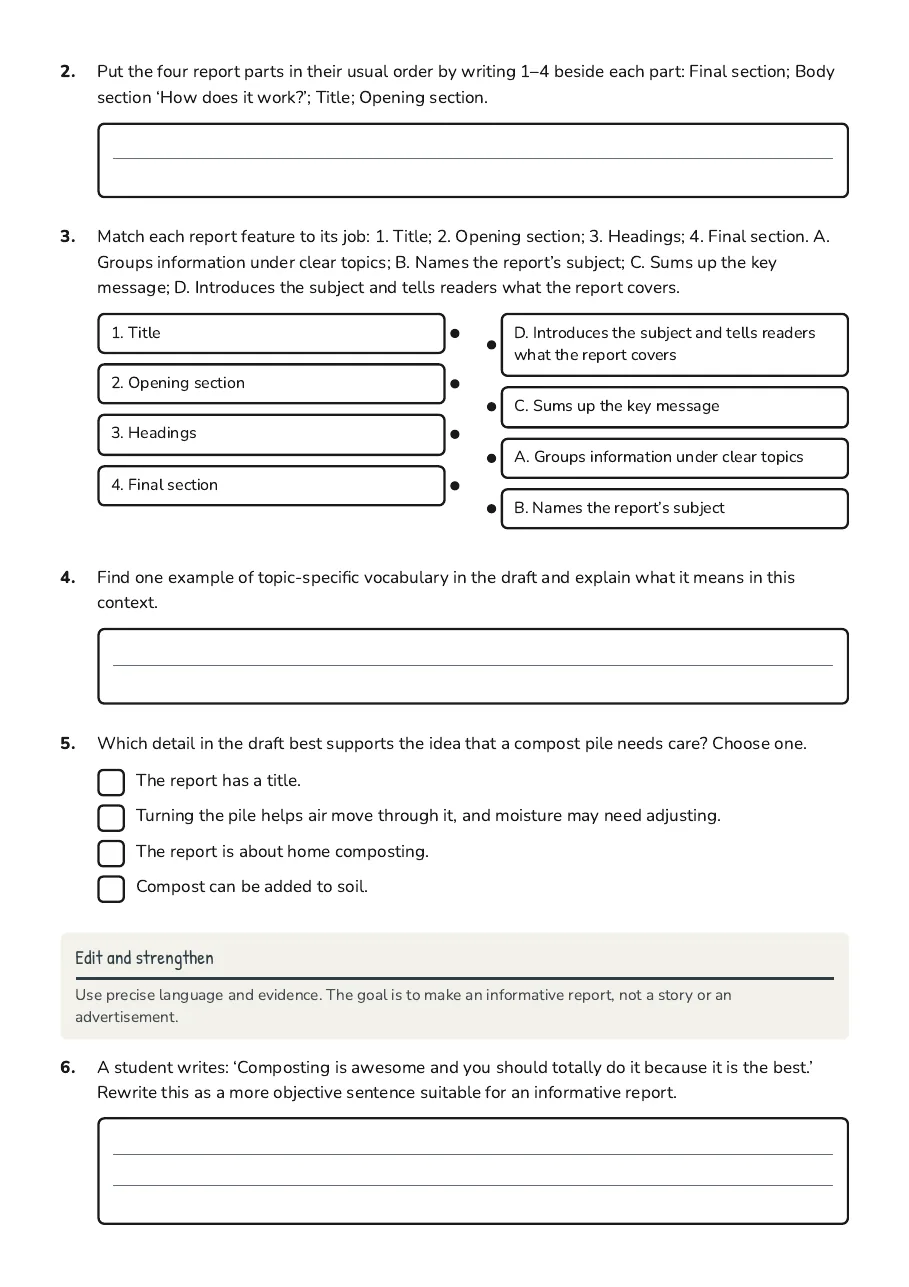
- 1. Title
- 2. Opening section
- 3. Headings
- 4. Final section
- D. Introduces the subject and tells readers what the report covers
- C. Sums up the key message
- A. Groups information under clear topics
- B. Names the report’s subject
- The report has a title.
- Turning the pile helps air move through it, and moisture may need adjusting.
- The report is about home composting.
- Compost can be added to soil.
Edit and strengthen
Use precise language and evidence. The goal is to make an informative report, not a story or an advertisement.
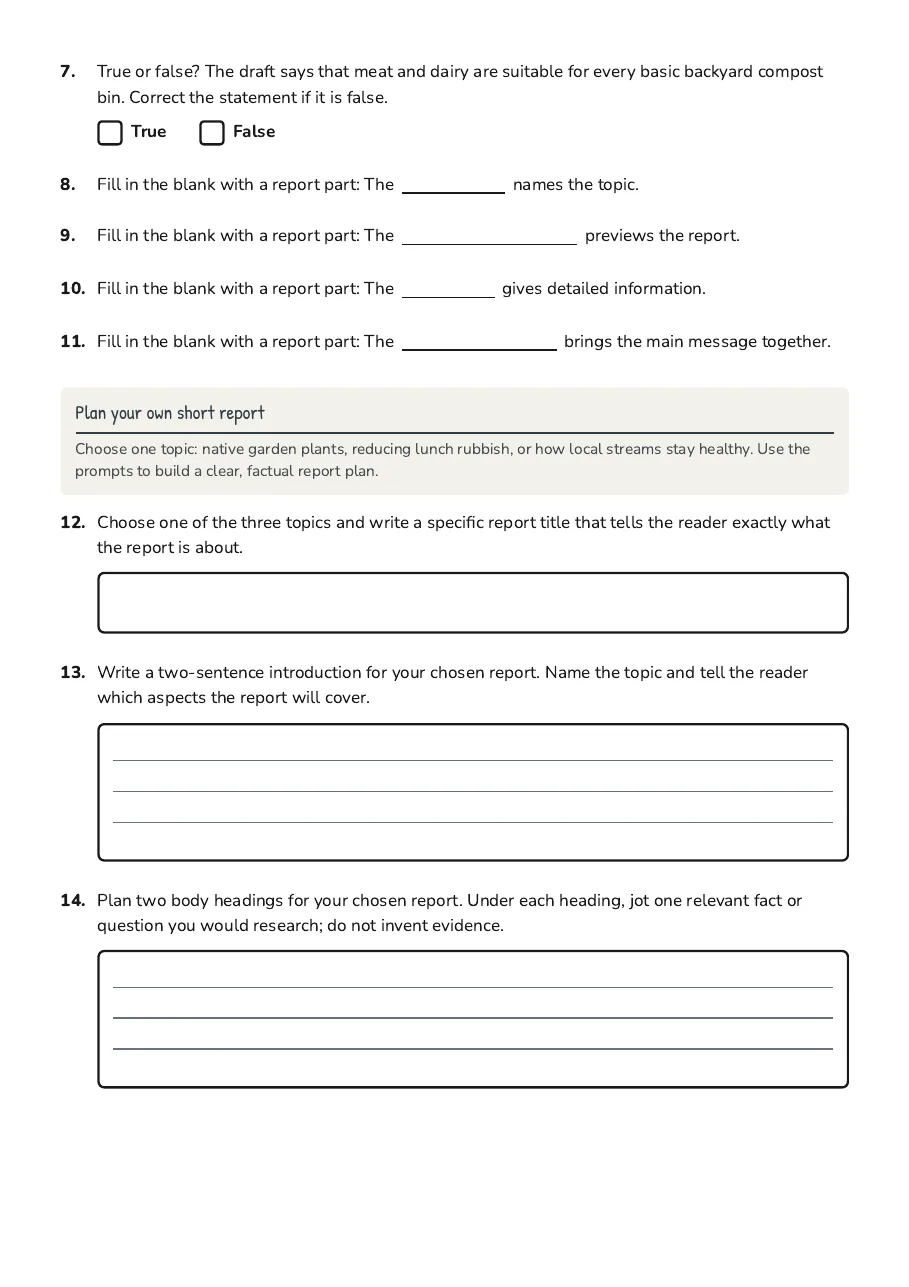
Plan your own short report
Choose one topic: native garden plants, reducing lunch rubbish, or how local streams stay healthy. Use the prompts to build a clear, factual report plan.
4 printable pages
Page 1
Page 2
Page 3
Page 4
About This Worksheet
Free in Kuraplan
Sign up free, grab the PDF, and customize it for your class.
Print-Ready
Formatted for standard paper. Clean layout, easy to read.
AI-Generated
Created with Kuraplan's AI, designed for real classroom use.
For Teachers & Parents
Use in classrooms, for homework, tutoring, or homeschool.
Need a custom version of this worksheet?
Kuraplan's AI generates custom worksheets in seconds — differentiated for every learner, aligned to your curriculum.
Generate Custom Worksheets — FreeMore English Worksheets
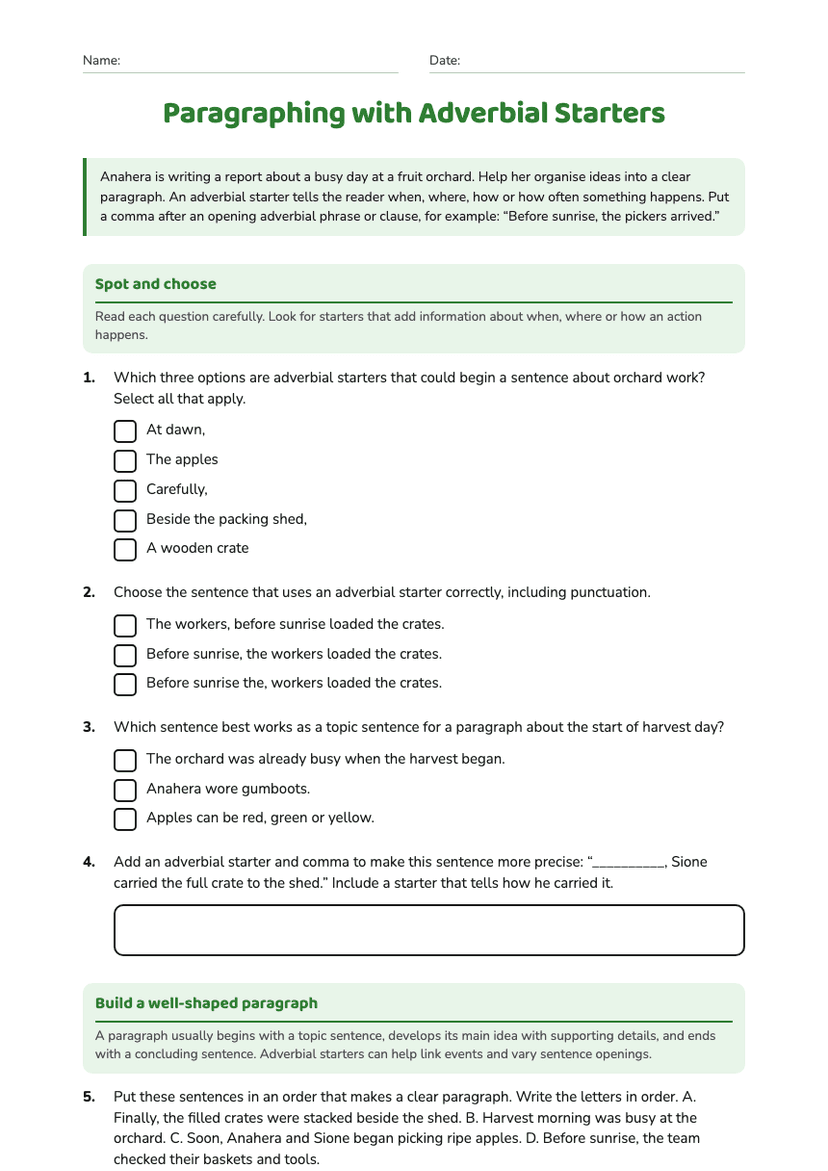
Paragraphing with Adverbial Starters
Free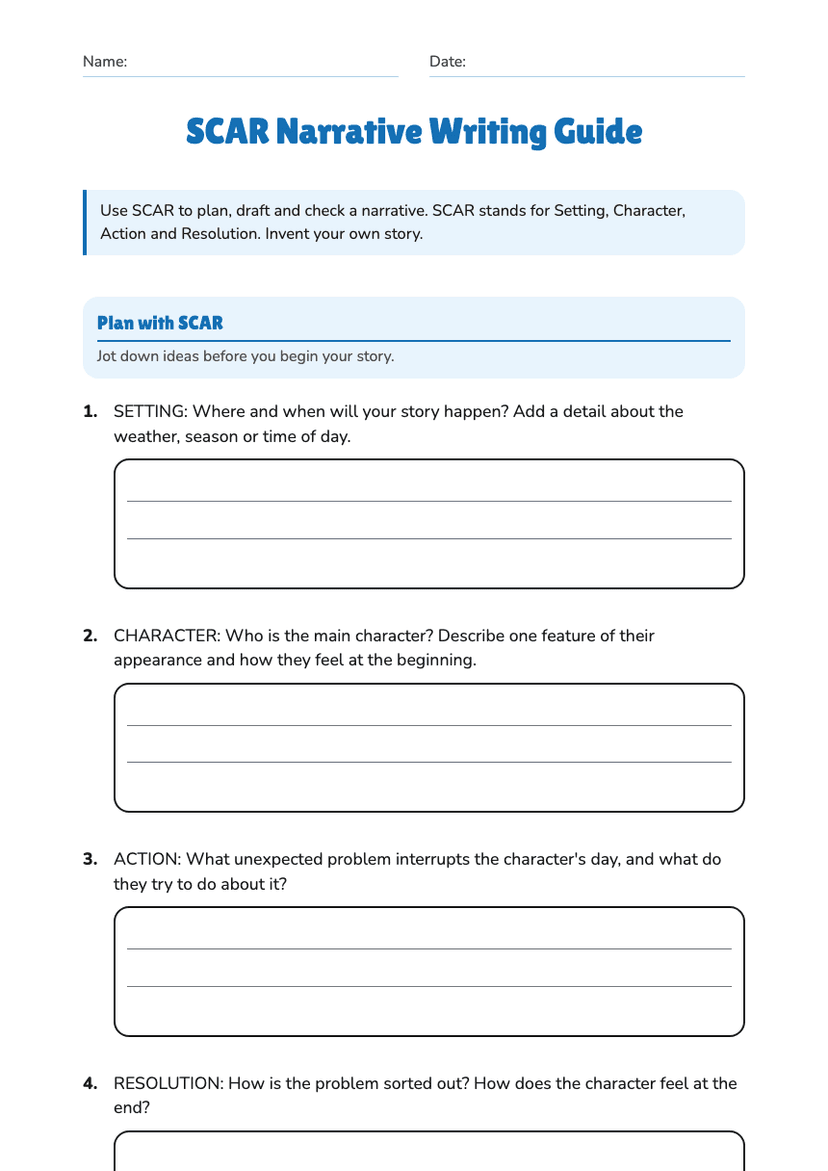
SCAR Narrative Writing Guide
Free
Year 12 Writing Scaffolds
Free
Dunkirk Essay Analysis Worksheet
Free
Persuasive Writing Planning Workshop
Free
Curious Essay Explorers Introduction
Free
Special Moment Recount Writing
Free