Static Electricity Observation Sheet
A free science worksheet ready for your classroom. Open in Kuraplan to grab the print-ready PDF, customize it for your students, or generate a fresh version in seconds.
Static Electricity Observation Sheet
Before you test
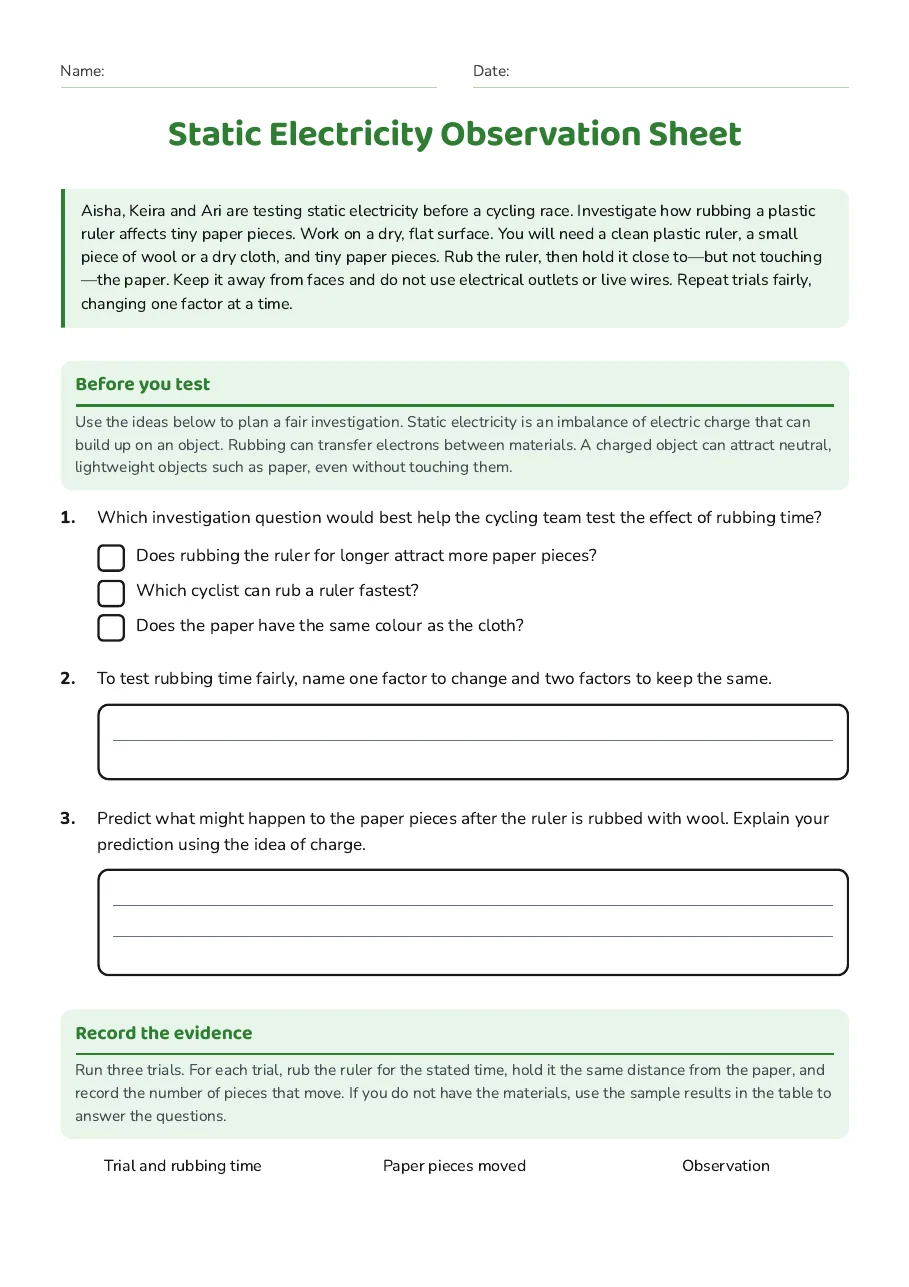
Use the ideas below to plan a fair investigation. Static electricity is an imbalance of electric charge that can build up on an object. Rubbing can transfer electrons between materials. A charged object can attract neutral, lightweight objects such as paper, even without touching them.
- Does rubbing the ruler for longer attract more paper pieces?
- Which cyclist can rub a ruler fastest?
- Does the paper have the same colour as the cloth?
Record the evidence
Run three trials. For each trial, rub the ruler for the stated time, hold it the same distance from the paper, and record the number of pieces that move. If you do not have the materials, use the sample results in the table to answer the questions.
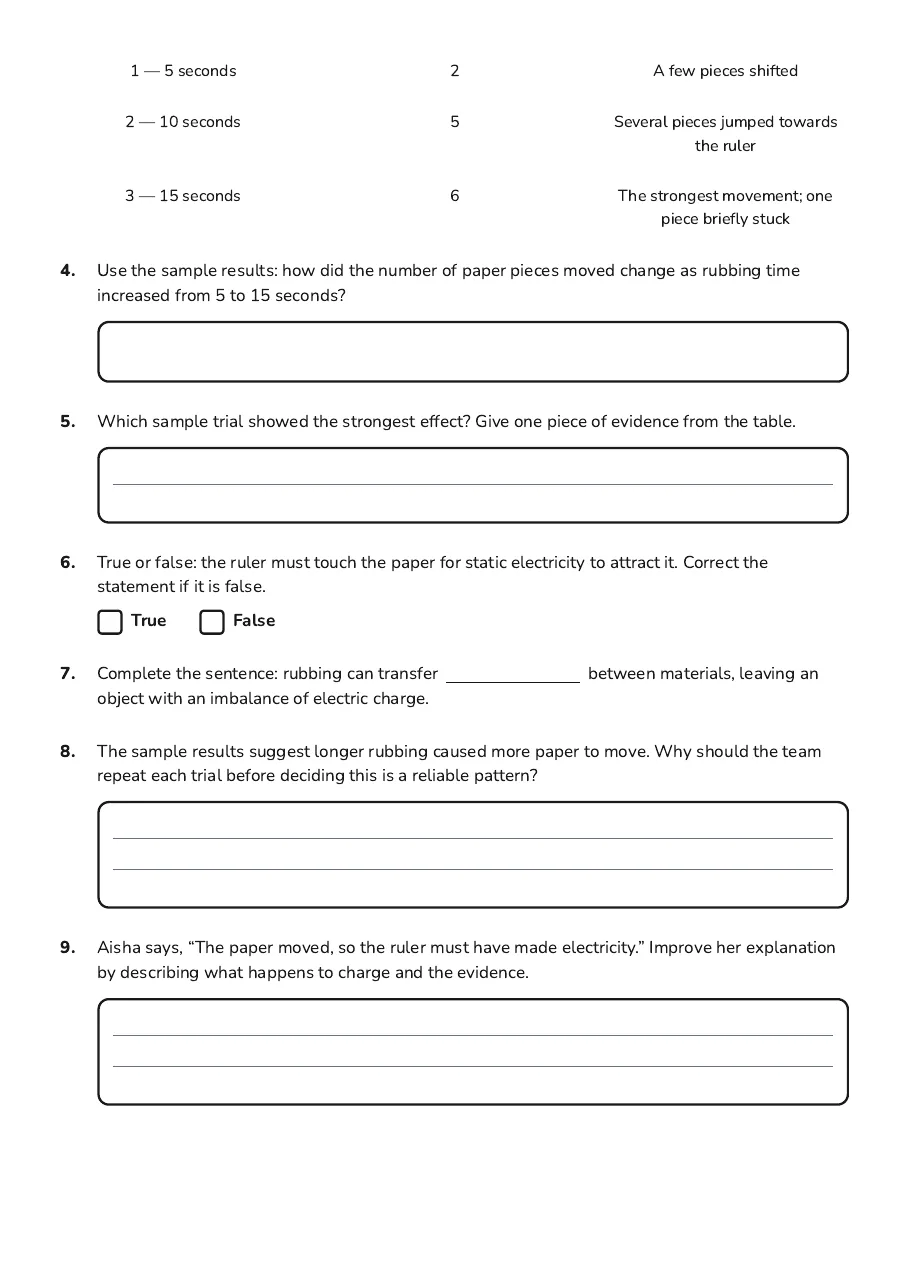
Trial and rubbing time
Paper pieces moved
Observation
1 — 5 seconds
2
A few pieces shifted
2 — 10 seconds
5
Several pieces jumped towards the ruler
3 — 15 seconds
6
The strongest movement; one piece briefly stuck
2 printable pages
Page 1
Page 2
About This Worksheet
Free in Kuraplan
Sign up free, grab the PDF, and customize it for your class.
Print-Ready
Formatted for standard paper. Clean layout, easy to read.
AI-Generated
Created with Kuraplan's AI, designed for real classroom use.
For Teachers & Parents
Use in classrooms, for homework, tutoring, or homeschool.
Need a custom version of this worksheet?
Kuraplan's AI generates custom worksheets in seconds — differentiated for every learner, aligned to your curriculum.
Generate Custom Worksheets — FreeMore Science Worksheets
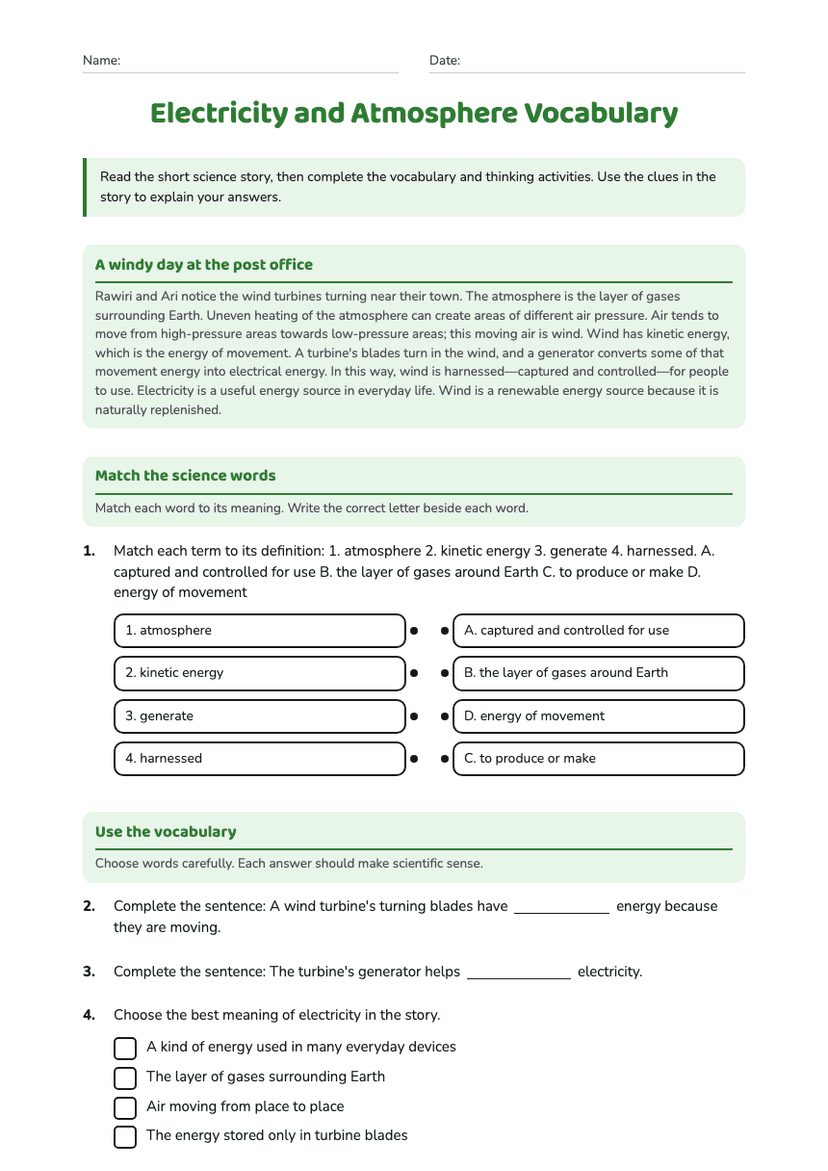
Electricity and Atmosphere Vocabulary
Free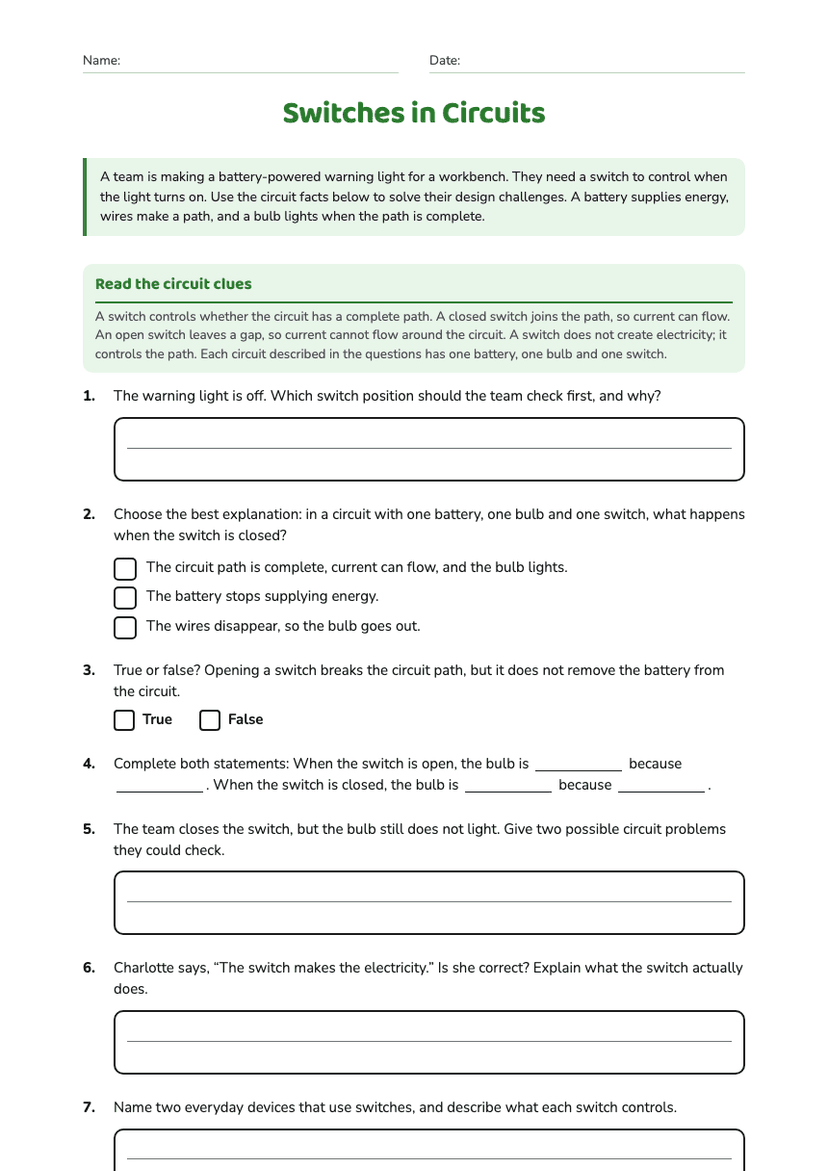
Switches in Circuits
Free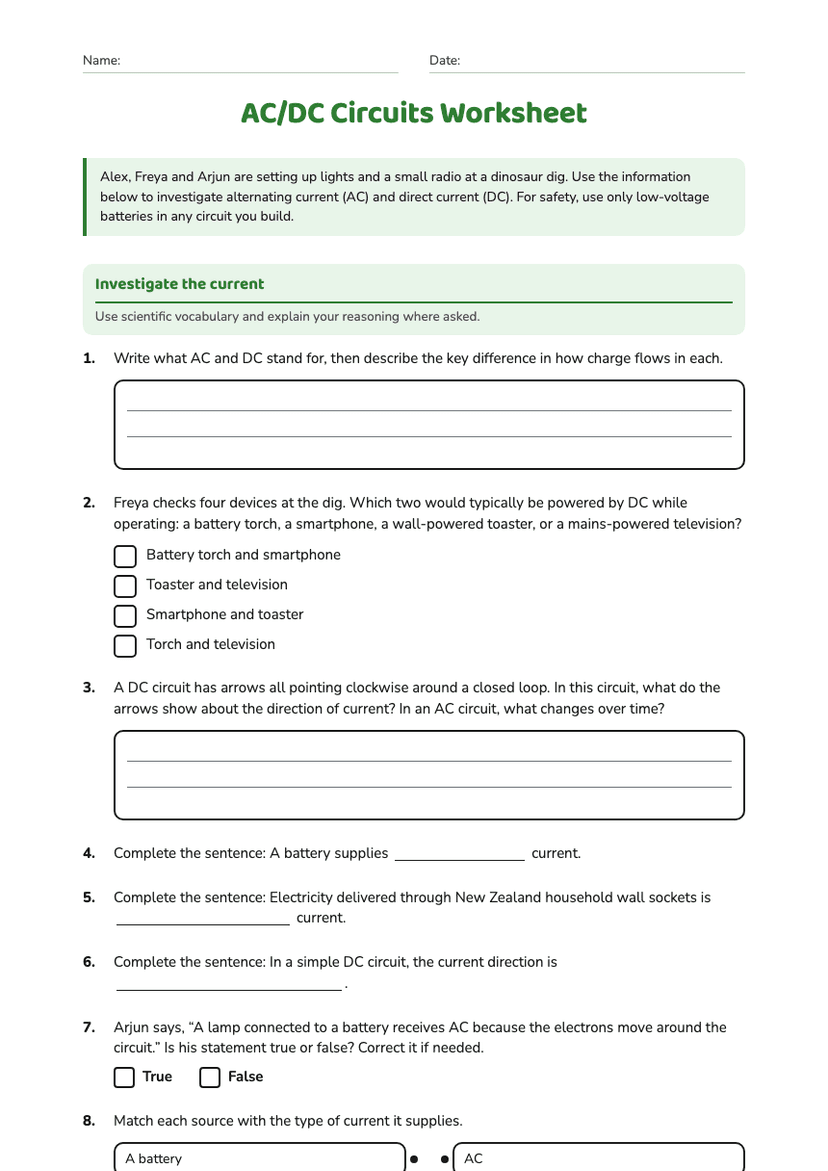
AC/DC Circuits Worksheet
Free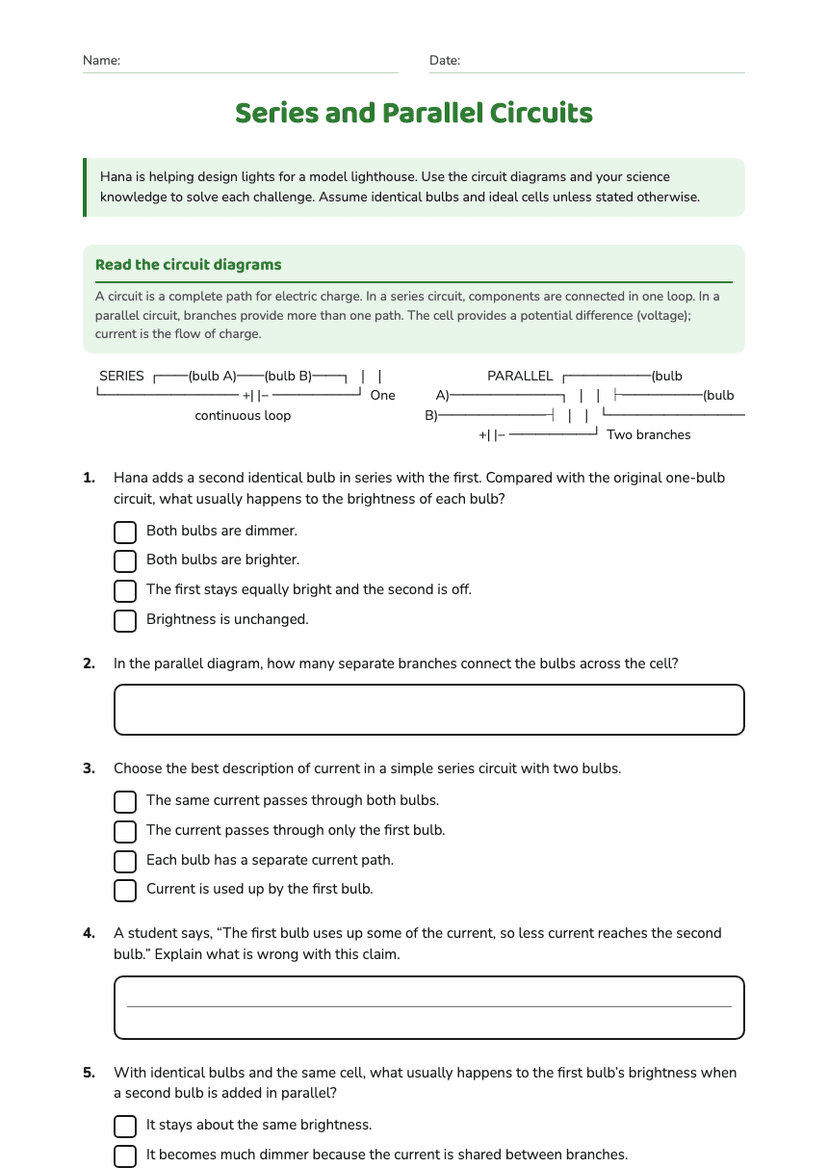
Series and Parallel Circuits
Free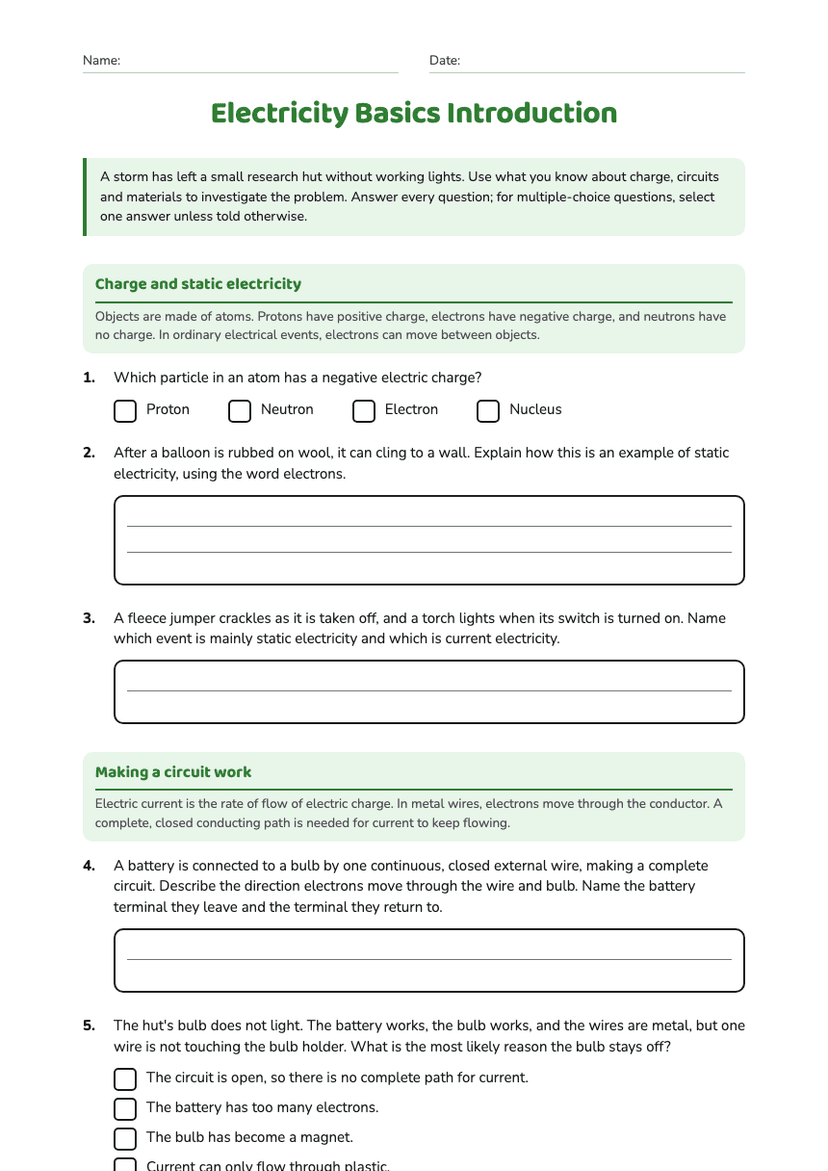
Electricity Basics Introduction
Free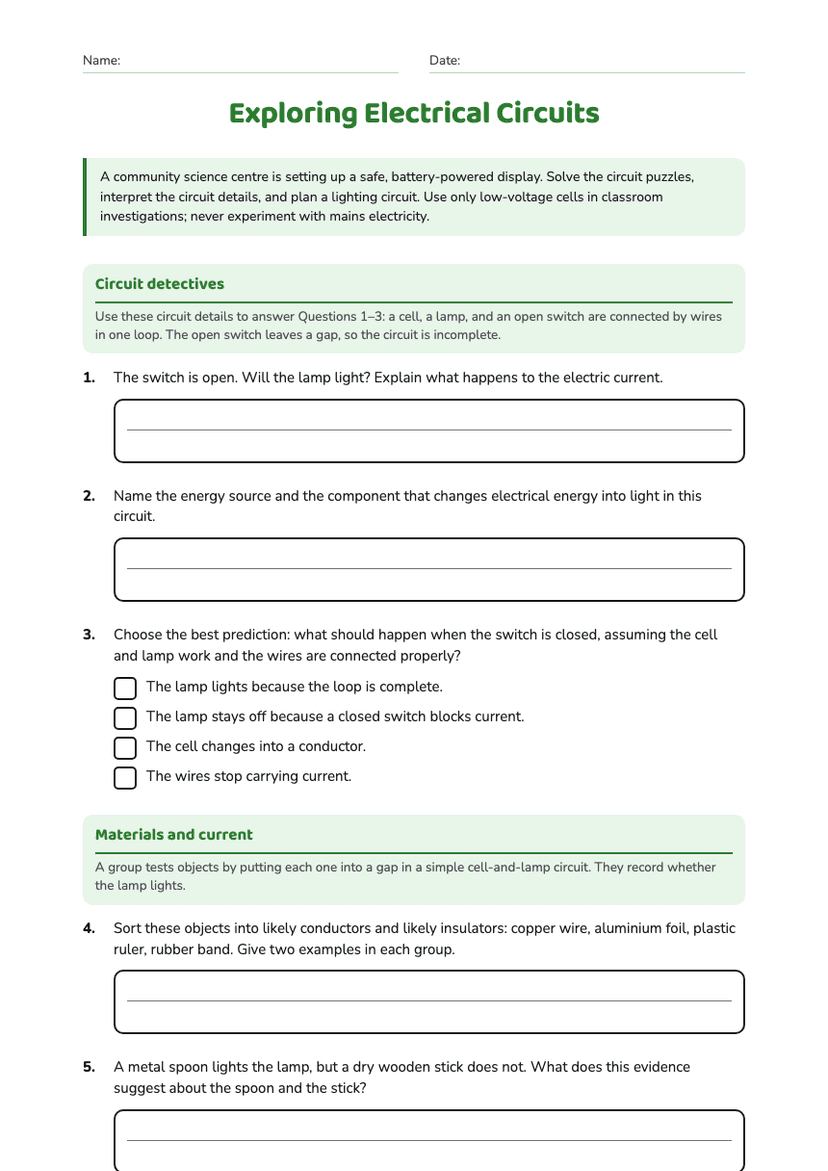
Exploring Electrical Circuits
Free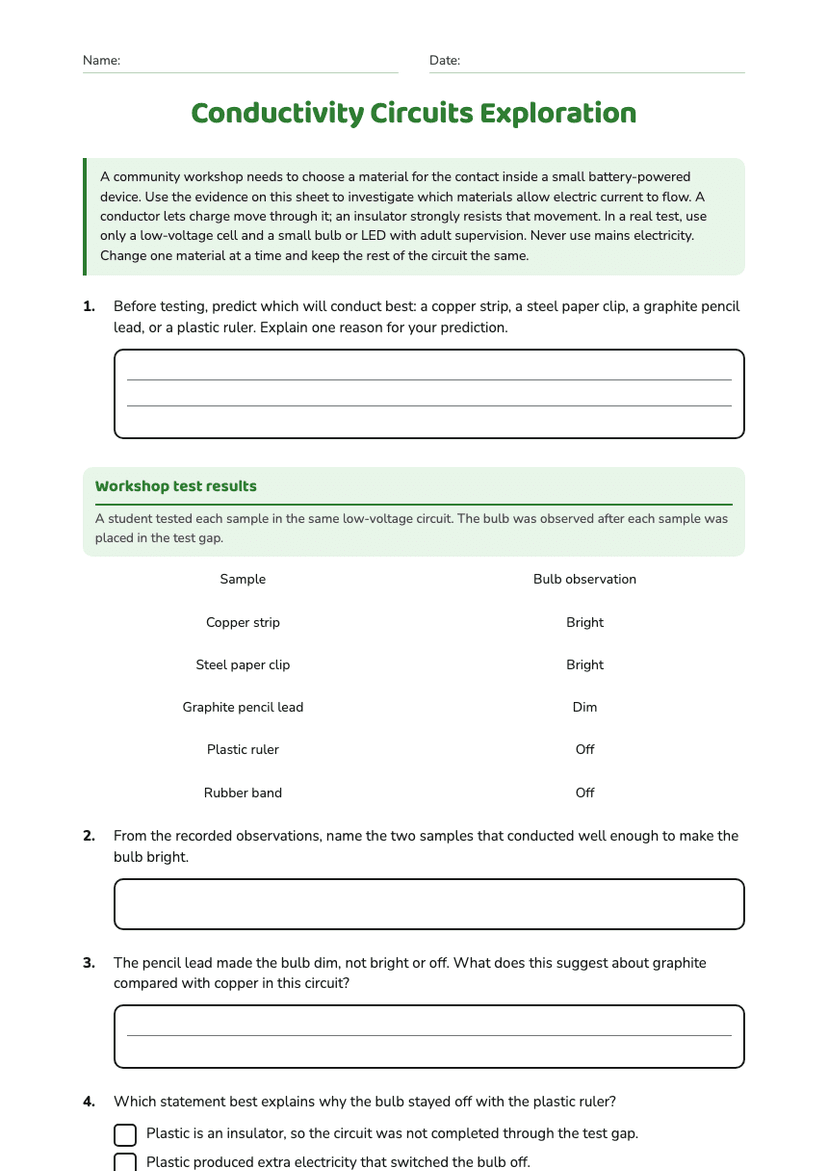
Conductivity Circuits Exploration
Free