Electricity Basics Introduction
A free science worksheet ready for your classroom. Open in Kuraplan to grab the print-ready PDF, customize it for your students, or generate a fresh version in seconds.
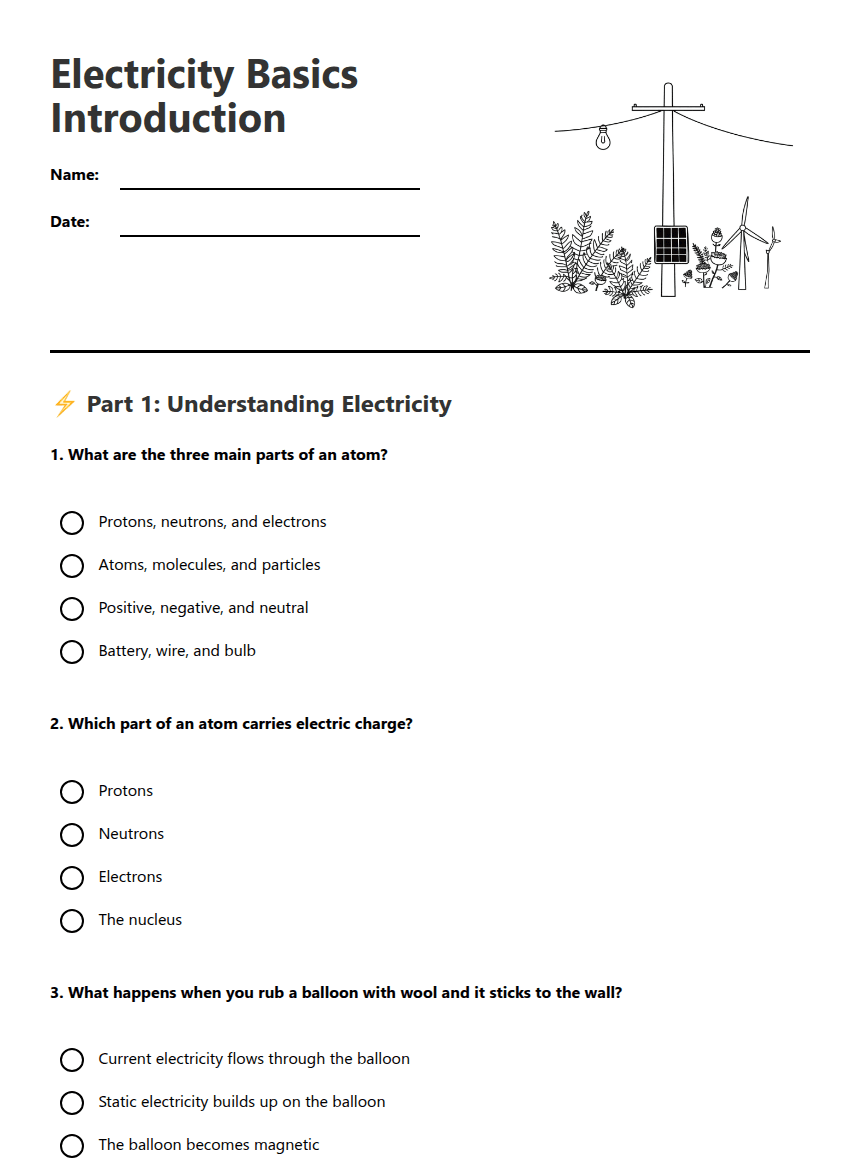
Electricity Basics Introduction
⚡ Part 1: Understanding Electricity
🔍 Part 2: Comparing Types of Electricity
a) _____________ electricity happens when electrons move from one object to another but stay put.
b) _____________ electricity is when electrons _____________ continuously through a conductor.
c) Both types of electricity involve the movement of _____________.
Static electricity example: _________________________________
Current electricity example: _________________________________
💡 Part 3: Apply Your Knowledge
Hint: Think about which way the electrons need to move to complete the circuit.
About This Worksheet
Free in Kuraplan
Sign up free, grab the PDF, and customize it for your class.
Print-Ready
Formatted for standard paper. Clean layout, easy to read.
AI-Generated
Created with Kuraplan's AI, designed for real classroom use.
For Teachers & Parents
Use in classrooms, for homework, tutoring, or homeschool.
Need a custom version of this worksheet?
Kuraplan's AI generates custom worksheets in seconds — differentiated for every learner, aligned to your curriculum.
Generate Custom Worksheets — FreeMore Science Worksheets
Static Electricity Experiment Worksheet
Free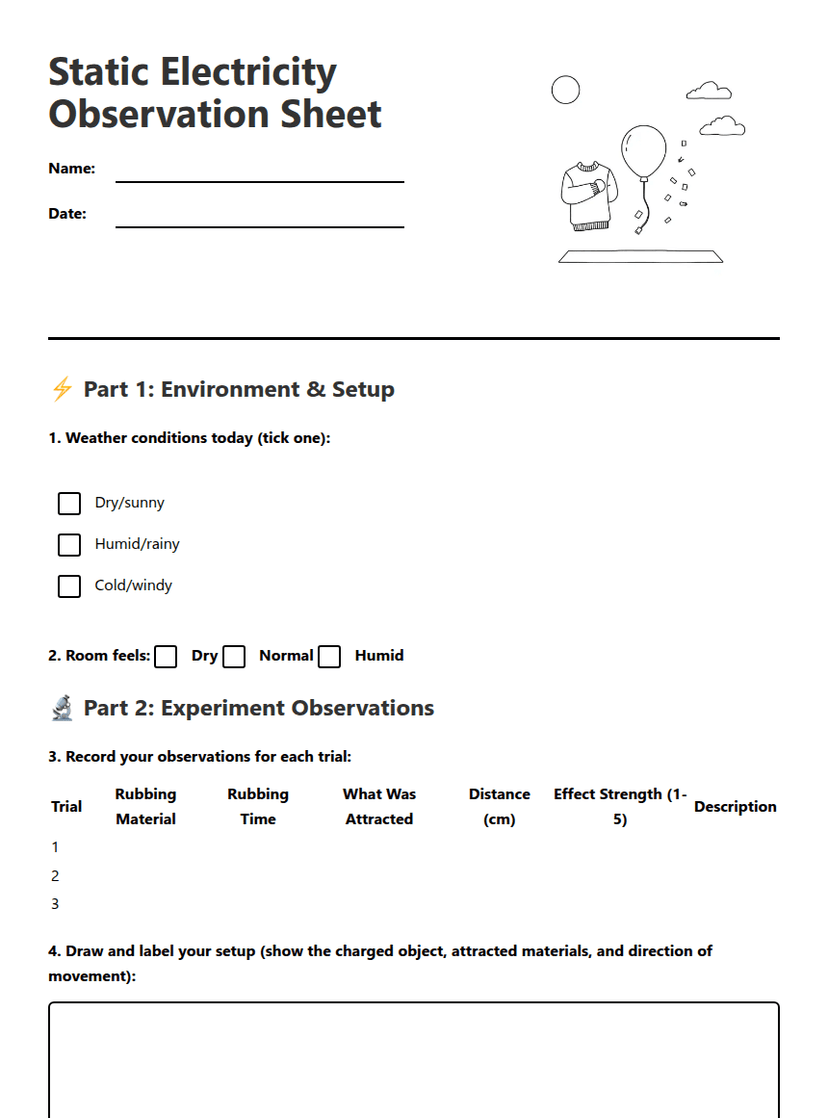
Static Electricity Observation Sheet
Free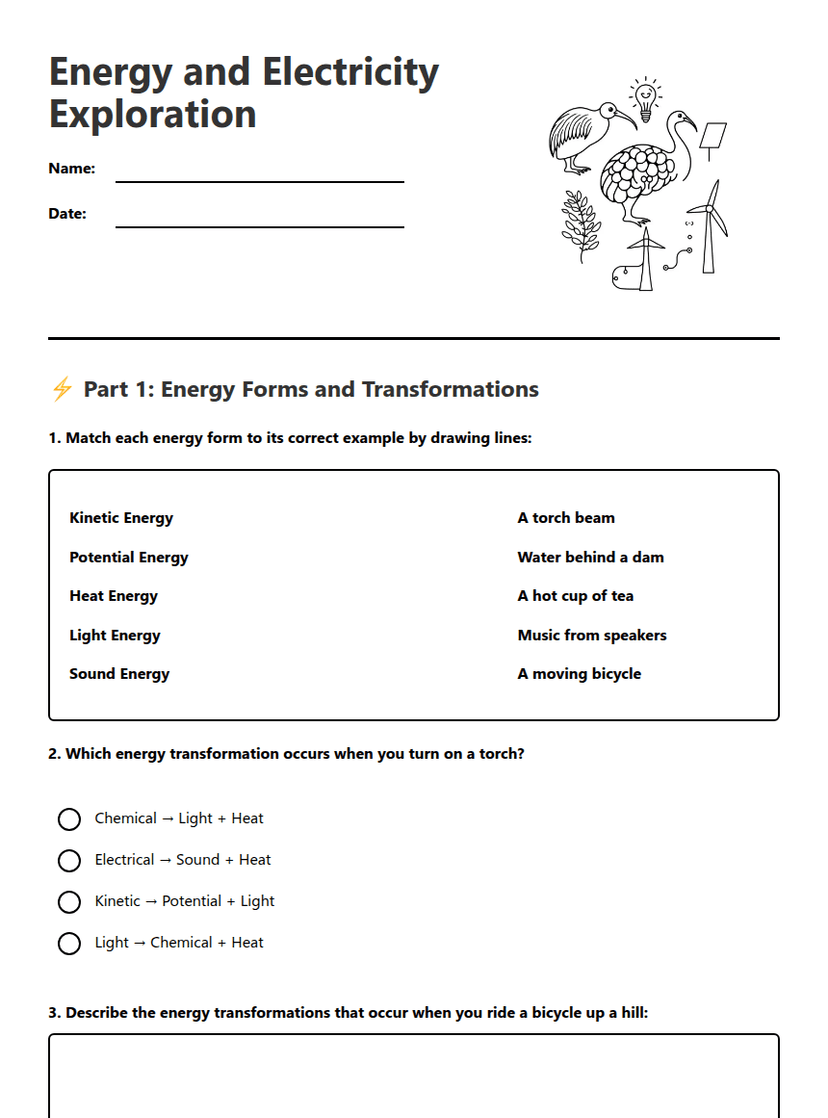
Energy and Electricity Exploration
Free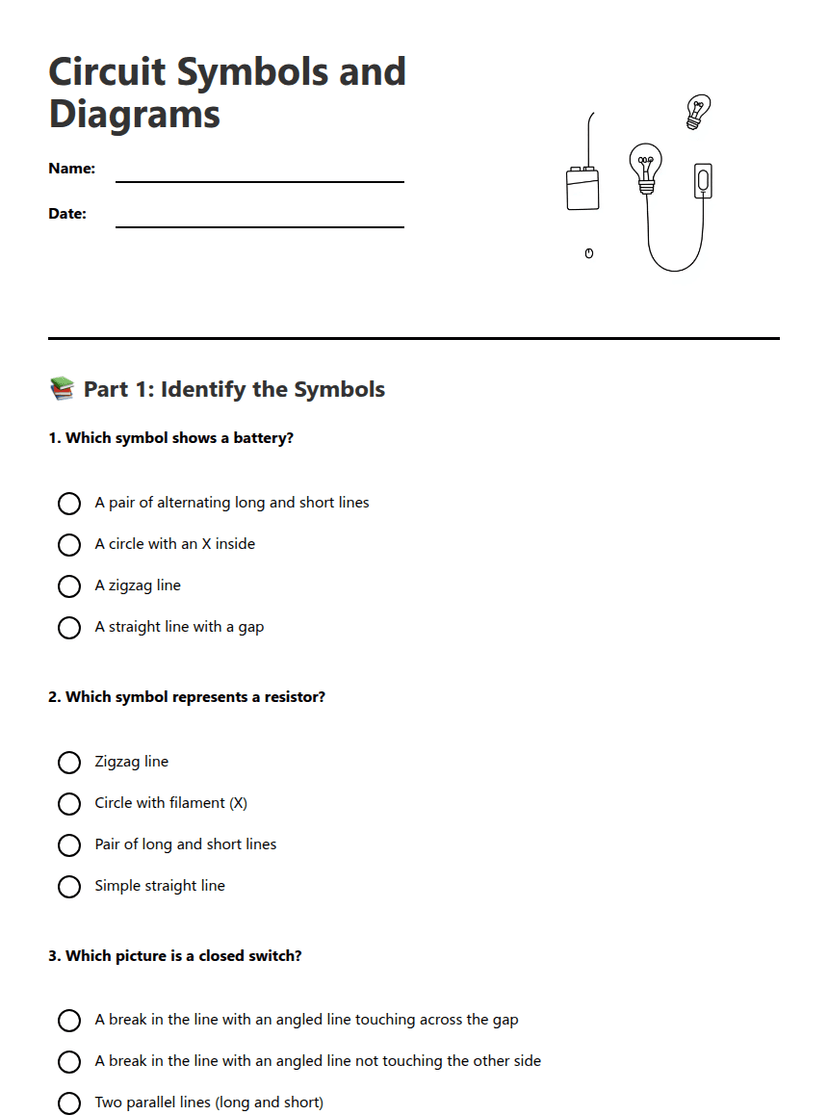
Circuit Symbols and Diagrams
Free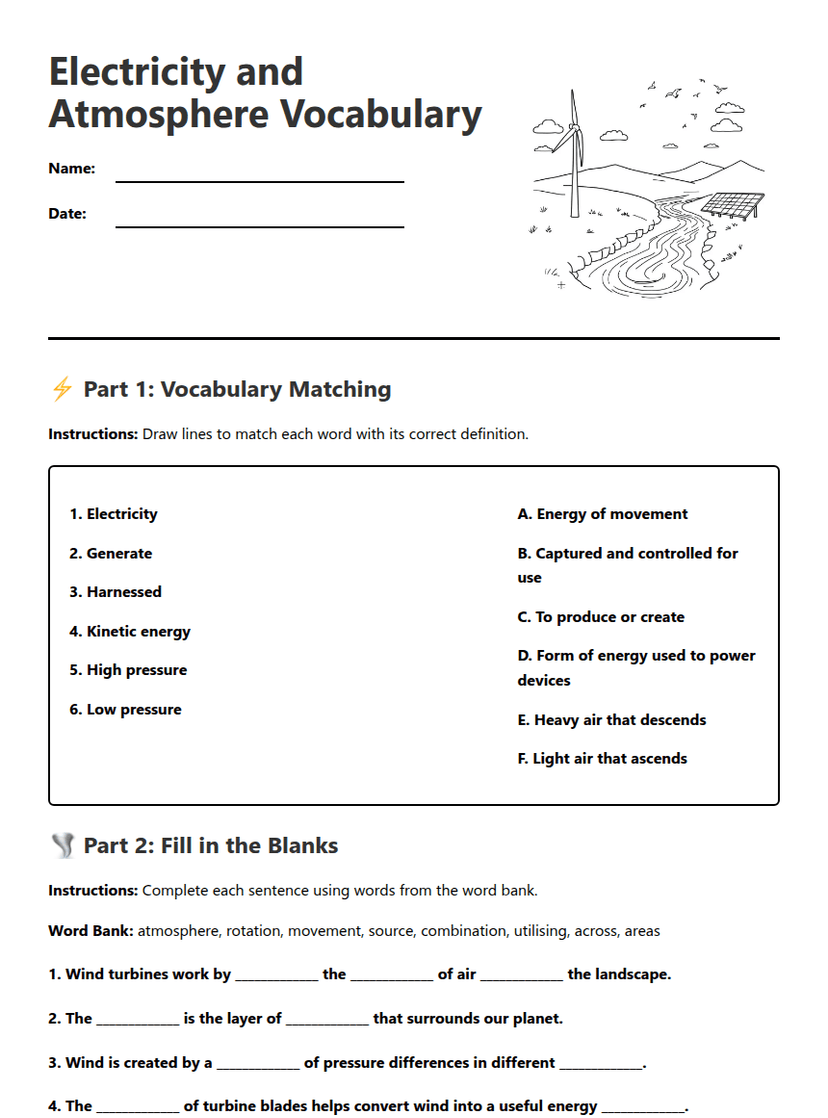
Electricity and Atmosphere Vocabulary
Free
Electricity Revision Worksheet
Free
Series and Parallel Circuits
Free