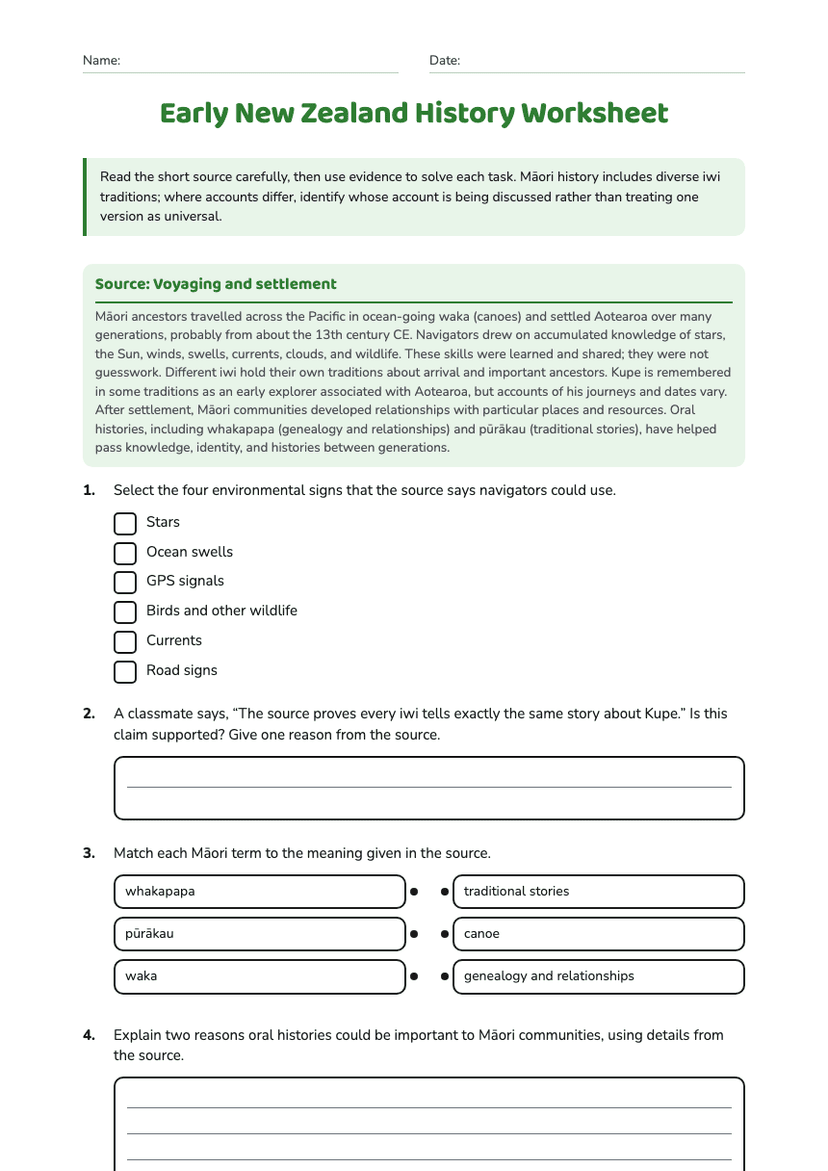
Te Pūrākau Learning Worksheet
A free social sciences worksheet ready for your classroom. Open in Kuraplan to grab the print-ready PDF, customize it for your students, or generate a fresh version in seconds.
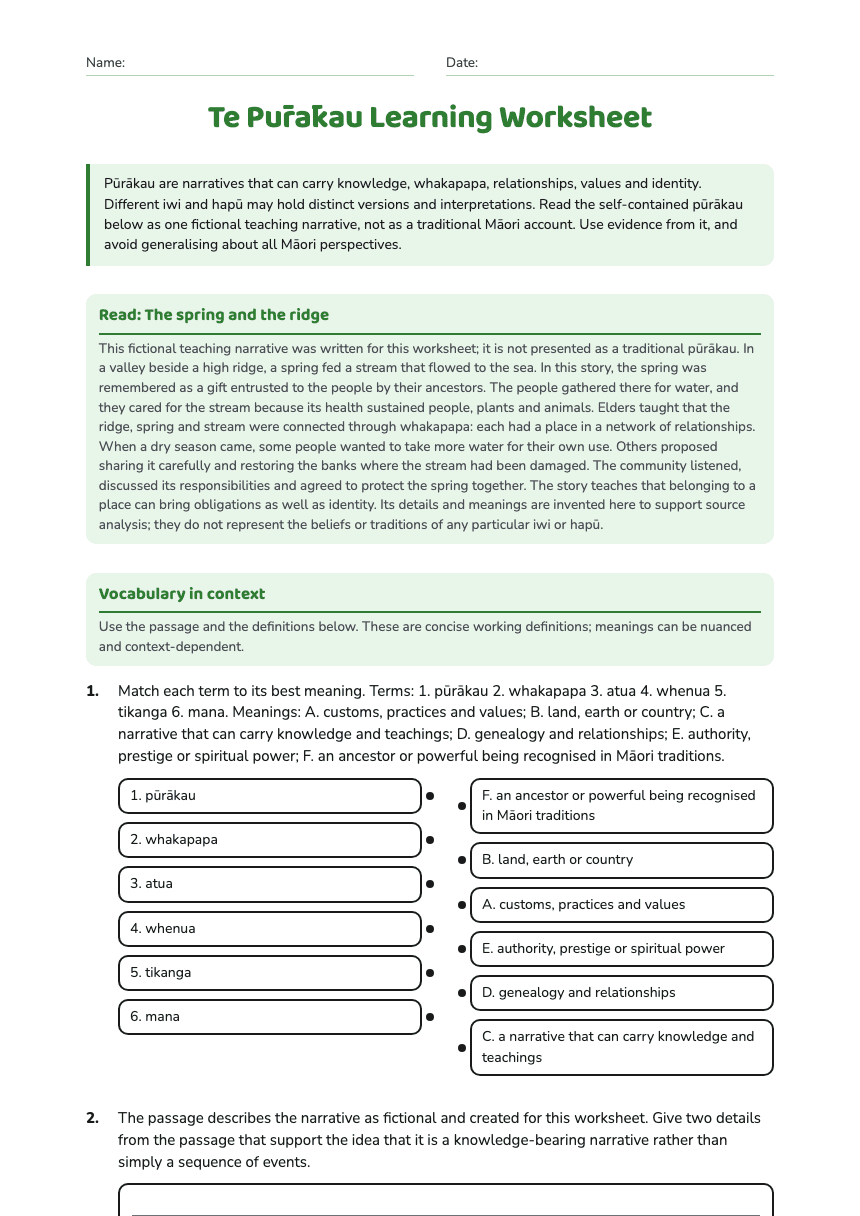
Te Pūrākau Learning Worksheet
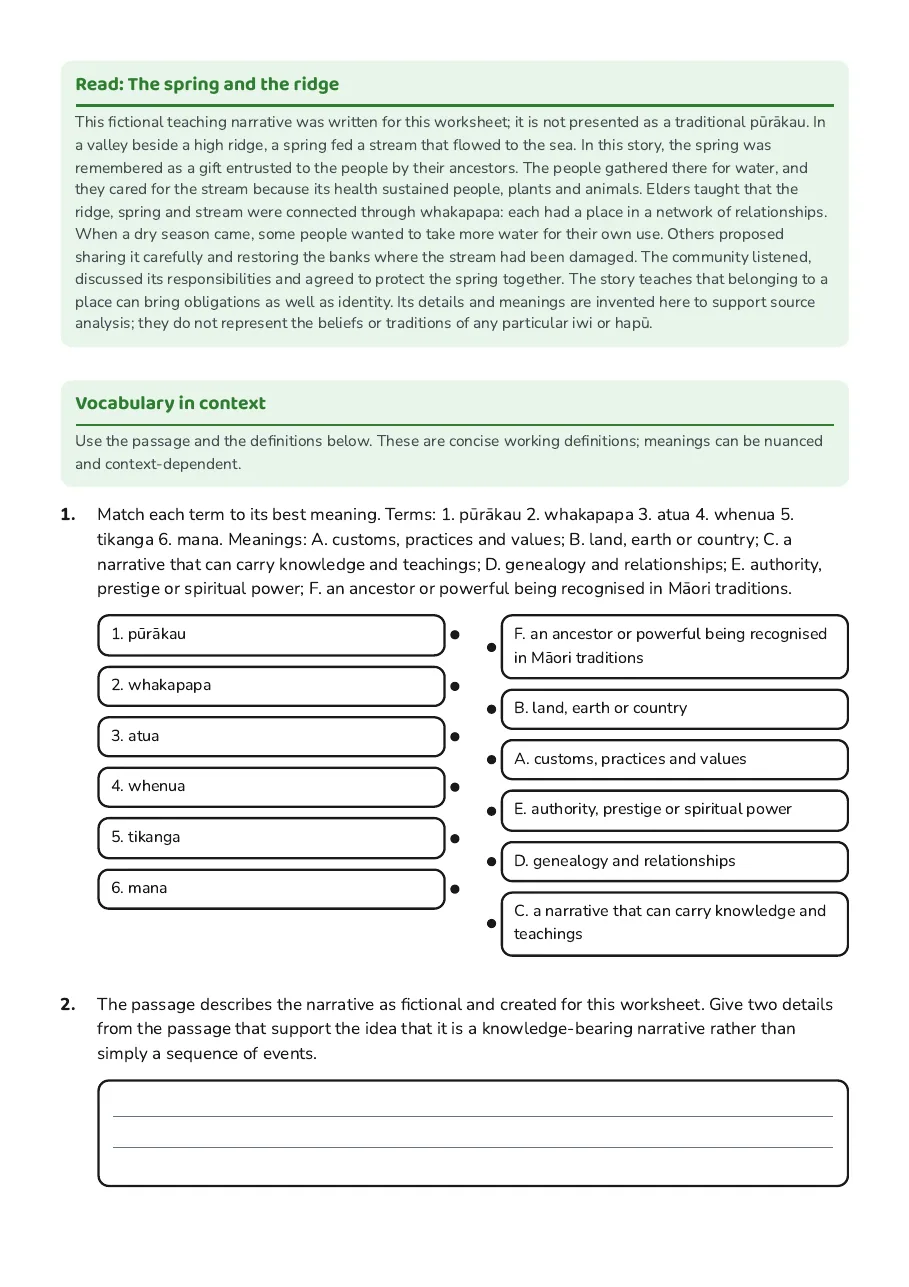
Read: The spring and the ridge
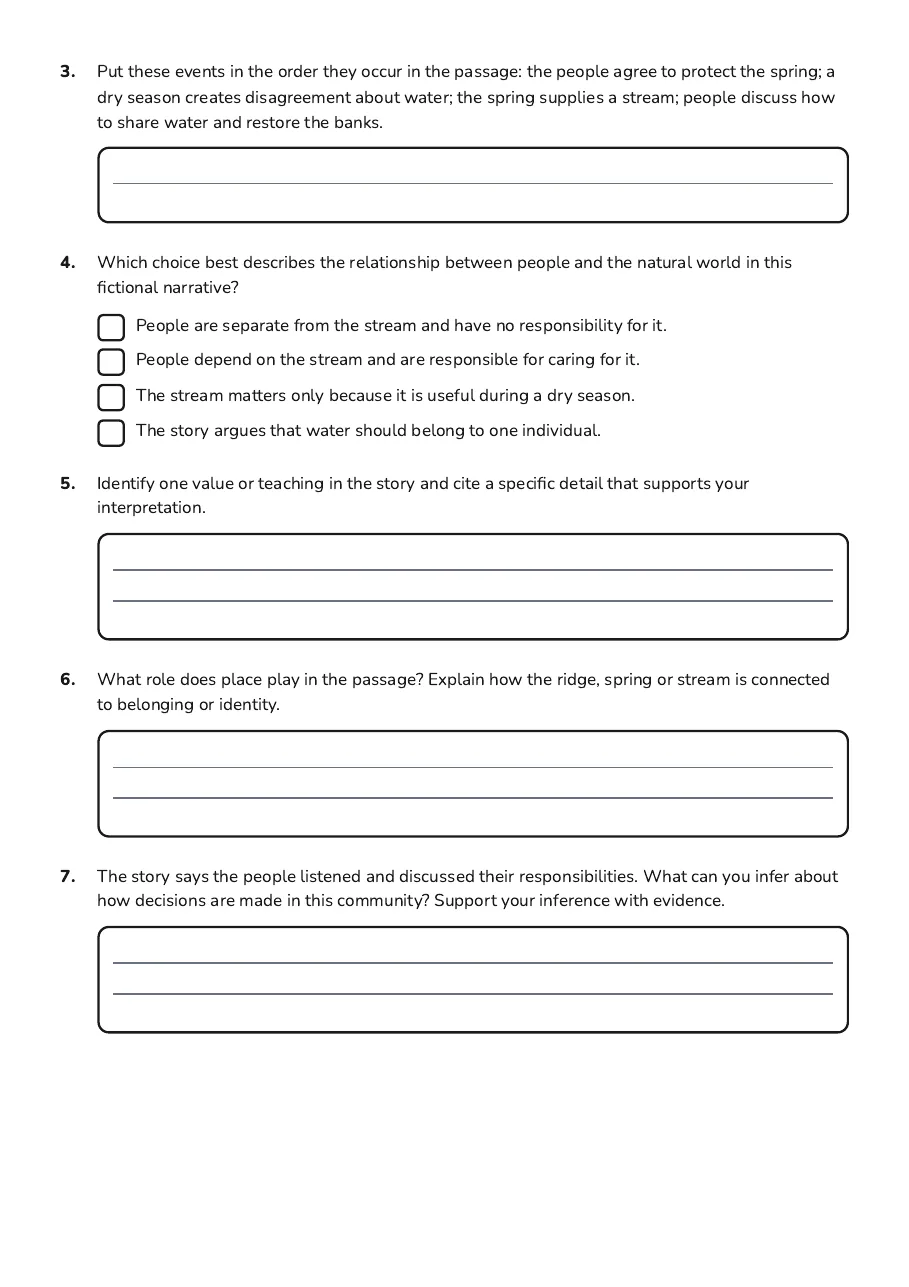
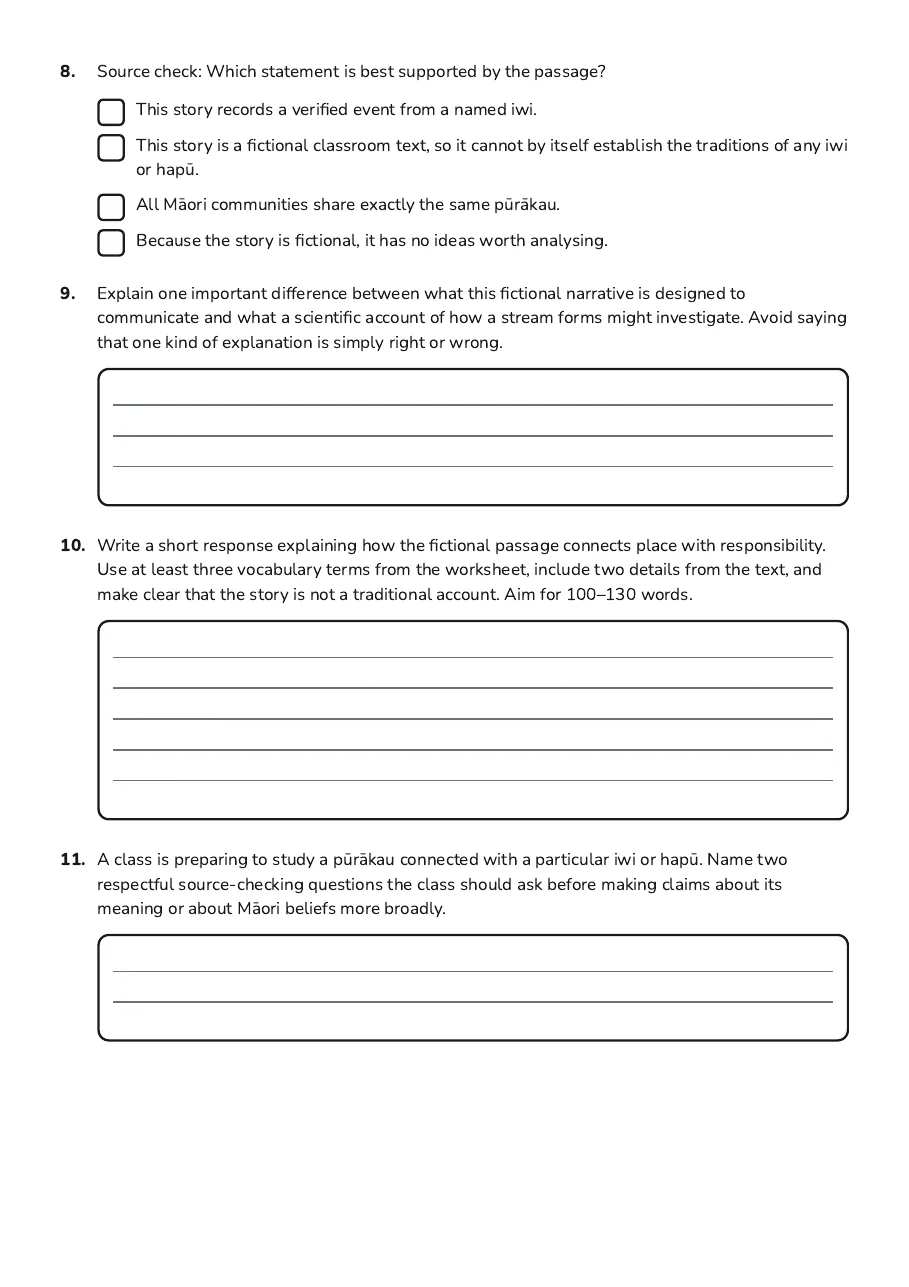
This fictional teaching narrative was written for this worksheet; it is not presented as a traditional pūrākau. In a valley beside a high ridge, a spring fed a stream that flowed to the sea. In this story, the spring was remembered as a gift entrusted to the people by their ancestors. The people gathered there for water, and they cared for the stream because its health sustained people, plants and animals. Elders taught that the ridge, spring and stream were connected through whakapapa: each had a place in a network of relationships. When a dry season came, some people wanted to take more water for their own use. Others proposed sharing it carefully and restoring the banks where the stream had been damaged. The community listened, discussed its responsibilities and agreed to protect the spring together. The story teaches that belonging to a place can bring obligations as well as identity. Its details and meanings are invented here to support source analysis; they do not represent the beliefs or traditions of any particular iwi or hapū.
Vocabulary in context
Use the passage and the definitions below. These are concise working definitions; meanings can be nuanced and context-dependent.
- 1. pūrākau
- 2. whakapapa
- 3. atua
- 4. whenua
- 5. tikanga
- 6. mana
- F. an ancestor or powerful being recognised in Māori traditions
- B. land, earth or country
- A. customs, practices and values
- E. authority, prestige or spiritual power
- D. genealogy and relationships
- C. a narrative that can carry knowledge and teachings
- People are separate from the stream and have no responsibility for it.
- People depend on the stream and are responsible for caring for it.
- The stream matters only because it is useful during a dry season.
- The story argues that water should belong to one individual.
- This story records a verified event from a named iwi.
- This story is a fictional classroom text, so it cannot by itself establish the traditions of any iwi or hapū.
- All Māori communities share exactly the same pūrākau.
- Because the story is fictional, it has no ideas worth analysing.
4 printable pages
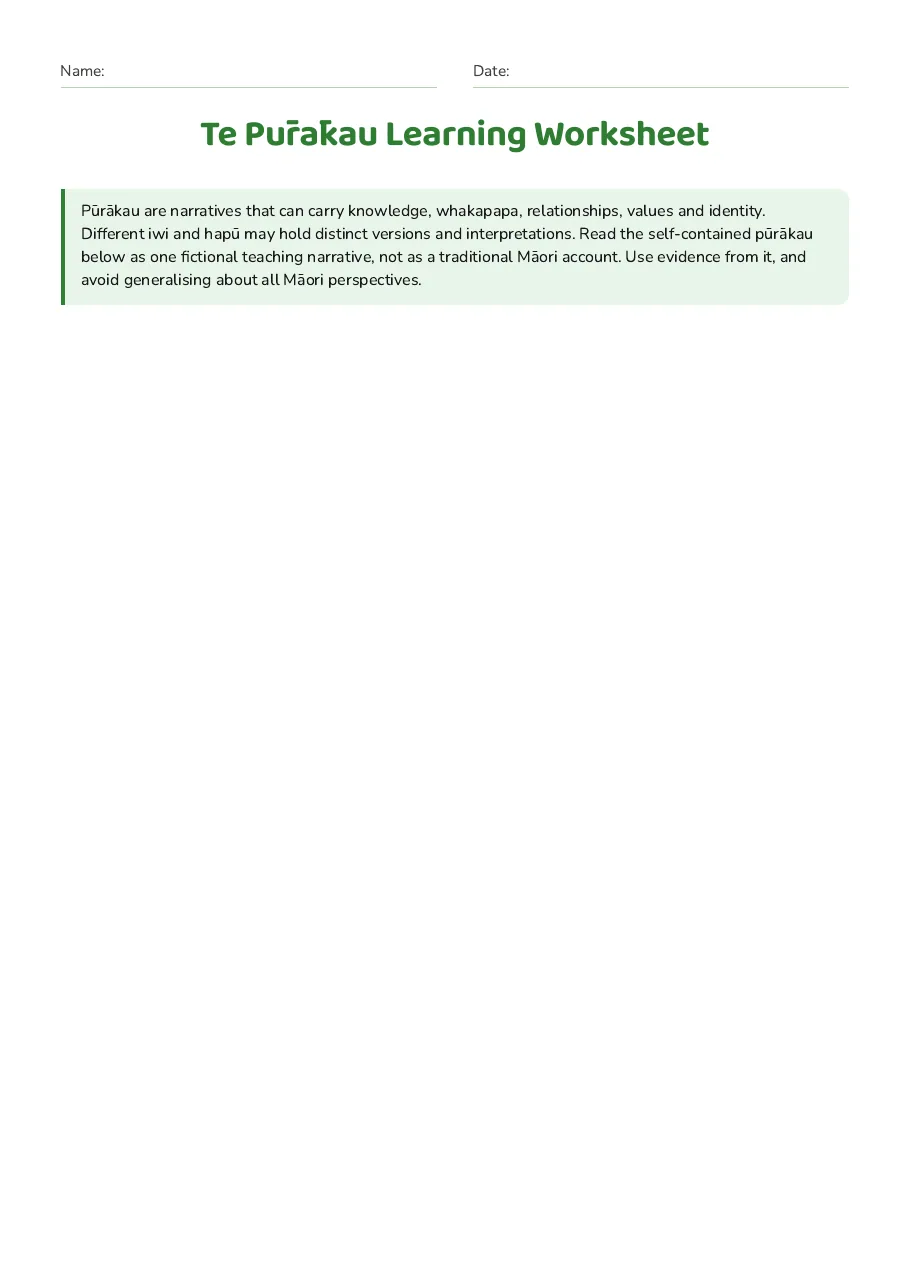
Page 1
Page 2
Page 3
Page 4
About This Worksheet
Free in Kuraplan
Sign up free, grab the PDF, and customize it for your class.
Print-Ready
Formatted for standard paper. Clean layout, easy to read.
AI-Generated
Created with Kuraplan's AI, designed for real classroom use.
For Teachers & Parents
Use in classrooms, for homework, tutoring, or homeschool.
Need a custom version of this worksheet?
Kuraplan's AI generates custom worksheets in seconds — differentiated for every learner, aligned to your curriculum.
Generate Custom Worksheets — FreeMore Social Sciences Worksheets
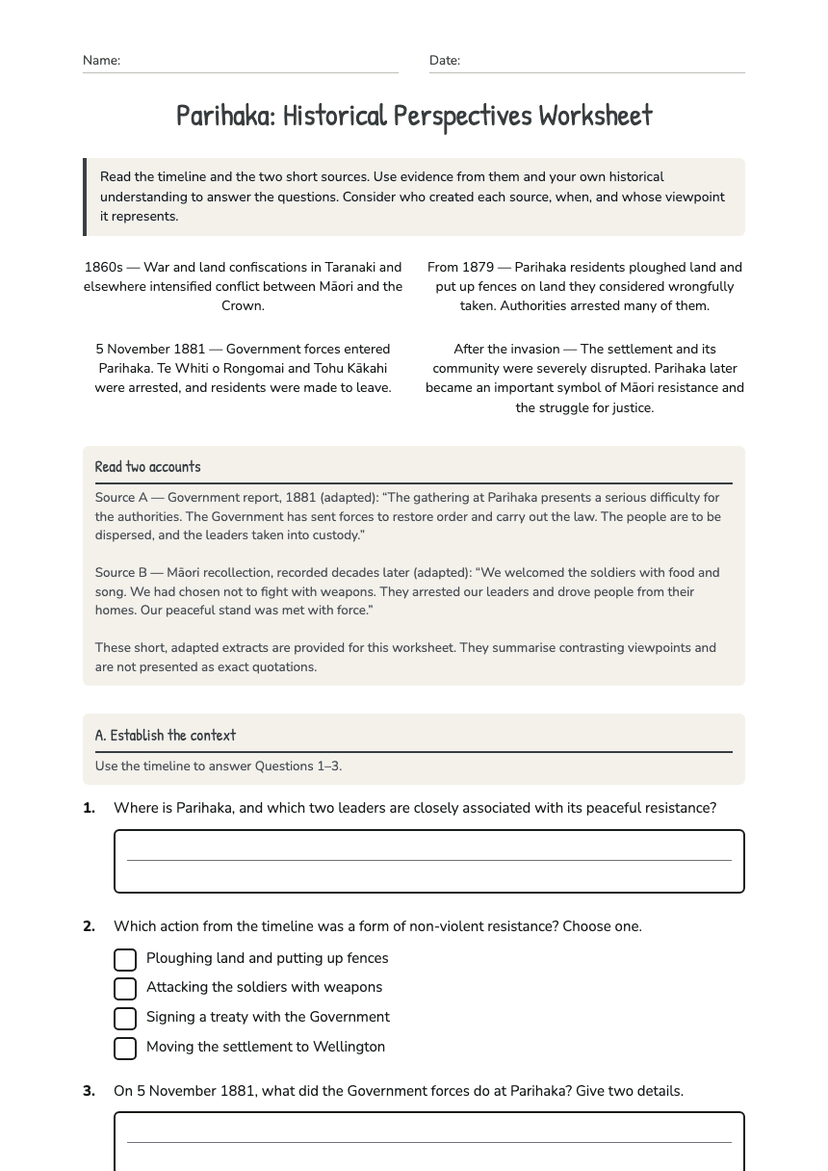
Parihaka: Historical Perspectives Worksheet
Free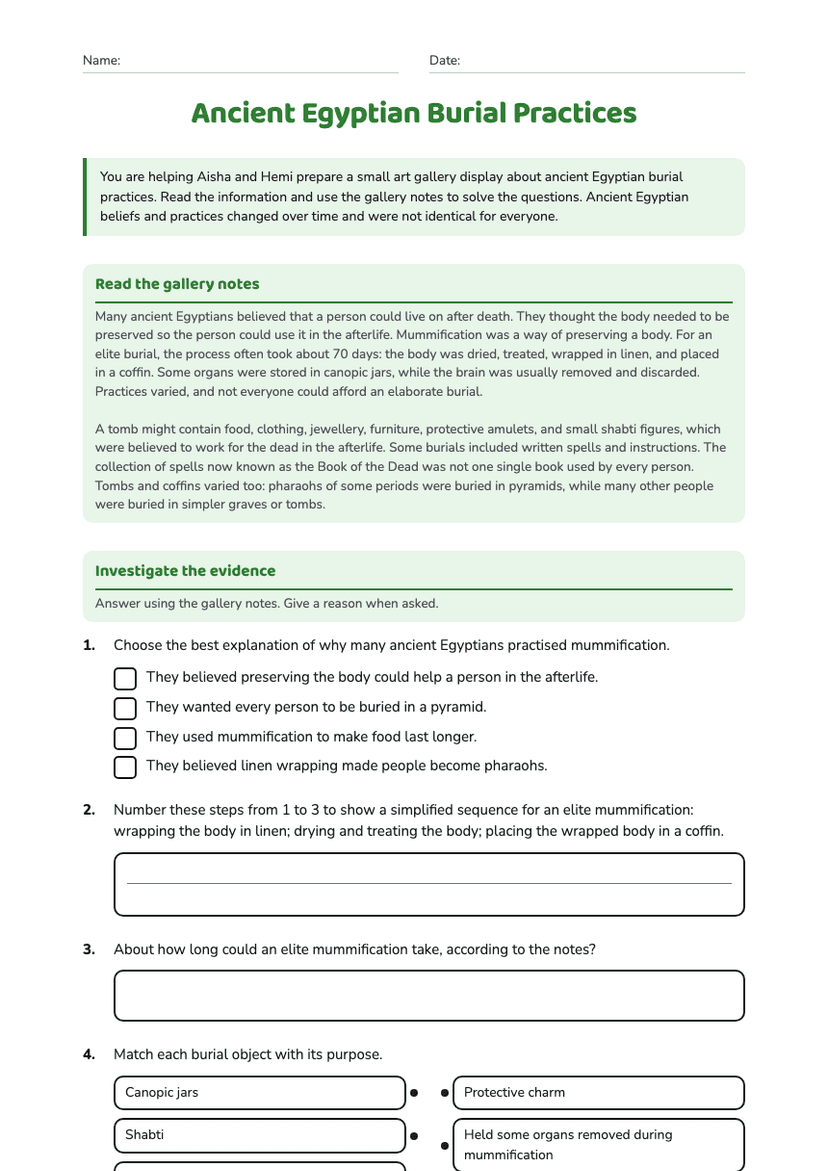
Ancient Egyptian Burial Practices
Free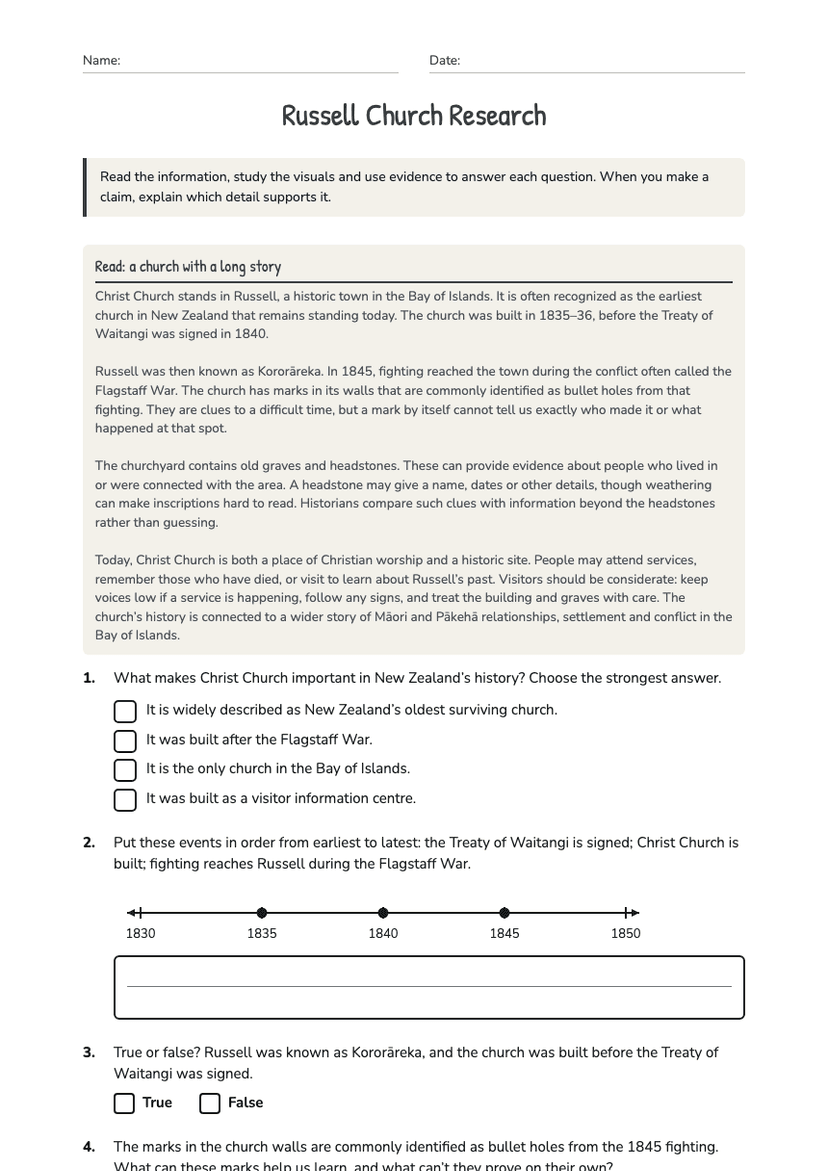
Russell Church Research
Free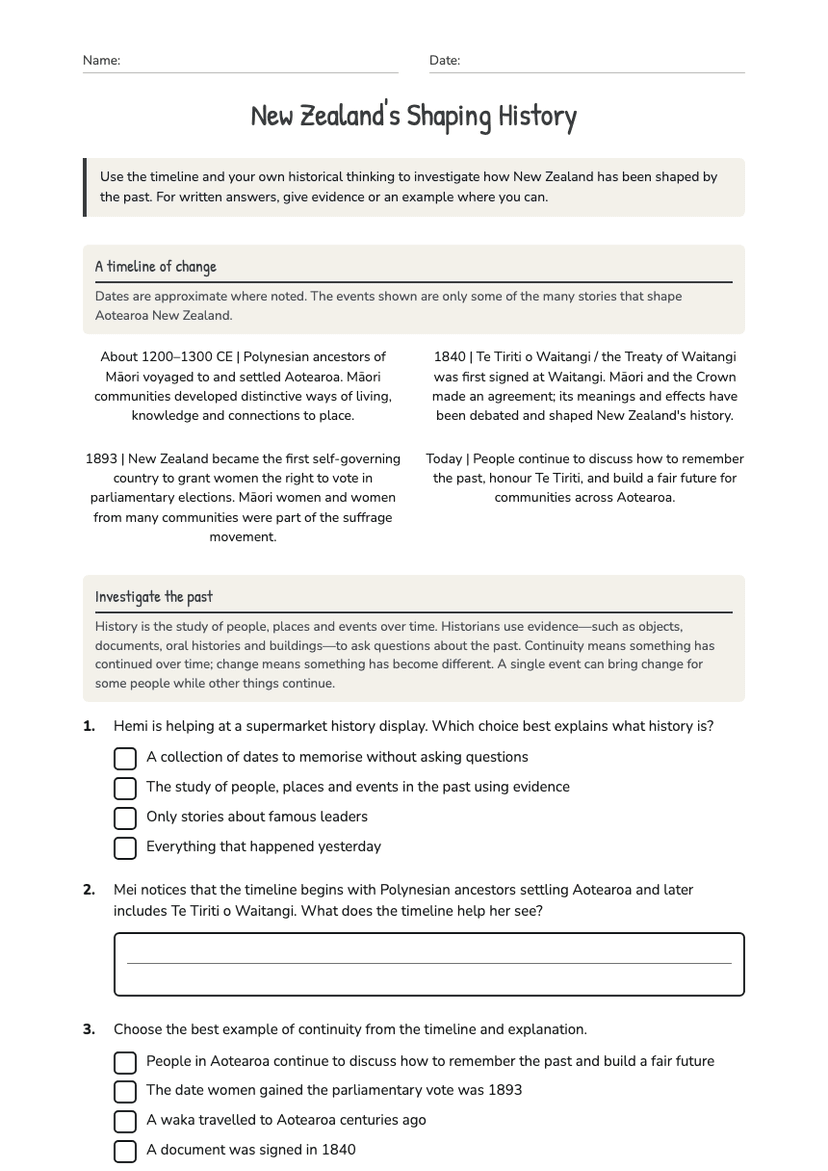
New Zealand's Shaping History
Free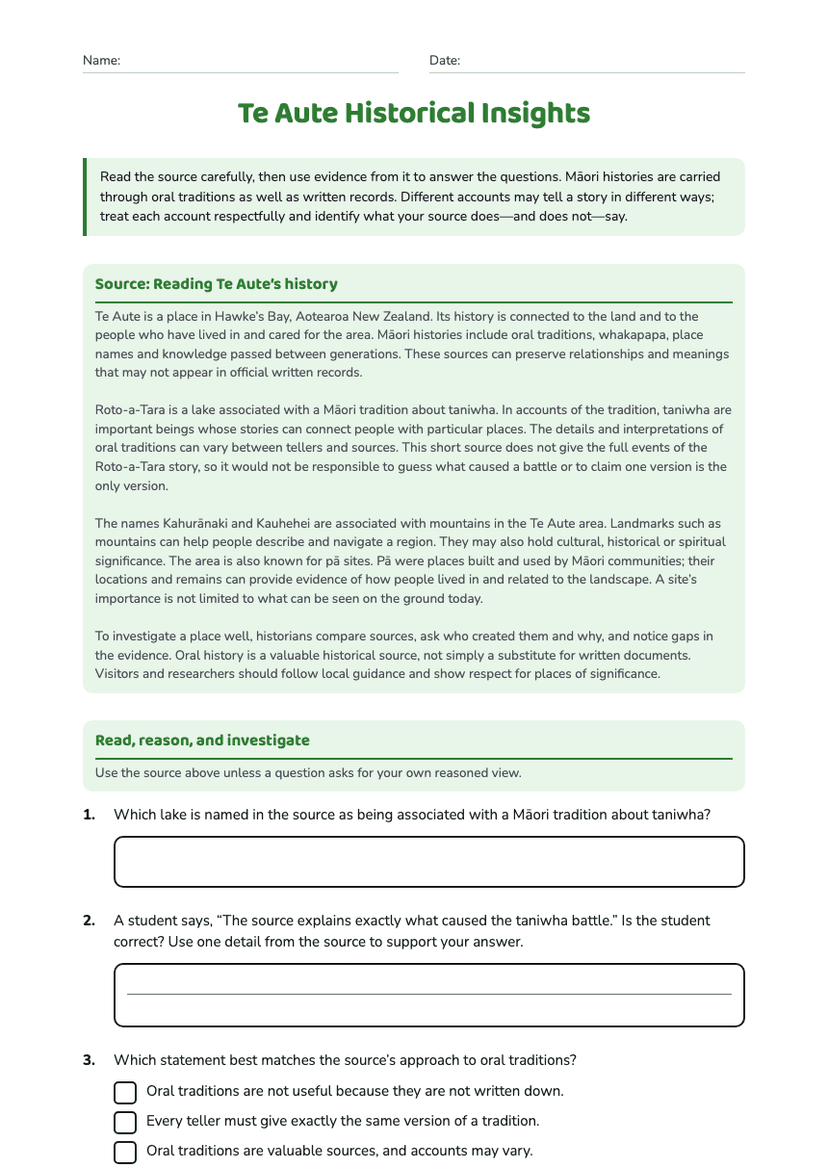
Te Aute Historical Insights
Free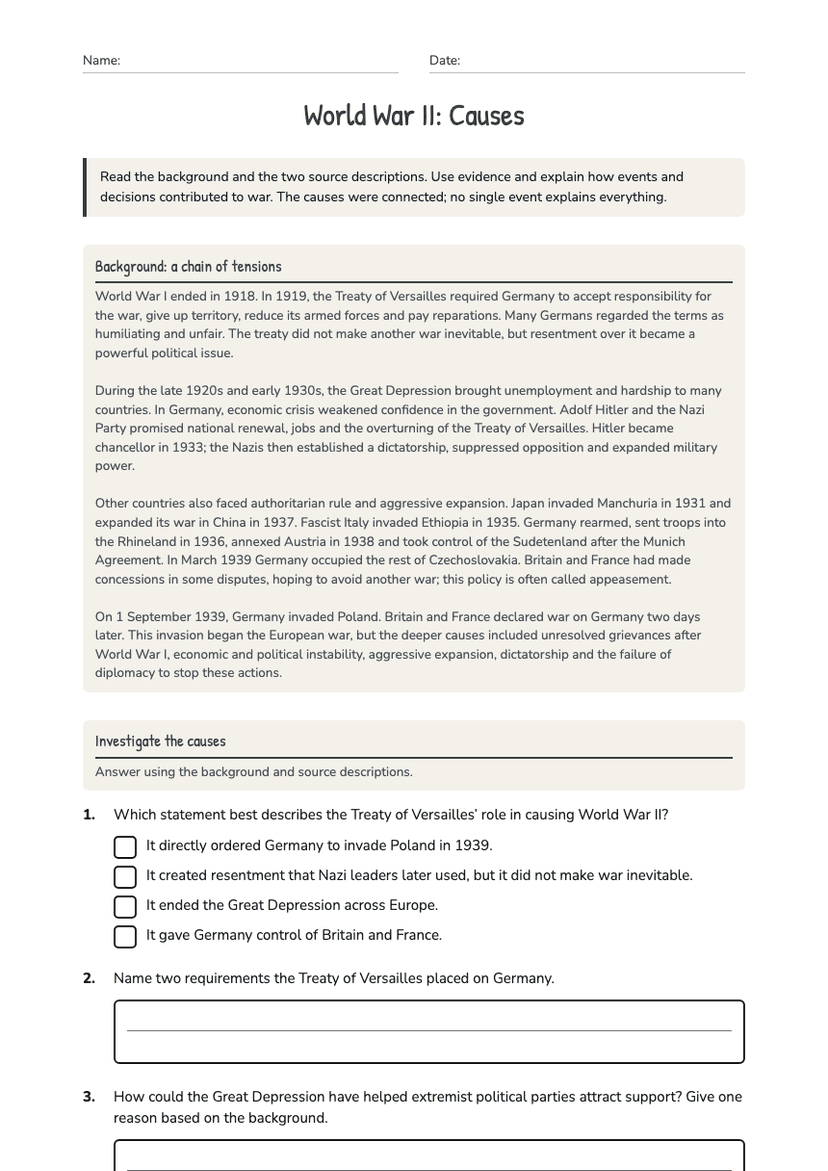
World War II: Causes
Free
Traditional and Modern Voyaging
Free