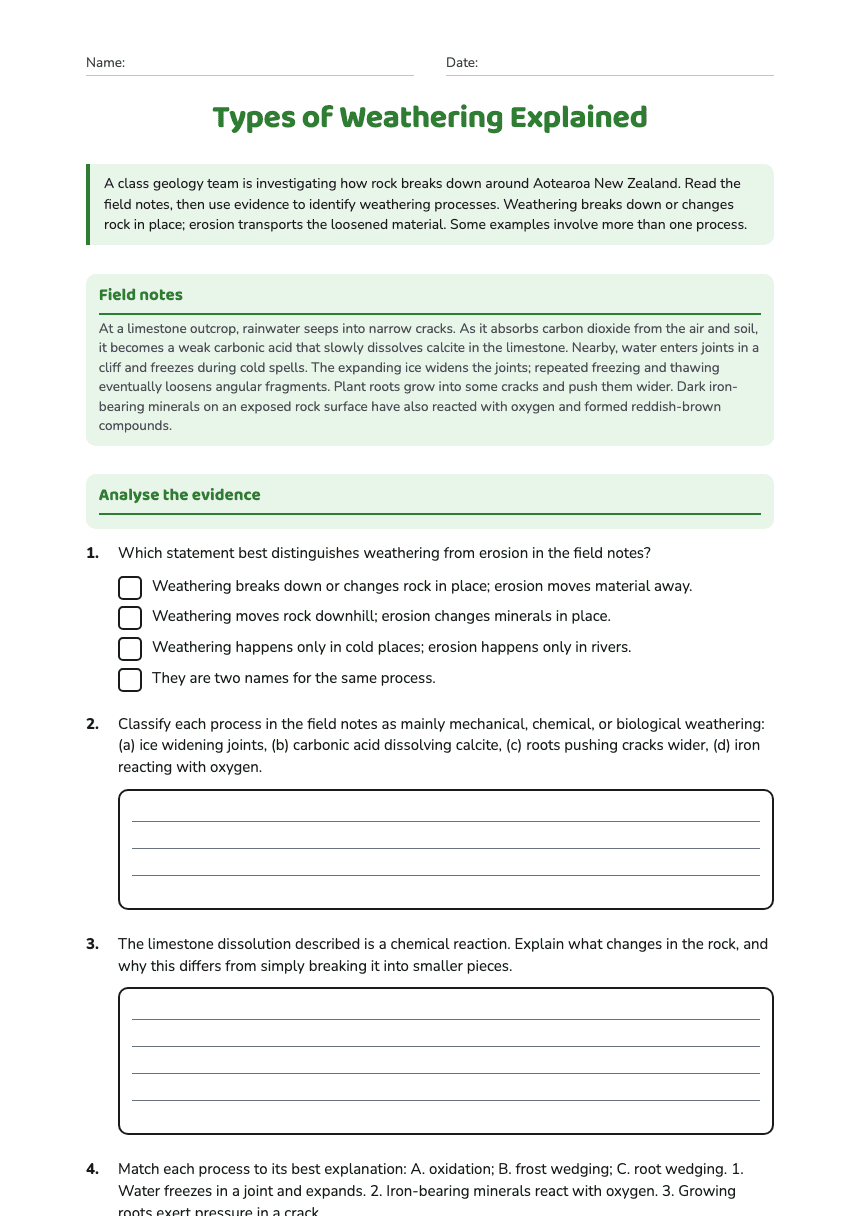
Types of Weathering Explained
A free science worksheet ready for your classroom. Open in Kuraplan to grab the print-ready PDF, customize it for your students, or generate a fresh version in seconds.
Types of Weathering Explained
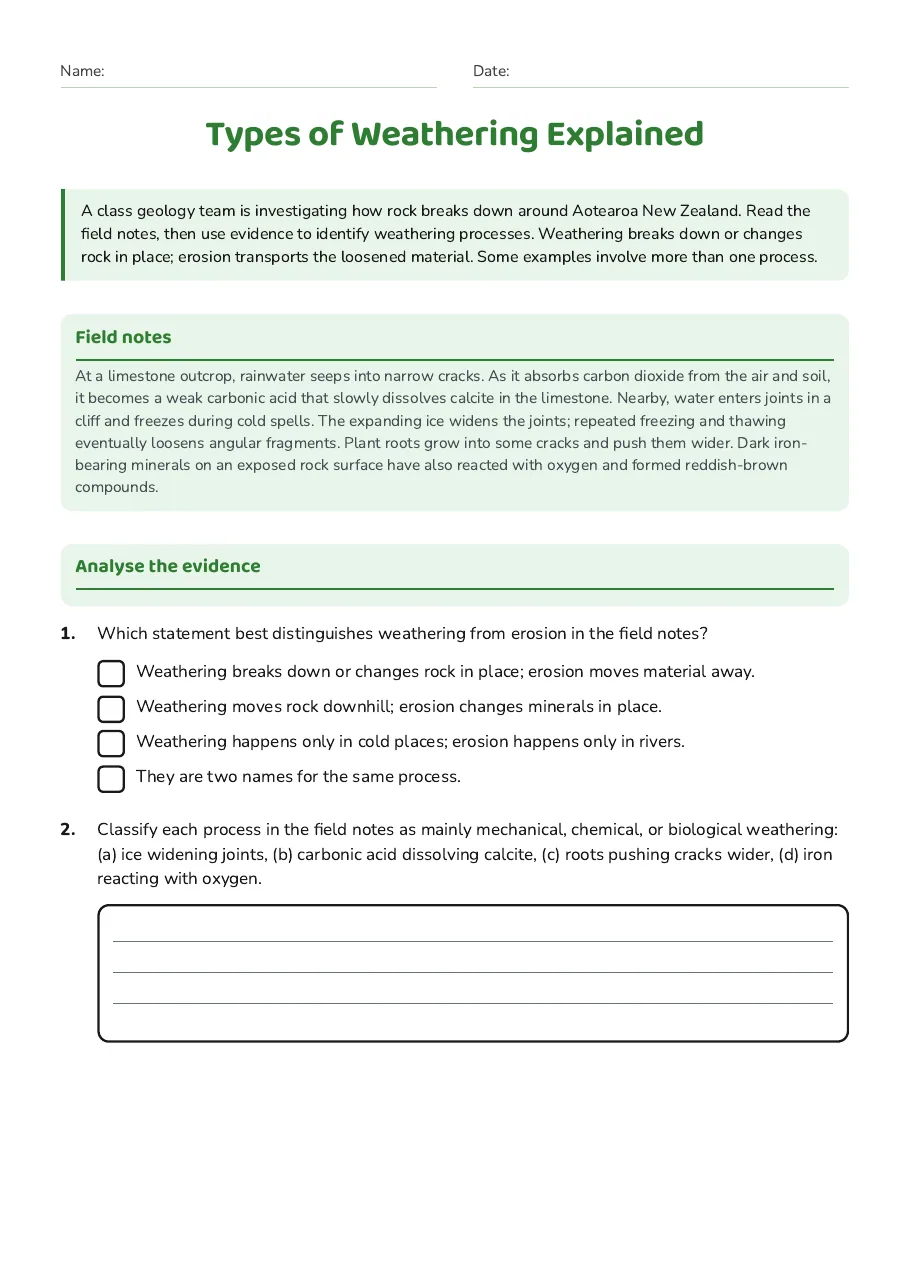
Field notes
At a limestone outcrop, rainwater seeps into narrow cracks. As it absorbs carbon dioxide from the air and soil, it becomes a weak carbonic acid that slowly dissolves calcite in the limestone. Nearby, water enters joints in a cliff and freezes during cold spells. The expanding ice widens the joints; repeated freezing and thawing eventually loosens angular fragments. Plant roots grow into some cracks and push them wider. Dark iron-bearing minerals on an exposed rock surface have also reacted with oxygen and formed reddish-brown compounds.
Analyse the evidence
- Weathering breaks down or changes rock in place; erosion moves material away.
- Weathering moves rock downhill; erosion changes minerals in place.
- Weathering happens only in cold places; erosion happens only in rivers.
- They are two names for the same process.
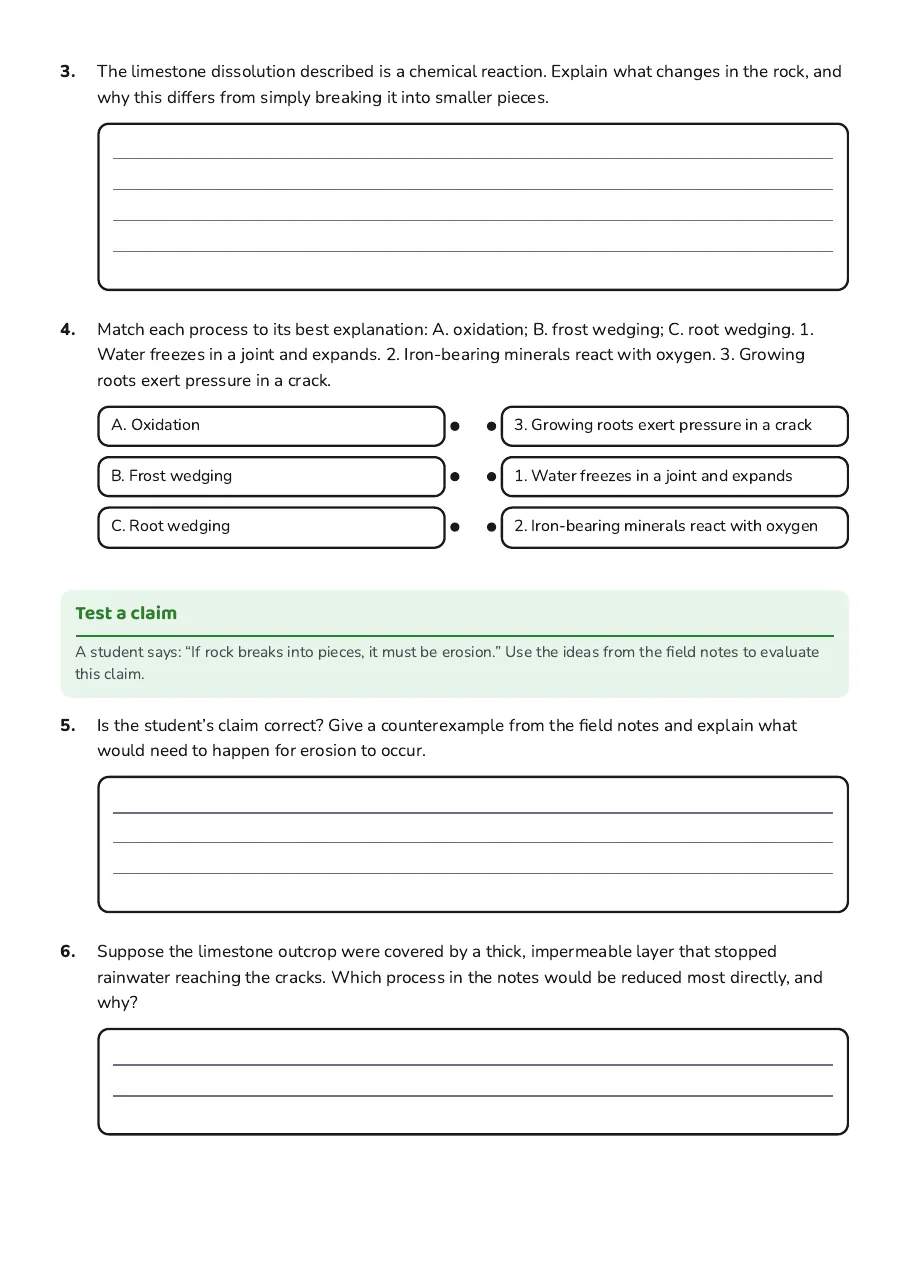
- A. Oxidation
- B. Frost wedging
- C. Root wedging
- 3. Growing roots exert pressure in a crack
- 1. Water freezes in a joint and expands
- 2. Iron-bearing minerals react with oxygen
Test a claim
A student says: “If rock breaks into pieces, it must be erosion.” Use the ideas from the field notes to evaluate this claim.
3 printable pages
Page 1
Page 2
Page 3
About This Worksheet
Free in Kuraplan
Sign up free, grab the PDF, and customize it for your class.
Print-Ready
Formatted for standard paper. Clean layout, easy to read.
AI-Generated
Created with Kuraplan's AI, designed for real classroom use.
For Teachers & Parents
Use in classrooms, for homework, tutoring, or homeschool.
Need a custom version of this worksheet?
Kuraplan's AI generates custom worksheets in seconds — differentiated for every learner, aligned to your curriculum.
Generate Custom Worksheets — Free