Forces and Motion Worksheets
A free science worksheet ready for your classroom. Open in Kuraplan to grab the print-ready PDF, customize it for your students, or generate a fresh version in seconds.

Forces and Motion — Year 12 Physics
AS91524 | Level 3 NCEA Physics | Mechanics Revision & Application
📋 Worksheet 1: Key Mechanics Concepts — Revision
Revise the foundational concepts needed for AS91524 problem-solving.
First Law (Inertia):
Second Law (F = ma):
Third Law (Action–Reaction):
Equation: ___________________________________
🔧 Worksheet 2: Mechanical Systems — Diagram & Force Labelling
Label forces and apply free-body diagram conventions for AS91524.
In the space below, draw a free-body diagram of the box on the inclined plane. Label the following forces with arrows and correct notation:
Calculate the magnitude of the normal force acting on the box. Show all working steps. (g = 9.8 m/s²)
Draw and label a free-body diagram of the hanging load below. Include all forces acting on it.
Problem-Solving Steps: If the load accelerates upward at 1.5 m/s², calculate the tension T in the rope.
Step 1 — Identify forces and direction of acceleration:
Step 2 — Apply Newton's Second Law (ΣF = ma):
Step 3 — State your answer with correct units:
T = _____________________ N
⚙️ Worksheet 3: Scaffolded Problem Solving
Apply Newton's Second Law, kinematics, and motion graph interpretation. Show ALL working — this is required for AS91524.
(a) Calculate the acceleration of the gondola.
(b) Draw a free-body diagram of the gondola on the slope, labelling all forces.
(c) Using Newton's Second Law, calculate the driving force (tension) in the cable. (g = 9.8 m/s²)
(a) Calculate the tension in the crane cable during the acceleration phase.
(b) On the axes below, sketch a free-body diagram for the beam during the acceleration phase. Label all forces.
(c) Use your understanding of forces to explain how the crane operates effectively in lifting heavy loads.
(a) Calculate the deceleration of the car.
(b) Calculate the braking force applied.
(c) If the road were wet and friction reduced by 30%, how would this affect stopping distance? Explain using Newton's Second Law.
💭 Worksheet 4: Reflect and Connect
Consolidate your learning and prepare for AS91524 assessment.
Takeaway 1:
Takeaway 2:
Drawing and interpreting free-body diagrams:
Applying Newton's Second Law (ΣF = ma) to solve problems:
Using kinematic equations to find unknown quantities:
Sketching and interpreting velocity–time graphs:
Solving multi-step mechanics problems (AS91524 style):
Teacher reminder: Always show all working steps, use correct units, and apply Newton's laws systematically — this is essential for achieving Merit and Excellence in AS91524.
About This Worksheet
Free in Kuraplan
Sign up free, grab the PDF, and customize it for your class.
Print-Ready
Formatted for standard paper. Clean layout, easy to read.
AI-Generated
Created with Kuraplan's AI, designed for real classroom use.
For Teachers & Parents
Use in classrooms, for homework, tutoring, or homeschool.
Need a custom version of this worksheet?
Kuraplan's AI generates custom worksheets in seconds — differentiated for every learner, aligned to your curriculum.
Generate Custom Worksheets — FreeMore Science Worksheets
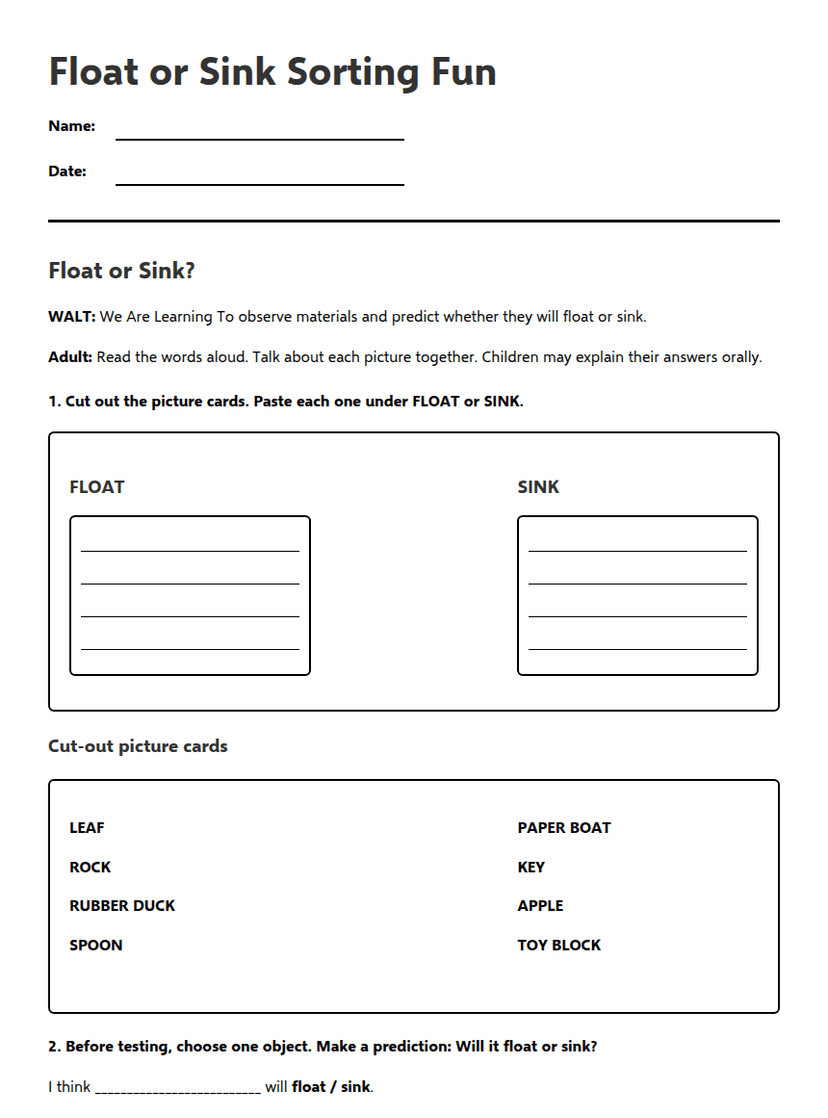
Float or Sink Sorting Fun
Free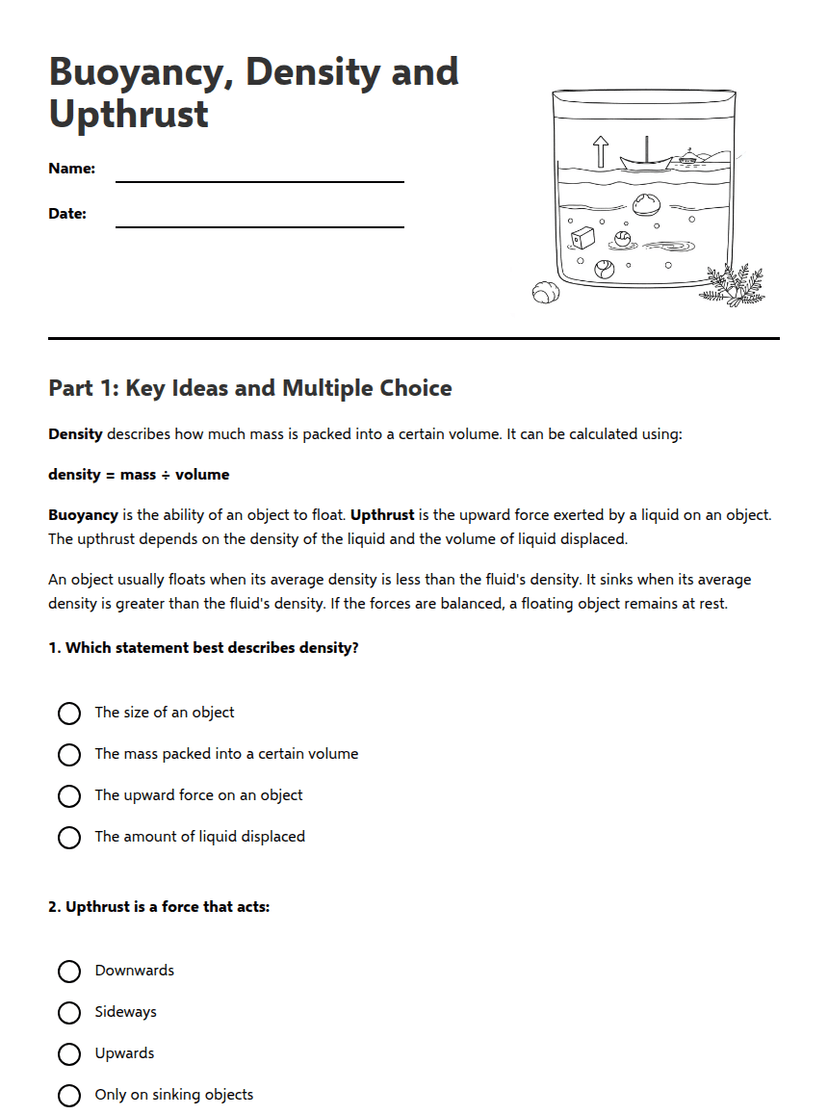
Buoyancy, Density and Upthrust
Free
Waka Buoyancy Science Worksheet
Free
Ō Ahupūngao: Forces and Motion
Free
Aircraft Design and Aerodynamics
Free
Circular Motion Physics
Free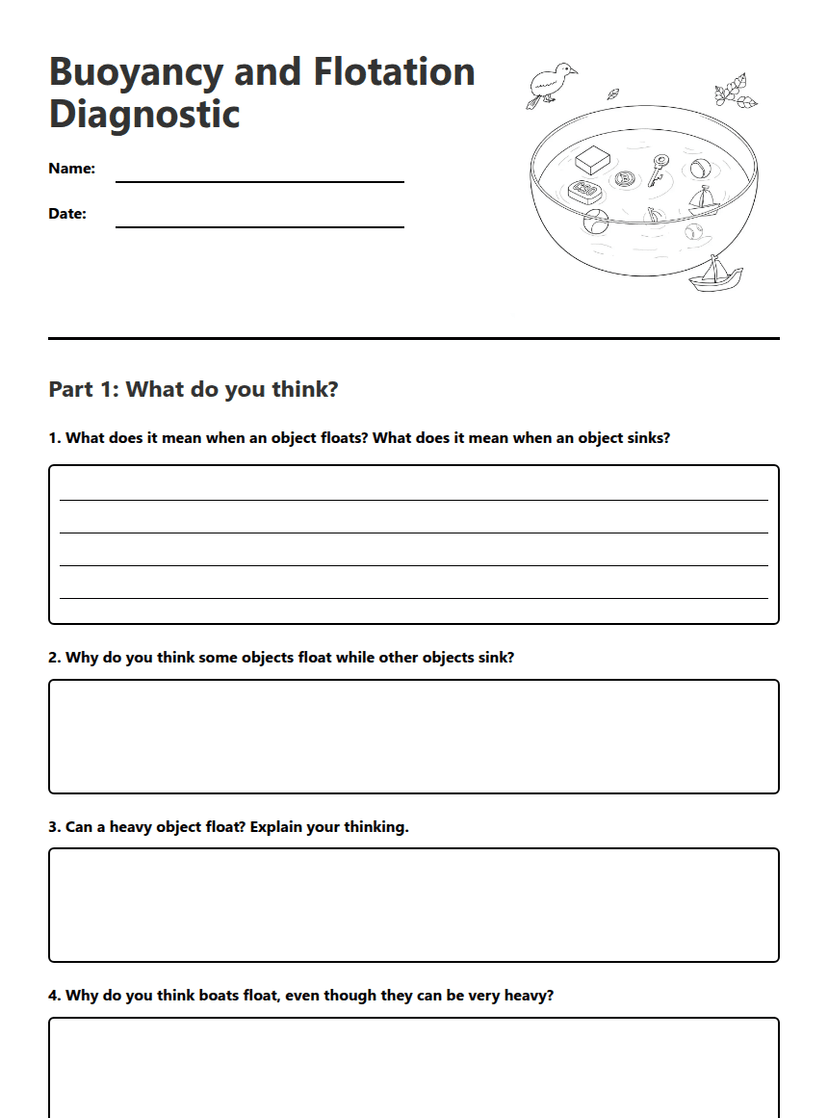
Buoyancy and Flotation Diagnostic
Free