Whakapapa History Explorer Worksheet
A free social sciences worksheet ready for your classroom. Open in Kuraplan to grab the print-ready PDF, customize it for your students, or generate a fresh version in seconds.
Whakapapa History Explorer Worksheet
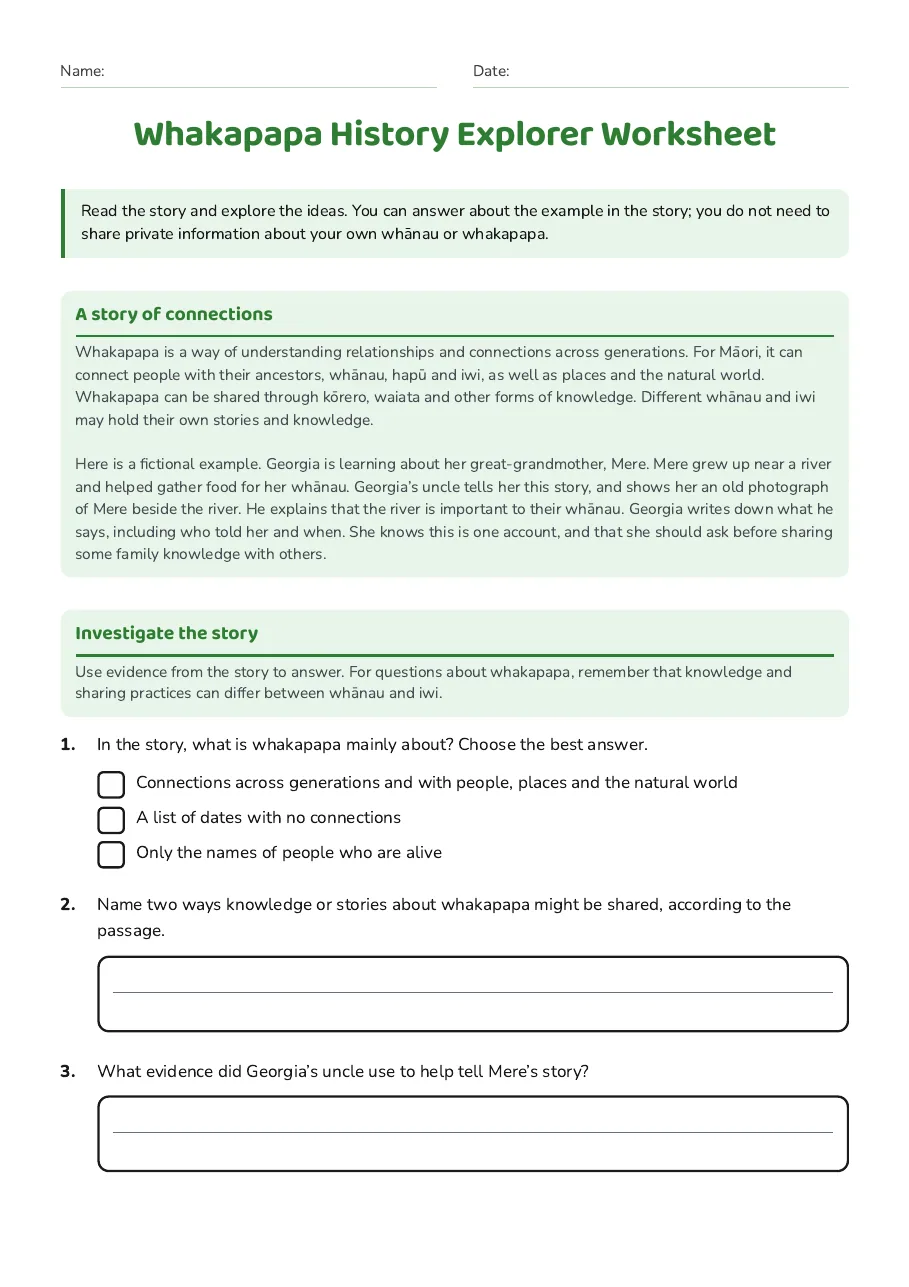
A story of connections
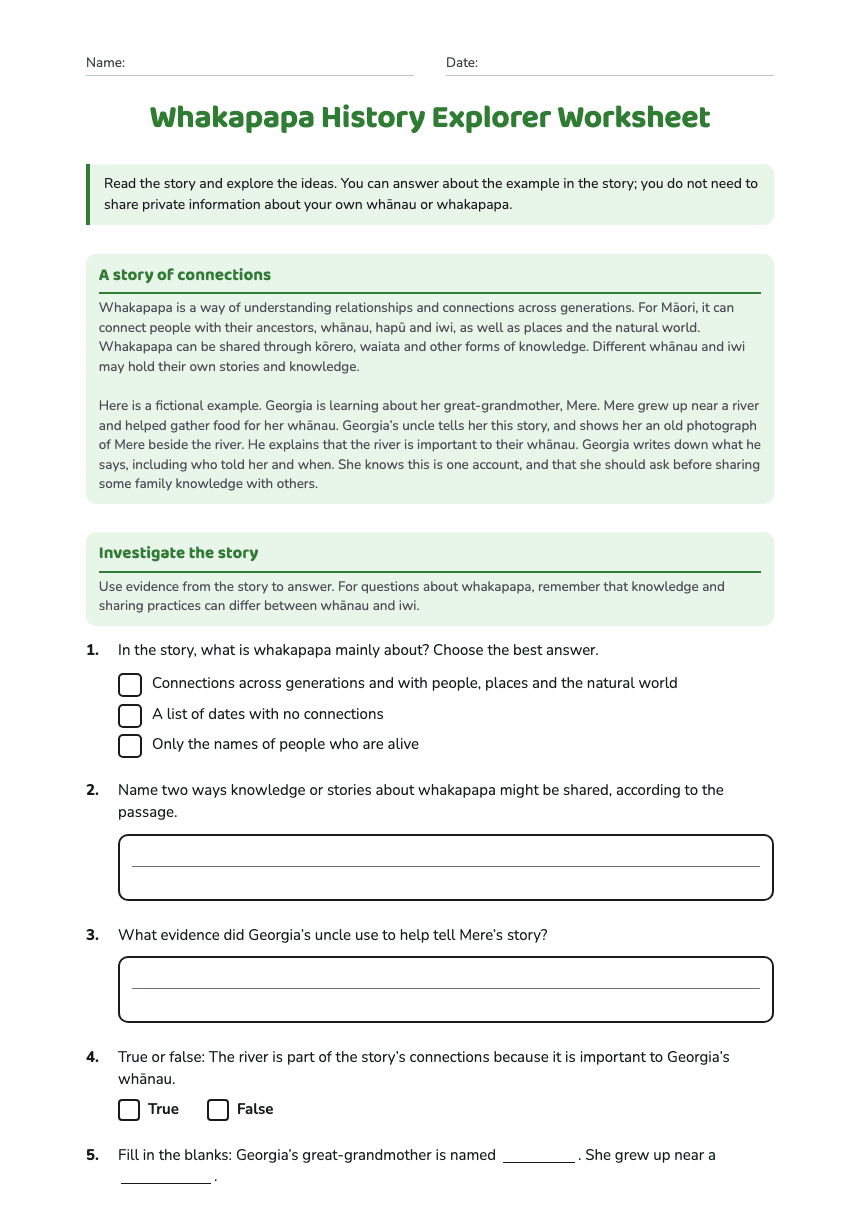
Whakapapa is a way of understanding relationships and connections across generations. For Māori, it can connect people with their ancestors, whānau, hapū and iwi, as well as places and the natural world. Whakapapa can be shared through kōrero, waiata and other forms of knowledge. Different whānau and iwi may hold their own stories and knowledge. Here is a fictional example. Georgia is learning about her great-grandmother, Mere. Mere grew up near a river and helped gather food for her whānau. Georgia’s uncle tells her this story, and shows her an old photograph of Mere beside the river. He explains that the river is important to their whānau. Georgia writes down what he says, including who told her and when. She knows this is one account, and that she should ask before sharing some family knowledge with others.
Investigate the story
Use evidence from the story to answer. For questions about whakapapa, remember that knowledge and sharing practices can differ between whānau and iwi.
- Connections across generations and with people, places and the natural world
- A list of dates with no connections
- Only the names of people who are alive
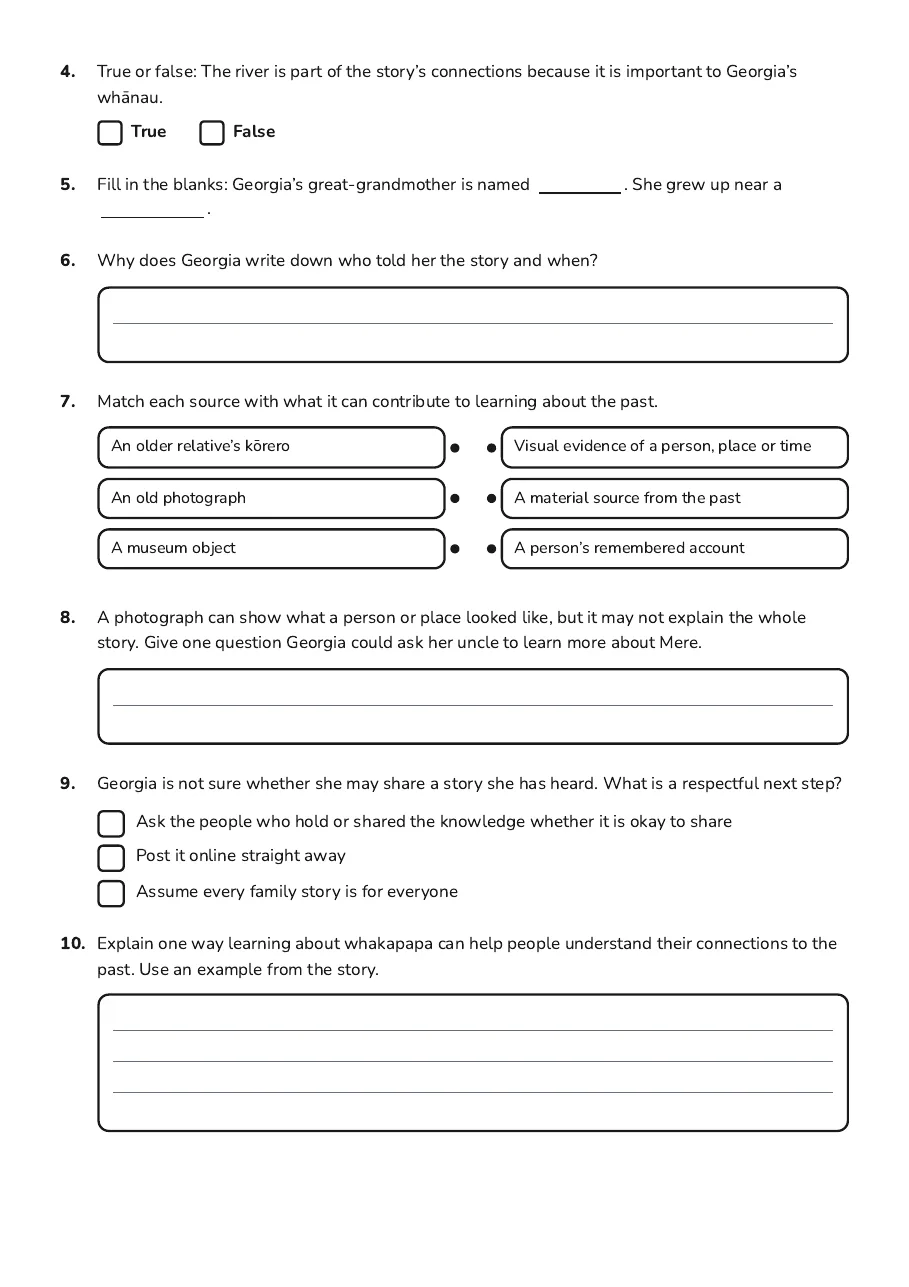
- An older relative’s kōrero
- An old photograph
- A museum object
- Visual evidence of a person, place or time
- A material source from the past
- A person’s remembered account
- Ask the people who hold or shared the knowledge whether it is okay to share
- Post it online straight away
- Assume every family story is for everyone
2 printable pages
Page 1
Page 2
About This Worksheet
Free in Kuraplan
Sign up free, grab the PDF, and customize it for your class.
Print-Ready
Formatted for standard paper. Clean layout, easy to read.
AI-Generated
Created with Kuraplan's AI, designed for real classroom use.
For Teachers & Parents
Use in classrooms, for homework, tutoring, or homeschool.
Need a custom version of this worksheet?
Kuraplan's AI generates custom worksheets in seconds — differentiated for every learner, aligned to your curriculum.
Generate Custom Worksheets — FreeMore Social Sciences Worksheets
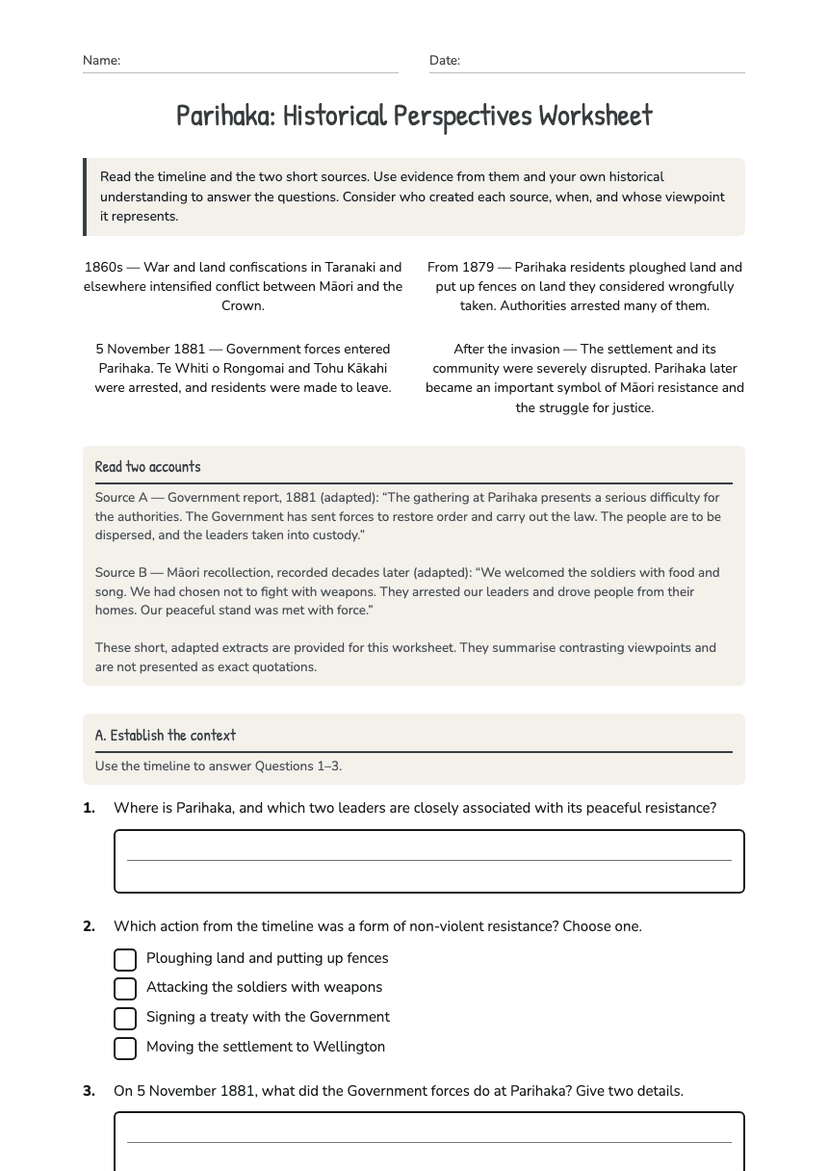
Parihaka: Historical Perspectives Worksheet
Free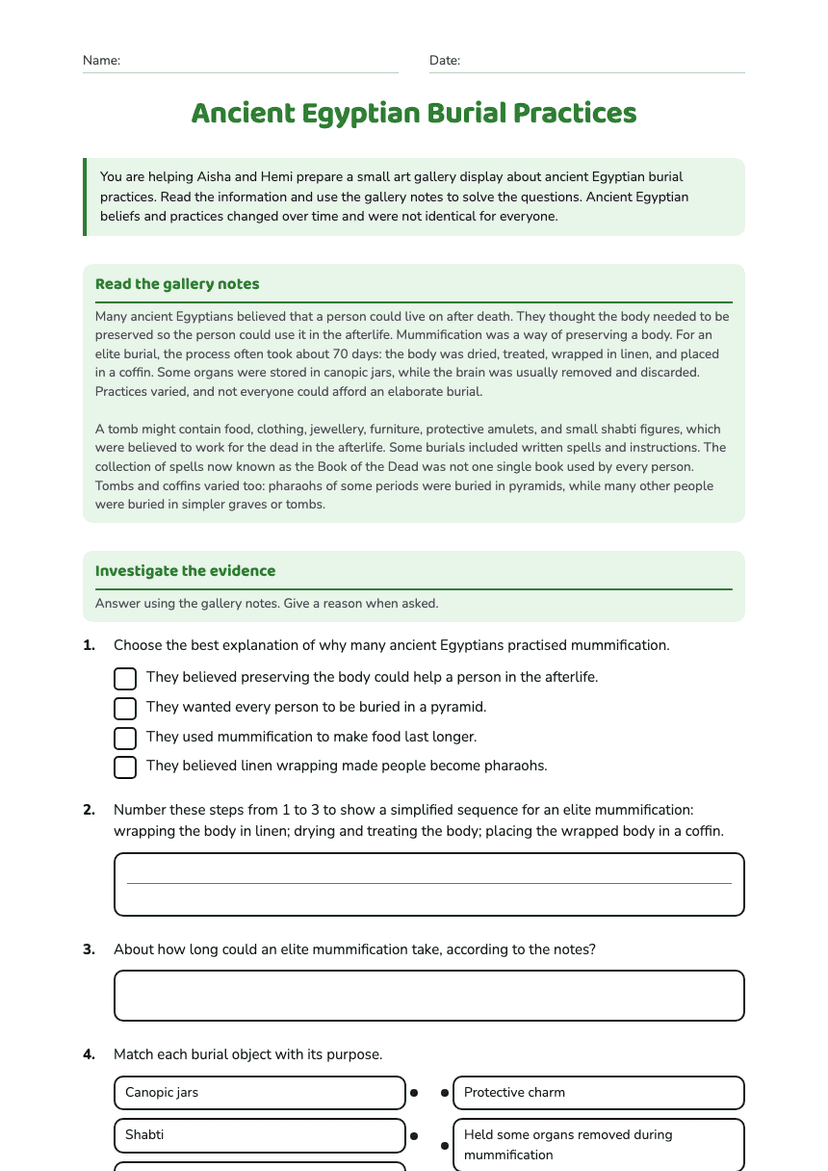
Ancient Egyptian Burial Practices
Free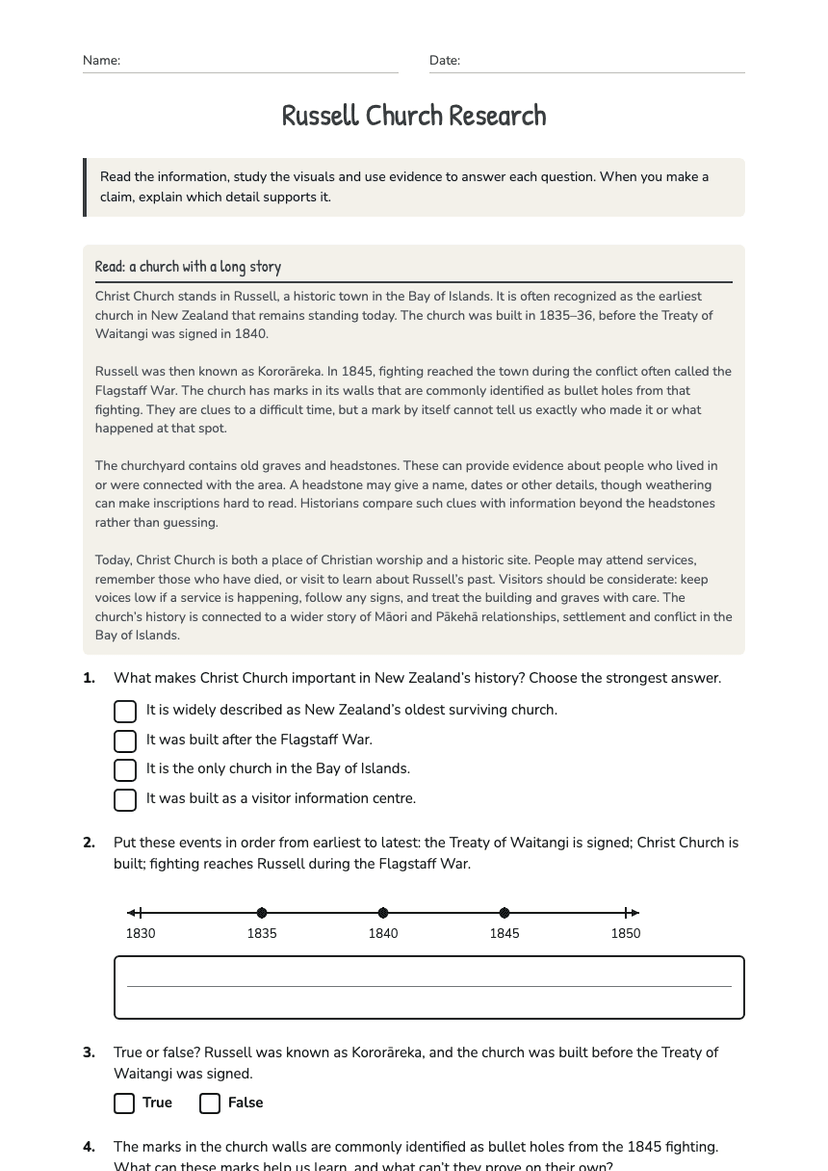
Russell Church Research
Free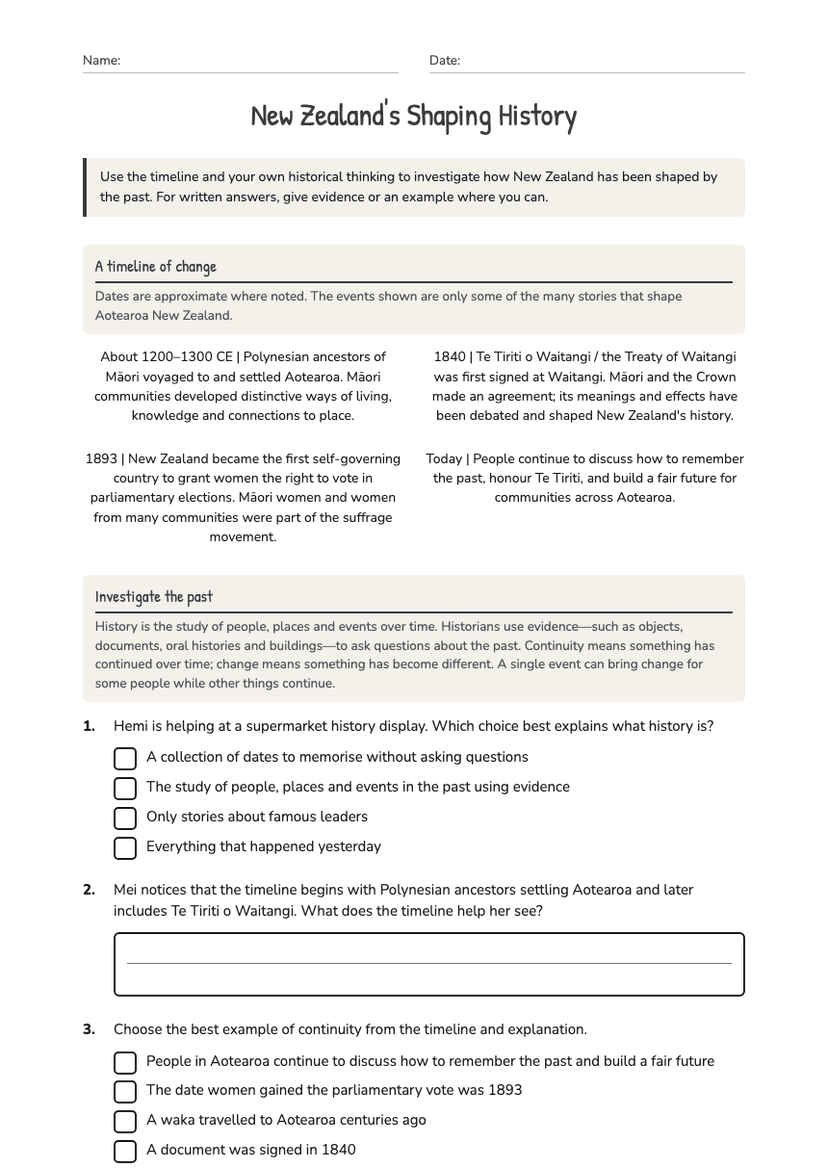
New Zealand's Shaping History
Free
Te Aute Historical Insights
Free
World War II: Causes
Free
Traditional and Modern Voyaging
Free