Workplace Health Safety Guide
A free health worksheet ready for your classroom. Open in Kuraplan to grab the print-ready PDF, customize it for your students, or generate a fresh version in seconds.

Workplace Health Safety Guide
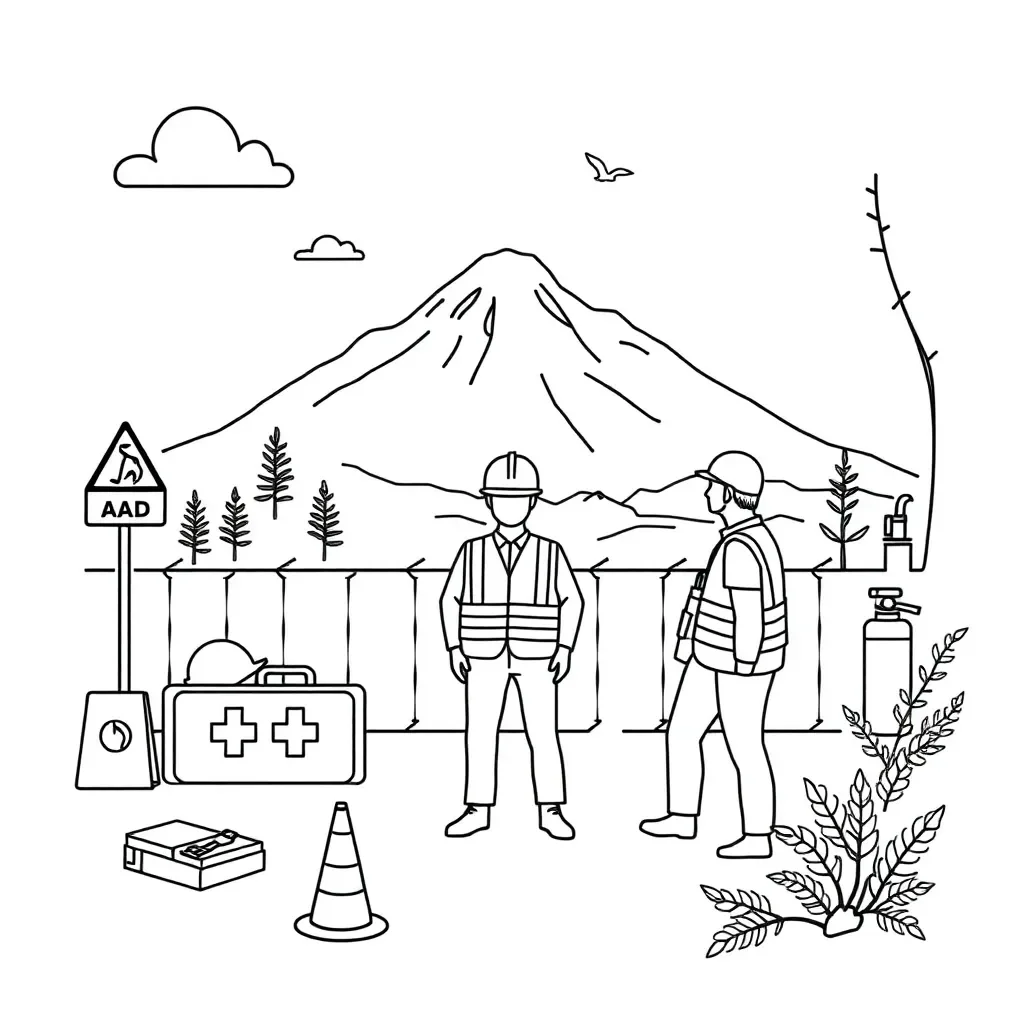
🚨 Part 1: Hazards and Risks in the Workplace
What are Hazards and Risks?
Hazard: Anything that could cause harm to a person (e.g., chemicals, machinery, wet floors)
Risk: The chance that a hazard will actually cause harm and how serious that harm might be
Common Workplace Hazards:
• Physical: Machinery, electricity, noise, heat, slippery surfaces
• Chemical: Cleaning products, paint fumes, pesticides
• Biological: Bacteria, viruses, mould
• Ergonomic: Heavy lifting, repetitive movements, poor posture
• Psychological: Workplace stress, bullying, violence
Why Identify Hazards?
• Prevents workplace injuries and illnesses
• Required by law under the Health and Safety at Work Act 2015
• Creates a safer, more productive work environment
• Reduces costs from accidents and insurance claims
⚖️ Part 2: Responsibilities Under the Health and Safety at Work Act 2015
Business/Employer Duties (PCBUs - Persons Conducting a Business or Undertaking):
• Primary duty of care: Ensure health and safety of workers and others
• Provide and maintain a safe work environment
• Provide adequate facilities (toilets, drinking water, first aid)
• Provide information, training, instruction and supervision
• Monitor workers' health and workplace conditions
• Provide personal protective equipment (PPE) when needed
Worker Duties:
• Take reasonable care of your own health and safety
• Take reasonable care that your actions don't harm others
• Follow reasonable health and safety instructions
• Use personal protective equipment as instructed
• Report hazards and injuries to your supervisor
• Cooperate with health and safety policies and procedures
Penalties for Non-Compliance:
• Fines up to $3 million for businesses
• Fines up to $300,000 and/or 5 years imprisonment for individuals
• Fines up to $50,000 for workers who don't follow safety rules
🔧 Part 3: Health and Safety Management Systems
Risk Assessment Process:
1. Identify hazards in the workplace
2. Assess the risk level (likelihood × severity)
3. Control risks using the hierarchy of controls:
• Elimination (remove the hazard completely)
• Substitution (replace with something safer)
• Engineering controls (guards, ventilation)
• Administrative controls (training, procedures)
• Personal protective equipment (PPE)
4. Review and monitor controls regularly
Common Safety Systems:
• Safety training programmes: Induction training, ongoing education
• Incident reporting: Near misses, injuries, and hazards
• Safety meetings: Regular toolbox talks and safety discussions
• Emergency procedures: Fire drills, evacuation plans, first aid
• Health monitoring: Regular health checks for workers exposed to hazards
• Safety audits: Regular inspections and reviews of safety systems
Key Safety Documents:
• Safety Data Sheets (SDS) for chemicals
• Standard Operating Procedures (SOPs)
• Emergency response plans
• Training records and certifications
About This Worksheet
Free in Kuraplan
Sign up free, grab the PDF, and customize it for your class.
Print-Ready
Formatted for standard paper. Clean layout, easy to read.
AI-Generated
Created with Kuraplan's AI, designed for real classroom use.
For Teachers & Parents
Use in classrooms, for homework, tutoring, or homeschool.
Need a custom version of this worksheet?
Kuraplan's AI generates custom worksheets in seconds — differentiated for every learner, aligned to your curriculum.
Generate Custom Worksheets — FreeMore Health Worksheets
Brain Lobes and Substances
Free
Factors Influencing Meth Use
Free
Methamphetamine in New Zealand
Free
Kitchen Safety Answer Key
Free
Kitchen Health and Safety Guide
Free
Body Awareness and Safety
Free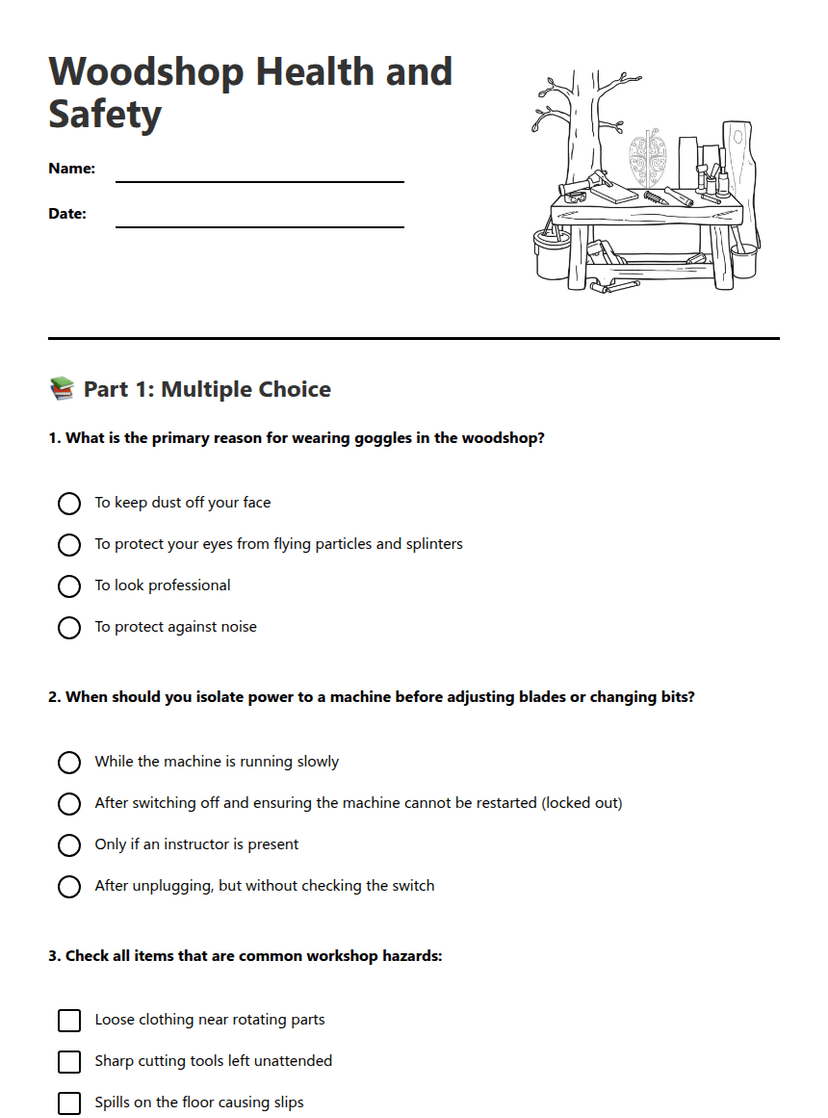
Woodshop Health and Safety
Free