World War One Origins
A free nz history worksheet ready for your classroom. Open in Kuraplan to grab the print-ready PDF, customize it for your students, or generate a fresh version in seconds.
World War One Origins
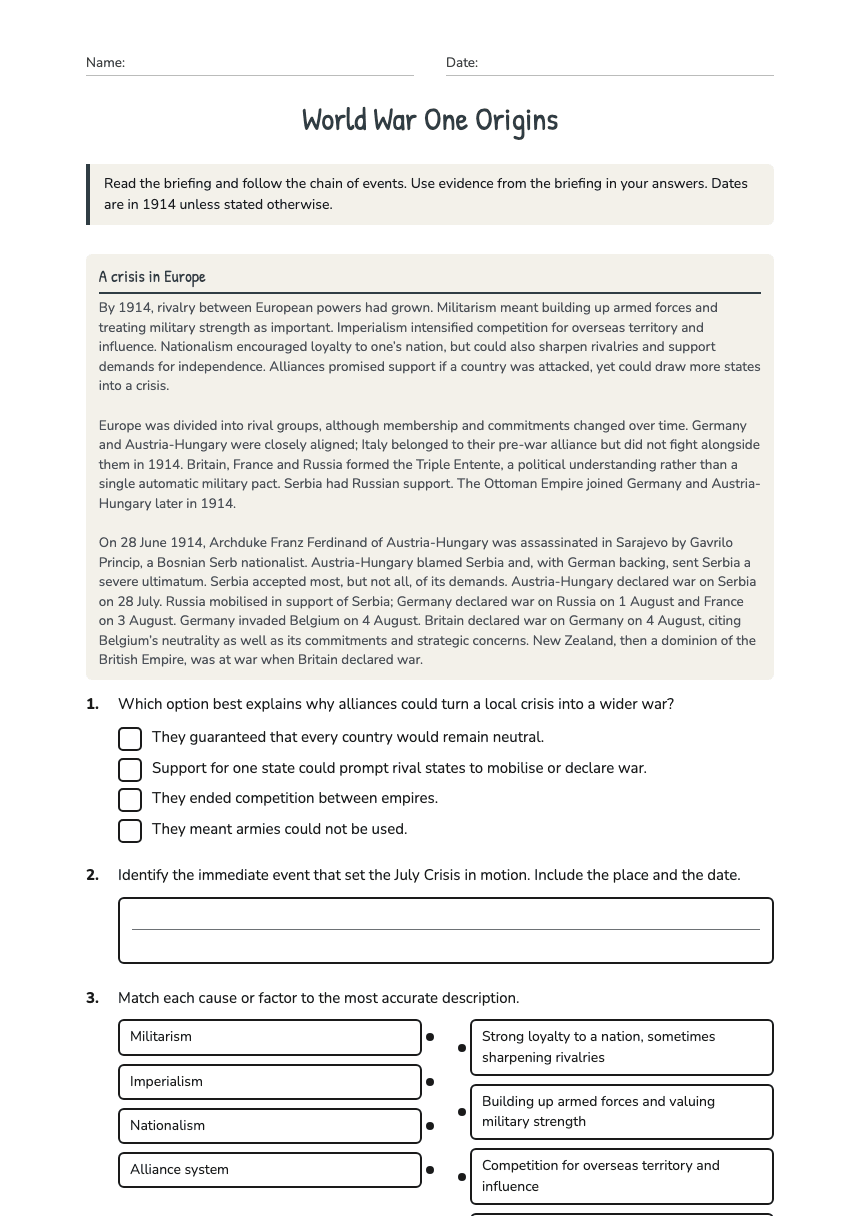
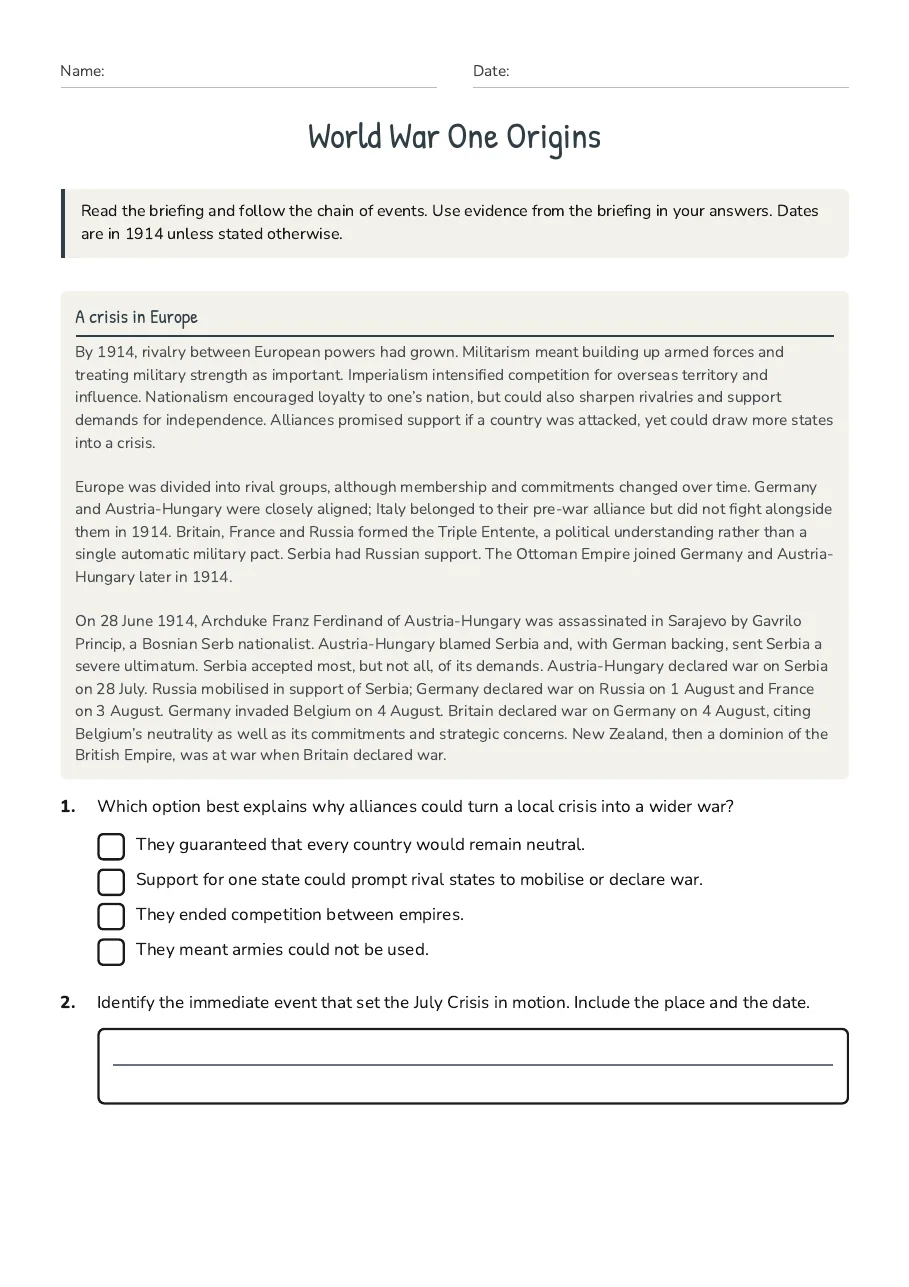
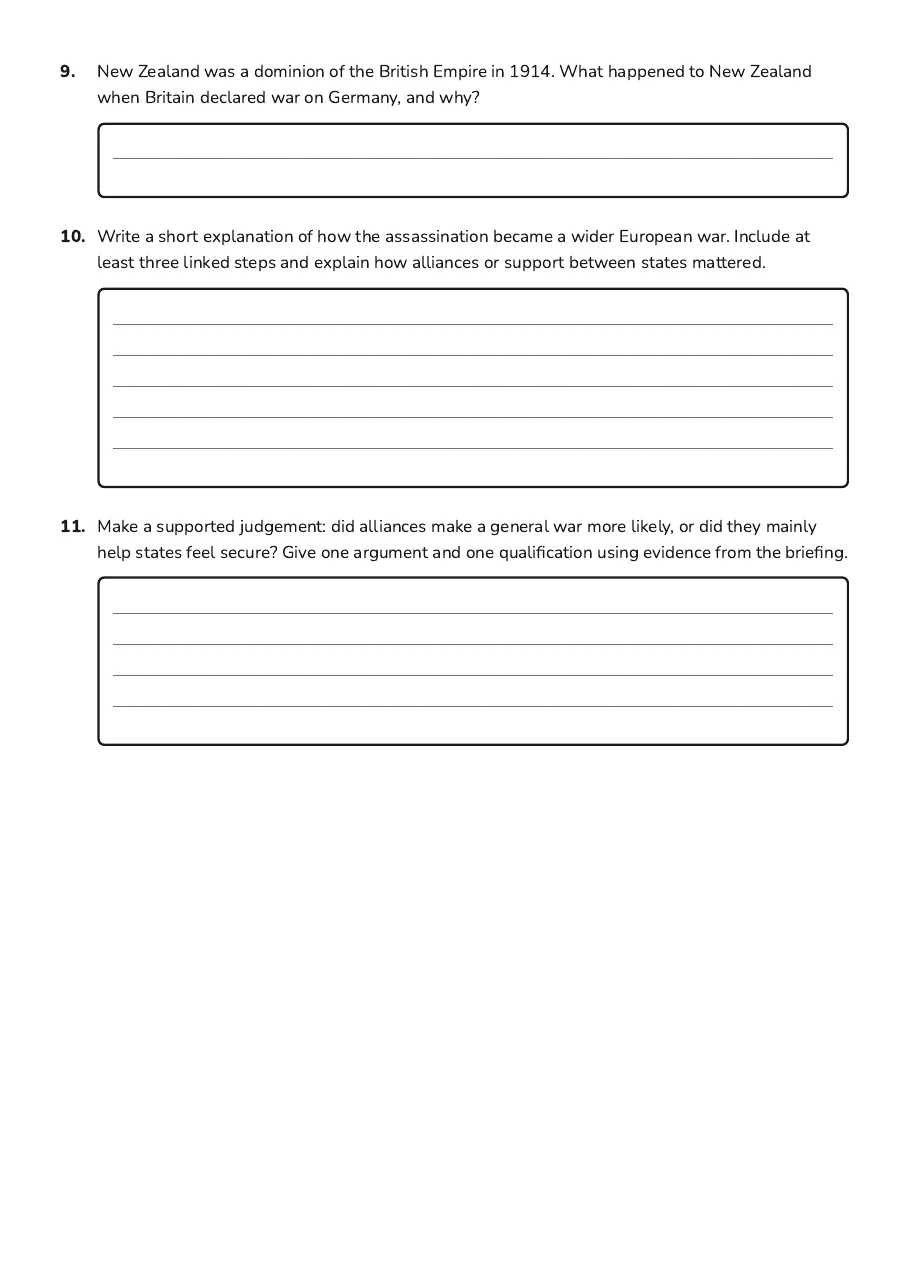
A crisis in Europe
By 1914, rivalry between European powers had grown. Militarism meant building up armed forces and treating military strength as important. Imperialism intensified competition for overseas territory and influence. Nationalism encouraged loyalty to one’s nation, but could also sharpen rivalries and support demands for independence. Alliances promised support if a country was attacked, yet could draw more states into a crisis. Europe was divided into rival groups, although membership and commitments changed over time. Germany and Austria-Hungary were closely aligned; Italy belonged to their pre-war alliance but did not fight alongside them in 1914. Britain, France and Russia formed the Triple Entente, a political understanding rather than a single automatic military pact. Serbia had Russian support. The Ottoman Empire joined Germany and Austria-Hungary later in 1914. On 28 June 1914, Archduke Franz Ferdinand of Austria-Hungary was assassinated in Sarajevo by Gavrilo Princip, a Bosnian Serb nationalist. Austria-Hungary blamed Serbia and, with German backing, sent Serbia a severe ultimatum. Serbia accepted most, but not all, of its demands. Austria-Hungary declared war on Serbia on 28 July. Russia mobilised in support of Serbia; Germany declared war on Russia on 1 August and France on 3 August. Germany invaded Belgium on 4 August. Britain declared war on Germany on 4 August, citing Belgium’s neutrality as well as its commitments and strategic concerns. New Zealand, then a dominion of the British Empire, was at war when Britain declared war.
- They guaranteed that every country would remain neutral.
- Support for one state could prompt rival states to mobilise or declare war.
- They ended competition between empires.
- They meant armies could not be used.
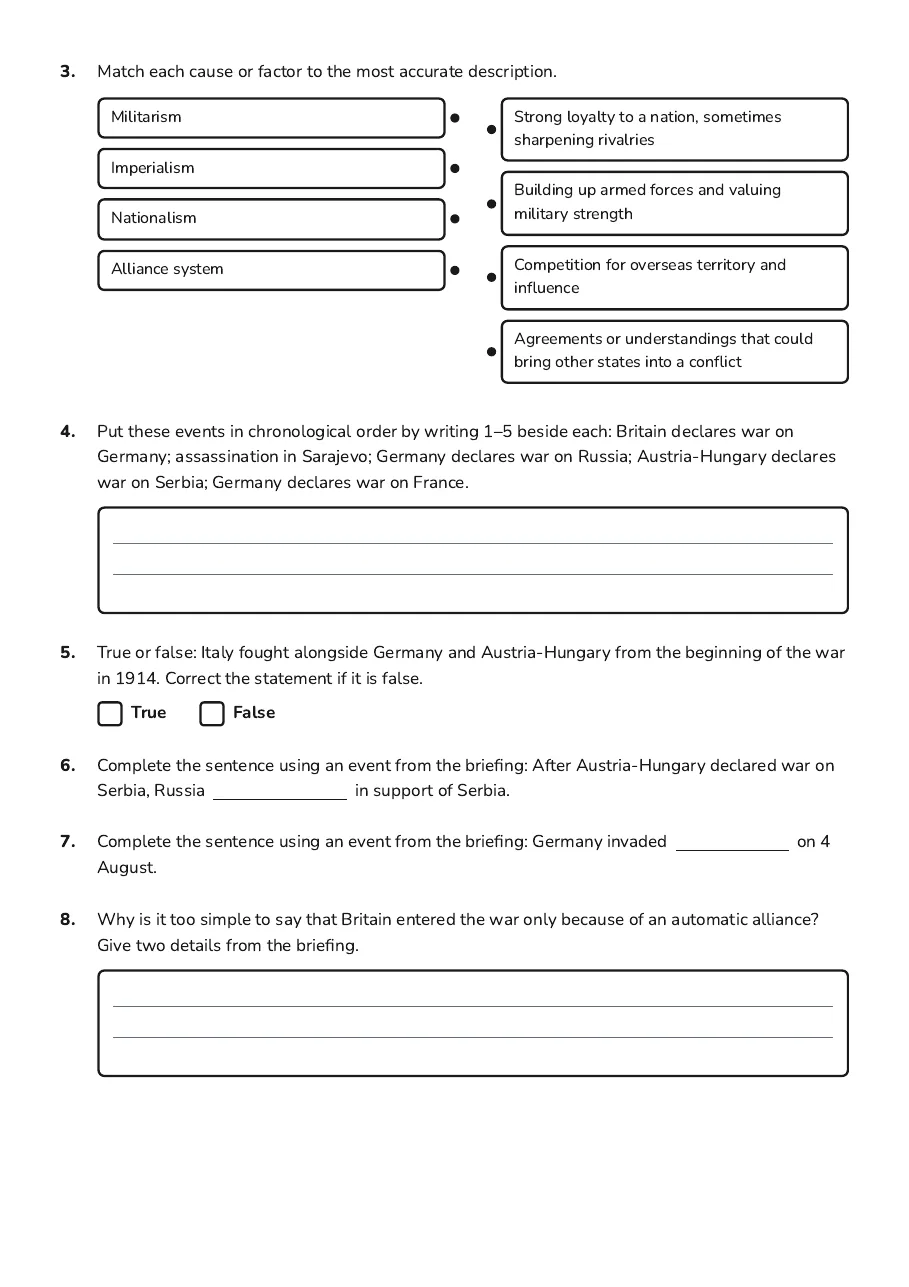
- Militarism
- Imperialism
- Nationalism
- Alliance system
- Strong loyalty to a nation, sometimes sharpening rivalries
- Building up armed forces and valuing military strength
- Competition for overseas territory and influence
- Agreements or understandings that could bring other states into a conflict
3 printable pages
Page 1
Page 2
Page 3
About This Worksheet
Free in Kuraplan
Sign up free, grab the PDF, and customize it for your class.
Print-Ready
Formatted for standard paper. Clean layout, easy to read.
AI-Generated
Created with Kuraplan's AI, designed for real classroom use.
For Teachers & Parents
Use in classrooms, for homework, tutoring, or homeschool.
Need a custom version of this worksheet?
Kuraplan's AI generates custom worksheets in seconds — differentiated for every learner, aligned to your curriculum.
Generate Custom Worksheets — FreeMore NZ History Worksheets
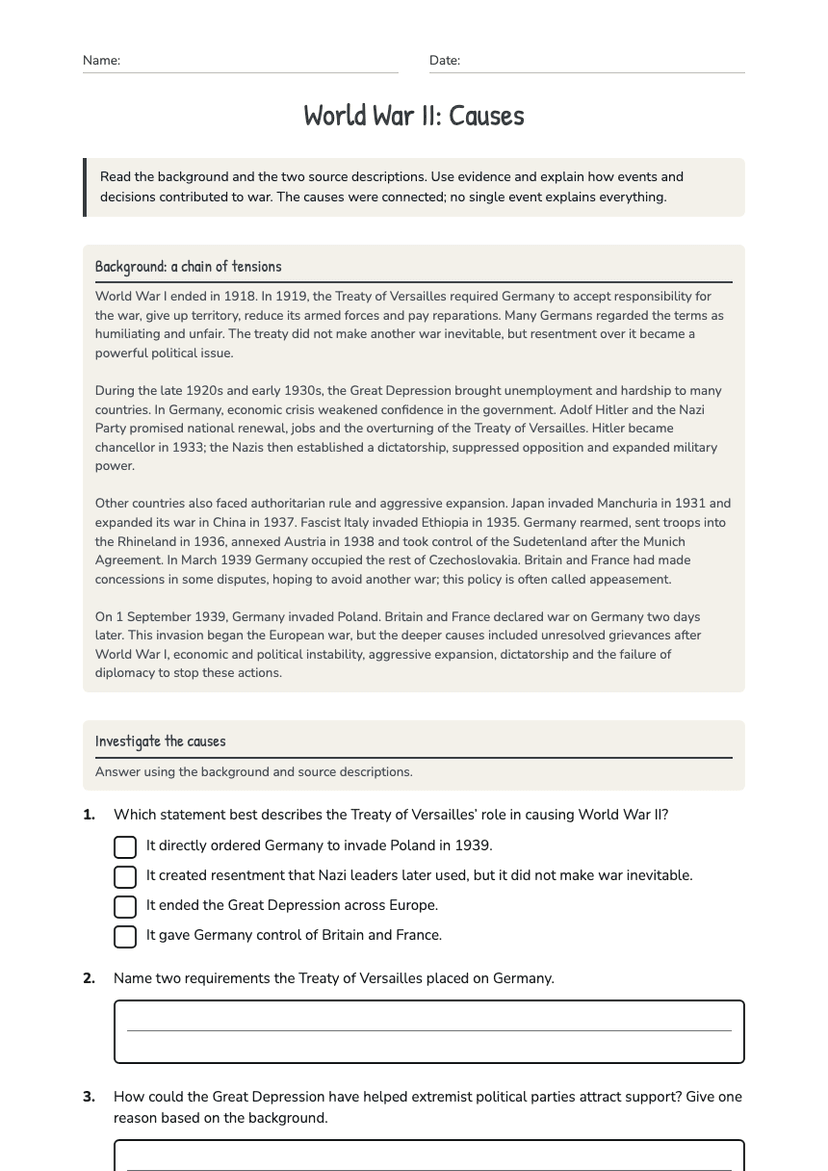
World War II: Causes
Free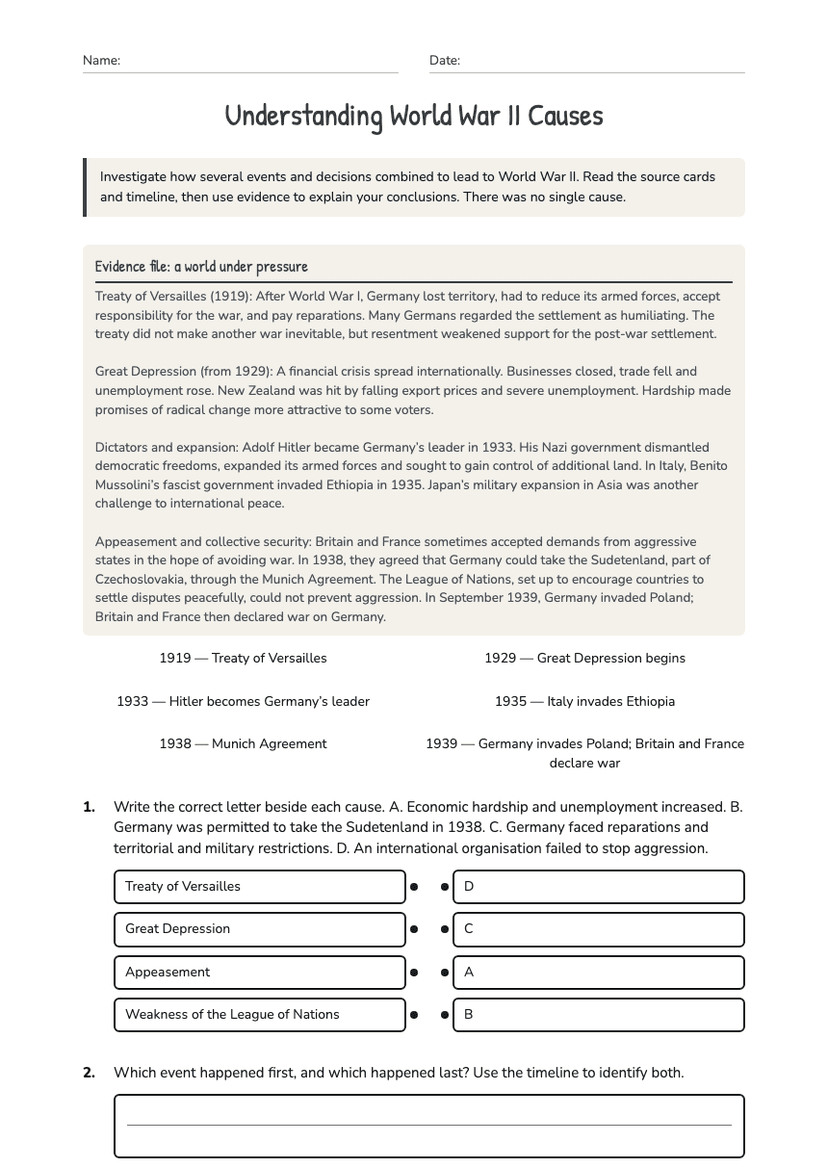
Understanding World War II Causes
Free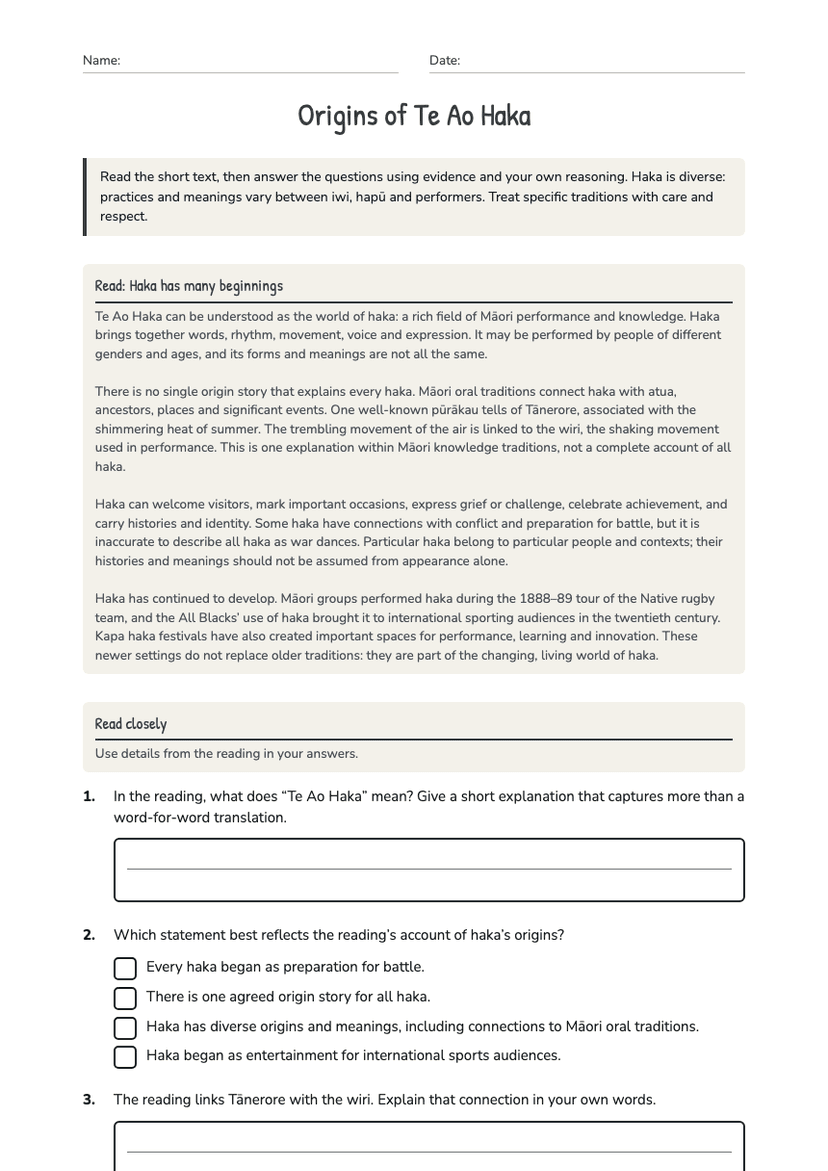
Origins of Te Ao Haka
Free
Real-World Geometry Applications
Free
Real World Percentages Practice
Free
Real-World Proportions Worksheet
Free
Adjectives: Describing Our World
Free