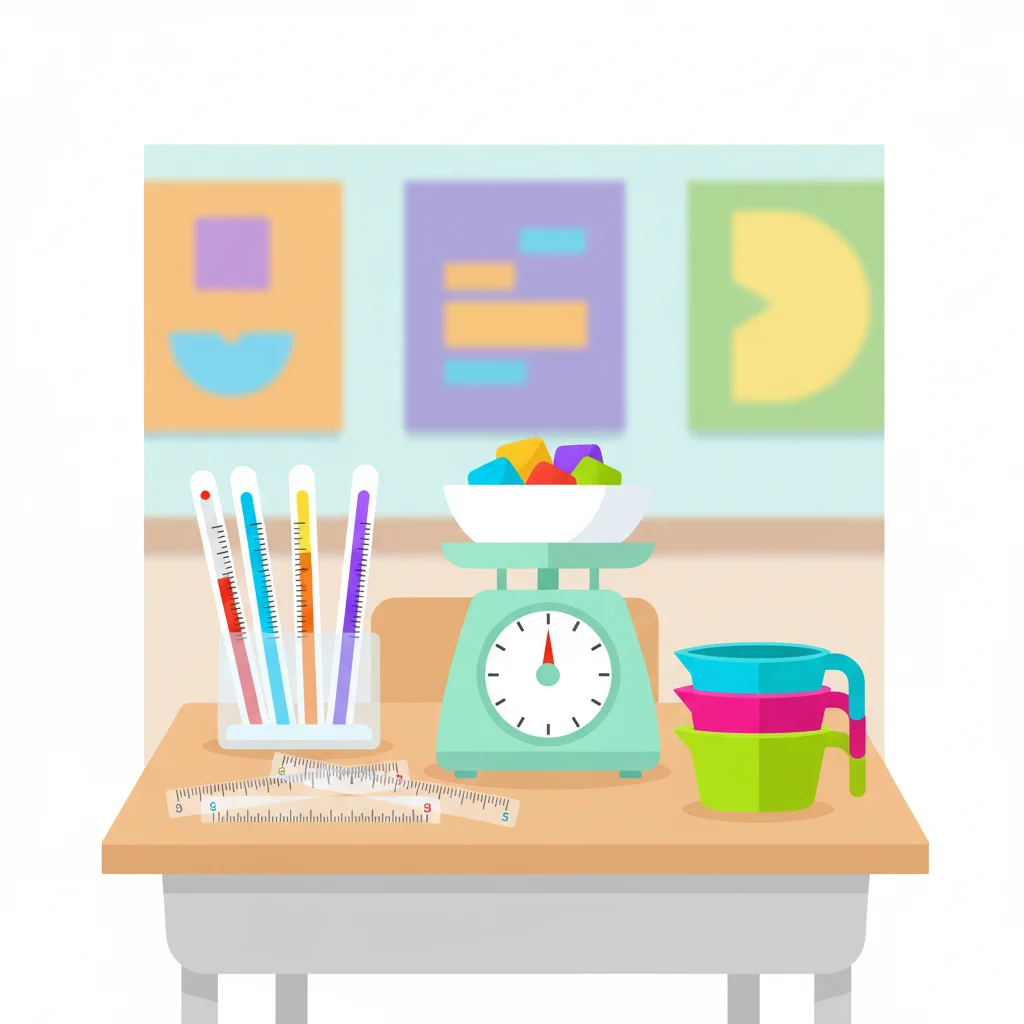
Confident Scale Reading for Year 3
Mathematics Lesson Learning to read different scales Catholic Primary School Values

WALT - We Are Learning To
Read graduations and values on different scales Understand what markings on scales represent Explain our reasoning using mathematical vocabulary Work together with respect and perseverance
Success Criteria - How We'll Know We've Succeeded
I can recognise different parts of a scale I can accurately read values from scales I can describe how I know the value using clear words I can solve practical problems with scales
Starter Activity - What Do These Have in Common?
Look at the measuring tools Talk to your partner using our sentence starters Share your ideas with the class Listen respectfully to others

What Are Scales?
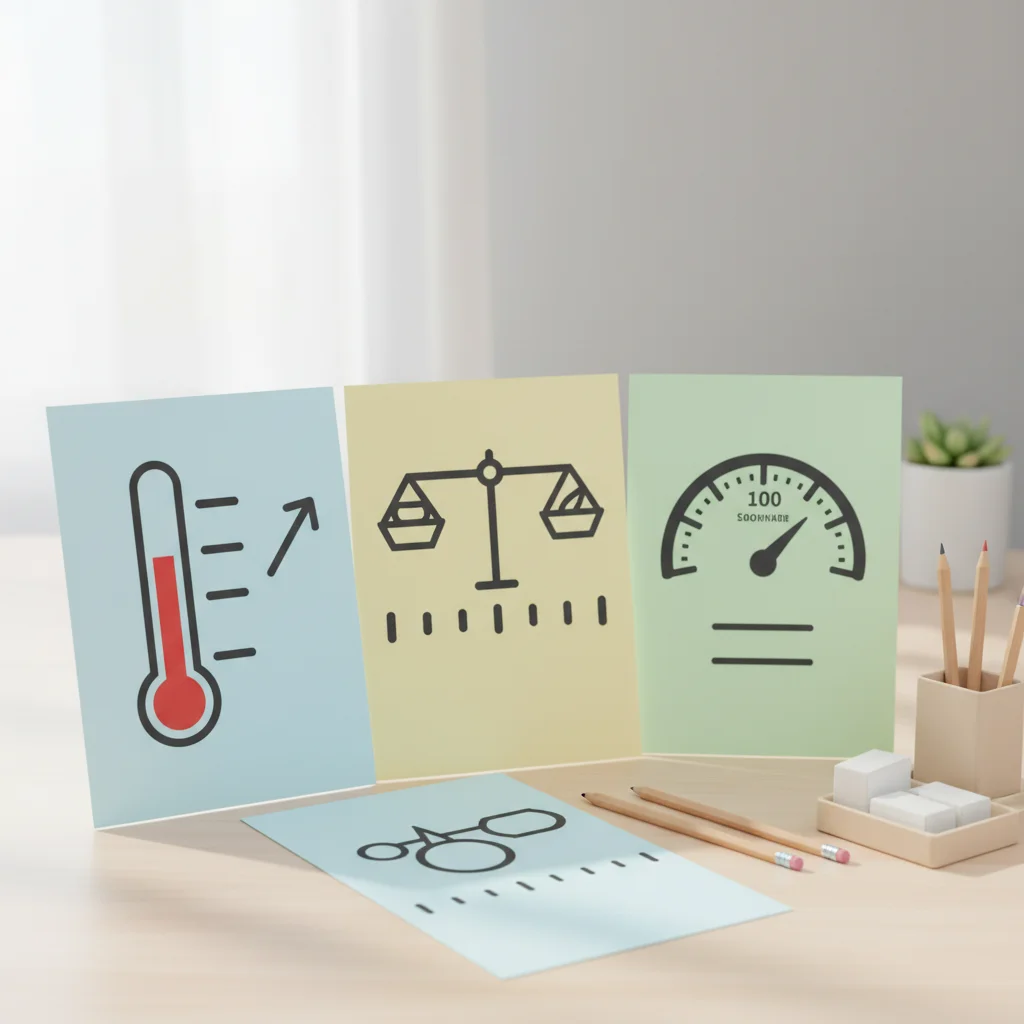
Scales help us measure things accurately They have markings called graduations Each marking represents a specific amount We use them for length, weight, and temperature
Teacher Modelling - Reading a Ruler
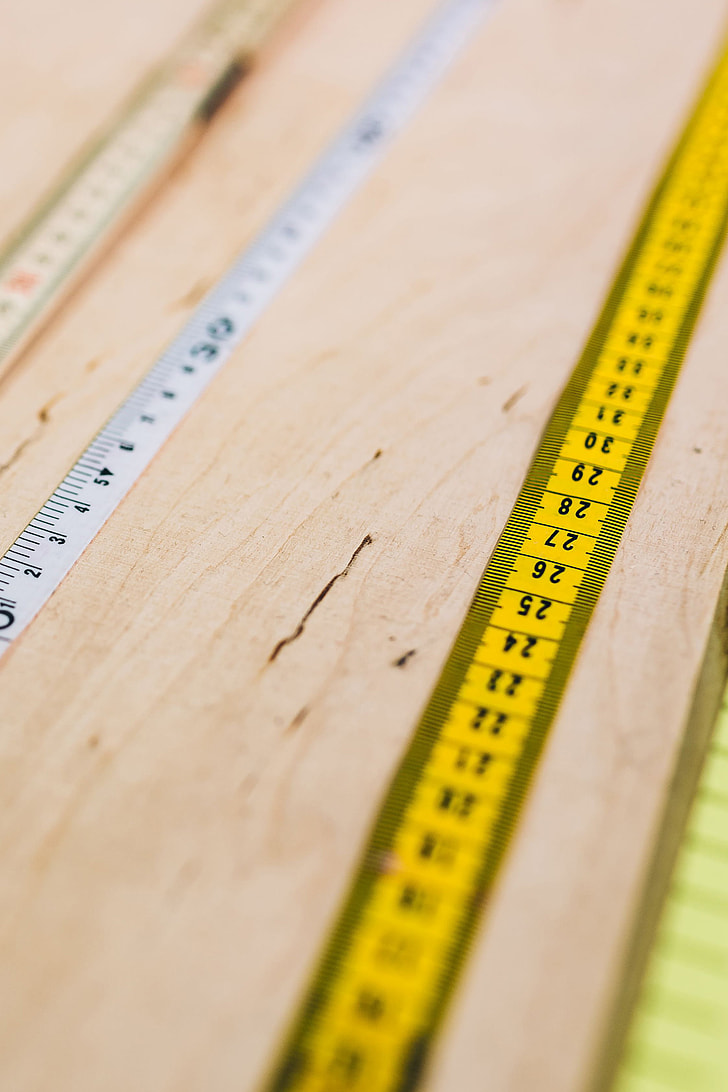
Start at zero and count the markings Big markings are centimetres Small markings are millimetres Think aloud: 'This shows 7 centimetres and 3 millimetres'

Different Types of Scales We Use
{"left":"Length scales (rulers, tape measures)\nMass scales (kitchen scales, bathroom scales)","right":"Temperature scales (thermometers, weather)\nEach scale has different units and markings"}
Guided Group Activity - Scale Reading Stations
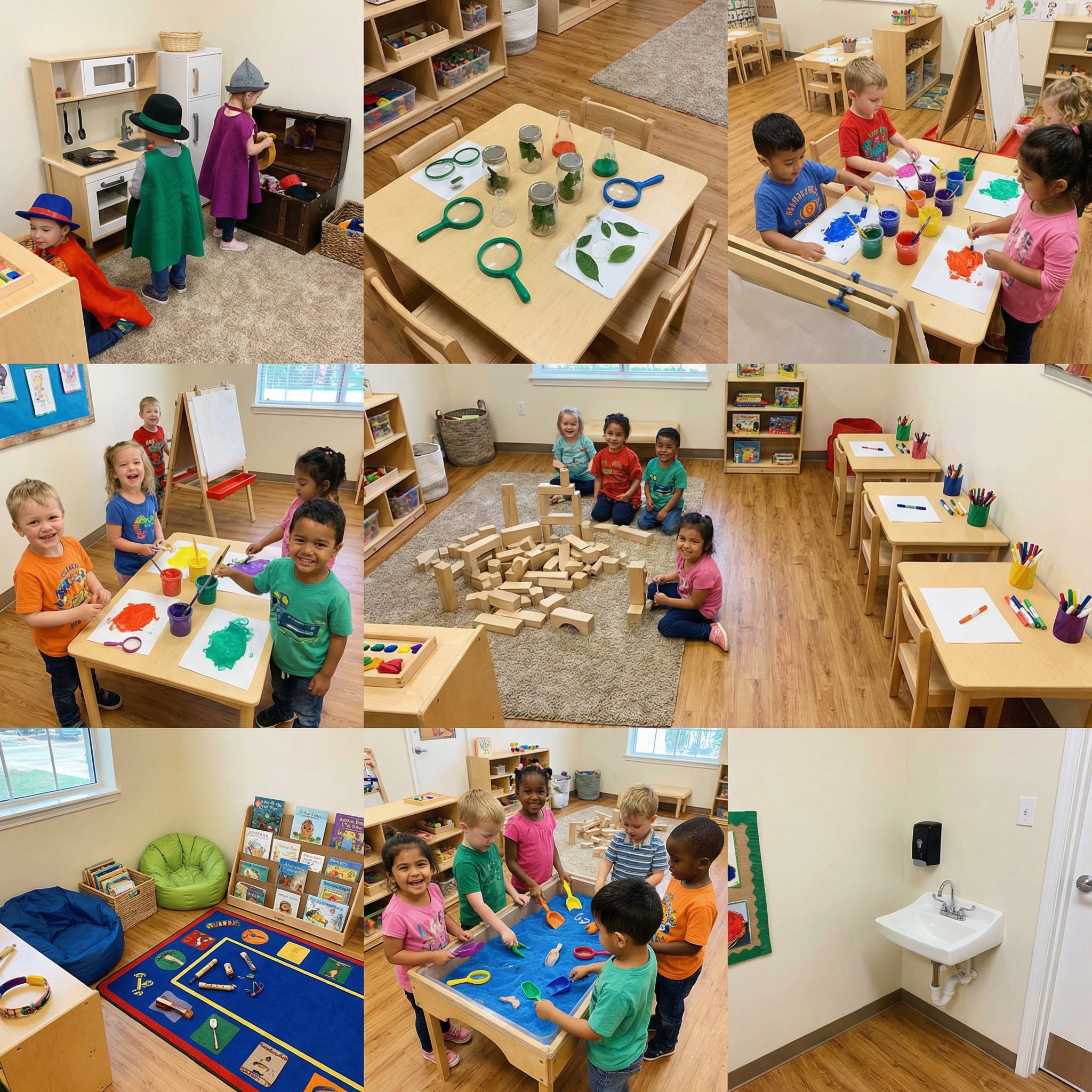
Station 1: Length scales with rulers Station 2: Mass scales showing grams Station 3: Temperature scales with thermometers Use whiteboards to record your answers

Reading Scales with Tricky Intervals
Sometimes markings aren't at every number Count carefully between the marked numbers Estimate when the reading falls between markings Always check your answer makes sense
Independent Practice - Differentiated Worksheets
Emerging: Whole number scales with clear markings Expected: Mixed intervals and half marks Advanced: Decimals and multi-step problems Use dyslexia-friendly resources provided

Challenge Question for Discussion
If the temperature on this thermometer rises by 3 degrees, what will the new reading be? Explain your reasoning to a partner Use our mathematical vocabulary
Plenary - What Have We Learned?
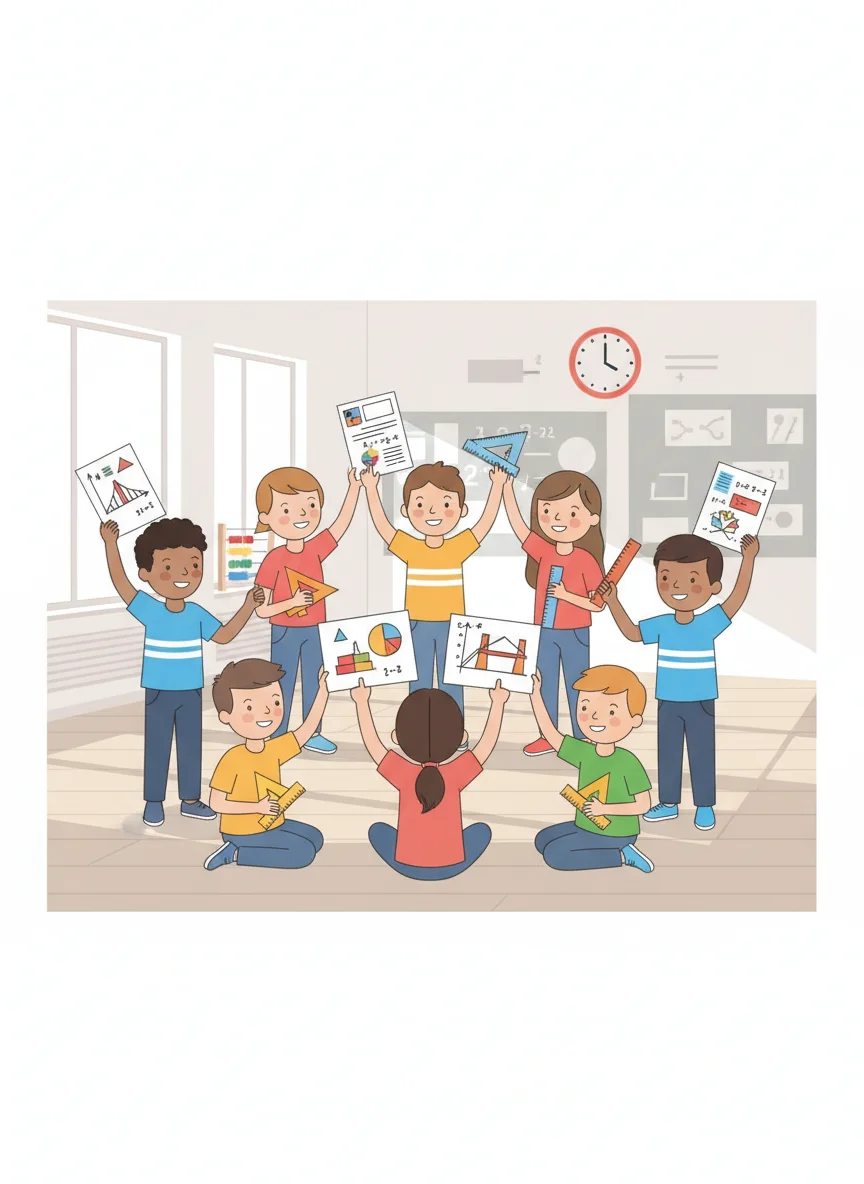
We can read different types of scales accurately We use mathematical vocabulary to explain our thinking We showed respect by listening to classmates We persevered with challenging problems We're now confident scale readers!
More Maths slide decks
Other ready-to-teach maths decks for UK classrooms.


