
Confident Scale Reading
Year 3 Mathematics Learning to read different scales 60 minute lesson
WALT - We Are Learning To
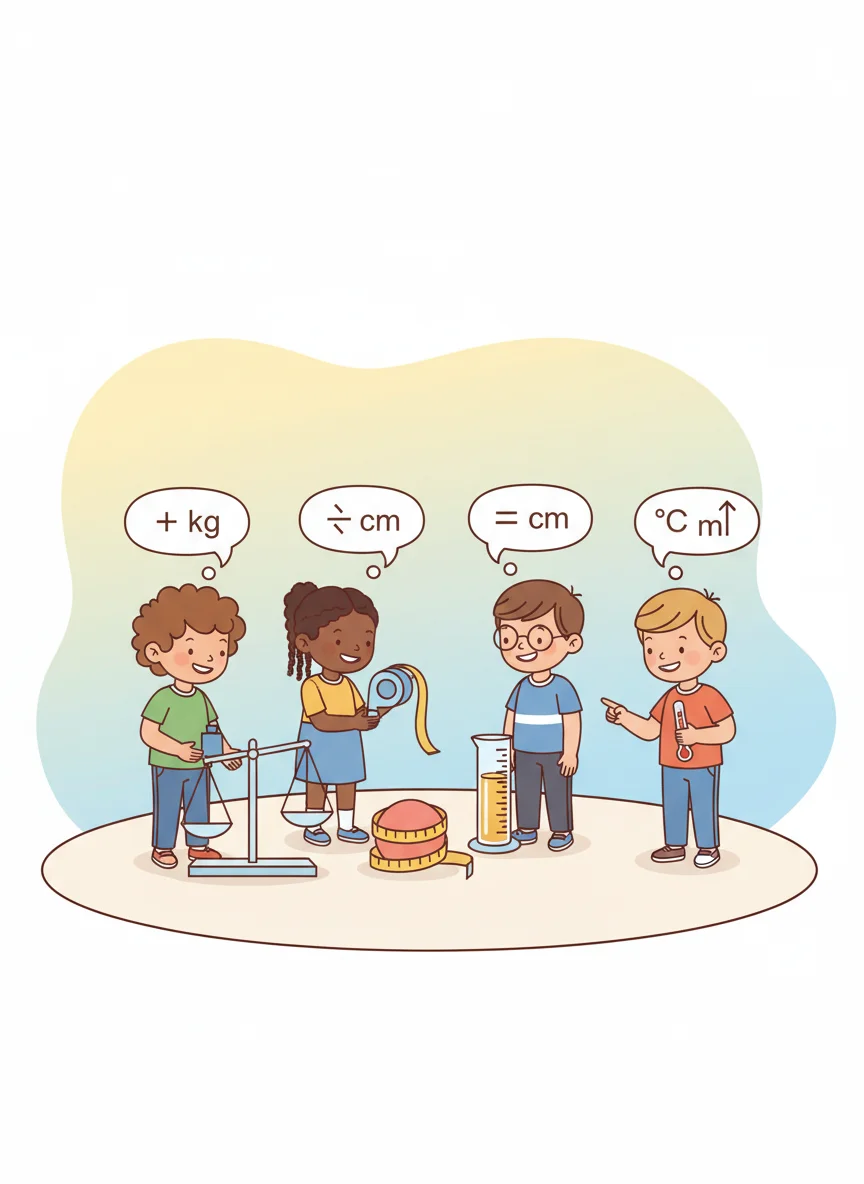
Read graduations and values on different scales Understand what markings on scales represent Explain our reasoning using mathematical vocabulary Work together respectfully and persevere
Success Criteria - How We'll Know We've Succeeded
I can recognise different parts of a scale I can accurately read values from scales I can describe how I know the value using clear vocabulary I can solve practical problems involving scales
Starter Activity - What Do These Have in Common?
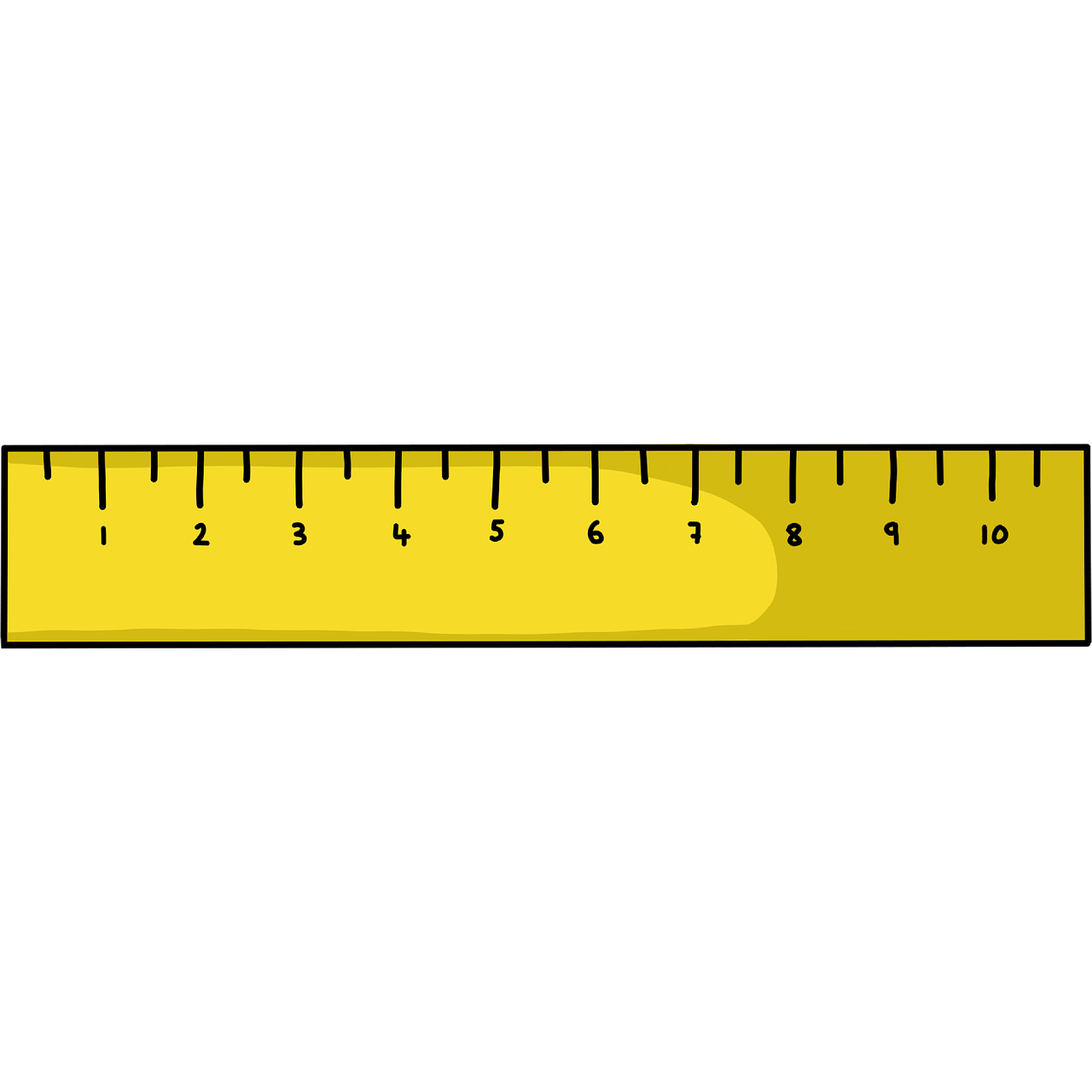
Look at the ruler and kitchen scale Discuss with your partner using these sentence starters: I notice that... I think they both...

What Makes a Scale?
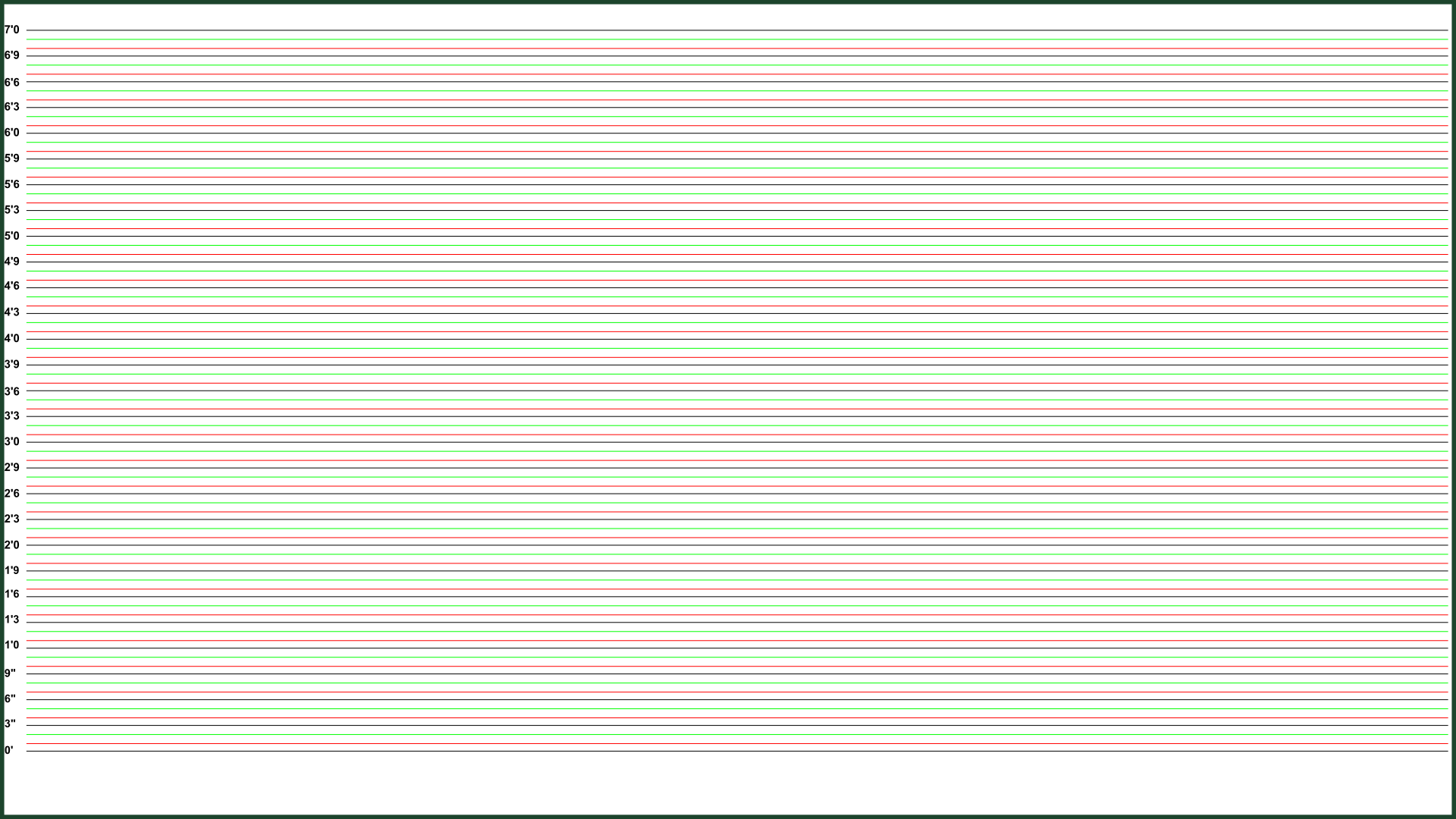
Numbers that show units (cm, g, °C) Small markings called graduations Regular spaces between markings A starting point (usually zero)
Reading Scales Step by Step

Group Stations - Scale Reading Challenge
Station 1: Length scales with rulers Station 2: Mass scales with kitchen scales Station 3: Temperature scales with thermometers Record your answers and explain your thinking

Think and Share
How do you work out the value when the pointer is between two numbers? What strategies help you read scales accurately?
Extension Challenges for Advanced Learners
{"left":"Create your own scale with irregular intervals\nChallenge a friend to read your scale","right":"Convert between different units using scales\nEstimate values between markings using fractions"}

Celebrating Our Learning
We showed respect by listening to each other We persevered when scales were tricky to read We used clear mathematical vocabulary We worked as a community to solve problems
More Maths slide decks
Other ready-to-teach maths decks for UK classrooms.


