Fiction vs Non-fiction Features
A free english worksheet ready for your classroom. Open in Kuraplan to grab the print-ready PDF, customize it for your students, or generate a fresh version in seconds.
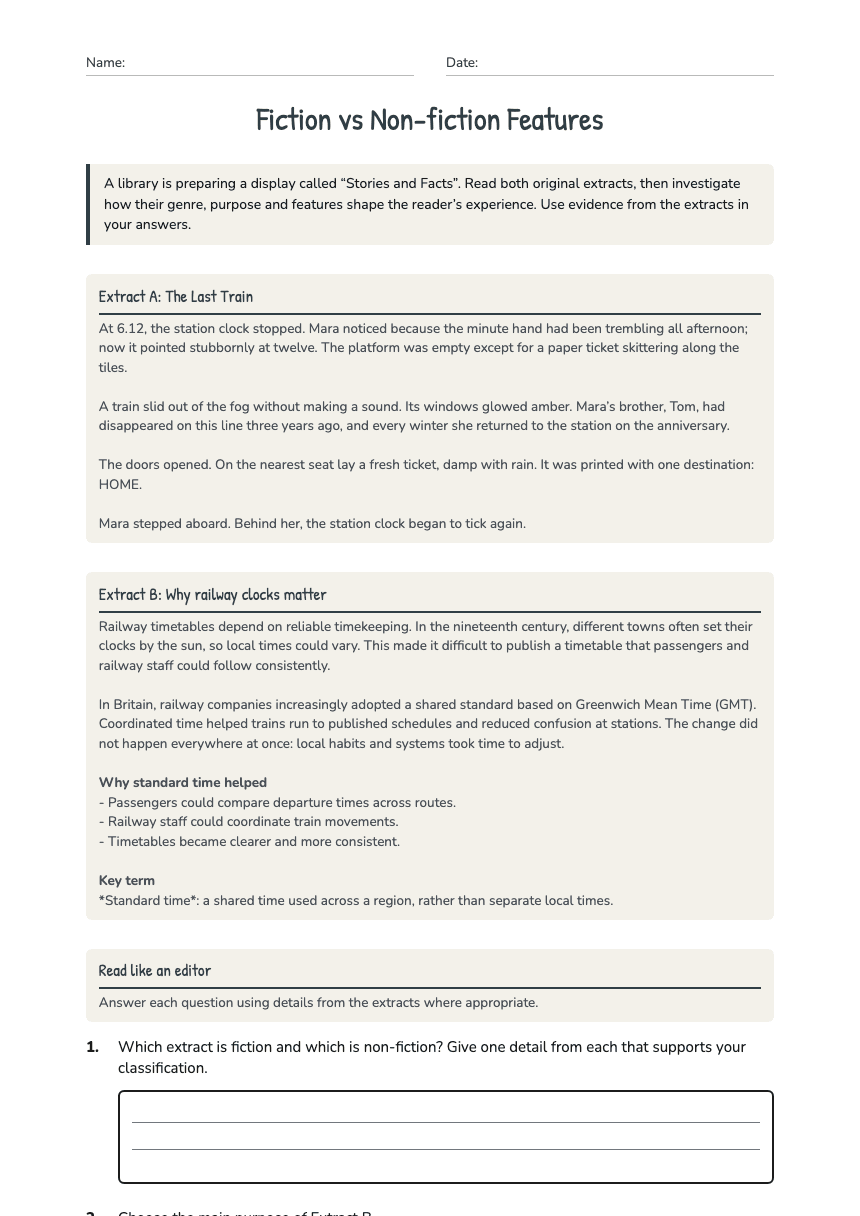
Fiction vs Non-fiction Features
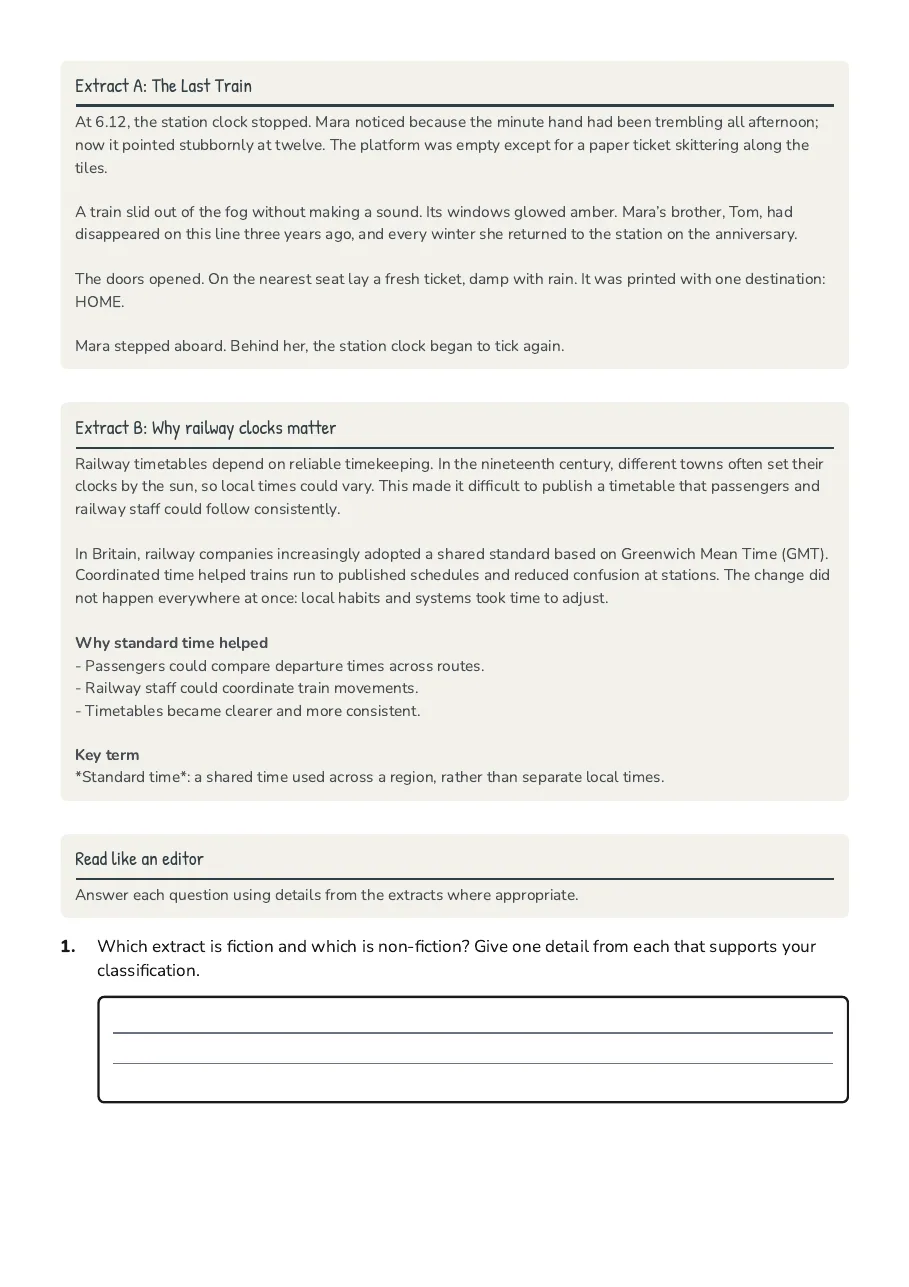
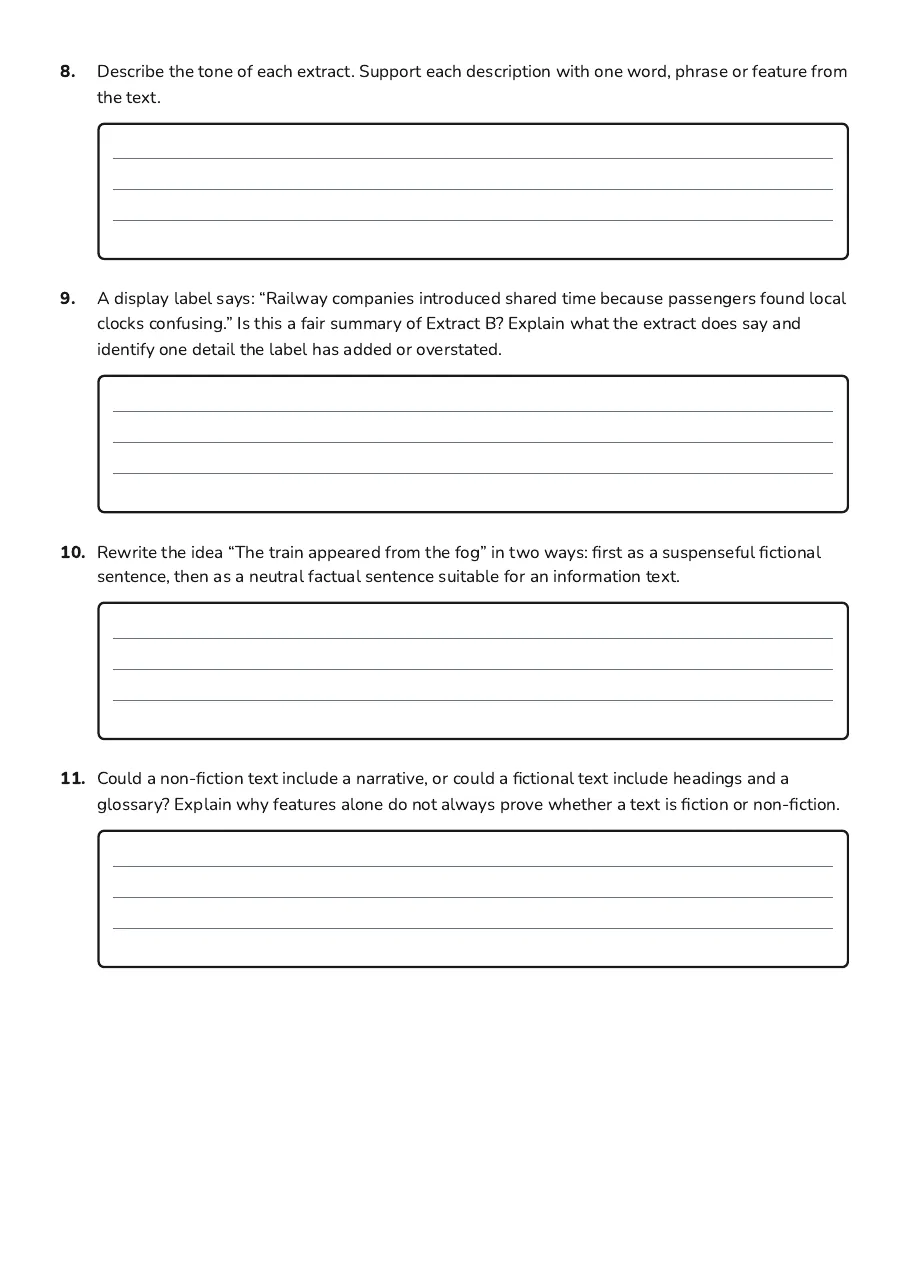
Extract A: The Last Train
At 6.12, the station clock stopped. Mara noticed because the minute hand had been trembling all afternoon; now it pointed stubbornly at twelve. The platform was empty except for a paper ticket skittering along the tiles. A train slid out of the fog without making a sound. Its windows glowed amber. Mara’s brother, Tom, had disappeared on this line three years ago, and every winter she returned to the station on the anniversary. The doors opened. On the nearest seat lay a fresh ticket, damp with rain. It was printed with one destination: HOME. Mara stepped aboard. Behind her, the station clock began to tick again.
Extract B: Why railway clocks matter
Railway timetables depend on reliable timekeeping. In the nineteenth century, different towns often set their clocks by the sun, so local times could vary. This made it difficult to publish a timetable that passengers and railway staff could follow consistently. In Britain, railway companies increasingly adopted a shared standard based on Greenwich Mean Time (GMT). Coordinated time helped trains run to published schedules and reduced confusion at stations. The change did not happen everywhere at once: local habits and systems took time to adjust. Why standard time helped - Passengers could compare departure times across routes. - Railway staff could coordinate train movements. - Timetables became clearer and more consistent. Key term *Standard time*: a shared time used across a region, rather than separate local times.
Read like an editor
Answer each question using details from the extracts where appropriate.
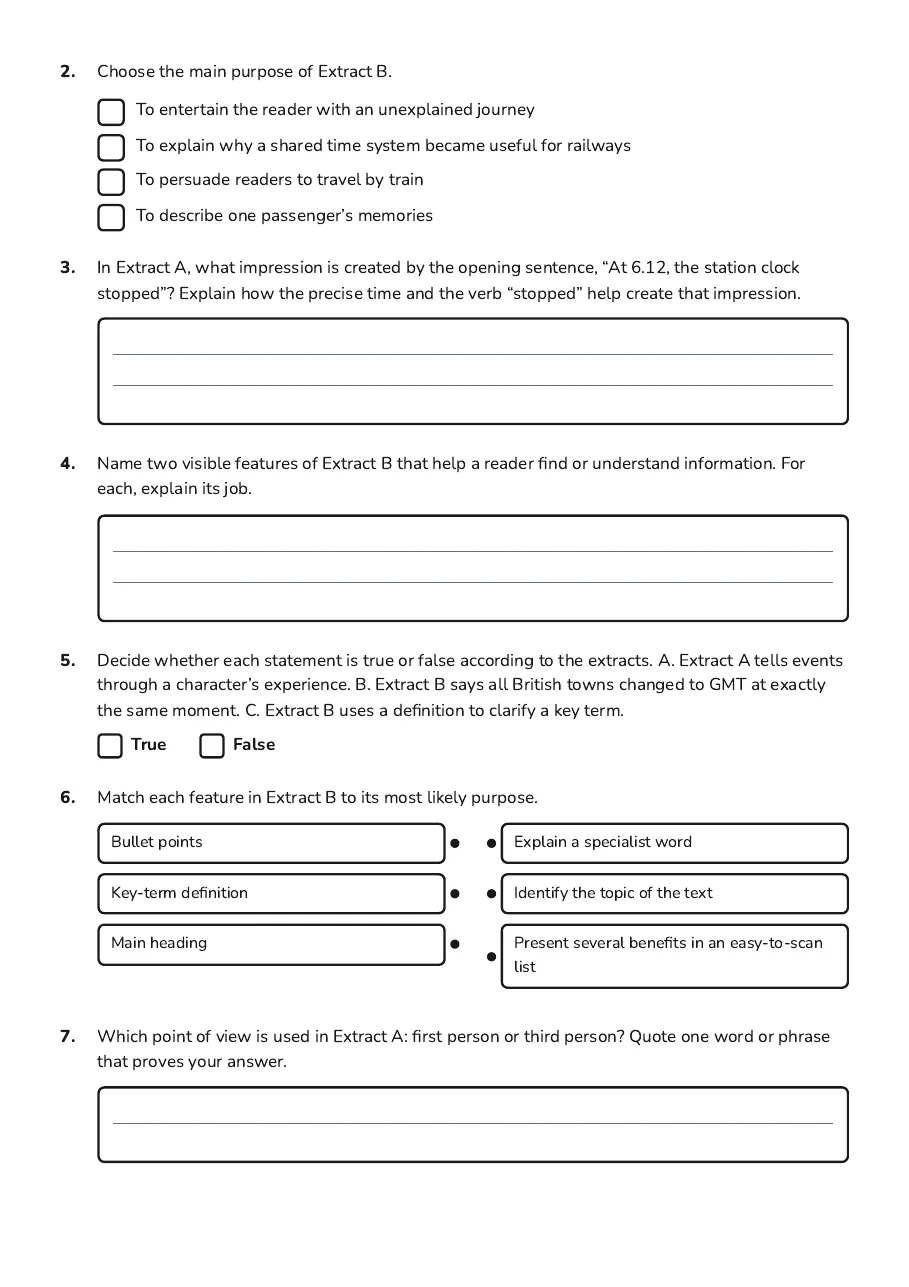
- To entertain the reader with an unexplained journey
- To explain why a shared time system became useful for railways
- To persuade readers to travel by train
- To describe one passenger’s memories
- Bullet points
- Key-term definition
- Main heading
- Explain a specialist word
- Identify the topic of the text
- Present several benefits in an easy-to-scan list
4 printable pages
Page 1
Page 2
Page 3
Page 4
About This Worksheet
Free in Kuraplan
Sign up free, grab the PDF, and customize it for your class.
Print-Ready
Formatted for standard paper. Clean layout, easy to read.
AI-Generated
Created with Kuraplan's AI, designed for real classroom use.
For Teachers & Parents
Use in classrooms, for homework, tutoring, or homeschool.
Need a custom version of this worksheet?
Kuraplan's AI generates custom worksheets in seconds — differentiated for every learner, aligned to your curriculum.
Generate Custom Worksheets — Free