Human Digestive System
A free science worksheet ready for your classroom. Open in Kuraplan to grab the print-ready PDF, customize it for your students, or generate a fresh version in seconds.
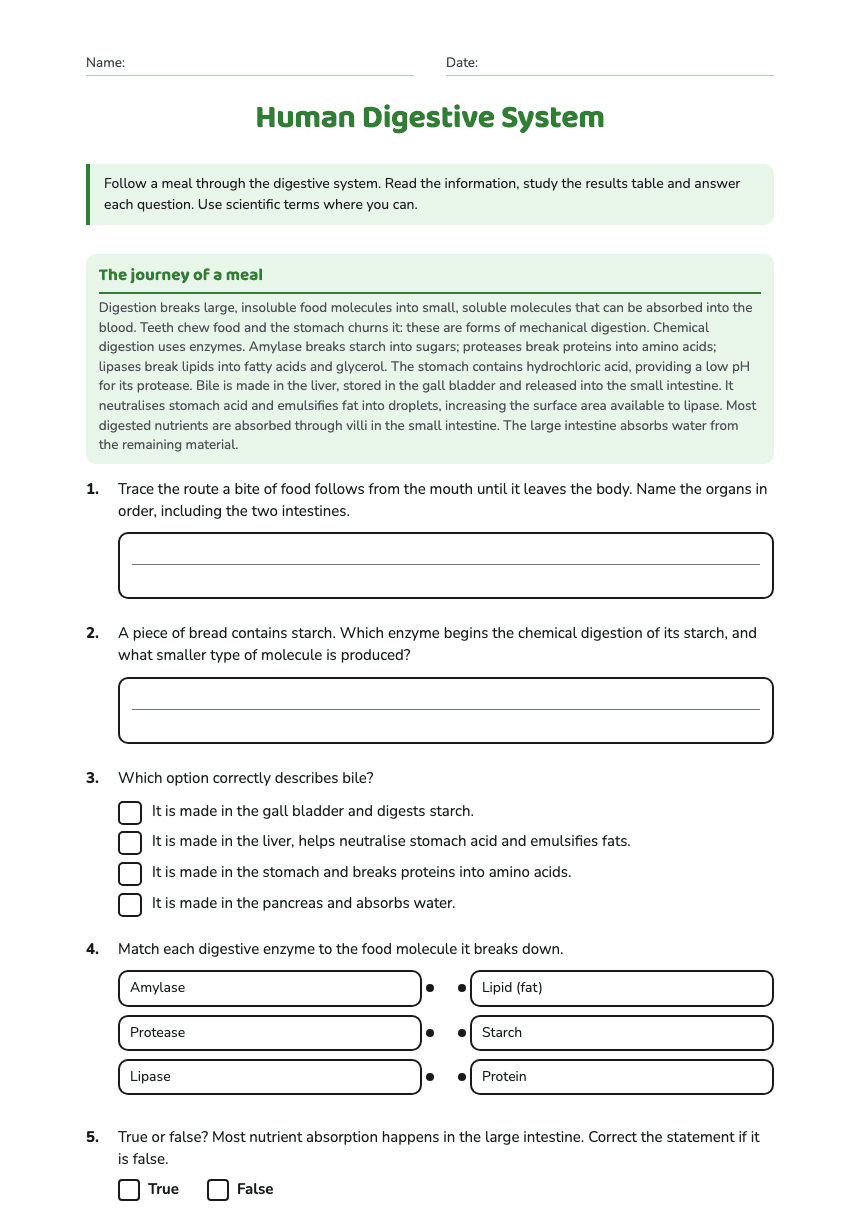
Human Digestive System
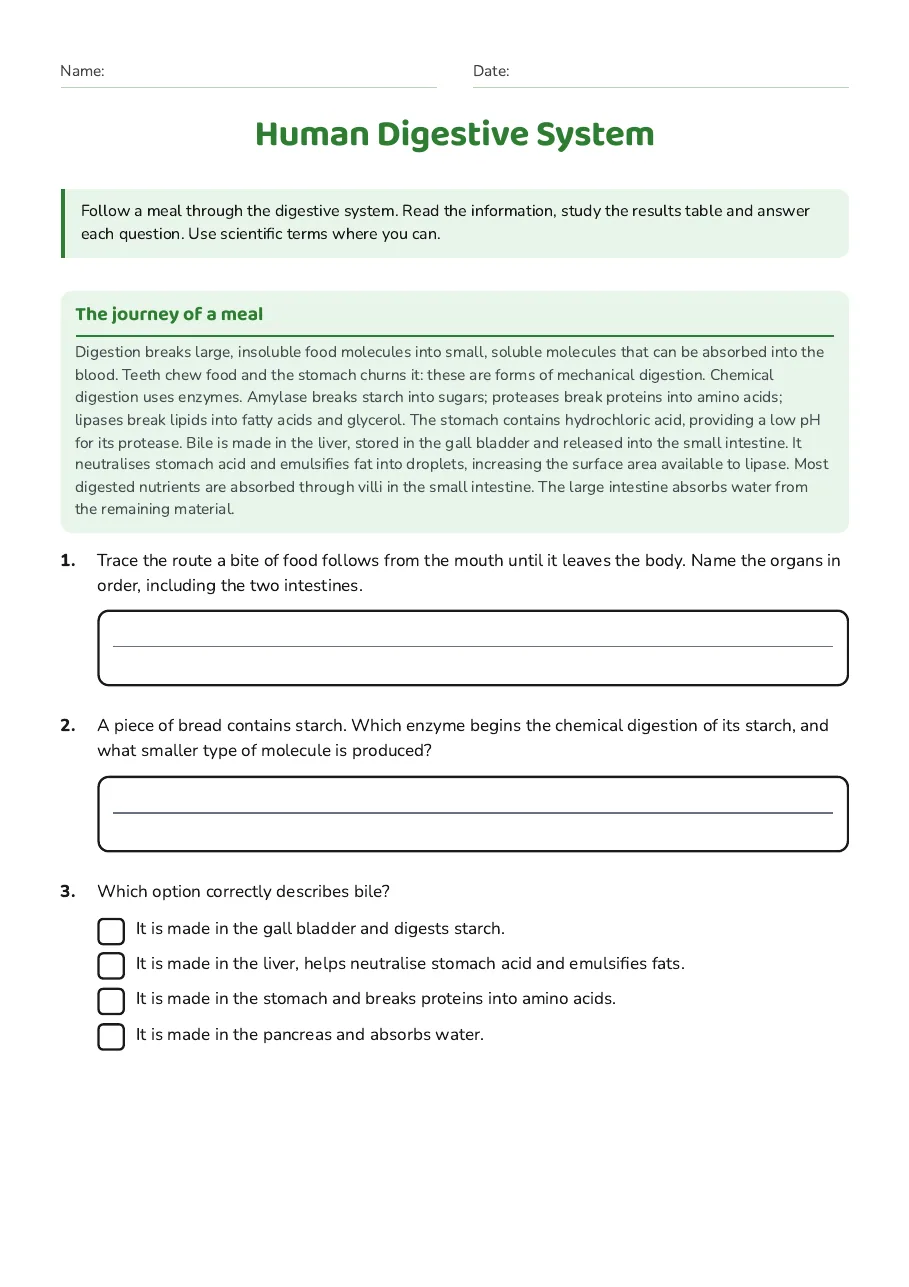
The journey of a meal
Digestion breaks large, insoluble food molecules into small, soluble molecules that can be absorbed into the blood. Teeth chew food and the stomach churns it: these are forms of mechanical digestion. Chemical digestion uses enzymes. Amylase breaks starch into sugars; proteases break proteins into amino acids; lipases break lipids into fatty acids and glycerol. The stomach contains hydrochloric acid, providing a low pH for its protease. Bile is made in the liver, stored in the gall bladder and released into the small intestine. It neutralises stomach acid and emulsifies fat into droplets, increasing the surface area available to lipase. Most digested nutrients are absorbed through villi in the small intestine. The large intestine absorbs water from the remaining material.
- It is made in the gall bladder and digests starch.
- It is made in the liver, helps neutralise stomach acid and emulsifies fats.
- It is made in the stomach and breaks proteins into amino acids.
- It is made in the pancreas and absorbs water.
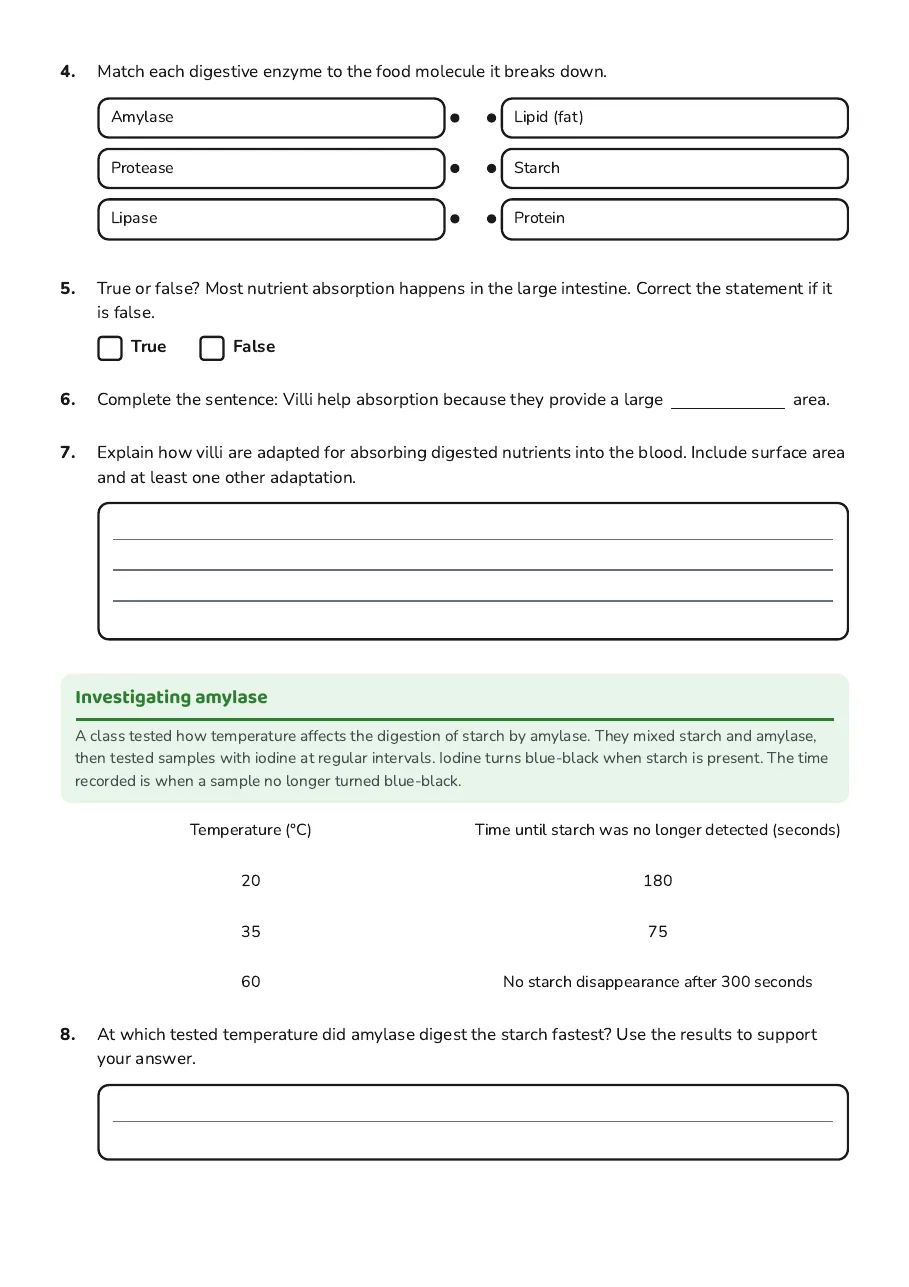
- Amylase
- Protease
- Lipase
- Lipid (fat)
- Starch
- Protein
Investigating amylase
A class tested how temperature affects the digestion of starch by amylase. They mixed starch and amylase, then tested samples with iodine at regular intervals. Iodine turns blue-black when starch is present. The time recorded is when a sample no longer turned blue-black.
Temperature (°C)
Time until starch was no longer detected (seconds)
20
180
35
75
60
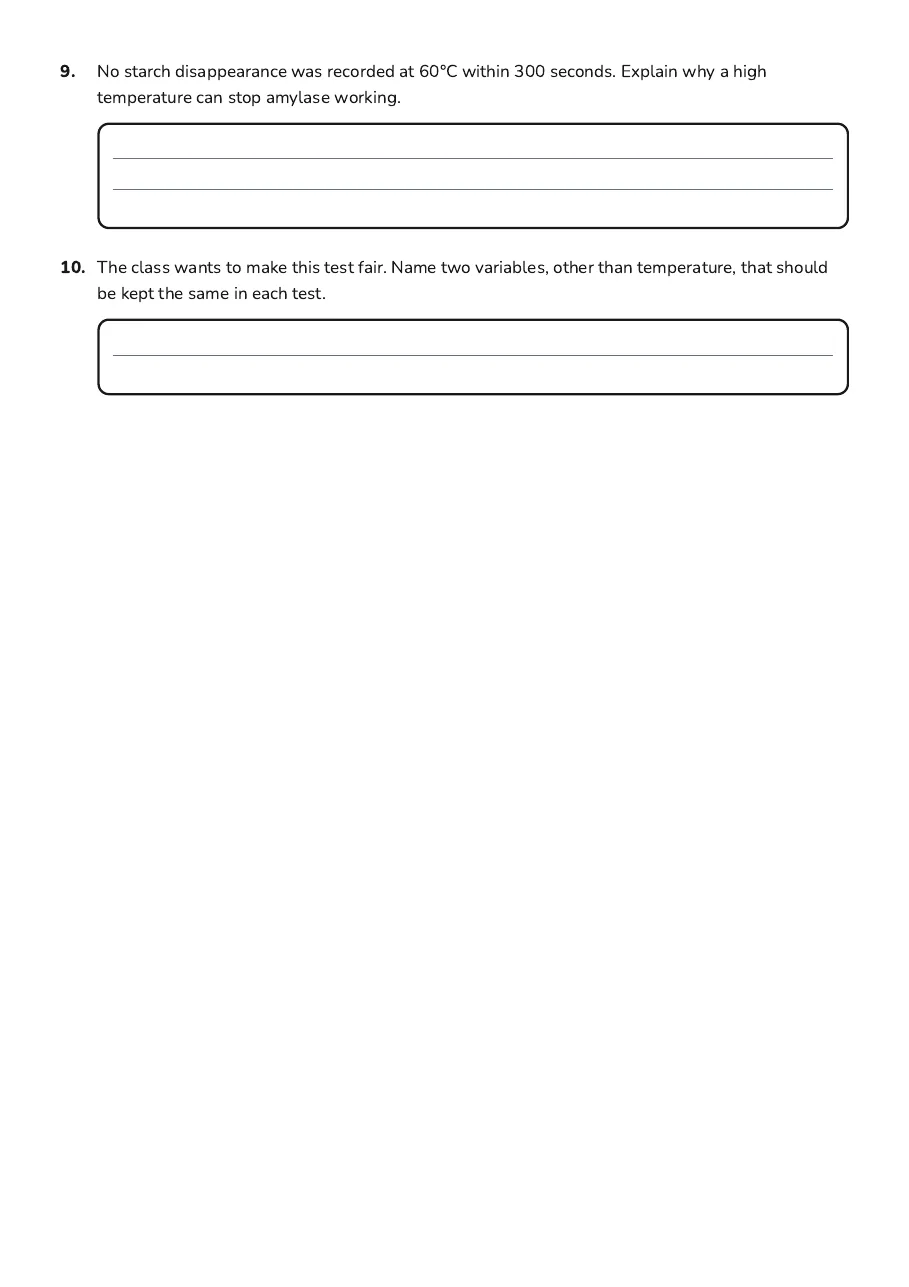
No starch disappearance after 300 seconds
3 printable pages
Page 1
Page 2
Page 3
About This Worksheet
Free in Kuraplan
Sign up free, grab the PDF, and customize it for your class.
Print-Ready
Formatted for standard paper. Clean layout, easy to read.
AI-Generated
Created with Kuraplan's AI, designed for real classroom use.
For Teachers & Parents
Use in classrooms, for homework, tutoring, or homeschool.
Need a custom version of this worksheet?
Kuraplan's AI generates custom worksheets in seconds — differentiated for every learner, aligned to your curriculum.
Generate Custom Worksheets — Free