Mystery Box Descriptive Writing
A free english worksheet ready for your classroom. Open in Kuraplan to grab the print-ready PDF, customize it for your students, or generate a fresh version in seconds.
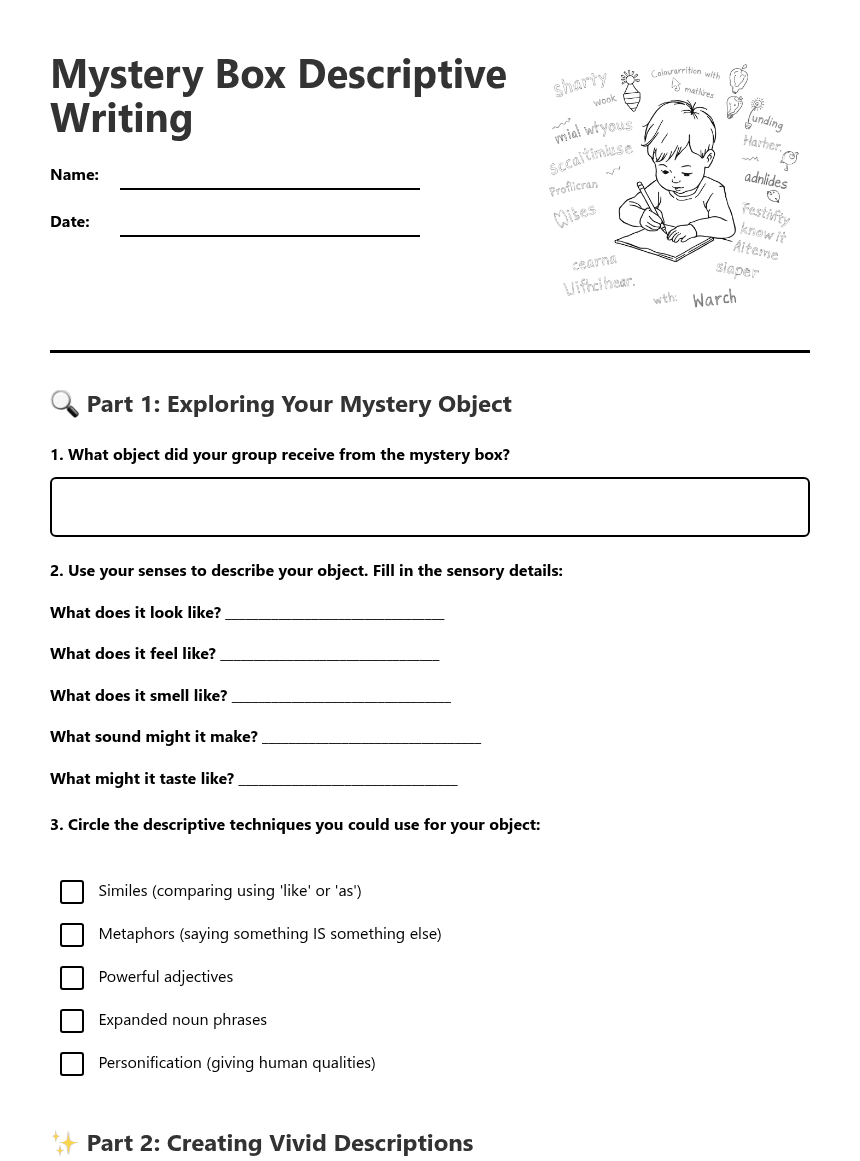
Mystery Box Descriptive Writing
🔍 Part 1: Exploring Your Mystery Object
What does it look like? _________________________________
What does it feel like? _________________________________
What does it smell like? _________________________________
What sound might it make? _________________________________
What might it taste like? _________________________________
✨ Part 2: Creating Vivid Descriptions
a) It looked like _________________________________________________
b) It felt as ____________________________________________________
c) It moved like _________________________________________________
The key was old.
Showing version: ________________________________________________
The feather was soft.
Showing version: ________________________________________________
If this object could speak, it would say: "_________________________
________________________________________________________________"
This object reminds me of: _____________________________________
I think it once belonged to: ____________________________________
📝 Part 3: Your Descriptive Paragraph
• Expanded noun phrases • Sensory details • Similes or metaphors • Varied sentence lengths
🎯 Part 4: Peer Feedback and Reflection
Group: _____________ Object: _________________________________
I liked how they described ___________________________________
because it made me feel/imagine _____________________________
About This Worksheet
Free in Kuraplan
Sign up free, grab the PDF, and customize it for your class.
Print-Ready
Formatted for standard paper. Clean layout, easy to read.
AI-Generated
Created with Kuraplan's AI, designed for real classroom use.
For Teachers & Parents
Use in classrooms, for homework, tutoring, or homeschool.
Need a custom version of this worksheet?
Kuraplan's AI generates custom worksheets in seconds — differentiated for every learner, aligned to your curriculum.
Generate Custom Worksheets — FreeMore English Worksheets
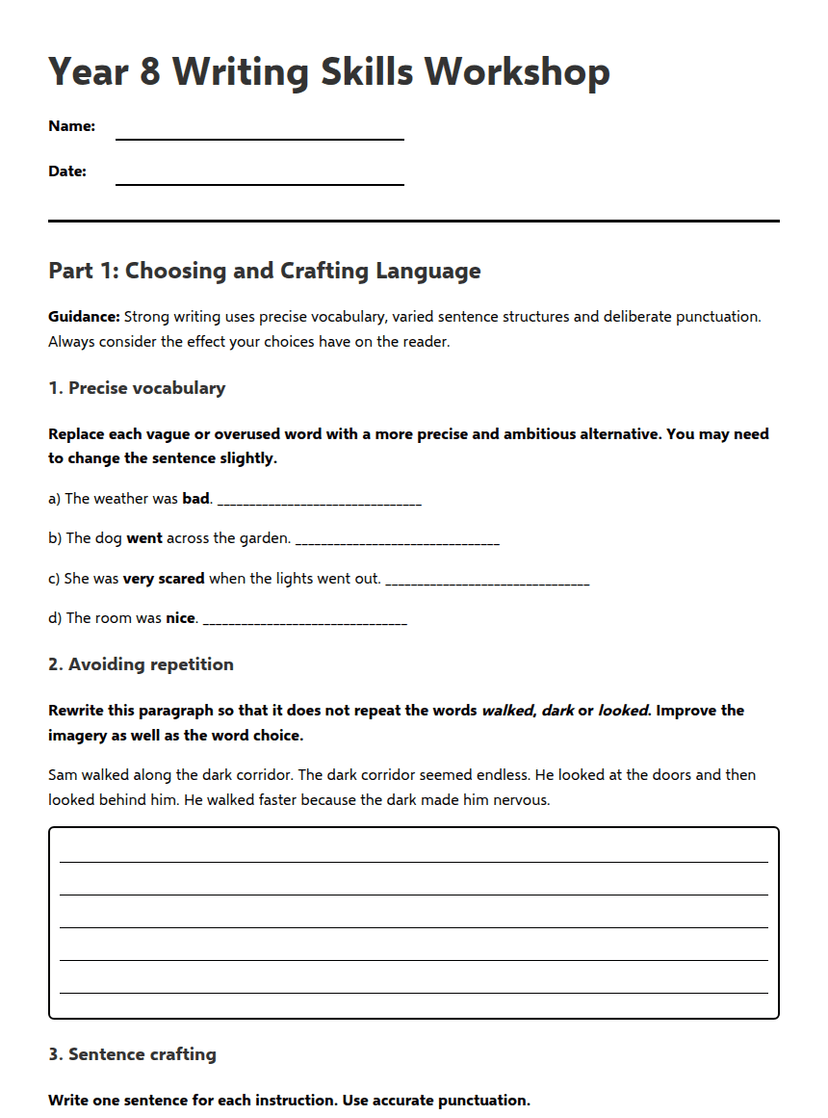
Year 8 Writing Skills Workshop
Free
Alien Ecosystem Design Project
Free
Futuristic City Design Worksheet
Free
Gothic Writing Planning Guide
Free
Gothic Creative Writing Guide
Free
Mysterious House Exploration
Free
Fairy Tale Writing Workshop
Free