Unicellular Organisms Worksheet
A free science worksheet ready for your classroom. Open in Kuraplan to grab the print-ready PDF, customize it for your students, or generate a fresh version in seconds.
Unicellular Organisms Worksheet
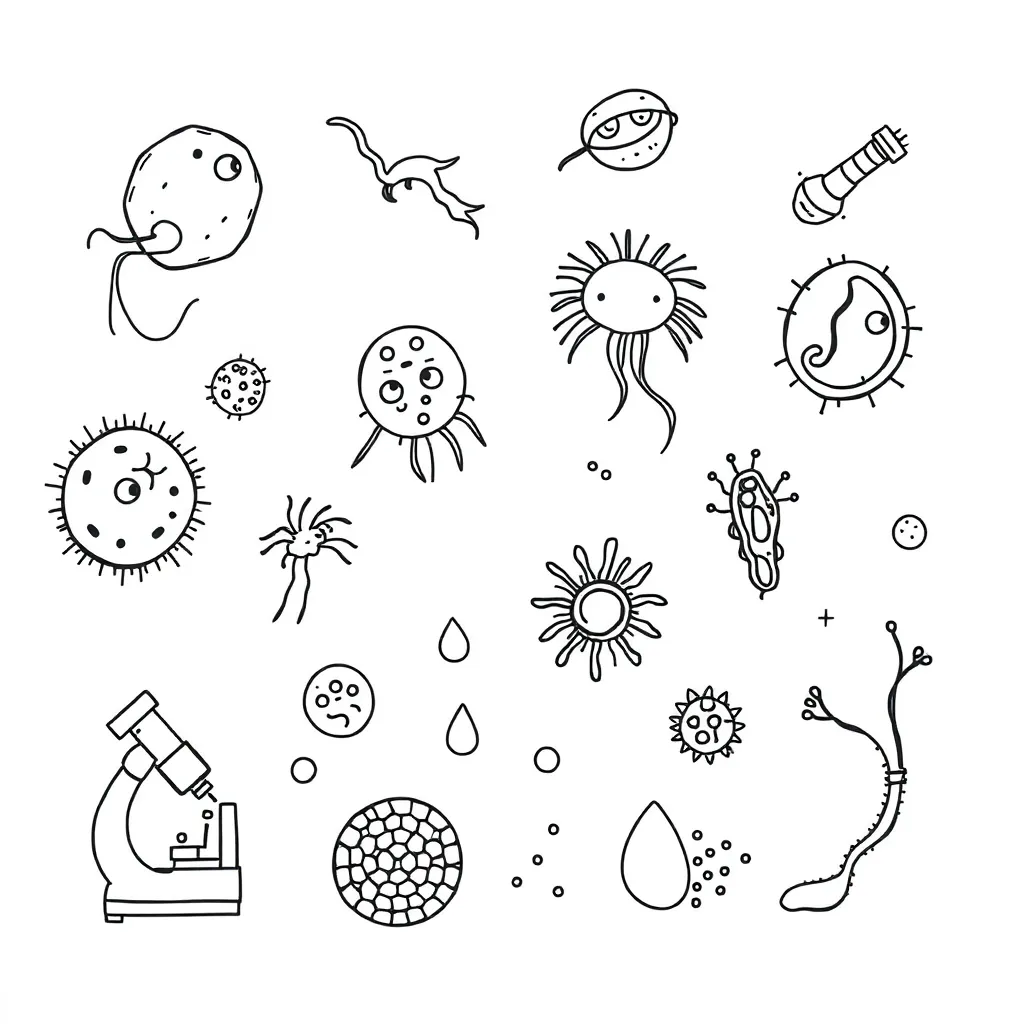
🔬 Part 1: Understanding Unicellular Organisms
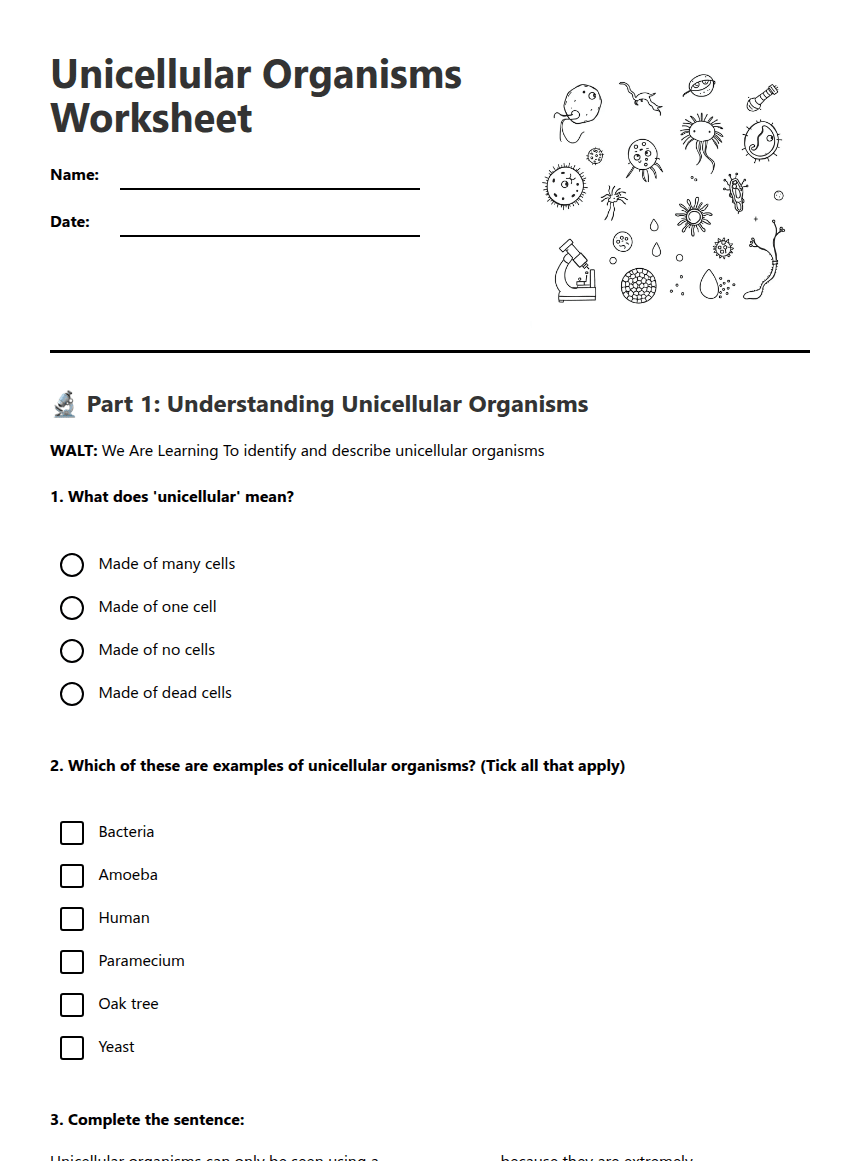
WALT: We Are Learning To identify and describe unicellular organisms
Unicellular organisms can only be seen using a _________________ because they are extremely _________.
📊 Part 2: Comparing Organisms
Unicellular Organisms:
Number of cells: ___________
Size: Usually _____________ (microscopic/large)
Examples: _____________, _____________, _____________
Multicellular Organisms:
Number of cells: ___________
Size: Can be _____________ (microscopic/large)
Examples: _____________, _____________, _____________
1. _________________________________________________
2. _________________________________________________
🌟 Part 3: Extension Research Activity
My chosen organism: _________________________
Fact 1:
Fact 2:
Fact 3:
Dyslexia-friendly tip: Key words are in bold. Read questions twice before answering. Use the word bank if needed: microscope, bacteria, amoeba, reproduction, cell division, small, single
Success Criteria:
✓ I can define what unicellular means
✓ I can give examples of unicellular organisms
✓ I can explain how unicellular organisms survive
✓ I can compare unicellular and multicellular organisms
About This Worksheet
Free in Kuraplan
Sign up free, grab the PDF, and customize it for your class.
Print-Ready
Formatted for standard paper. Clean layout, easy to read.
AI-Generated
Created with Kuraplan's AI, designed for real classroom use.
For Teachers & Parents
Use in classrooms, for homework, tutoring, or homeschool.
Need a custom version of this worksheet?
Kuraplan's AI generates custom worksheets in seconds — differentiated for every learner, aligned to your curriculum.
Generate Custom Worksheets — FreeMore Science Worksheets
GCSE Biology Core Topics
Free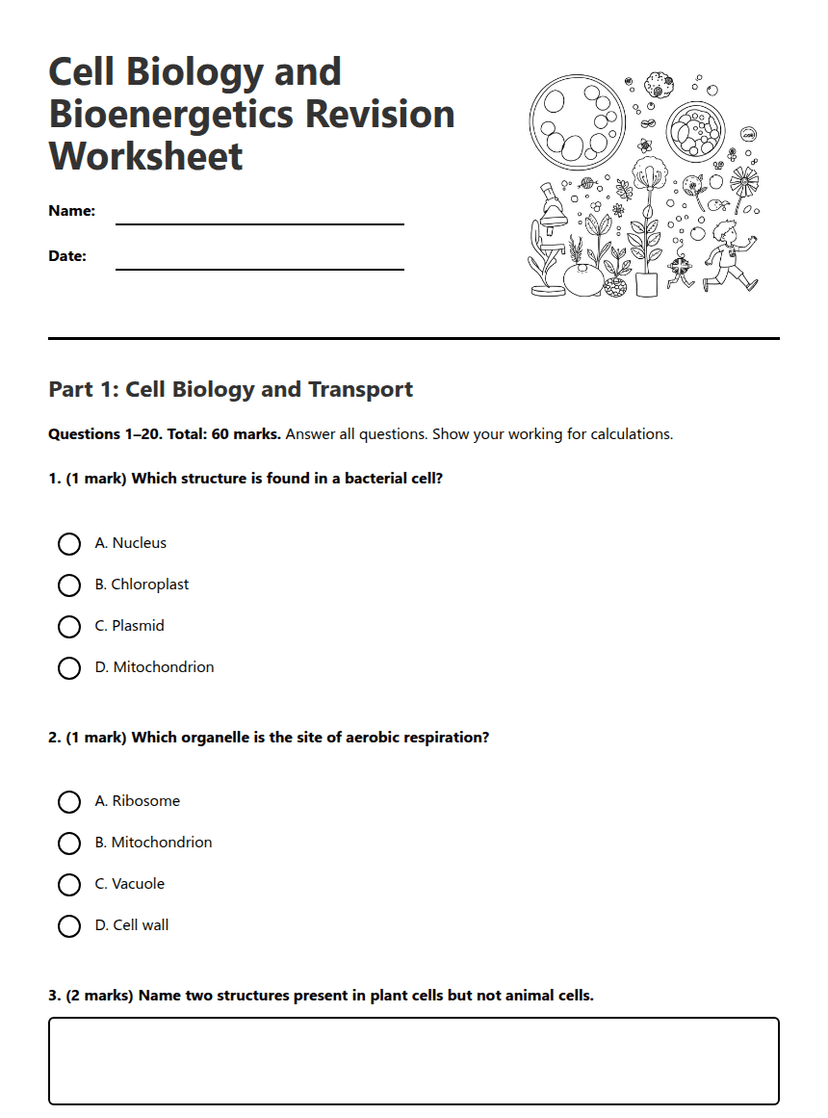
Cell Biology and Bioenergetics Revision Worksheet
Free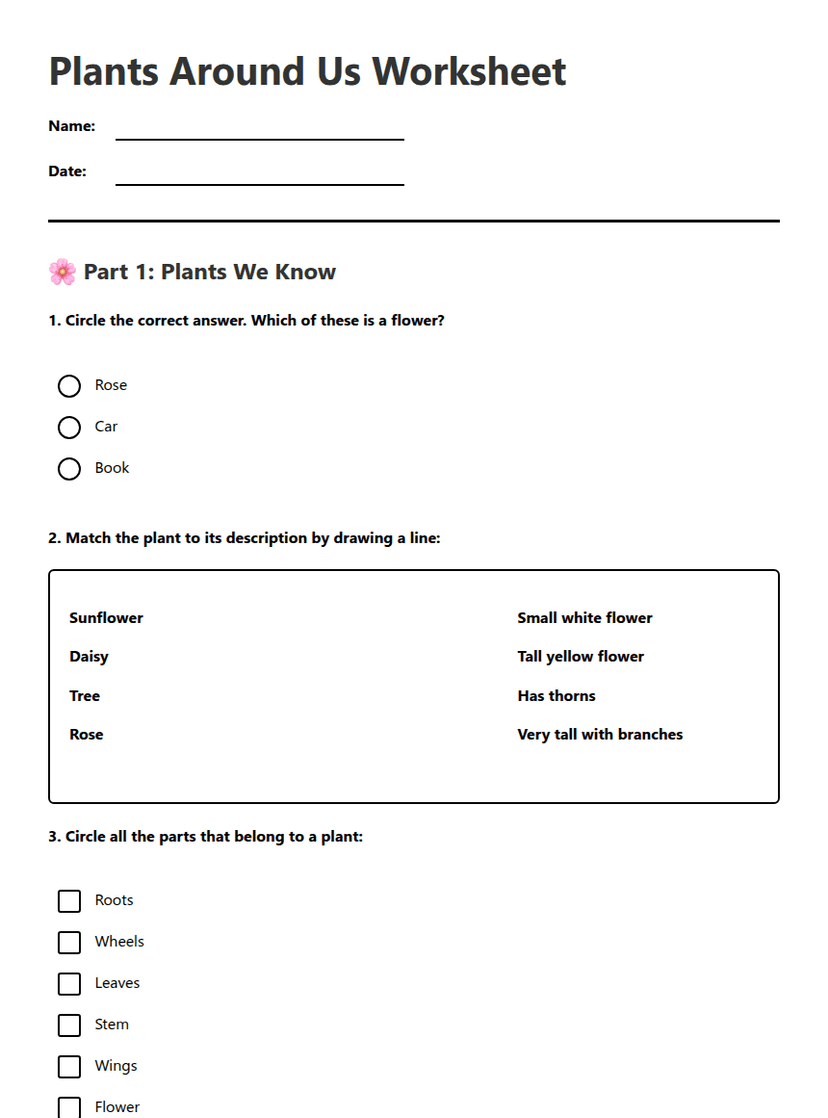
Plants Around Us Worksheet
Free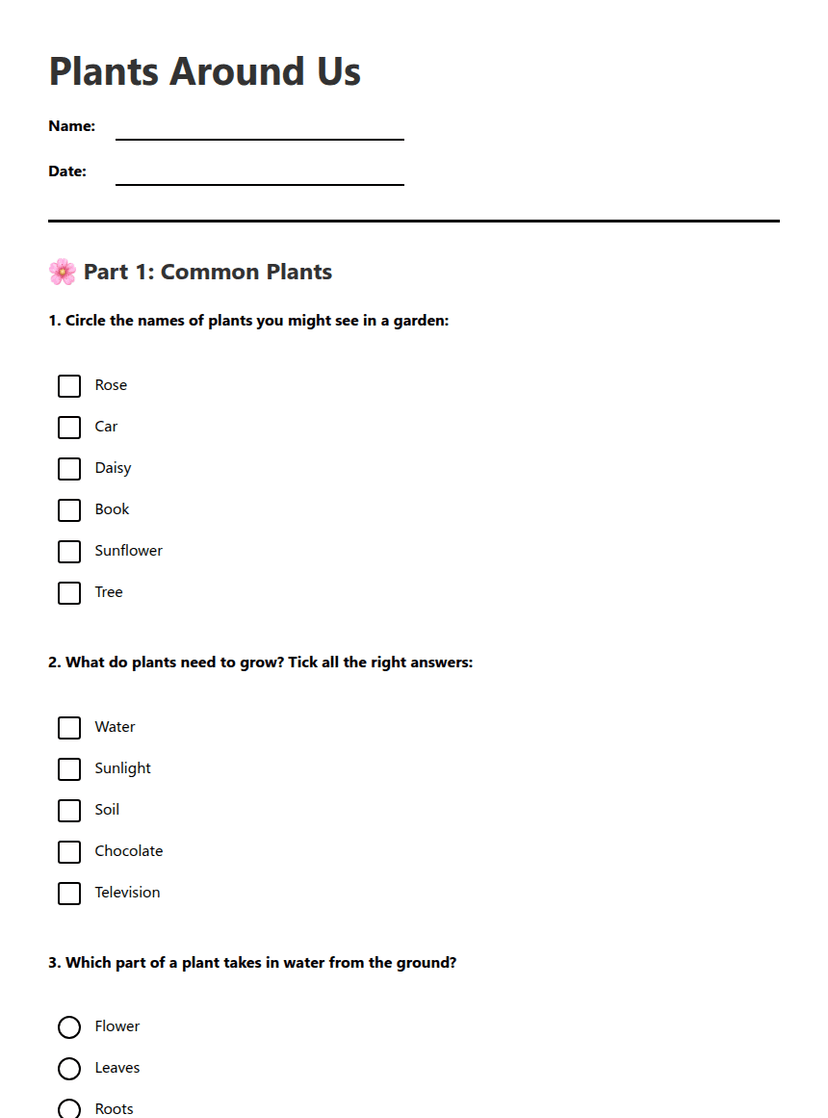
Exploring Common Plants
Free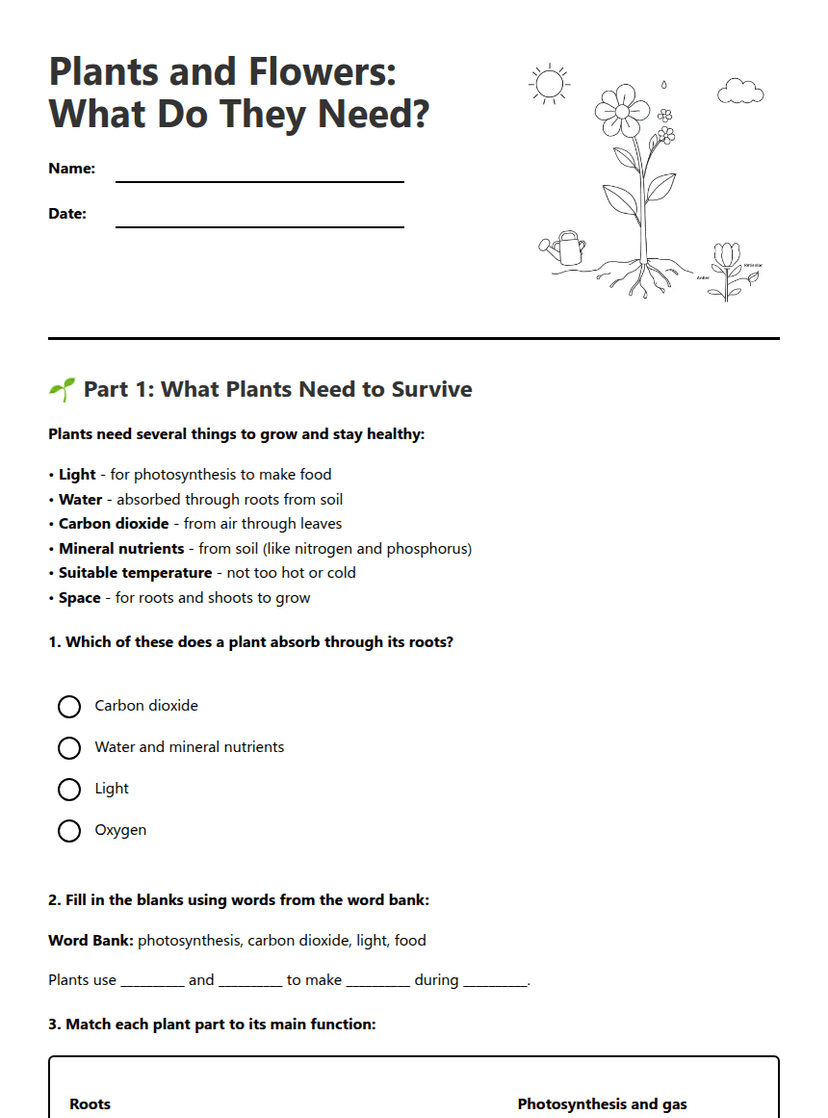
Plant Needs and Functions
Free
Plant Cells and Reproduction
Free
Respiration Learning Tasks
Free