Cell Structure and Function
A free science worksheet ready for your classroom. Open in Kuraplan to grab the print-ready PDF, customize it for your students, or generate a fresh version in seconds.
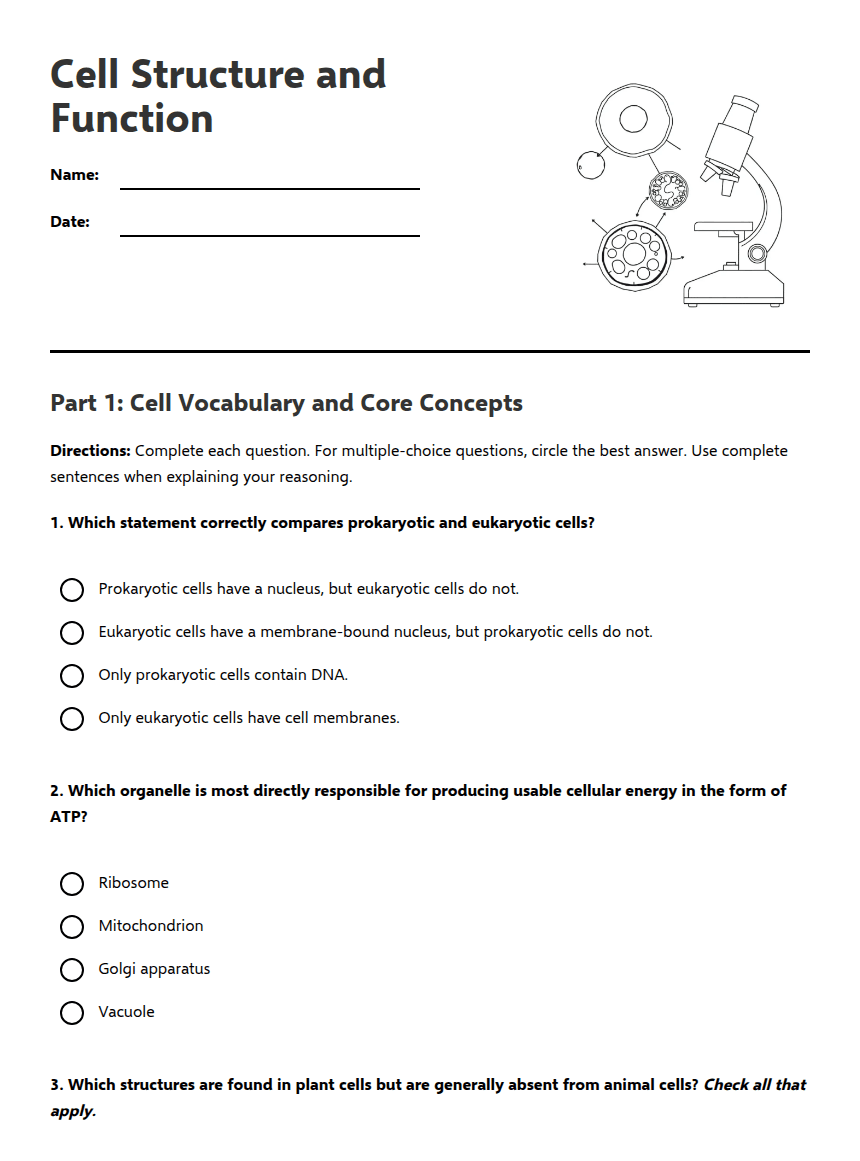
Cell Structure and Function
Part 1: Cell Vocabulary and Core Concepts
Directions: Complete each question. For multiple-choice questions, circle the best answer. Use complete sentences when explaining your reasoning.
Word bank: cytoplasm, mitochondrion, cell wall, Golgi apparatus, DNA
a. The jellylike material where many cell processes occur: __________________________
b. The molecule that stores hereditary information: __________________________
c. The rigid outer layer that supports many plant cells: __________________________
d. The organelle that modifies, sorts, and packages cell products: __________________________
e. The organelle that releases energy from food: __________________________
Part 2: Reading, Comparison, and Application
Directions: Read the passage. Then answer questions 6–10 using evidence from the passage and your knowledge of cell structure and function.
Reading Passage: Cells are the basic units of life, but they are not all organized in the same way. Prokaryotic cells, such as bacteria, do not have a membrane-bound nucleus. Their DNA is located in a region of the cytoplasm. Eukaryotic cells have a nucleus and other membrane-bound organelles. These internal compartments allow different chemical processes to occur in specialized locations. For example, mitochondria transfer energy from food into ATP, while ribosomes assemble proteins. Plant cells also contain chloroplasts, which capture light energy for photosynthesis, and cell walls, which provide additional support. In every cell, the structure of an organelle helps it perform its particular function.
Answer Key — Final Page
1. Eukaryotic cells have a membrane-bound nucleus, but prokaryotic cells do not.
2. Mitochondrion
3. Cell wall, chloroplast, and large central vacuole
4. 1-C, 2-B, 3-A, 4-D
5. a. cytoplasm; b. DNA; c. cell wall; d. Golgi apparatus; e. mitochondrion
6. Sample responses: Both cell types have DNA, a cell membrane, cytoplasm, and ribosomes. Prokaryotic cells lack a membrane-bound nucleus and include bacteria. Eukaryotic cells have a nucleus and membrane-bound organelles and include plant and animal cells.
7. Sample response: Cells have different internal structures that help them perform specific functions. Prokaryotic and eukaryotic cells differ in organization, and plant cells contain structures for support and photosynthesis.
8. Able to perform a particular job
9. The cell is adapted to produce and transport many proteins. Ribosomes assemble proteins, and the rough endoplasmic reticulum helps process and transport proteins.
10. The cell is most likely a plant cell. The thick outer boundary is the cell wall, which provides support, and the green structures are chloroplasts, which carry out photosynthesis.
About This Worksheet
Free in Kuraplan
Sign up free, grab the PDF, and customize it for your class.
Print-Ready
Formatted for standard paper. Clean layout, easy to read.
AI-Generated
Created with Kuraplan's AI, designed for real classroom use.
For Teachers & Parents
Use in classrooms, for homework, tutoring, or homeschool.
Need a custom version of this worksheet?
Kuraplan's AI generates custom worksheets in seconds — differentiated for every learner, aligned to your curriculum.
Generate Custom Worksheets — FreeMore Science Worksheets
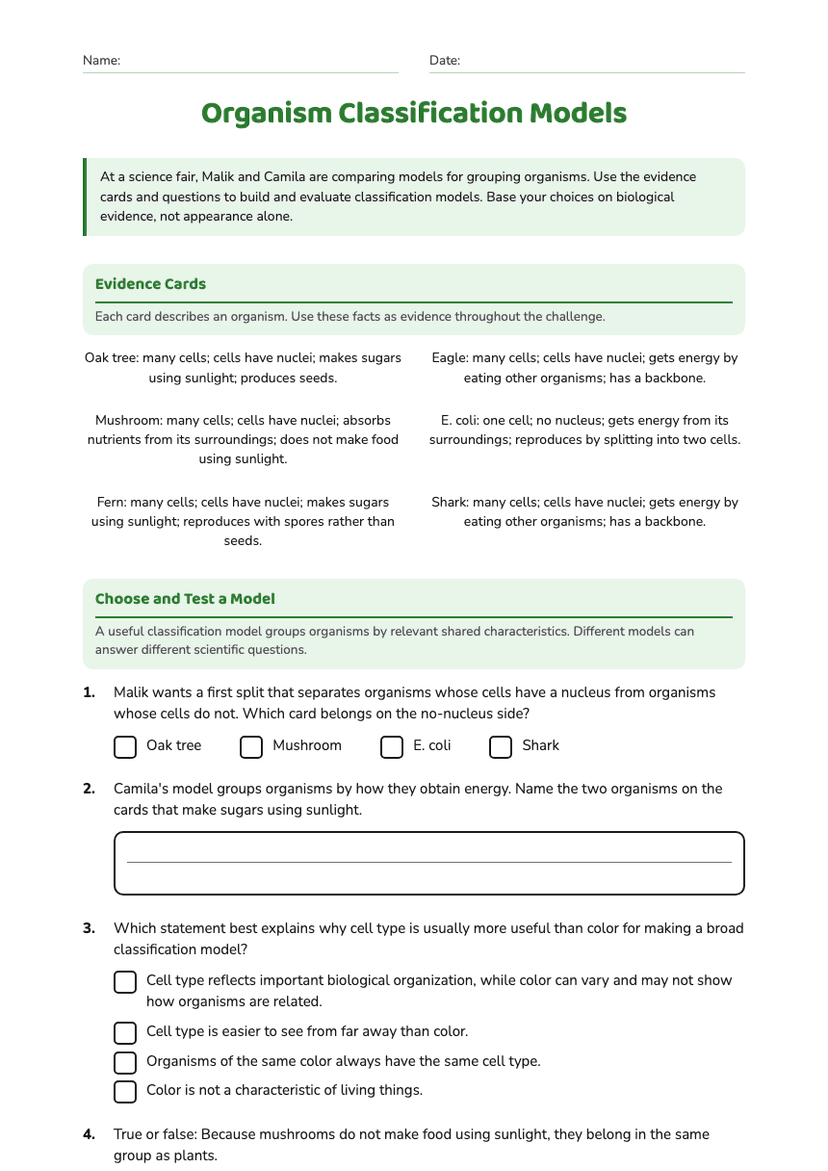
Organism Classification Models
Free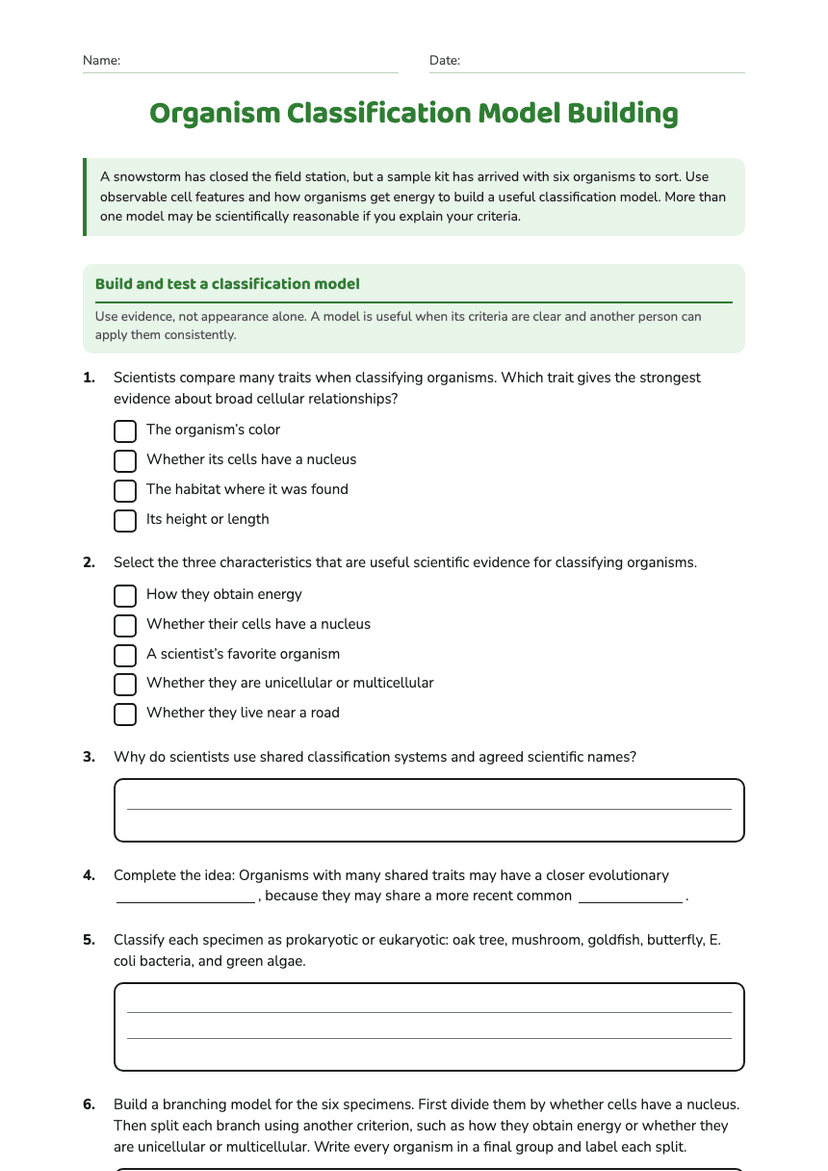
Organism Classification Model Building
Free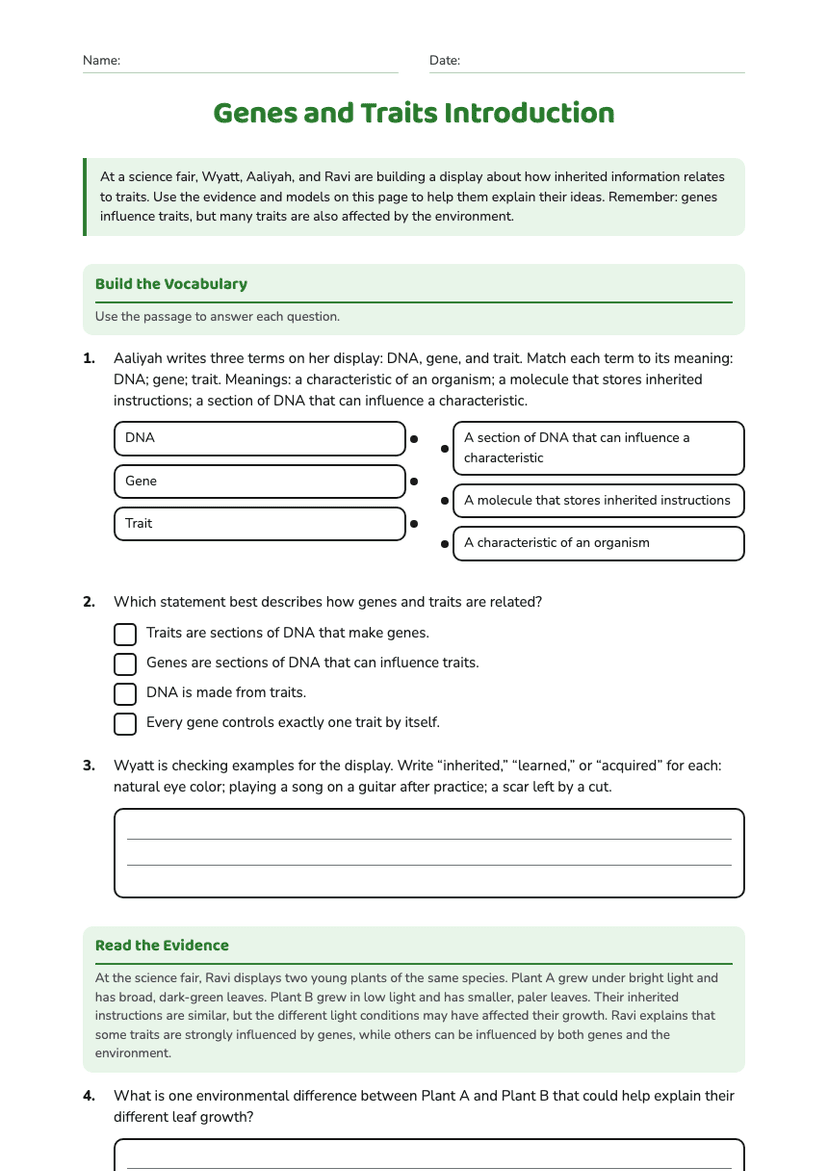
Genes and Traits Introduction
Free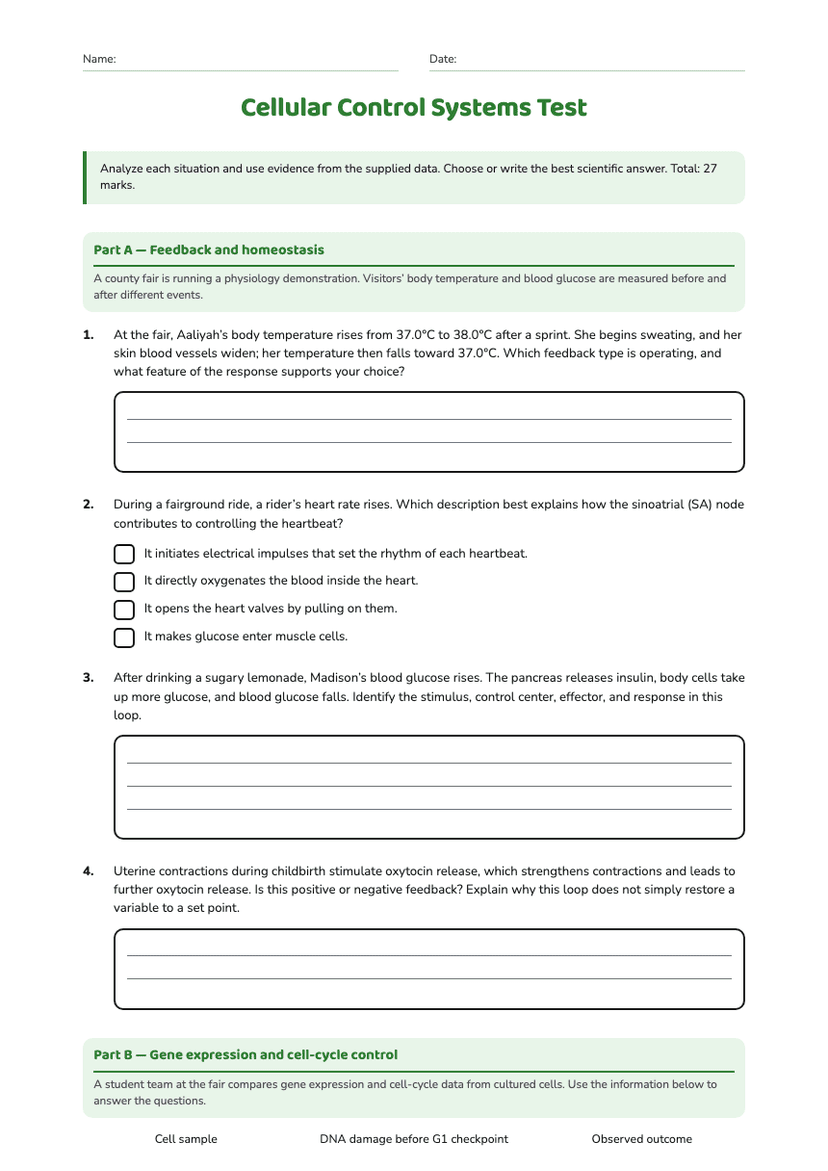
Cellular Control Systems Test
Free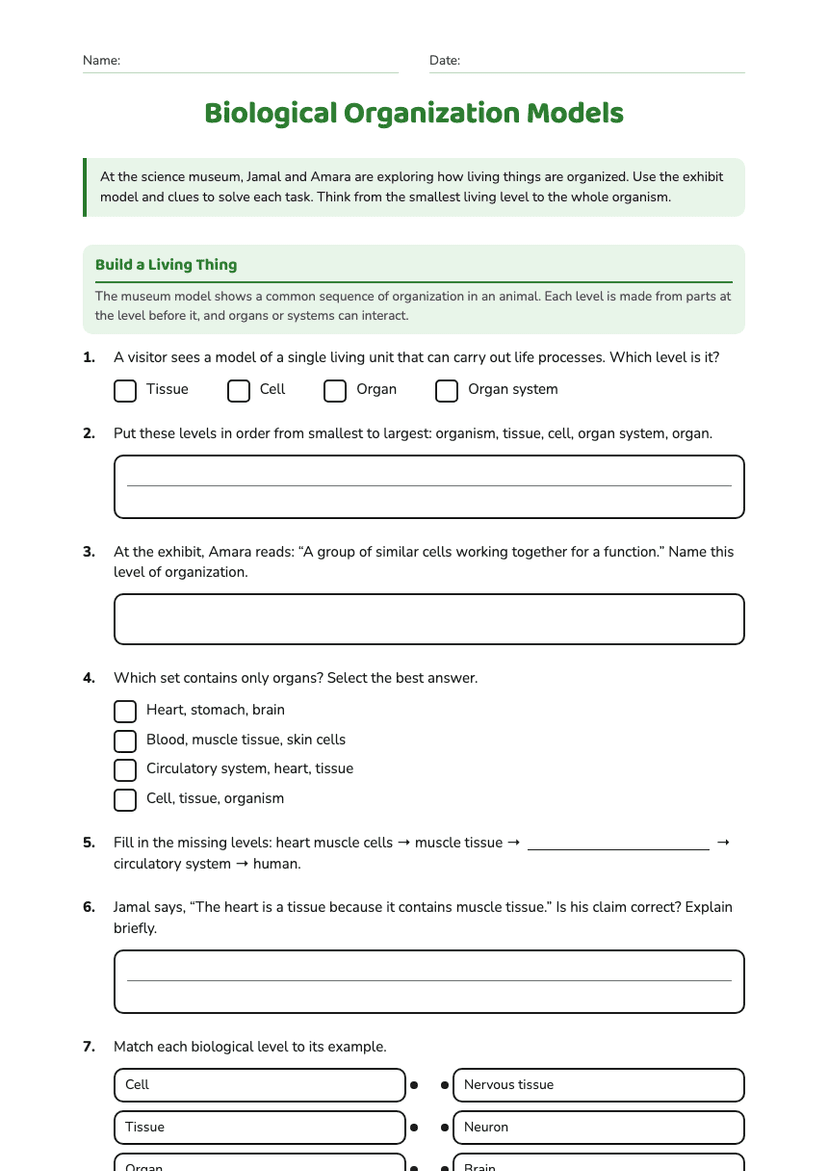
Biological Organization Models
Free
Plant Life Cycle Worksheet
Free
Reproduction Models Worksheet
Free