Cellular Control Systems Test
A free science worksheet ready for your classroom. Open in Kuraplan to grab the print-ready PDF, customize it for your students, or generate a fresh version in seconds.
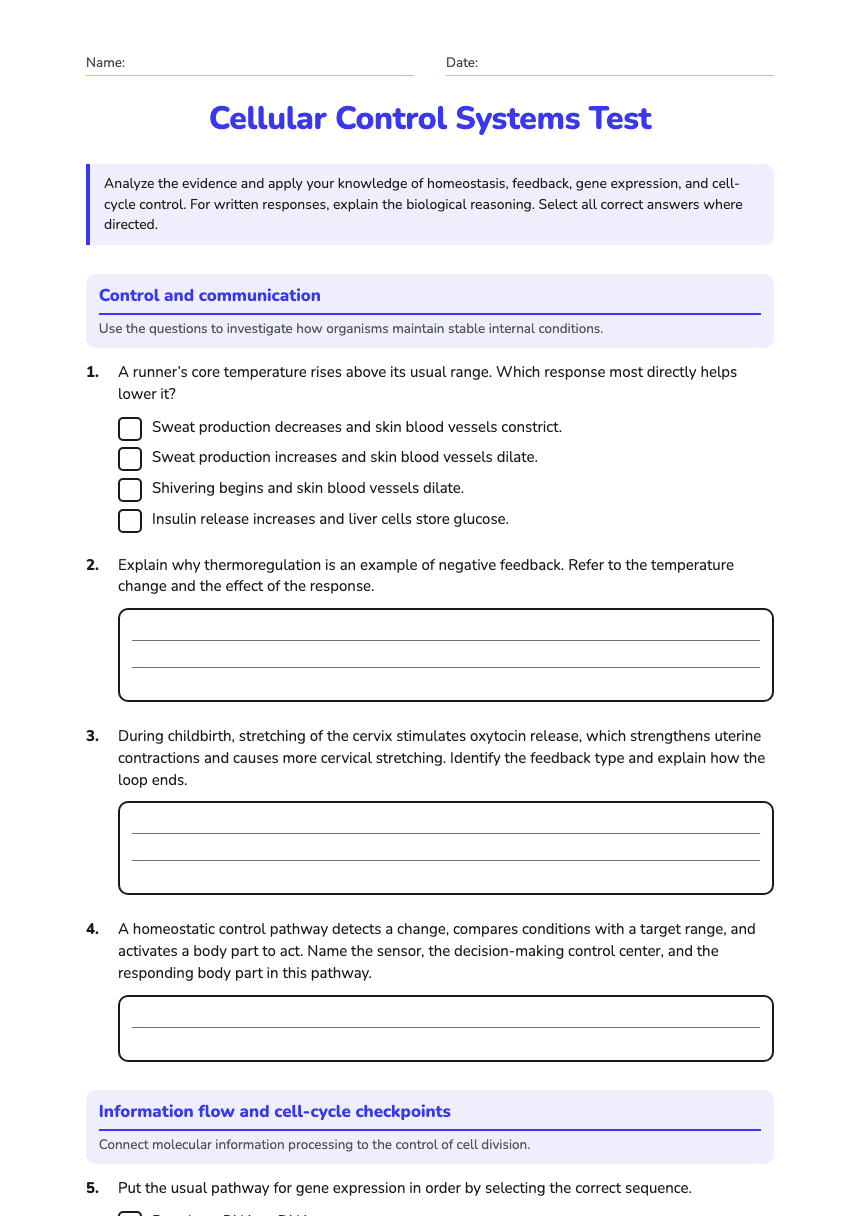
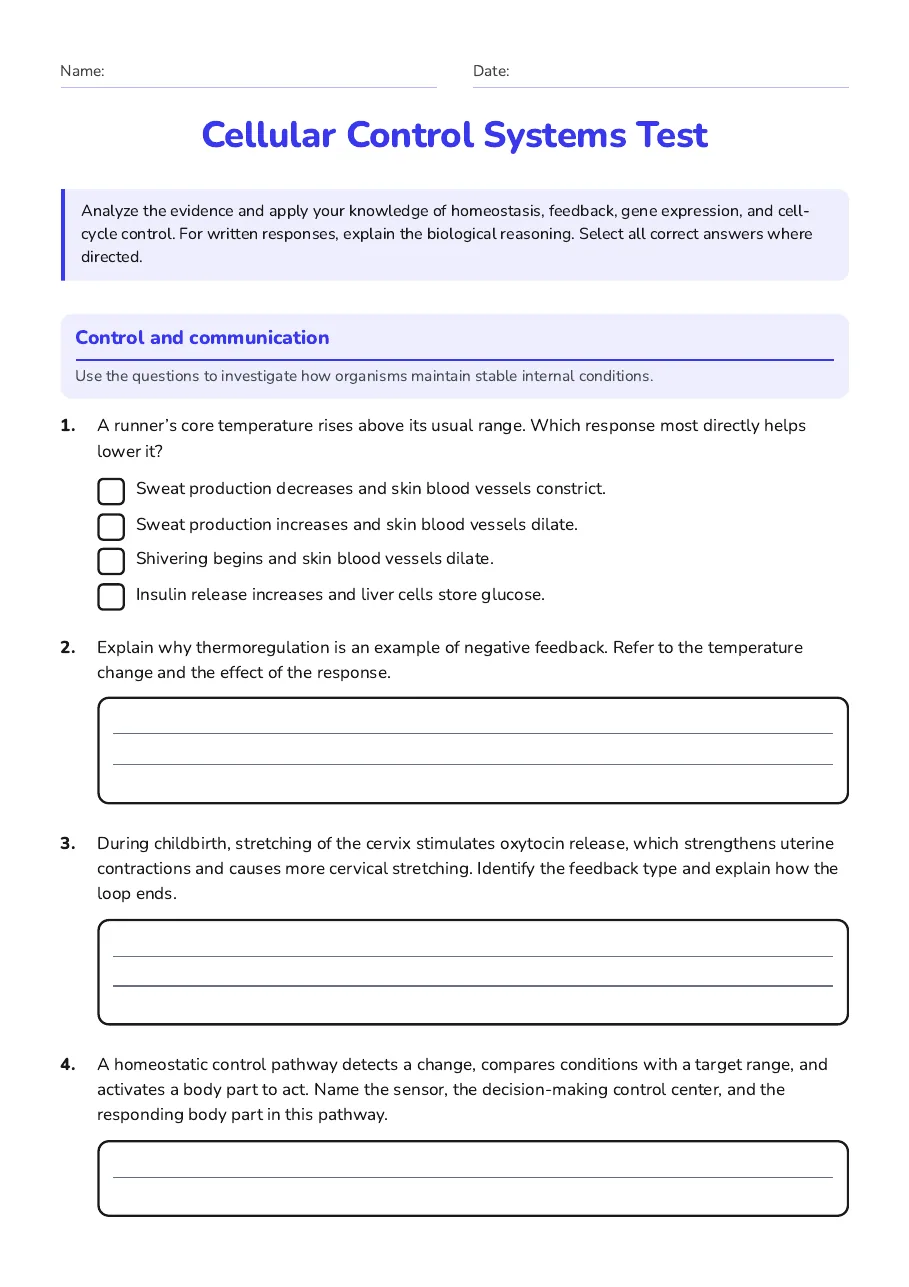
Cellular Control Systems Test
Control and communication
Use the questions to investigate how organisms maintain stable internal conditions.
- Sweat production decreases and skin blood vessels constrict.
- Sweat production increases and skin blood vessels dilate.
- Shivering begins and skin blood vessels dilate.
- Insulin release increases and liver cells store glucose.
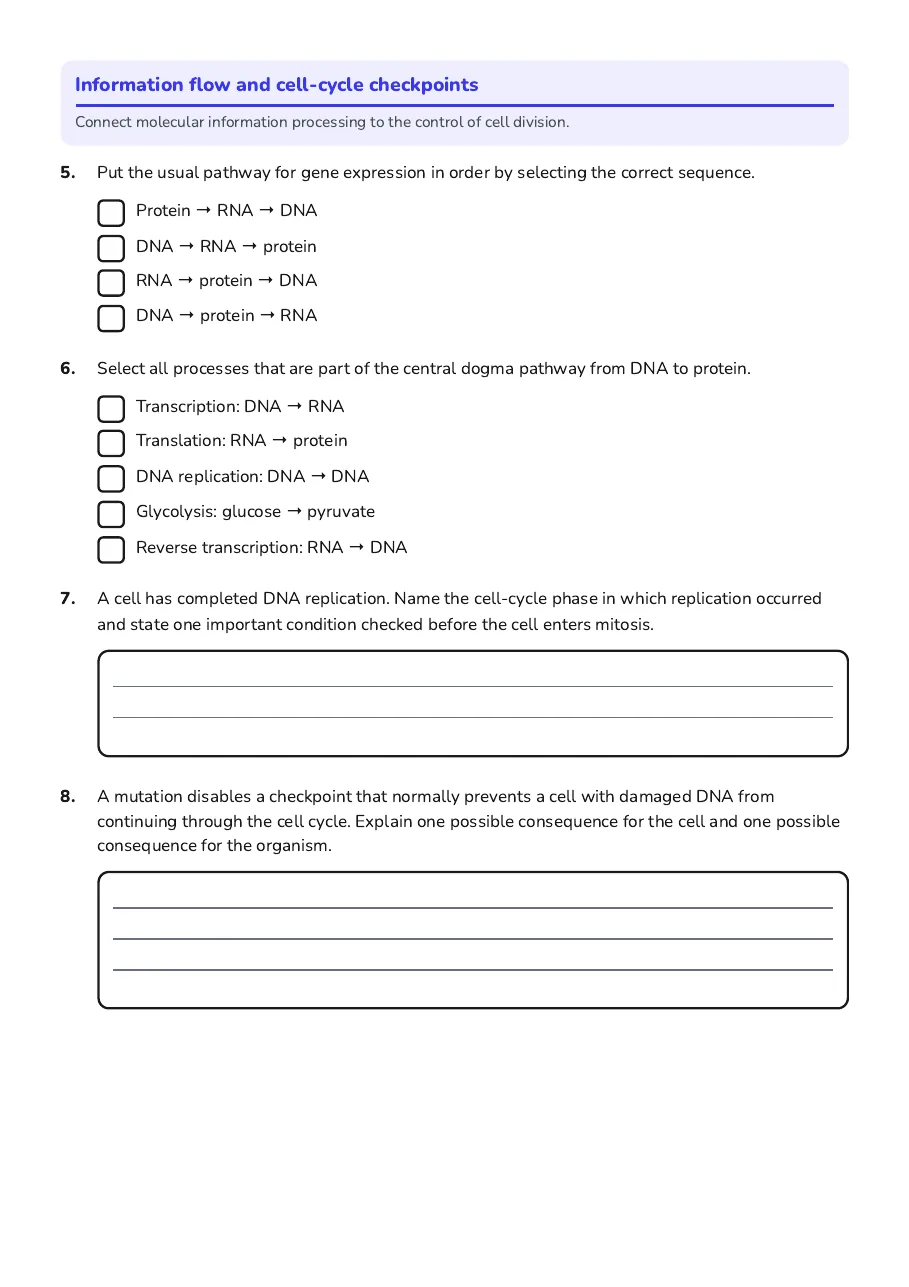
Information flow and cell-cycle checkpoints
Connect molecular information processing to the control of cell division.
- Protein → RNA → DNA
- DNA → RNA → protein
- RNA → protein → DNA
- DNA → protein → RNA
- Transcription: DNA → RNA
- Translation: RNA → protein
- DNA replication: DNA → DNA
- Glycolysis: glucose → pyruvate
- Reverse transcription: RNA → DNA
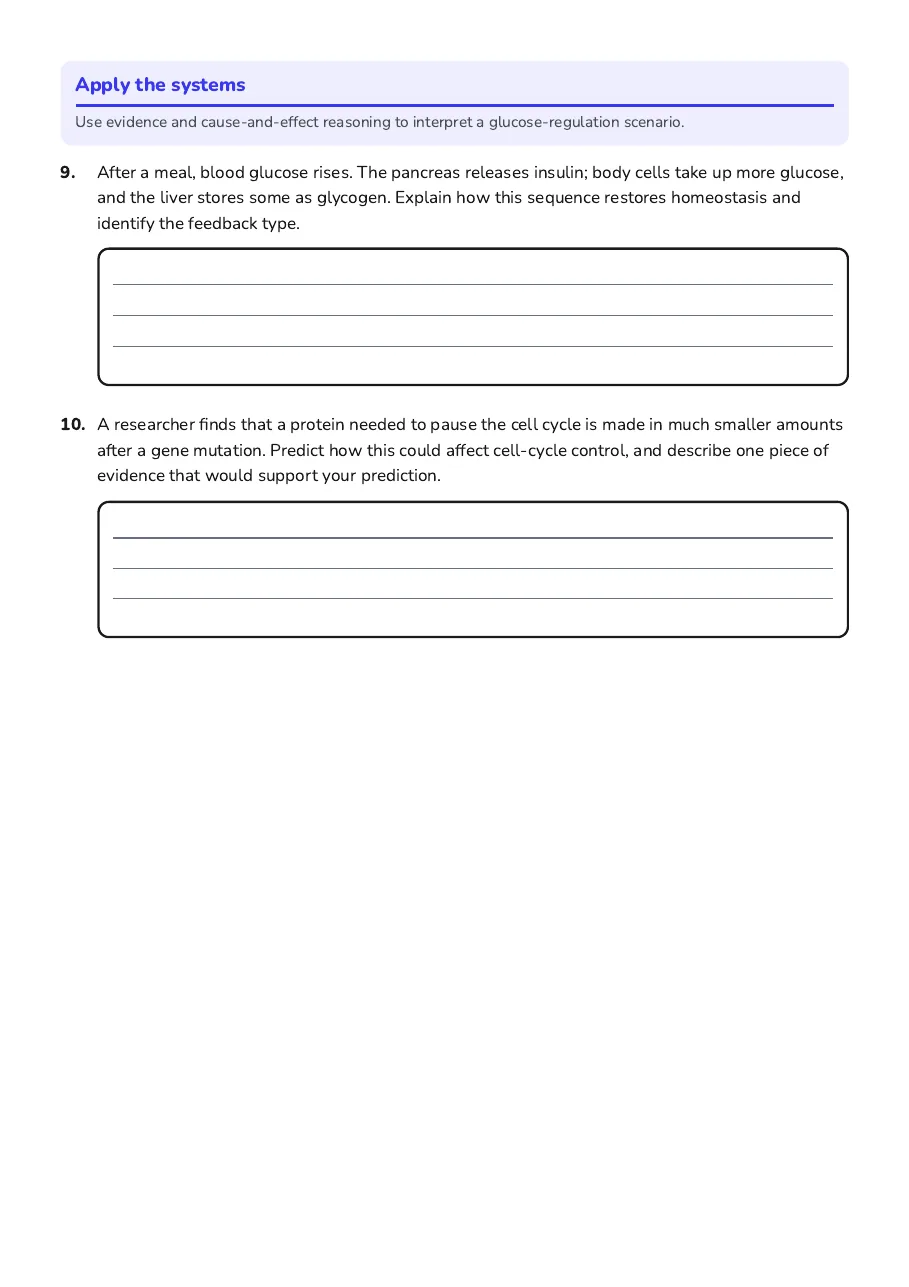
Apply the systems
Use evidence and cause-and-effect reasoning to interpret a glucose-regulation scenario.
3 printable pages
Page 1
Page 2
Page 3
About This Worksheet
Free in Kuraplan
Sign up free, grab the PDF, and customize it for your class.
Print-Ready
Formatted for standard paper. Clean layout, easy to read.
AI-Generated
Created with Kuraplan's AI, designed for real classroom use.
For Teachers & Parents
Use in classrooms, for homework, tutoring, or homeschool.
Need a custom version of this worksheet?
Kuraplan's AI generates custom worksheets in seconds — differentiated for every learner, aligned to your curriculum.
Generate Custom Worksheets — FreeMore Science Worksheets
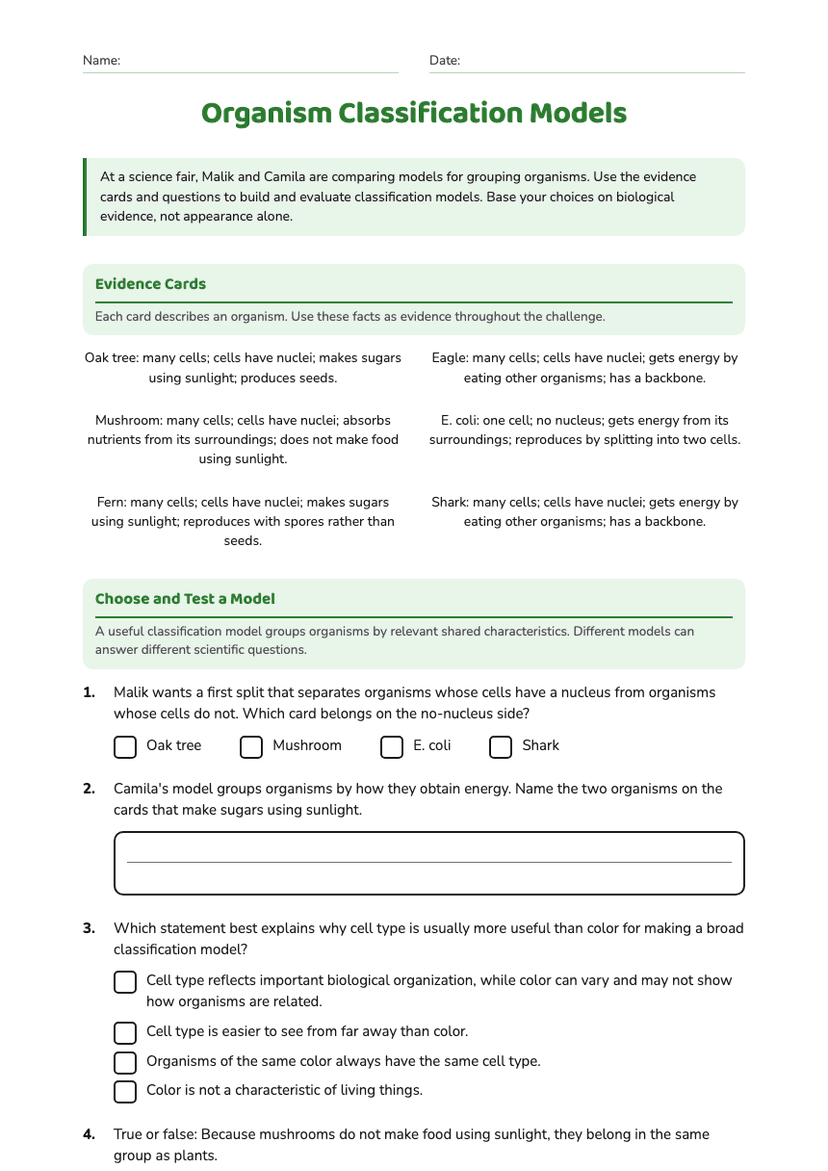
Organism Classification Models
Free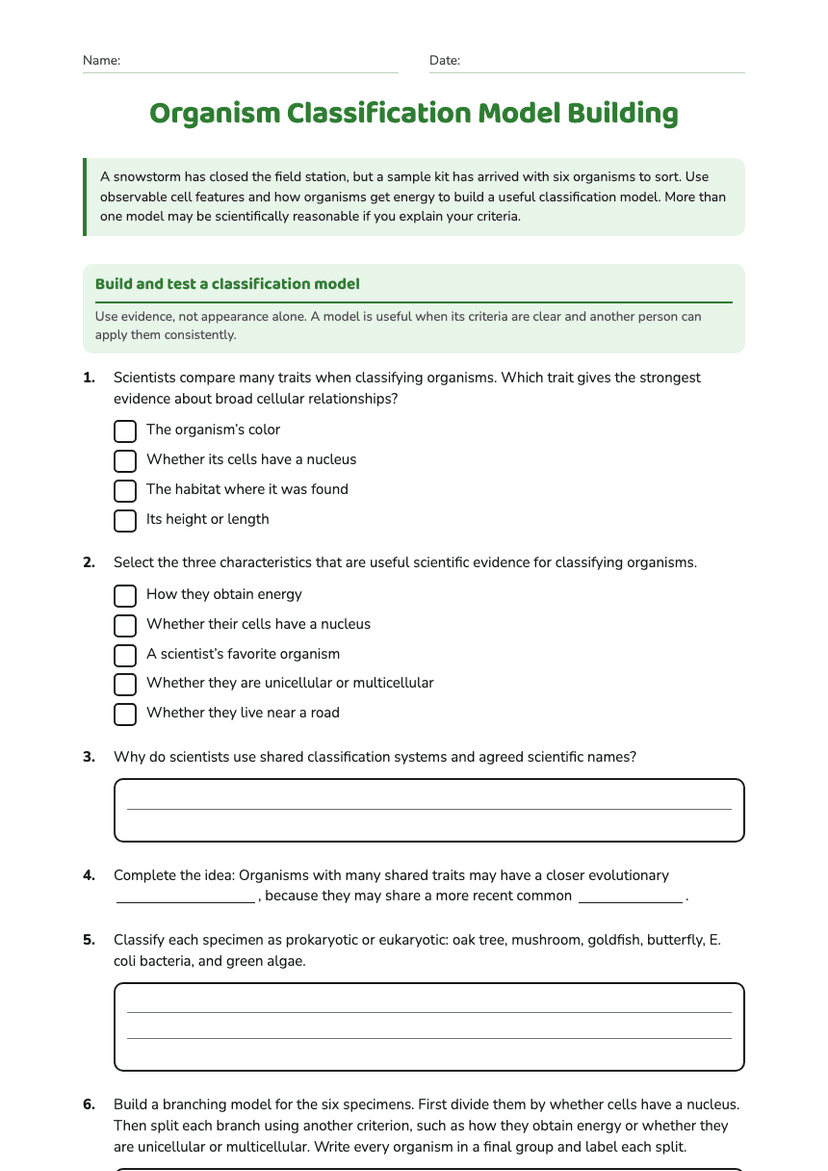
Organism Classification Model Building
Free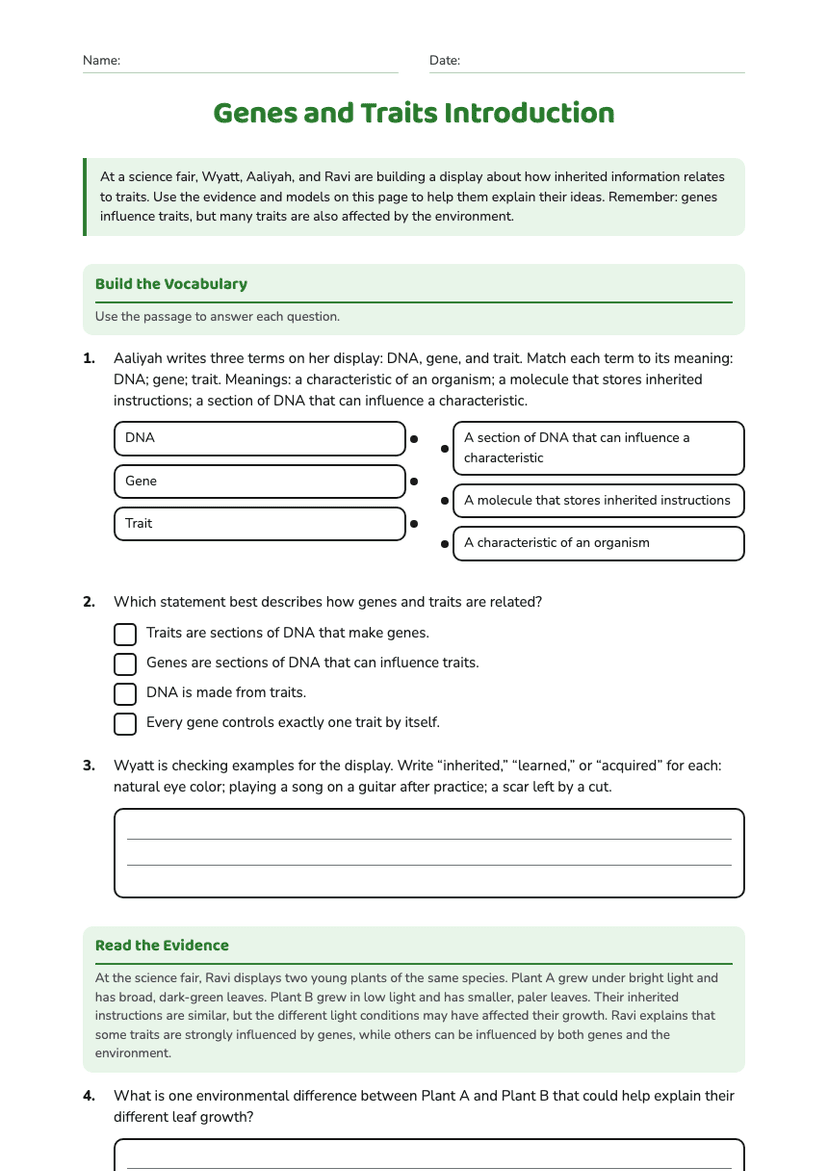
Genes and Traits Introduction
Free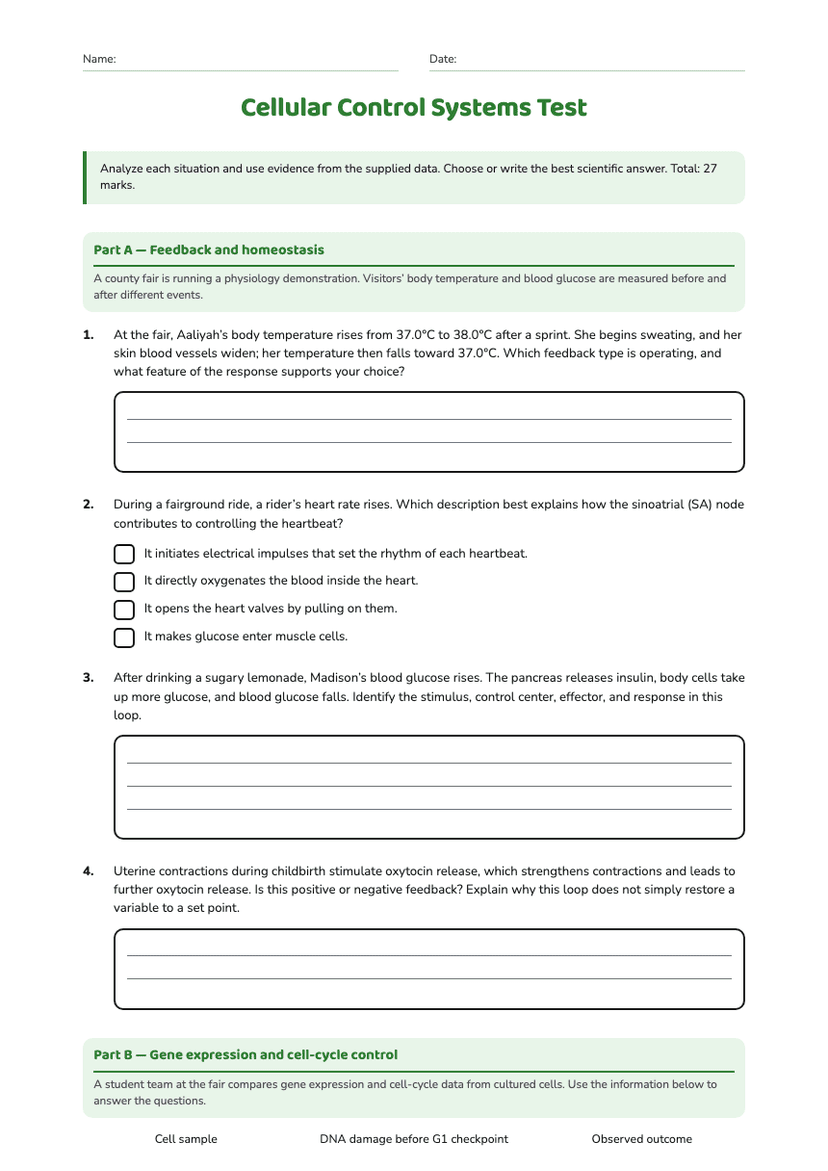
Cellular Control Systems Test
Free
Biological Organization Models
Free
Plant Life Cycle Worksheet
Free
Reproduction Models Worksheet
Free