Chemistry Concepts Quiz
A free science worksheet ready for your classroom. Open in Kuraplan to grab the print-ready PDF, customize it for your students, or generate a fresh version in seconds.
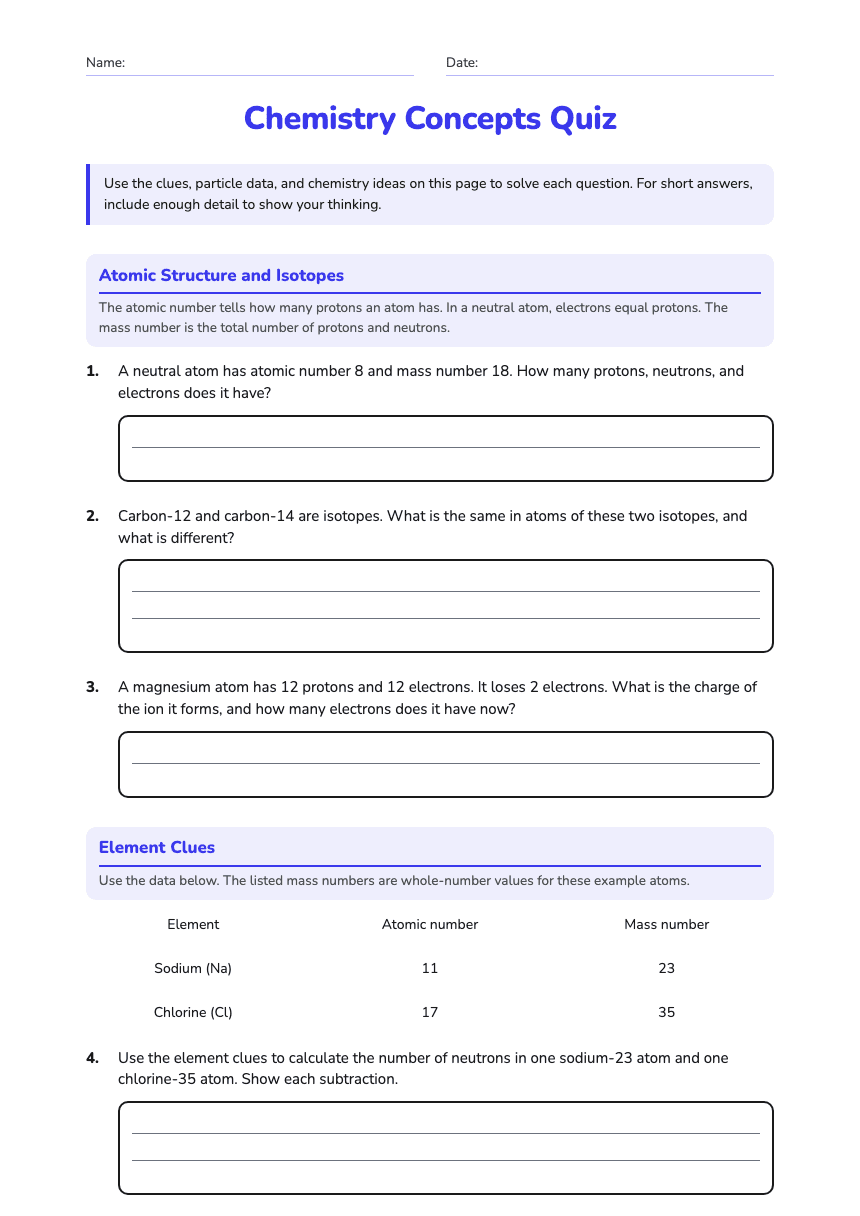
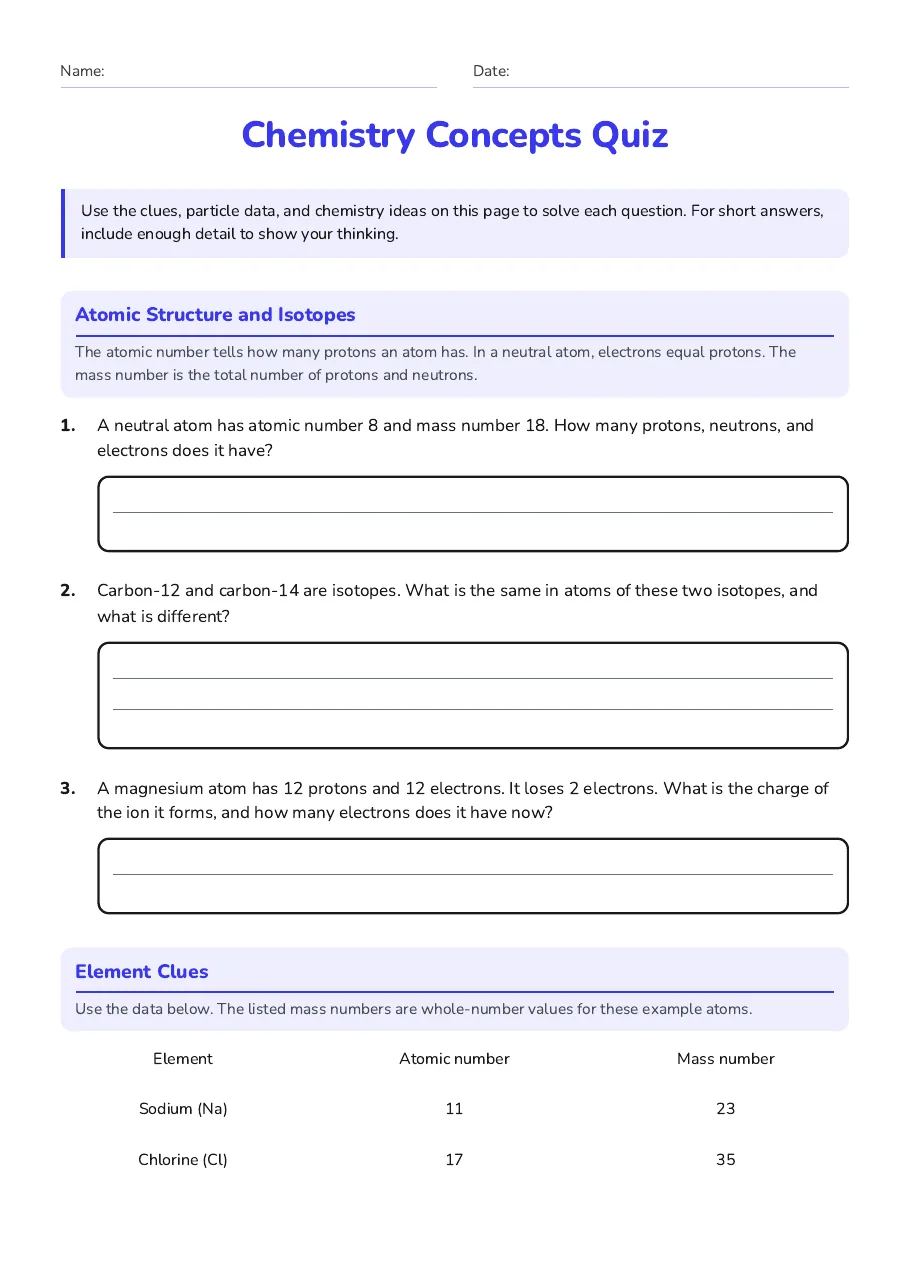
Chemistry Concepts Quiz
Atomic Structure and Isotopes
The atomic number tells how many protons an atom has. In a neutral atom, electrons equal protons. The mass number is the total number of protons and neutrons.
Element Clues
Use the data below. The listed mass numbers are whole-number values for these example atoms.
Element
Atomic number
Mass number
Sodium (Na)
11
23
Chlorine (Cl)
17
35
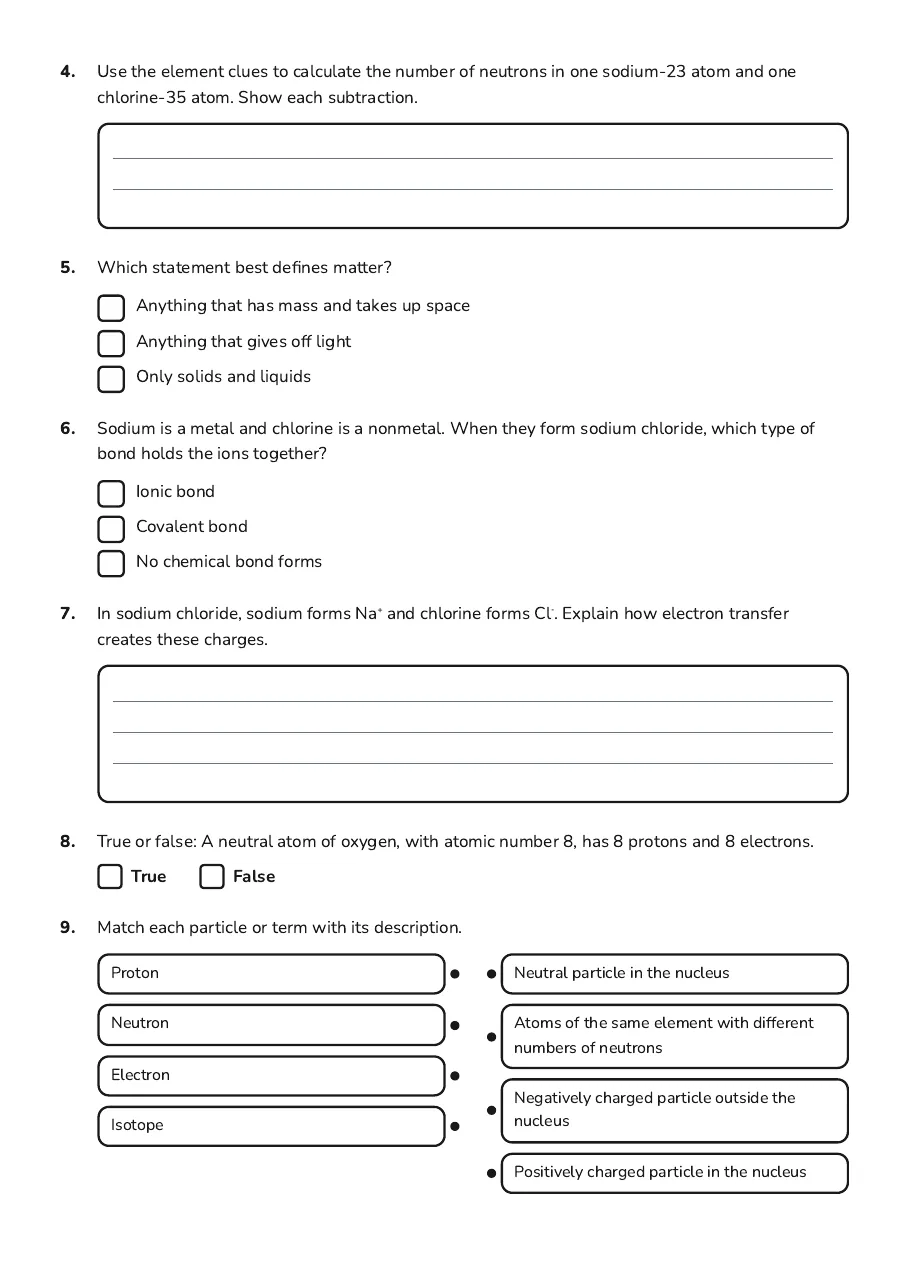
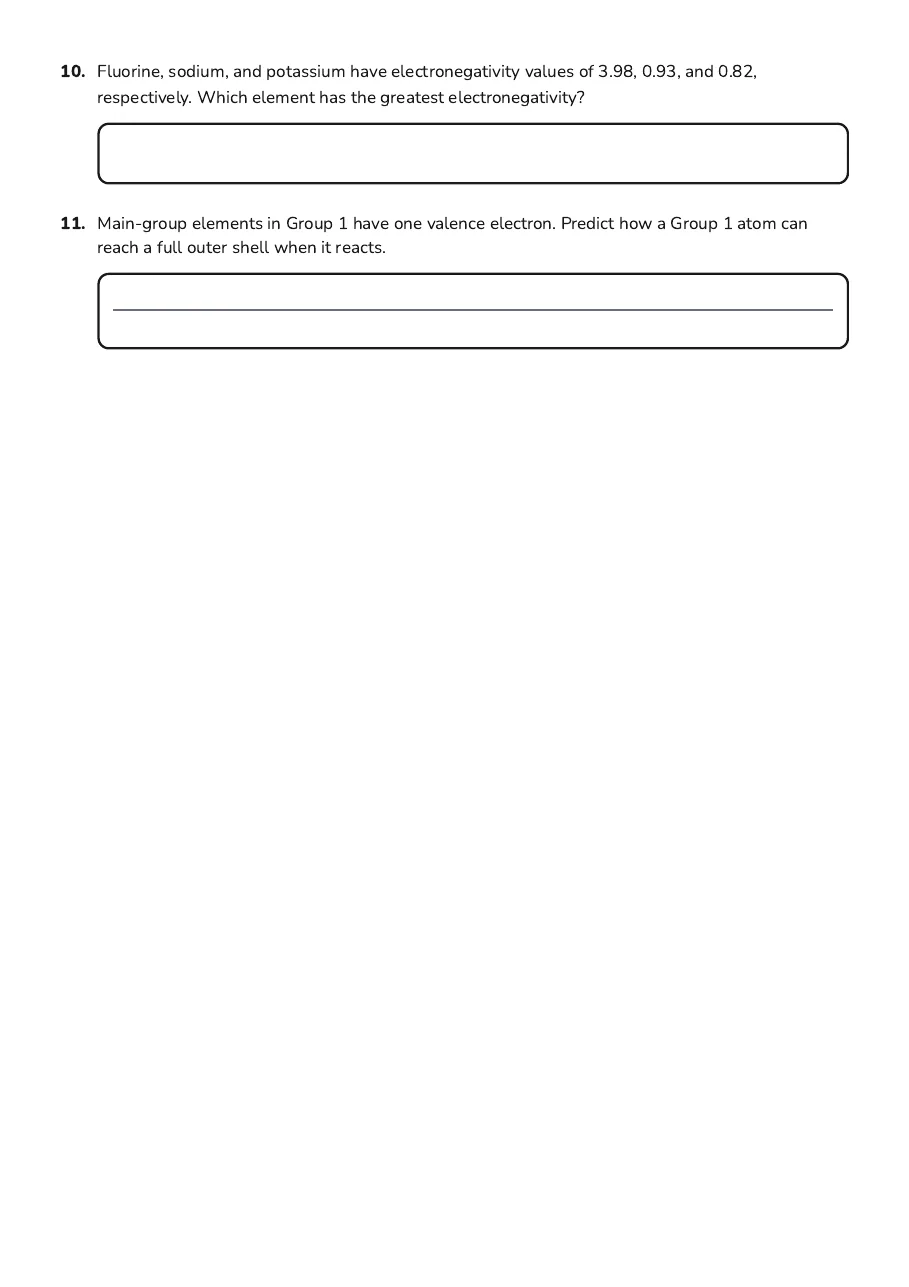
- Anything that has mass and takes up space
- Anything that gives off light
- Only solids and liquids
- Ionic bond
- Covalent bond
- No chemical bond forms
- Proton
- Neutron
- Electron
- Isotope
- Neutral particle in the nucleus
- Atoms of the same element with different numbers of neutrons
- Negatively charged particle outside the nucleus
- Positively charged particle in the nucleus
3 printable pages
Page 1
Page 2
Page 3
About This Worksheet
Free in Kuraplan
Sign up free, grab the PDF, and customize it for your class.
Print-Ready
Formatted for standard paper. Clean layout, easy to read.
AI-Generated
Created with Kuraplan's AI, designed for real classroom use.
For Teachers & Parents
Use in classrooms, for homework, tutoring, or homeschool.
Need a custom version of this worksheet?
Kuraplan's AI generates custom worksheets in seconds — differentiated for every learner, aligned to your curriculum.
Generate Custom Worksheets — FreeMore Science Worksheets
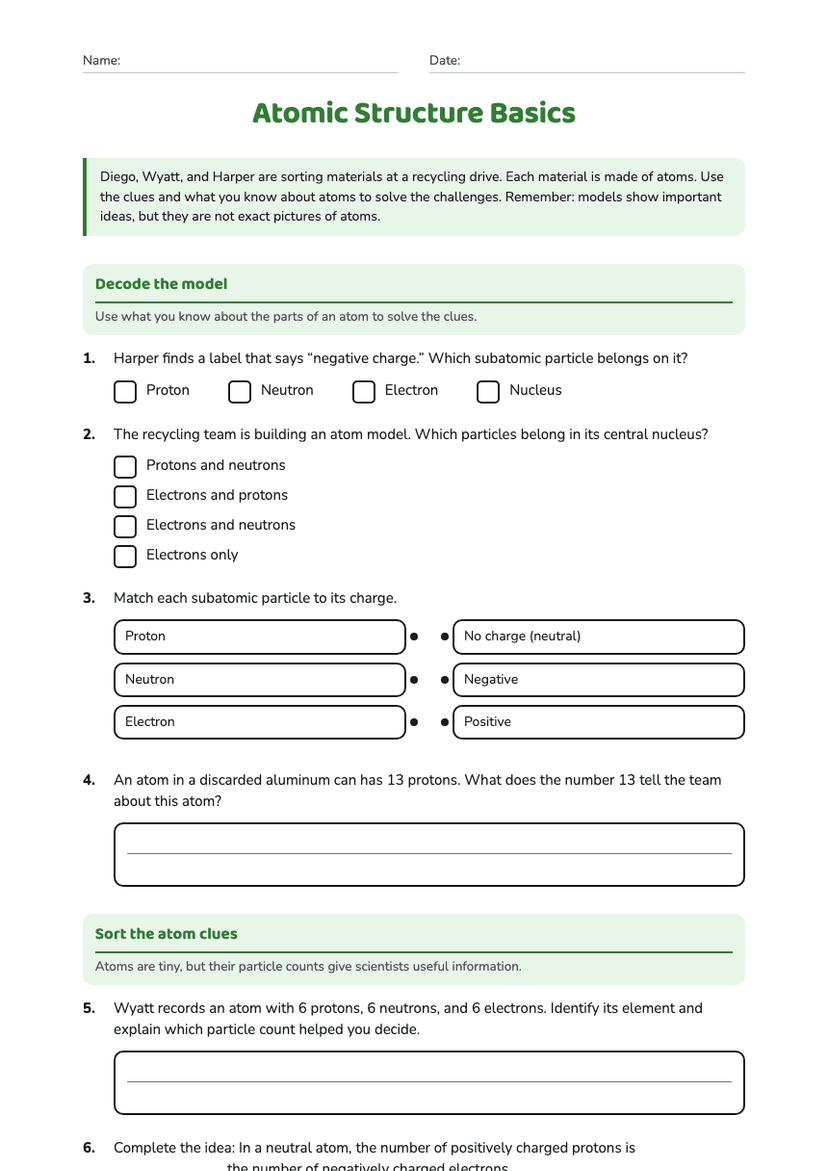
Atomic Structure Basics
Free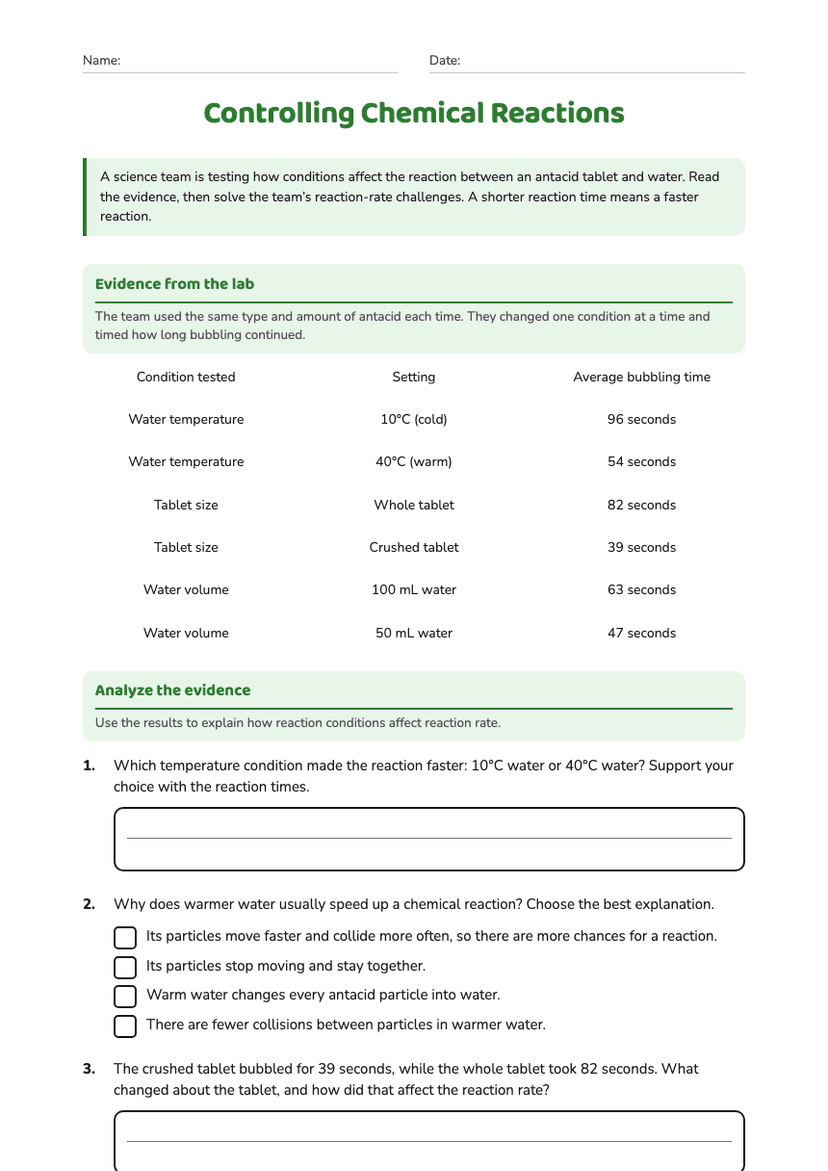
Controlling Chemical Reactions
Free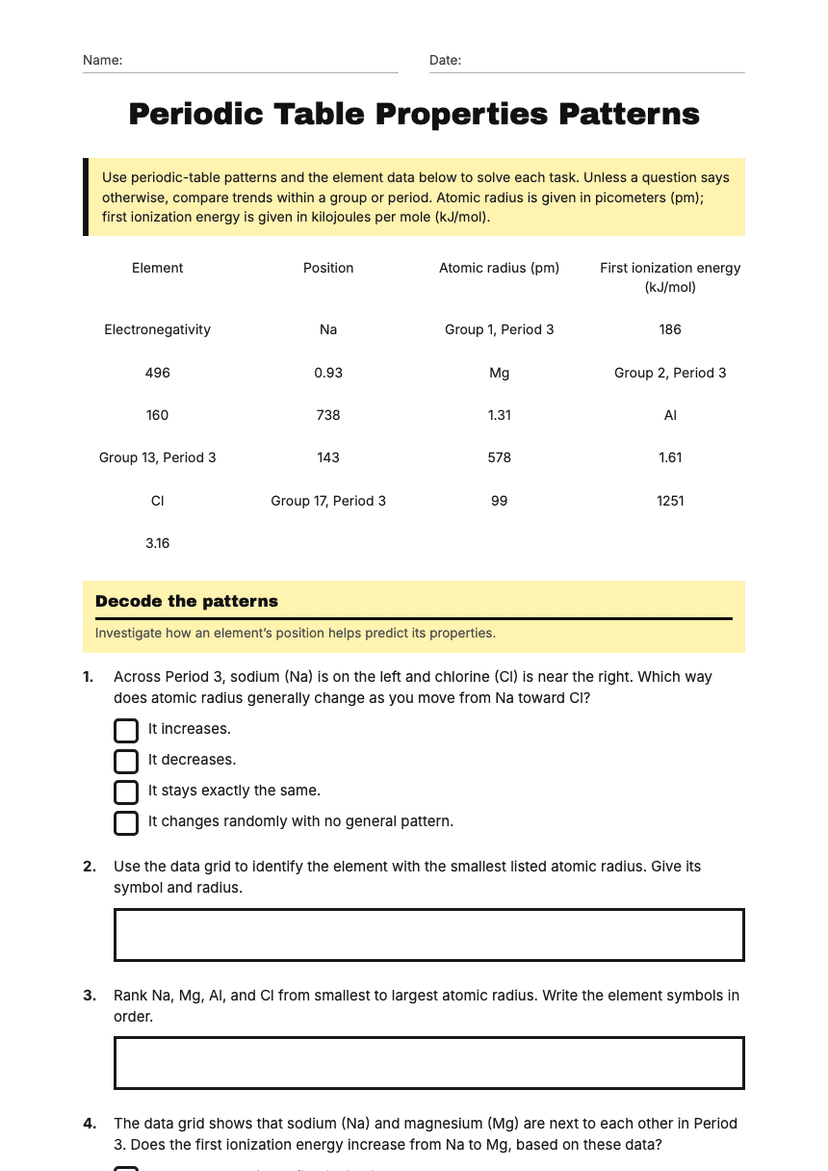
Periodic Table Properties Patterns
Free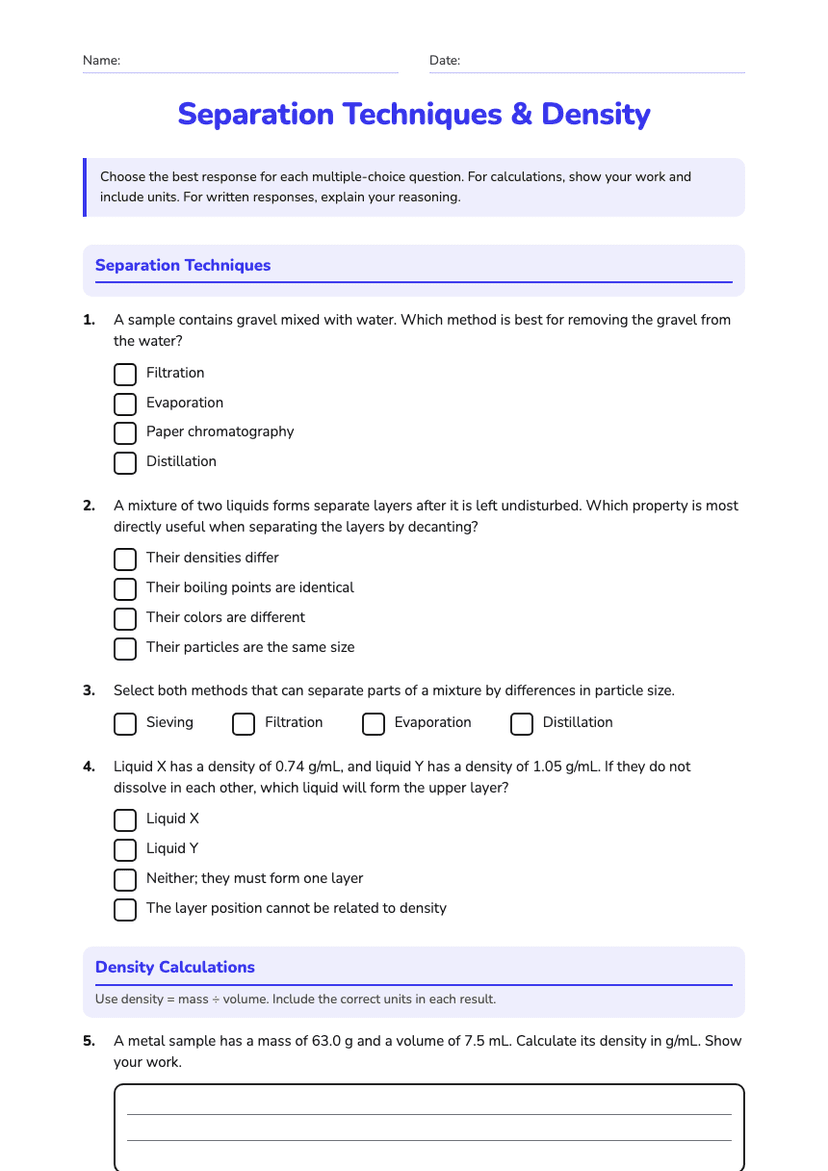
Separation Techniques & Density
Free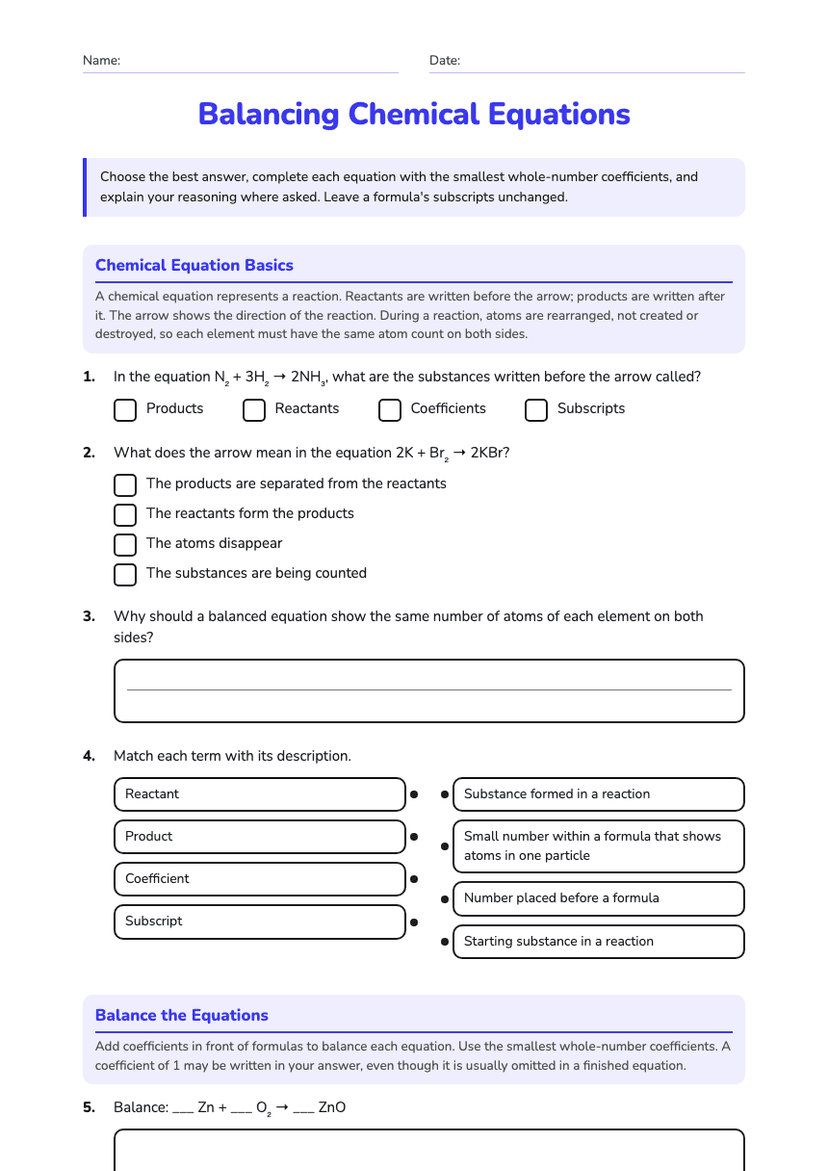
Balancing Chemical Equations
Free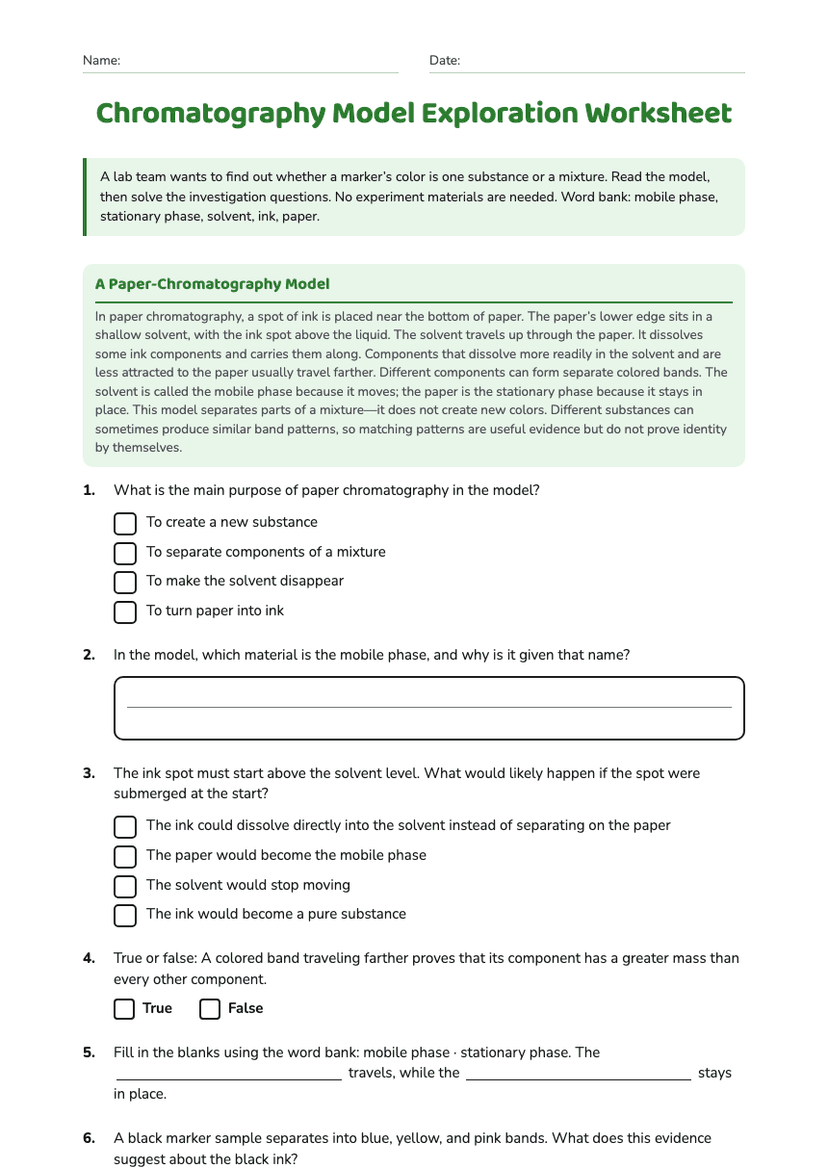
Chromatography Model Exploration Worksheet
Free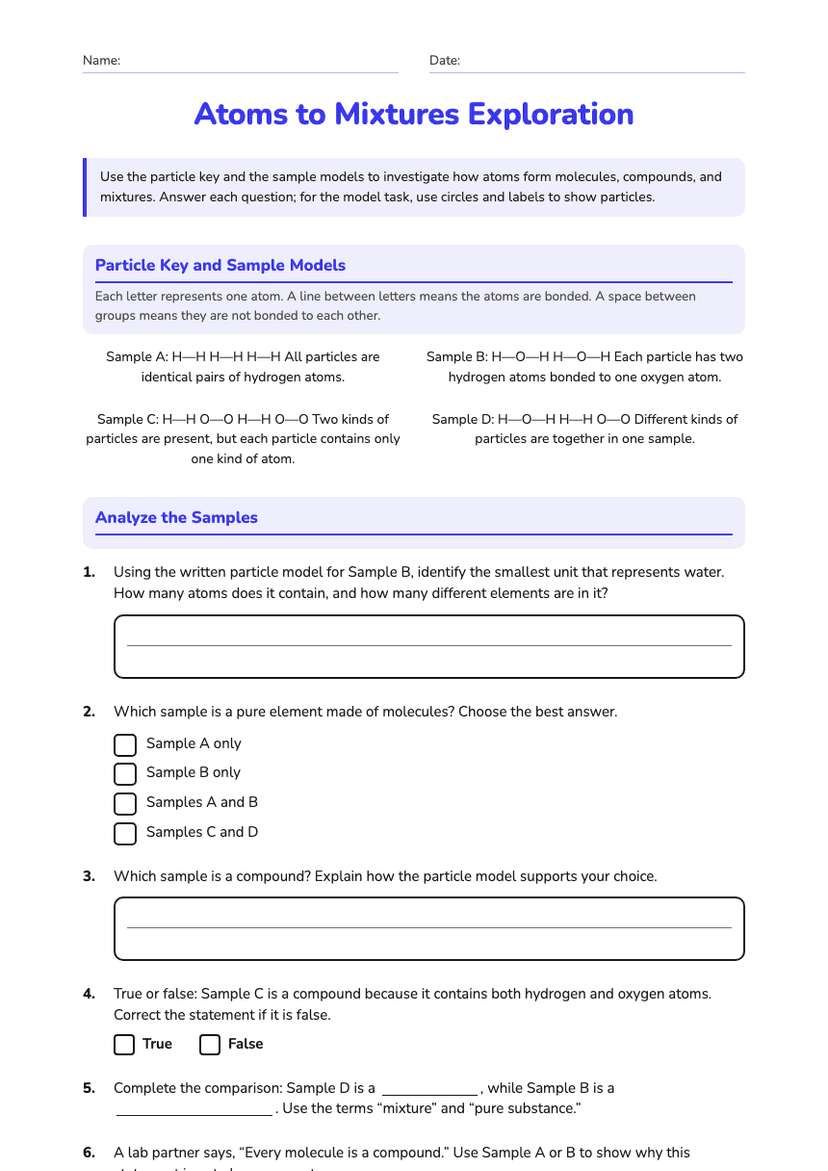
Atoms to Mixtures Exploration
Free