ScienceFreePrintable
Fossil Records and Evolution
A free science worksheet ready for your classroom. Open in Kuraplan to grab the print-ready PDF, customize it for your students, or generate a fresh version in seconds.
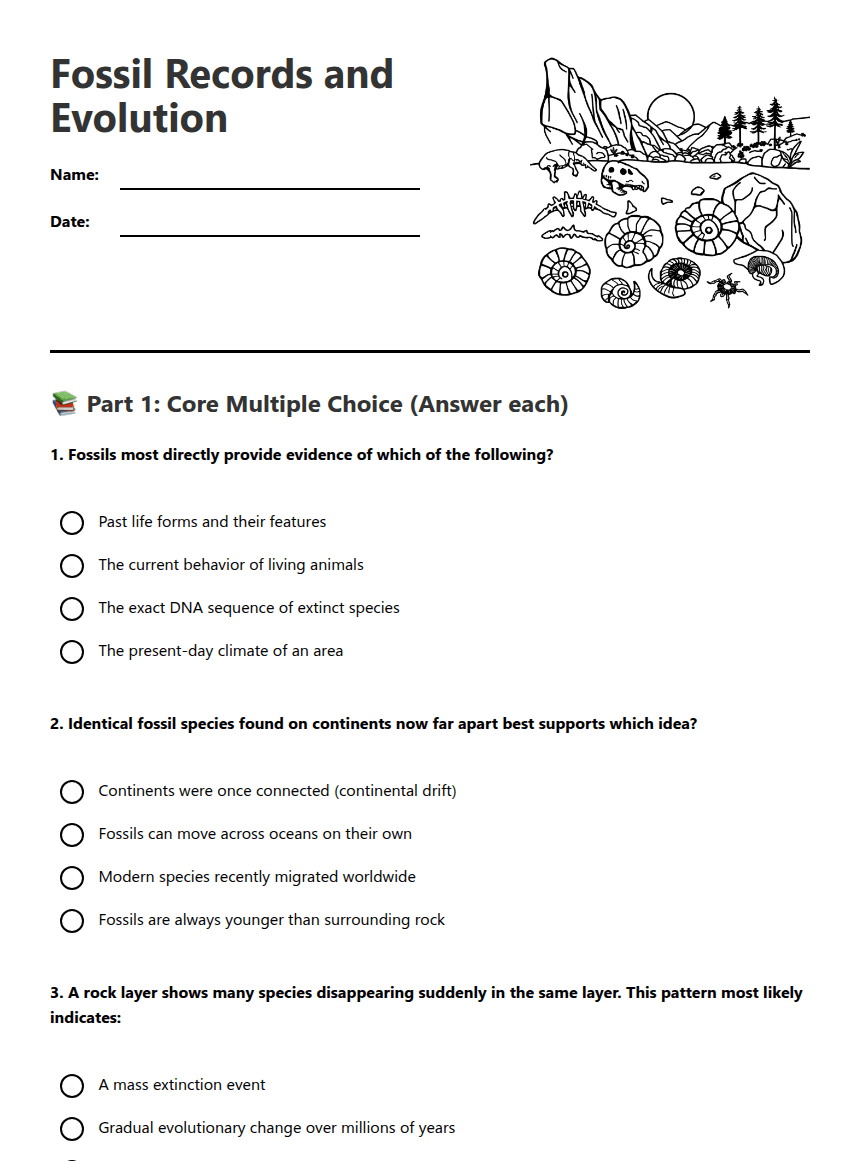
Fossil Records and Evolution
📚 Part 1: Core Multiple Choice (Answer each)
1. Fossils most directly provide evidence of which of the following?
Past life forms and their features
The current behavior of living animals
The exact DNA sequence of extinct species
The present-day climate of an area
2. Identical fossil species found on continents now far apart best supports which idea?
Continents were once connected (continental drift)
Fossils can move across oceans on their own
Modern species recently migrated worldwide
Fossils are always younger than surrounding rock
3. A rock layer shows many species disappearing suddenly in the same layer. This pattern most likely indicates:
A mass extinction event
Gradual evolutionary change over millions of years
Fossil contamination from other layers
Improved preservation in deeper layers
4. Transitional fossils (showing intermediate traits) are important because they:
Provide direct evidence of evolutionary change between groups
Prove that species never change over time
Show that fossils form only in deserts
Always preserve soft tissues
5. Index fossils are most useful for:
Correlating and dating rock layers of the same age
Showing the diet of extinct animals
Determining the color of ancient plants
Reconstructing the exact lifespan of an individual
6. The principle that older rock layers lie beneath younger layers is called:
The Law of Superposition
The Principle of Uniformity
The Theory of Fossilization
Radioactive decay
7. When a species' fossils show slow, steady changes across many rock layers, this pattern supports which idea?
Gradual evolution by small changes over time
That the species was created exactly the same each generation
That fossils from different layers are the same age
That all changes occur in one generation
🔬 Part 2: Application Multiple Choice
8. Carbon-14 dating is most appropriate for estimating the age of a fossil that is:
Less than about 50,000 years old
Hundreds of millions of years old
Older than the Earth
Always exactly 1,000 years old
9. Similar fossil assemblages in rocks of the same age but different regions most likely indicate:
Those organisms lived at the same time and may share ancestry or environments
That fossils determine exact body color of species
That rock layers cannot be compared geographically
That fossils are unrelated to past environments
10. Soft-bodied organisms are underrepresented in the fossil record mainly because:
They decay rapidly and lack hard parts needed for preservation
They never lived in environments that produce rocks
Soft tissues always turn into diamonds
They are too recent to fossilize
About This Worksheet
Free in Kuraplan
Sign up free, grab the PDF, and customize it for your class.
Print-Ready
Formatted for standard paper. Clean layout, easy to read.
AI-Generated
Created with Kuraplan's AI, designed for real classroom use.
For Teachers & Parents
Use in classrooms, for homework, tutoring, or homeschool.
Need a custom version of this worksheet?
Kuraplan's AI generates custom worksheets in seconds — differentiated for every learner, aligned to your curriculum.
Generate Custom Worksheets — Free No credit card Curriculum-aligned Under 60 seconds
More Science Worksheets
7th Grade
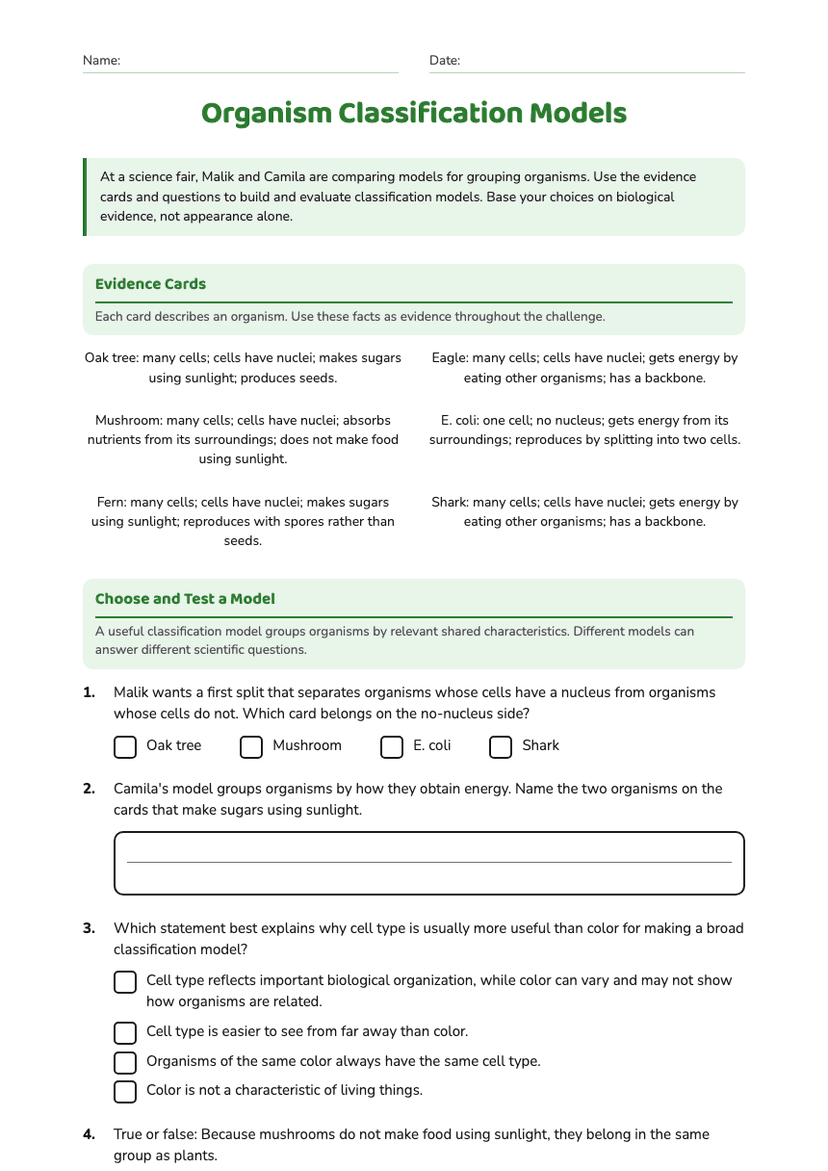
Organism Classification Models
Free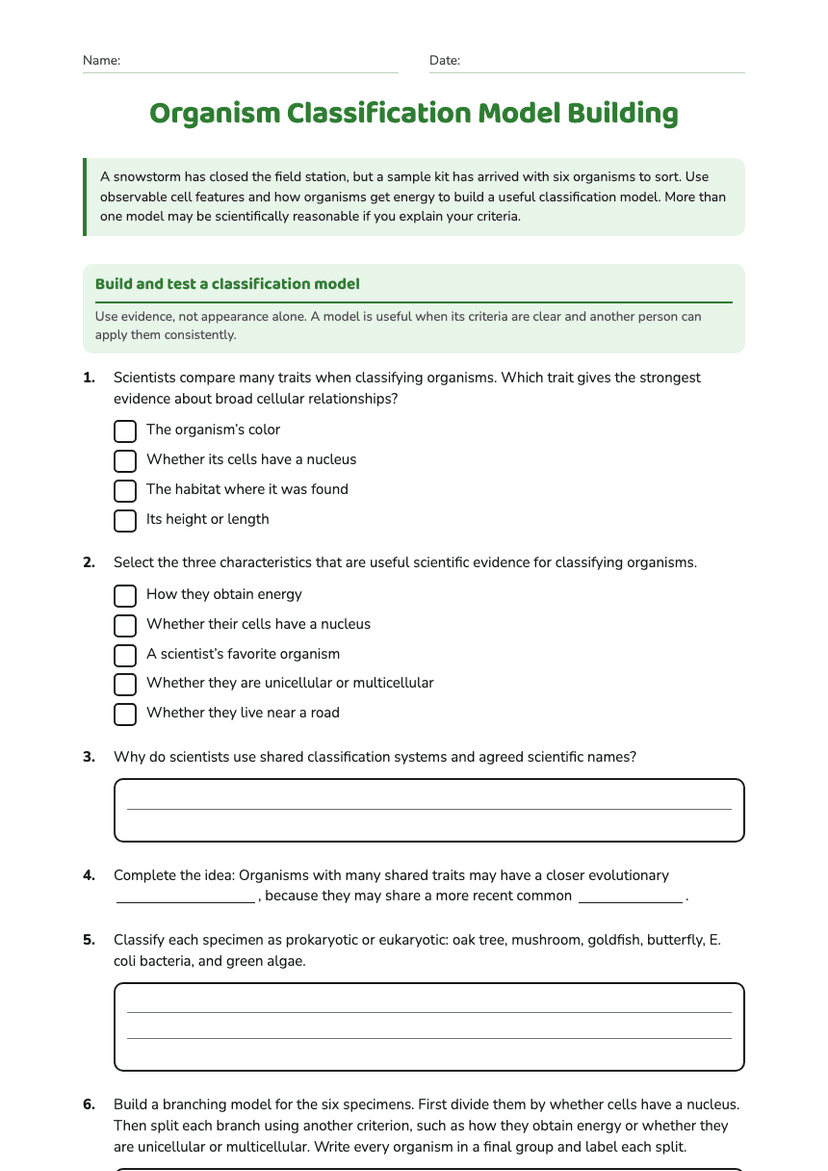
7th Grade
Organism Classification Model Building
Free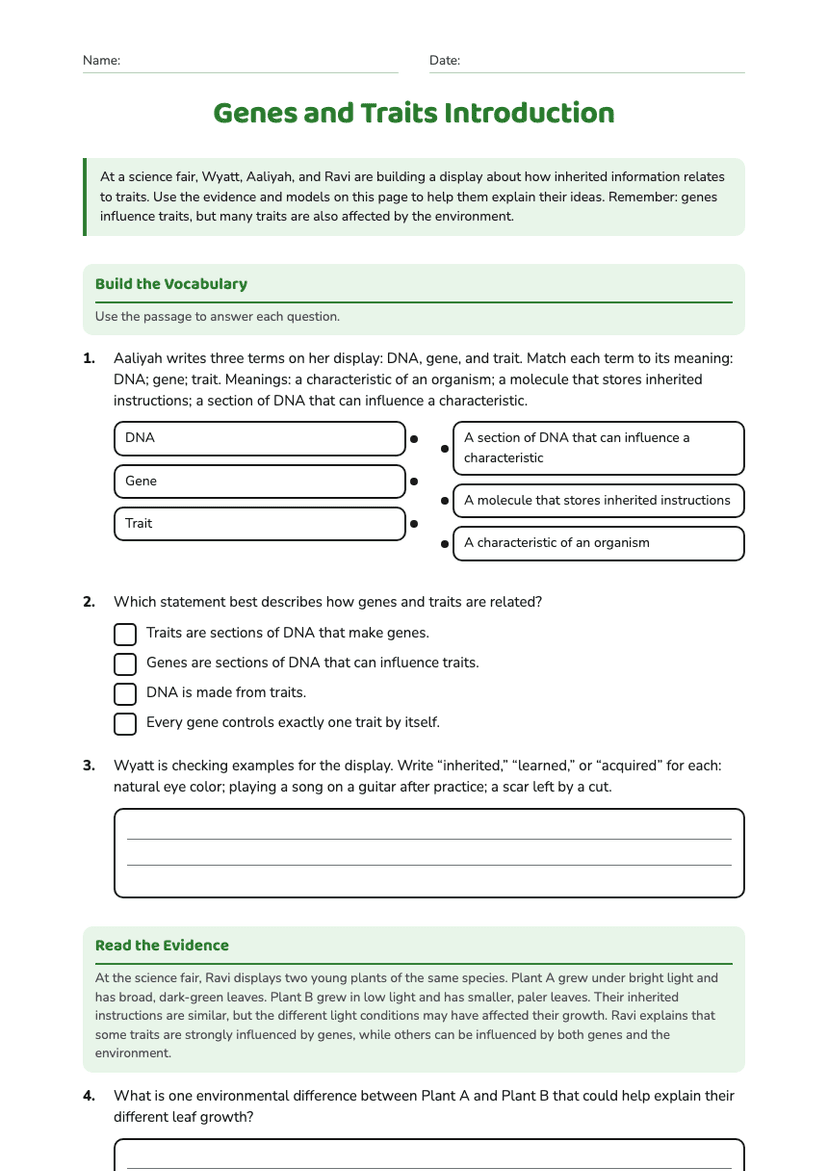
7th Grade
Genes and Traits Introduction
Free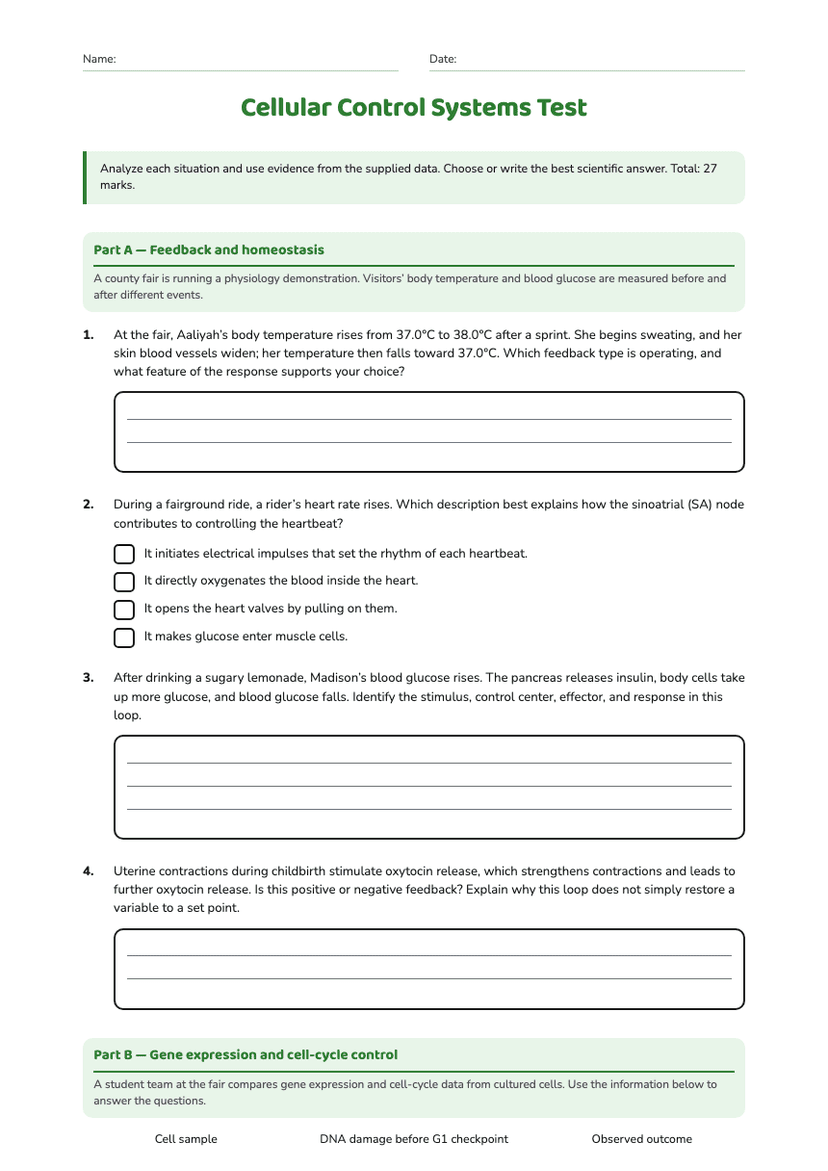
12th Grade
Cellular Control Systems Test
Free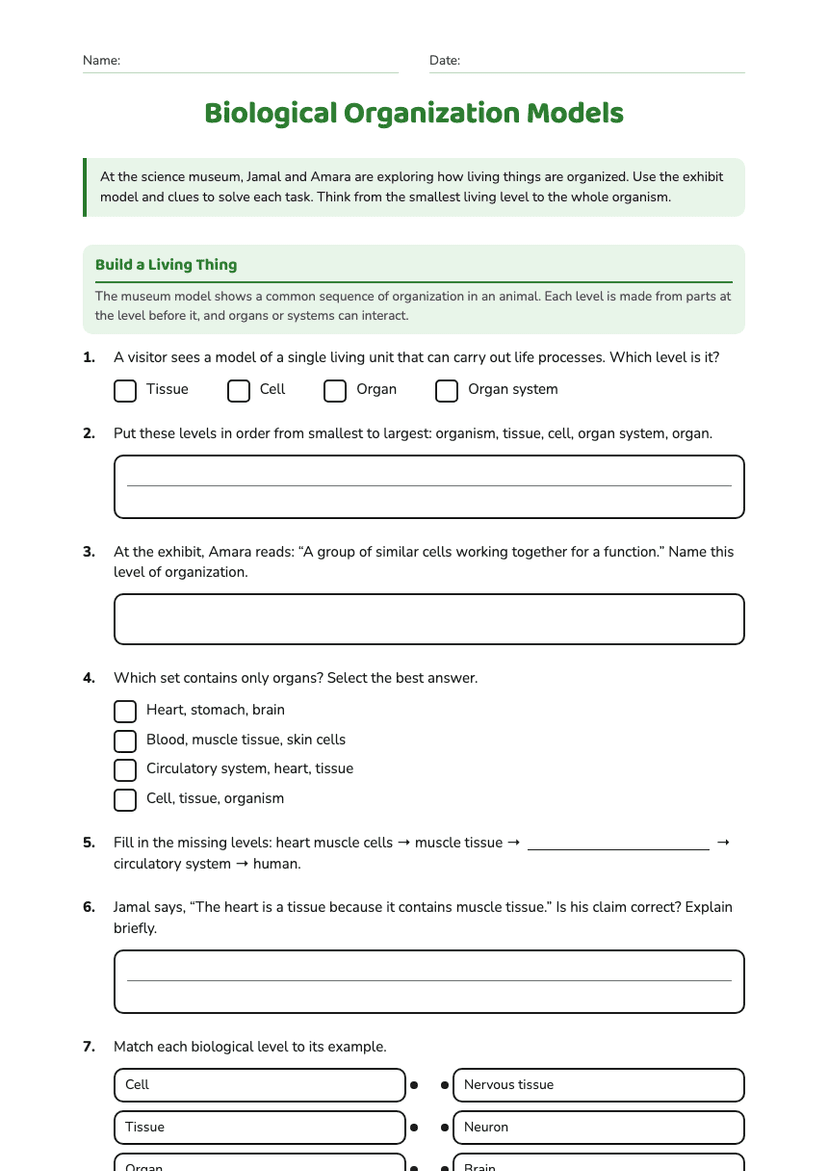
7th Grade
Biological Organization Models
Free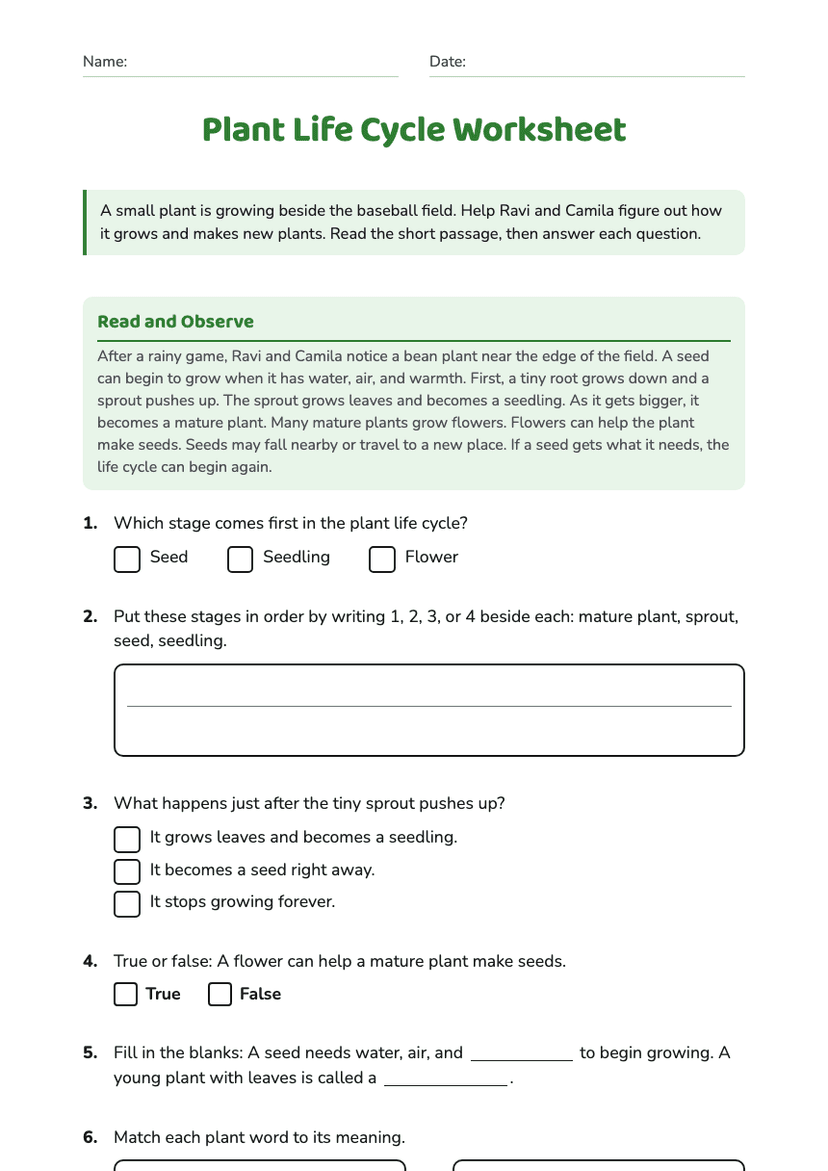
2nd Grade
Plant Life Cycle Worksheet
Free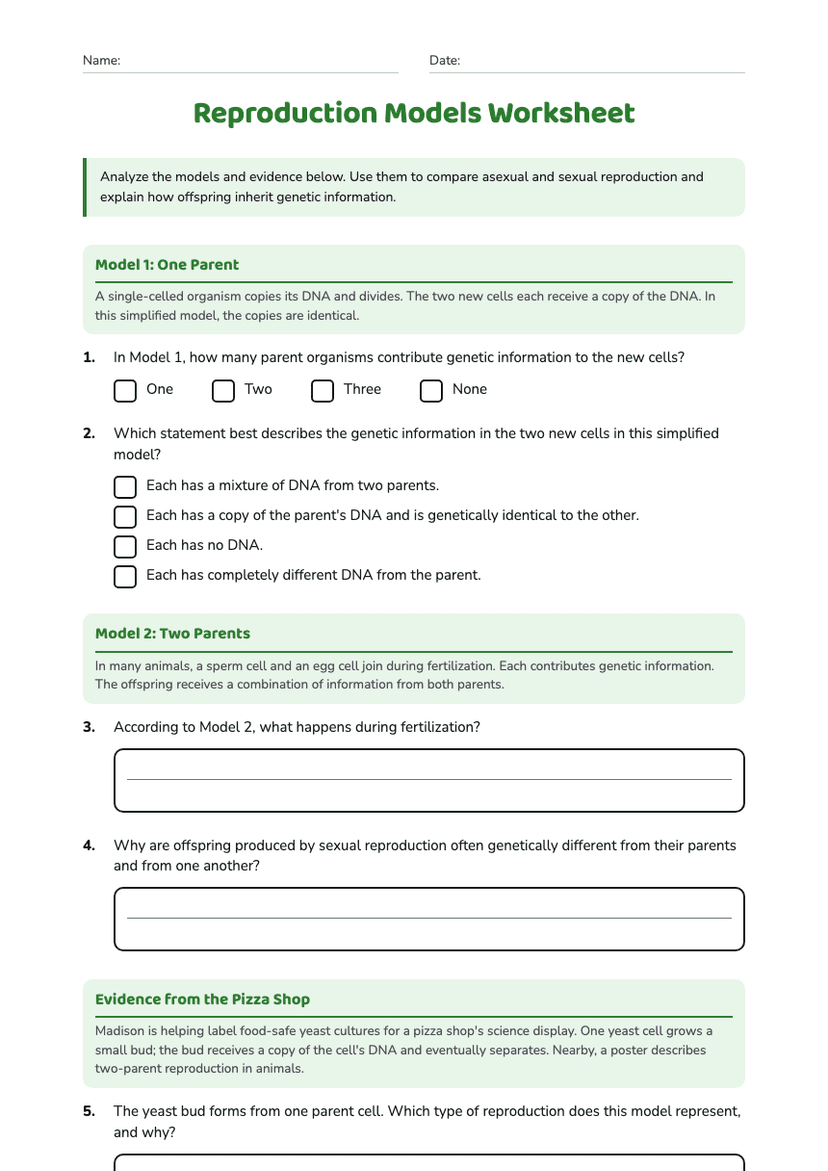
7th Grade
Reproduction Models Worksheet
Free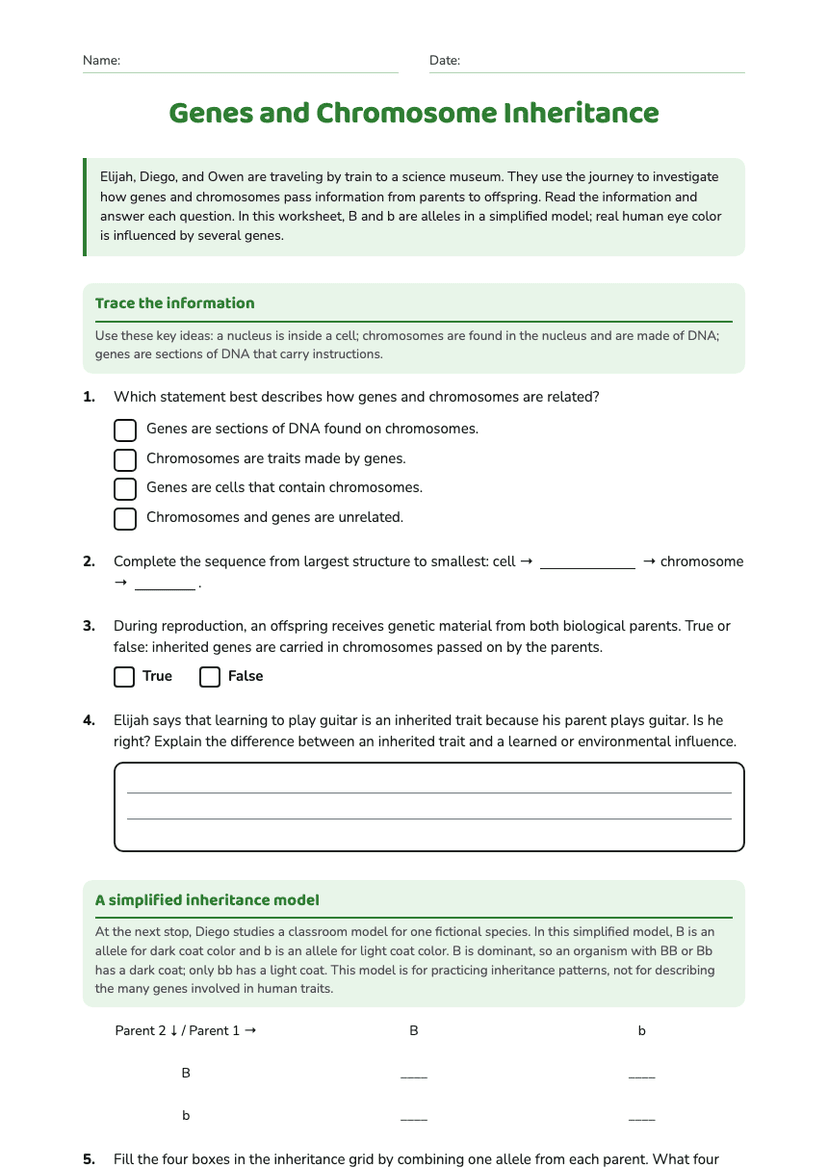
7th Grade