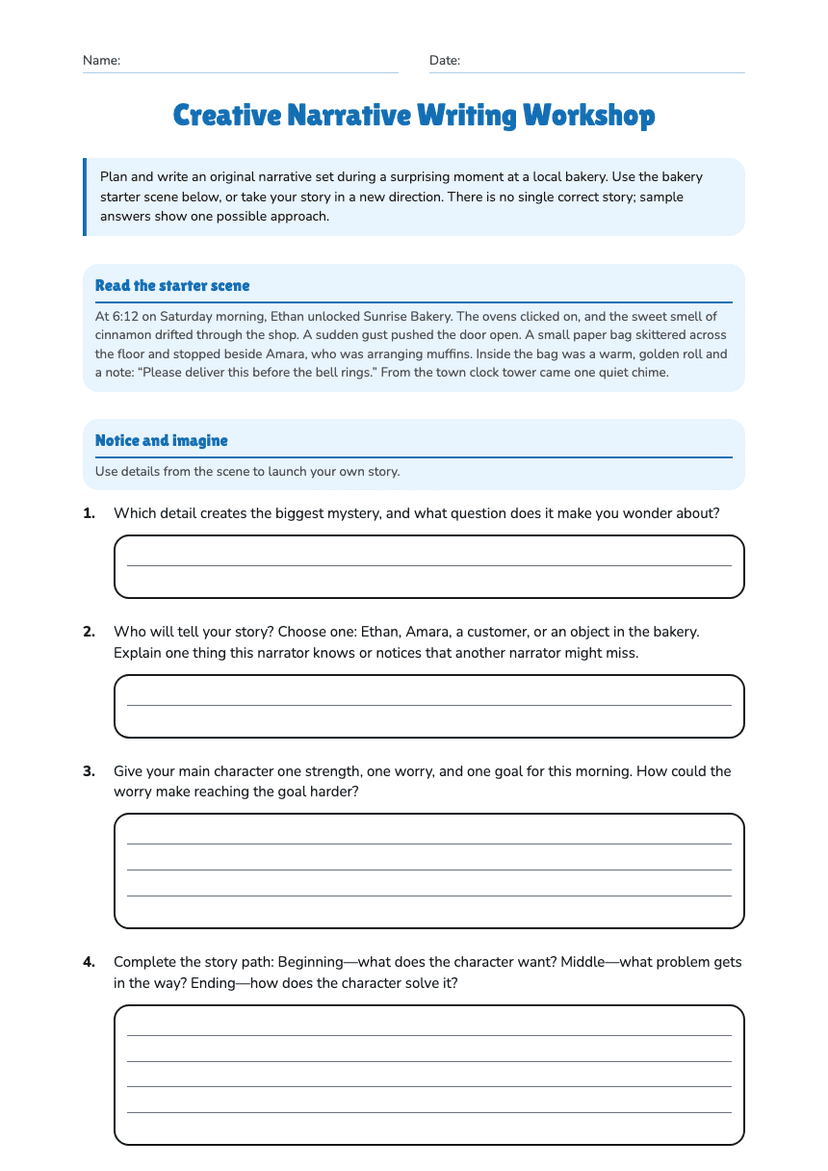
Narrator Perspective Evidence Paragraph、】【
A free english (ela) worksheet ready for your classroom. Open in Kuraplan to grab the print-ready PDF, customize it for your students, or generate a fresh version in seconds.
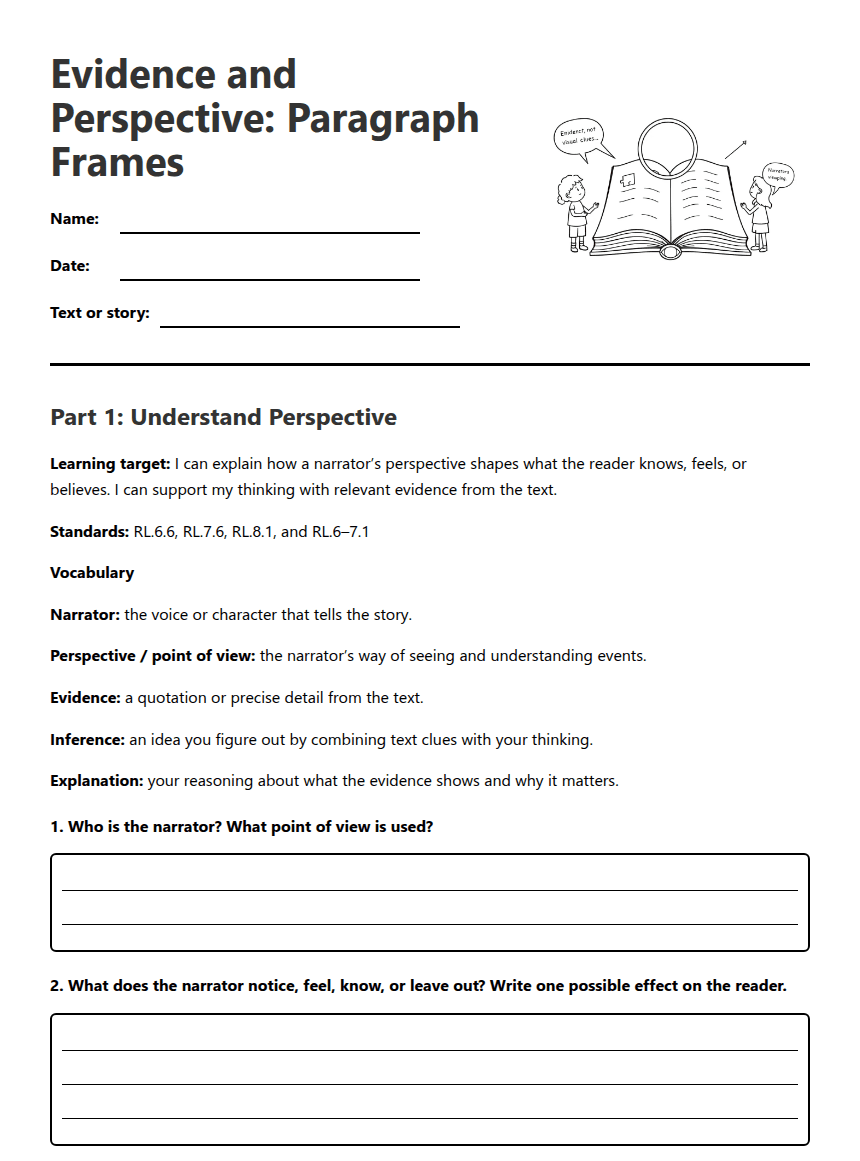
Evidence and Perspective: Paragraph Frames
Part 1: Understand Perspective
Learning target: I can explain how a narrator’s perspective shapes what the reader knows, feels, or believes. I can support my thinking with relevant evidence from the text.
Standards: RL.6.6, RL.7.6, RL.8.1, and RL.6–7.1
Vocabulary
Narrator: the voice or character that tells the story.
Perspective / point of view: the narrator’s way of seeing and understanding events.
Evidence: a quotation or precise detail from the text.
Inference: an idea you figure out by combining text clues with your thinking.
Explanation: your reasoning about what the evidence shows and why it matters.
Reminder: Summary tells what happened. Analysis explains what a detail shows or why it matters.
Part 2: Find Your Evidence and Build Your Paragraph
Choose one important passage. Record a short quotation or a precise paraphrase. Add the page or paragraph number.
Supported frame: The narrator’s perspective shapes the reader’s understanding by ____________________. For example, the text says, “____________________.” This shows ____________________.
Developing frame: Because the narrator ____________________, the reader understands that ____________________. The detail “____________________” supports this idea because ____________________.
Challenge frame: The narrator’s limited or specific perspective influences the reader to ____________________. The author’s word choice, “____________________,” creates a feeling of ____________________. This suggests ____________________.
Additional sentence stems
Compared with ____________________’s perspective, ____________________ sees the event as ____________________.
The narrator may be reliable or unreliable because ____________________.
The narrator leaves out ____________________, which causes the reader to ____________________.
Part 3: Write, Check, and Extend
Write your polished evidence paragraph. Include a claim, relevant evidence, a citation, and an explanation. Aim for 6–8 lines.
Self-check: Check each box when you have reviewed your paragraph.
Teacher notes and answer guidance: Accept a clear claim supported by one relevant quotation or precise detail. Strong explanations connect the evidence to what the narrator allows the reader to know, feel, or believe. For EAL learners, allow oral rehearsal, partner reading, a shortened passage, word banks, speech-to-text, or scribing. Accept a shorter paragraph with one strong piece of evidence. For advanced learners, encourage two pieces of evidence, comparison of contrasting perspectives, and analysis of how word choice creates tone.
About This Worksheet
Free in Kuraplan
Sign up free, grab the PDF, and customize it for your class.
Print-Ready
Formatted for standard paper. Clean layout, easy to read.
AI-Generated
Created with Kuraplan's AI, designed for real classroom use.
For Teachers & Parents
Use in classrooms, for homework, tutoring, or homeschool.
Need a custom version of this worksheet?
Kuraplan's AI generates custom worksheets in seconds — differentiated for every learner, aligned to your curriculum.
Generate Custom Worksheets — FreeMore English (ELA) Worksheets
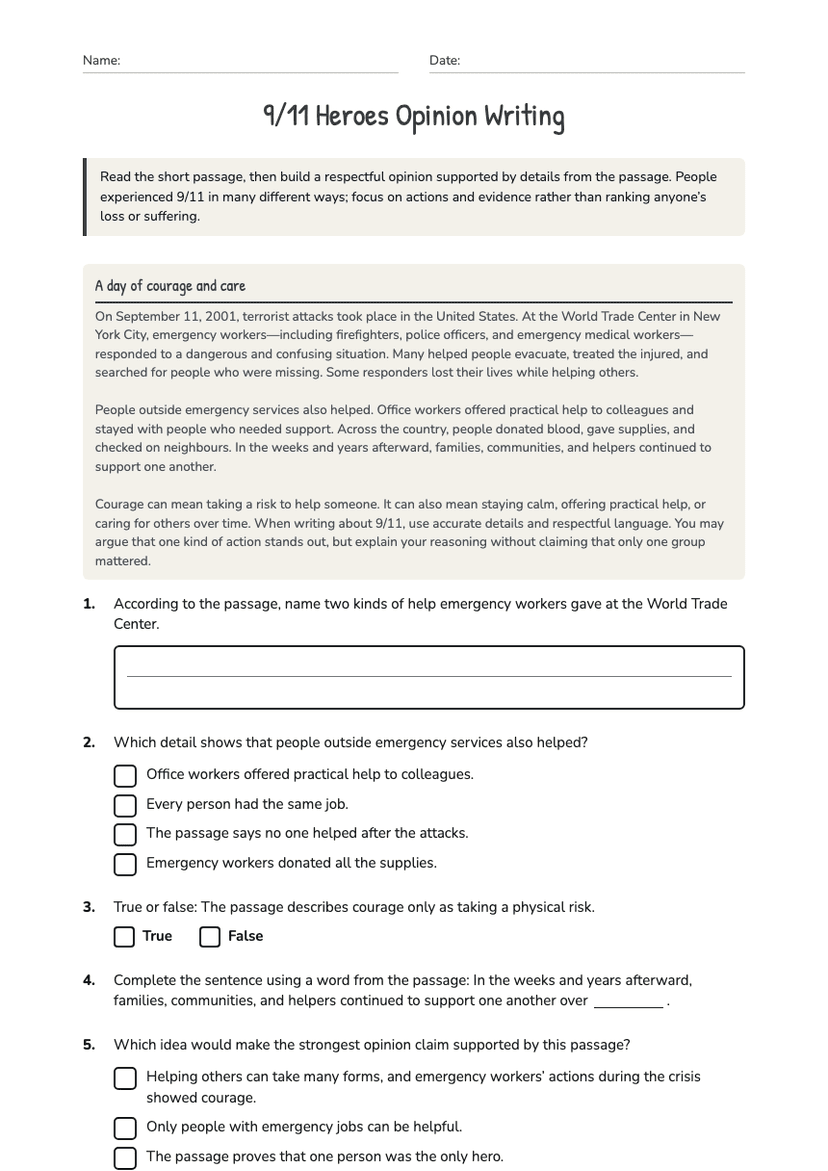
9/11 Heroes Opinion Writing
Free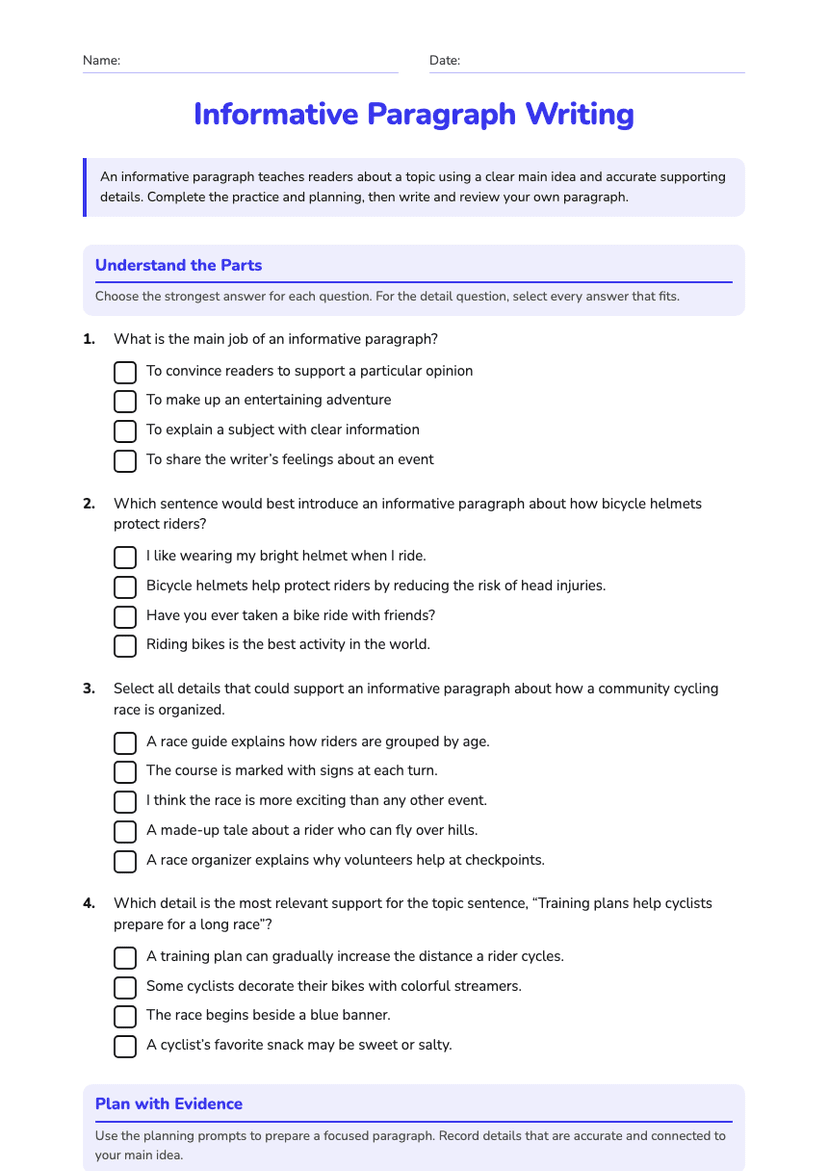
Informative Paragraph Writing
Free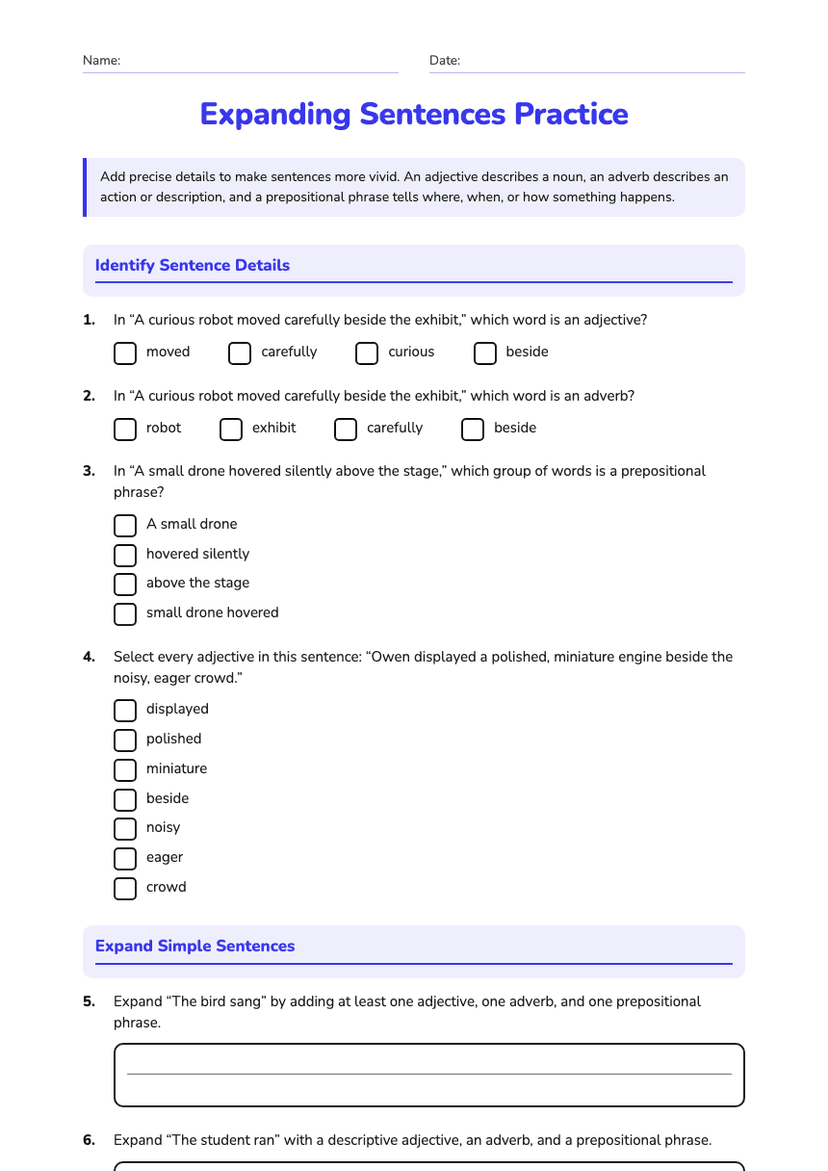
Expanding Sentences Practice
Free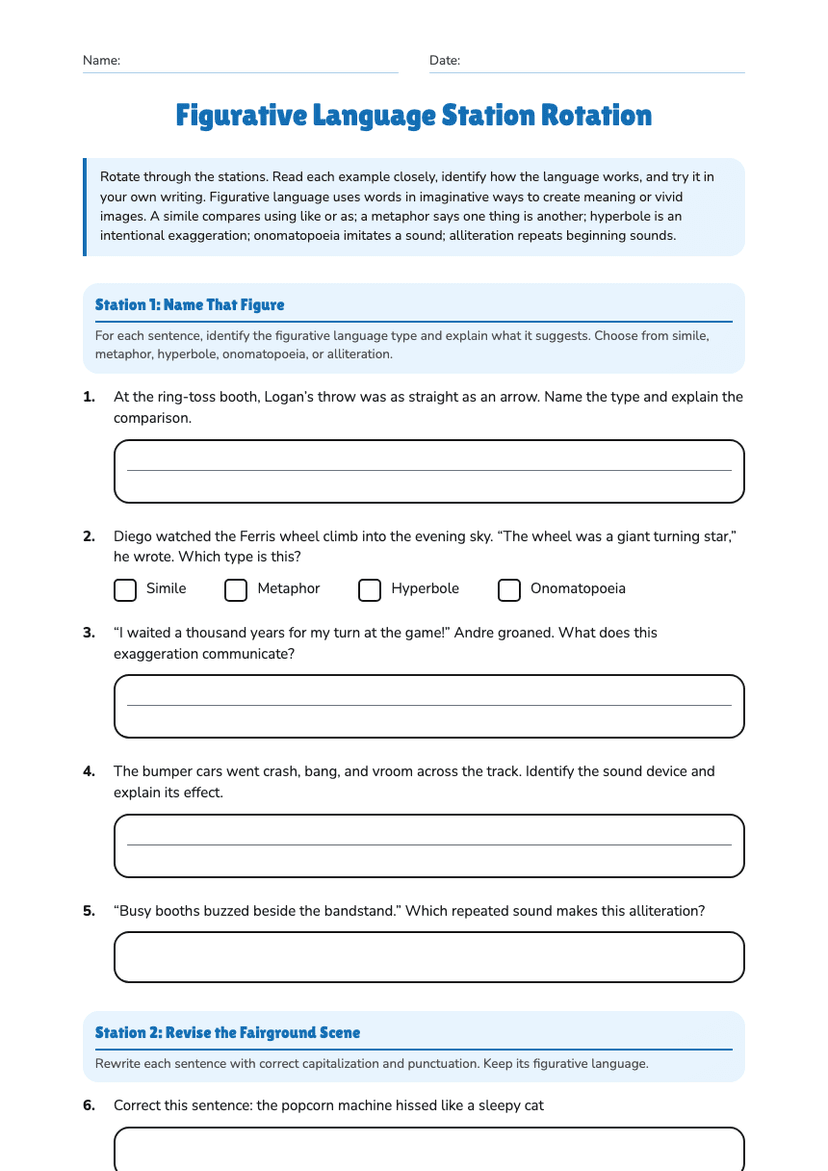
Figurative Language Station Rotation
Free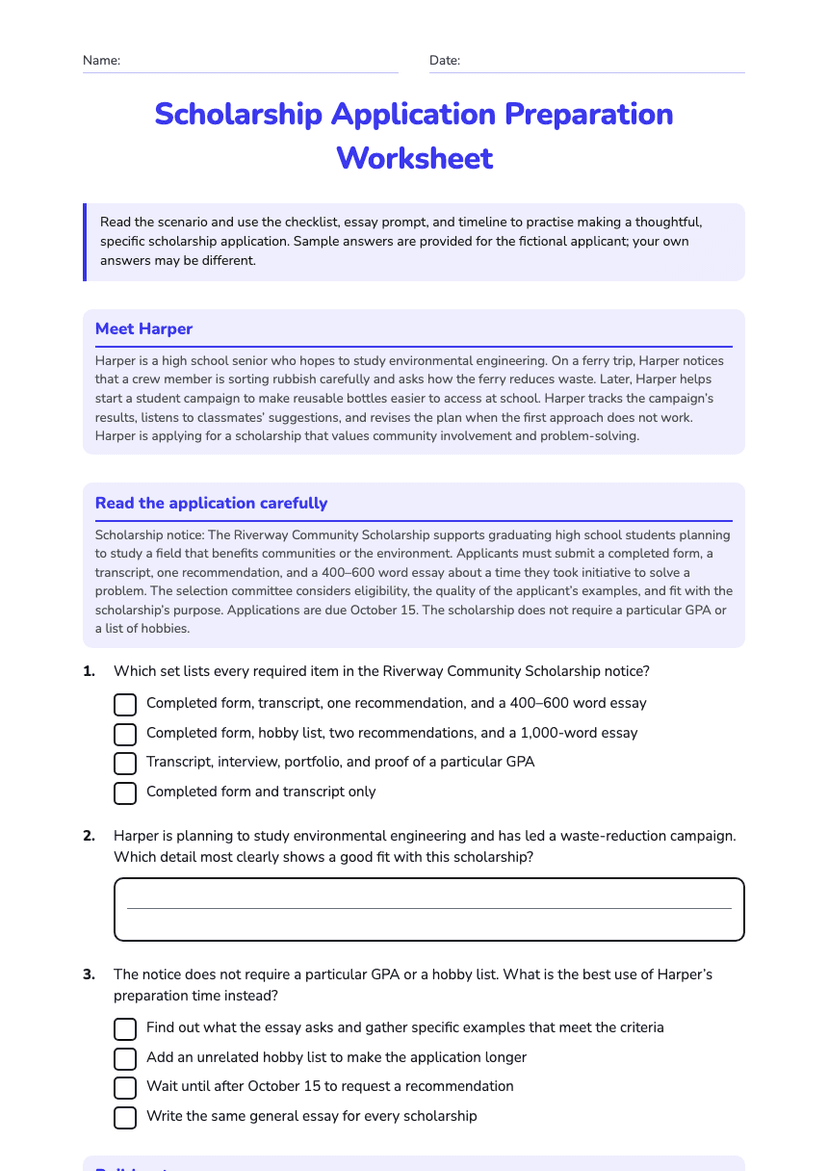
Scholarship Application Preparation Worksheet
Free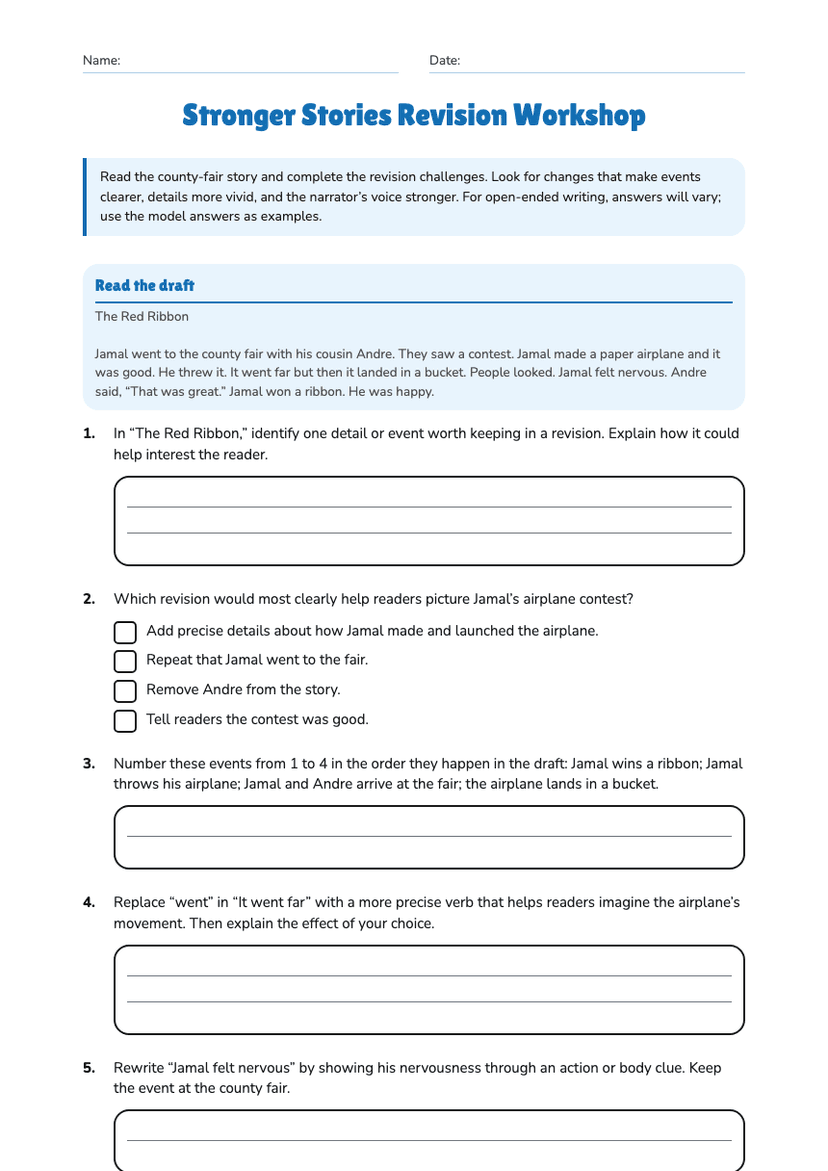
Stronger Stories Revision Workshop
Free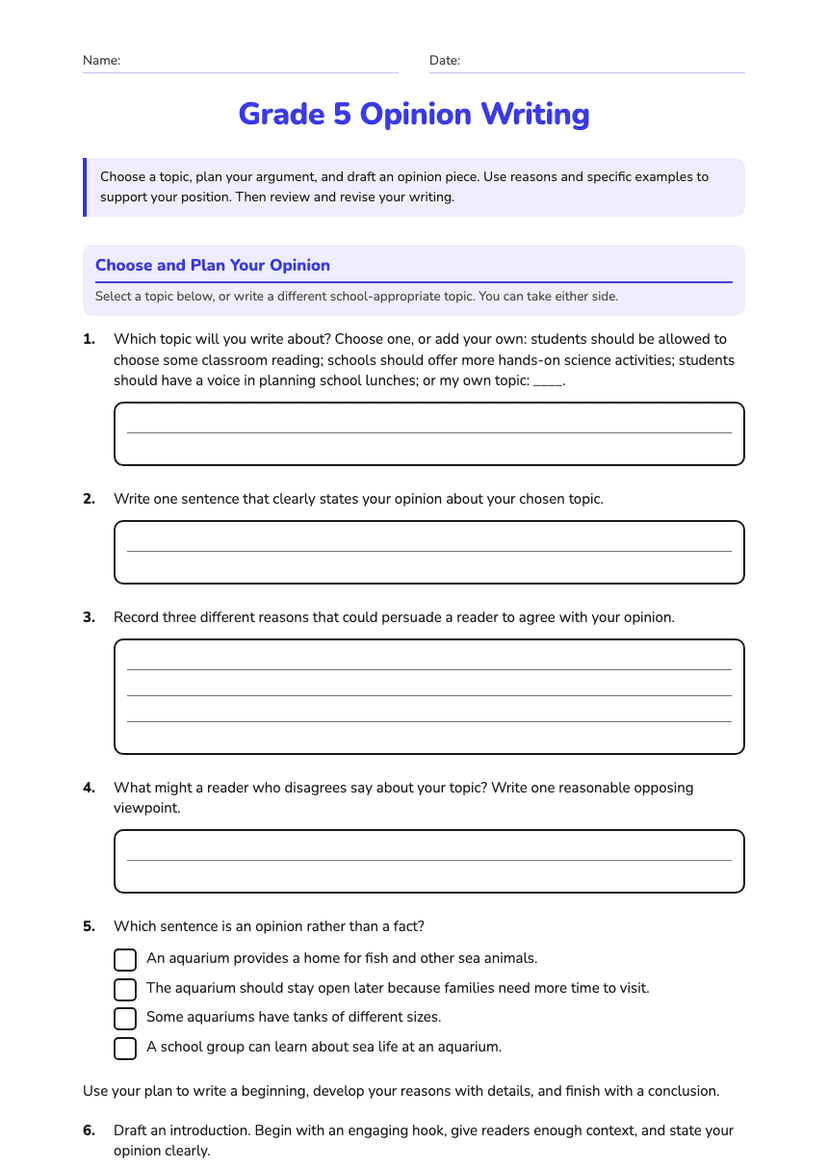
Grade 5 Opinion Writing
Free