Physical and Chemical Changes
A free science worksheet ready for your classroom. Open in Kuraplan to grab the print-ready PDF, customize it for your students, or generate a fresh version in seconds.
Physical and Chemical Changes
Reading: Changes in Matter
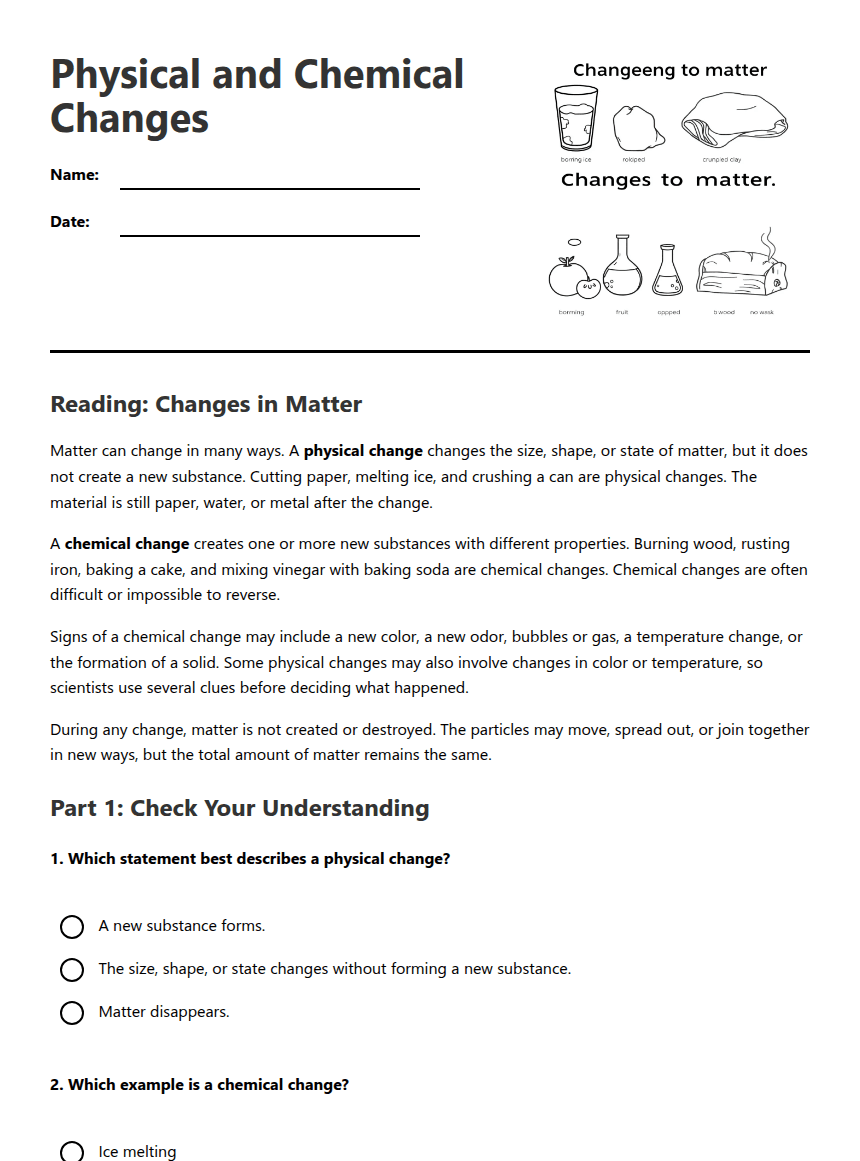
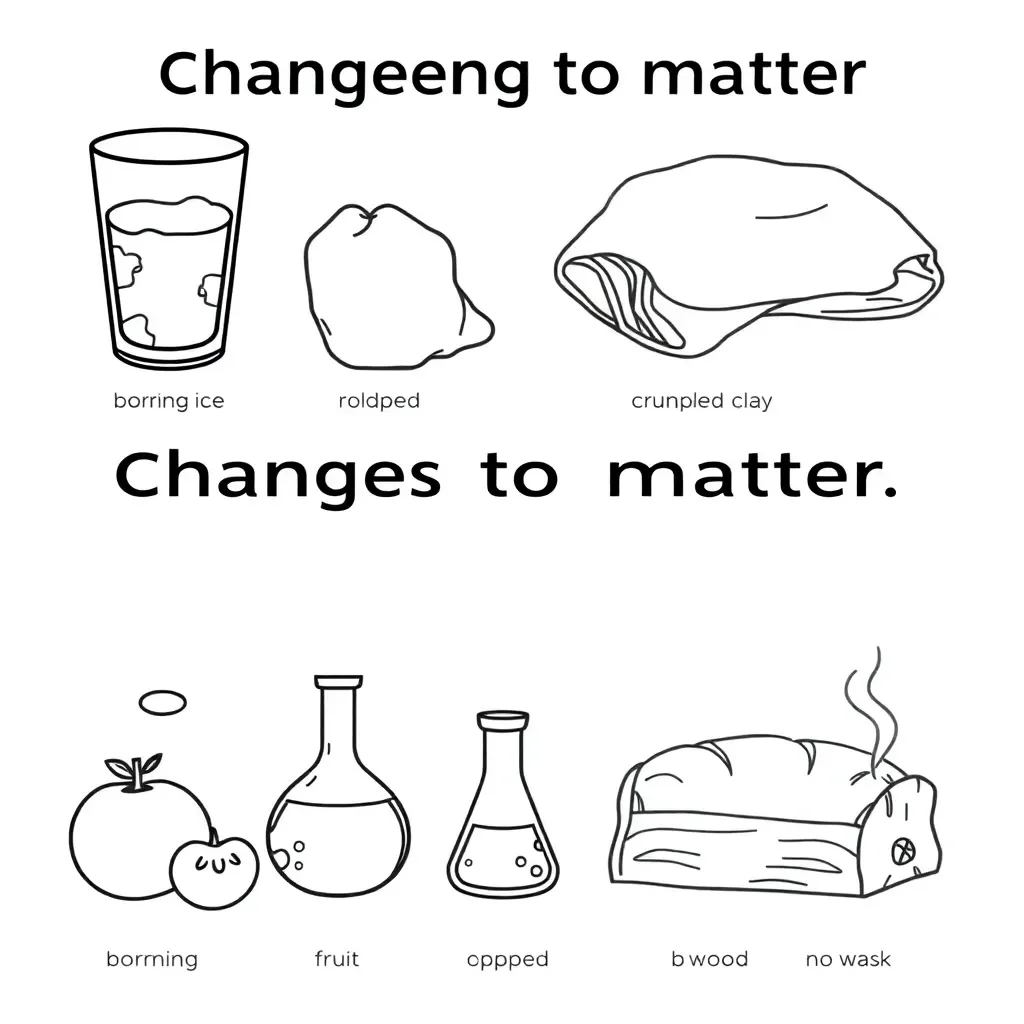
Matter can change in many ways. A physical change changes the size, shape, or state of matter, but it does not create a new substance. Cutting paper, melting ice, and crushing a can are physical changes. The material is still paper, water, or metal after the change.
A chemical change creates one or more new substances with different properties. Burning wood, rusting iron, baking a cake, and mixing vinegar with baking soda are chemical changes. Chemical changes are often difficult or impossible to reverse.
Signs of a chemical change may include a new color, a new odor, bubbles or gas, a temperature change, or the formation of a solid. Some physical changes may also involve changes in color or temperature, so scientists use several clues before deciding what happened.
During any change, matter is not created or destroyed. The particles may move, spread out, or join together in new ways, but the total amount of matter remains the same.
Part 1: Check Your Understanding
____________________________
Part 2: Explain and Classify
a. A glass breaks: ____________________
b. A cake bakes: ____________________
c. Water freezes: ____________________
d. Vinegar and baking soda form bubbles: ____________________
About This Worksheet
Free in Kuraplan
Sign up free, grab the PDF, and customize it for your class.
Print-Ready
Formatted for standard paper. Clean layout, easy to read.
AI-Generated
Created with Kuraplan's AI, designed for real classroom use.
For Teachers & Parents
Use in classrooms, for homework, tutoring, or homeschool.
Need a custom version of this worksheet?
Kuraplan's AI generates custom worksheets in seconds — differentiated for every learner, aligned to your curriculum.
Generate Custom Worksheets — FreeMore Science Worksheets
Changes Cut and Paste
Free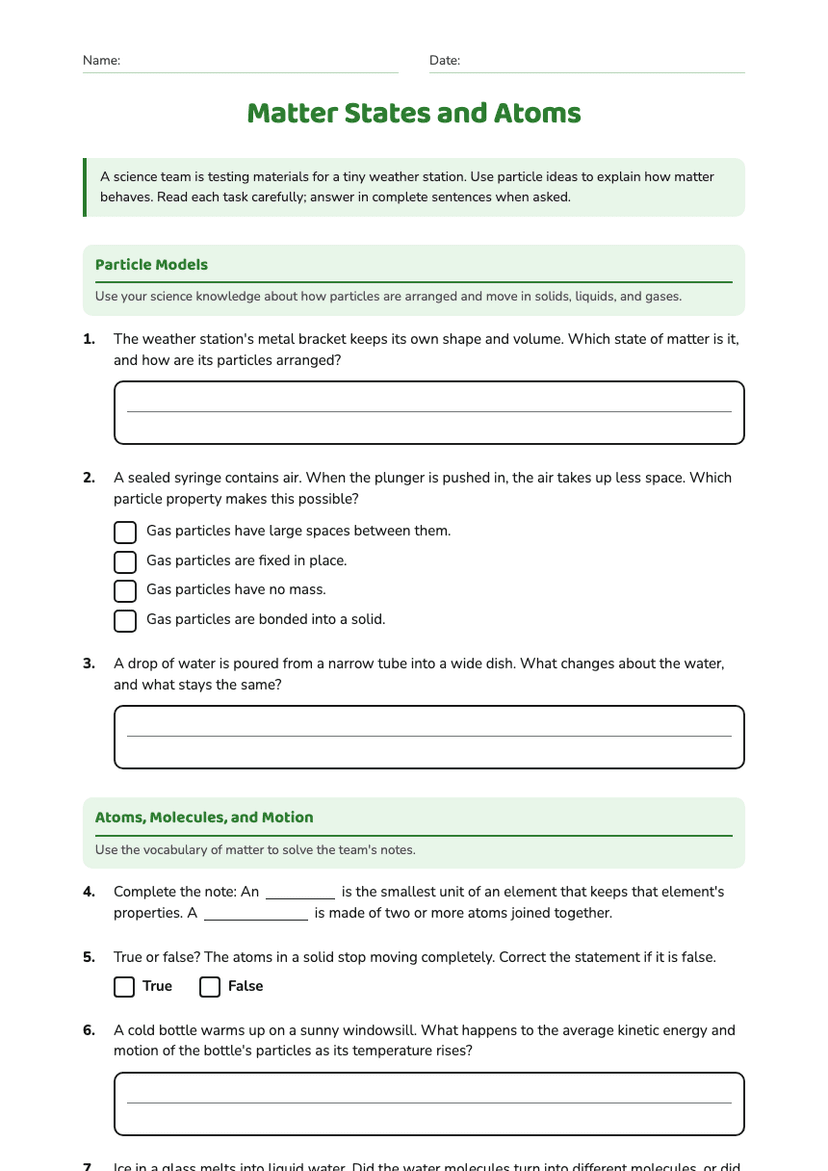
Matter States and Atoms
Free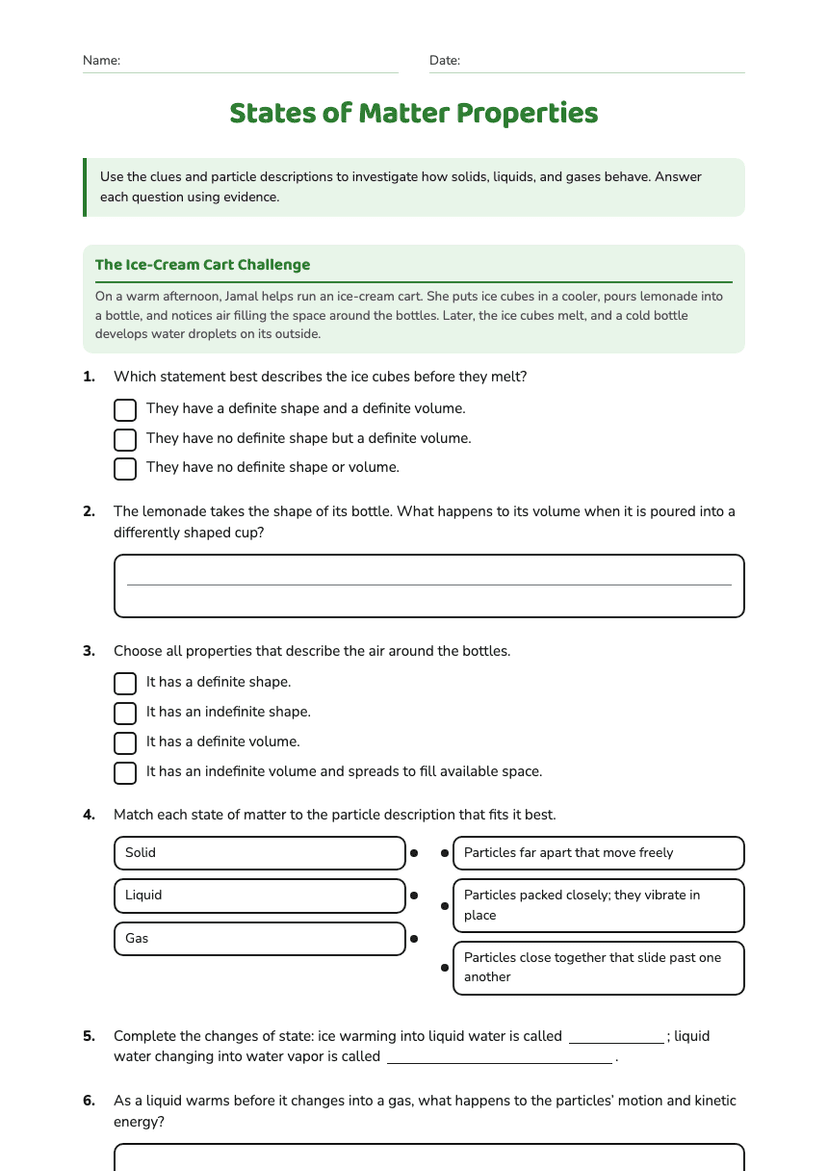
States of Matter Properties
Free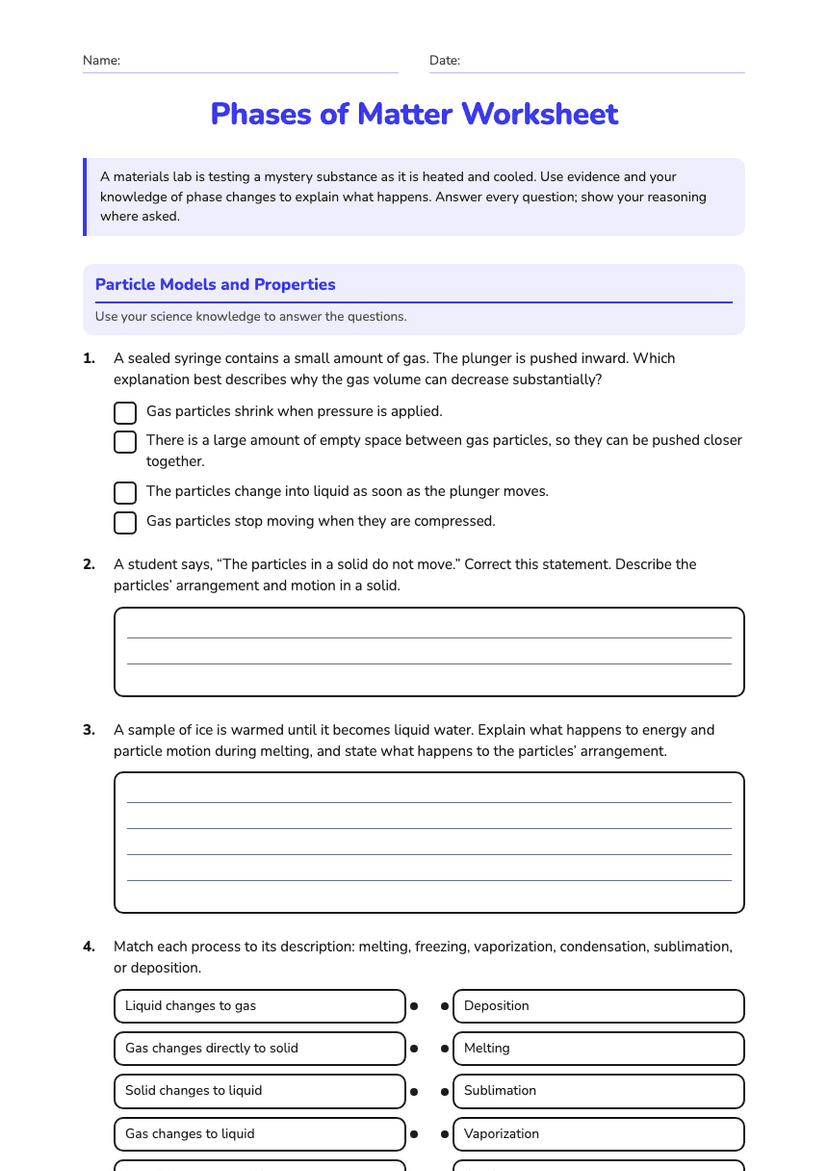
Phases of Matter Worksheet
Free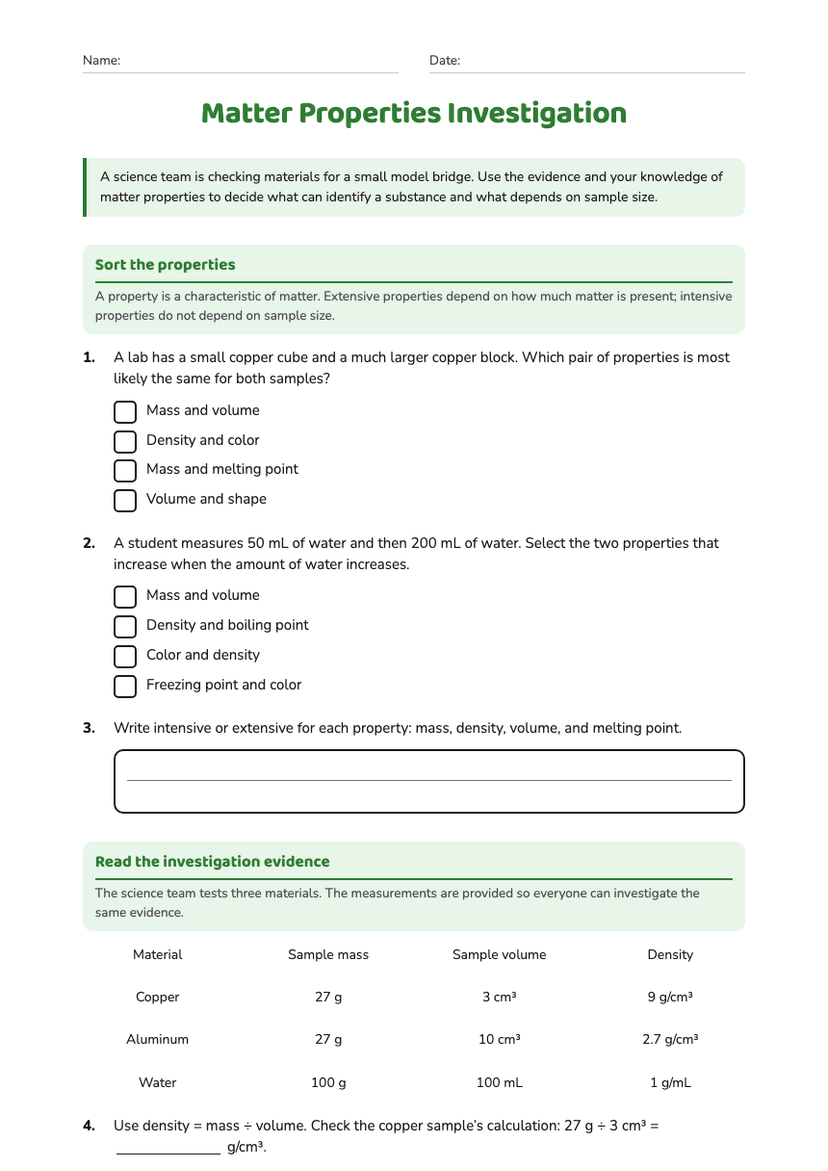
Matter Properties Investigation
Free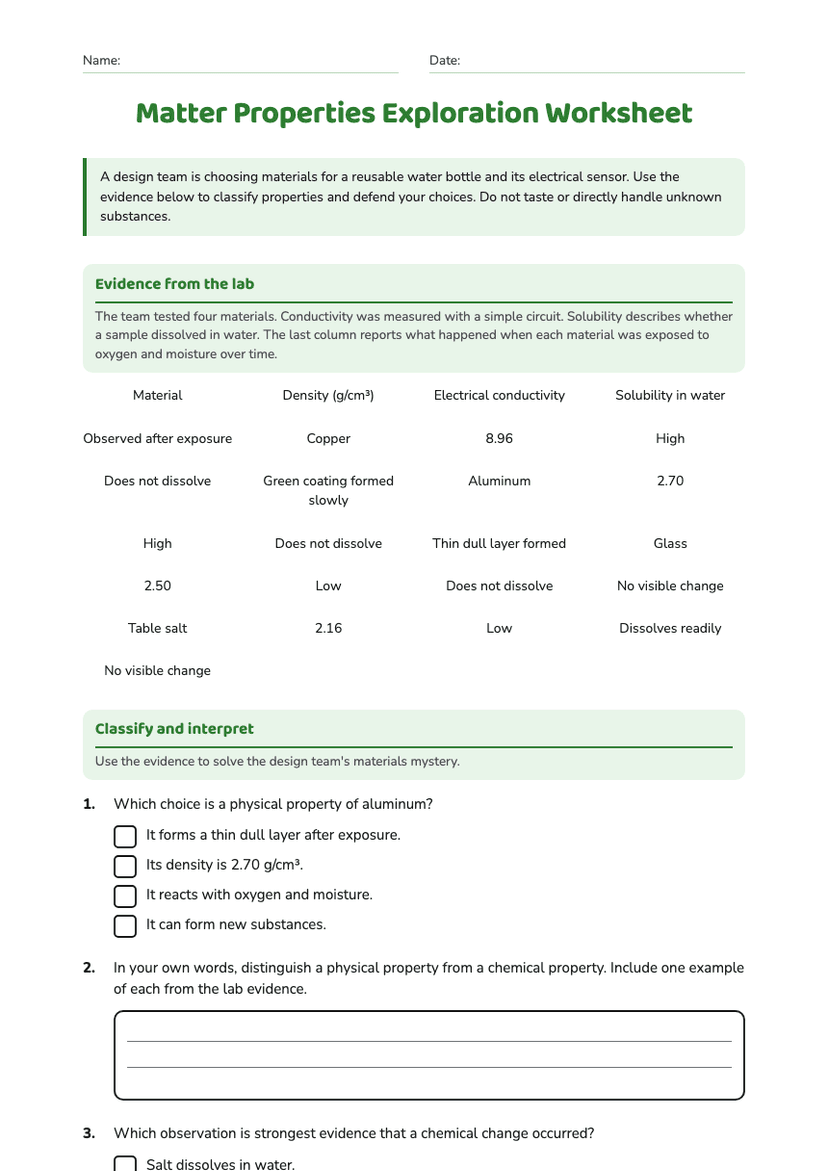
Matter Properties Exploration Worksheet
Free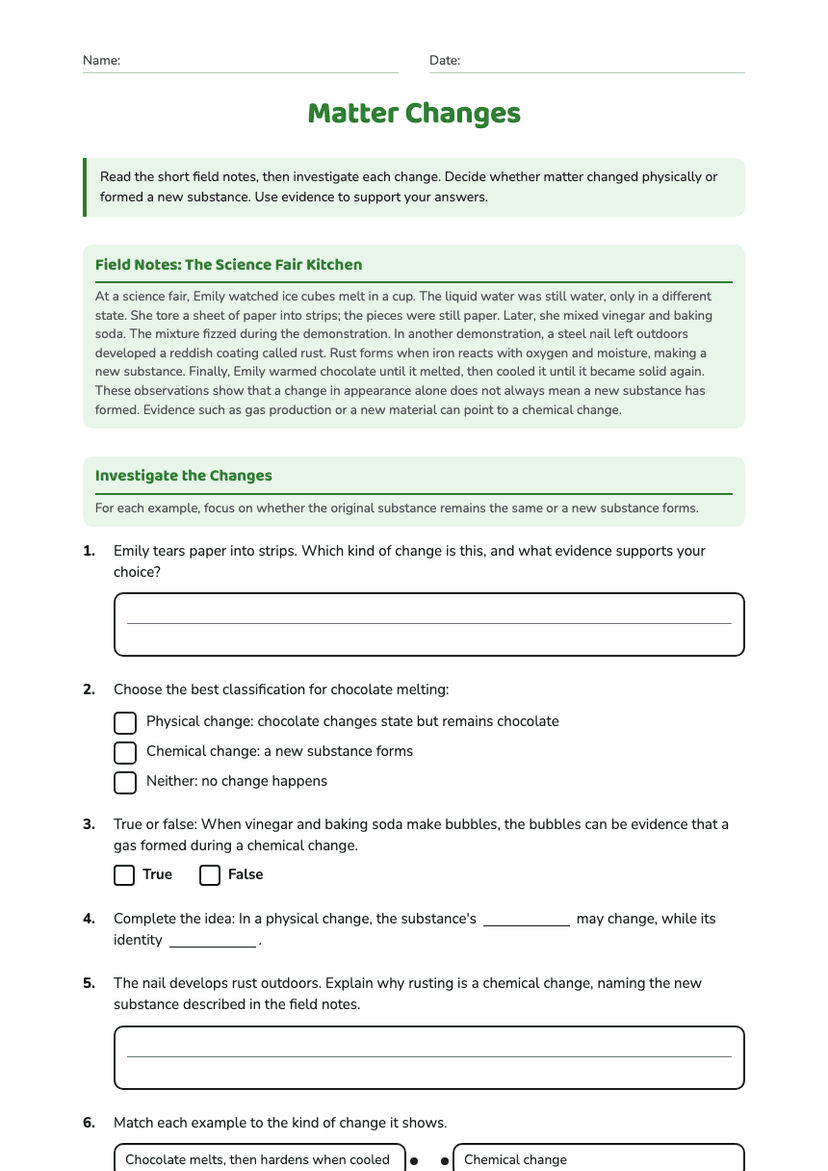
Matter Changes
Free