Pool Safety Reading Guide
A free english (ela) worksheet ready for your classroom. Open in Kuraplan to grab the print-ready PDF, customize it for your students, or generate a fresh version in seconds.
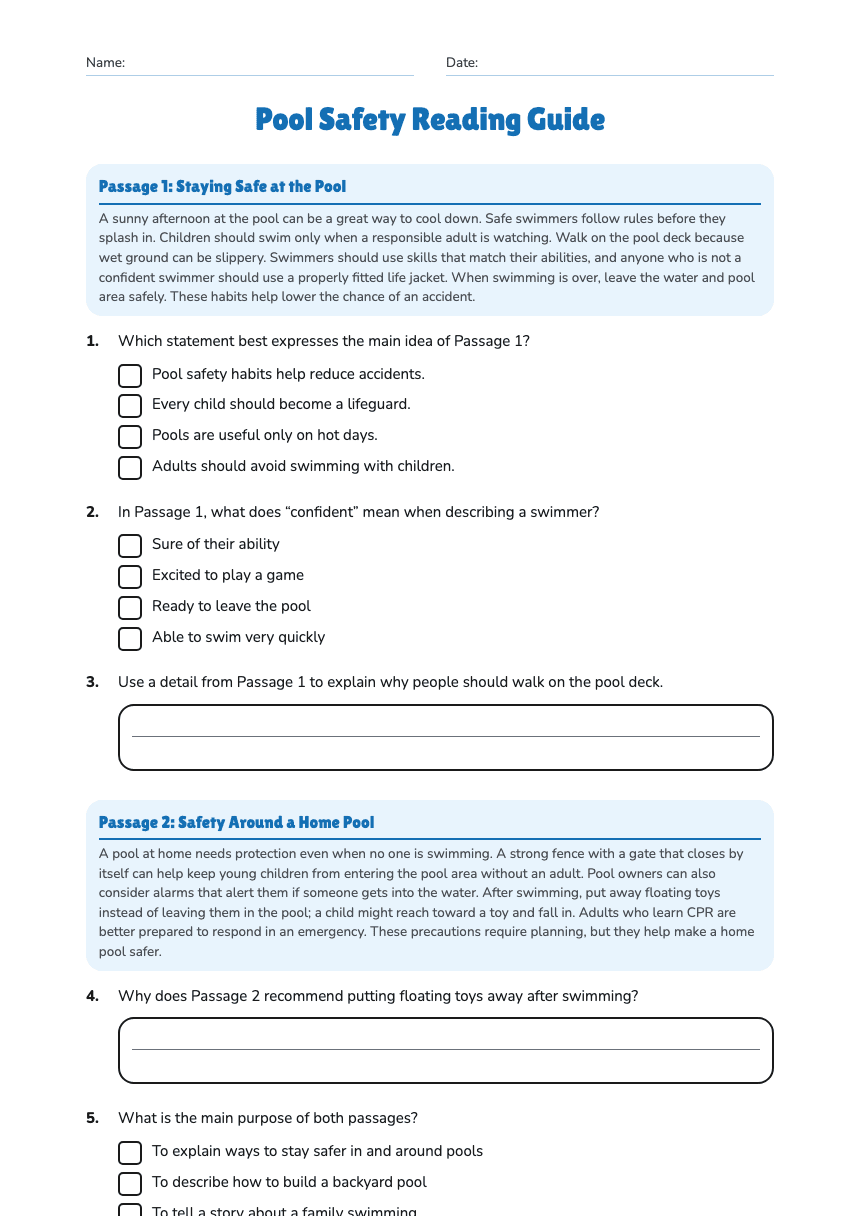
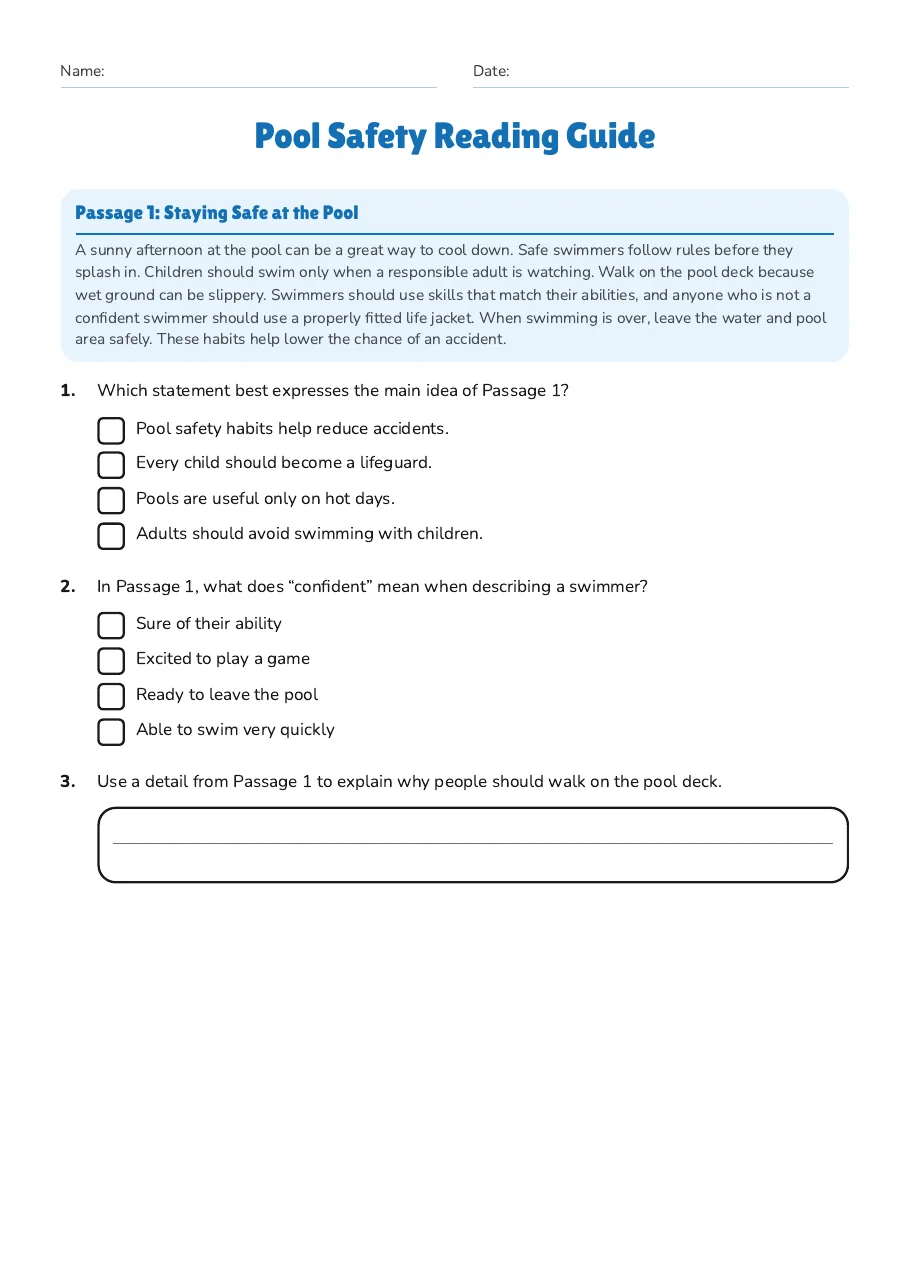
Pool Safety Reading Guide
Passage 1: Staying Safe at the Pool
A sunny afternoon at the pool can be a great way to cool down. Safe swimmers follow rules before they splash in. Children should swim only when a responsible adult is watching. Walk on the pool deck because wet ground can be slippery. Swimmers should use skills that match their abilities, and anyone who is not a confident swimmer should use a properly fitted life jacket. When swimming is over, leave the water and pool area safely. These habits help lower the chance of an accident.
- Pool safety habits help reduce accidents.
- Every child should become a lifeguard.
- Pools are useful only on hot days.
- Adults should avoid swimming with children.
- Sure of their ability
- Excited to play a game
- Ready to leave the pool
- Able to swim very quickly
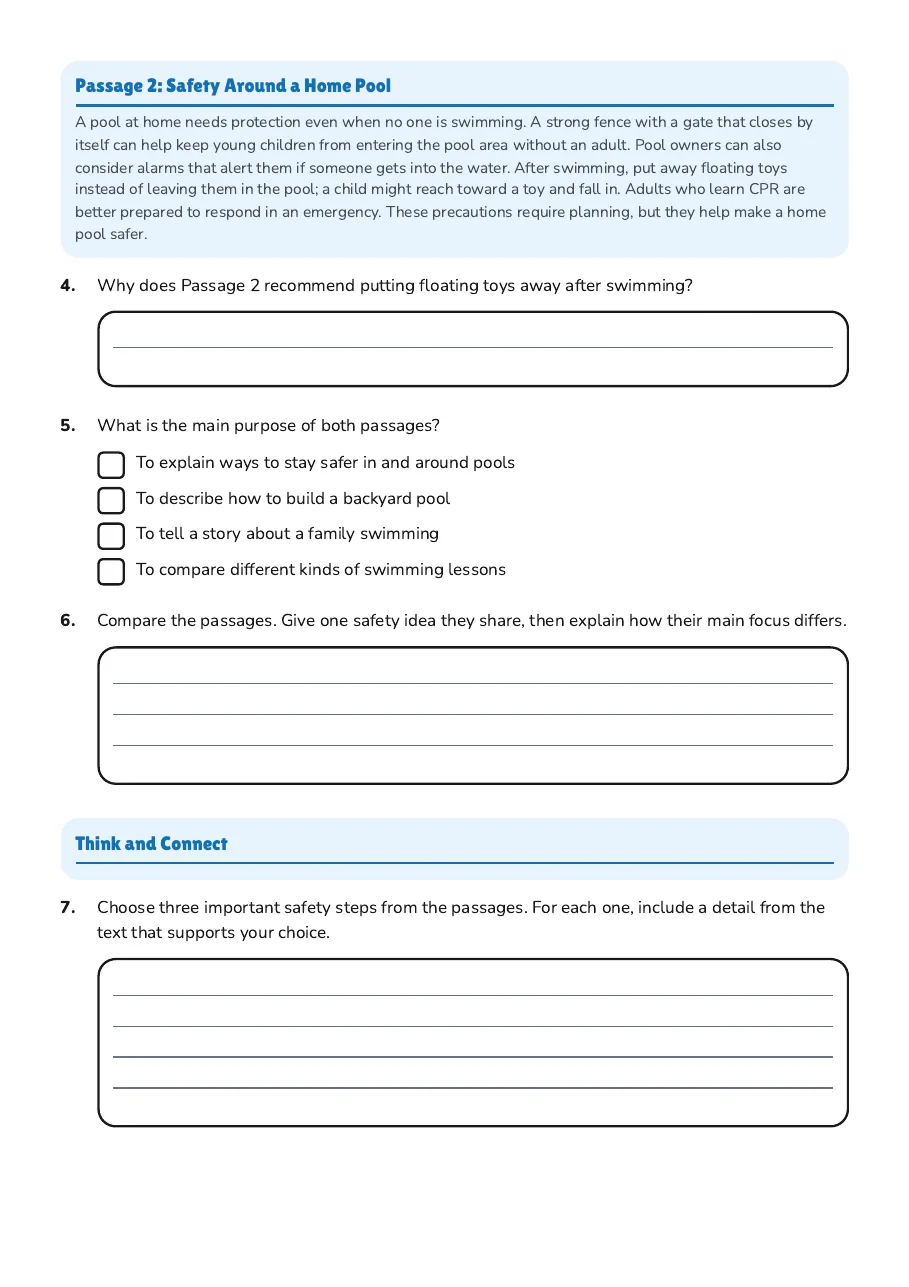
Passage 2: Safety Around a Home Pool
A pool at home needs protection even when no one is swimming. A strong fence with a gate that closes by itself can help keep young children from entering the pool area without an adult. Pool owners can also consider alarms that alert them if someone gets into the water. After swimming, put away floating toys instead of leaving them in the pool; a child might reach toward a toy and fall in. Adults who learn CPR are better prepared to respond in an emergency. These precautions require planning, but they help make a home pool safer.
- To explain ways to stay safer in and around pools
- To describe how to build a backyard pool
- To tell a story about a family swimming
- To compare different kinds of swimming lessons
Think and Connect
3 printable pages
Page 1
Page 2
Page 3
About This Worksheet
Free in Kuraplan
Sign up free, grab the PDF, and customize it for your class.
Print-Ready
Formatted for standard paper. Clean layout, easy to read.
AI-Generated
Created with Kuraplan's AI, designed for real classroom use.
For Teachers & Parents
Use in classrooms, for homework, tutoring, or homeschool.
Need a custom version of this worksheet?
Kuraplan's AI generates custom worksheets in seconds — differentiated for every learner, aligned to your curriculum.
Generate Custom Worksheets — Free