African American History Timeline
A free social sciences worksheet ready for your classroom. Open in Kuraplan to grab the print-ready PDF, customize it for your students, or generate a fresh version in seconds.
African American History Timeline
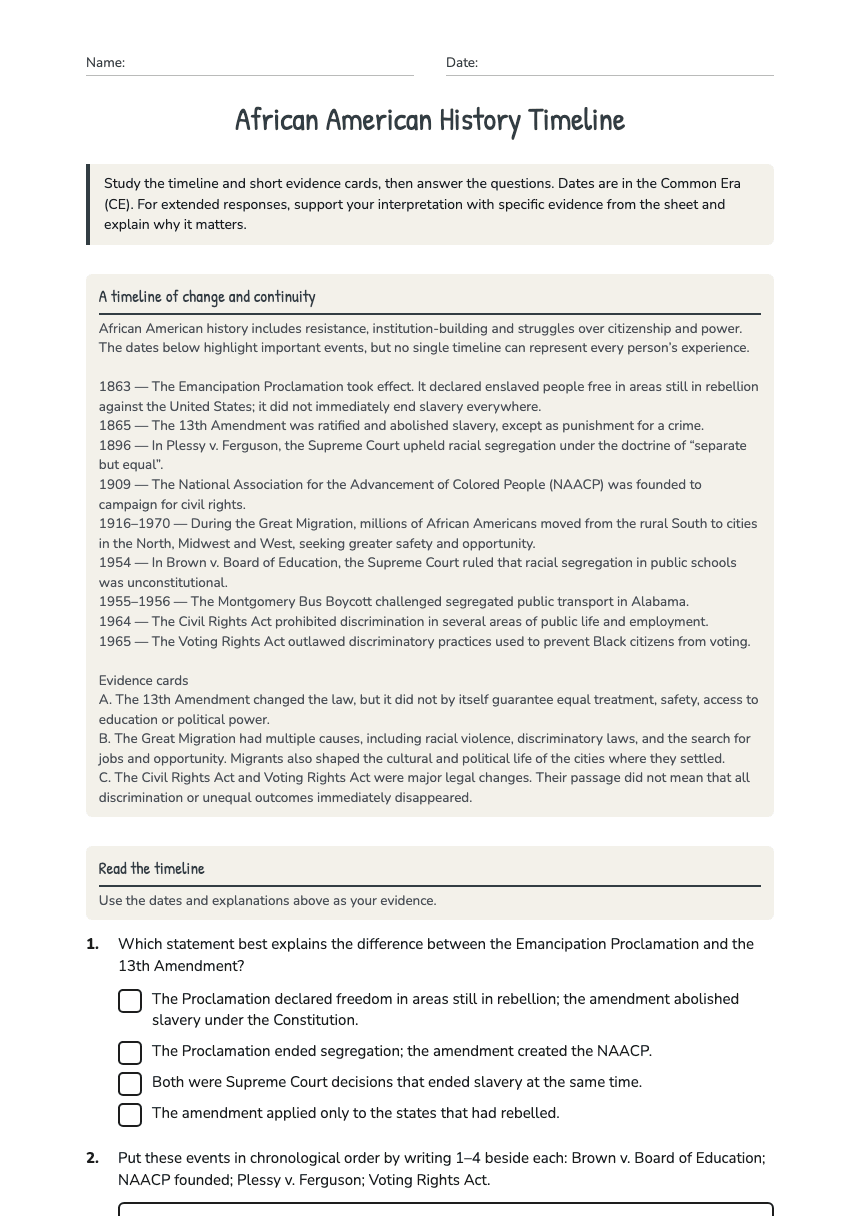
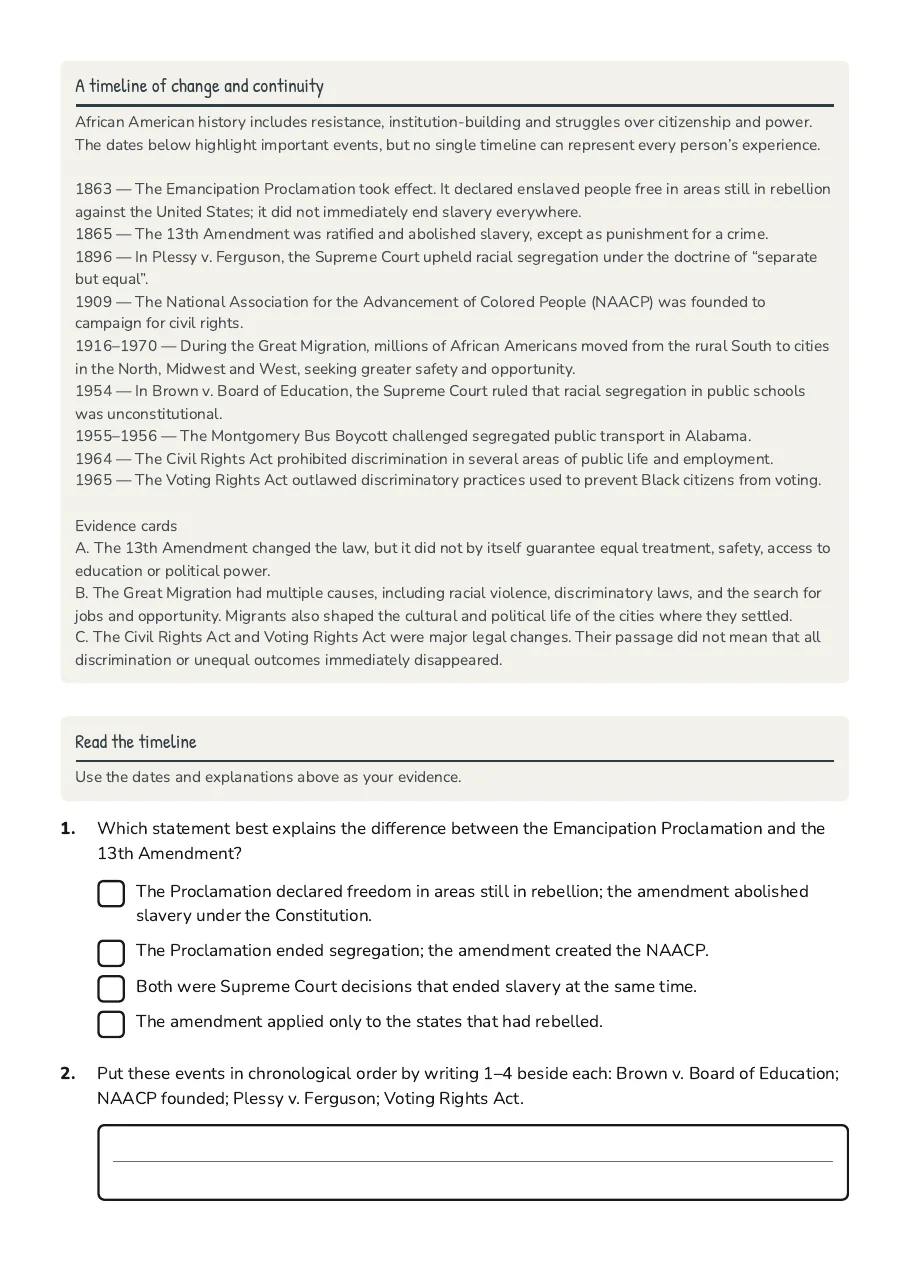
A timeline of change and continuity
African American history includes resistance, institution-building and struggles over citizenship and power. The dates below highlight important events, but no single timeline can represent every person’s experience. 1863 — The Emancipation Proclamation took effect. It declared enslaved people free in areas still in rebellion against the United States; it did not immediately end slavery everywhere. 1865 — The 13th Amendment was ratified and abolished slavery, except as punishment for a crime. 1896 — In Plessy v. Ferguson, the Supreme Court upheld racial segregation under the doctrine of “separate but equal”. 1909 — The National Association for the Advancement of Colored People (NAACP) was founded to campaign for civil rights. 1916–1970 — During the Great Migration, millions of African Americans moved from the rural South to cities in the North, Midwest and West, seeking greater safety and opportunity. 1954 — In Brown v. Board of Education, the Supreme Court ruled that racial segregation in public schools was unconstitutional. 1955–1956 — The Montgomery Bus Boycott challenged segregated public transport in Alabama. 1964 — The Civil Rights Act prohibited discrimination in several areas of public life and employment. 1965 — The Voting Rights Act outlawed discriminatory practices used to prevent Black citizens from voting. Evidence cards A. The 13th Amendment changed the law, but it did not by itself guarantee equal treatment, safety, access to education or political power. B. The Great Migration had multiple causes, including racial violence, discriminatory laws, and the search for jobs and opportunity. Migrants also shaped the cultural and political life of the cities where they settled. C. The Civil Rights Act and Voting Rights Act were major legal changes. Their passage did not mean that all discrimination or unequal outcomes immediately disappeared.
Read the timeline
Use the dates and explanations above as your evidence.
- The Proclamation declared freedom in areas still in rebellion; the amendment abolished slavery under the Constitution.
- The Proclamation ended segregation; the amendment created the NAACP.
- Both were Supreme Court decisions that ended slavery at the same time.
- The amendment applied only to the states that had rebelled.
4 printable pages

Page 1
Page 2
Page 3
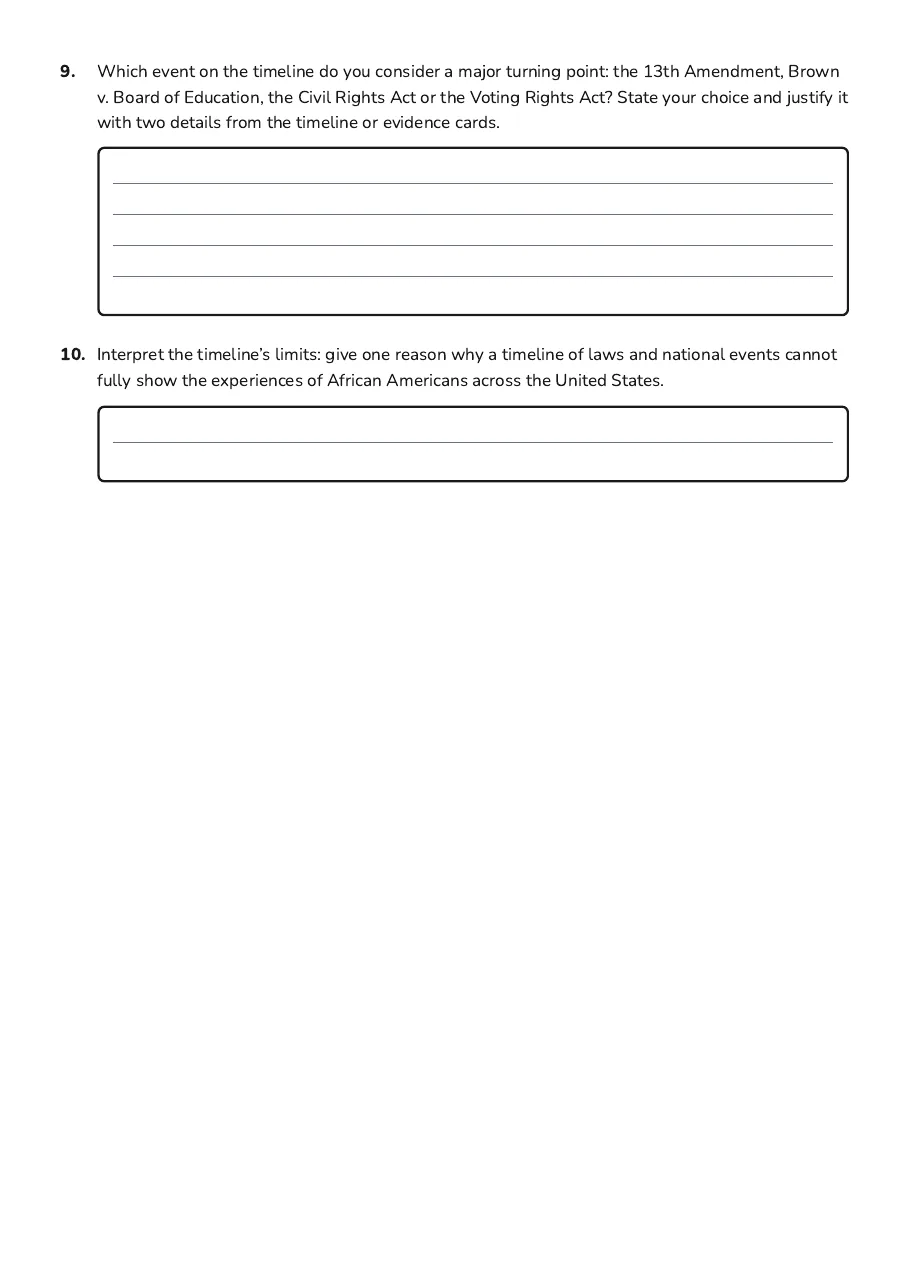
Page 4
About This Worksheet
Free in Kuraplan
Sign up free, grab the PDF, and customize it for your class.
Print-Ready
Formatted for standard paper. Clean layout, easy to read.
AI-Generated
Created with Kuraplan's AI, designed for real classroom use.
For Teachers & Parents
Use in classrooms, for homework, tutoring, or homeschool.
Need a custom version of this worksheet?
Kuraplan's AI generates custom worksheets in seconds — differentiated for every learner, aligned to your curriculum.
Generate Custom Worksheets — FreeMore Social Sciences Worksheets
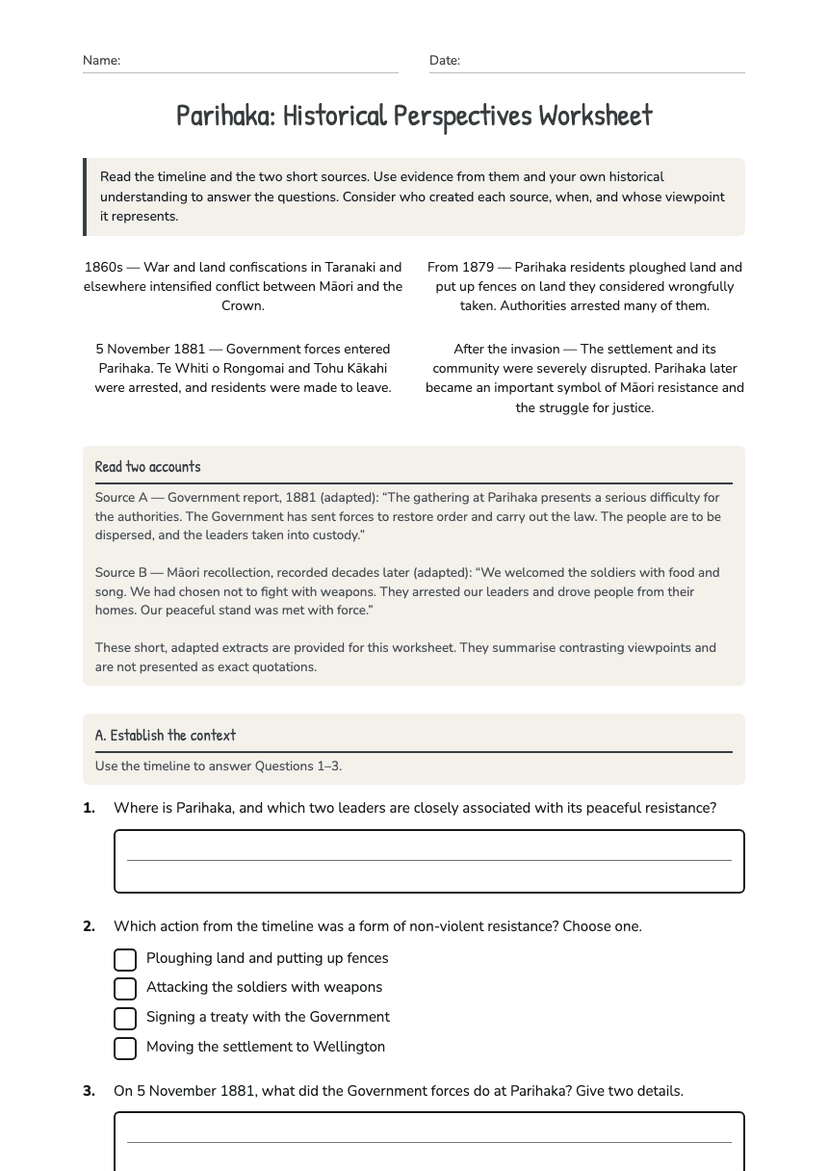
Parihaka: Historical Perspectives Worksheet
Free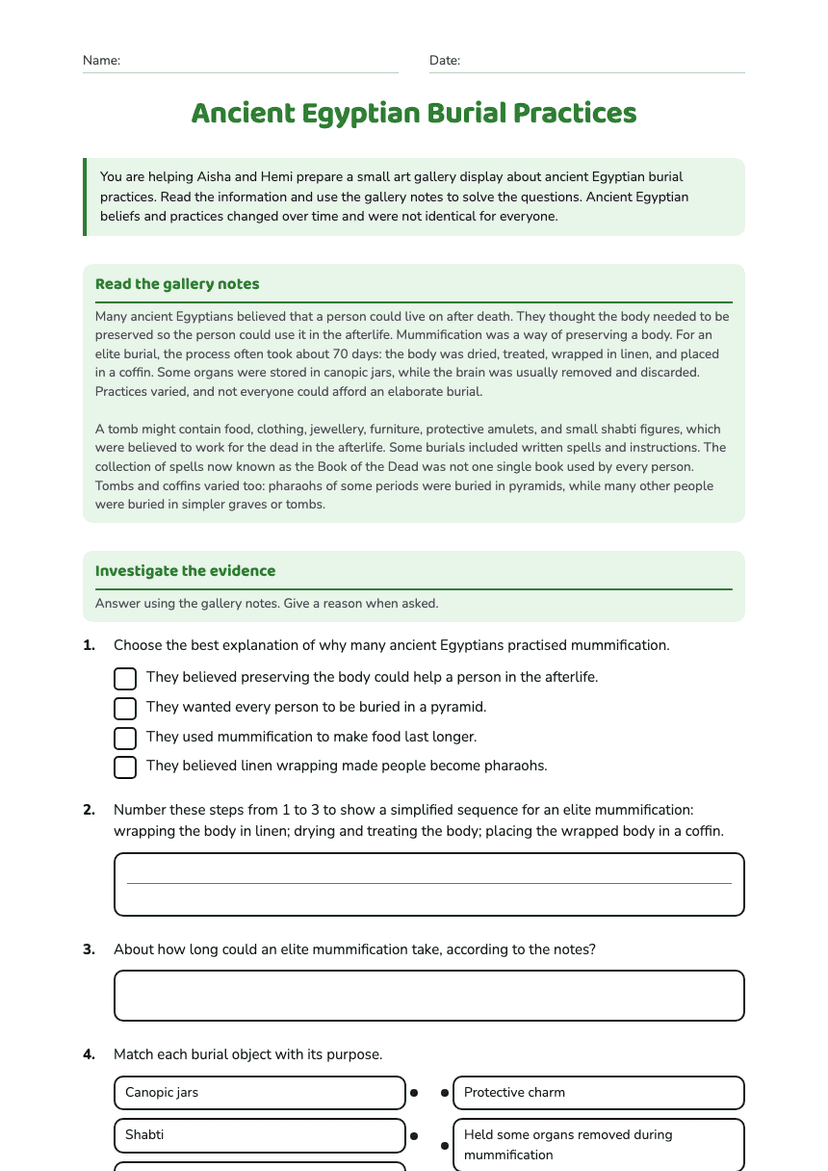
Ancient Egyptian Burial Practices
Free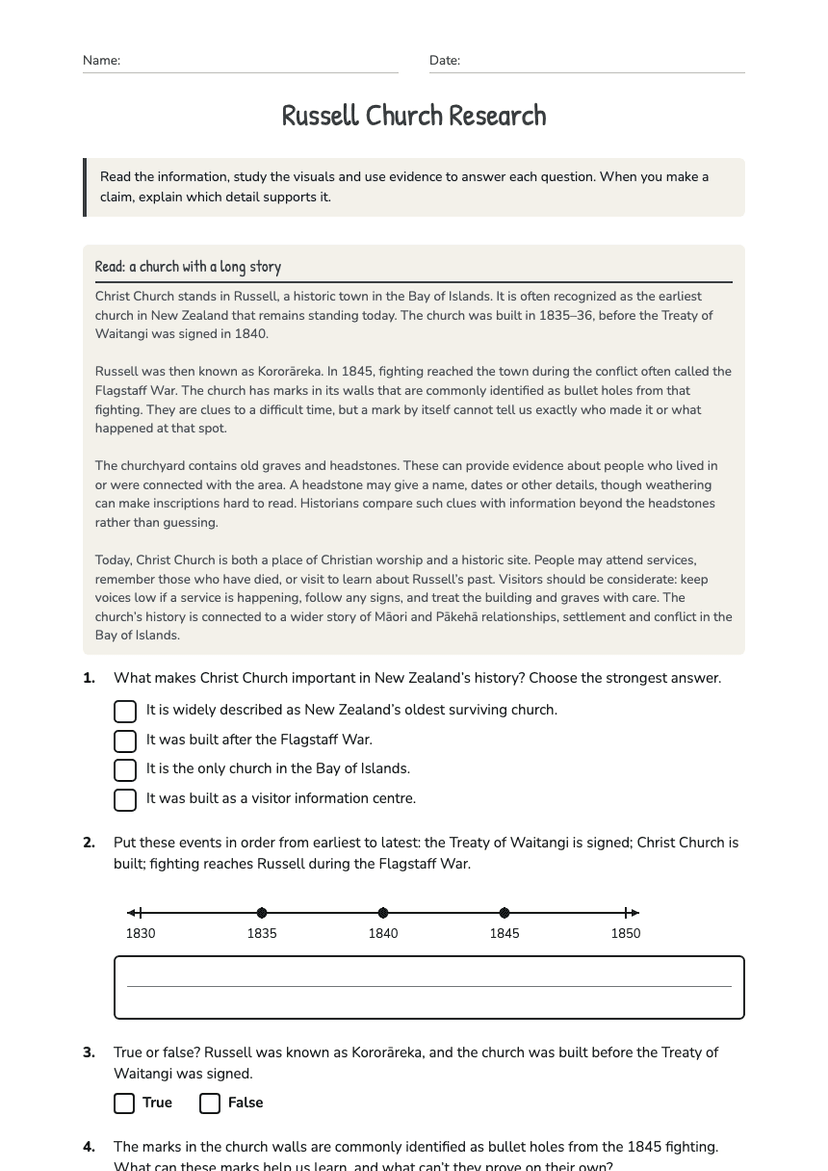
Russell Church Research
Free
New Zealand's Shaping History
Free
Te Aute Historical Insights
Free
World War II: Causes
Free
Traditional and Modern Voyaging
Free