Ancient Egypt Reading Levels
A free social sciences worksheet ready for your classroom. Open in Kuraplan to grab the print-ready PDF, customize it for your students, or generate a fresh version in seconds.
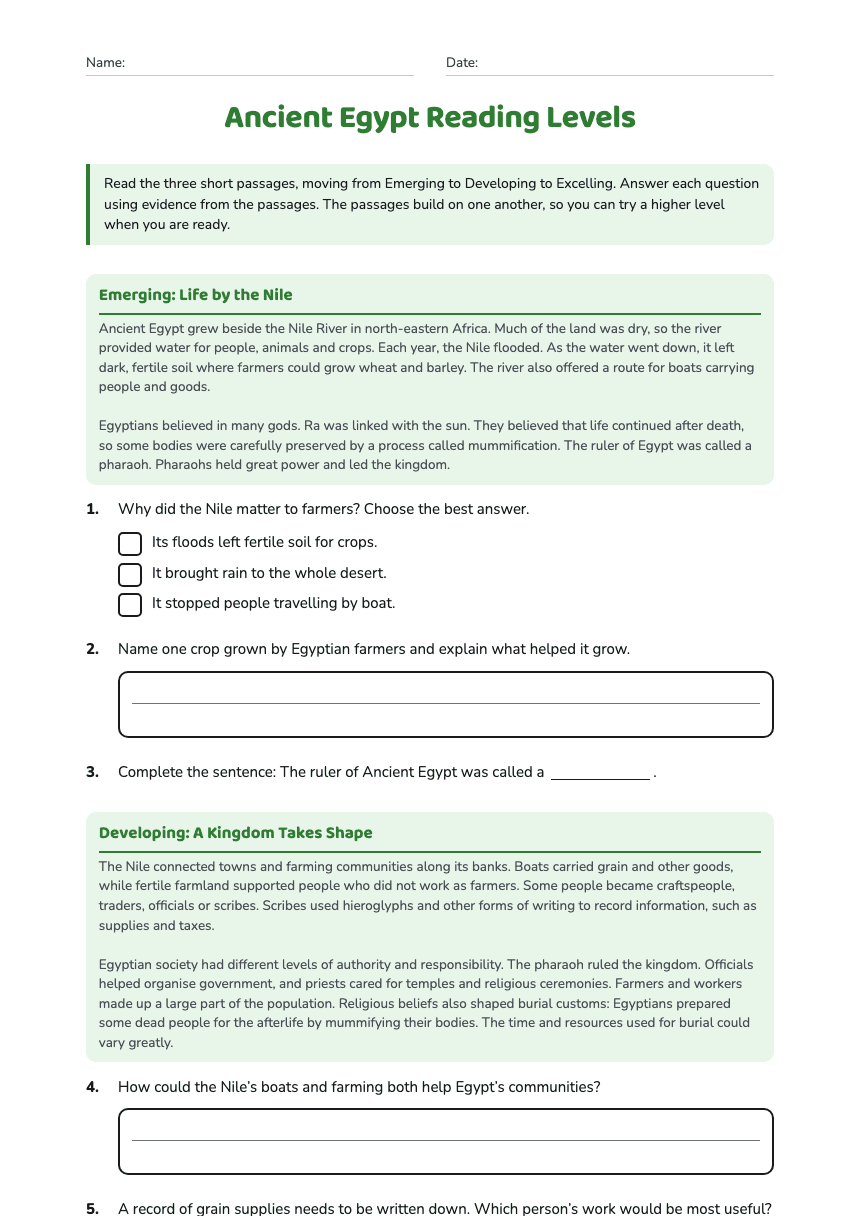
Ancient Egypt Reading Levels
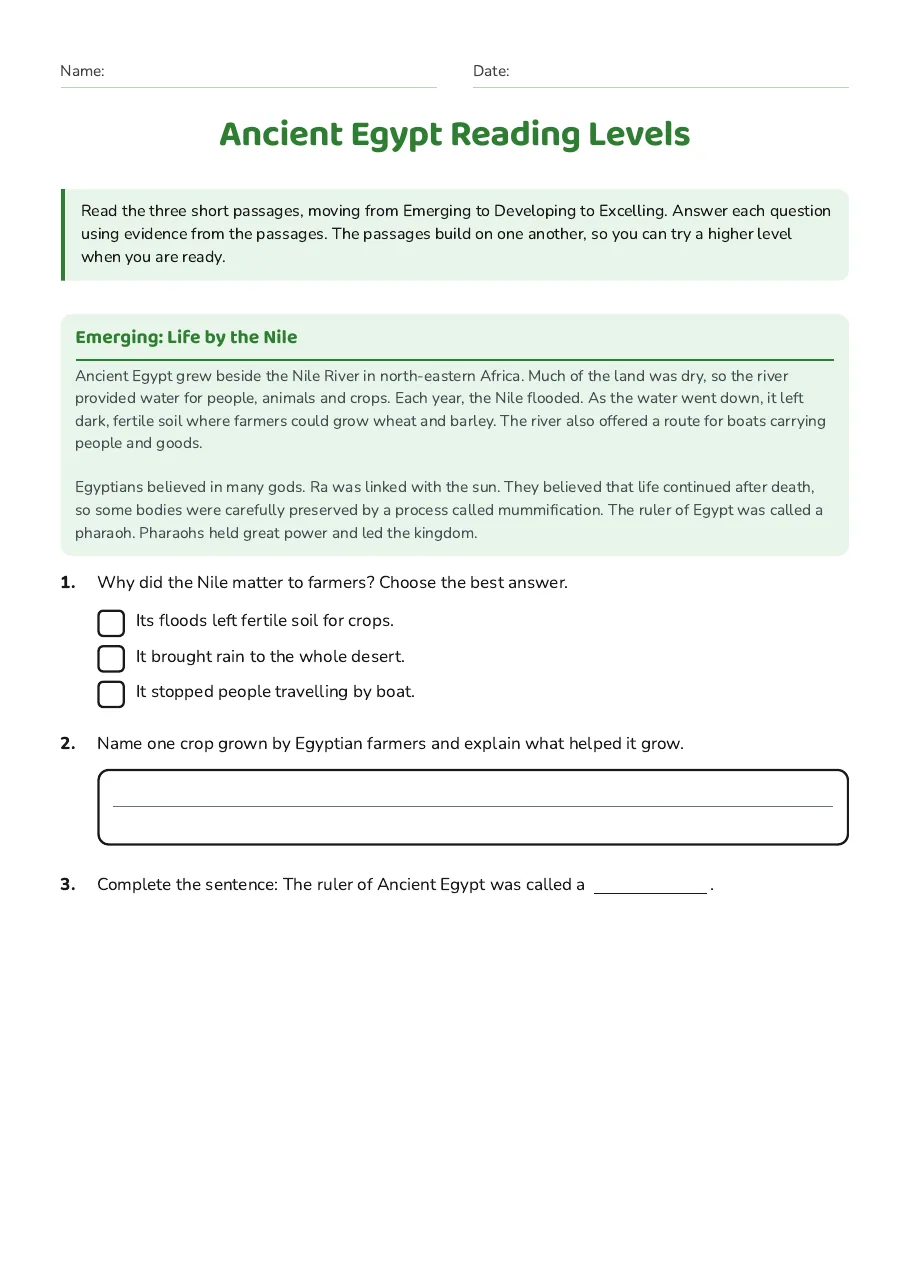
Emerging: Life by the Nile
Ancient Egypt grew beside the Nile River in north-eastern Africa. Much of the land was dry, so the river provided water for people, animals and crops. Each year, the Nile flooded. As the water went down, it left dark, fertile soil where farmers could grow wheat and barley. The river also offered a route for boats carrying people and goods. Egyptians believed in many gods. Ra was linked with the sun. They believed that life continued after death, so some bodies were carefully preserved by a process called mummification. The ruler of Egypt was called a pharaoh. Pharaohs held great power and led the kingdom.
- Its floods left fertile soil for crops.
- It brought rain to the whole desert.
- It stopped people travelling by boat.
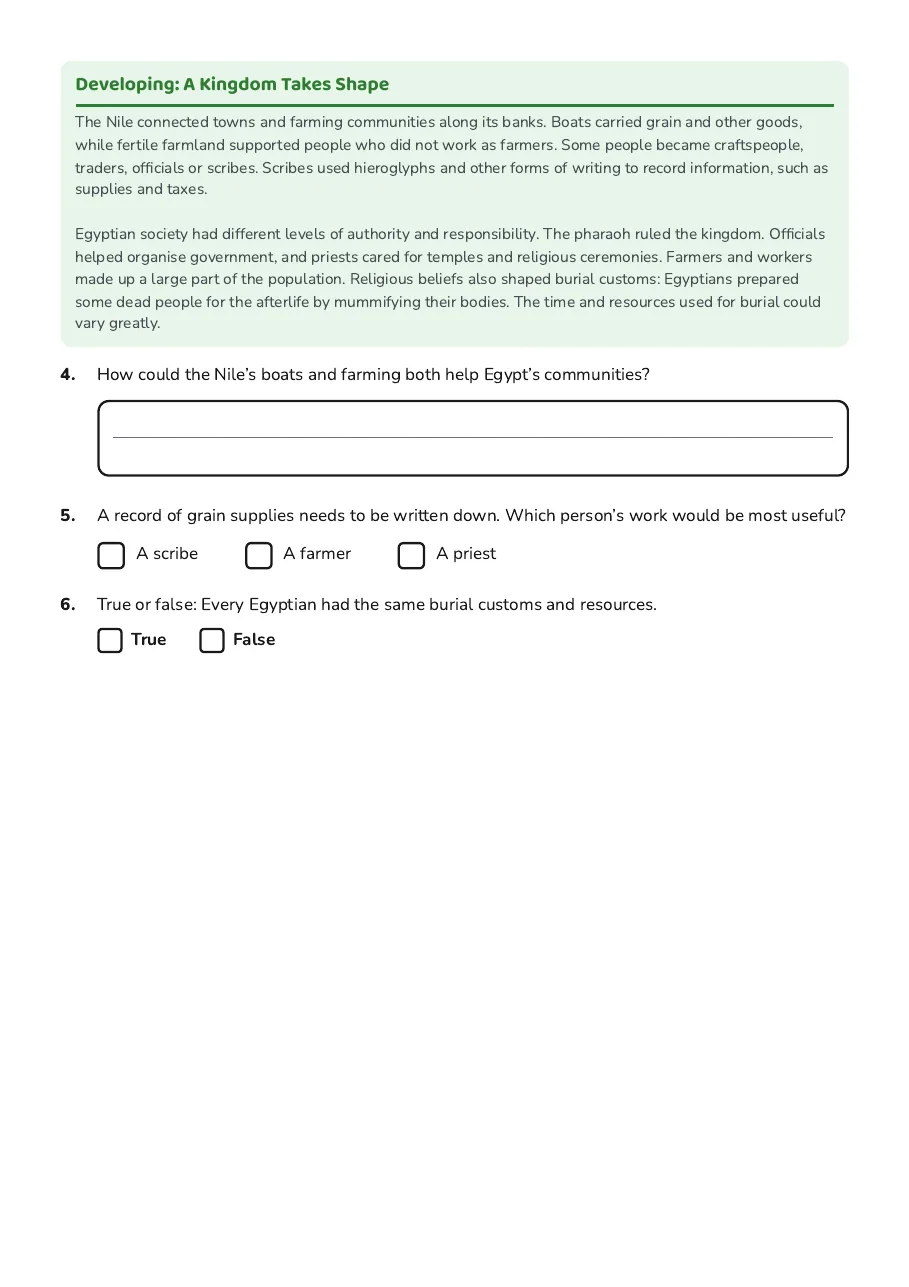
Developing: A Kingdom Takes Shape
The Nile connected towns and farming communities along its banks. Boats carried grain and other goods, while fertile farmland supported people who did not work as farmers. Some people became craftspeople, traders, officials or scribes. Scribes used hieroglyphs and other forms of writing to record information, such as supplies and taxes. Egyptian society had different levels of authority and responsibility. The pharaoh ruled the kingdom. Officials helped organise government, and priests cared for temples and religious ceremonies. Farmers and workers made up a large part of the population. Religious beliefs also shaped burial customs: Egyptians prepared some dead people for the afterlife by mummifying their bodies. The time and resources used for burial could vary greatly.
- A scribe
- A farmer
- A priest
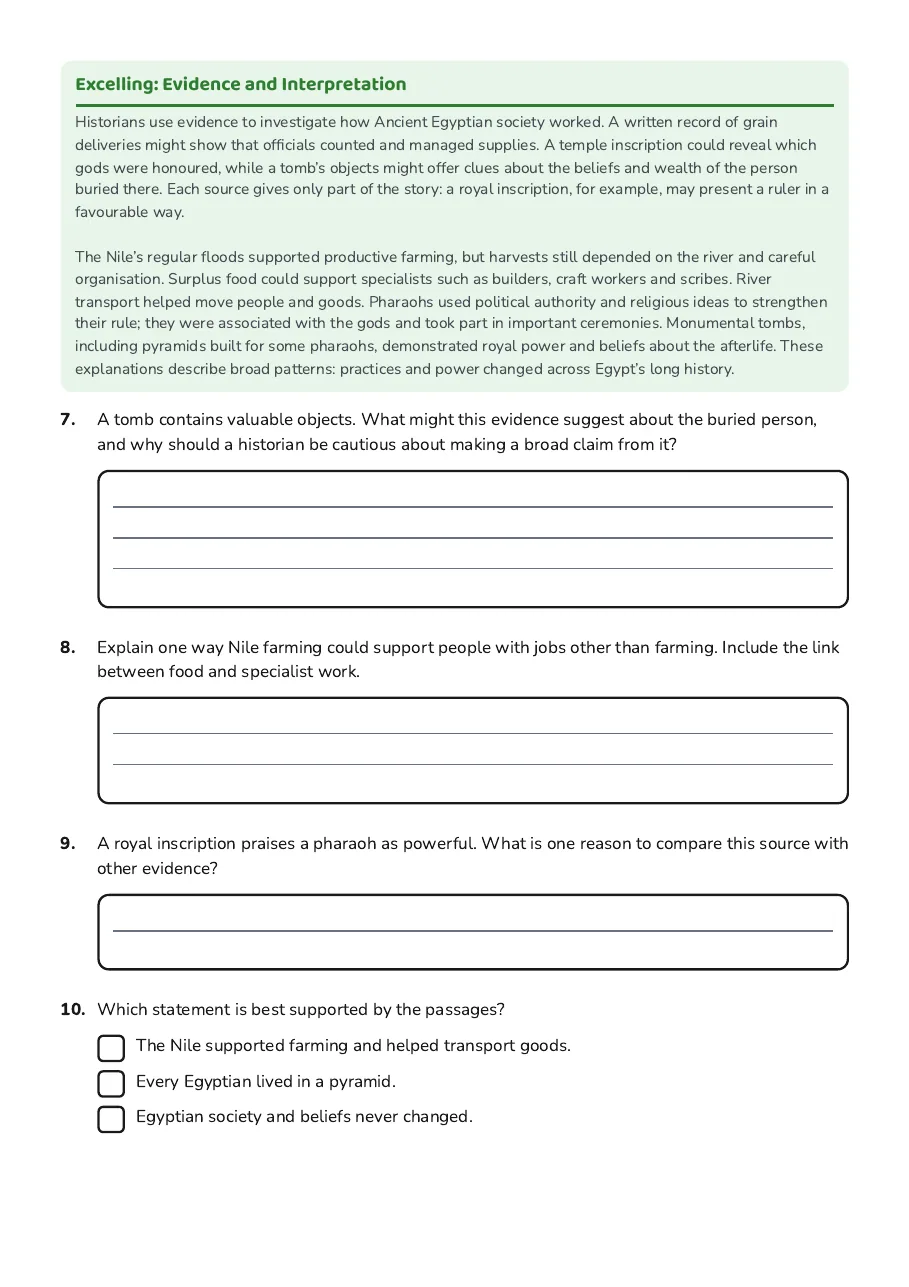
Excelling: Evidence and Interpretation
Historians use evidence to investigate how Ancient Egyptian society worked. A written record of grain deliveries might show that officials counted and managed supplies. A temple inscription could reveal which gods were honoured, while a tomb’s objects might offer clues about the beliefs and wealth of the person buried there. Each source gives only part of the story: a royal inscription, for example, may present a ruler in a favourable way. The Nile’s regular floods supported productive farming, but harvests still depended on the river and careful organisation. Surplus food could support specialists such as builders, craft workers and scribes. River transport helped move people and goods. Pharaohs used political authority and religious ideas to strengthen their rule; they were associated with the gods and took part in important ceremonies. Monumental tombs, including pyramids built for some pharaohs, demonstrated royal power and beliefs about the afterlife. These explanations describe broad patterns: practices and power changed across Egypt’s long history.
- The Nile supported farming and helped transport goods.
- Every Egyptian lived in a pyramid.
- Egyptian society and beliefs never changed.
3 printable pages
Page 1
Page 2
Page 3
About This Worksheet
Free in Kuraplan
Sign up free, grab the PDF, and customize it for your class.
Print-Ready
Formatted for standard paper. Clean layout, easy to read.
AI-Generated
Created with Kuraplan's AI, designed for real classroom use.
For Teachers & Parents
Use in classrooms, for homework, tutoring, or homeschool.
Need a custom version of this worksheet?
Kuraplan's AI generates custom worksheets in seconds — differentiated for every learner, aligned to your curriculum.
Generate Custom Worksheets — Free