Anglo-Saxon Social Structure
A free english worksheet ready for your classroom. Open in Kuraplan to grab the print-ready PDF, customize it for your students, or generate a fresh version in seconds.
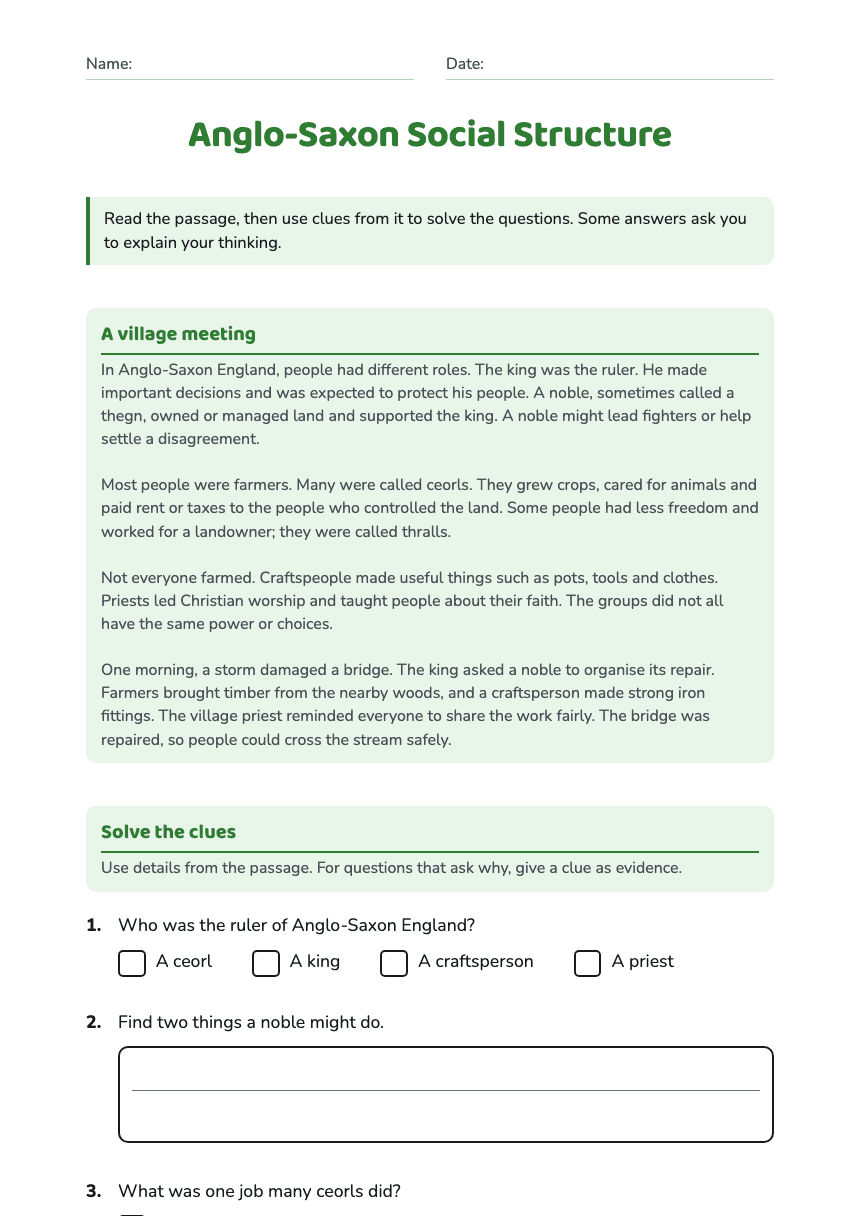
Anglo-Saxon Social Structure
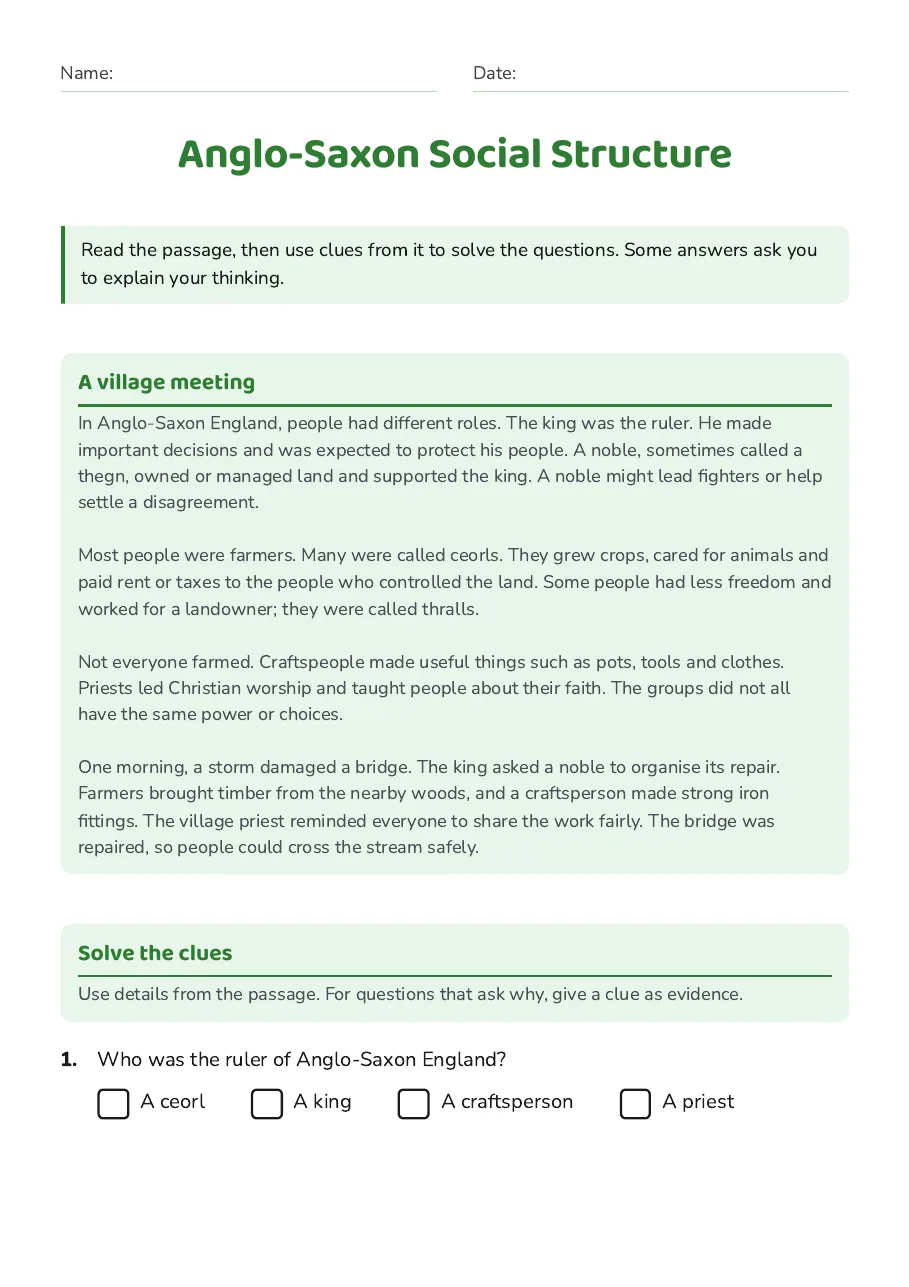
A village meeting
In Anglo-Saxon England, people had different roles. The king was the ruler. He made important decisions and was expected to protect his people. A noble, sometimes called a thegn, owned or managed land and supported the king. A noble might lead fighters or help settle a disagreement. Most people were farmers. Many were called ceorls. They grew crops, cared for animals and paid rent or taxes to the people who controlled the land. Some people had less freedom and worked for a landowner; they were called thralls. Not everyone farmed. Craftspeople made useful things such as pots, tools and clothes. Priests led Christian worship and taught people about their faith. The groups did not all have the same power or choices. One morning, a storm damaged a bridge. The king asked a noble to organise its repair. Farmers brought timber from the nearby woods, and a craftsperson made strong iron fittings. The village priest reminded everyone to share the work fairly. The bridge was repaired, so people could cross the stream safely.
Solve the clues
Use details from the passage. For questions that ask why, give a clue as evidence.
- A ceorl
- A king
- A craftsperson
- A priest
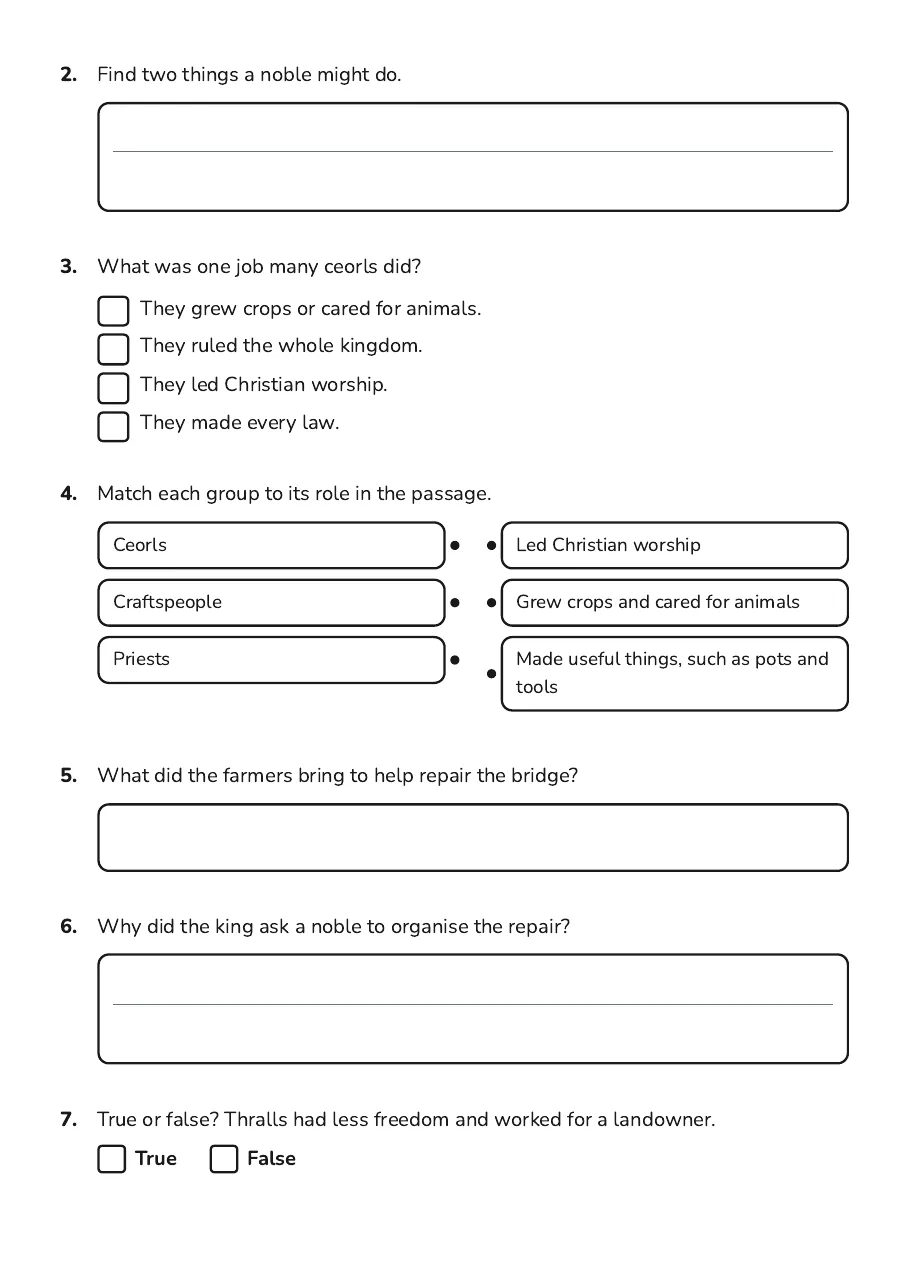
- They grew crops or cared for animals.
- They ruled the whole kingdom.
- They led Christian worship.
- They made every law.
- Ceorls
- Craftspeople
- Priests
- Led Christian worship
- Grew crops and cared for animals
- Made useful things, such as pots and tools
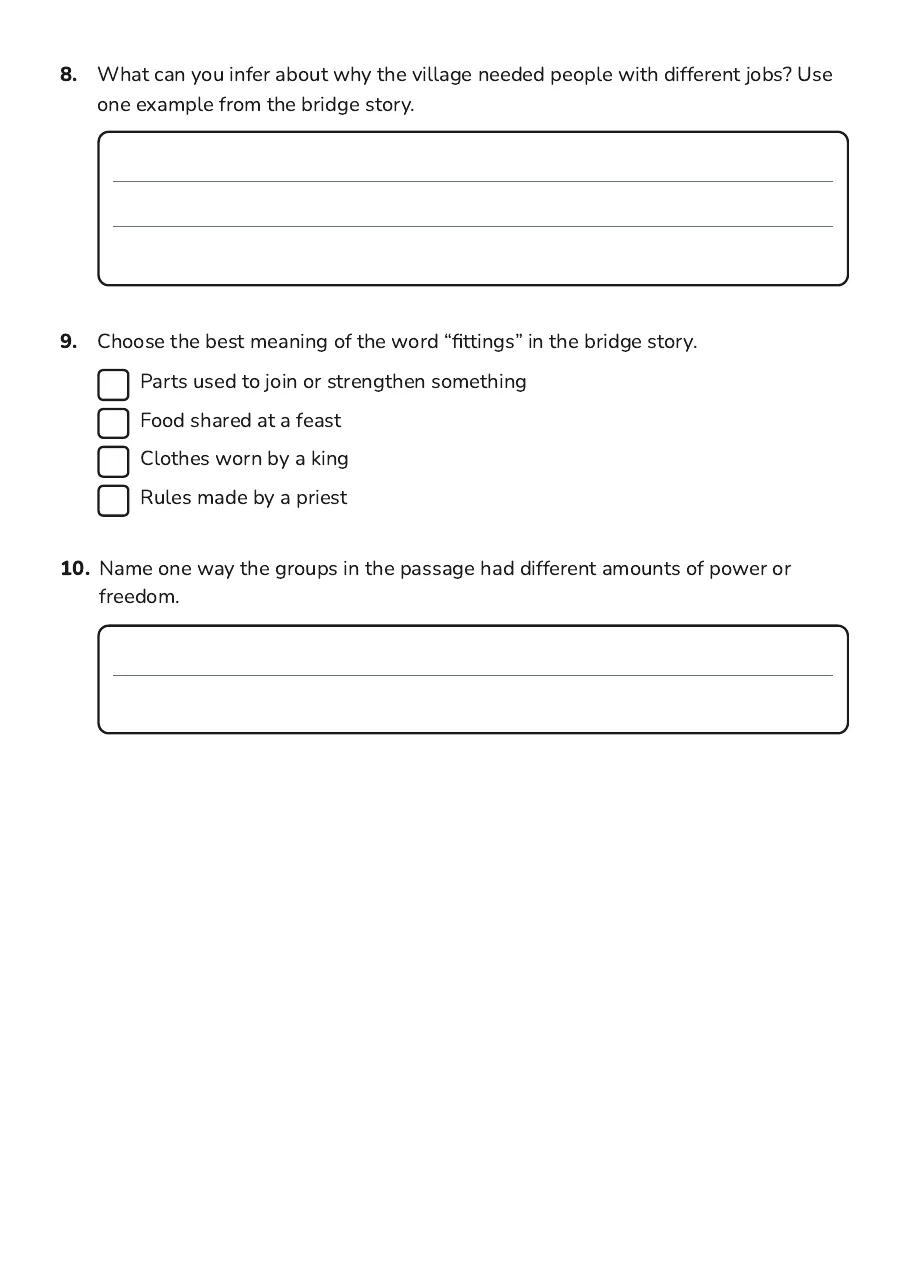
- Parts used to join or strengthen something
- Food shared at a feast
- Clothes worn by a king
- Rules made by a priest
3 printable pages
Page 1
Page 2
Page 3
About This Worksheet
Free in Kuraplan
Sign up free, grab the PDF, and customize it for your class.
Print-Ready
Formatted for standard paper. Clean layout, easy to read.
AI-Generated
Created with Kuraplan's AI, designed for real classroom use.
For Teachers & Parents
Use in classrooms, for homework, tutoring, or homeschool.
Need a custom version of this worksheet?
Kuraplan's AI generates custom worksheets in seconds — differentiated for every learner, aligned to your curriculum.
Generate Custom Worksheets — Free