Australians at War History
A free social sciences worksheet ready for your classroom. Open in Kuraplan to grab the print-ready PDF, customize it for your students, or generate a fresh version in seconds.
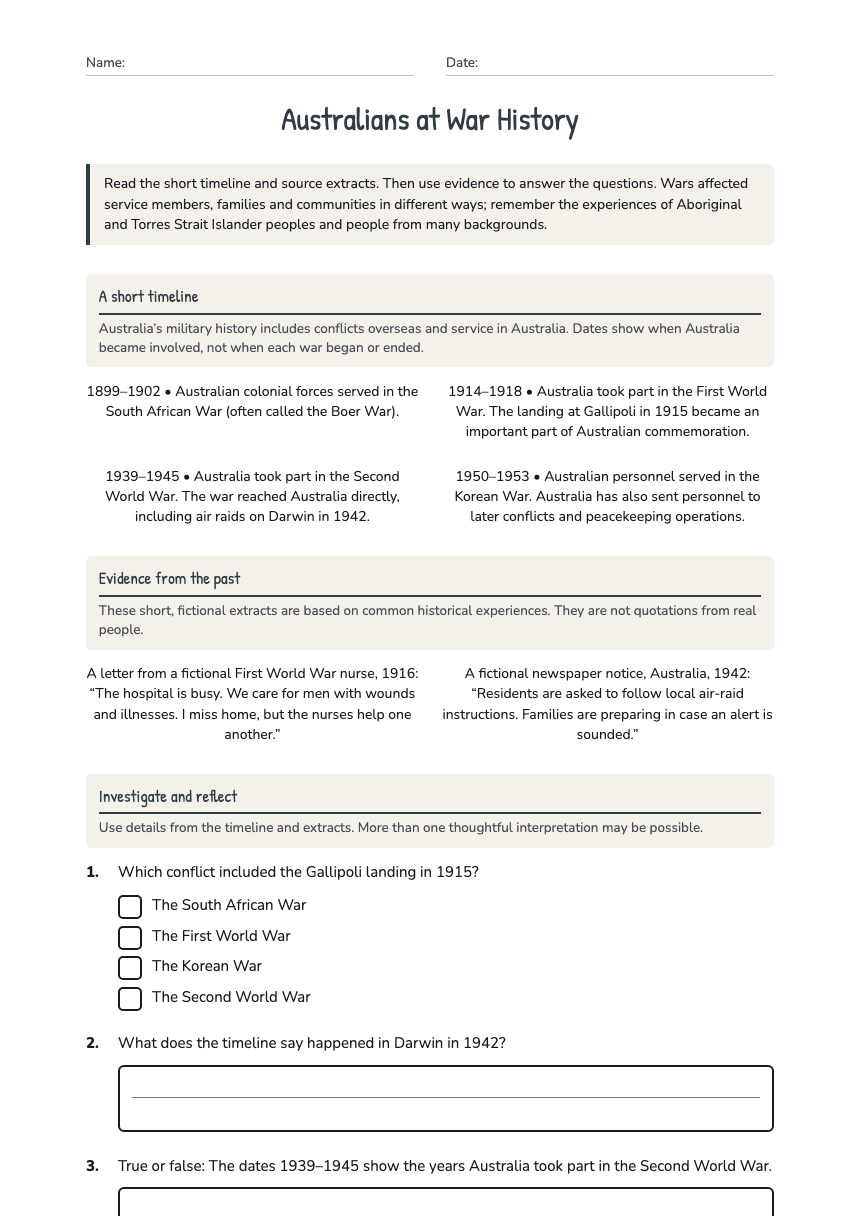
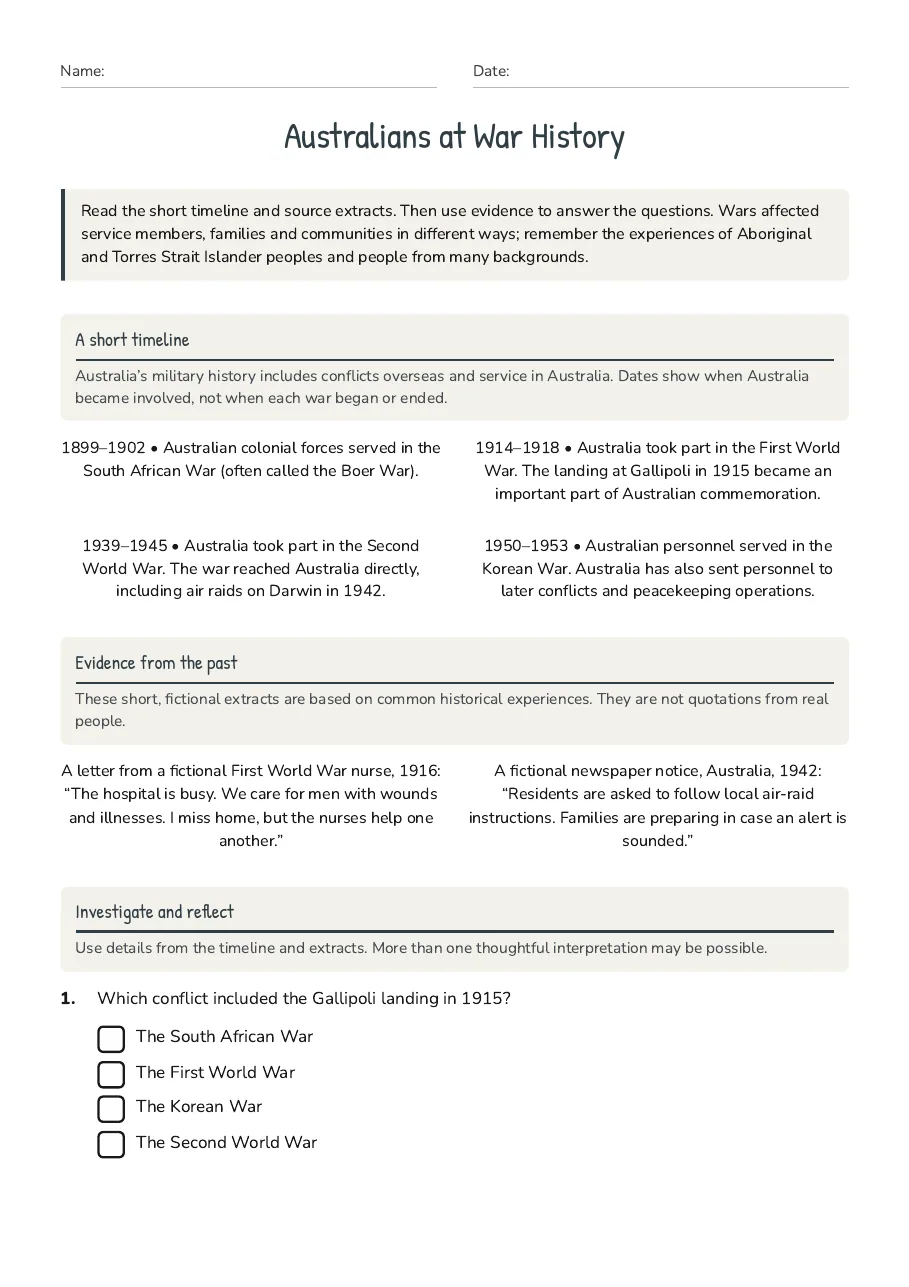
Australians at War History
A short timeline
Australia’s military history includes conflicts overseas and service in Australia. Dates show when Australia became involved, not when each war began or ended.
1899–1902 • Australian colonial forces served in the South African War (often called the Boer War).
1914–1918 • Australia took part in the First World War. The landing at Gallipoli in 1915 became an important part of Australian commemoration.
1939–1945 • Australia took part in the Second World War. The war reached Australia directly, including air raids on Darwin in 1942.
1950–1953 • Australian personnel served in the Korean War. Australia has also sent personnel to later conflicts and peacekeeping operations.
Evidence from the past
These short, fictional extracts are based on common historical experiences. They are not quotations from real people.
A letter from a fictional First World War nurse, 1916: “The hospital is busy. We care for men with wounds and illnesses. I miss home, but the nurses help one another.”
A fictional newspaper notice, Australia, 1942: “Residents are asked to follow local air-raid instructions. Families are preparing in case an alert is sounded.”
Investigate and reflect
Use details from the timeline and extracts. More than one thoughtful interpretation may be possible.
- The South African War
- The First World War
- The Korean War
- The Second World War
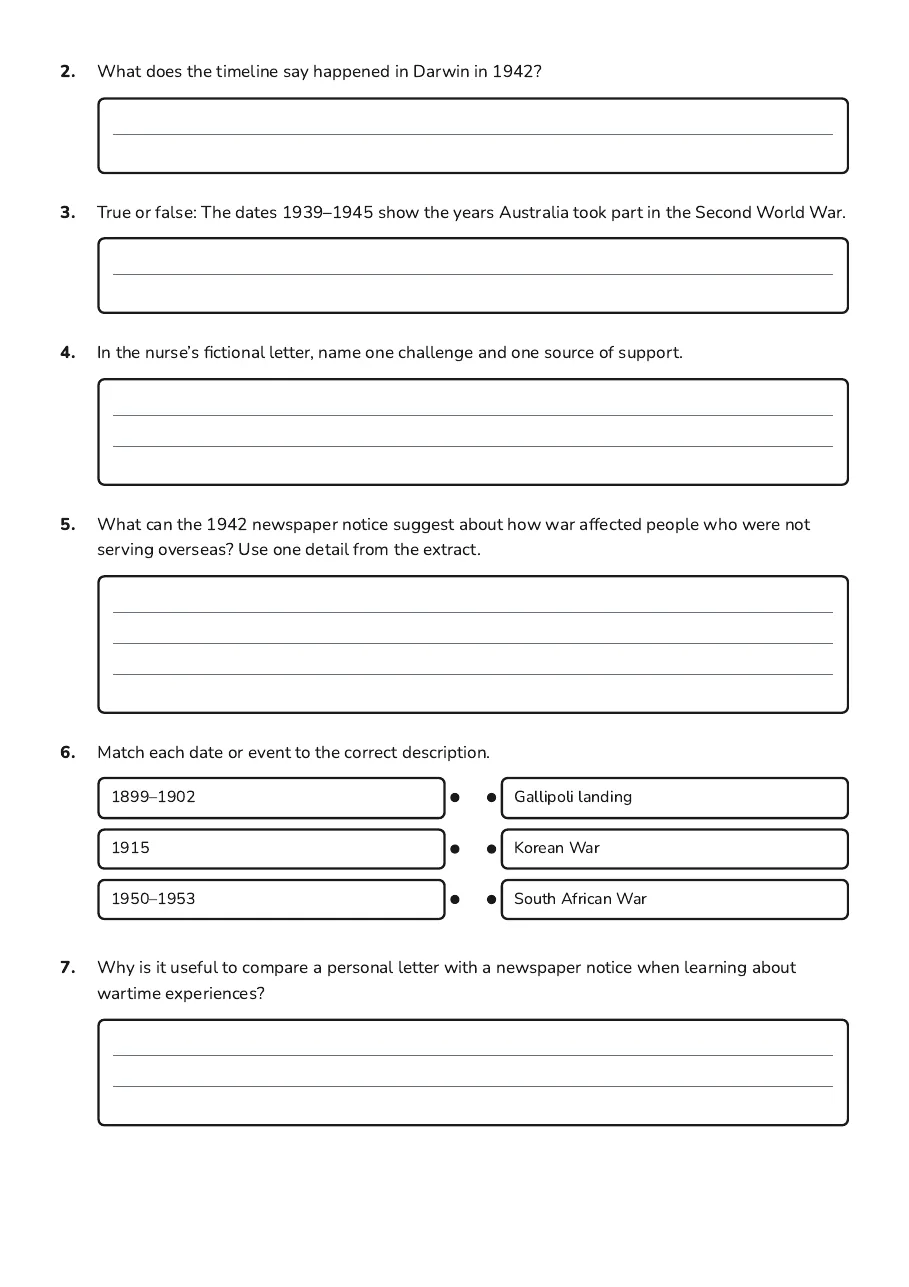
- 1899–1902
- 1915
- 1950–1953
- Gallipoli landing
- Korean War
- South African War
3 printable pages
Page 1
Page 2
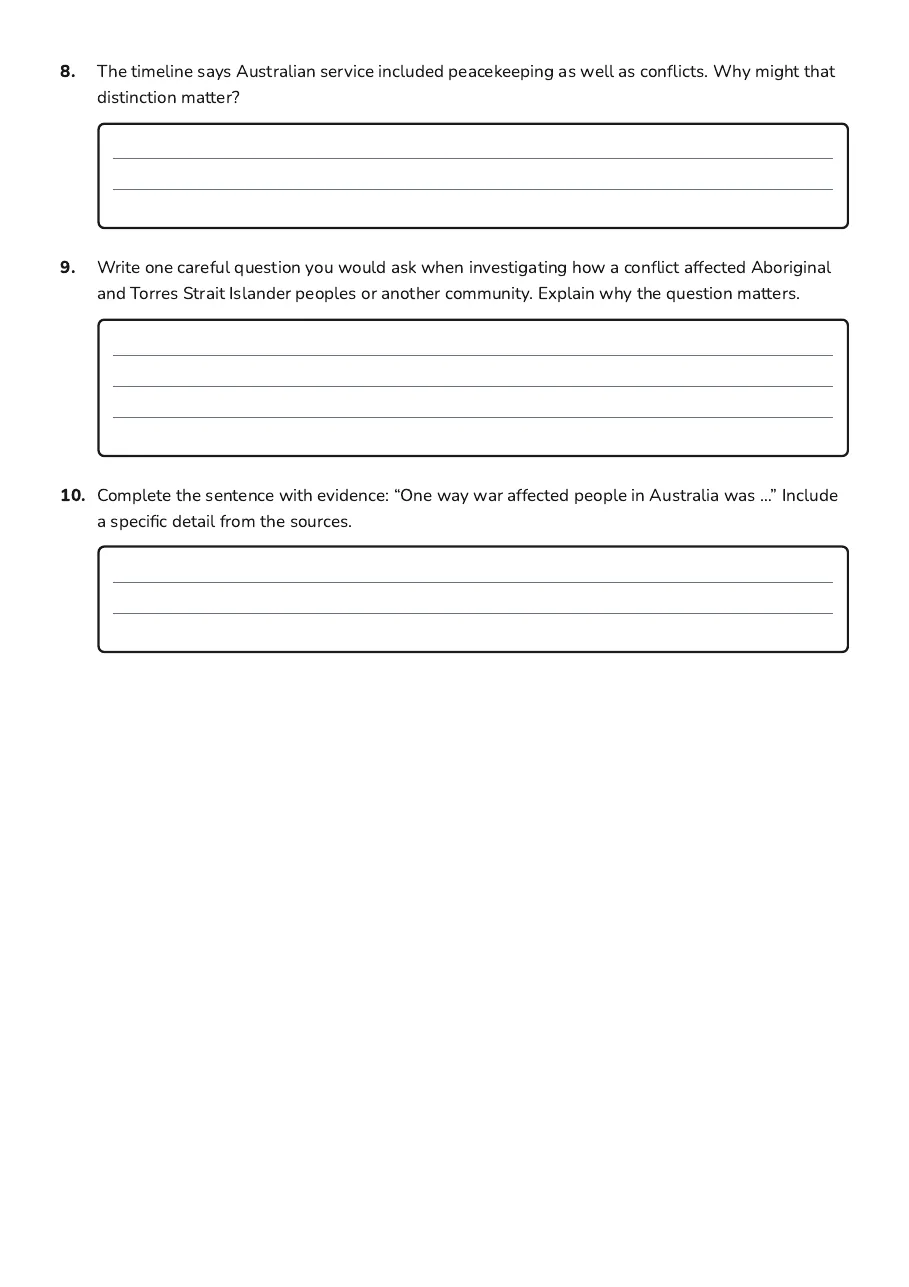
Page 3
About This Worksheet
Free in Kuraplan
Sign up free, grab the PDF, and customize it for your class.
Print-Ready
Formatted for standard paper. Clean layout, easy to read.
AI-Generated
Created with Kuraplan's AI, designed for real classroom use.
For Teachers & Parents
Use in classrooms, for homework, tutoring, or homeschool.
Need a custom version of this worksheet?
Kuraplan's AI generates custom worksheets in seconds — differentiated for every learner, aligned to your curriculum.
Generate Custom Worksheets — FreeMore Social Sciences Worksheets
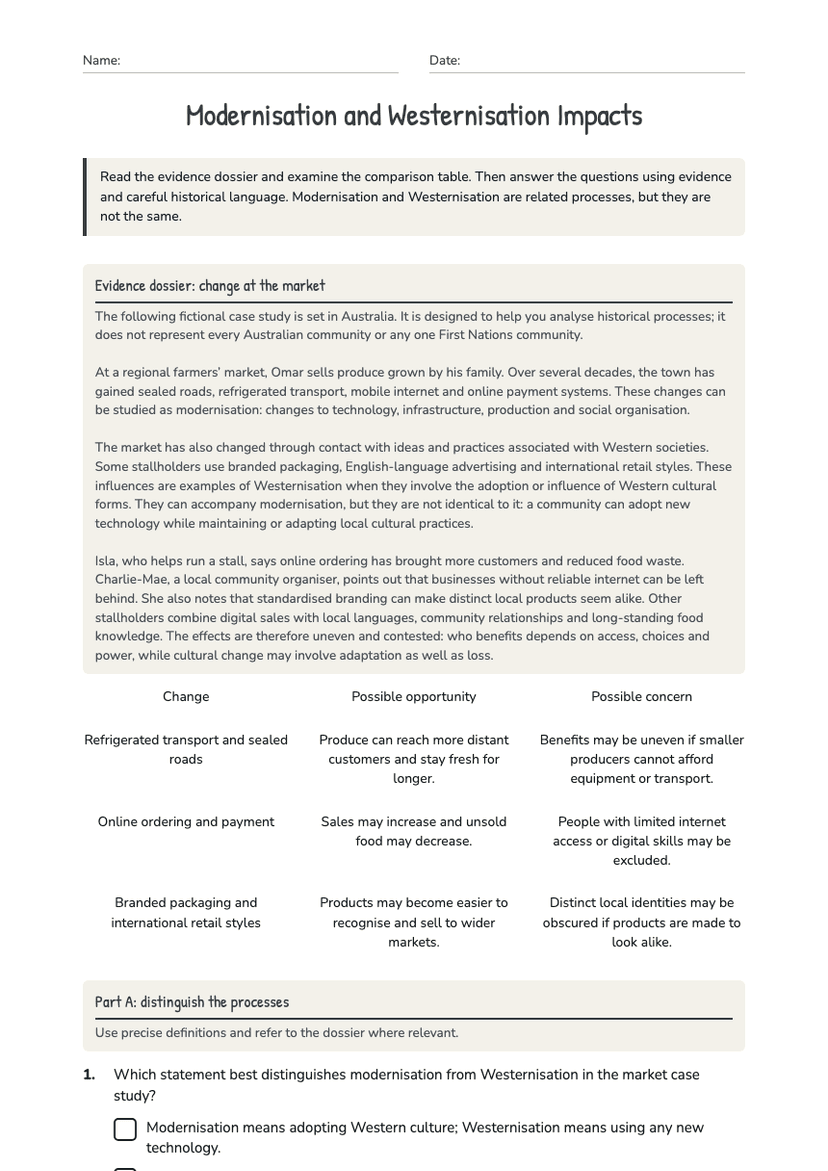
Modernisation and Westernisation Impacts
Free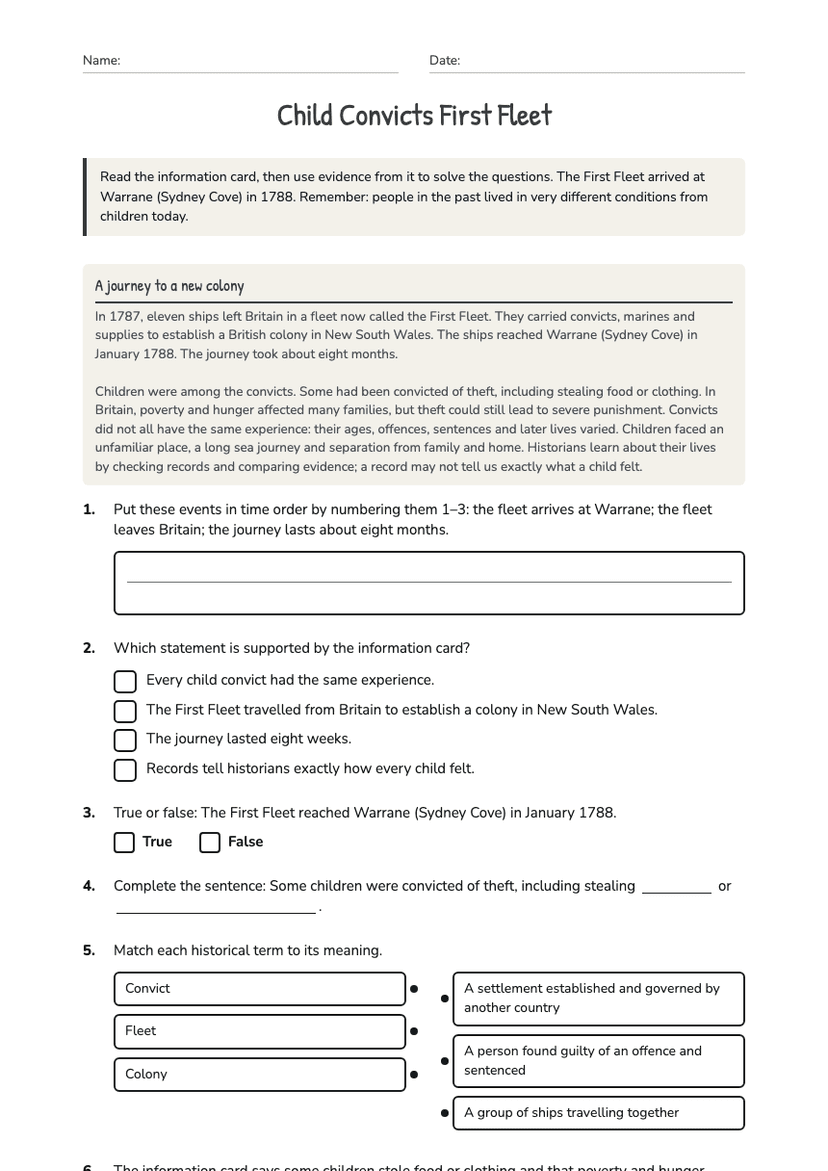
Child Convicts First Fleet
Free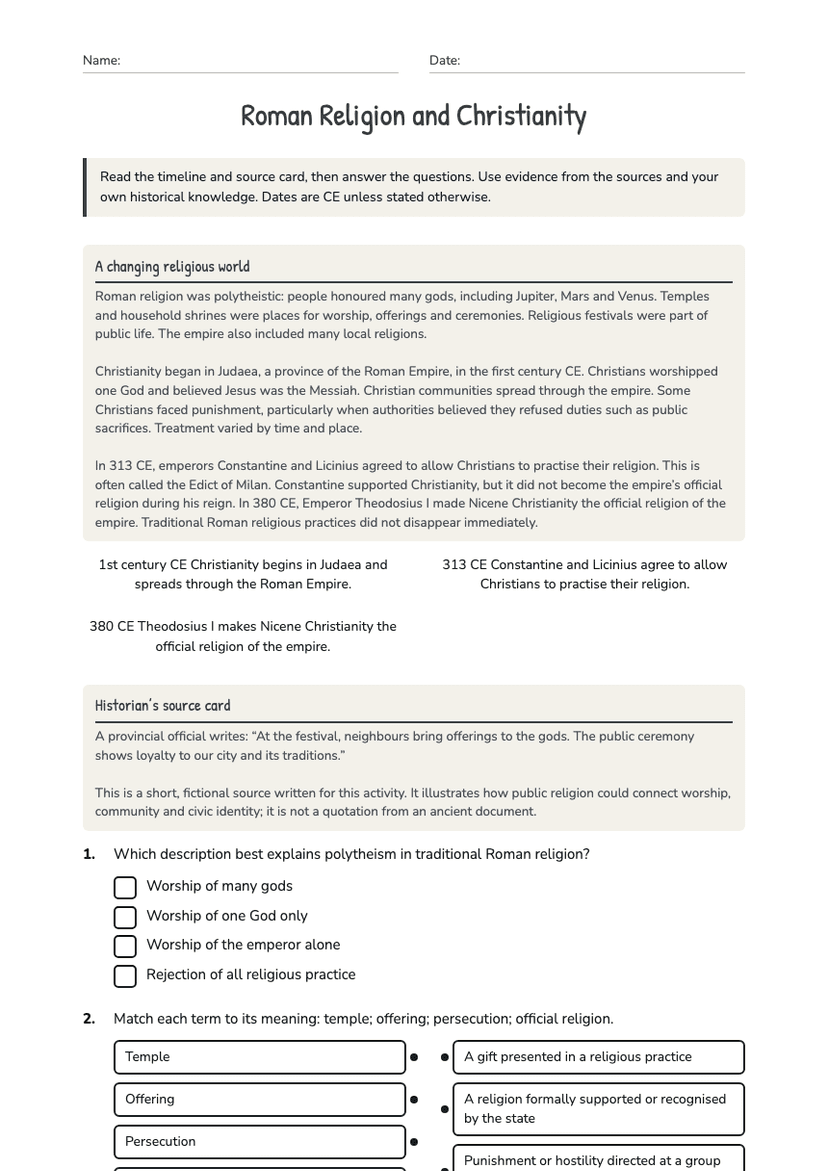
Roman Religion and Christianity
Free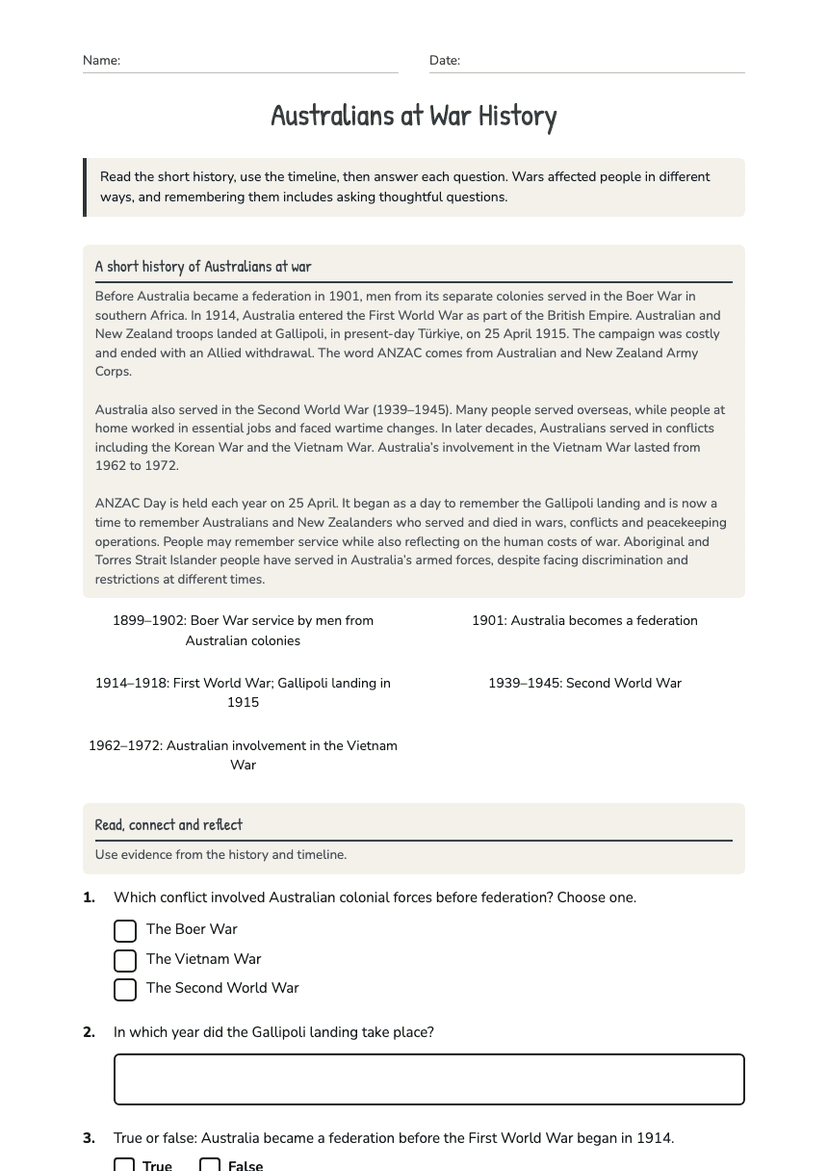
Australians at War History
Free
Colonial Australia Introduction
Free
Darwin Bombing 1942
Free
Industrial Revolution Reflection Worksheet
Free