Cellular Respiration Investigation
A free science worksheet ready for your classroom. Open in Kuraplan to grab the print-ready PDF, customize it for your students, or generate a fresh version in seconds.
Cellular Respiration Investigation
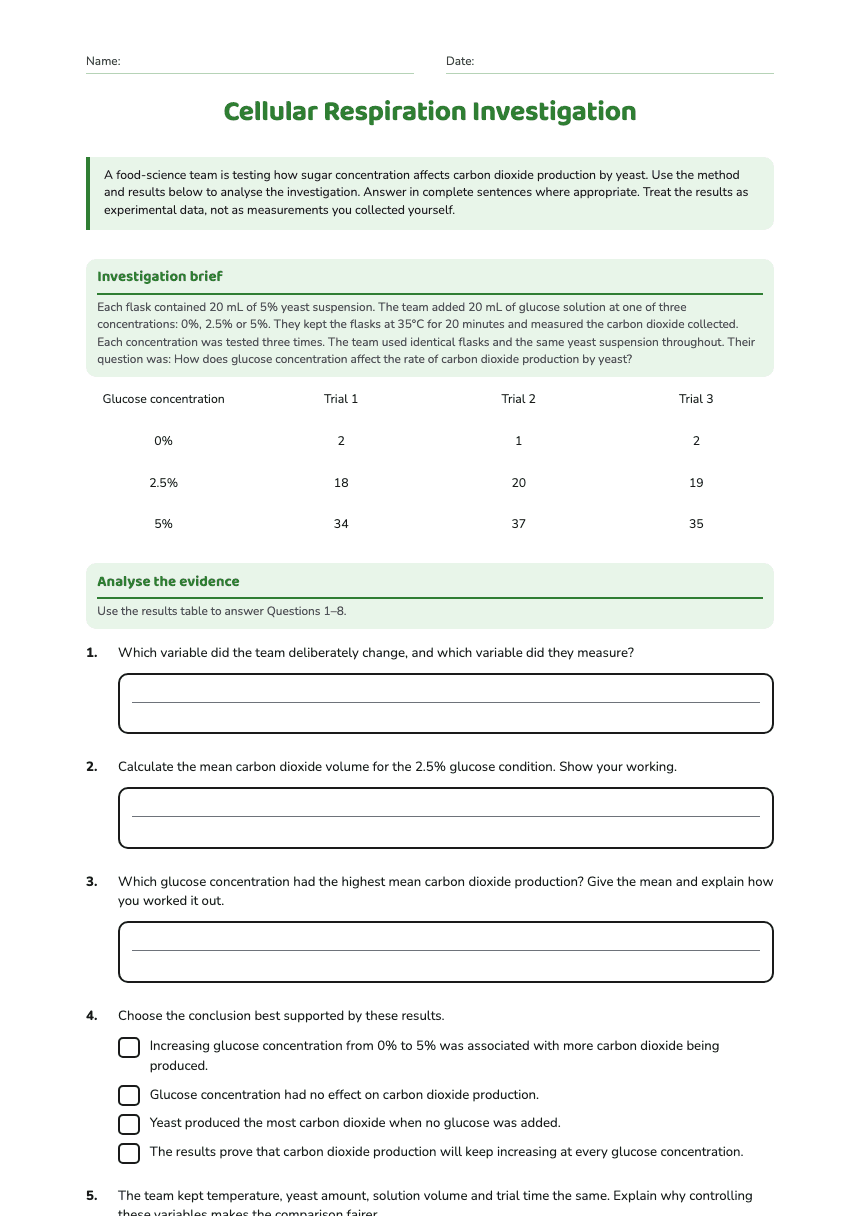
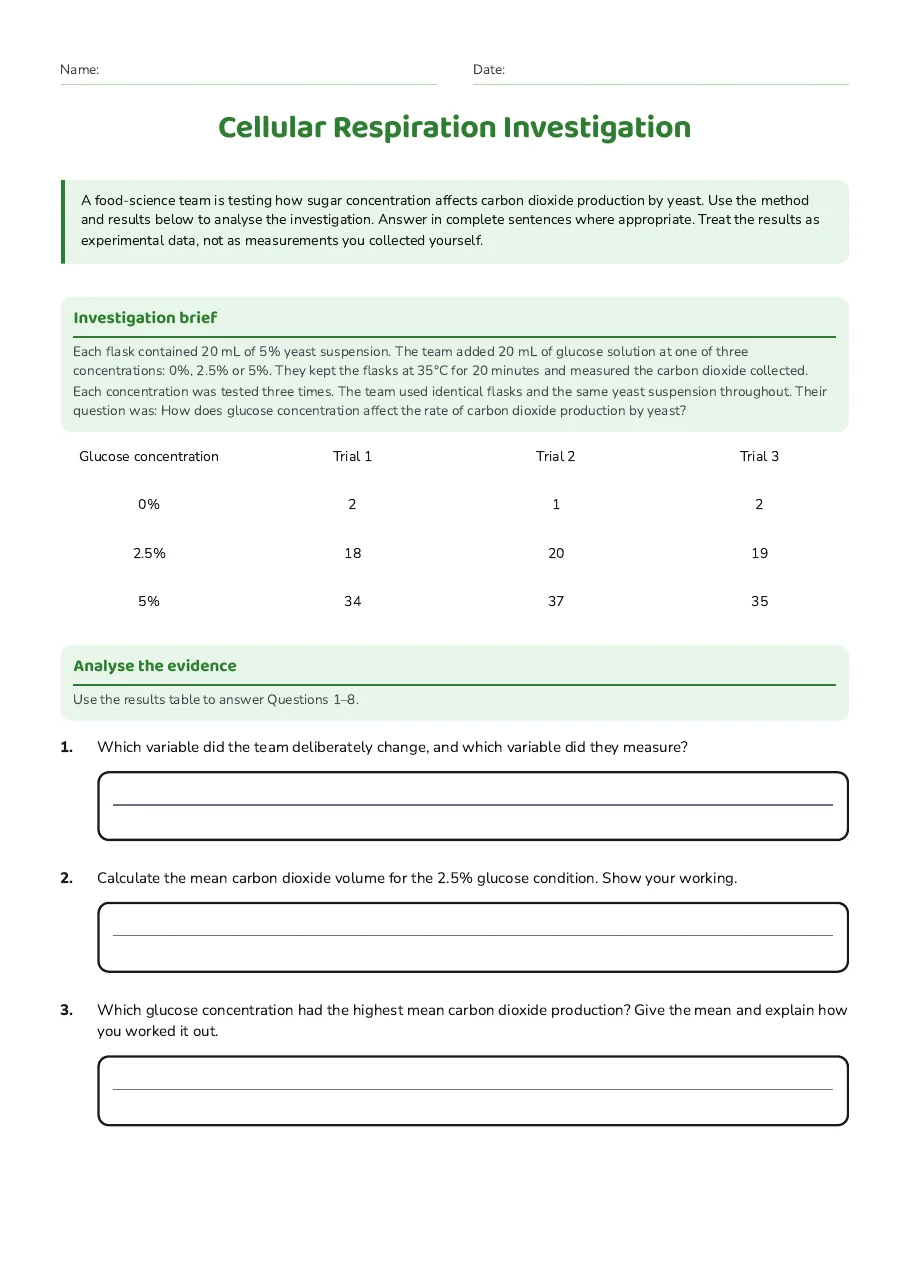
Investigation brief
Each flask contained 20 mL of 5% yeast suspension. The team added 20 mL of glucose solution at one of three concentrations: 0%, 2.5% or 5%. They kept the flasks at 35°C for 20 minutes and measured the carbon dioxide collected. Each concentration was tested three times. The team used identical flasks and the same yeast suspension throughout. Their question was: How does glucose concentration affect the rate of carbon dioxide production by yeast?
Glucose concentration
Trial 1
Trial 2
Trial 3
0%
2
1
2
2.5%
18
20
19
5%
34
37
35
Analyse the evidence
Use the results table to answer Questions 1–8.
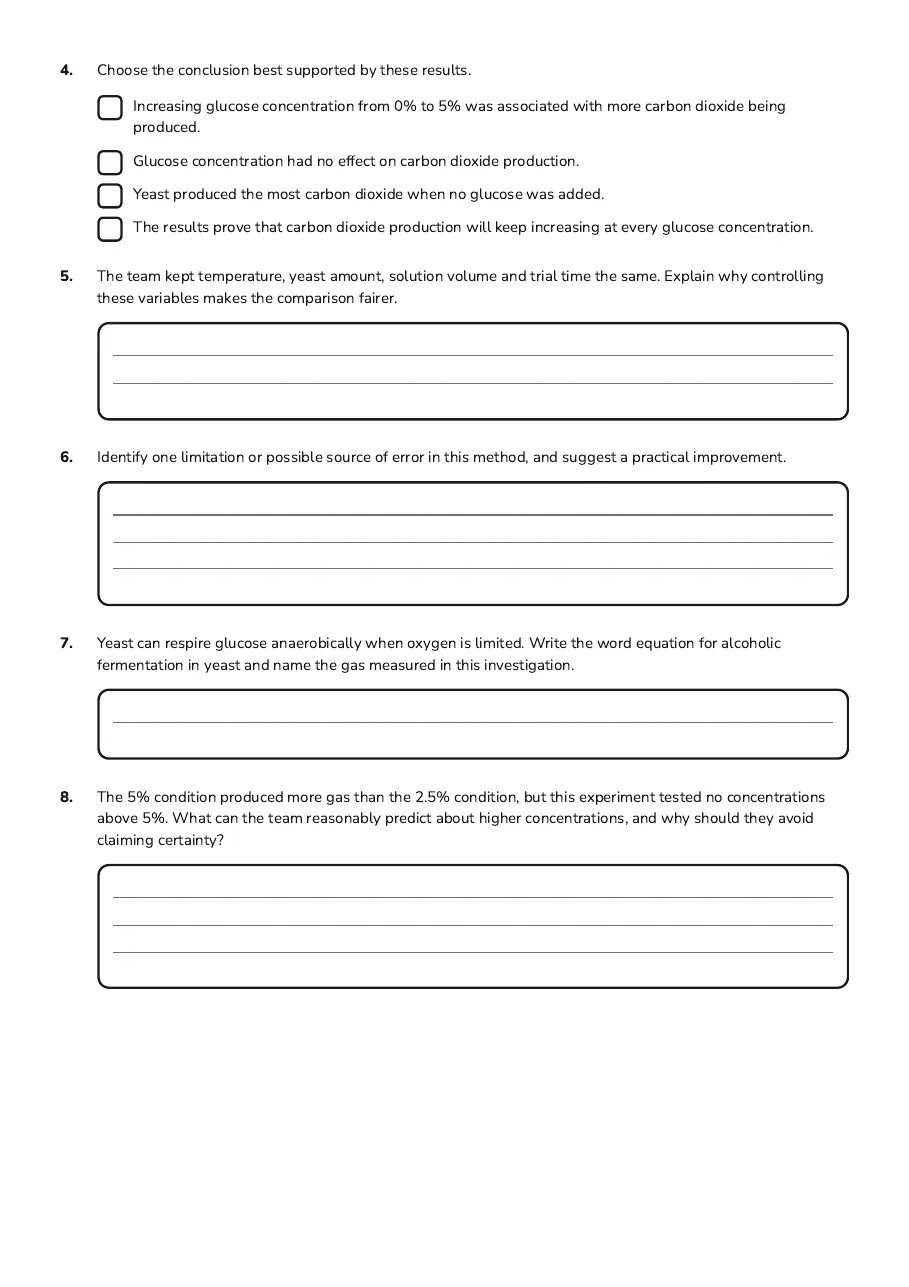
- Increasing glucose concentration from 0% to 5% was associated with more carbon dioxide being produced.
- Glucose concentration had no effect on carbon dioxide production.
- Yeast produced the most carbon dioxide when no glucose was added.
- The results prove that carbon dioxide production will keep increasing at every glucose concentration.
2 printable pages
Page 1
Page 2
About This Worksheet
Free in Kuraplan
Sign up free, grab the PDF, and customize it for your class.
Print-Ready
Formatted for standard paper. Clean layout, easy to read.
AI-Generated
Created with Kuraplan's AI, designed for real classroom use.
For Teachers & Parents
Use in classrooms, for homework, tutoring, or homeschool.
Need a custom version of this worksheet?
Kuraplan's AI generates custom worksheets in seconds — differentiated for every learner, aligned to your curriculum.
Generate Custom Worksheets — FreeMore Science Worksheets
Magic Milk Experiment Worksheet
Free
Dissolving and Separation Investigation
Free
Dancing Raisins Investigation
Free
Plant Growth Investigation
Free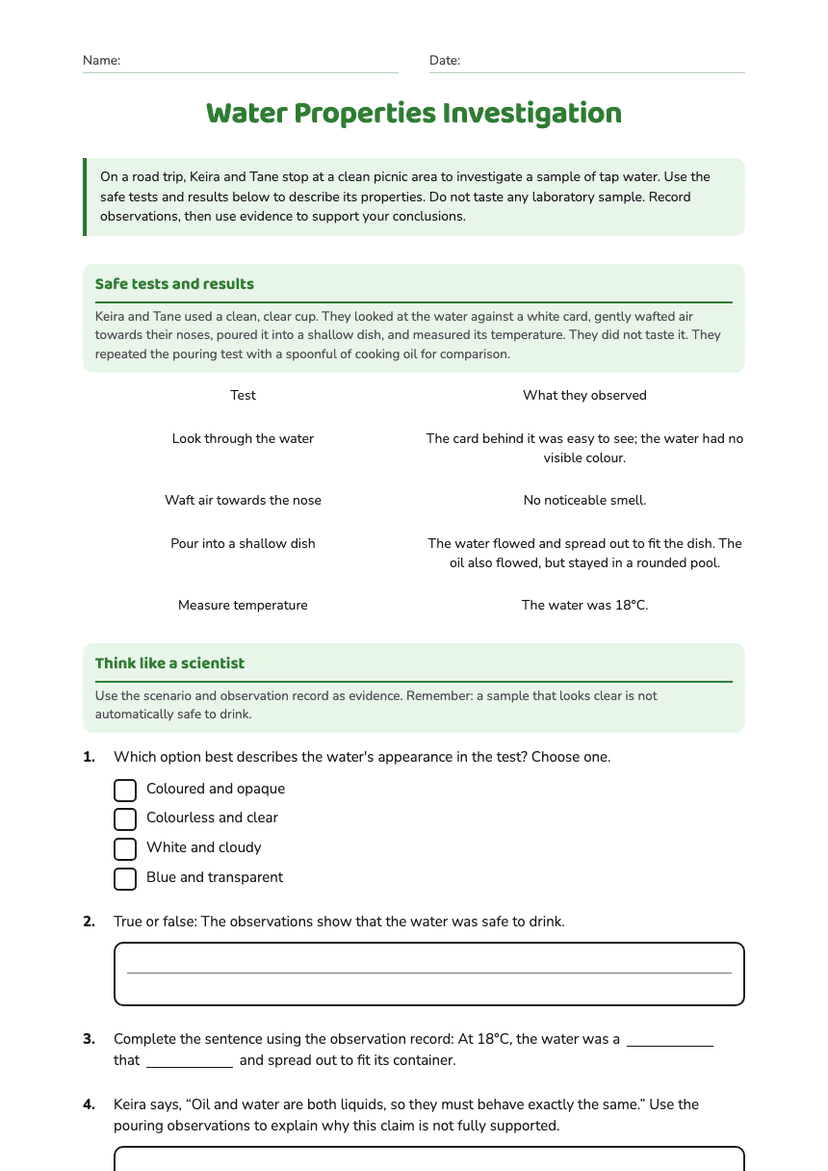
Water Properties Investigation
Free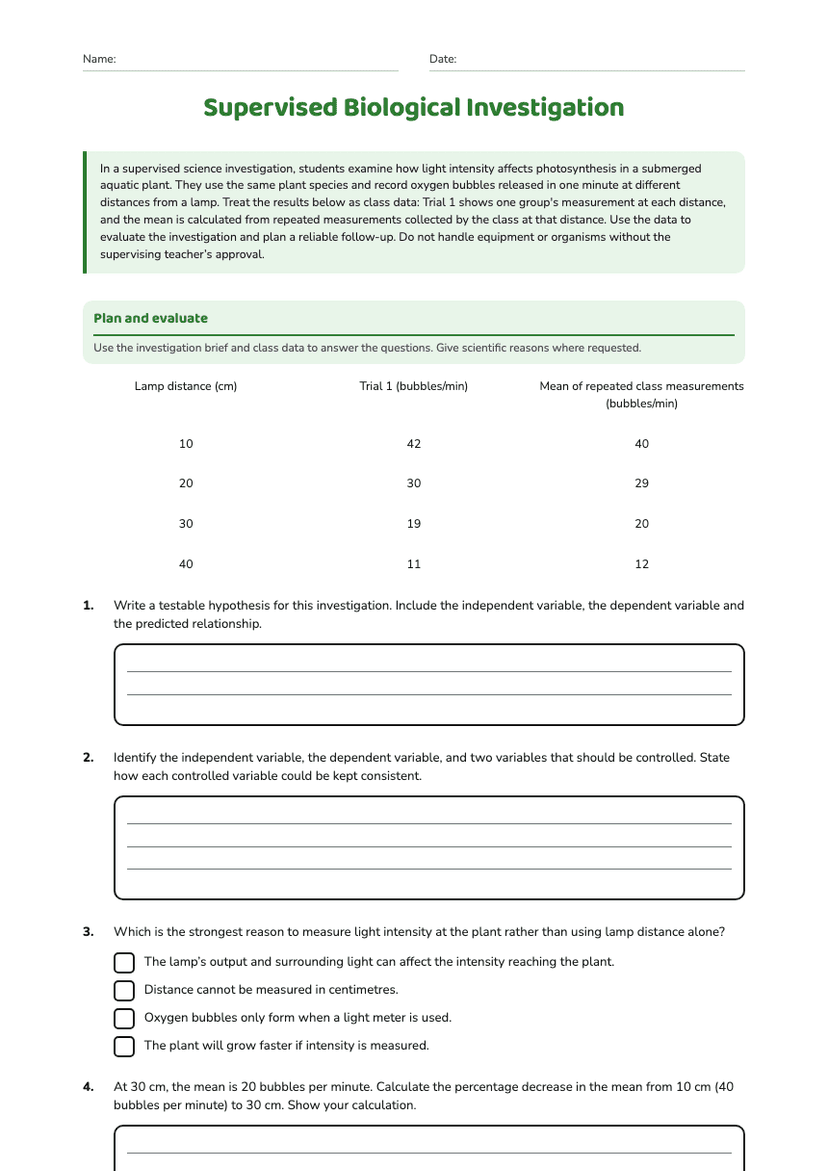
Supervised Biological Investigation
Free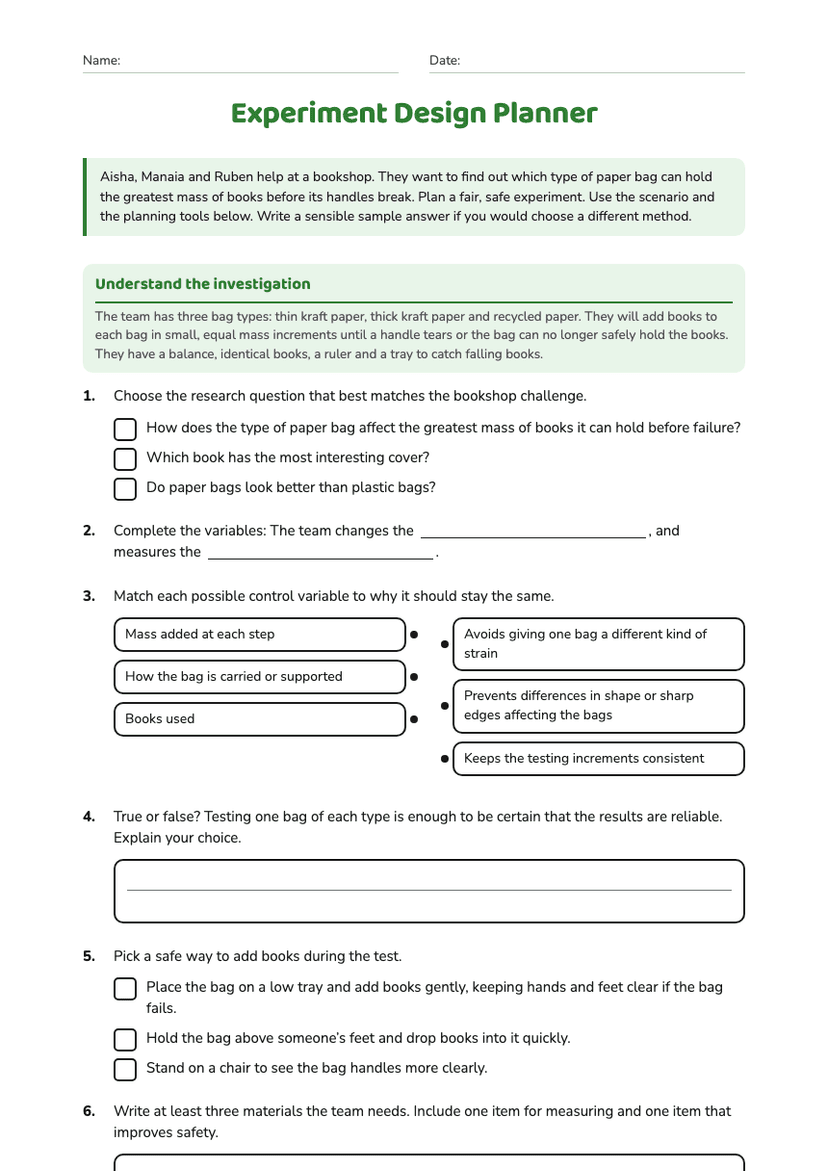
Experiment Design Planner
Free