Chemical Reactions Energy Worksheet
A free science worksheet ready for your classroom. Open in Kuraplan to grab the print-ready PDF, customize it for your students, or generate a fresh version in seconds.
Chemical Reactions Energy Worksheet
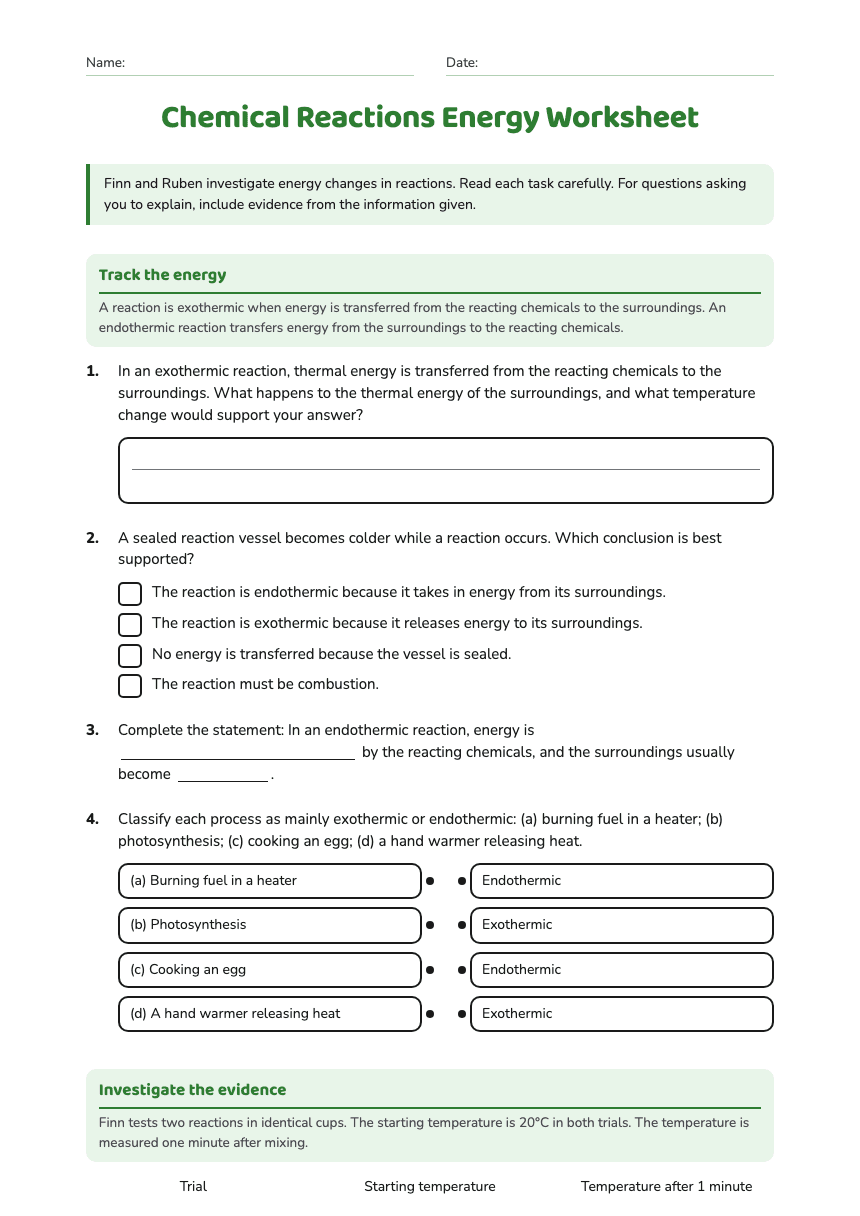
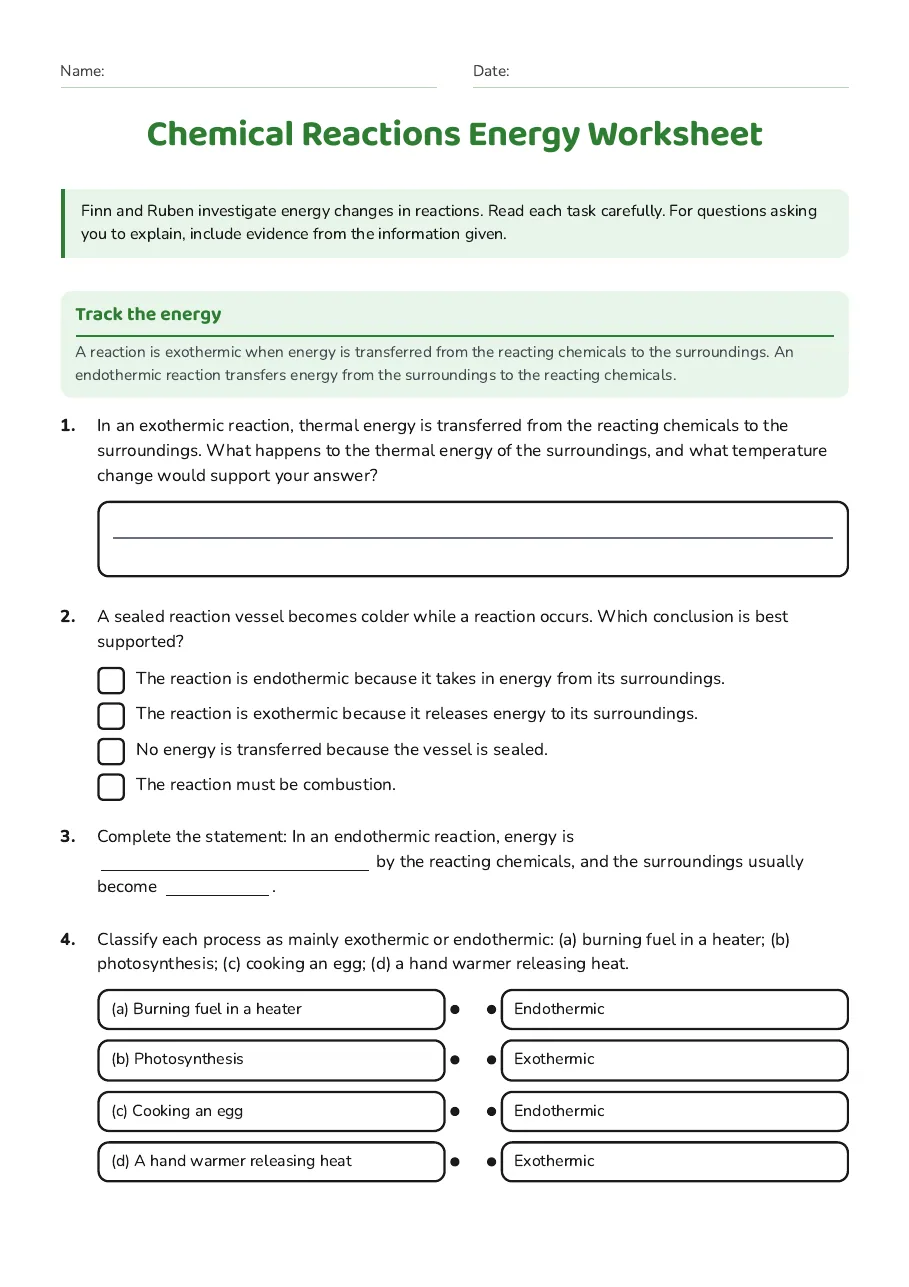
Track the energy
A reaction is exothermic when energy is transferred from the reacting chemicals to the surroundings. An endothermic reaction transfers energy from the surroundings to the reacting chemicals.
- The reaction is endothermic because it takes in energy from its surroundings.
- The reaction is exothermic because it releases energy to its surroundings.
- No energy is transferred because the vessel is sealed.
- The reaction must be combustion.
- (a) Burning fuel in a heater
- (b) Photosynthesis
- (c) Cooking an egg
- (d) A hand warmer releasing heat
- Endothermic
- Exothermic
- Endothermic
- Exothermic
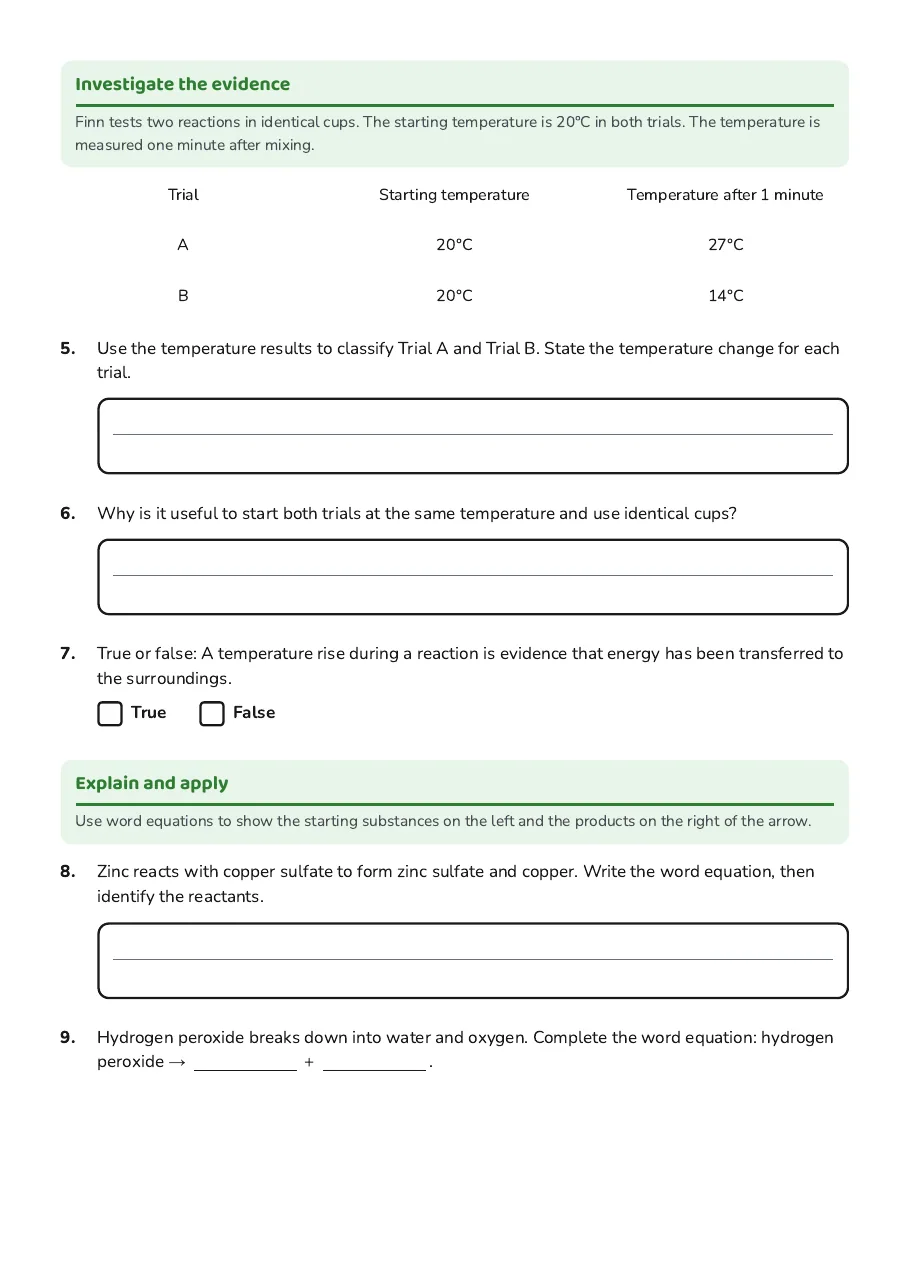
Investigate the evidence
Finn tests two reactions in identical cups. The starting temperature is 20°C in both trials. The temperature is measured one minute after mixing.
Trial
Starting temperature
Temperature after 1 minute
A
20°C
27°C
B
20°C
14°C
Explain and apply
Use word equations to show the starting substances on the left and the products on the right of the arrow.
3 printable pages
Page 1
Page 2
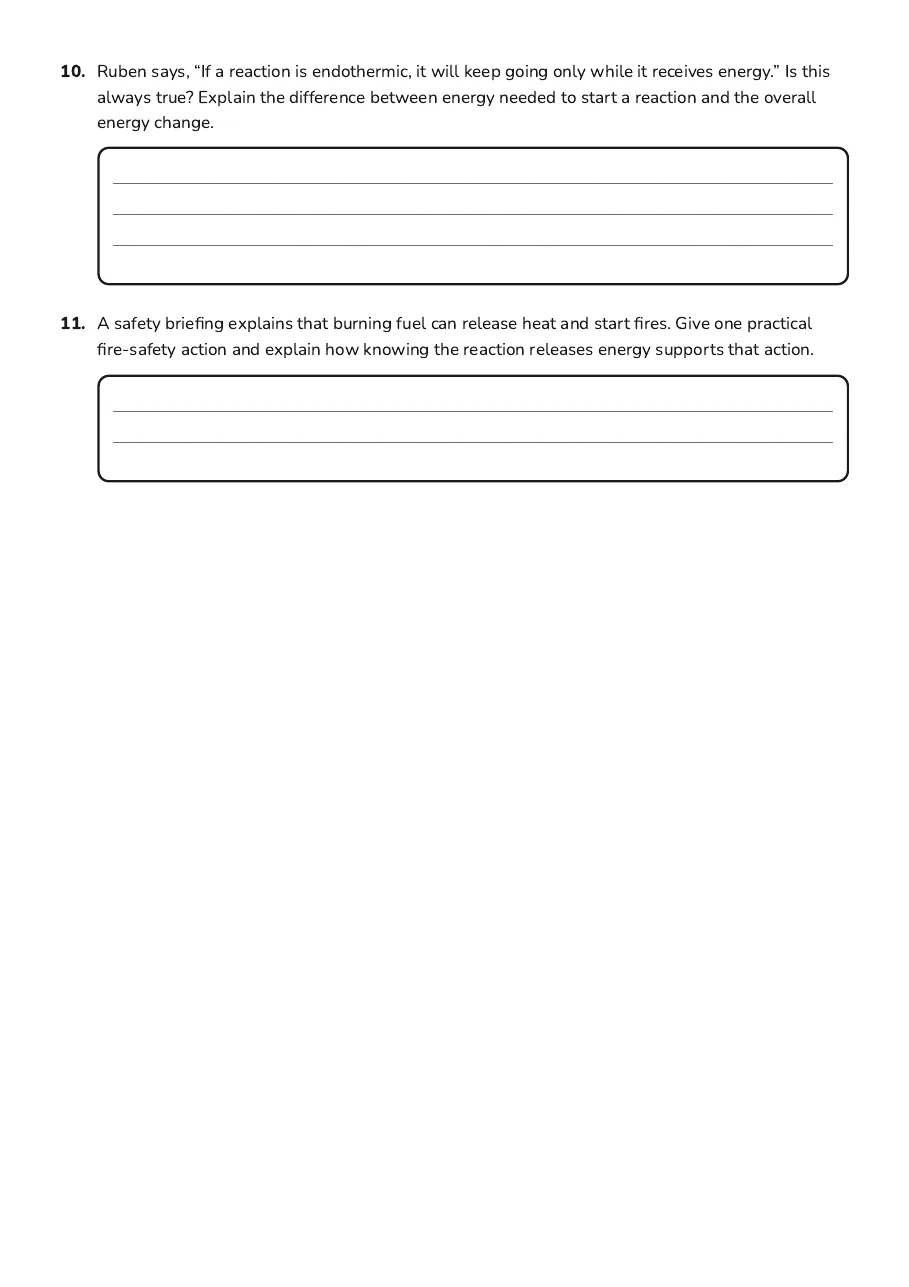
Page 3
About This Worksheet
Free in Kuraplan
Sign up free, grab the PDF, and customize it for your class.
Print-Ready
Formatted for standard paper. Clean layout, easy to read.
AI-Generated
Created with Kuraplan's AI, designed for real classroom use.
For Teachers & Parents
Use in classrooms, for homework, tutoring, or homeschool.
Need a custom version of this worksheet?
Kuraplan's AI generates custom worksheets in seconds — differentiated for every learner, aligned to your curriculum.
Generate Custom Worksheets — FreeMore Science Worksheets
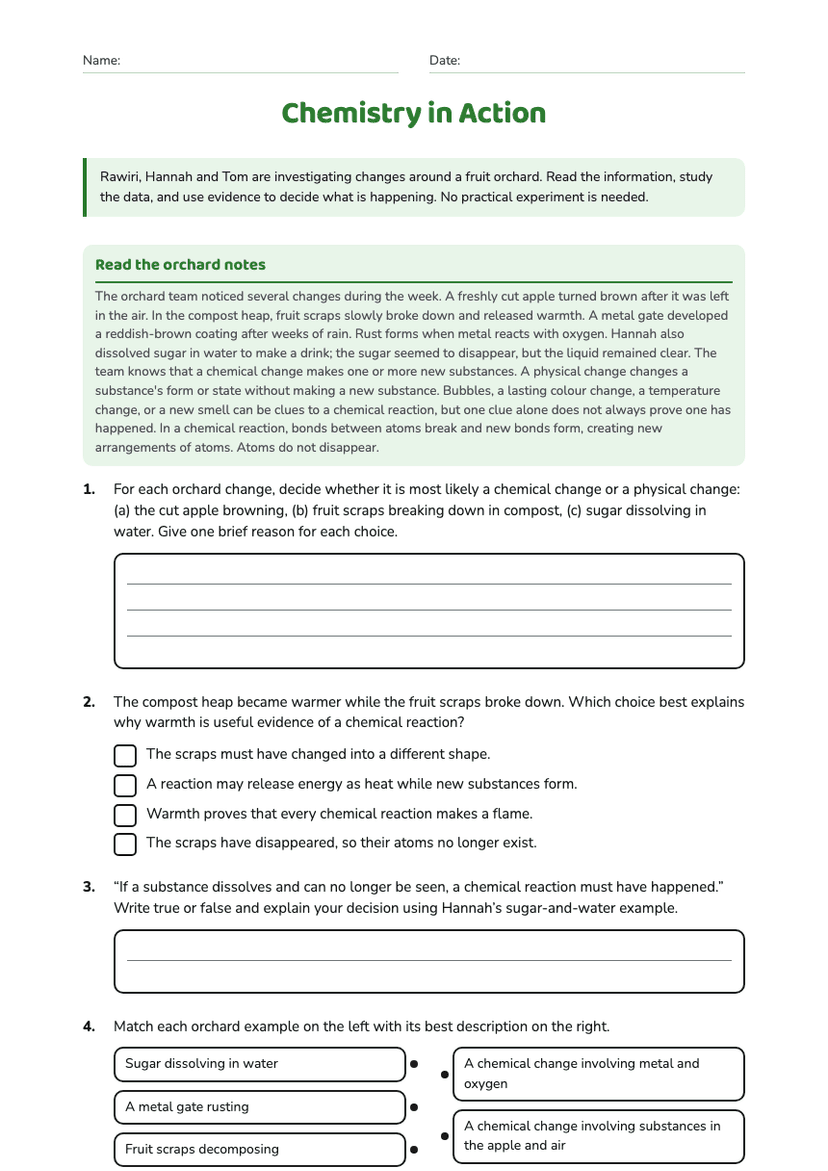
Chemistry in Action
Free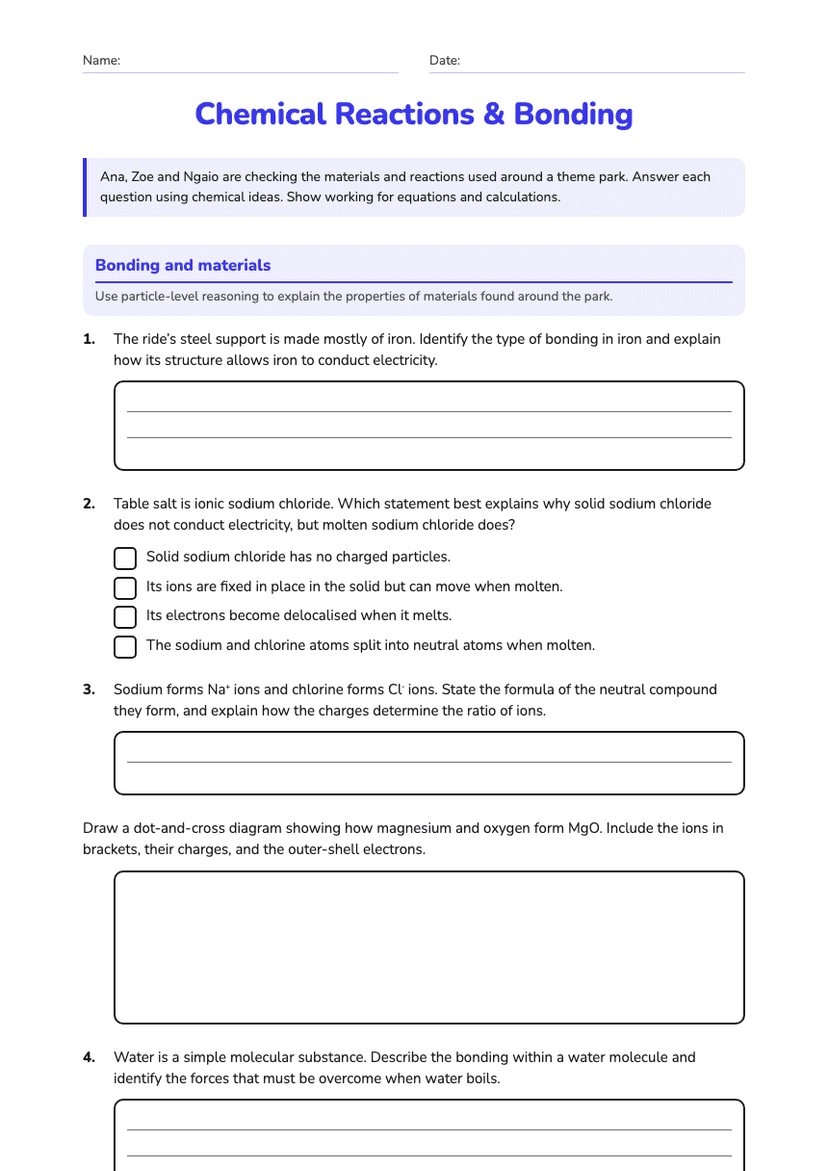
Chemical Reactions & Bonding
Free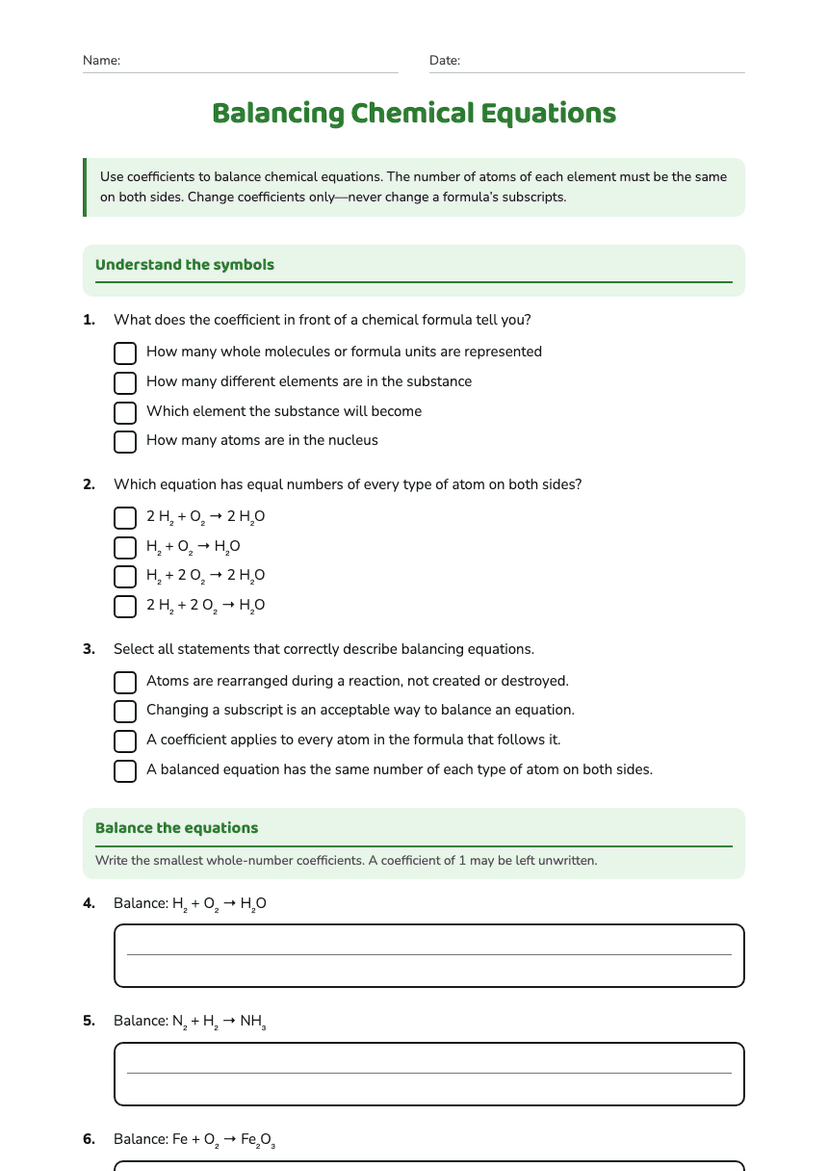
Balancing Chemical Equations
Free
Kitchen Chemistry Adventure
Free
Chemical Reactions Introduction
Free
Element Flashcards Worksheet
Free
Physical vs Chemical Changes
Free