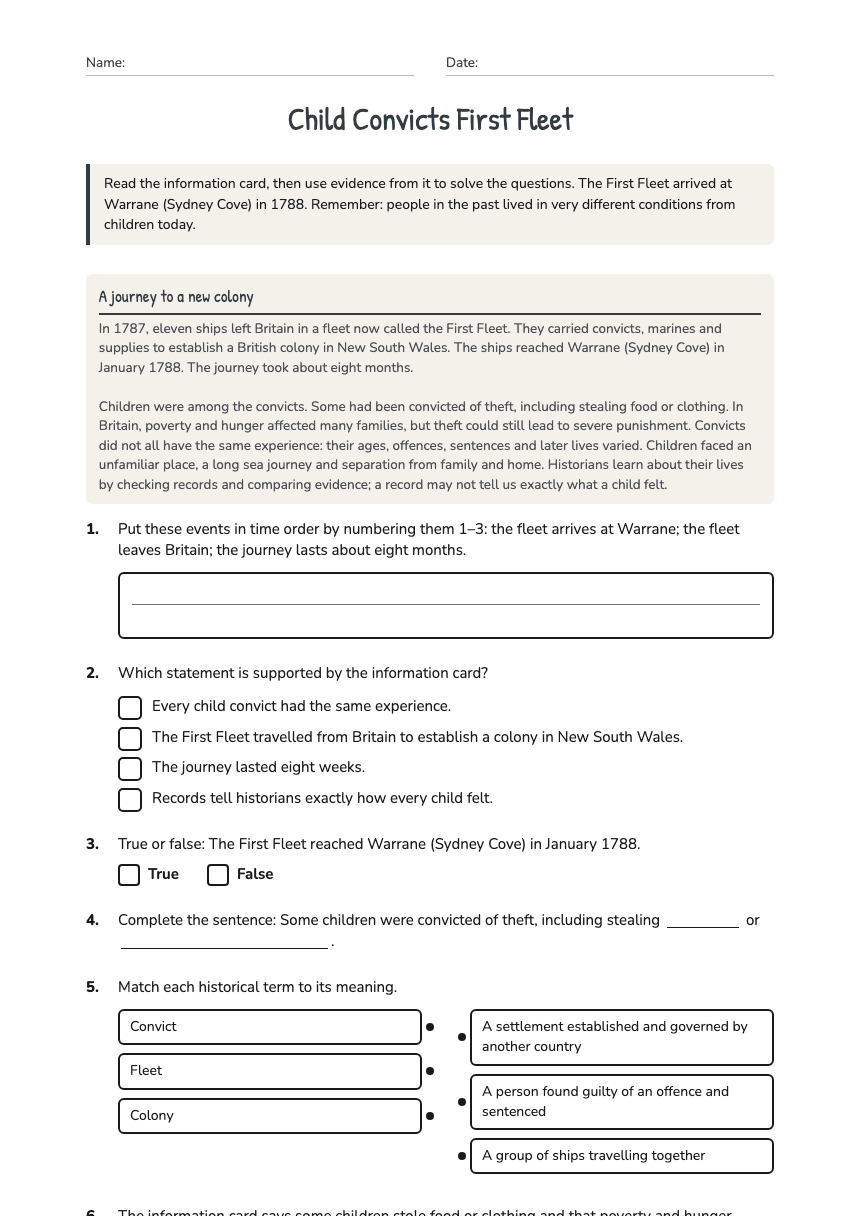
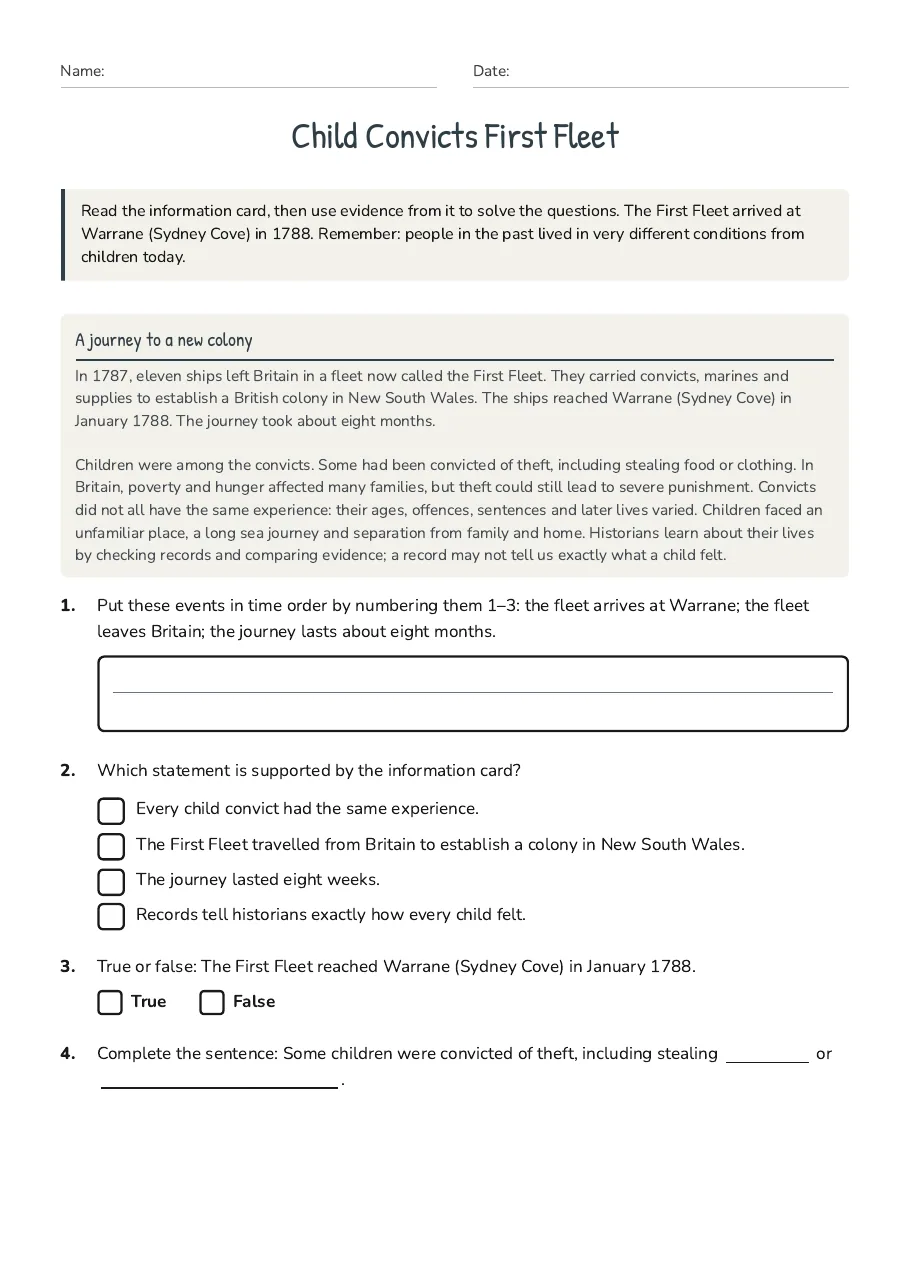
Child Convicts First Fleet
A free social sciences worksheet ready for your classroom. Open in Kuraplan to grab the print-ready PDF, customize it for your students, or generate a fresh version in seconds.
Child Convicts First Fleet
A journey to a new colony
In 1787, eleven ships left Britain in a fleet now called the First Fleet. They carried convicts, marines and supplies to establish a British colony in New South Wales. The ships reached Warrane (Sydney Cove) in January 1788. The journey took about eight months. Children were among the convicts. Some had been convicted of theft, including stealing food or clothing. In Britain, poverty and hunger affected many families, but theft could still lead to severe punishment. Convicts did not all have the same experience: their ages, offences, sentences and later lives varied. Children faced an unfamiliar place, a long sea journey and separation from family and home. Historians learn about their lives by checking records and comparing evidence; a record may not tell us exactly what a child felt.
- Every child convict had the same experience.
- The First Fleet travelled from Britain to establish a colony in New South Wales.
- The journey lasted eight weeks.
- Records tell historians exactly how every child felt.
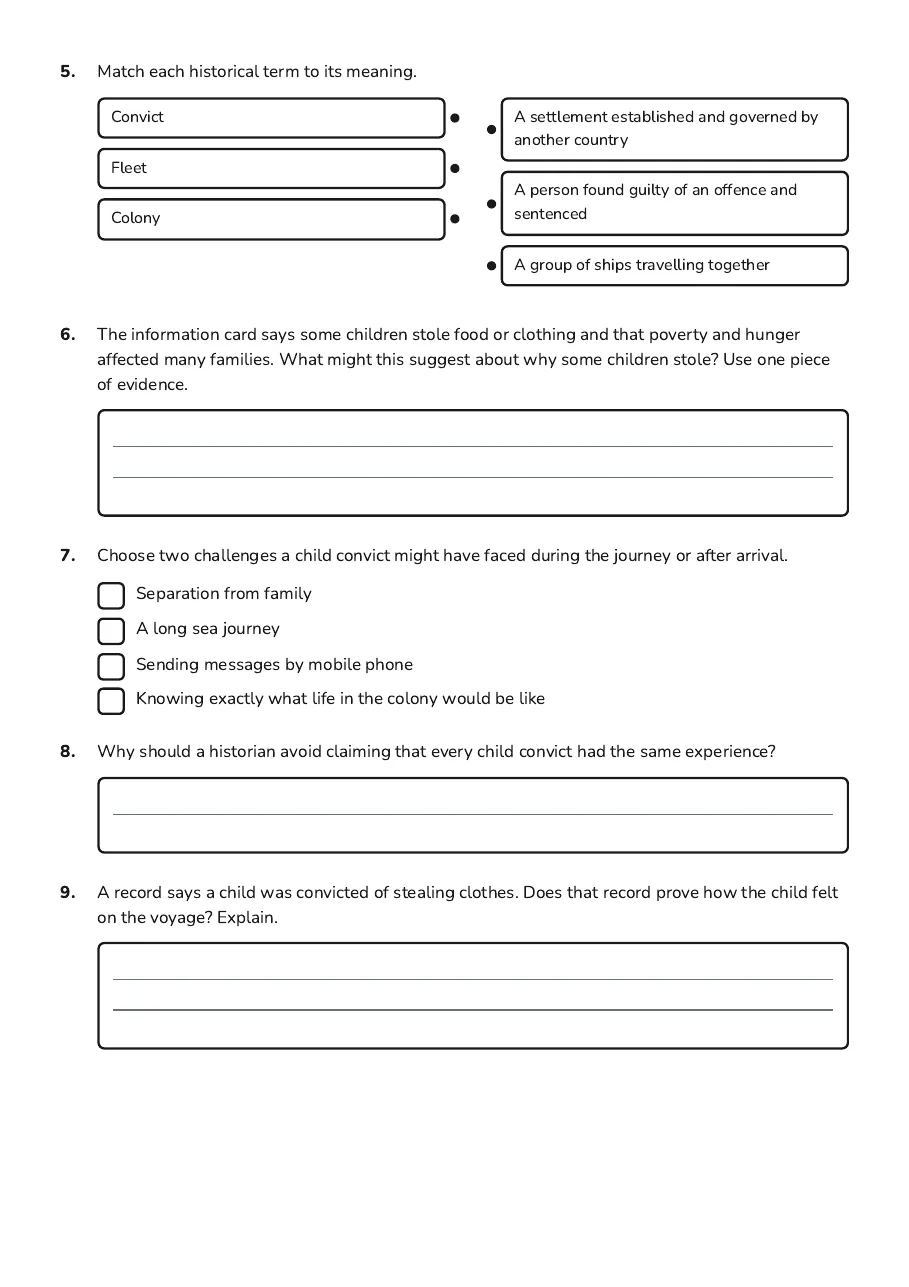
- Convict
- Fleet
- Colony
- A settlement established and governed by another country
- A person found guilty of an offence and sentenced
- A group of ships travelling together
- Separation from family
- A long sea journey
- Sending messages by mobile phone
- Knowing exactly what life in the colony would be like
3 printable pages
Page 1
Page 2
Page 3
About This Worksheet
Free in Kuraplan
Sign up free, grab the PDF, and customize it for your class.
Print-Ready
Formatted for standard paper. Clean layout, easy to read.
AI-Generated
Created with Kuraplan's AI, designed for real classroom use.
For Teachers & Parents
Use in classrooms, for homework, tutoring, or homeschool.
Need a custom version of this worksheet?
Kuraplan's AI generates custom worksheets in seconds — differentiated for every learner, aligned to your curriculum.
Generate Custom Worksheets — Free