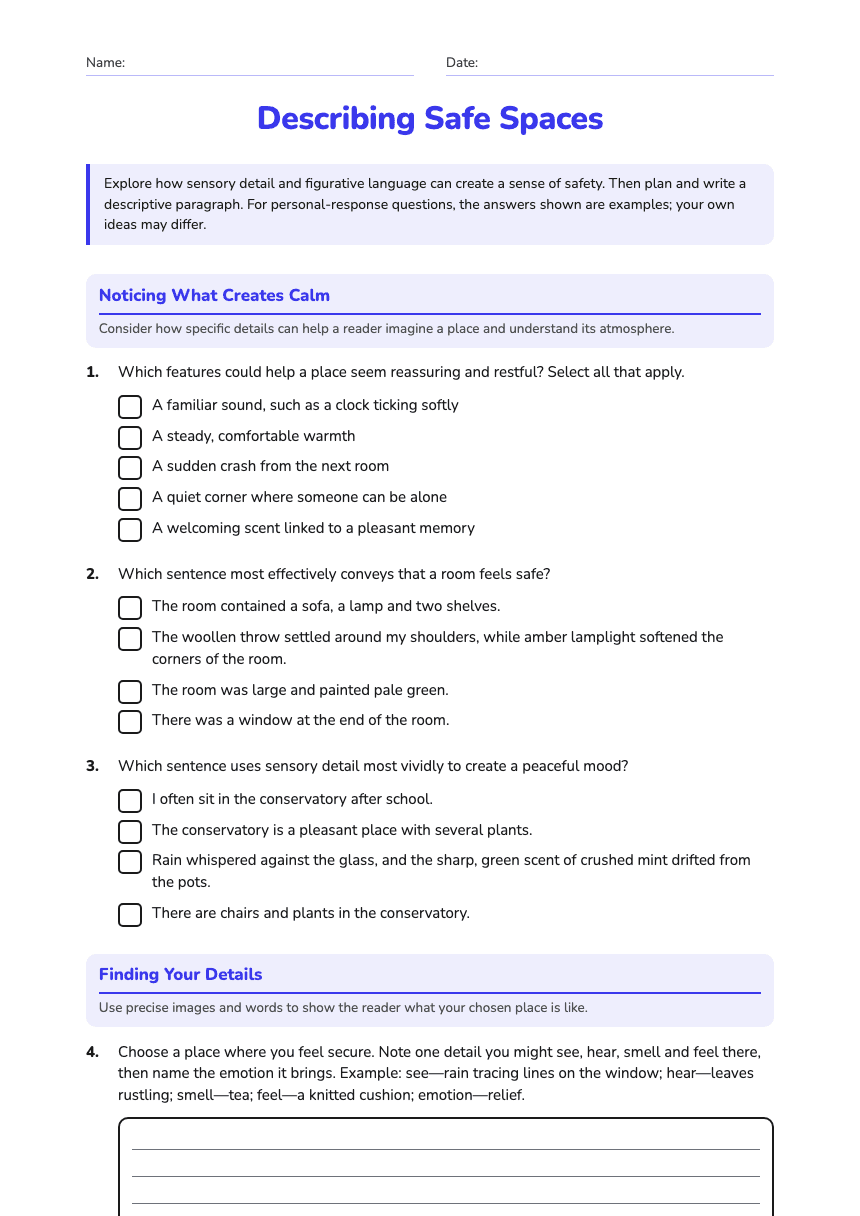
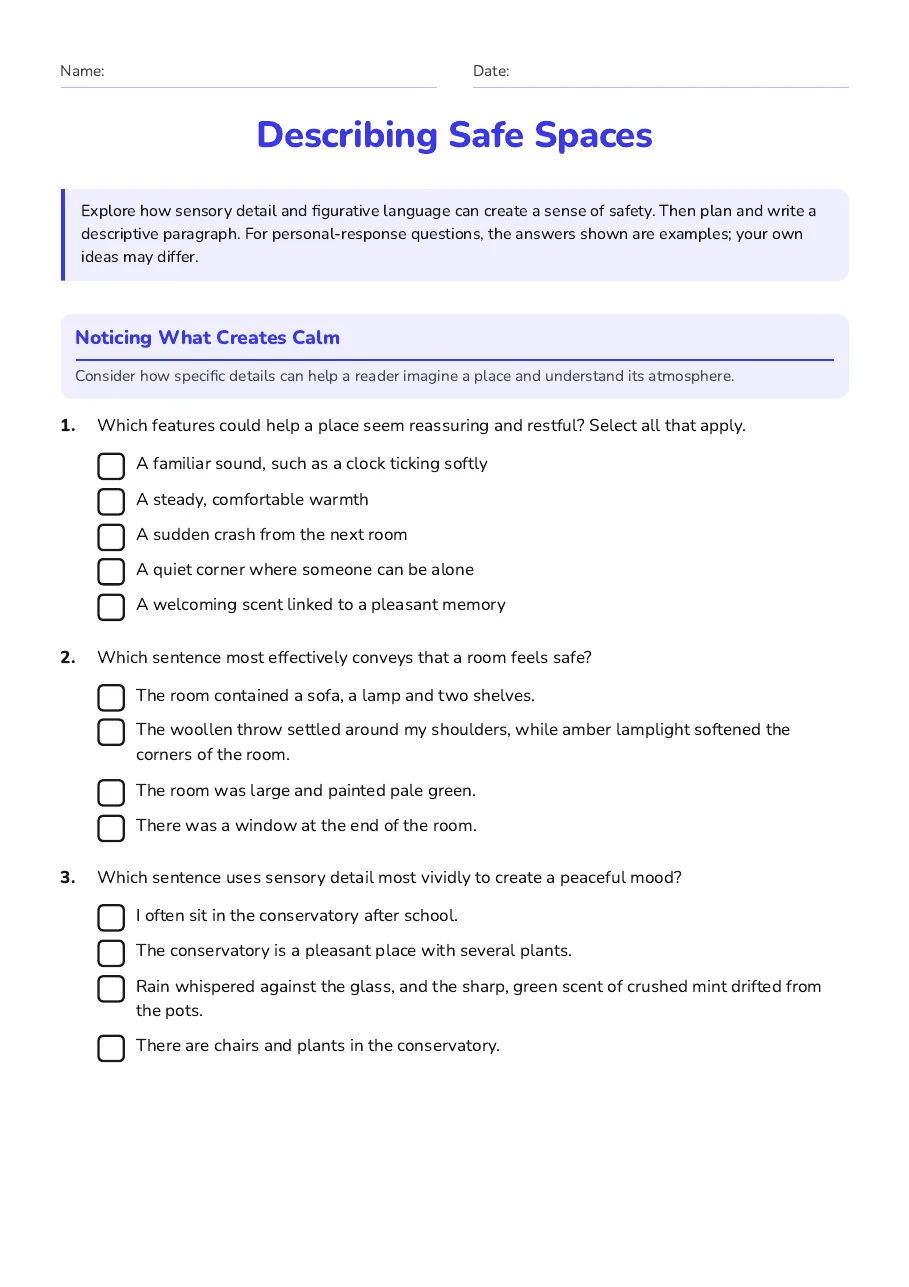
Describing Safe Spaces
A free english worksheet ready for your classroom. Open in Kuraplan to grab the print-ready PDF, customize it for your students, or generate a fresh version in seconds.
Describing Safe Spaces
Noticing What Creates Calm
Consider how specific details can help a reader imagine a place and understand its atmosphere.
- A familiar sound, such as a clock ticking softly
- A steady, comfortable warmth
- A sudden crash from the next room
- A quiet corner where someone can be alone
- A welcoming scent linked to a pleasant memory
- The room contained a sofa, a lamp and two shelves.
- The woollen throw settled around my shoulders, while amber lamplight softened the corners of the room.
- The room was large and painted pale green.
- There was a window at the end of the room.
- I often sit in the conservatory after school.
- The conservatory is a pleasant place with several plants.
- Rain whispered against the glass, and the sharp, green scent of crushed mint drifted from the pots.
- There are chairs and plants in the conservatory.
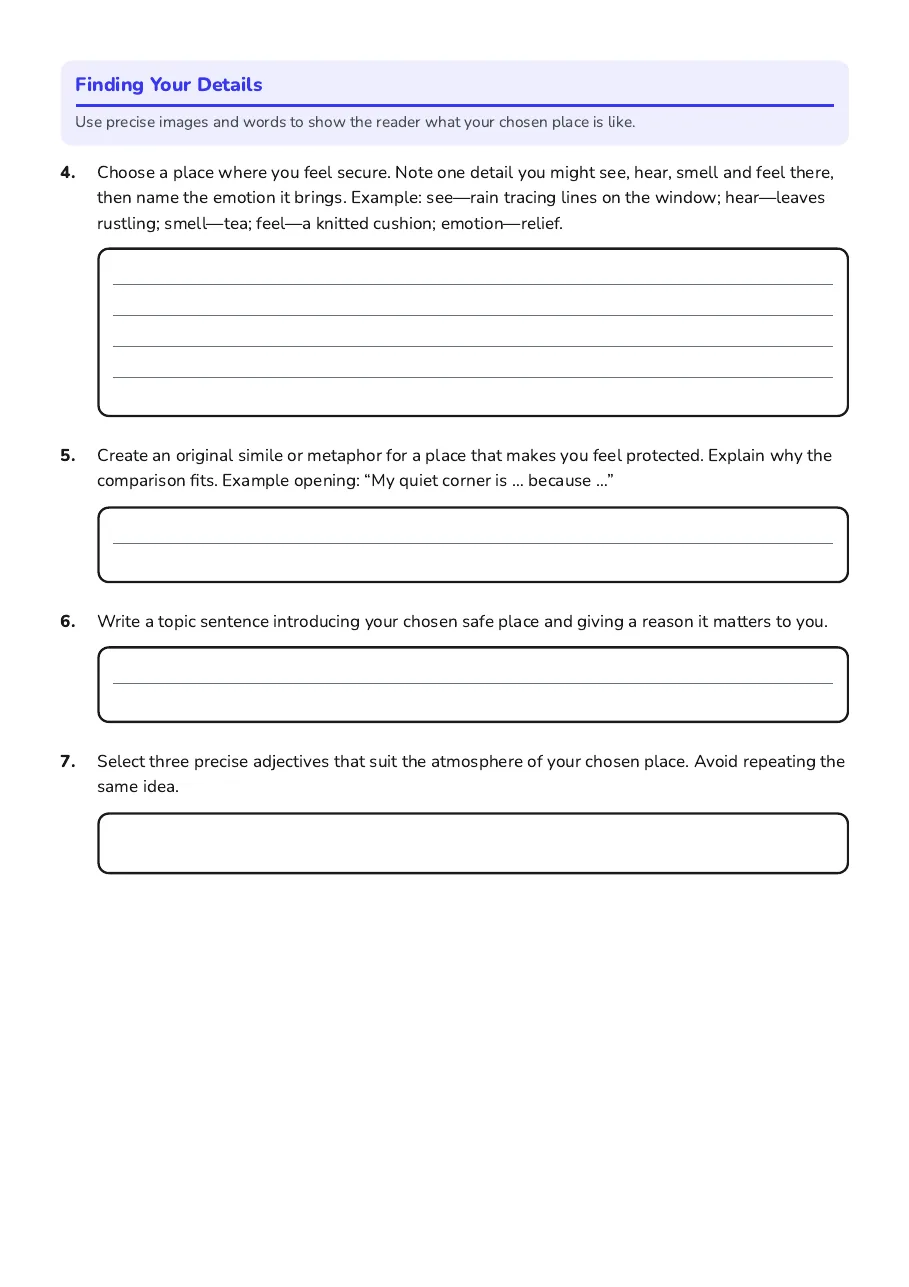
Finding Your Details
Use precise images and words to show the reader what your chosen place is like.
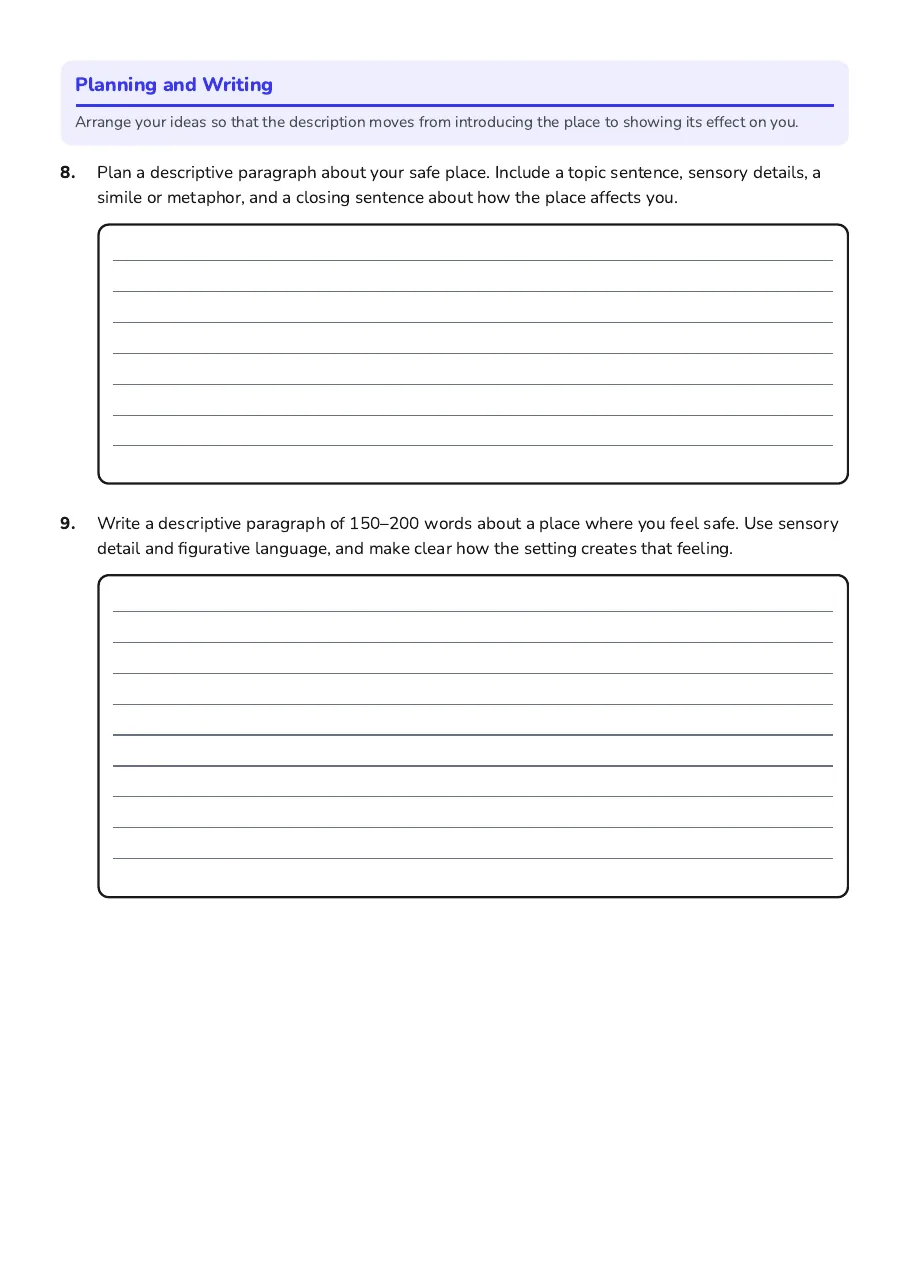
Planning and Writing
Arrange your ideas so that the description moves from introducing the place to showing its effect on you.
3 printable pages
Page 1
Page 2
Page 3
About This Worksheet
Free in Kuraplan
Sign up free, grab the PDF, and customize it for your class.
Print-Ready
Formatted for standard paper. Clean layout, easy to read.
AI-Generated
Created with Kuraplan's AI, designed for real classroom use.
For Teachers & Parents
Use in classrooms, for homework, tutoring, or homeschool.
Need a custom version of this worksheet?
Kuraplan's AI generates custom worksheets in seconds — differentiated for every learner, aligned to your curriculum.
Generate Custom Worksheets — Free