Ecosystem Species Matching Challenge
A free science worksheet ready for your classroom. Open in Kuraplan to grab the print-ready PDF, customize it for your students, or generate a fresh version in seconds.

Ecosystem Species Matching Challenge
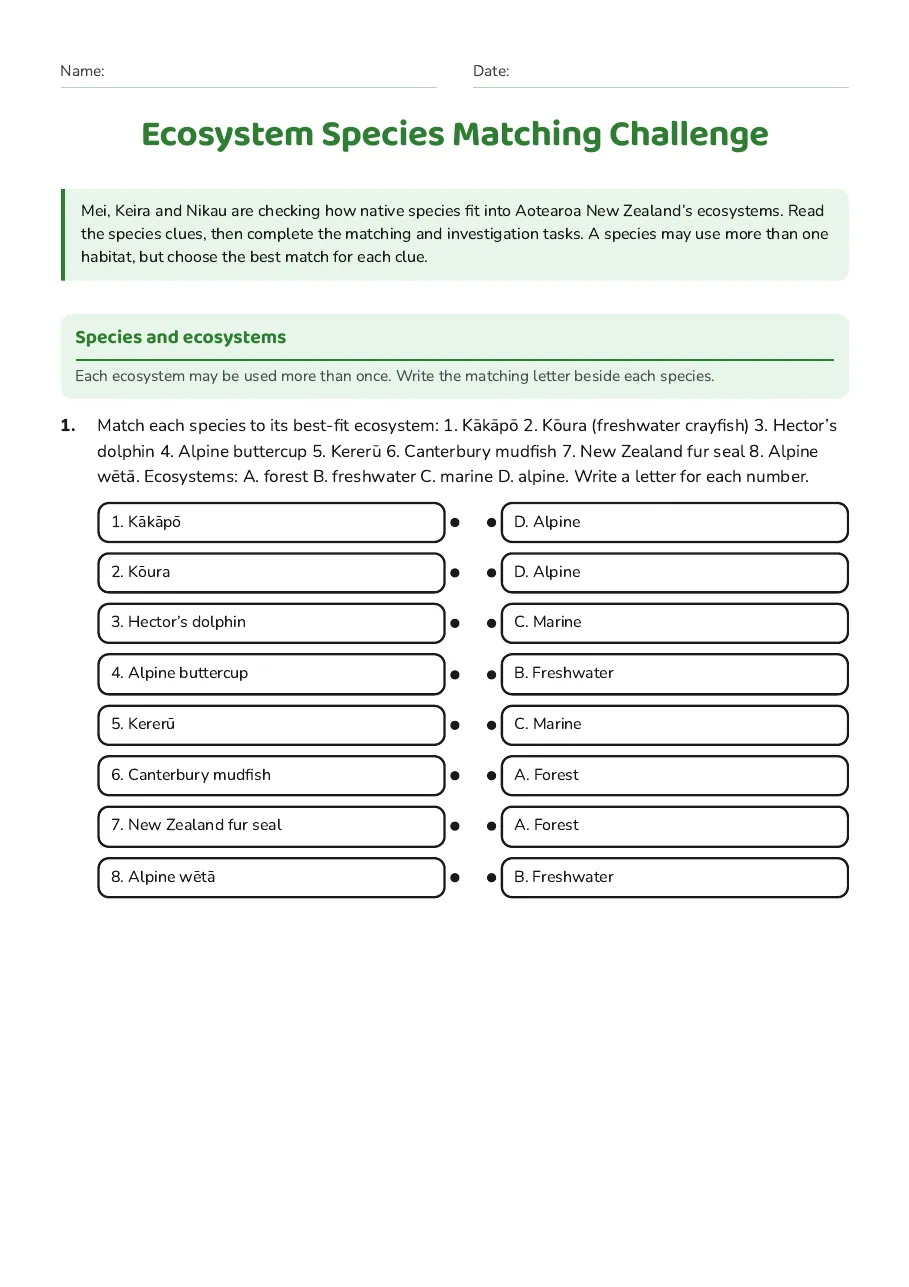
Species and ecosystems
Each ecosystem may be used more than once. Write the matching letter beside each species.
- 1. Kākāpō
- 2. Kōura
- 3. Hector’s dolphin
- 4. Alpine buttercup
- 5. Kererū
- 6. Canterbury mudfish
- 7. New Zealand fur seal
- 8. Alpine wētā
- D. Alpine
- D. Alpine
- C. Marine
- B. Freshwater
- C. Marine
- A. Forest
- A. Forest
- B. Freshwater
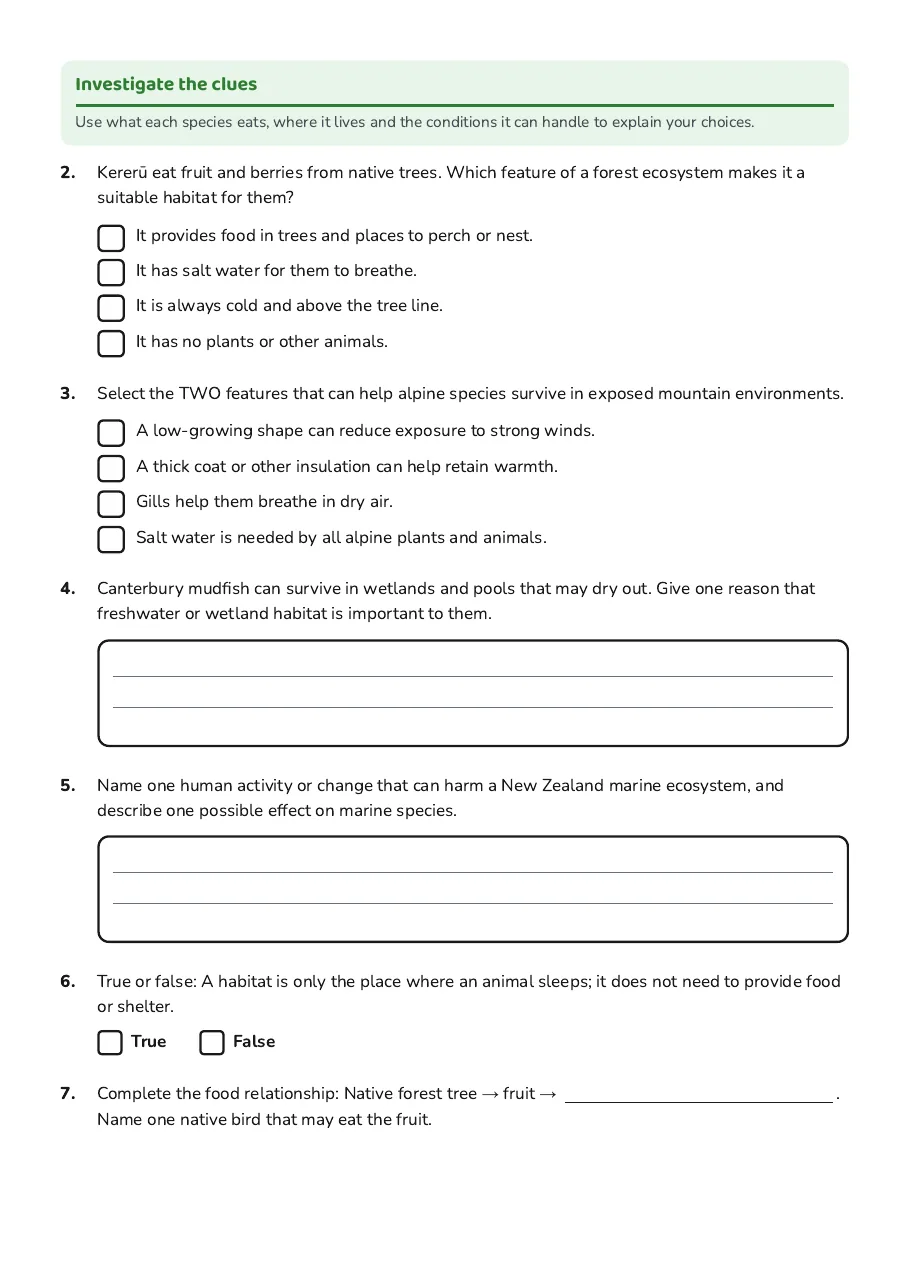
Investigate the clues
Use what each species eats, where it lives and the conditions it can handle to explain your choices.
- It provides food in trees and places to perch or nest.
- It has salt water for them to breathe.
- It is always cold and above the tree line.
- It has no plants or other animals.
- A low-growing shape can reduce exposure to strong winds.
- A thick coat or other insulation can help retain warmth.
- Gills help them breathe in dry air.
- Salt water is needed by all alpine plants and animals.
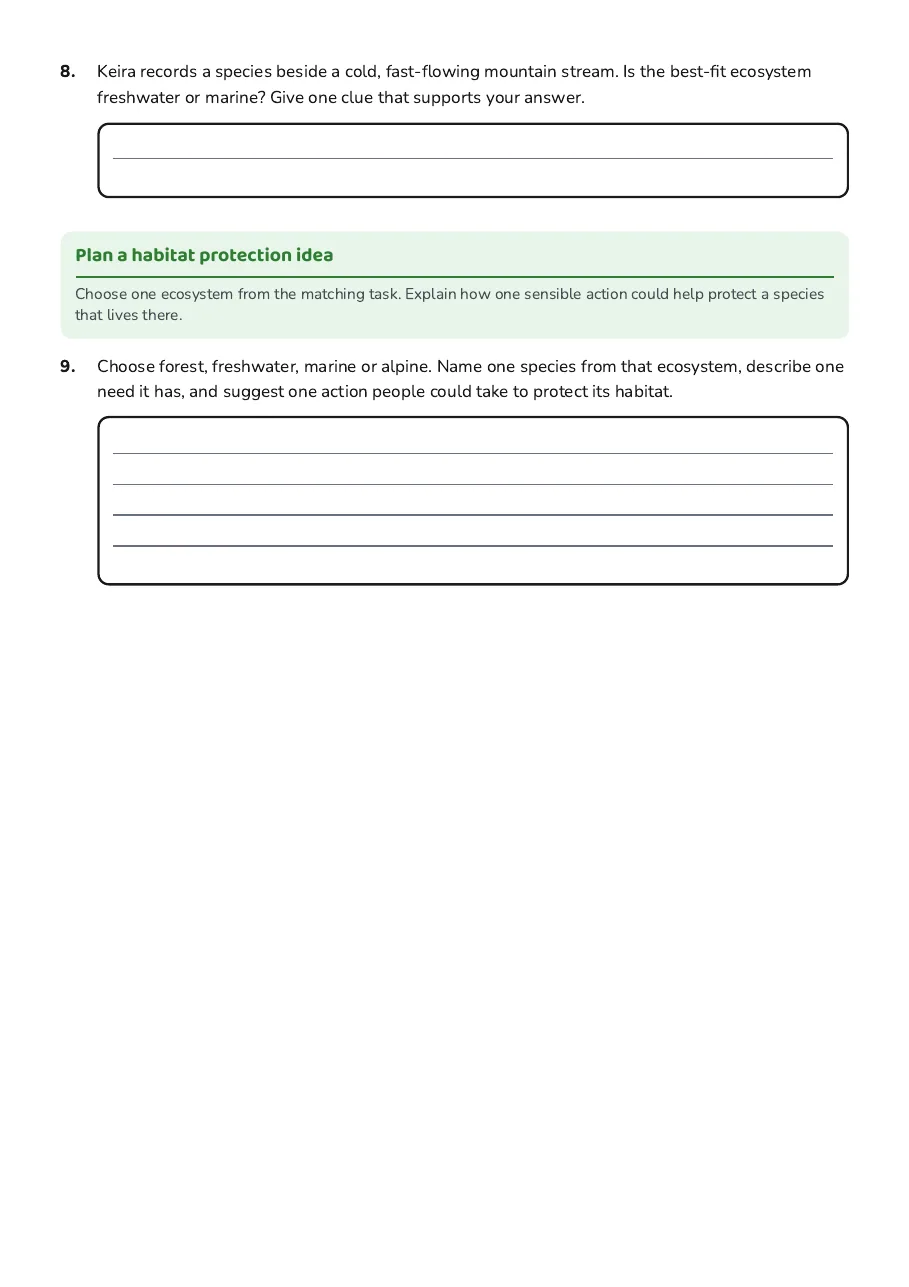
Plan a habitat protection idea
Choose one ecosystem from the matching task. Explain how one sensible action could help protect a species that lives there.
3 printable pages
Page 1
Page 2
Page 3
About This Worksheet
Free in Kuraplan
Sign up free, grab the PDF, and customize it for your class.
Print-Ready
Formatted for standard paper. Clean layout, easy to read.
AI-Generated
Created with Kuraplan's AI, designed for real classroom use.
For Teachers & Parents
Use in classrooms, for homework, tutoring, or homeschool.
Need a custom version of this worksheet?
Kuraplan's AI generates custom worksheets in seconds — differentiated for every learner, aligned to your curriculum.
Generate Custom Worksheets — FreeMore Science Worksheets
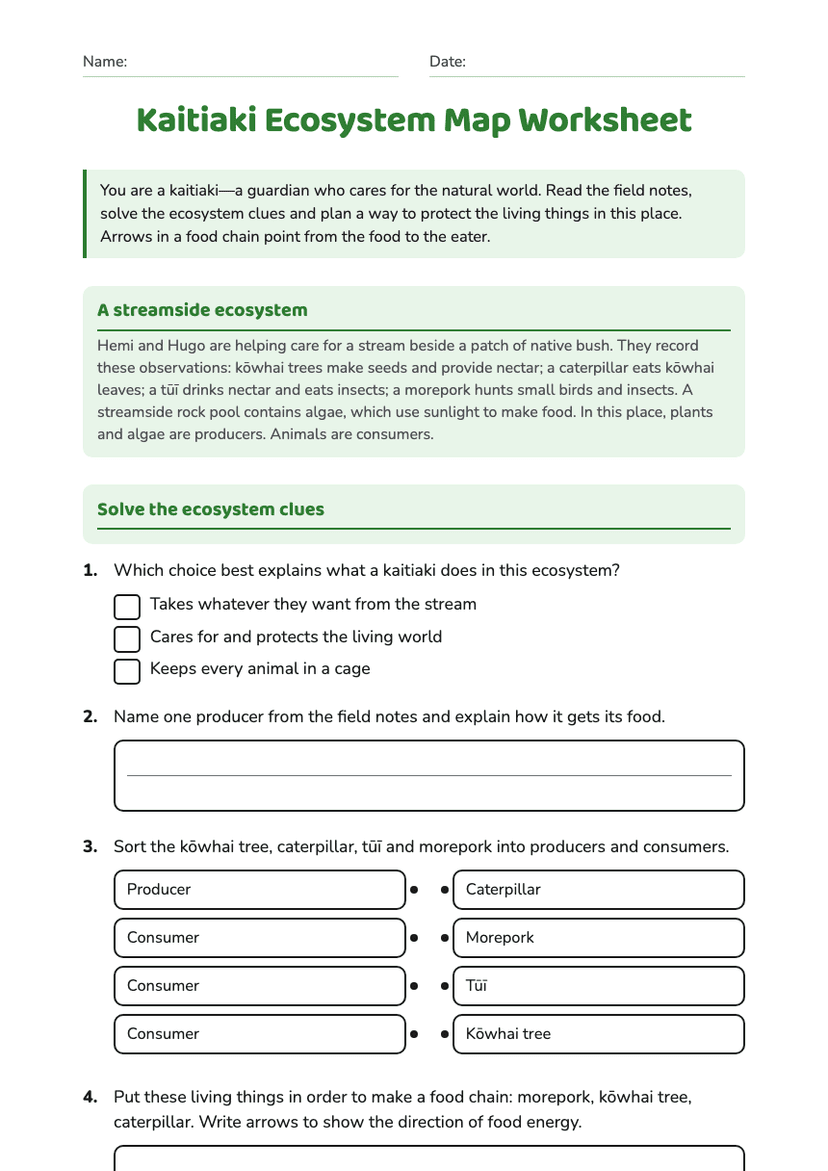
Kaitiaki Ecosystem Map Worksheet
Free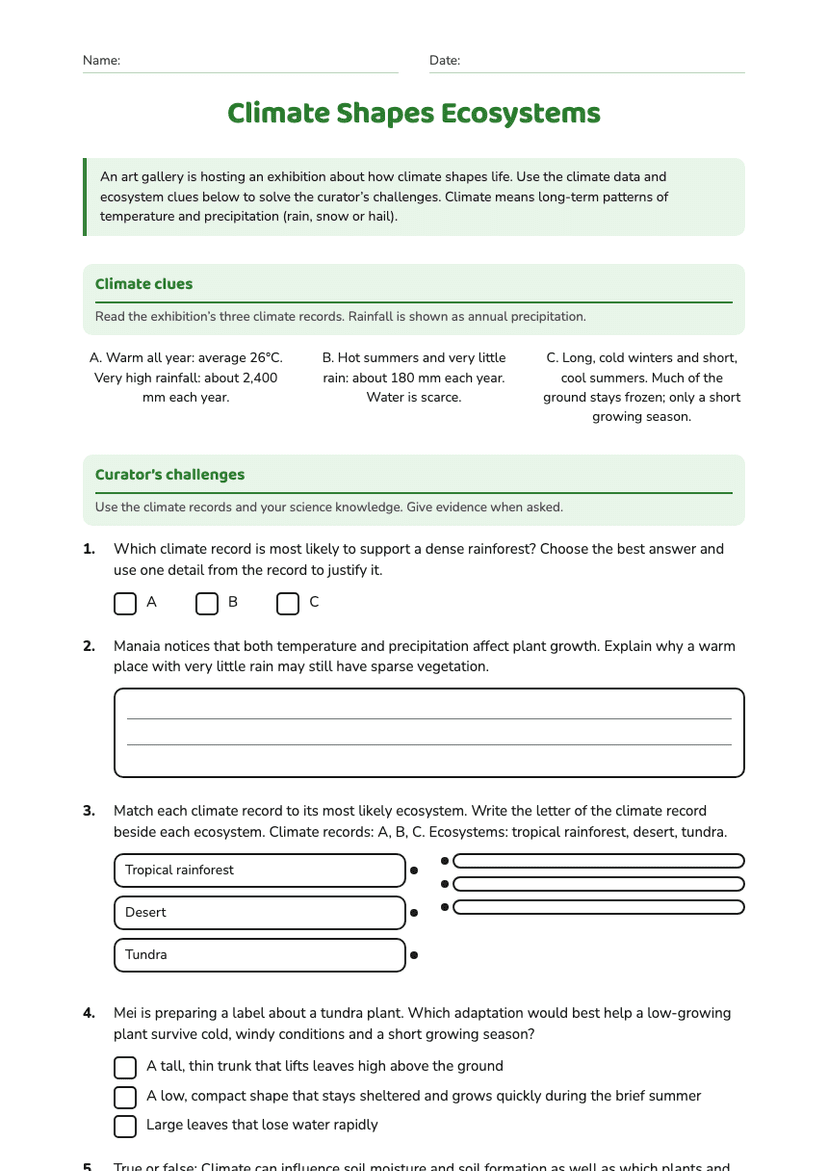
Climate Shapes Ecosystems
Free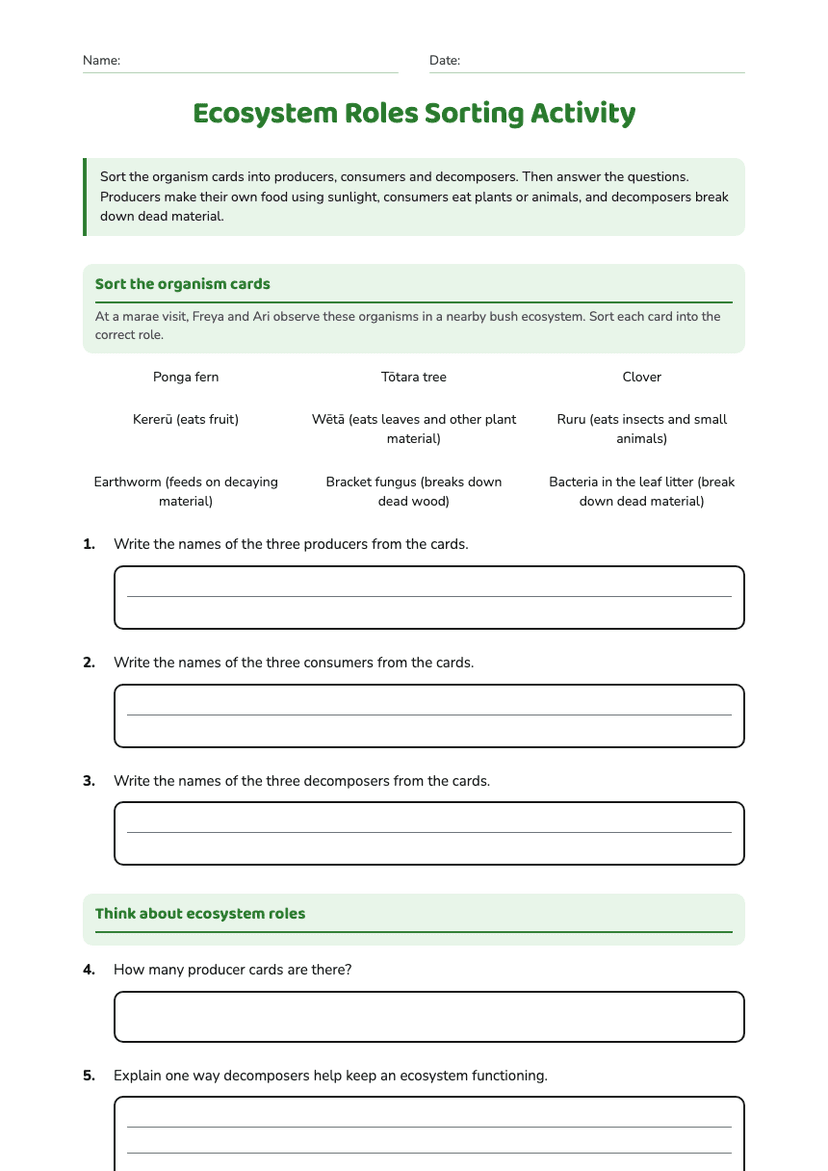
Ecosystem Roles Sorting Activity
Free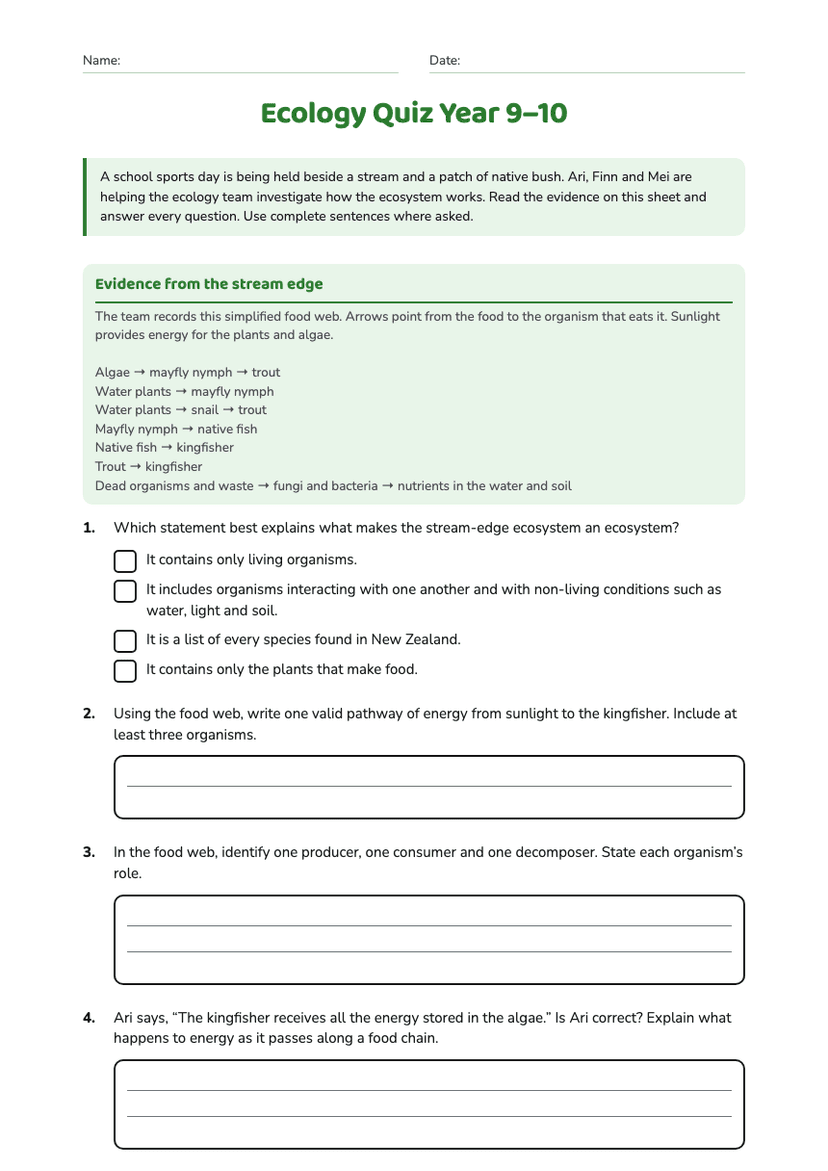
Ecology Quiz Year 9–10
Free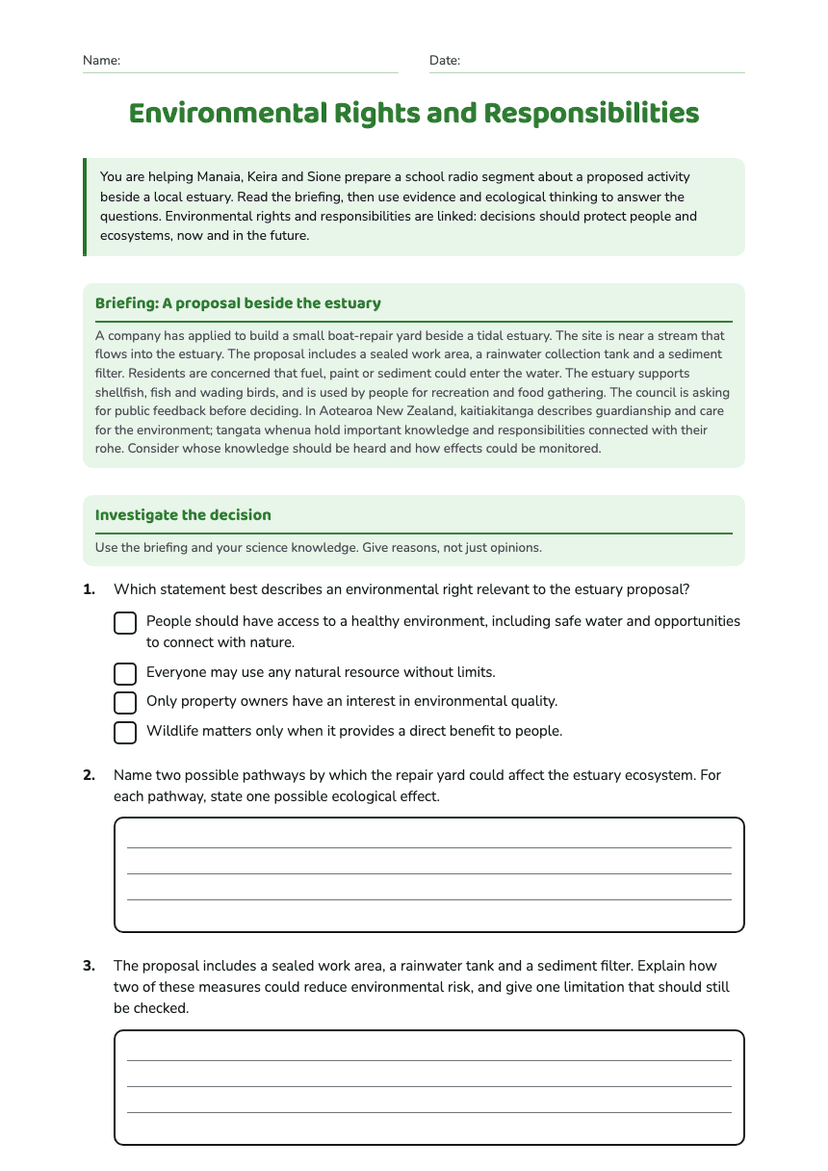
Environmental Rights and Responsibilities
Free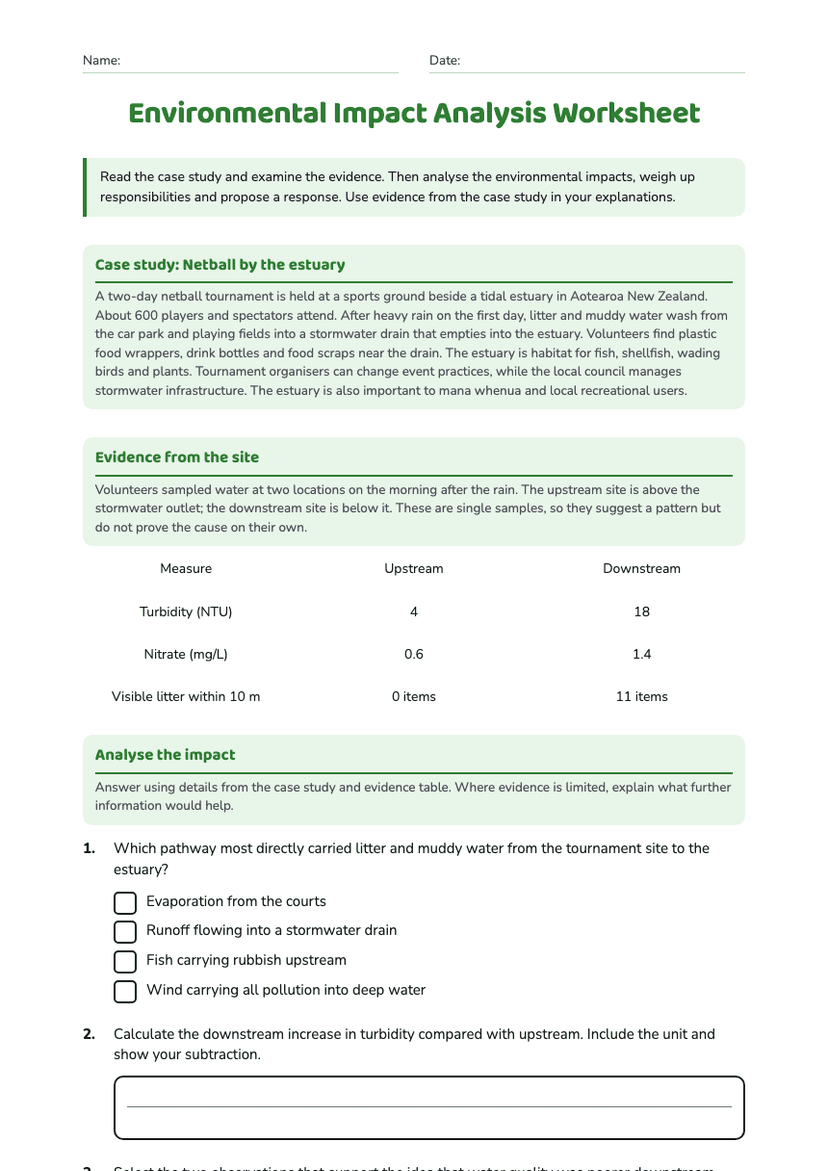
Environmental Impact Analysis Worksheet
Free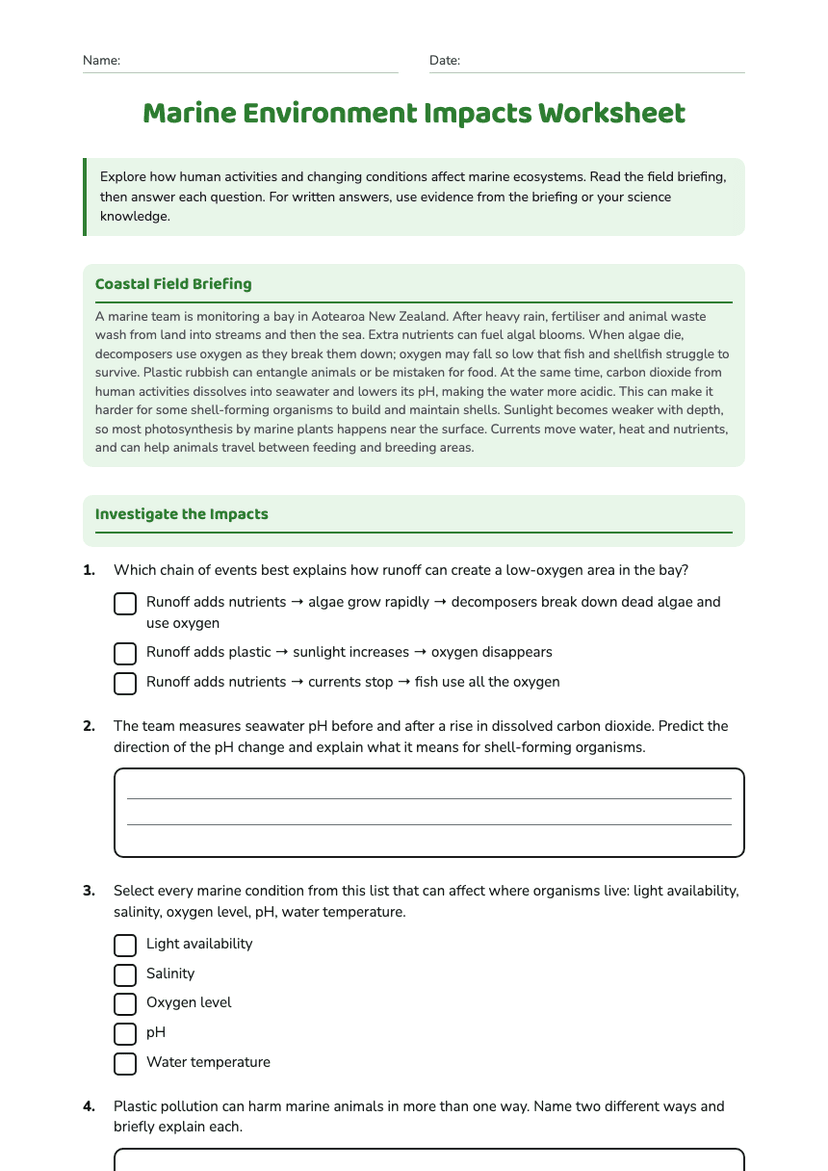
Marine Environment Impacts Worksheet
Free