Food Decomposition Heat Experiment
A free science worksheet ready for your classroom. Open in Kuraplan to grab the print-ready PDF, customize it for your students, or generate a fresh version in seconds.
Food Decomposition Heat Experiment
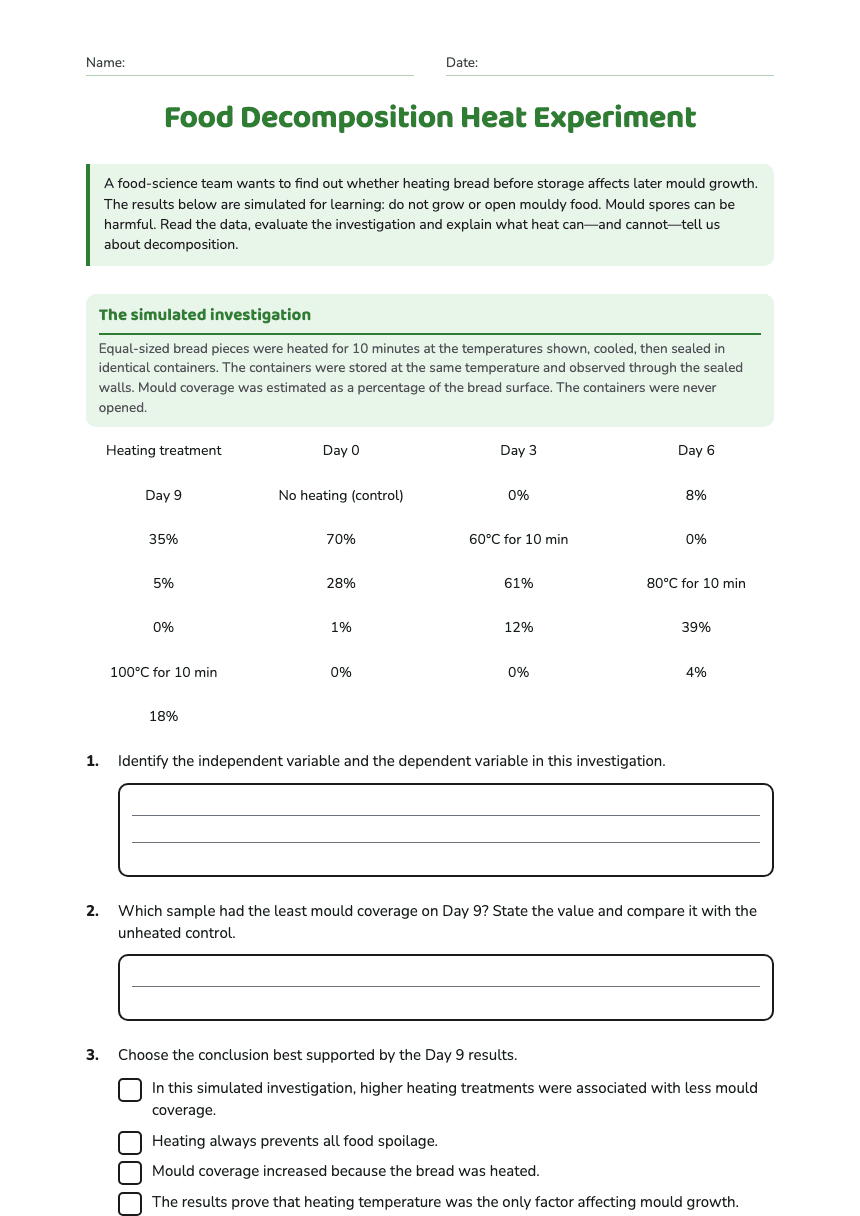
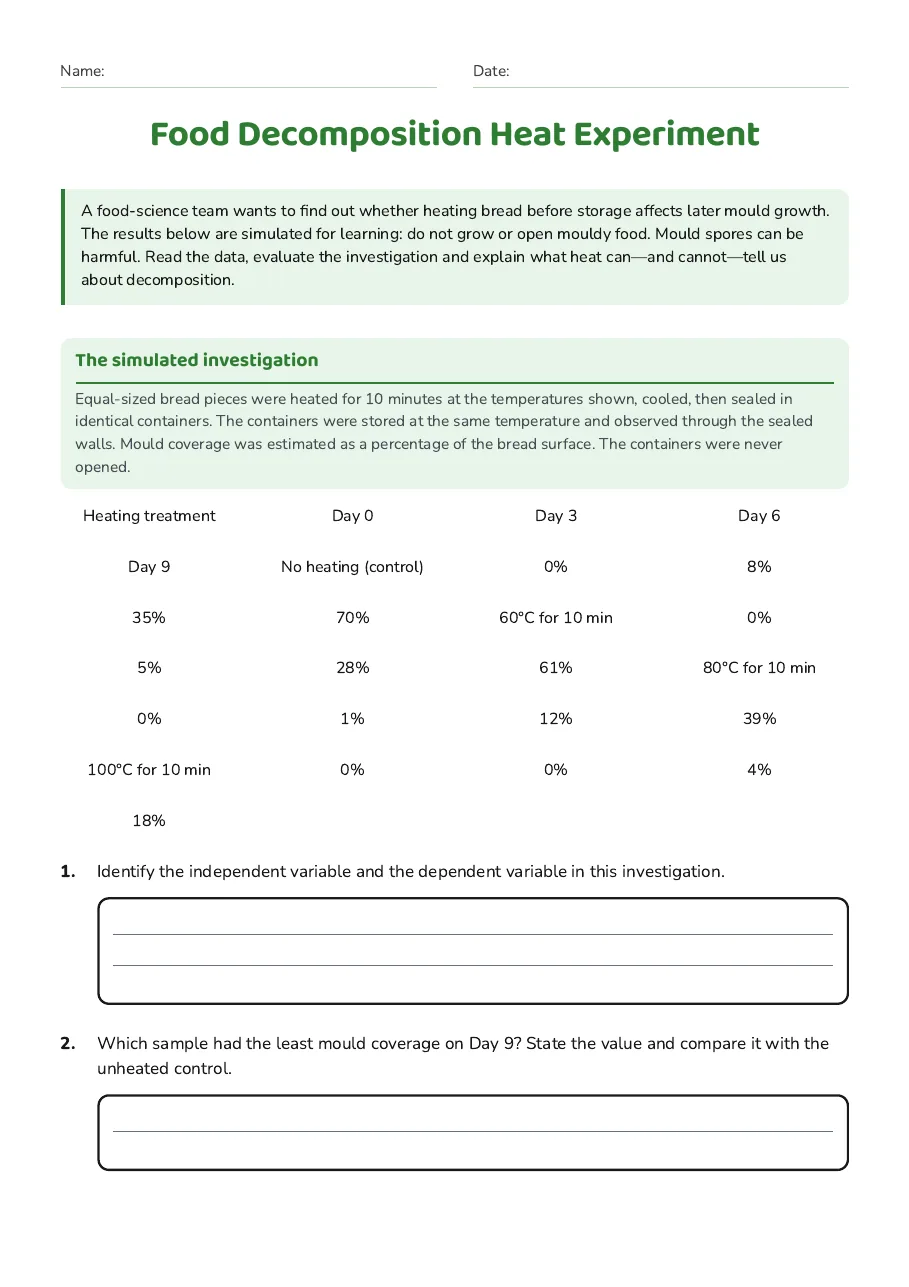
The simulated investigation
Equal-sized bread pieces were heated for 10 minutes at the temperatures shown, cooled, then sealed in identical containers. The containers were stored at the same temperature and observed through the sealed walls. Mould coverage was estimated as a percentage of the bread surface. The containers were never opened.
Heating treatment
Day 0
Day 3
Day 6
Day 9
No heating (control)
0%
8%
35%
70%
60°C for 10 min
0%
5%
28%
61%
80°C for 10 min
0%
1%
12%
39%
100°C for 10 min
0%
0%
4%
18%
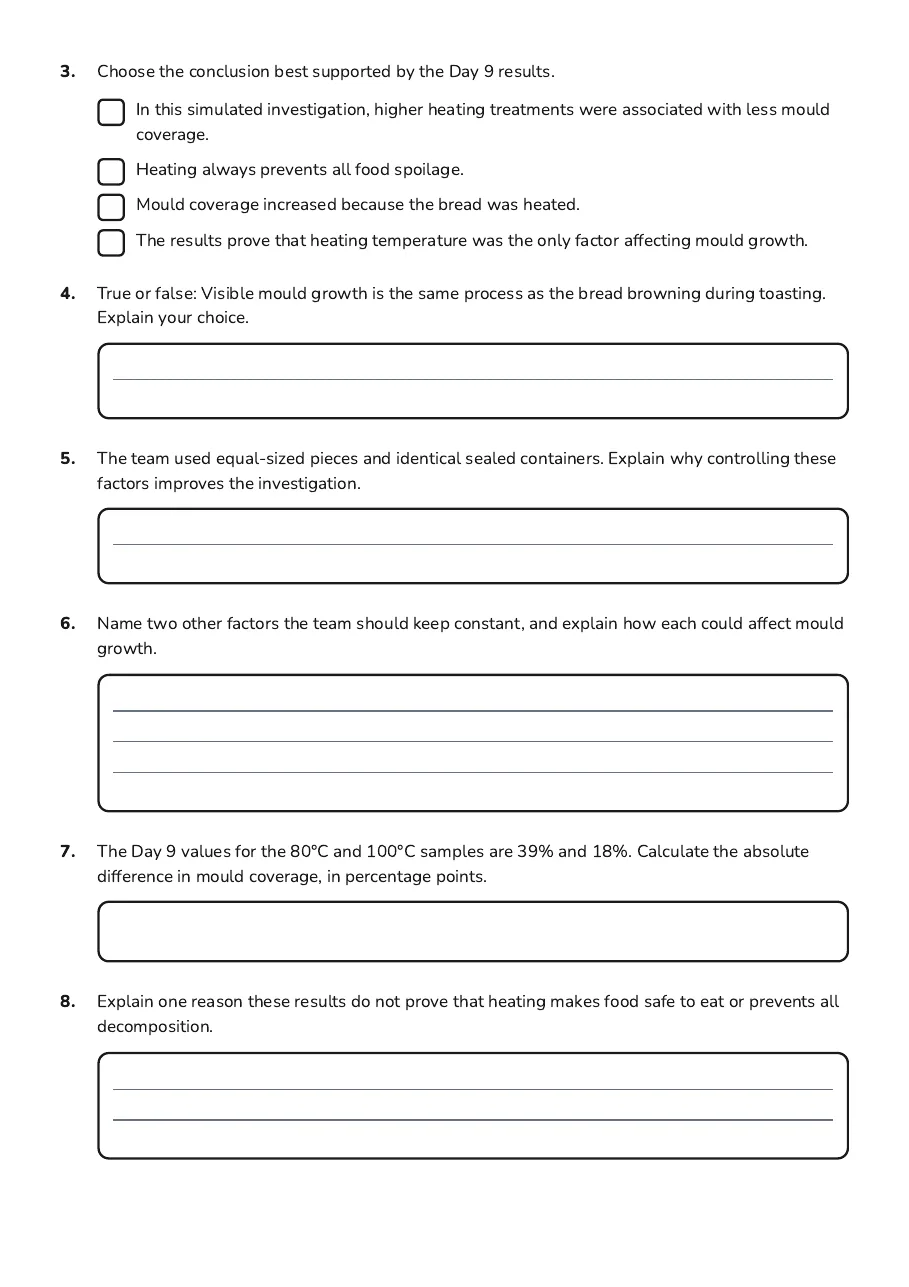
- In this simulated investigation, higher heating treatments were associated with less mould coverage.
- Heating always prevents all food spoilage.
- Mould coverage increased because the bread was heated.
- The results prove that heating temperature was the only factor affecting mould growth.
3 printable pages
Page 1
Page 2
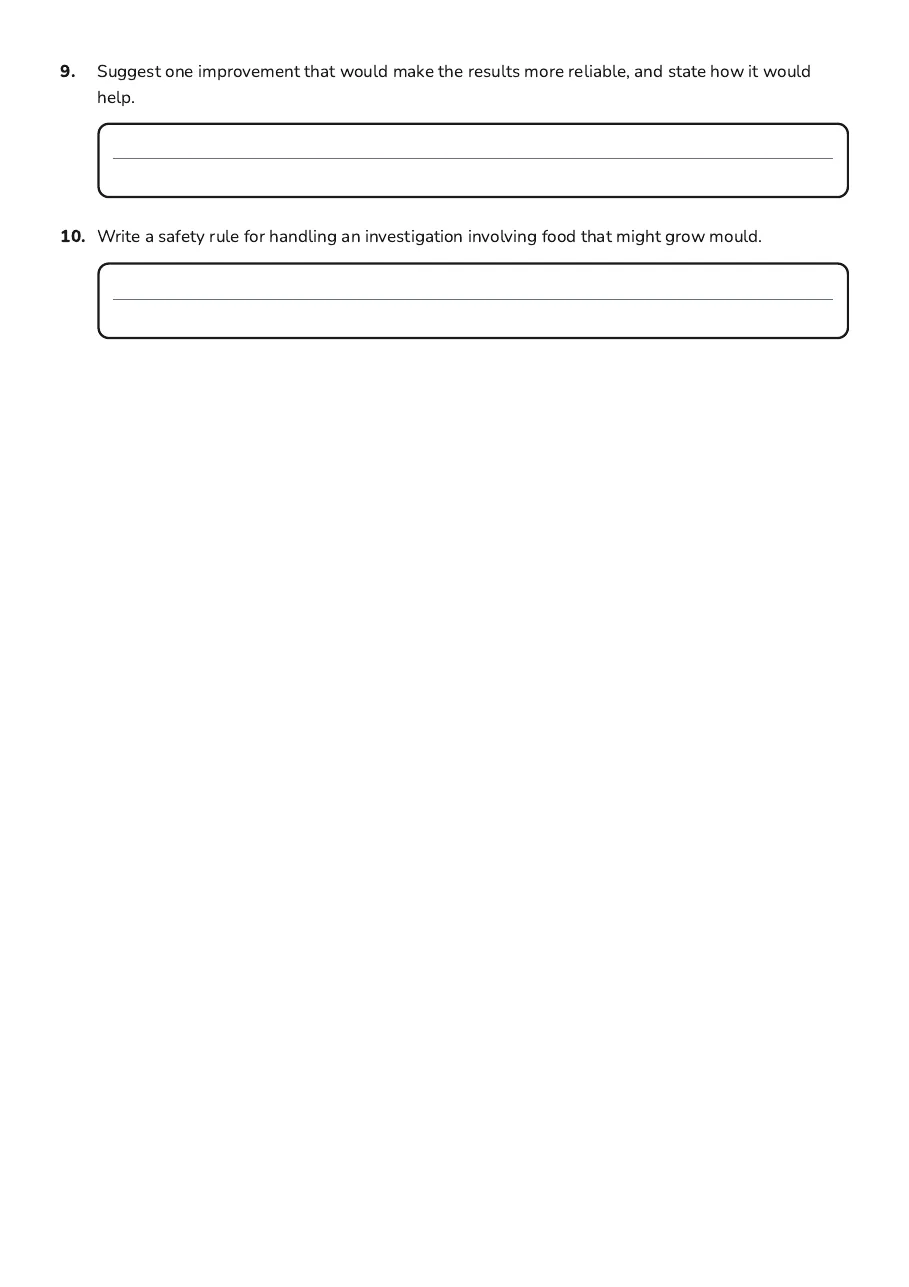
Page 3
About This Worksheet
Free in Kuraplan
Sign up free, grab the PDF, and customize it for your class.
Print-Ready
Formatted for standard paper. Clean layout, easy to read.
AI-Generated
Created with Kuraplan's AI, designed for real classroom use.
For Teachers & Parents
Use in classrooms, for homework, tutoring, or homeschool.
Need a custom version of this worksheet?
Kuraplan's AI generates custom worksheets in seconds — differentiated for every learner, aligned to your curriculum.
Generate Custom Worksheets — FreeMore Science Worksheets
Magic Milk Experiment Worksheet
Free
Dissolving and Separation Investigation
Free
Dancing Raisins Investigation
Free
Plant Growth Investigation
Free
Water Properties Investigation
Free
Supervised Biological Investigation
Free
Experiment Design Planner
Free