Identifying Fake News Guide
A free art worksheet ready for your classroom. Open in Kuraplan to grab the print-ready PDF, customize it for your students, or generate a fresh version in seconds.
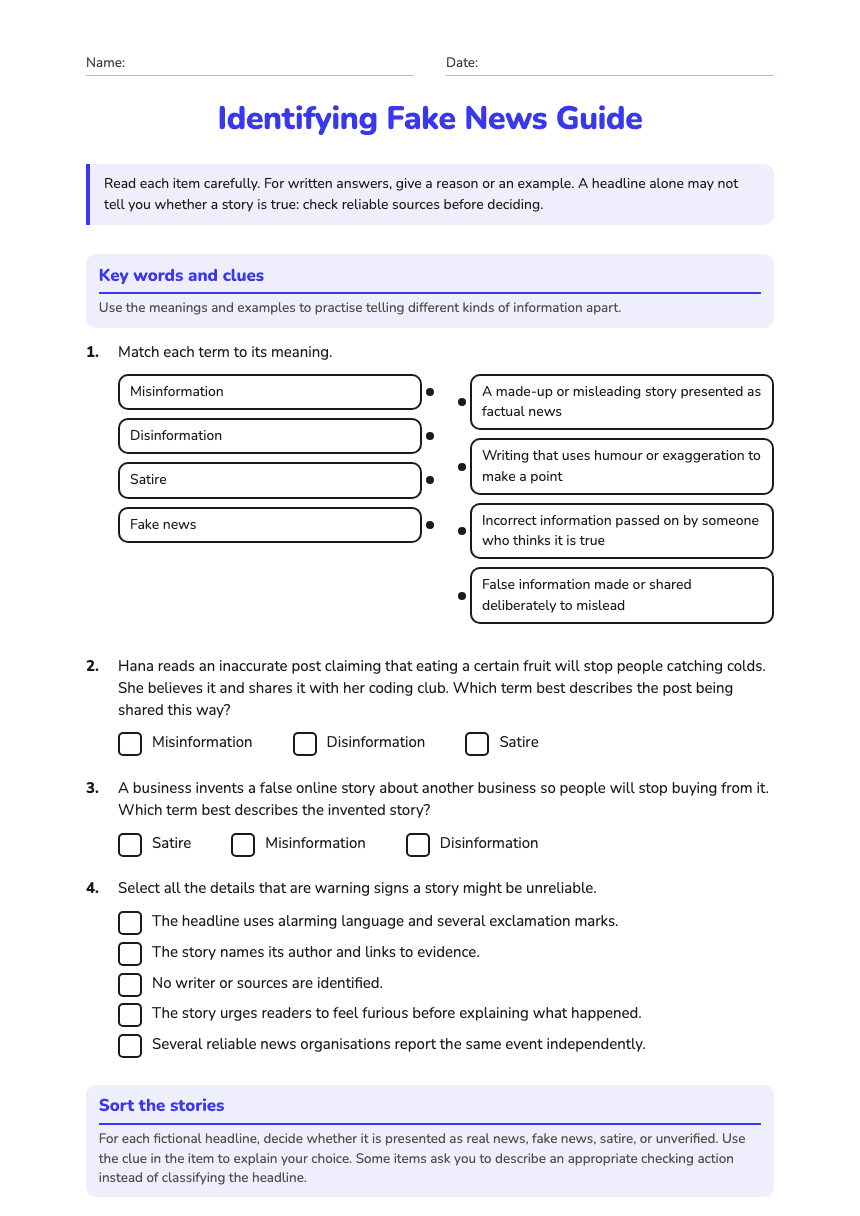
Identifying Fake News Guide
Key words and clues
Use the meanings and examples to practise telling different kinds of information apart.
- Misinformation
- Disinformation
- Satire
- Fake news
- A made-up or misleading story presented as factual news
- Writing that uses humour or exaggeration to make a point
- Incorrect information passed on by someone who thinks it is true
- False information made or shared deliberately to mislead
- Misinformation
- Disinformation
- Satire
- Satire
- Misinformation
- Disinformation
- The headline uses alarming language and several exclamation marks.
- The story names its author and links to evidence.
- No writer or sources are identified.
- The story urges readers to feel furious before explaining what happened.
- Several reliable news organisations report the same event independently.
Sort the stories
For each fictional headline, decide whether it is presented as real news, fake news, satire, or unverified. Use the clue in the item to explain your choice. Some items ask you to describe an appropriate checking action instead of classifying the headline.
Think before sharing
Explain how false stories can affect people and practise a safe checking routine.
3 printable pages
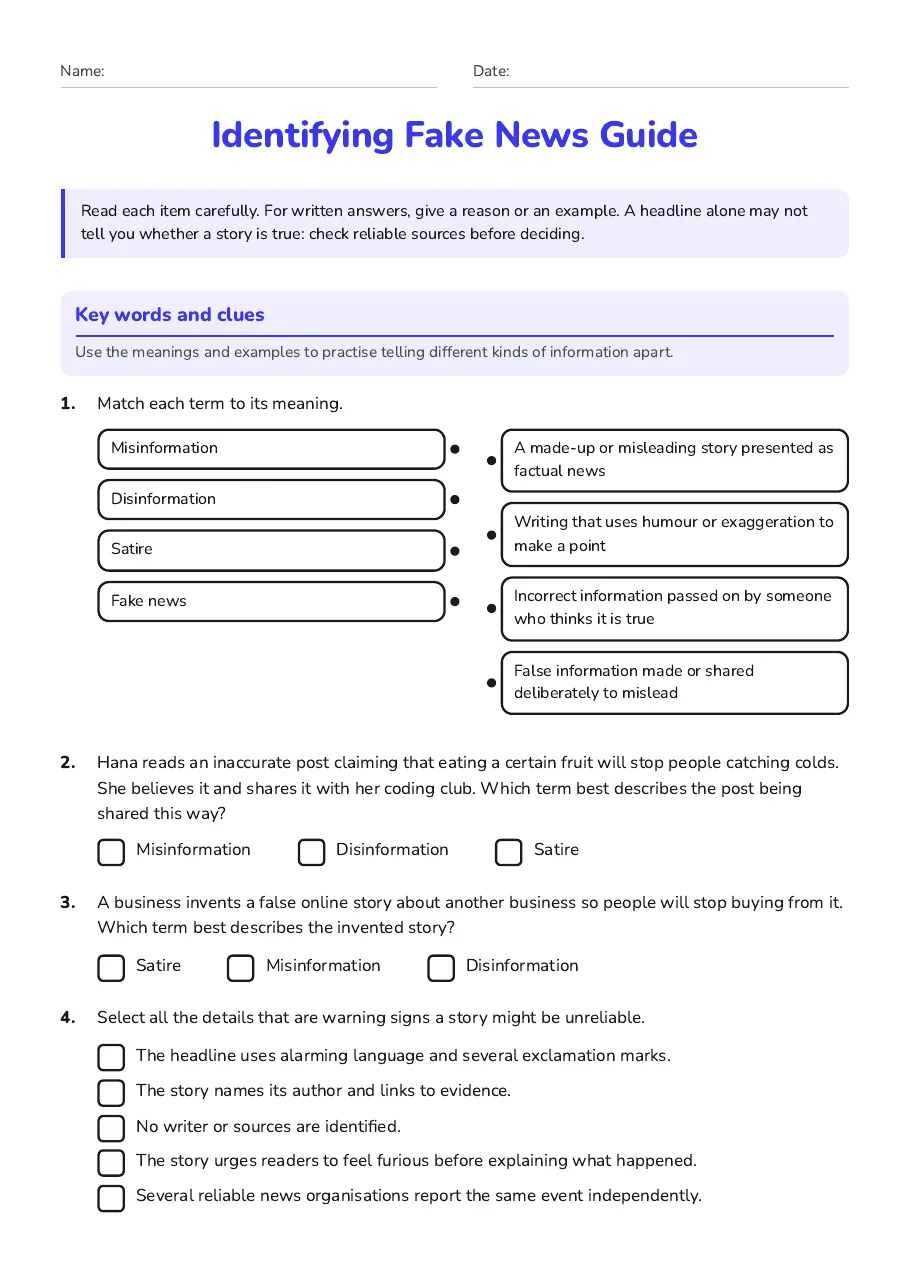
Page 1
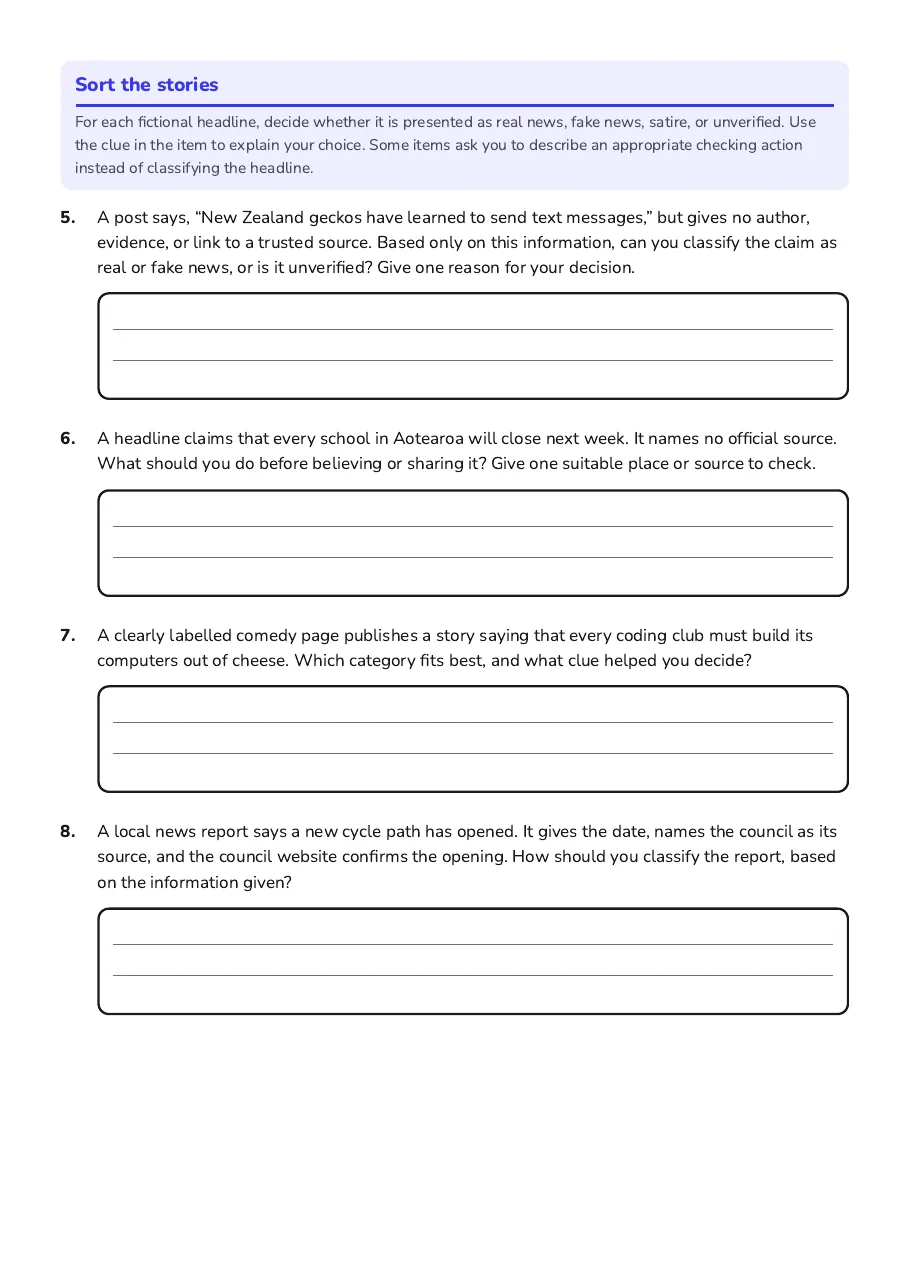
Page 2
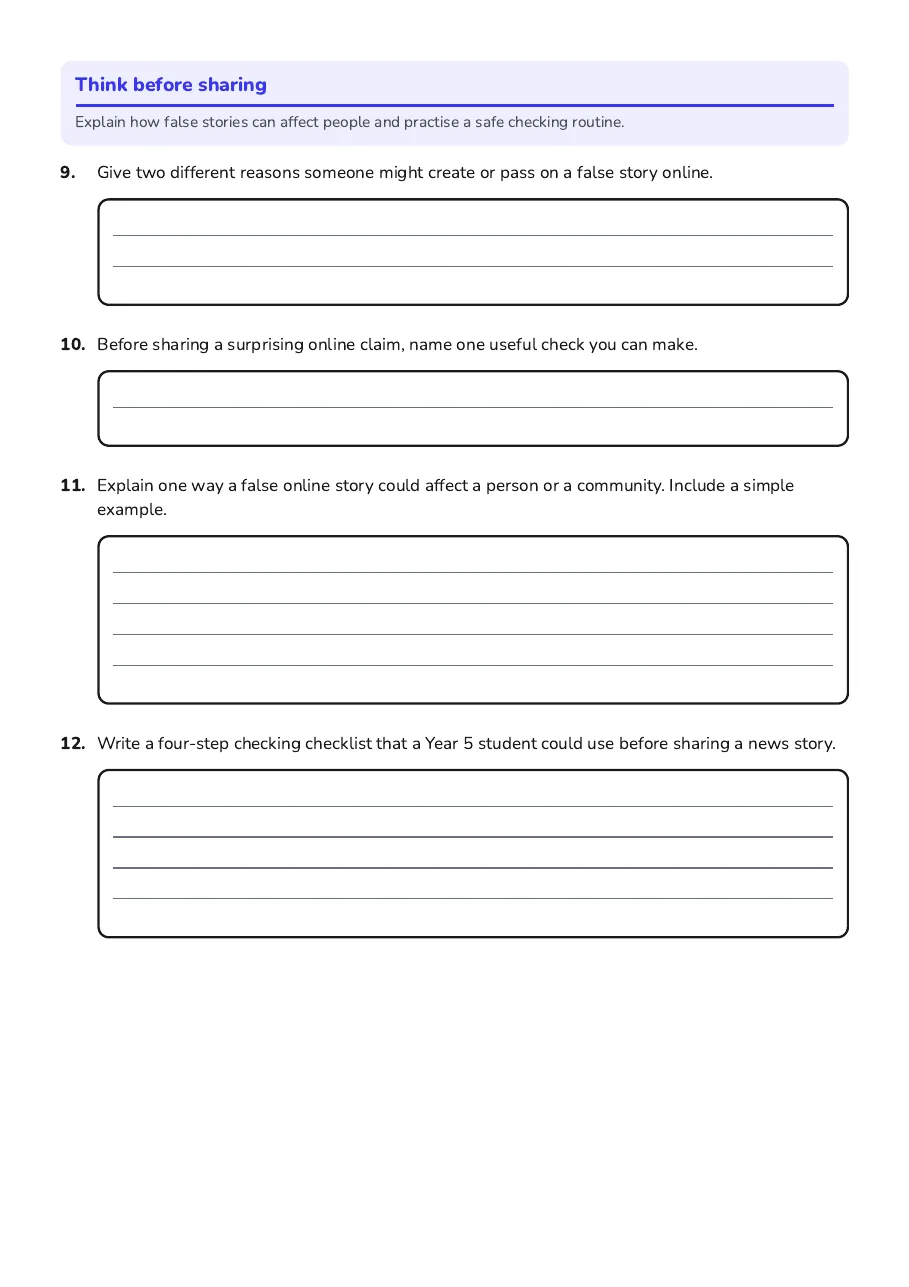
Page 3
About This Worksheet
Free in Kuraplan
Sign up free, grab the PDF, and customize it for your class.
Print-Ready
Formatted for standard paper. Clean layout, easy to read.
AI-Generated
Created with Kuraplan's AI, designed for real classroom use.
For Teachers & Parents
Use in classrooms, for homework, tutoring, or homeschool.
Need a custom version of this worksheet?
Kuraplan's AI generates custom worksheets in seconds — differentiated for every learner, aligned to your curriculum.
Generate Custom Worksheets — Free