Kitchen Chemistry Neutralisation
A free science worksheet ready for your classroom. Open in Kuraplan to grab the print-ready PDF, customize it for your students, or generate a fresh version in seconds.

Kitchen Chemistry Neutralisation
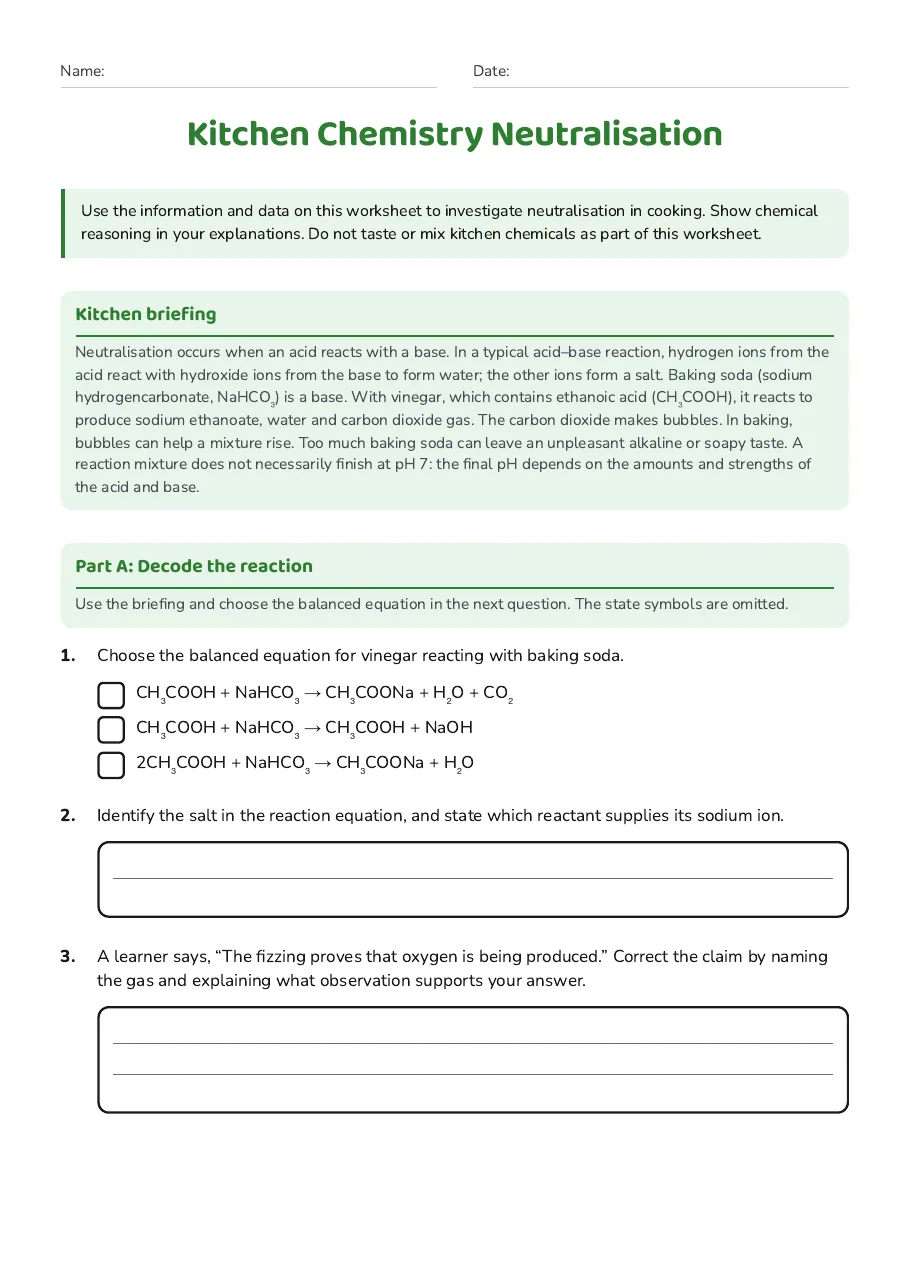
Kitchen briefing
Neutralisation occurs when an acid reacts with a base. In a typical acid–base reaction, hydrogen ions from the acid react with hydroxide ions from the base to form water; the other ions form a salt. Baking soda (sodium hydrogencarbonate, NaHCO₃) is a base. With vinegar, which contains ethanoic acid (CH₃COOH), it reacts to produce sodium ethanoate, water and carbon dioxide gas. The carbon dioxide makes bubbles. In baking, bubbles can help a mixture rise. Too much baking soda can leave an unpleasant alkaline or soapy taste. A reaction mixture does not necessarily finish at pH 7: the final pH depends on the amounts and strengths of the acid and base.
Part A: Decode the reaction
Use the briefing and choose the balanced equation in the next question. The state symbols are omitted.
- CH₃COOH + NaHCO₃ → CH₃COONa + H₂O + CO₂
- CH₃COOH + NaHCO₃ → CH₃COOH + NaOH
- 2CH₃COOH + NaHCO₃ → CH₃COONa + H₂O
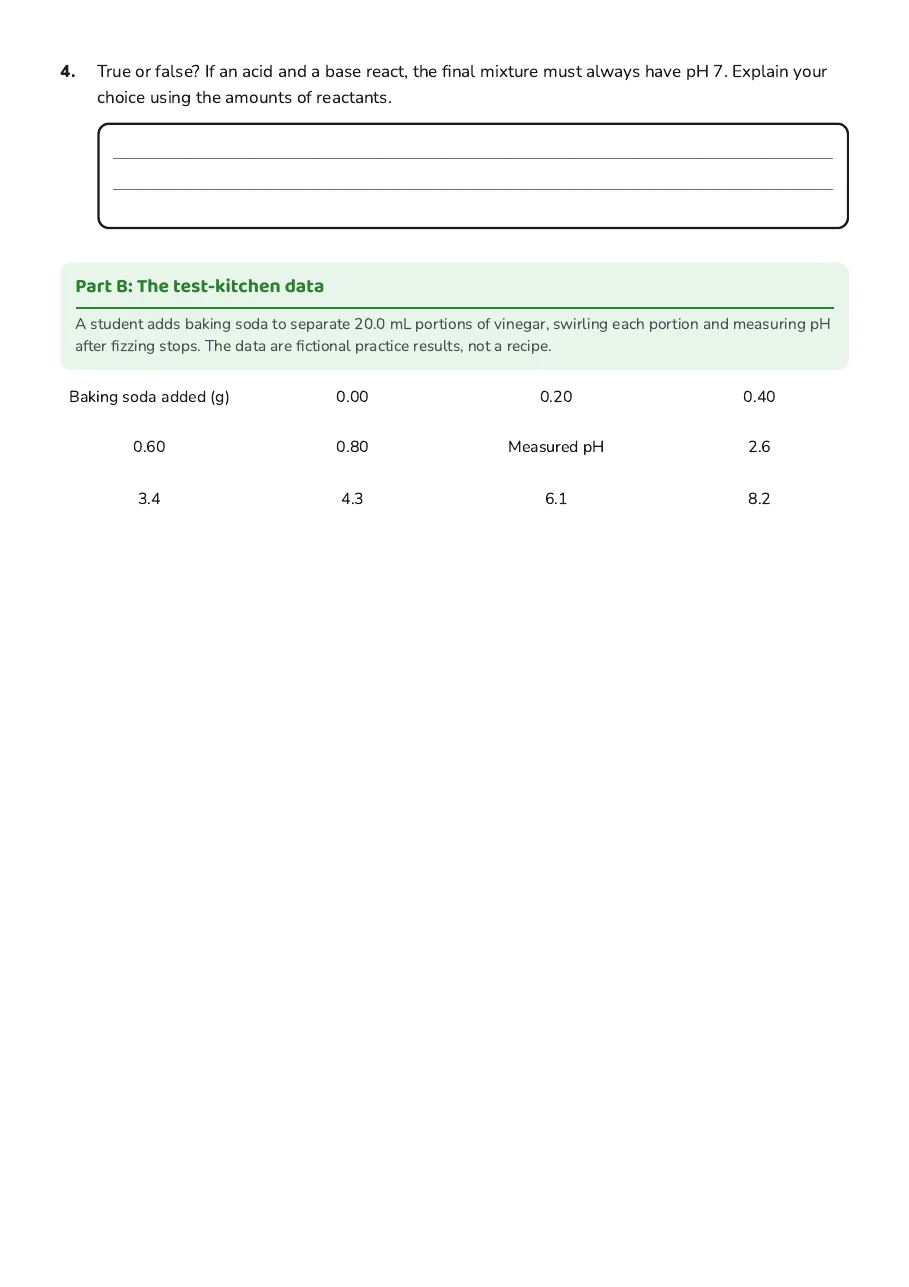
Part B: The test-kitchen data
A student adds baking soda to separate 20.0 mL portions of vinegar, swirling each portion and measuring pH after fizzing stops. The data are fictional practice results, not a recipe.
Baking soda added (g)
0.00
0.20
0.40
0.60
0.80
Measured pH
2.6
3.4
4.3
6.1
8.2
2 printable pages
Page 1
Page 2
About This Worksheet
Free in Kuraplan
Sign up free, grab the PDF, and customize it for your class.
Print-Ready
Formatted for standard paper. Clean layout, easy to read.
AI-Generated
Created with Kuraplan's AI, designed for real classroom use.
For Teachers & Parents
Use in classrooms, for homework, tutoring, or homeschool.
Need a custom version of this worksheet?
Kuraplan's AI generates custom worksheets in seconds — differentiated for every learner, aligned to your curriculum.
Generate Custom Worksheets — FreeMore Science Worksheets
Chemical Reactions Energy Worksheet
Free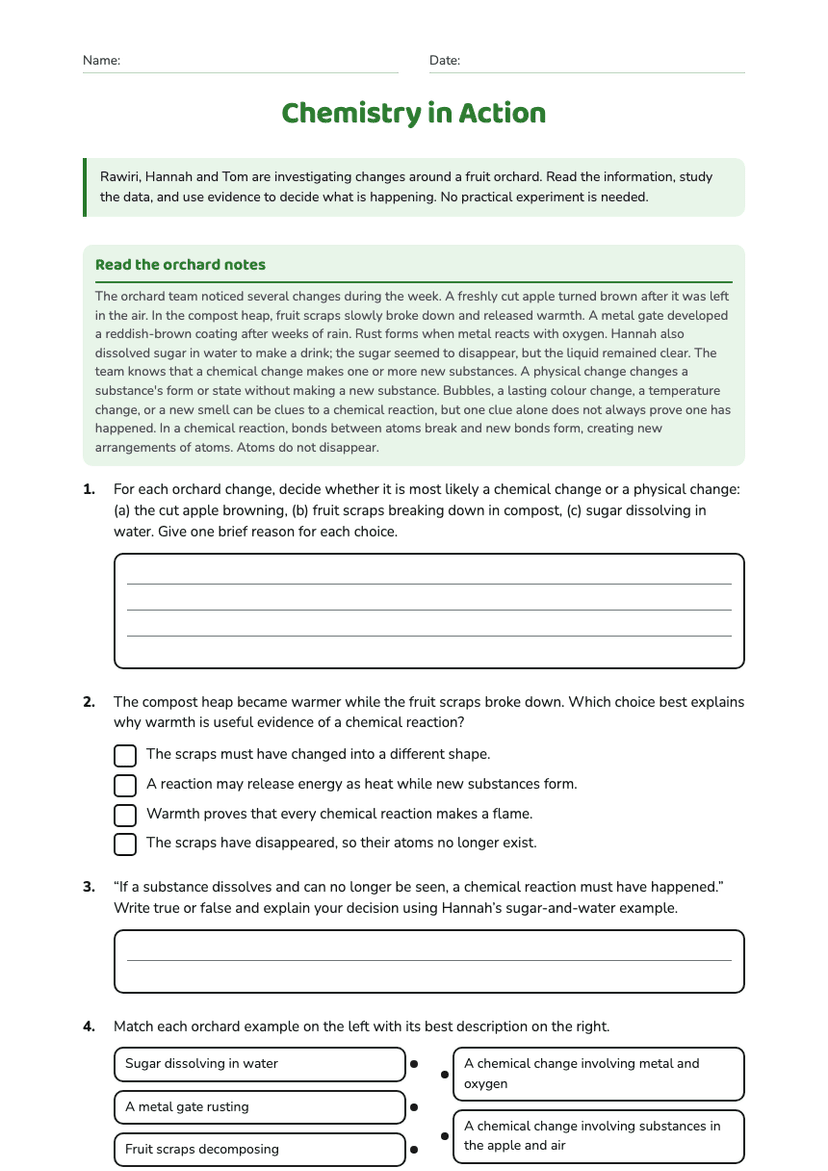
Chemistry in Action
Free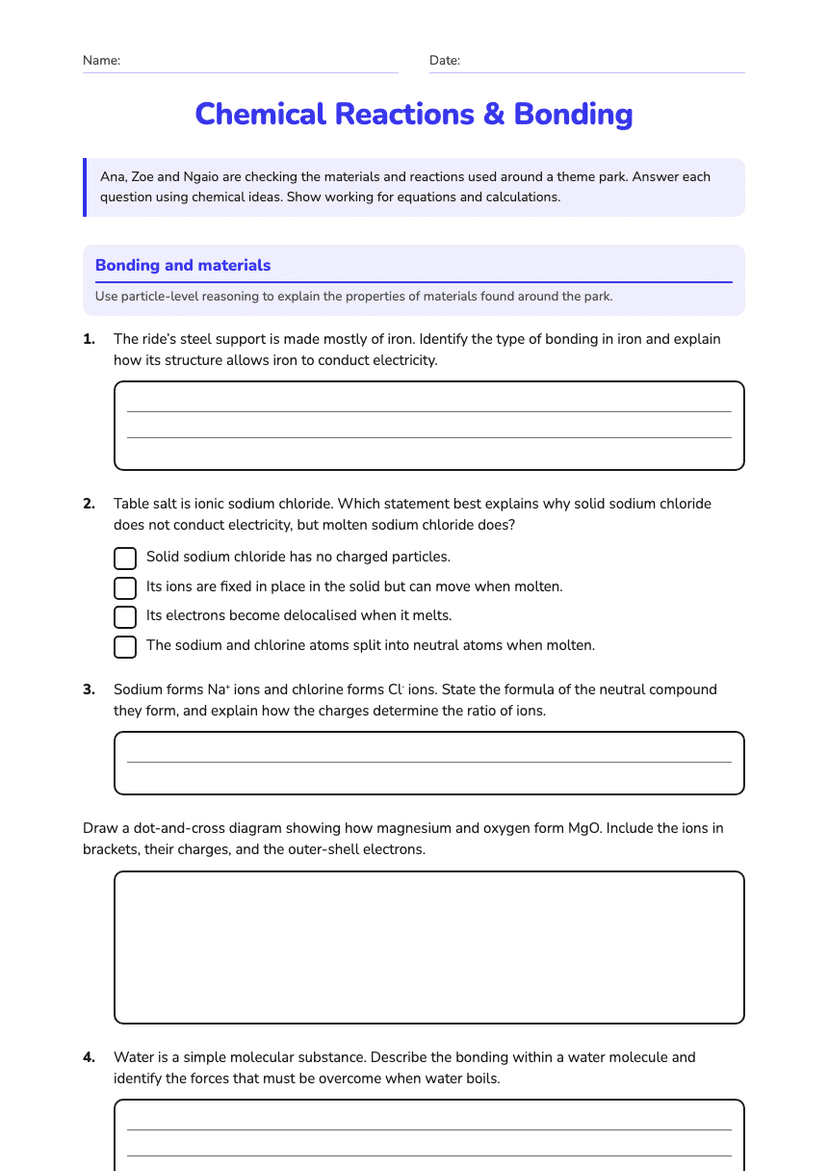
Chemical Reactions & Bonding
Free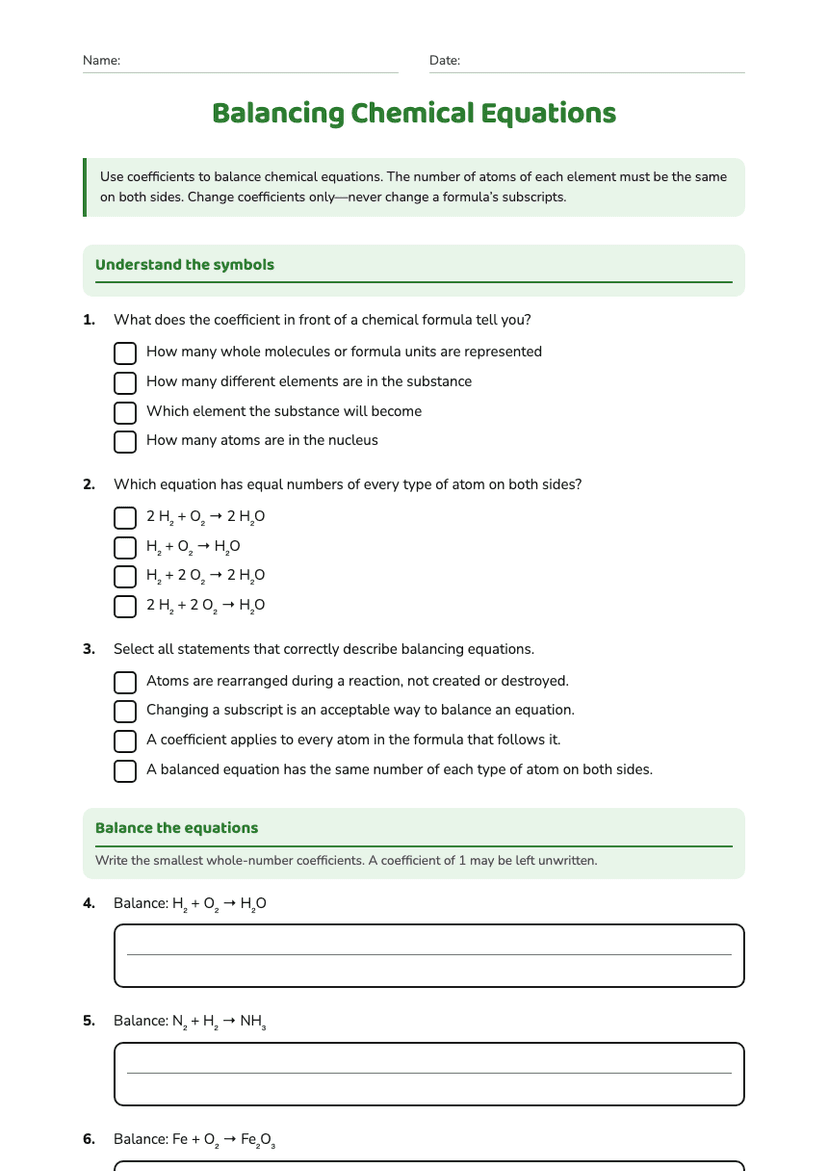
Balancing Chemical Equations
Free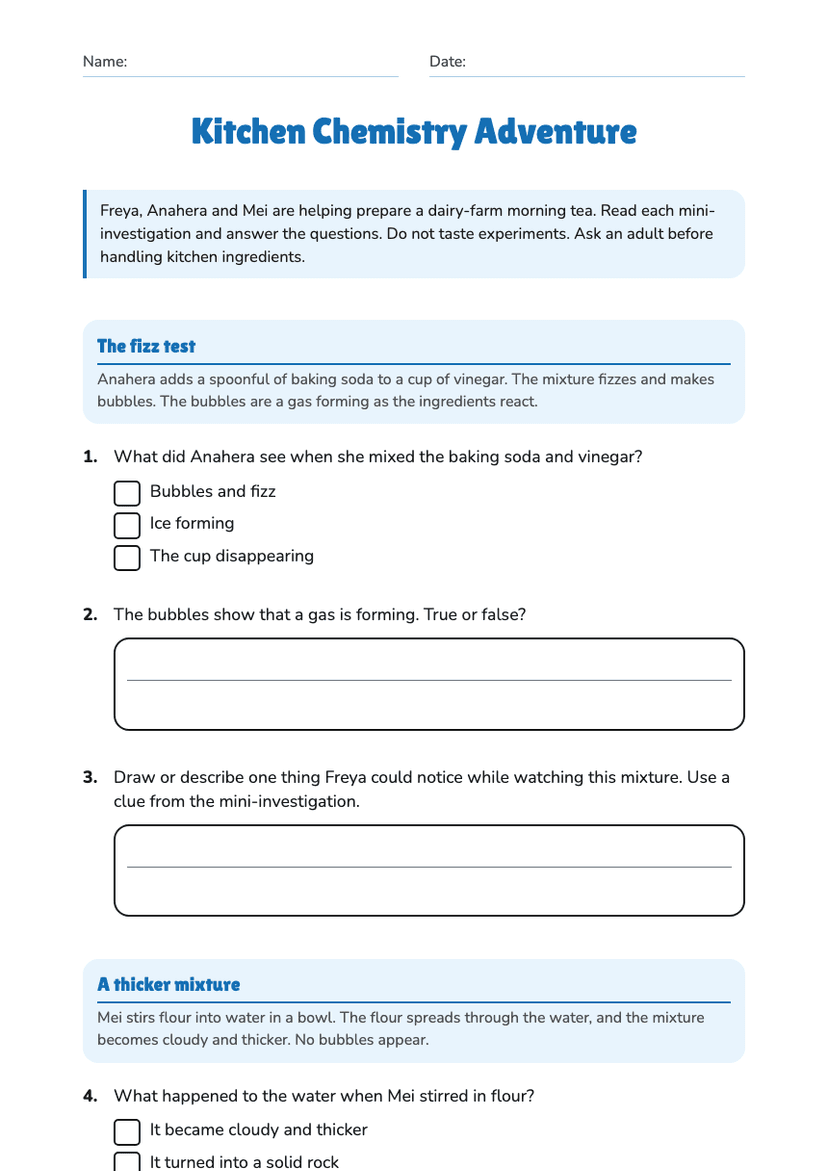
Kitchen Chemistry Adventure
Free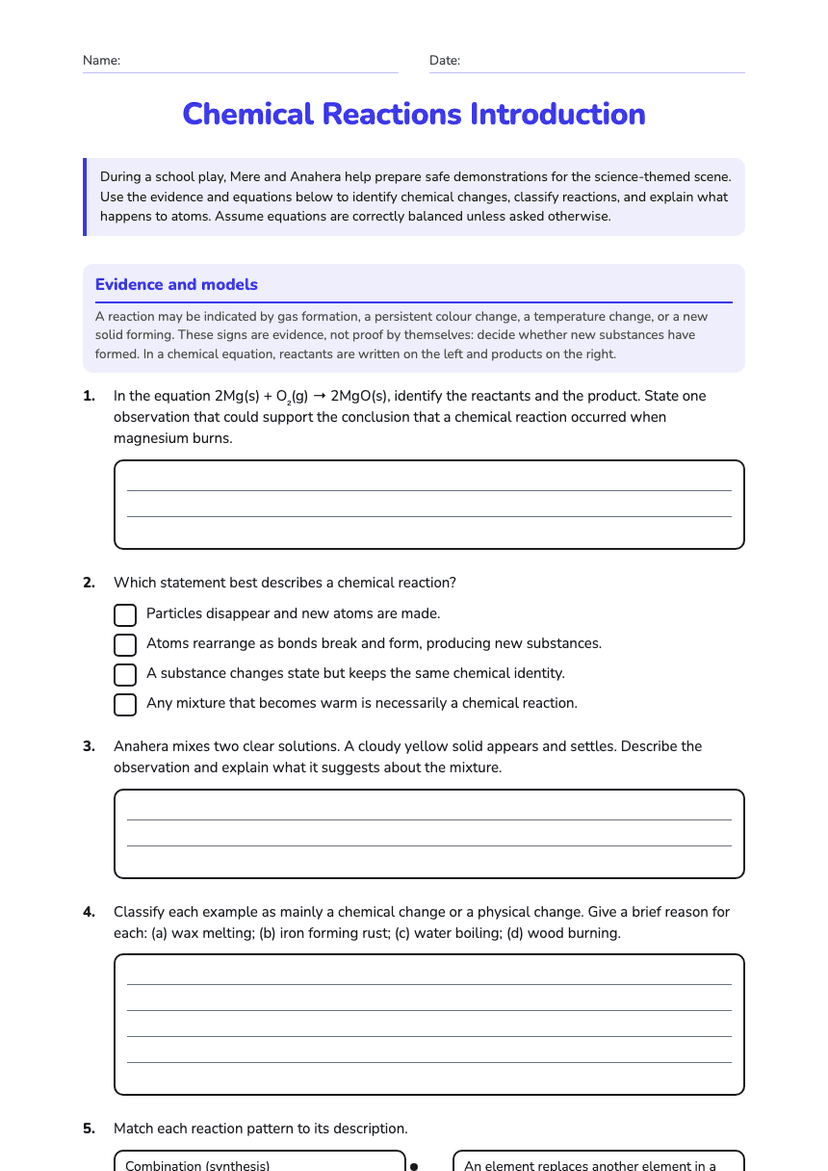
Chemical Reactions Introduction
Free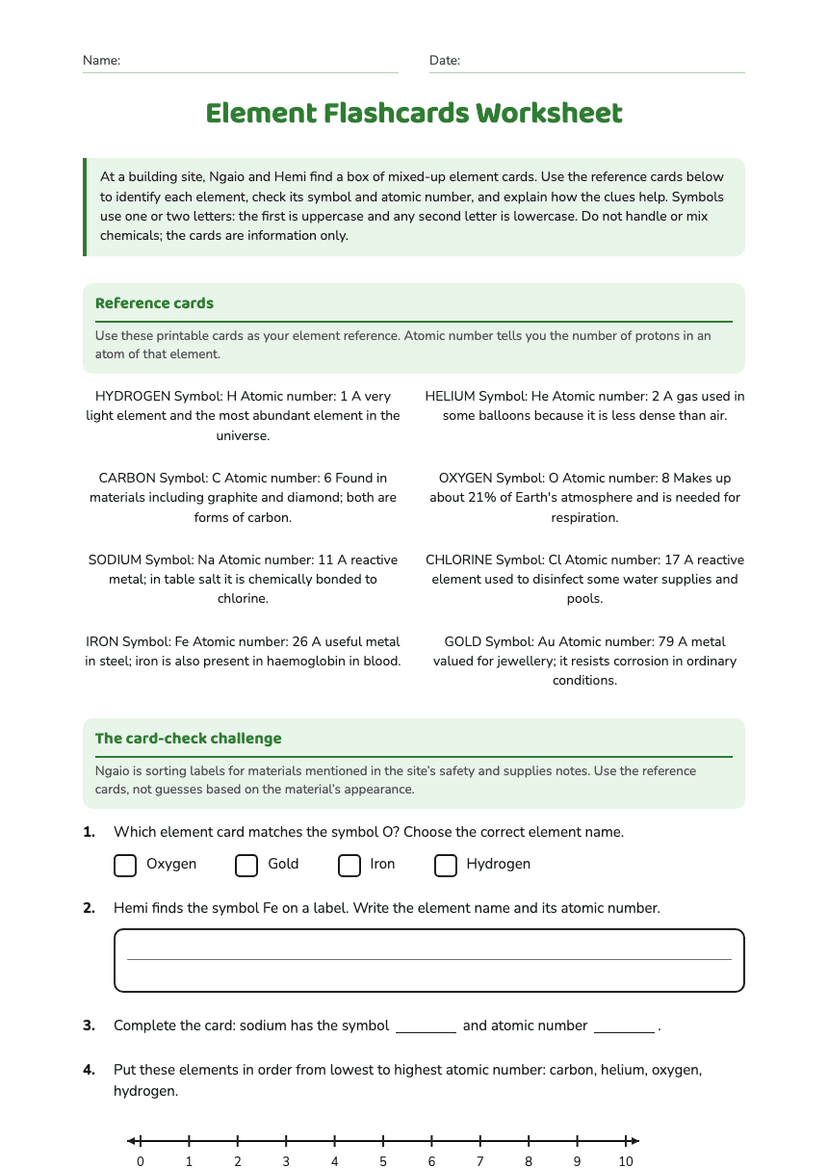
Element Flashcards Worksheet
Free