Electrical Circuits Exploration
A free science worksheet ready for your classroom. Open in Kuraplan to grab the print-ready PDF, customize it for your students, or generate a fresh version in seconds.
Electrical Circuits Exploration
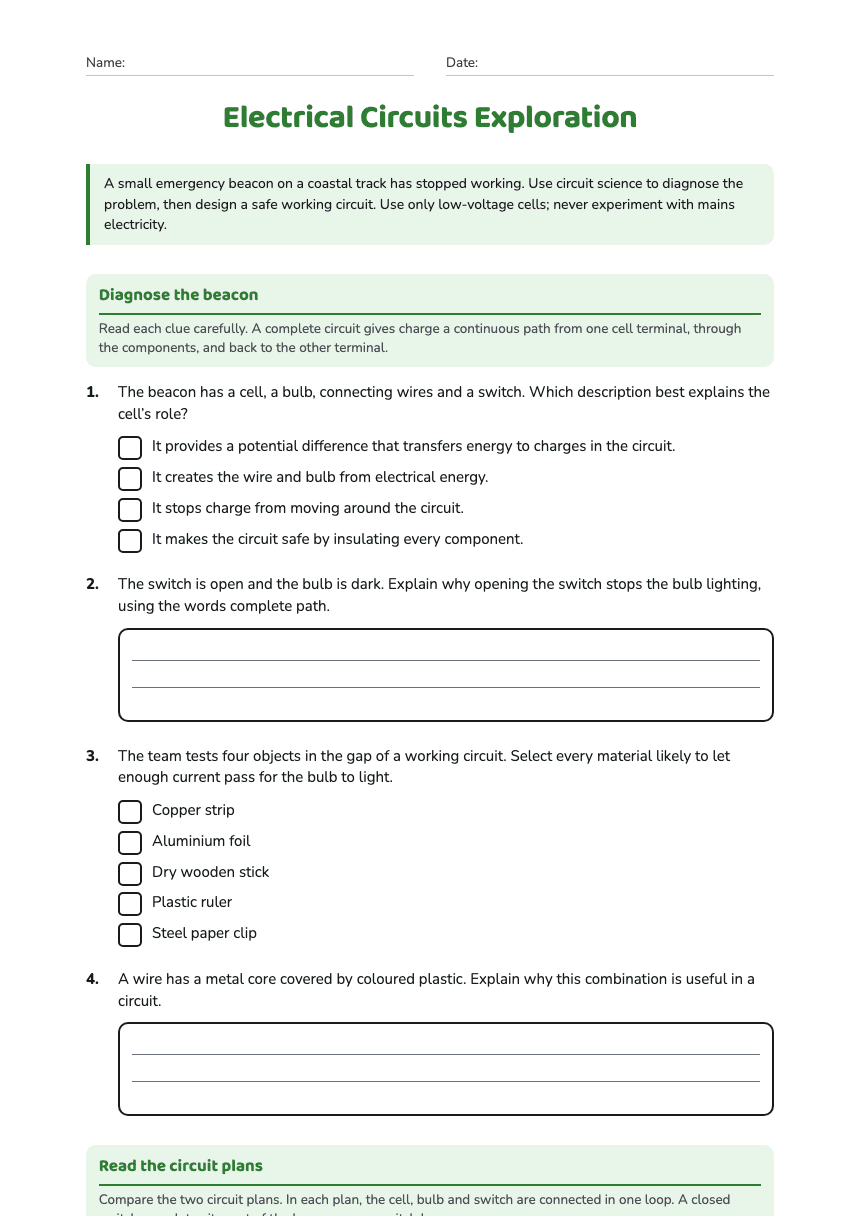
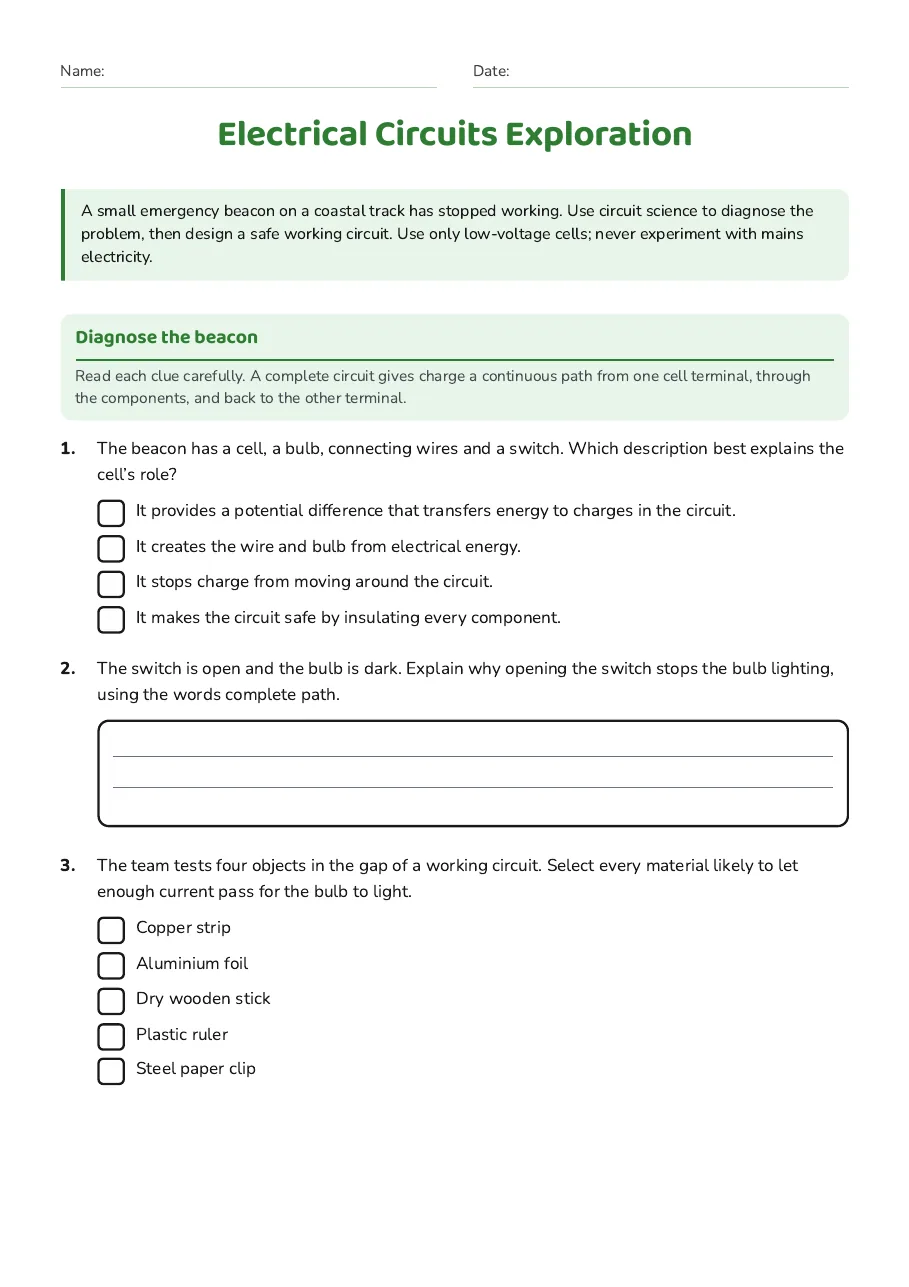
Diagnose the beacon
Read each clue carefully. A complete circuit gives charge a continuous path from one cell terminal, through the components, and back to the other terminal.
- It provides a potential difference that transfers energy to charges in the circuit.
- It creates the wire and bulb from electrical energy.
- It stops charge from moving around the circuit.
- It makes the circuit safe by insulating every component.
- Copper strip
- Aluminium foil
- Dry wooden stick
- Plastic ruler
- Steel paper clip
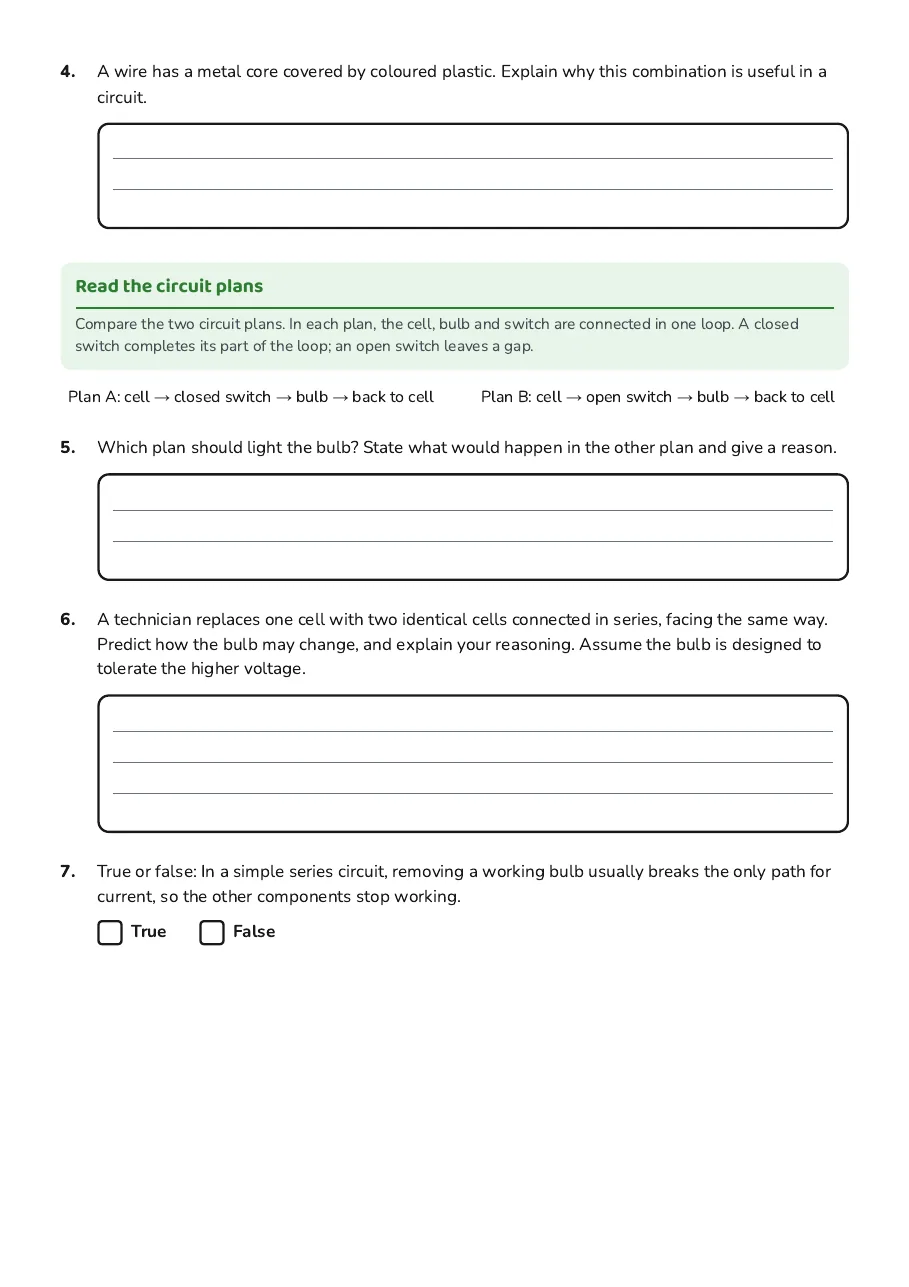
Read the circuit plans
Compare the two circuit plans. In each plan, the cell, bulb and switch are connected in one loop. A closed switch completes its part of the loop; an open switch leaves a gap.
Plan A: cell → closed switch → bulb → back to cell
Plan B: cell → open switch → bulb → back to cell
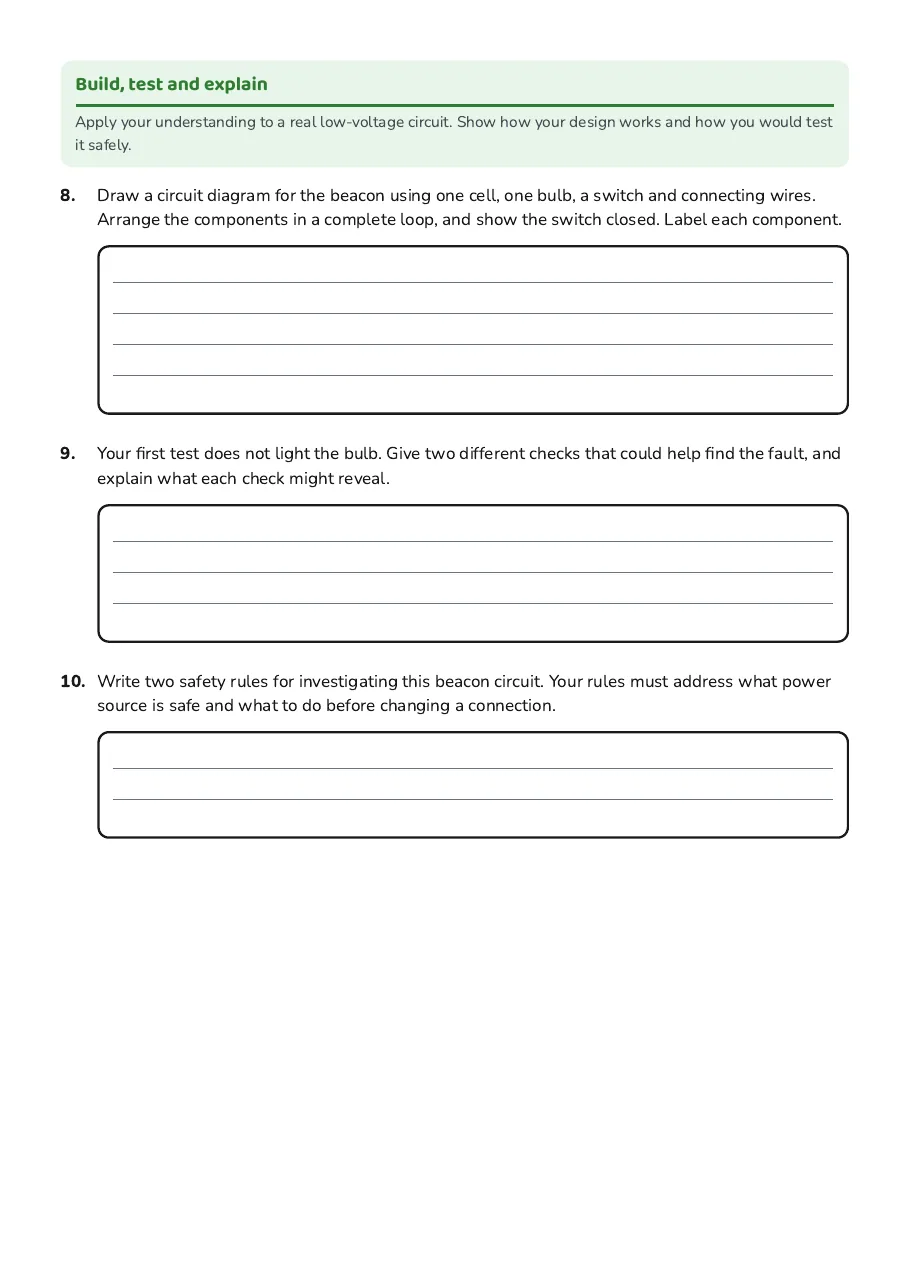
Build, test and explain
Apply your understanding to a real low-voltage circuit. Show how your design works and how you would test it safely.
3 printable pages
Page 1
Page 2
Page 3
About This Worksheet
Free in Kuraplan
Sign up free, grab the PDF, and customize it for your class.
Print-Ready
Formatted for standard paper. Clean layout, easy to read.
AI-Generated
Created with Kuraplan's AI, designed for real classroom use.
For Teachers & Parents
Use in classrooms, for homework, tutoring, or homeschool.
Need a custom version of this worksheet?
Kuraplan's AI generates custom worksheets in seconds — differentiated for every learner, aligned to your curriculum.
Generate Custom Worksheets — FreeMore Science Worksheets
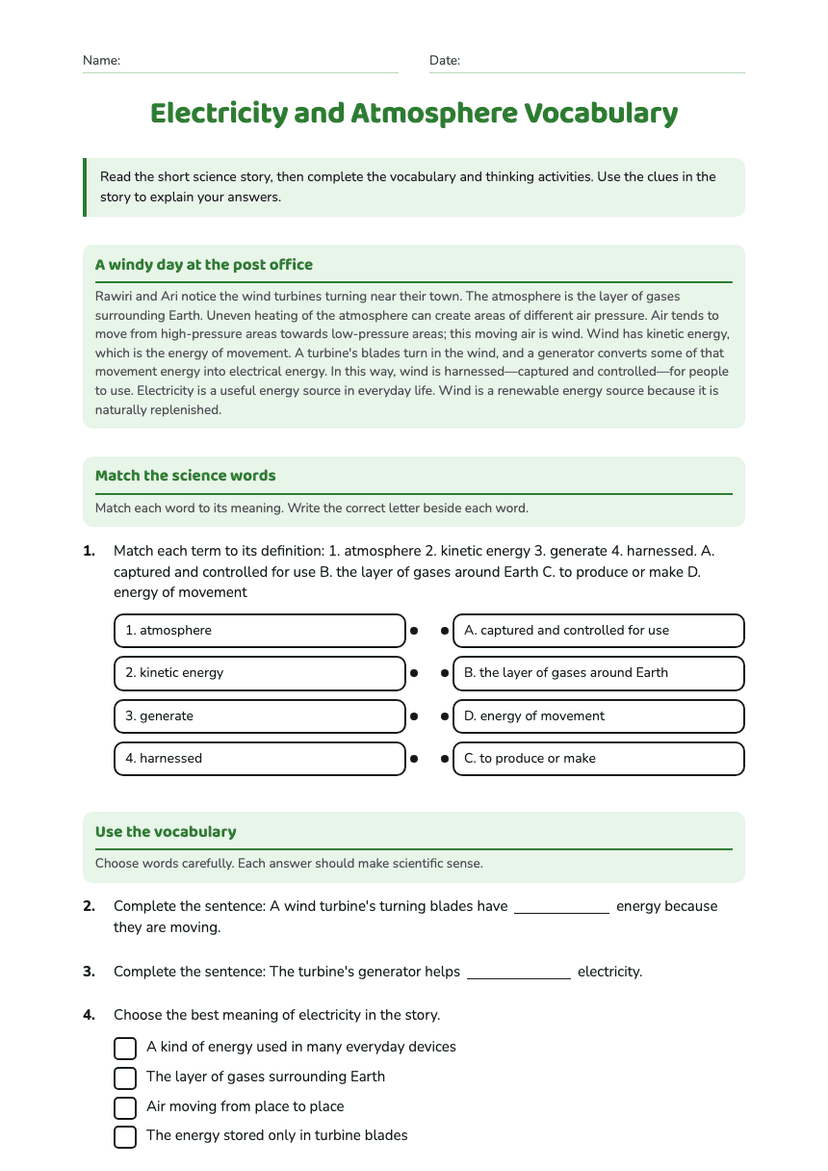
Electricity and Atmosphere Vocabulary
Free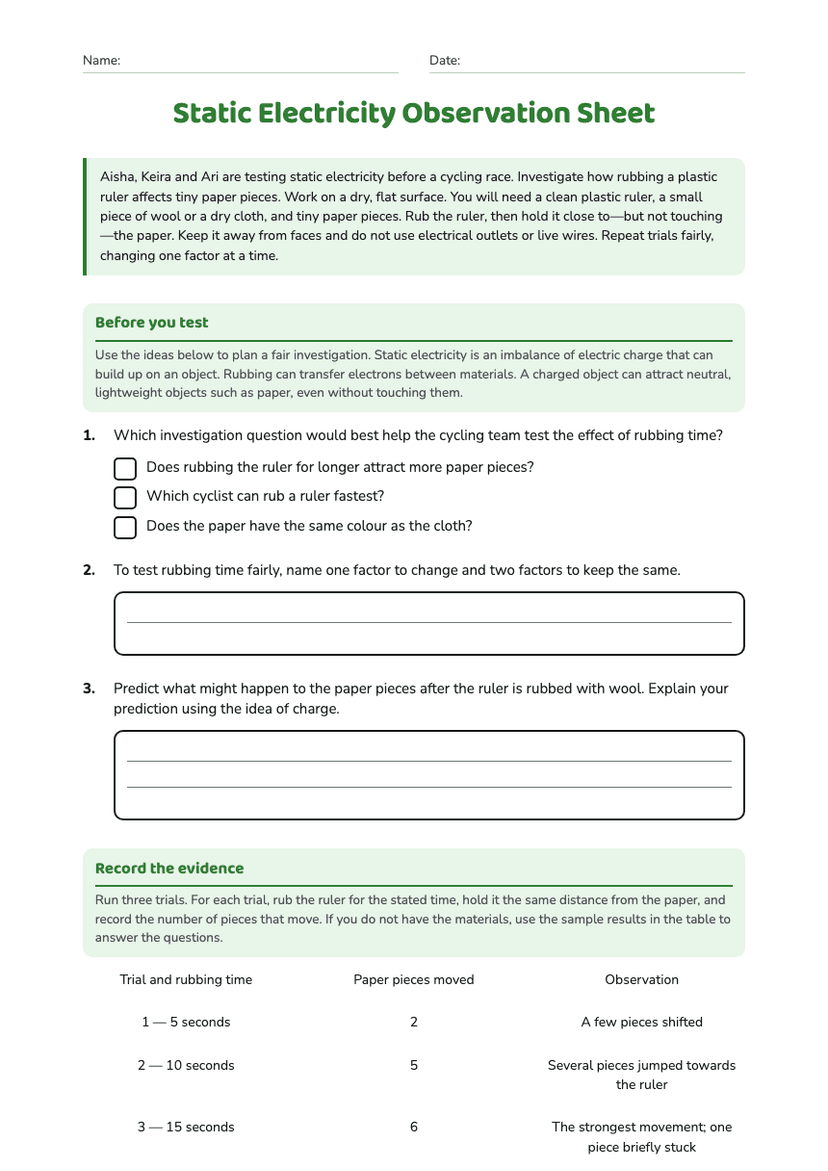
Static Electricity Observation Sheet
Free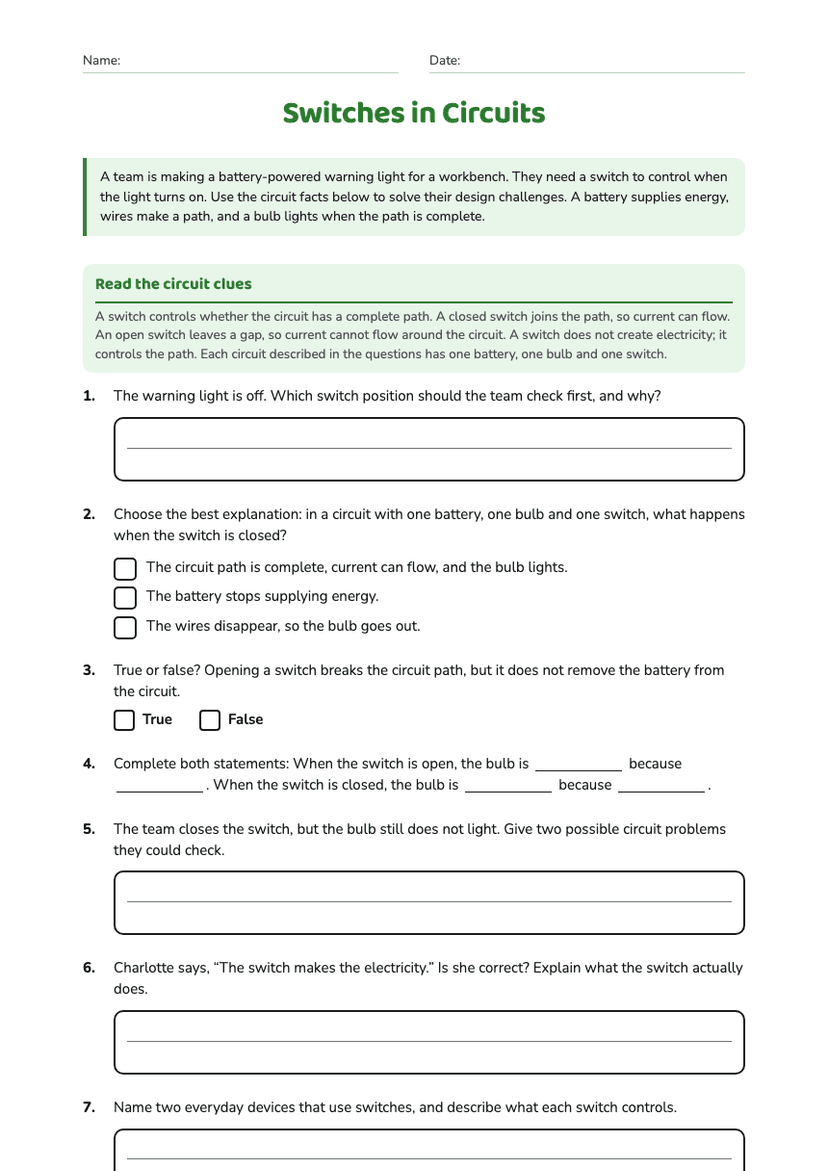
Switches in Circuits
Free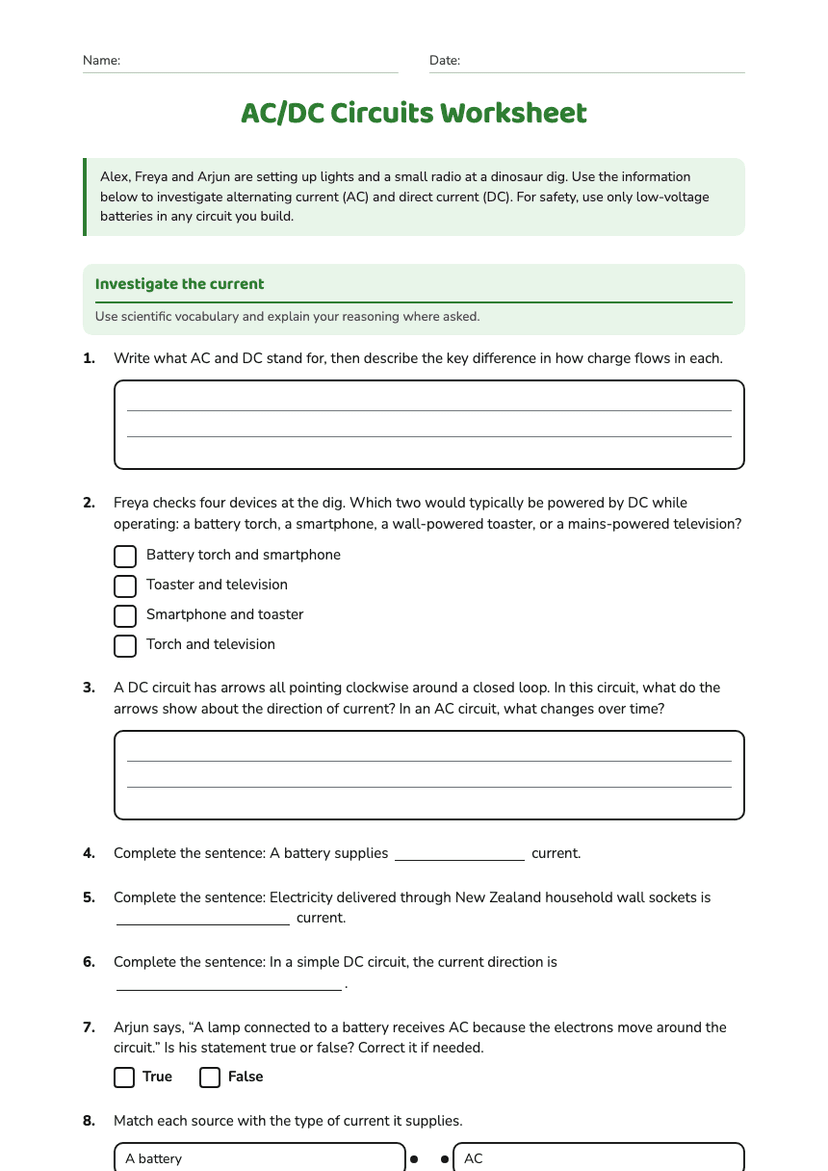
AC/DC Circuits Worksheet
Free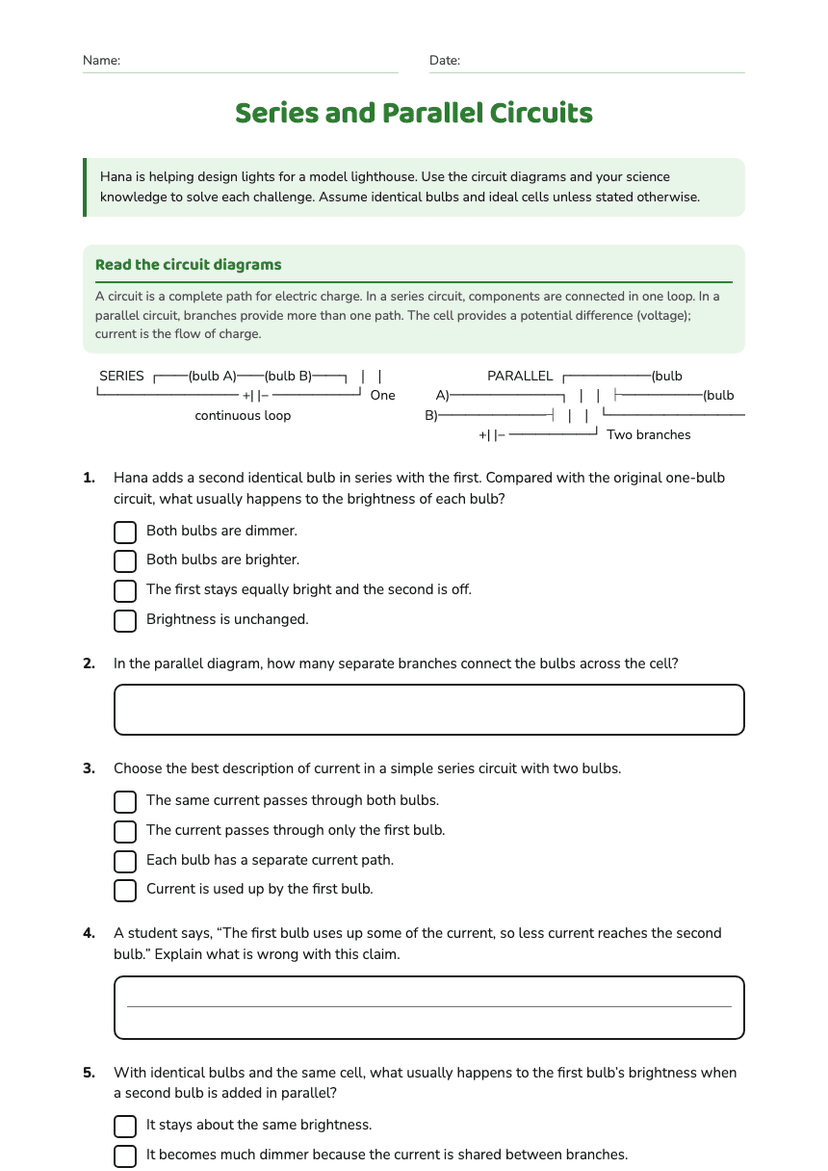
Series and Parallel Circuits
Free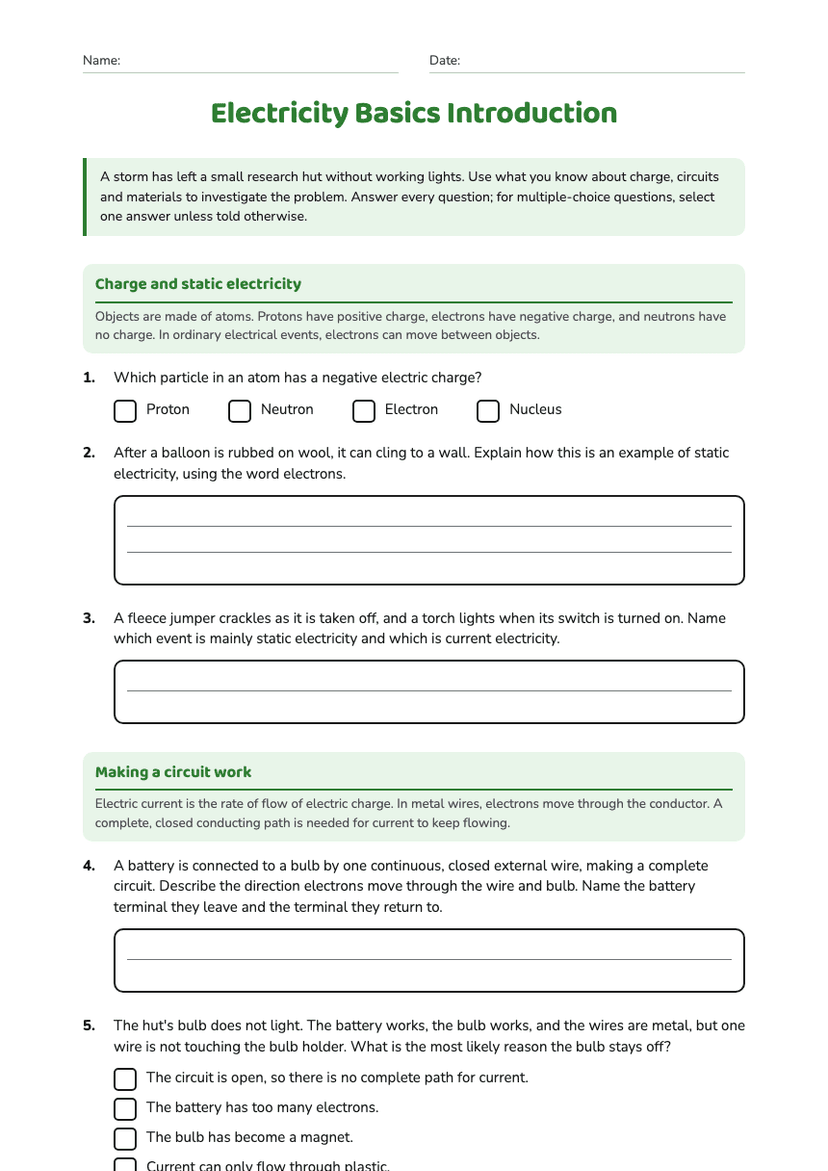
Electricity Basics Introduction
Free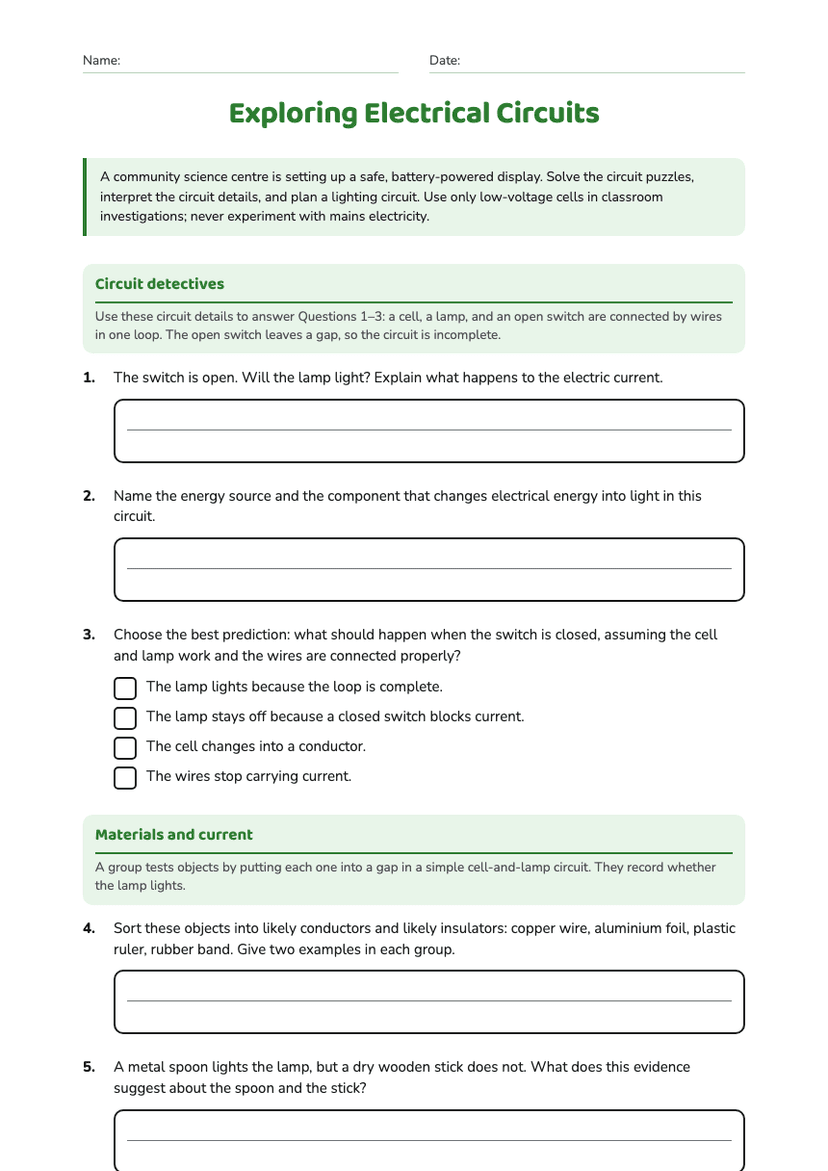
Exploring Electrical Circuits
Free