Kitchen Chemistry Project Presentations
A free science worksheet ready for your classroom. Open in Kuraplan to grab the print-ready PDF, customize it for your students, or generate a fresh version in seconds.
Kitchen Chemistry Project Presentations
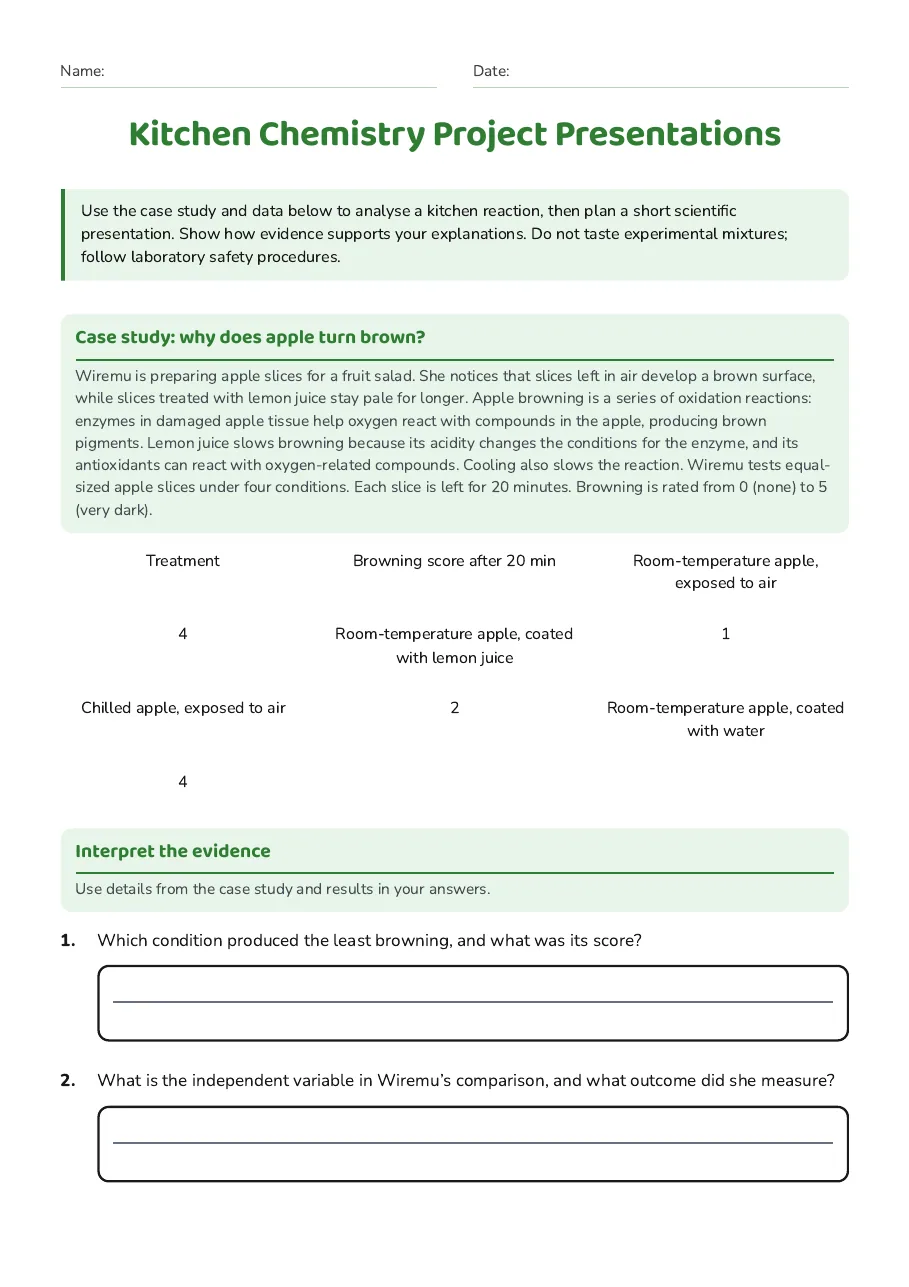
Case study: why does apple turn brown?
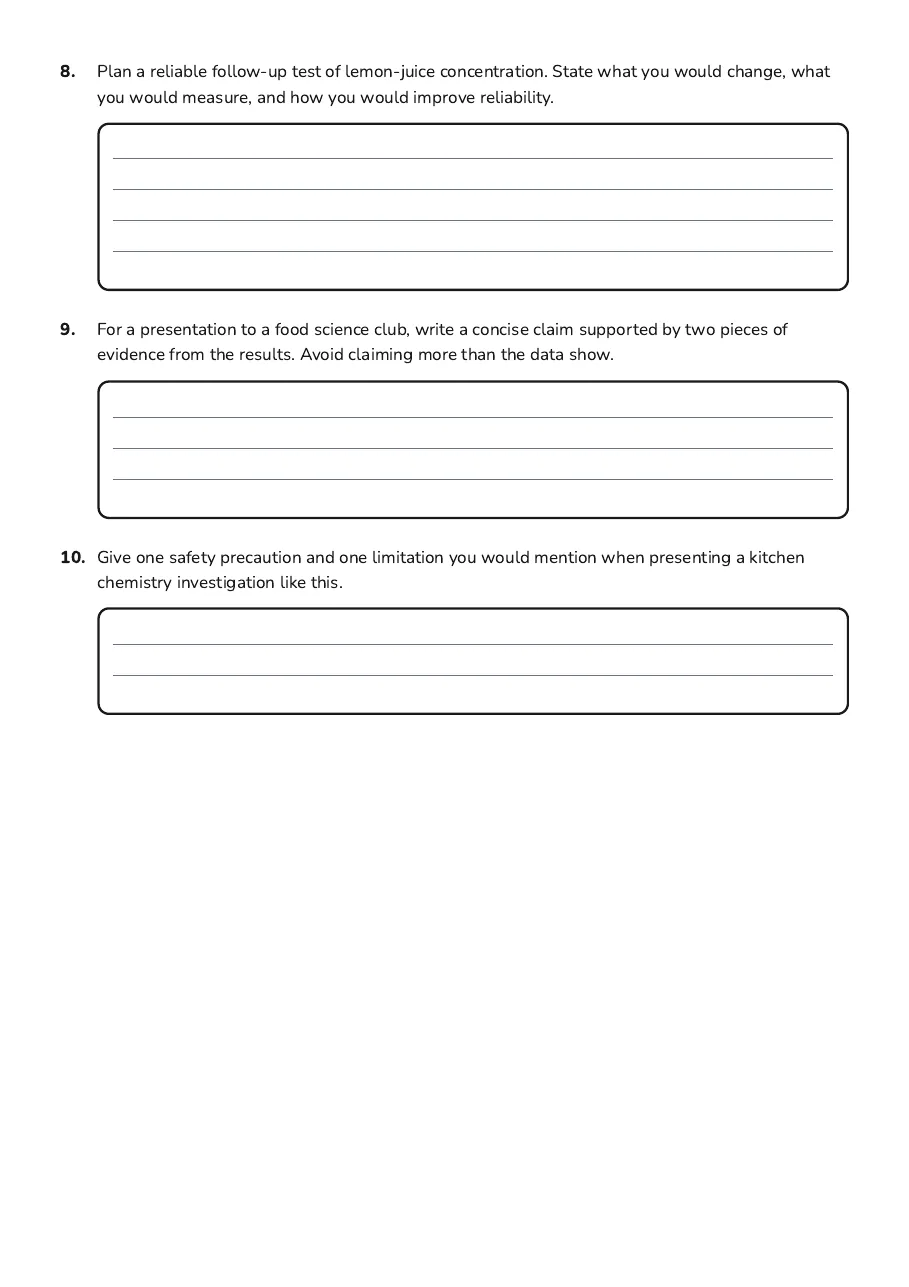
Wiremu is preparing apple slices for a fruit salad. She notices that slices left in air develop a brown surface, while slices treated with lemon juice stay pale for longer. Apple browning is a series of oxidation reactions: enzymes in damaged apple tissue help oxygen react with compounds in the apple, producing brown pigments. Lemon juice slows browning because its acidity changes the conditions for the enzyme, and its antioxidants can react with oxygen-related compounds. Cooling also slows the reaction. Wiremu tests equal-sized apple slices under four conditions. Each slice is left for 20 minutes. Browning is rated from 0 (none) to 5 (very dark).
Treatment
Browning score after 20 min
Room-temperature apple, exposed to air
4
Room-temperature apple, coated with lemon juice
1
Chilled apple, exposed to air
2
Room-temperature apple, coated with water
4
Interpret the evidence
Use details from the case study and results in your answers.
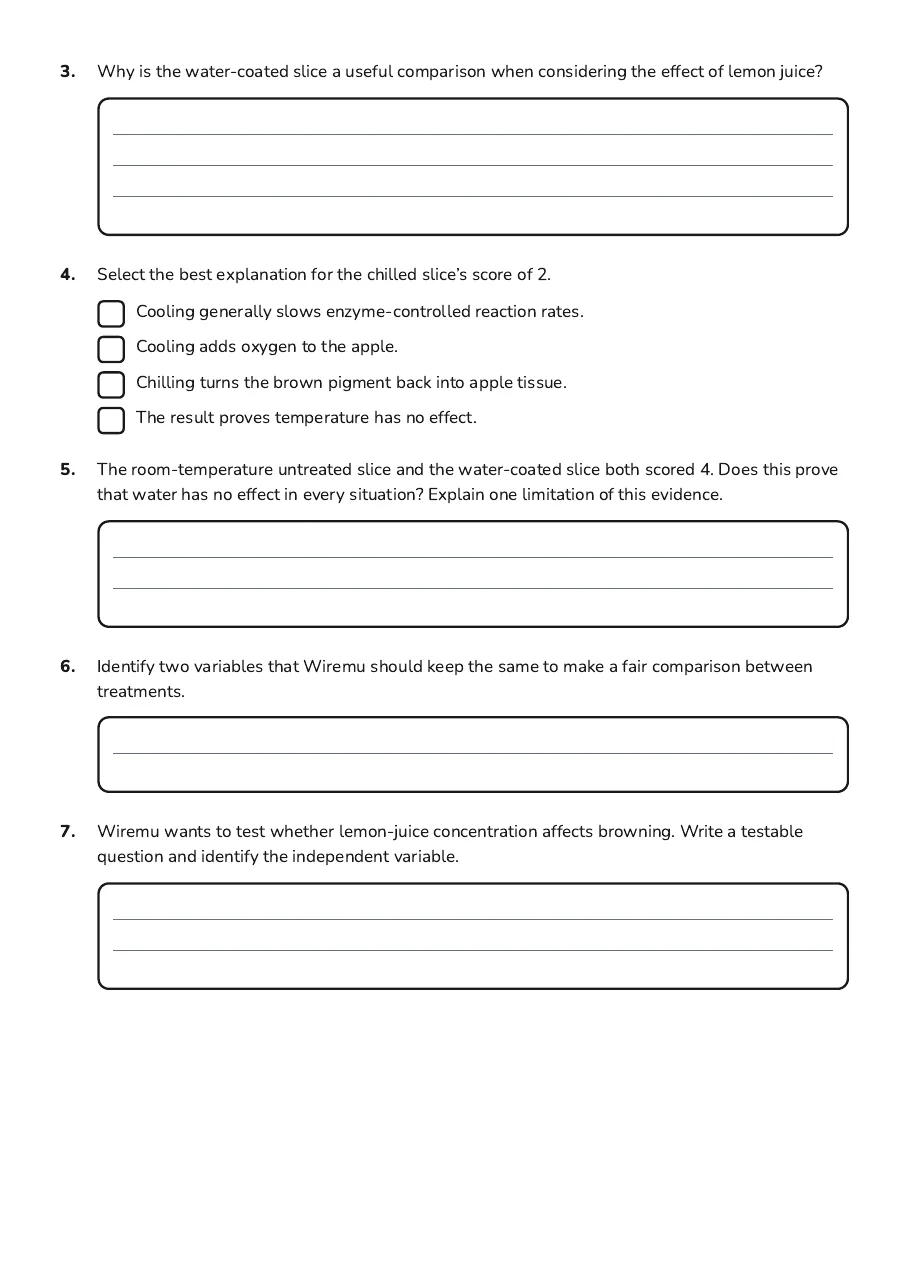
- Cooling generally slows enzyme-controlled reaction rates.
- Cooling adds oxygen to the apple.
- Chilling turns the brown pigment back into apple tissue.
- The result proves temperature has no effect.
3 printable pages
Page 1
Page 2
Page 3
About This Worksheet
Free in Kuraplan
Sign up free, grab the PDF, and customize it for your class.
Print-Ready
Formatted for standard paper. Clean layout, easy to read.
AI-Generated
Created with Kuraplan's AI, designed for real classroom use.
For Teachers & Parents
Use in classrooms, for homework, tutoring, or homeschool.
Need a custom version of this worksheet?
Kuraplan's AI generates custom worksheets in seconds — differentiated for every learner, aligned to your curriculum.
Generate Custom Worksheets — FreeMore Science Worksheets
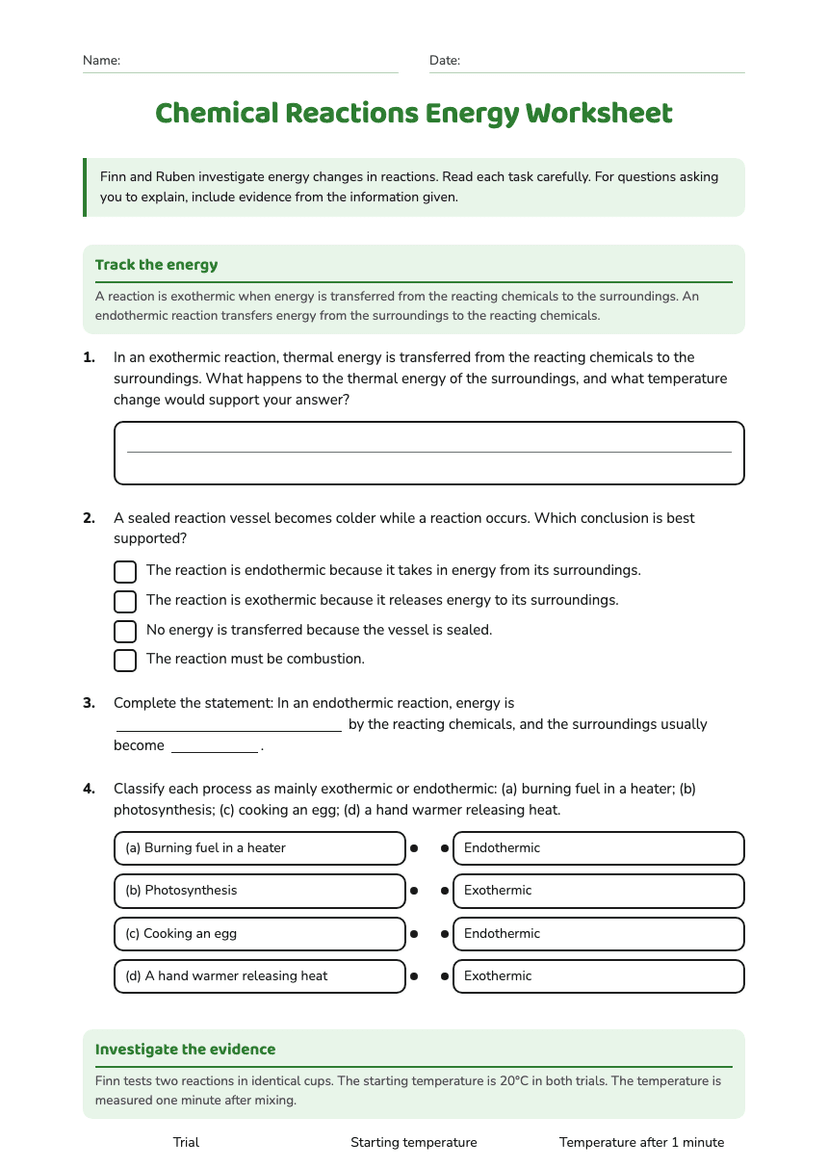
Chemical Reactions Energy Worksheet
Free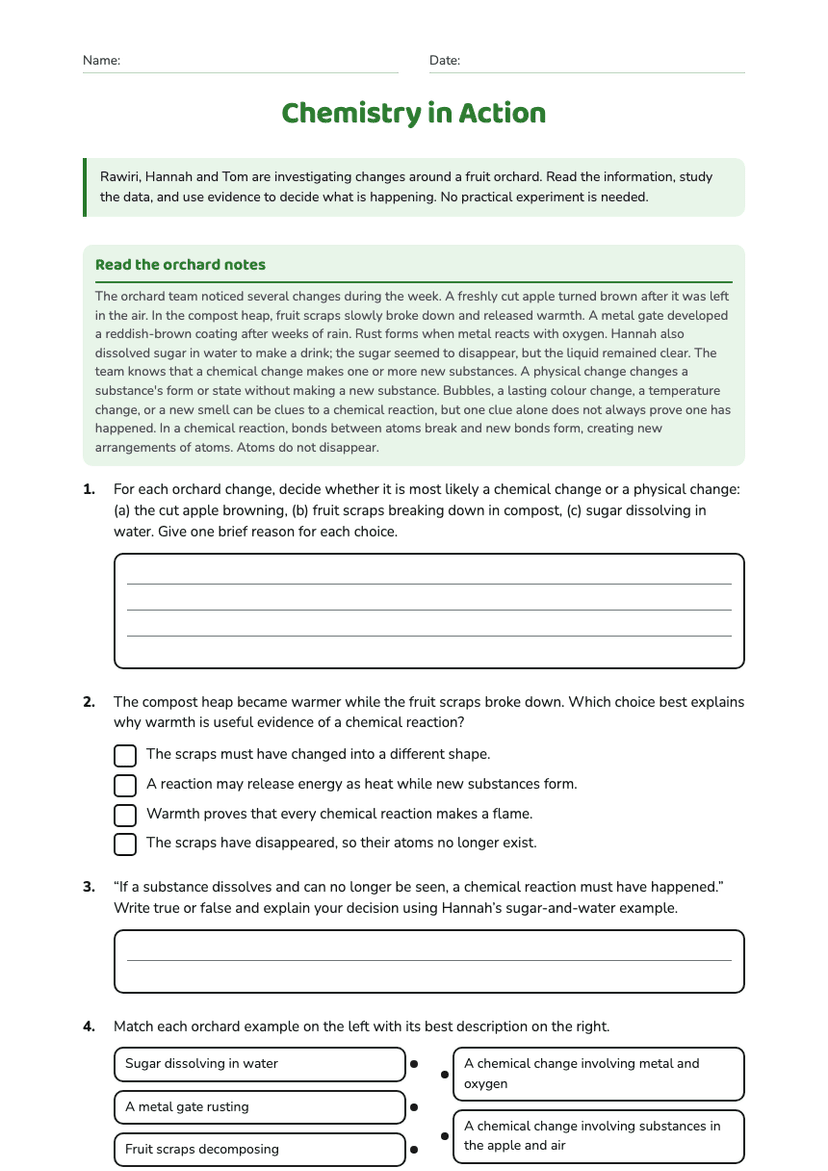
Chemistry in Action
Free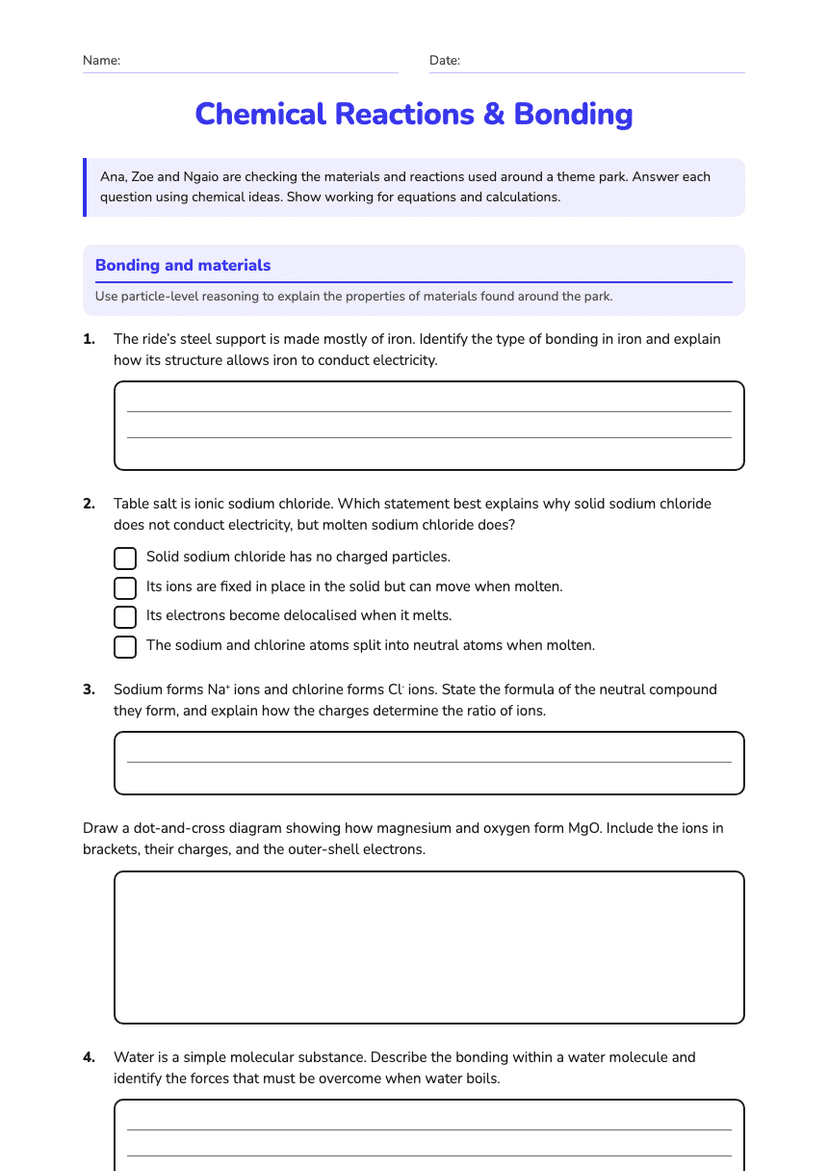
Chemical Reactions & Bonding
Free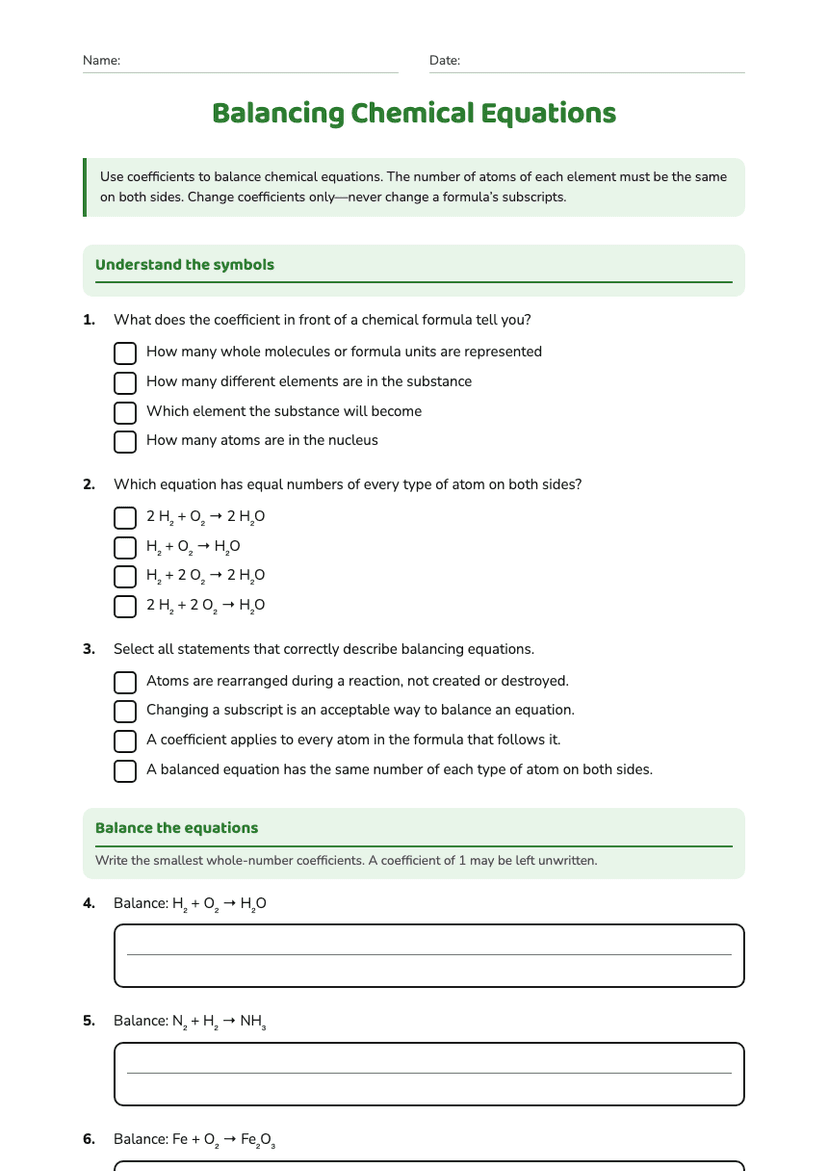
Balancing Chemical Equations
Free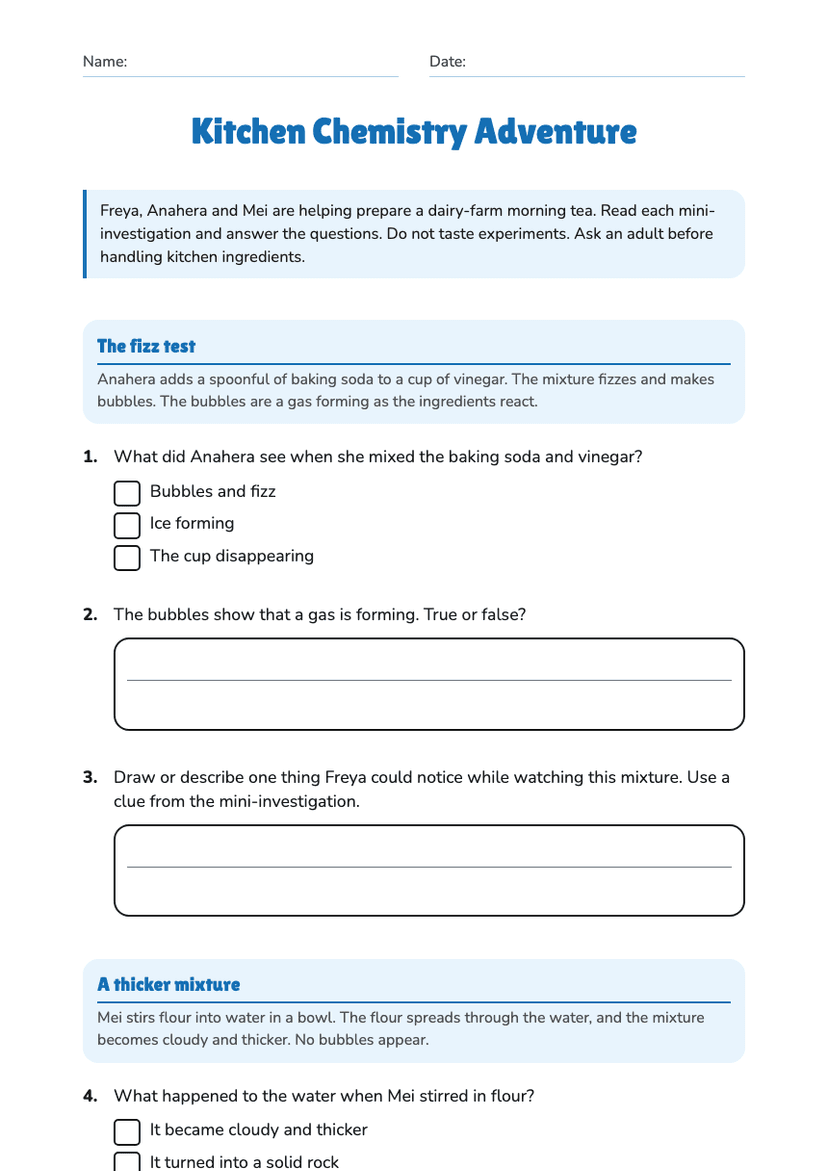
Kitchen Chemistry Adventure
Free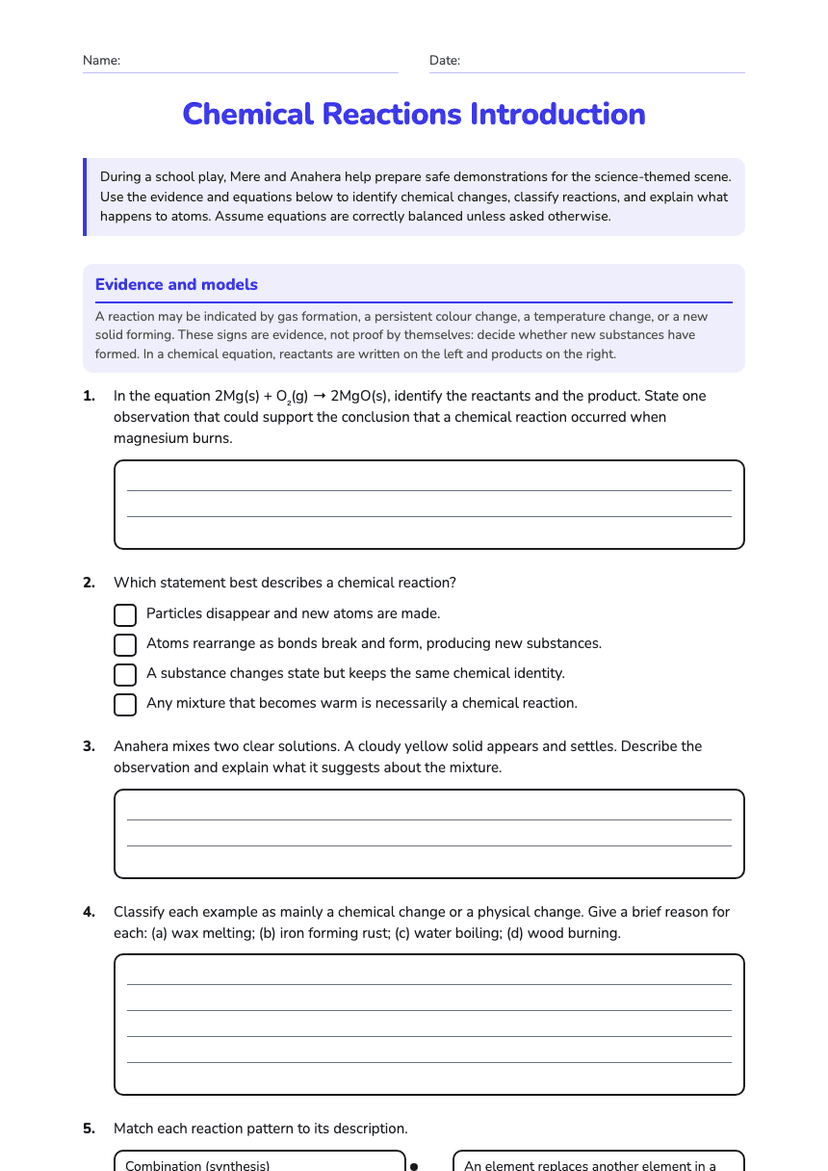
Chemical Reactions Introduction
Free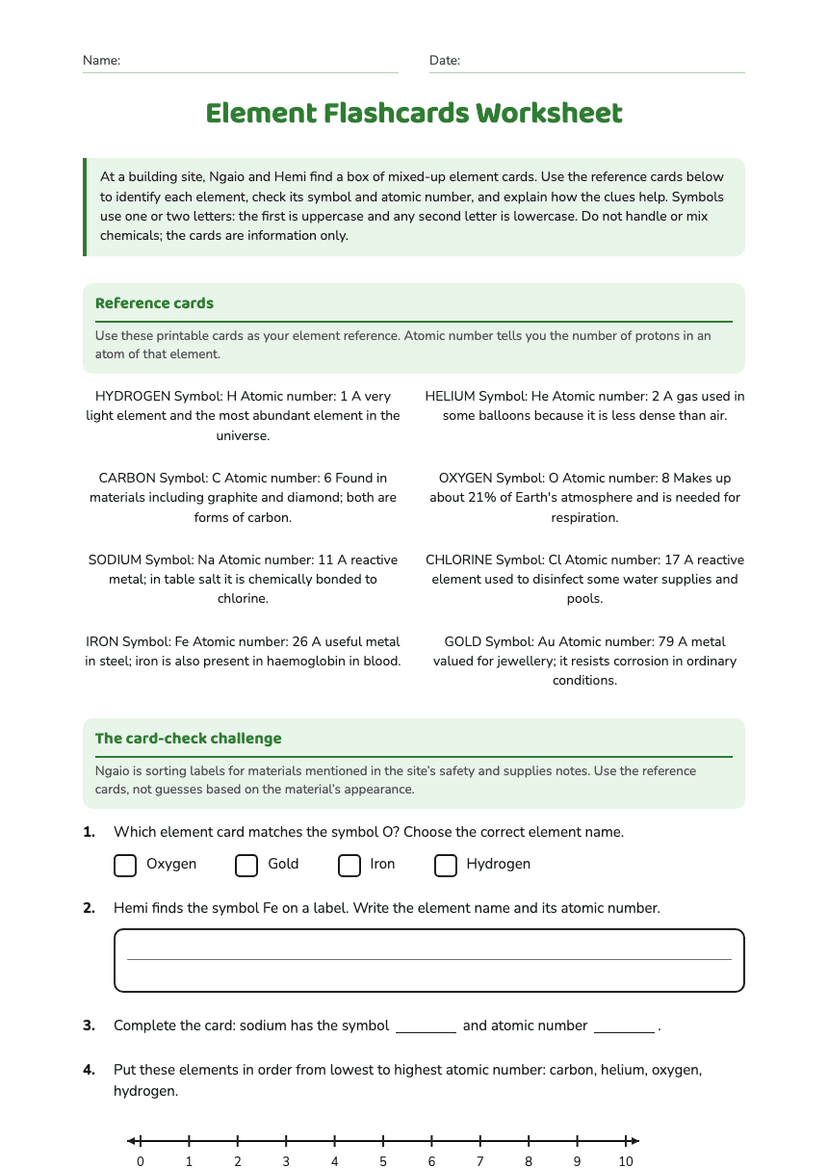
Element Flashcards Worksheet
Free