Leadership Through History
A free social sciences worksheet ready for your classroom. Open in Kuraplan to grab the print-ready PDF, customize it for your students, or generate a fresh version in seconds.
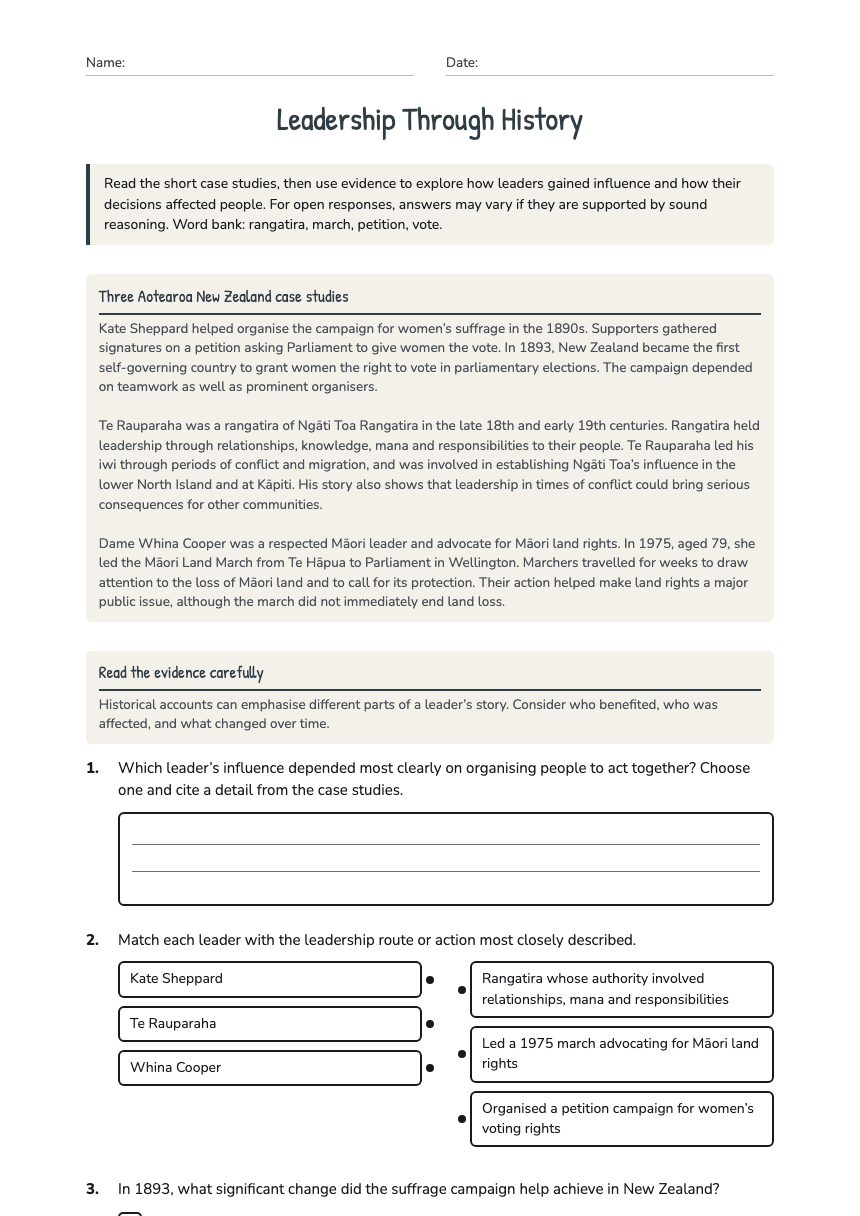
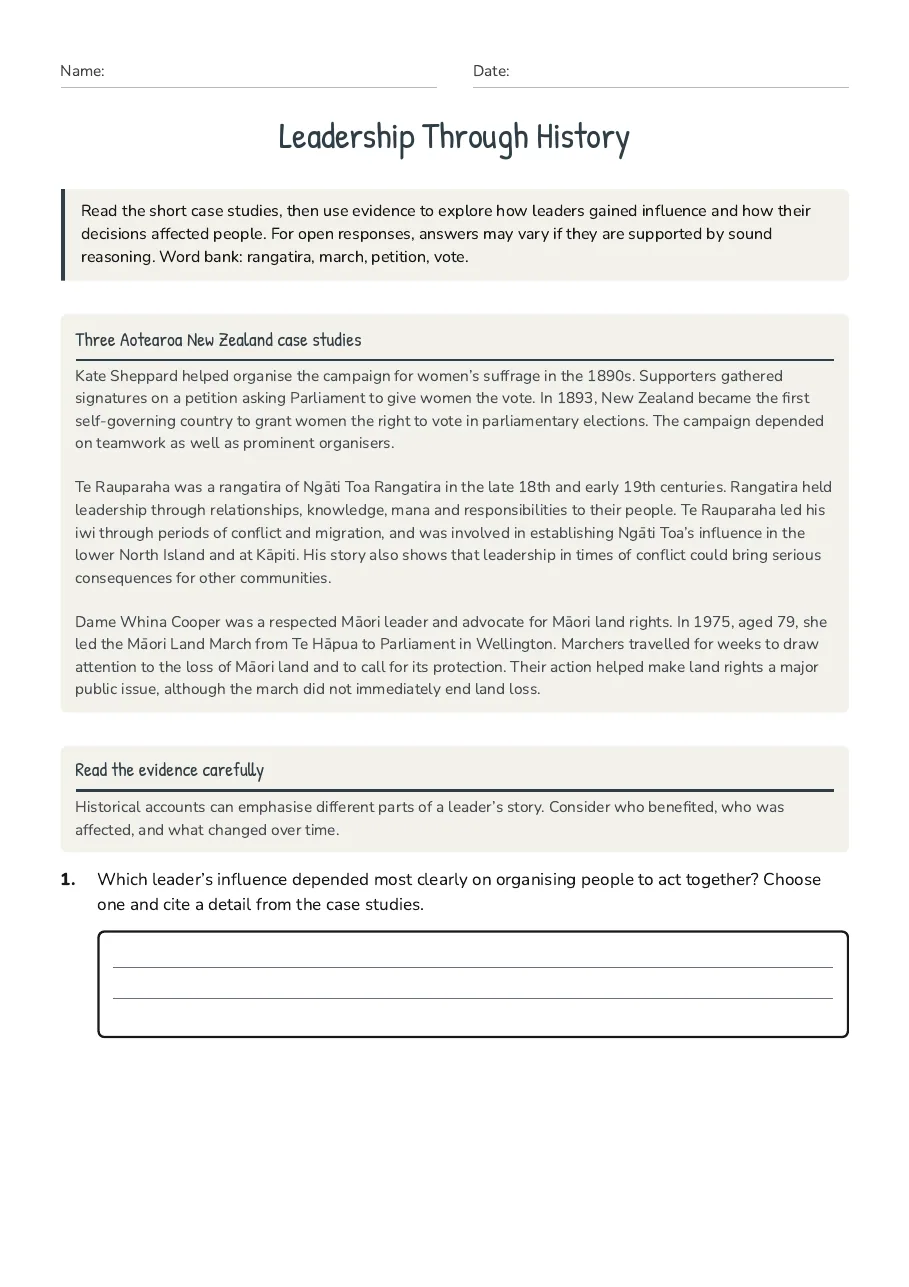
Leadership Through History
Three Aotearoa New Zealand case studies
Kate Sheppard helped organise the campaign for women’s suffrage in the 1890s. Supporters gathered signatures on a petition asking Parliament to give women the vote. In 1893, New Zealand became the first self-governing country to grant women the right to vote in parliamentary elections. The campaign depended on teamwork as well as prominent organisers. Te Rauparaha was a rangatira of Ngāti Toa Rangatira in the late 18th and early 19th centuries. Rangatira held leadership through relationships, knowledge, mana and responsibilities to their people. Te Rauparaha led his iwi through periods of conflict and migration, and was involved in establishing Ngāti Toa’s influence in the lower North Island and at Kāpiti. His story also shows that leadership in times of conflict could bring serious consequences for other communities. Dame Whina Cooper was a respected Māori leader and advocate for Māori land rights. In 1975, aged 79, she led the Māori Land March from Te Hāpua to Parliament in Wellington. Marchers travelled for weeks to draw attention to the loss of Māori land and to call for its protection. Their action helped make land rights a major public issue, although the march did not immediately end land loss.
Read the evidence carefully
Historical accounts can emphasise different parts of a leader’s story. Consider who benefited, who was affected, and what changed over time.
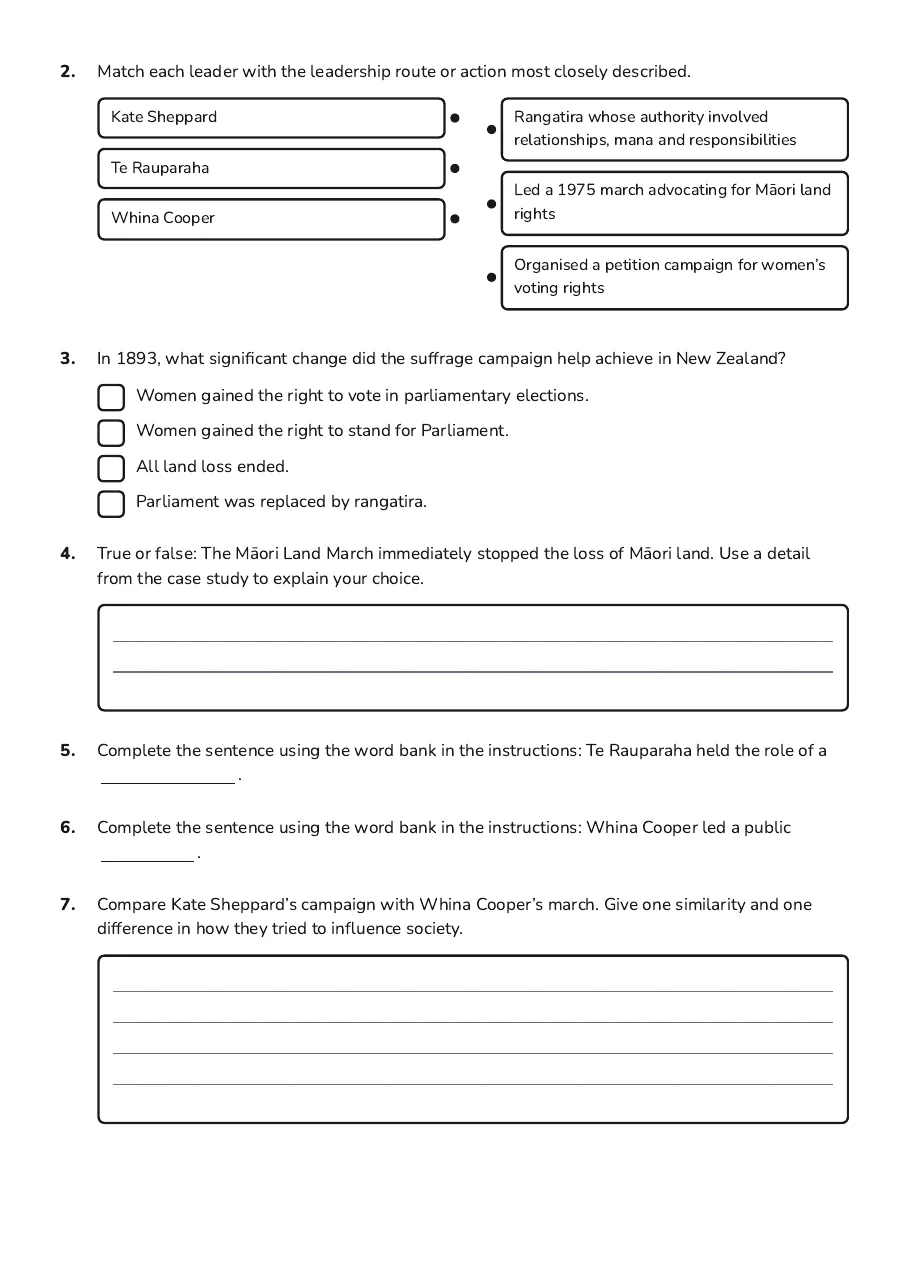
- Kate Sheppard
- Te Rauparaha
- Whina Cooper
- Rangatira whose authority involved relationships, mana and responsibilities
- Led a 1975 march advocating for Māori land rights
- Organised a petition campaign for women’s voting rights
- Women gained the right to vote in parliamentary elections.
- Women gained the right to stand for Parliament.
- All land loss ended.
- Parliament was replaced by rangatira.
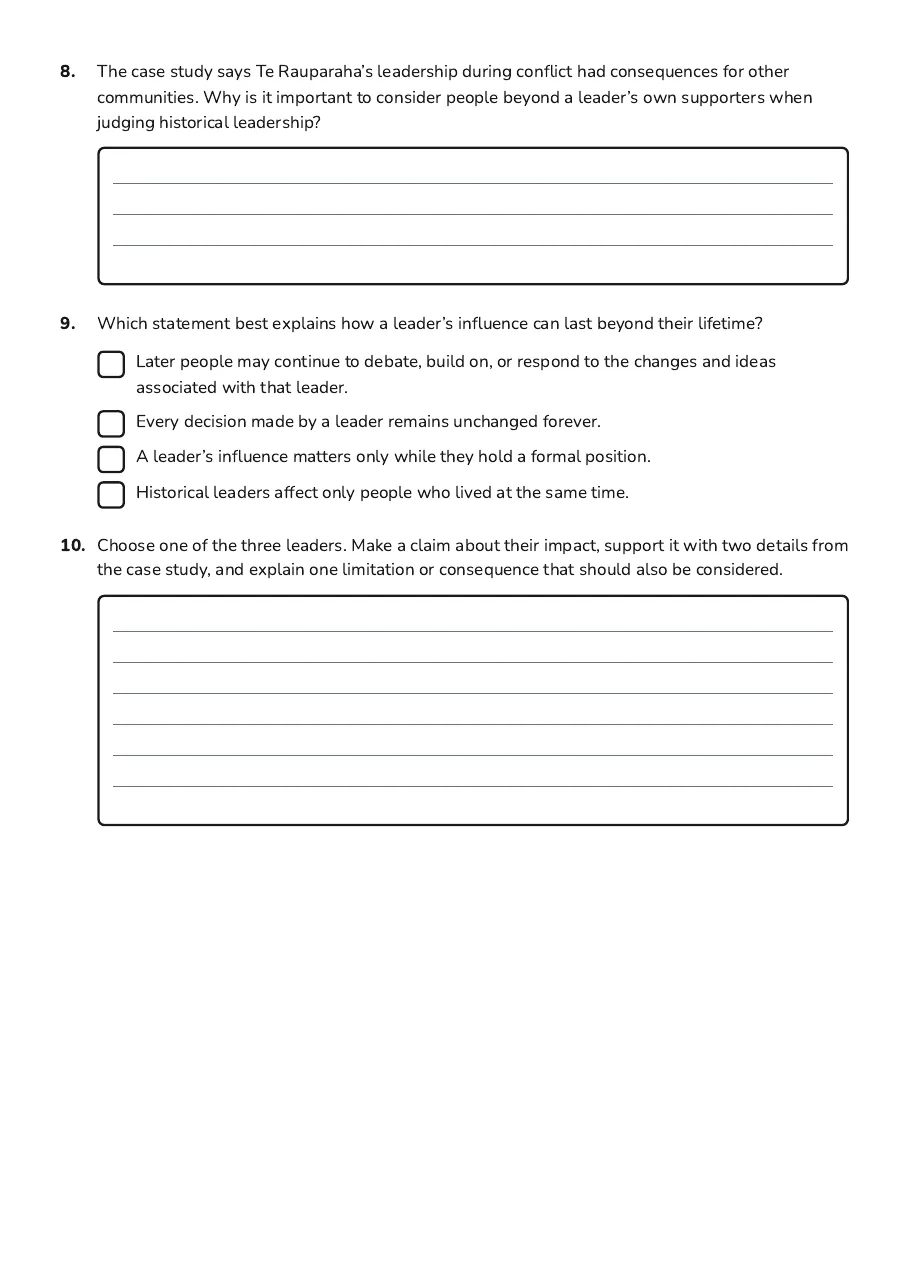
- Later people may continue to debate, build on, or respond to the changes and ideas associated with that leader.
- Every decision made by a leader remains unchanged forever.
- A leader’s influence matters only while they hold a formal position.
- Historical leaders affect only people who lived at the same time.
3 printable pages
Page 1
Page 2
Page 3
About This Worksheet
Free in Kuraplan
Sign up free, grab the PDF, and customize it for your class.
Print-Ready
Formatted for standard paper. Clean layout, easy to read.
AI-Generated
Created with Kuraplan's AI, designed for real classroom use.
For Teachers & Parents
Use in classrooms, for homework, tutoring, or homeschool.
Need a custom version of this worksheet?
Kuraplan's AI generates custom worksheets in seconds — differentiated for every learner, aligned to your curriculum.
Generate Custom Worksheets — FreeMore Social Sciences Worksheets
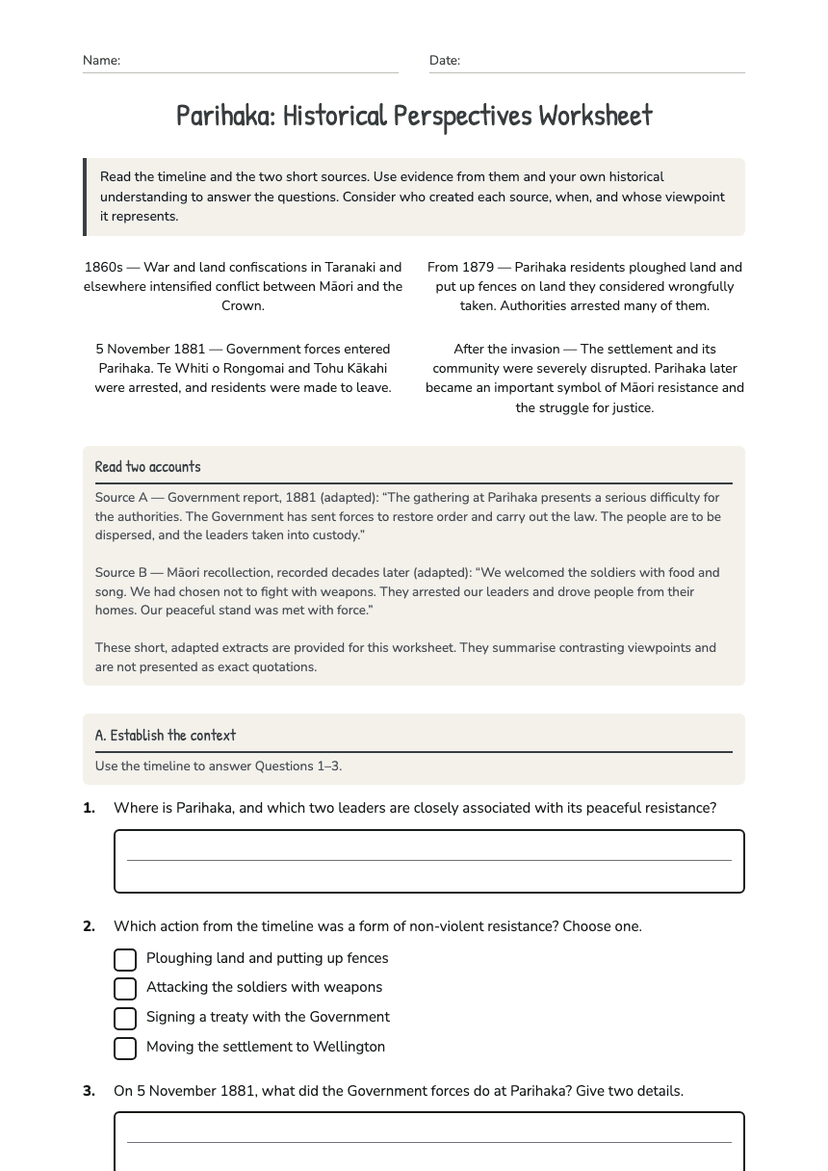
Parihaka: Historical Perspectives Worksheet
Free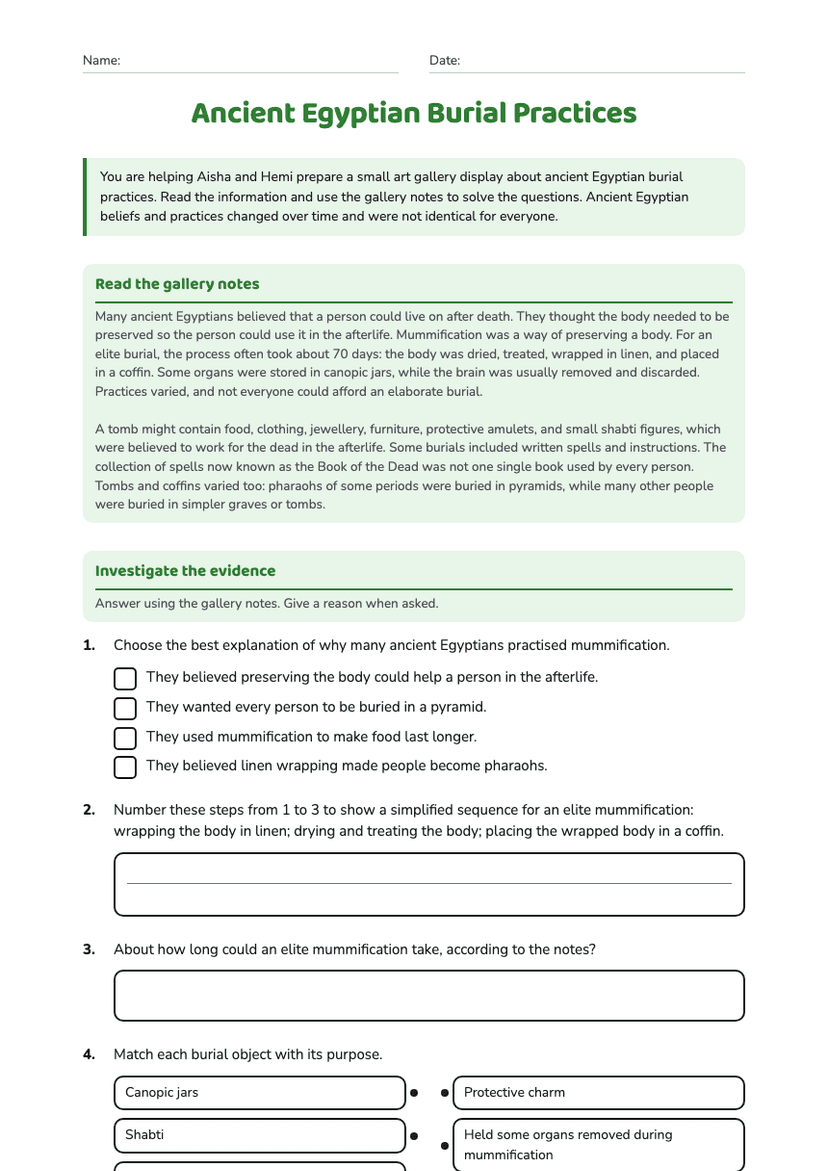
Ancient Egyptian Burial Practices
Free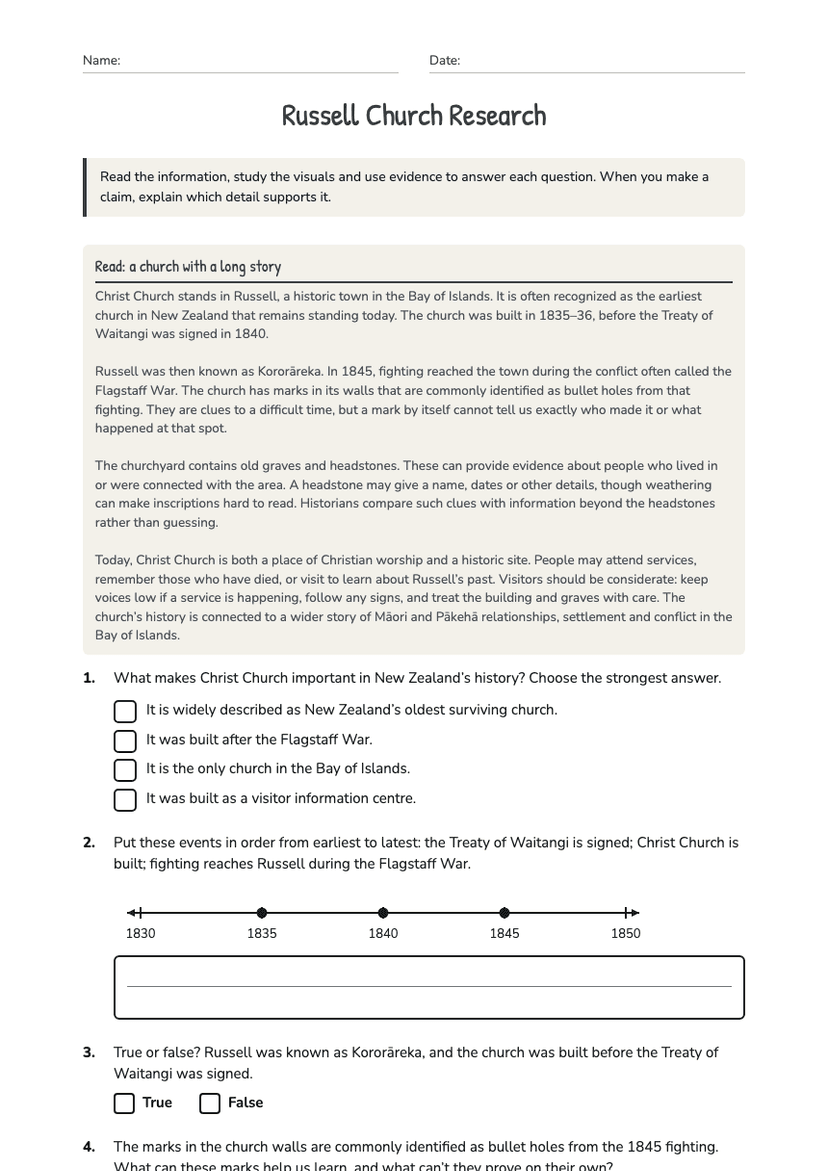
Russell Church Research
Free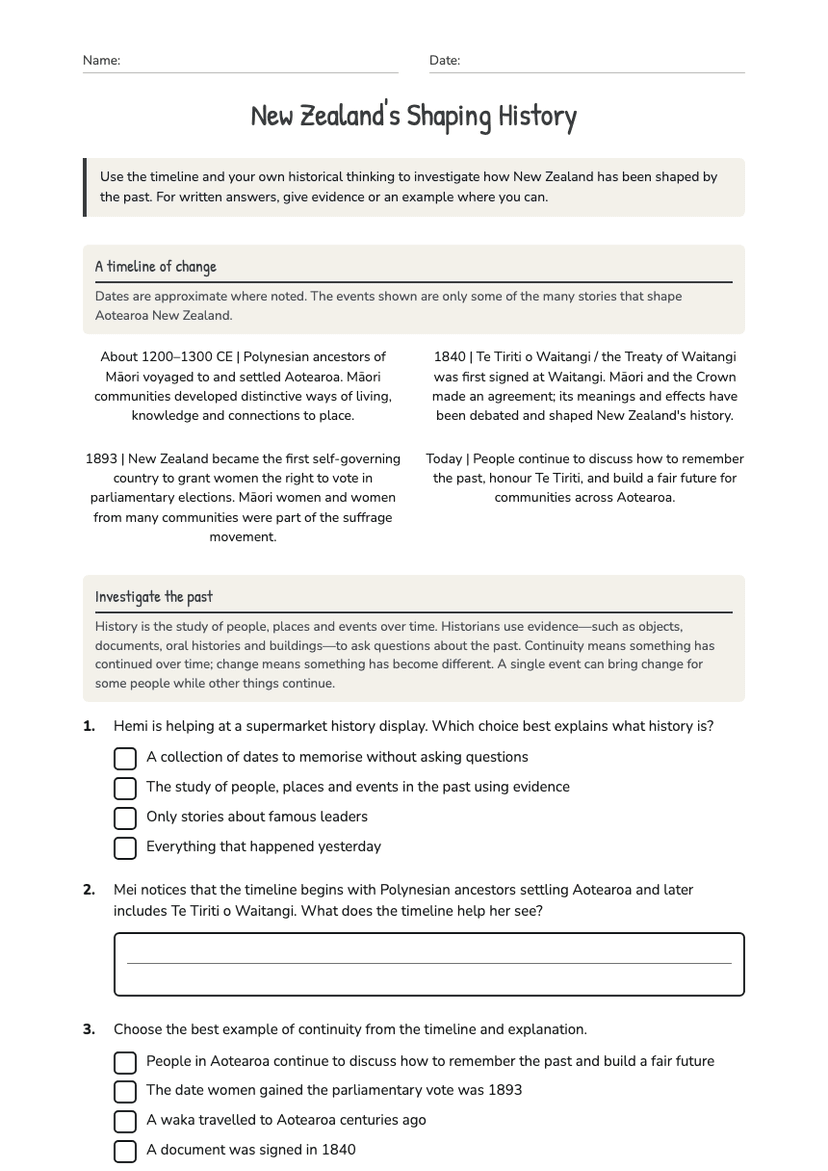
New Zealand's Shaping History
Free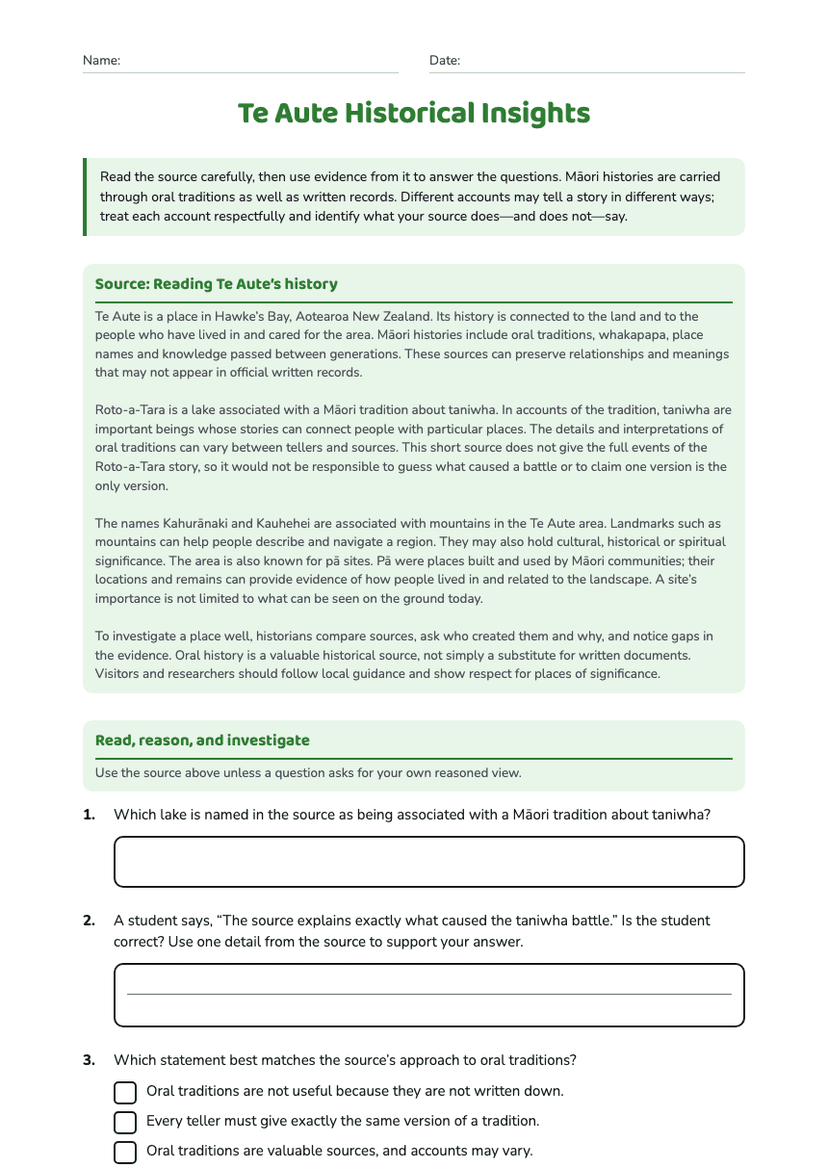
Te Aute Historical Insights
Free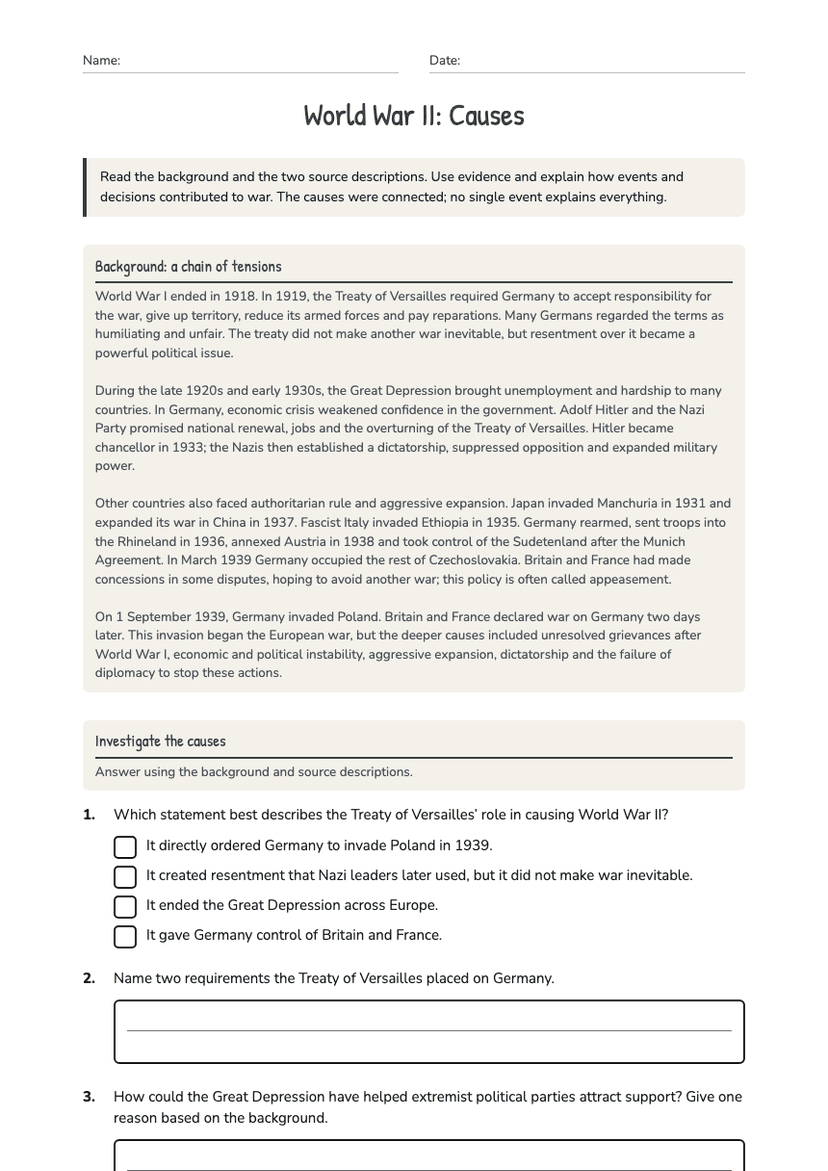
World War II: Causes
Free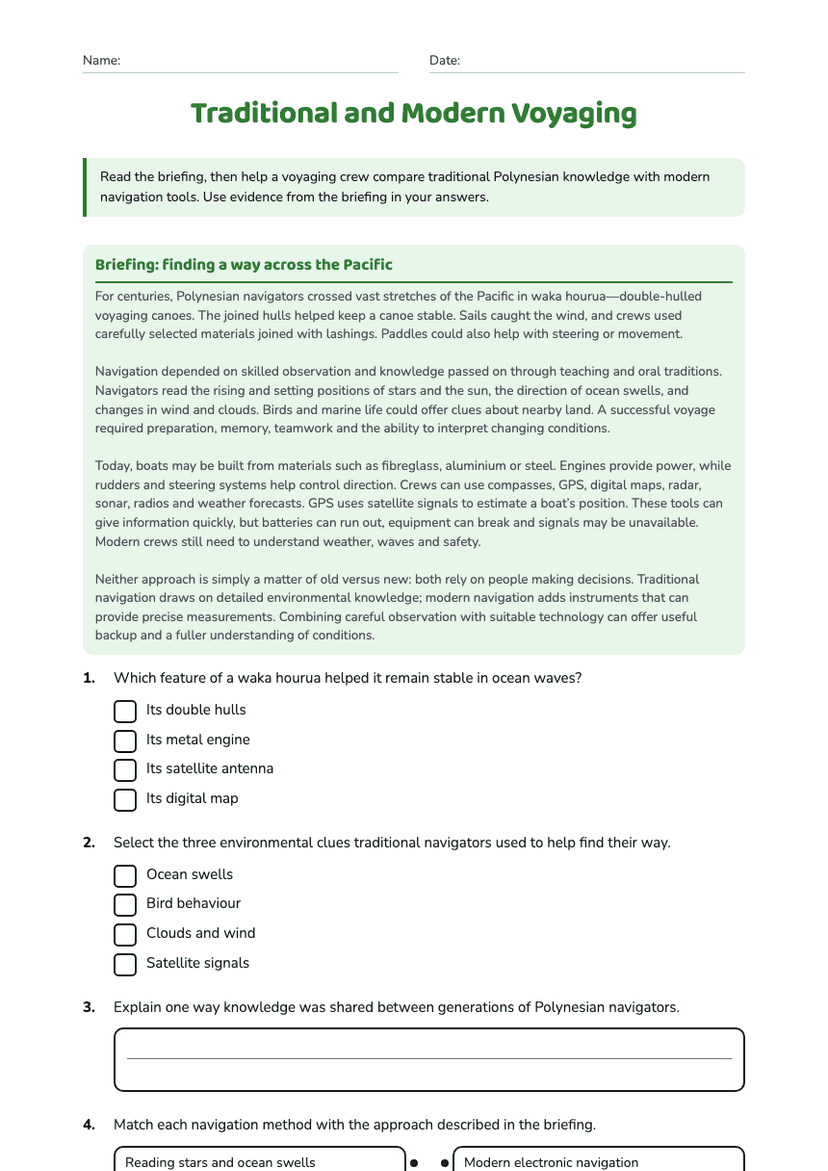
Traditional and Modern Voyaging
Free