Matariki Harvest Traditions
A free te reo māori worksheet ready for your classroom. Open in Kuraplan to grab the print-ready PDF, customize it for your students, or generate a fresh version in seconds.
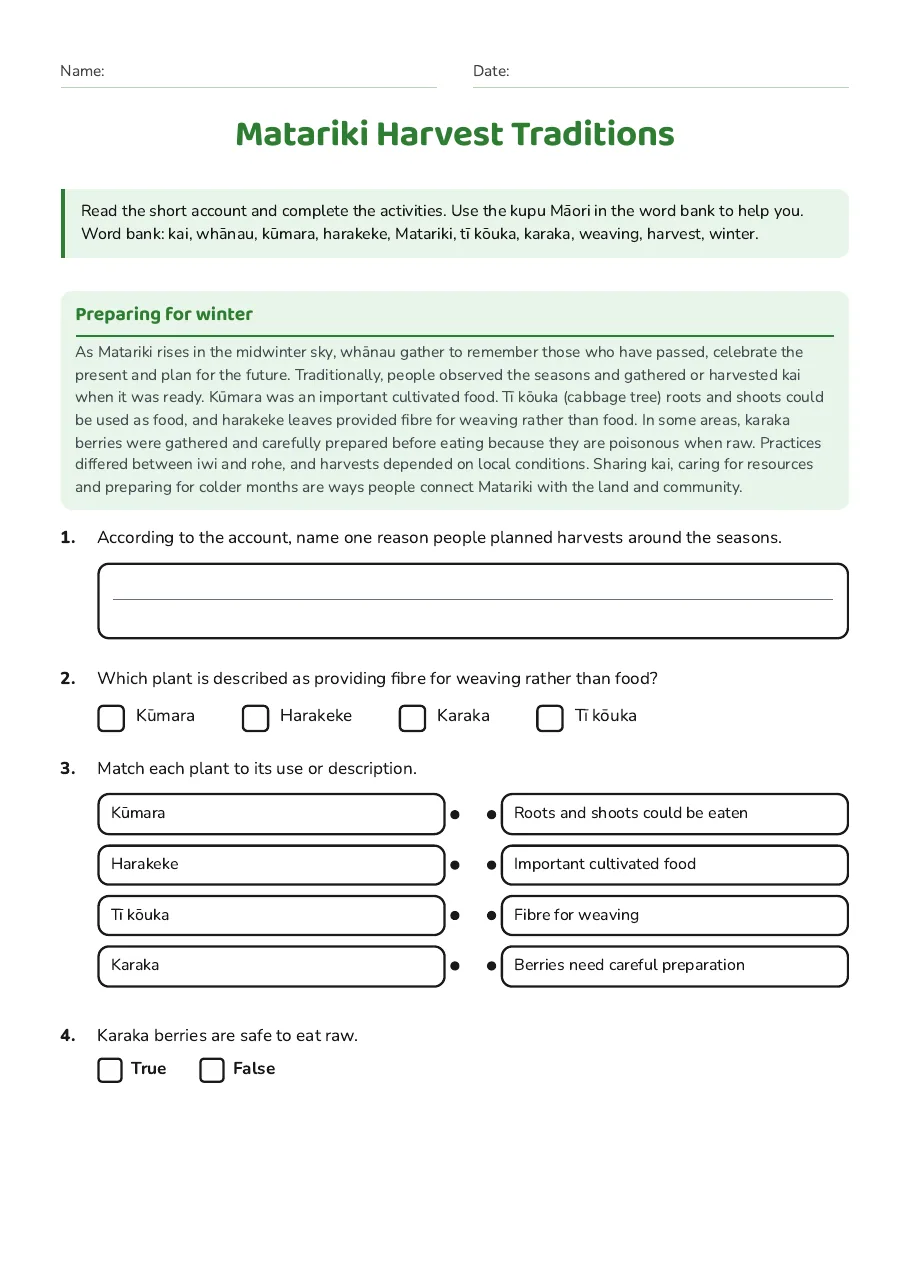
Matariki Harvest Traditions
Preparing for winter
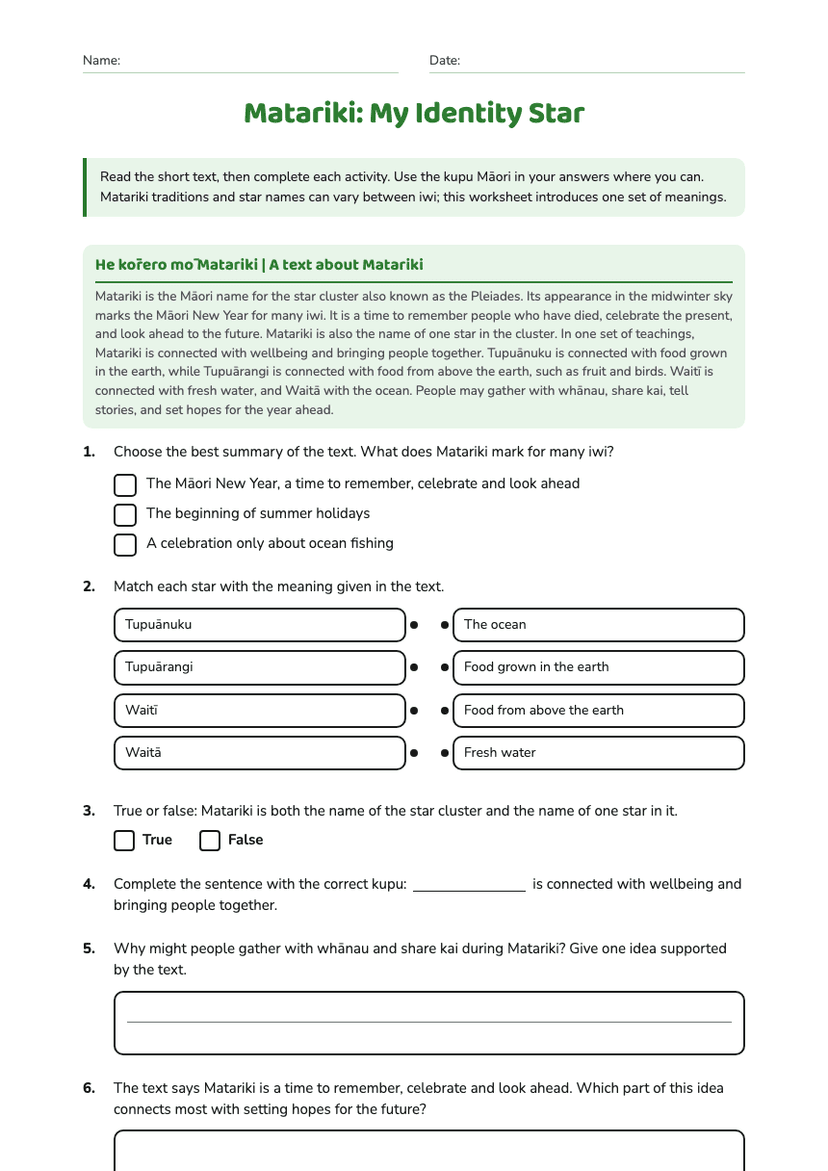
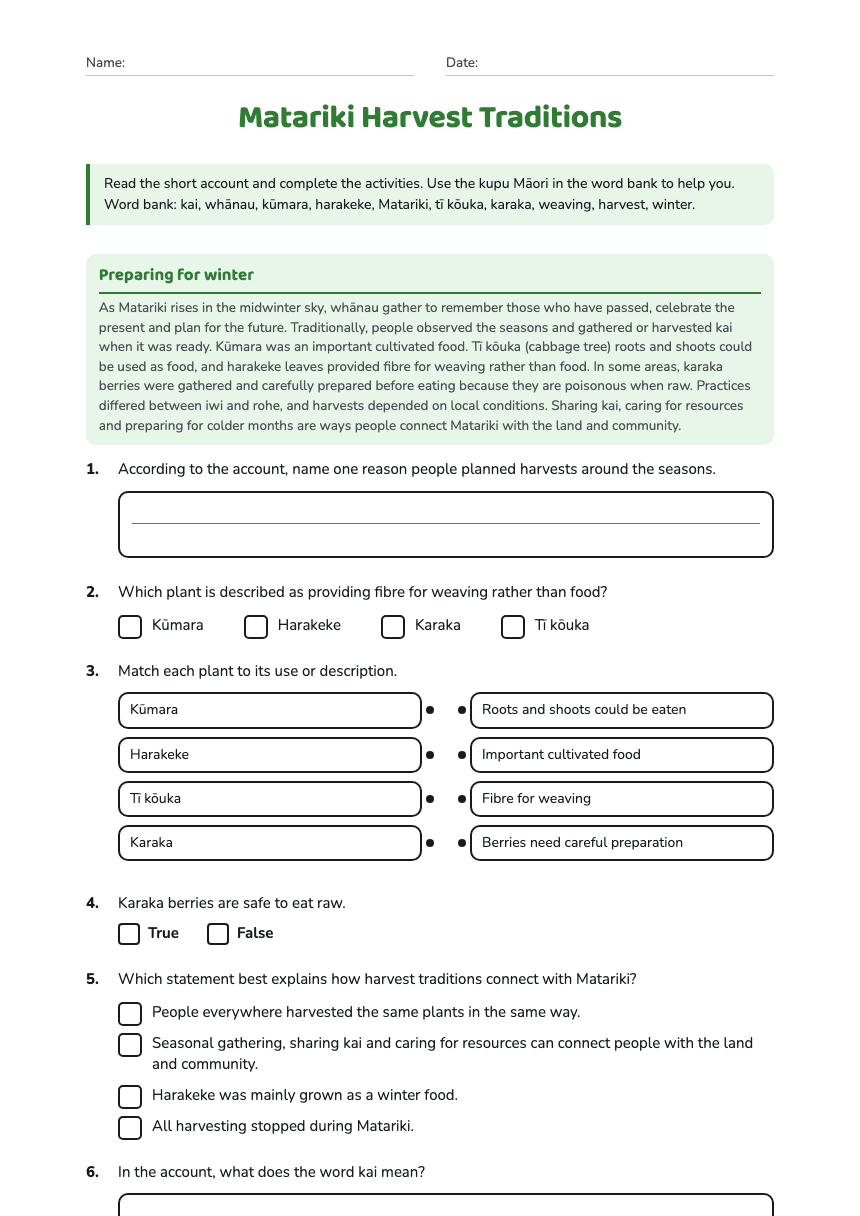
As Matariki rises in the midwinter sky, whānau gather to remember those who have passed, celebrate the present and plan for the future. Traditionally, people observed the seasons and gathered or harvested kai when it was ready. Kūmara was an important cultivated food. Tī kōuka (cabbage tree) roots and shoots could be used as food, and harakeke leaves provided fibre for weaving rather than food. In some areas, karaka berries were gathered and carefully prepared before eating because they are poisonous when raw. Practices differed between iwi and rohe, and harvests depended on local conditions. Sharing kai, caring for resources and preparing for colder months are ways people connect Matariki with the land and community.
- Kūmara
- Harakeke
- Karaka
- Tī kōuka
- Kūmara
- Harakeke
- Tī kōuka
- Karaka
- Roots and shoots could be eaten
- Important cultivated food
- Fibre for weaving
- Berries need careful preparation
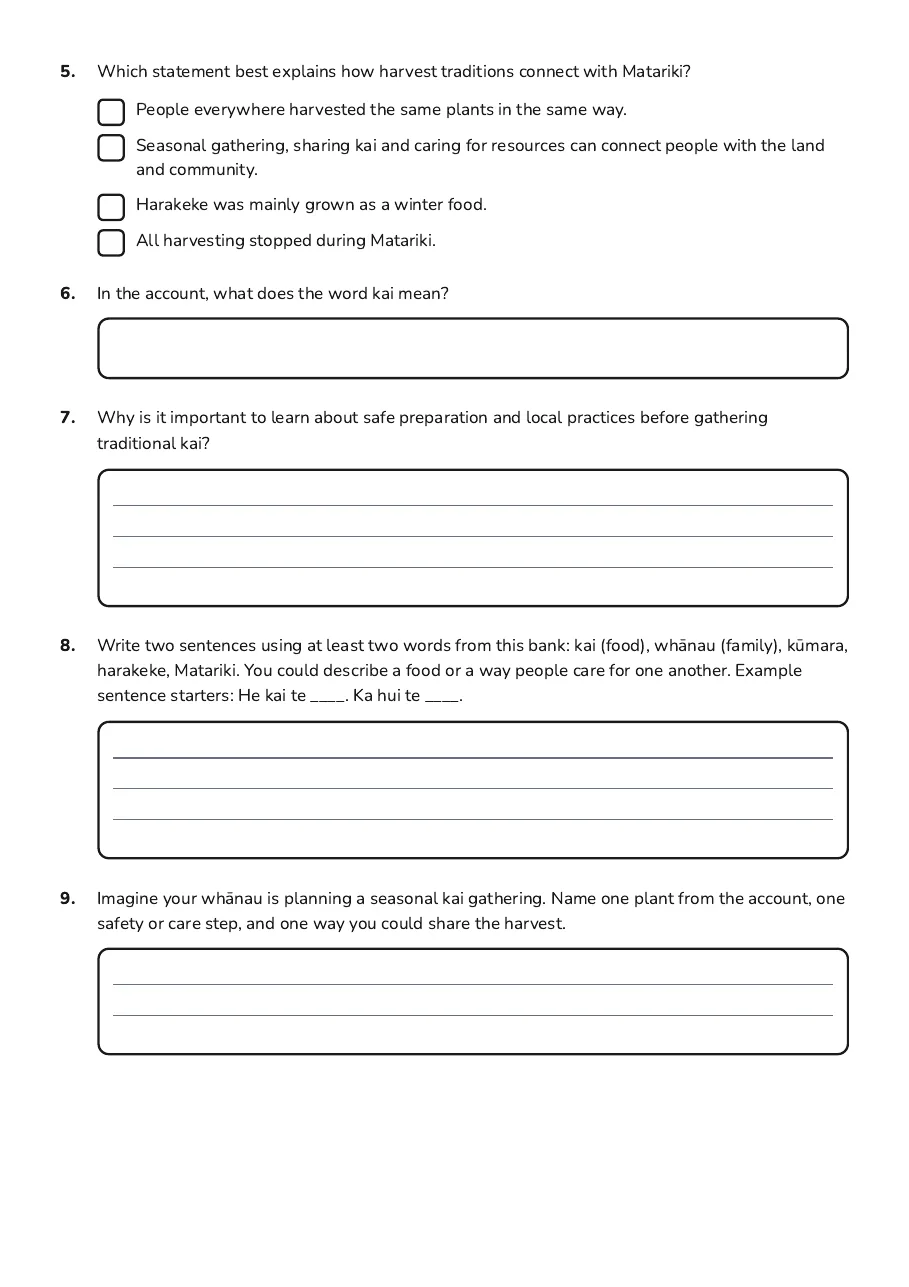
- People everywhere harvested the same plants in the same way.
- Seasonal gathering, sharing kai and caring for resources can connect people with the land and community.
- Harakeke was mainly grown as a winter food.
- All harvesting stopped during Matariki.
2 printable pages
Page 1
Page 2
About This Worksheet
Free in Kuraplan
Sign up free, grab the PDF, and customize it for your class.
Print-Ready
Formatted for standard paper. Clean layout, easy to read.
AI-Generated
Created with Kuraplan's AI, designed for real classroom use.
For Teachers & Parents
Use in classrooms, for homework, tutoring, or homeschool.
Need a custom version of this worksheet?
Kuraplan's AI generates custom worksheets in seconds — differentiated for every learner, aligned to your curriculum.
Generate Custom Worksheets — FreeMore Te Reo Māori Worksheets
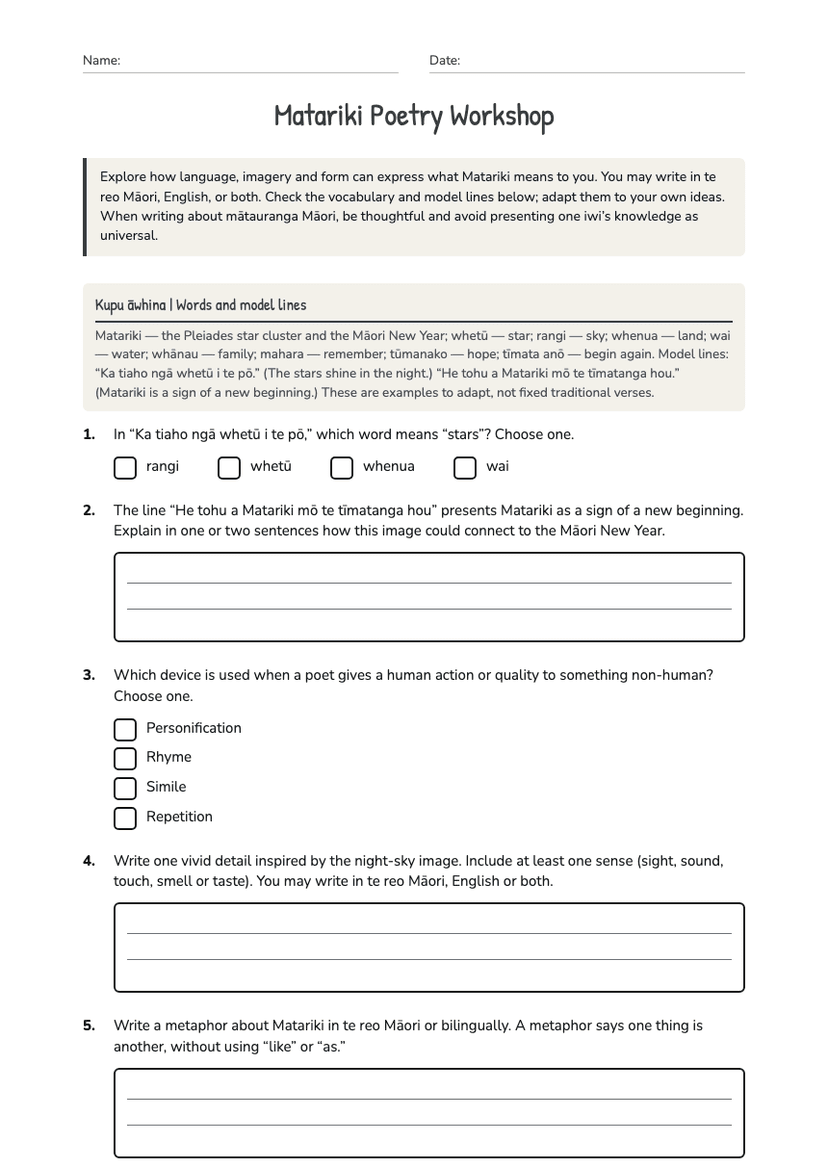
Matariki Poetry Workshop
Free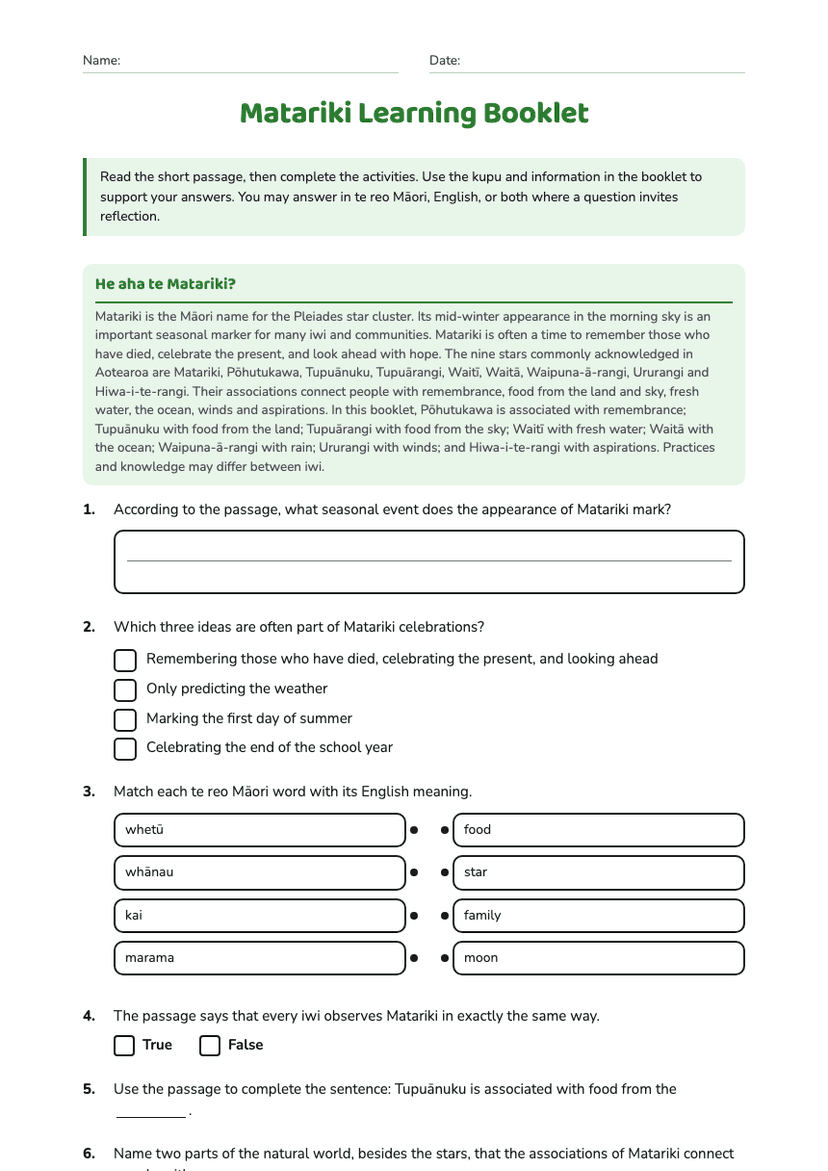
Matariki Learning Booklet
Free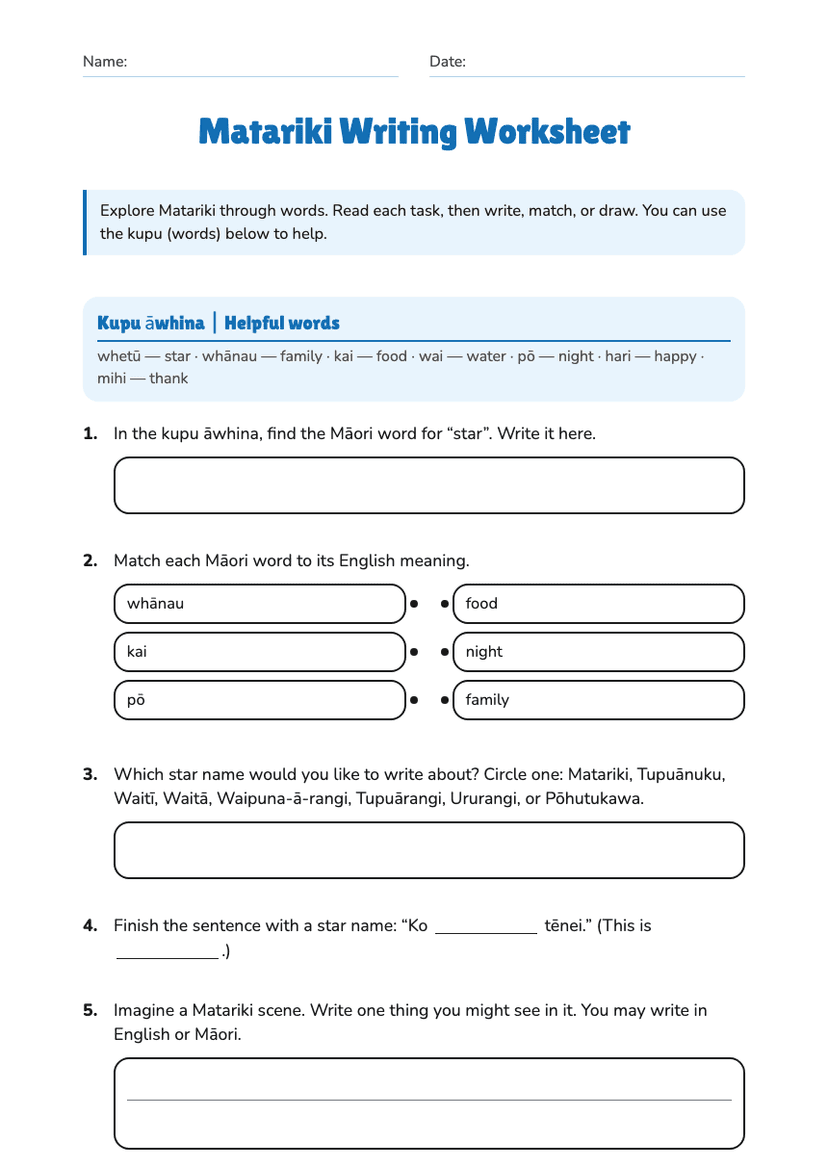
Matariki Writing Worksheet
Free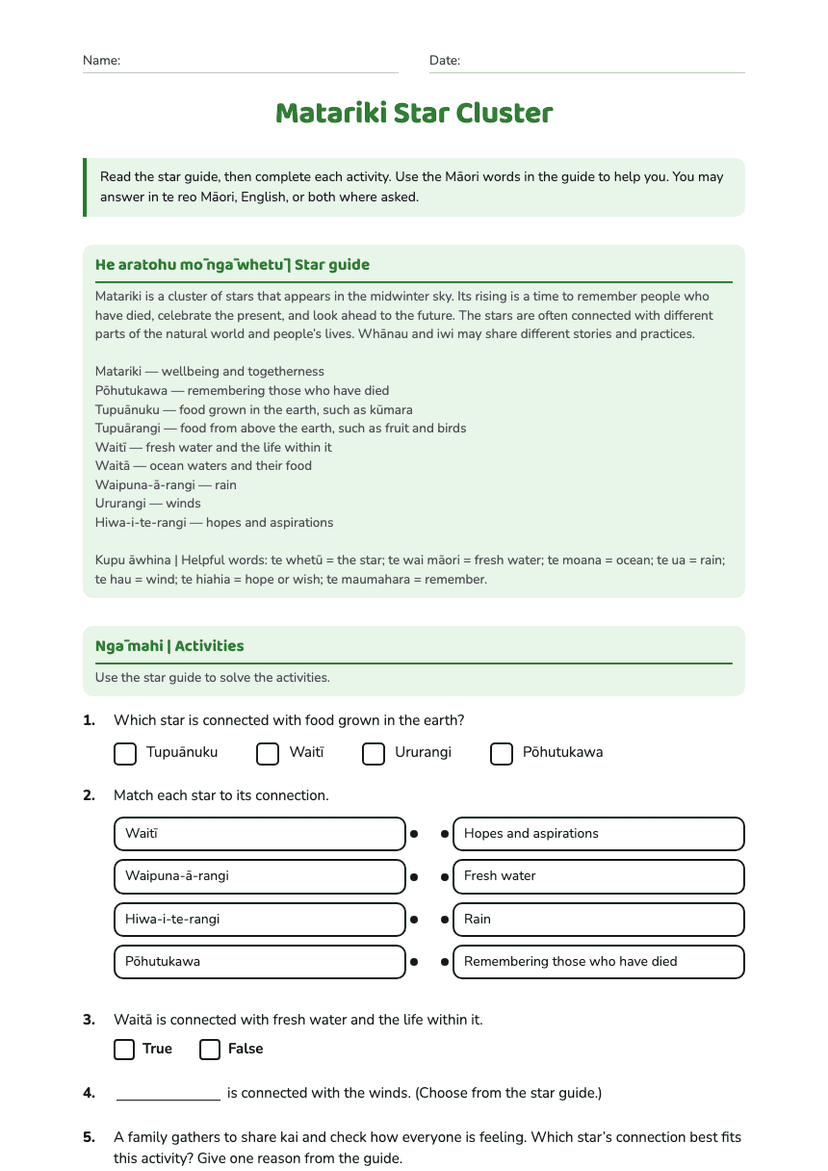
Matariki Star Cluster
Free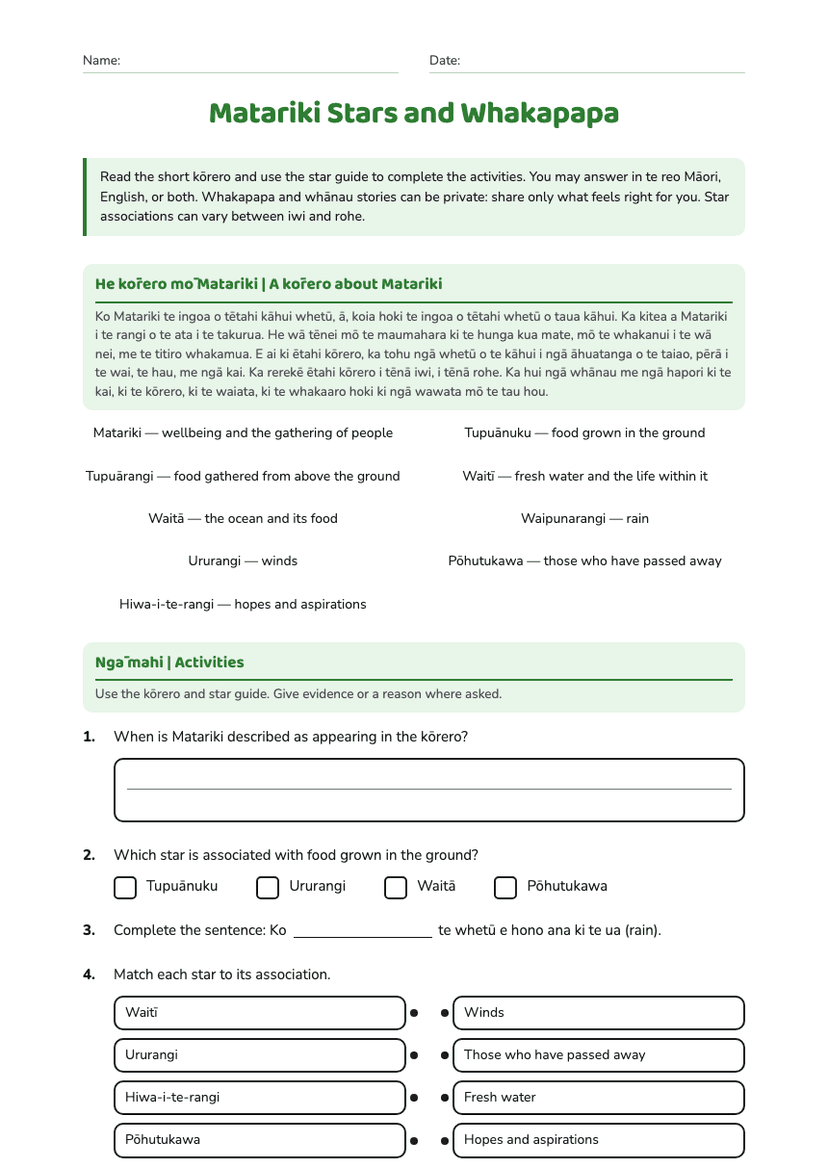
Matariki Stars and Whakapapa
Free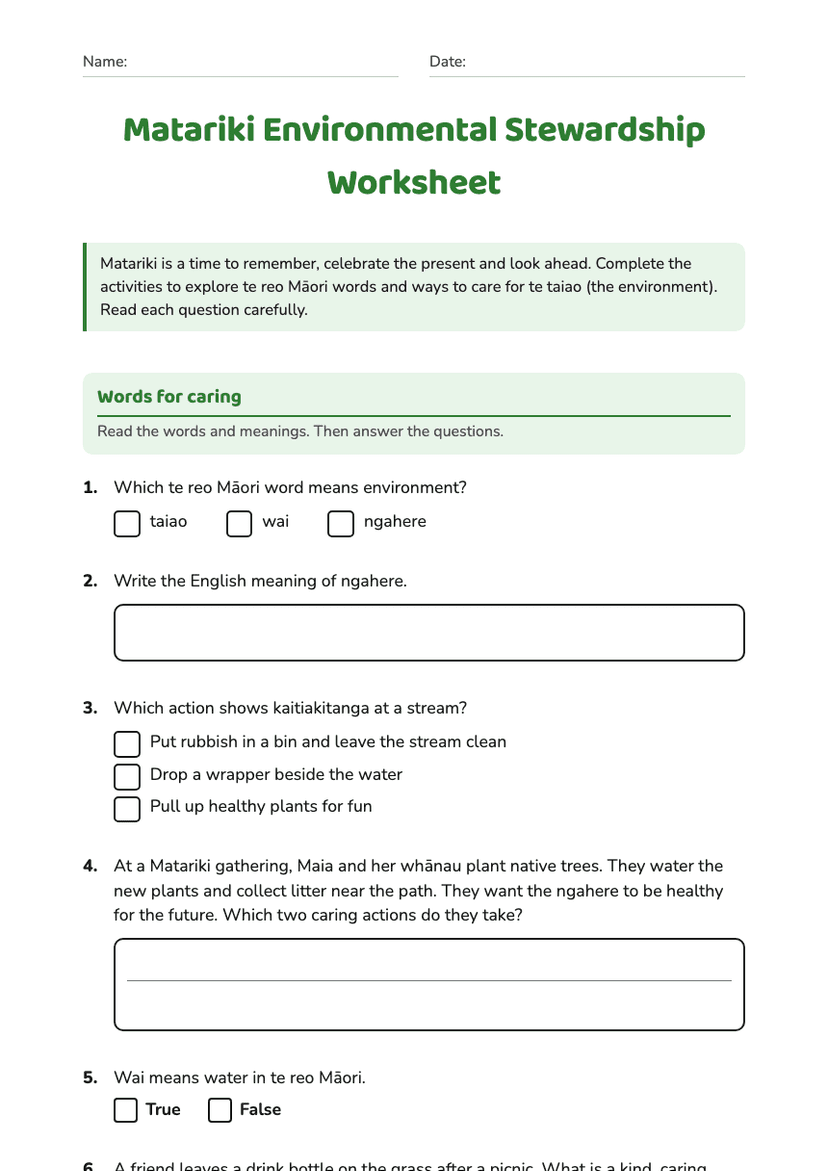
Matariki Environmental Stewardship Worksheet
Free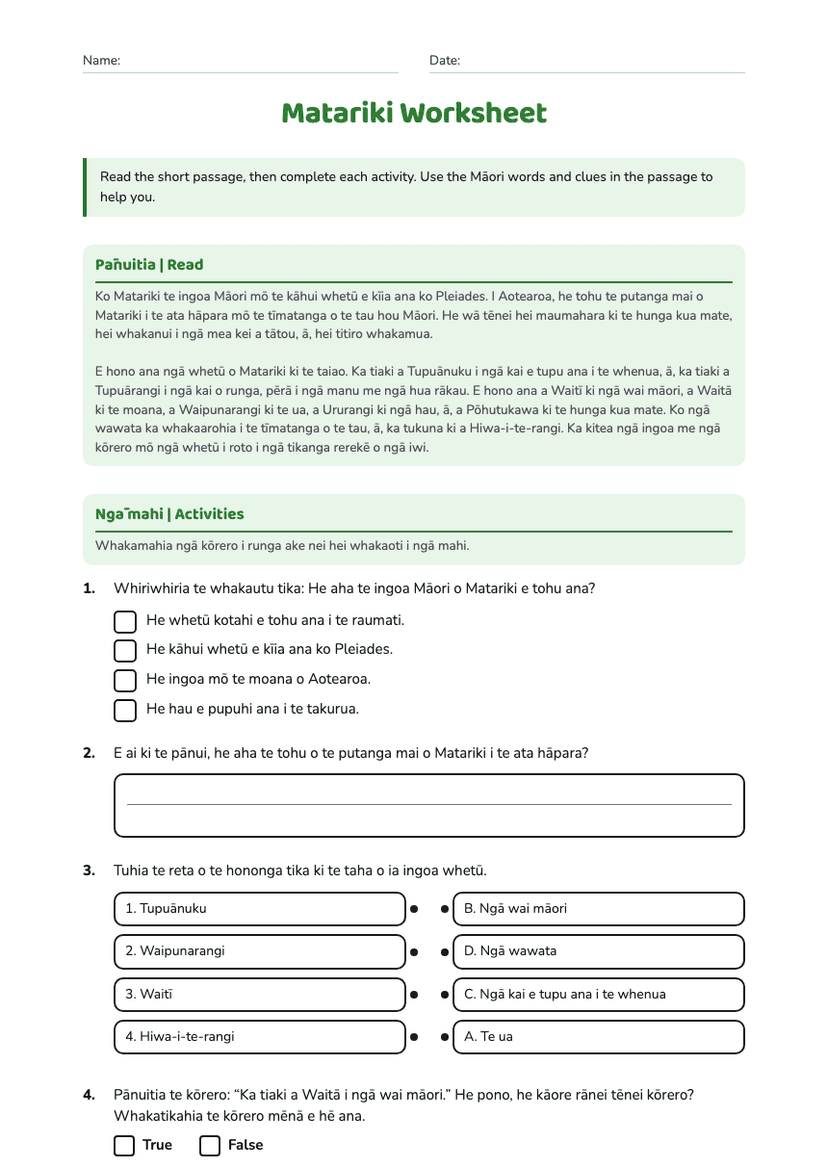
Matariki Worksheet
Free