Matariki Hautapu Learning Guide
A free te reo māori worksheet ready for your classroom. Open in Kuraplan to grab the print-ready PDF, customize it for your students, or generate a fresh version in seconds.
Matariki Hautapu Learning Guide
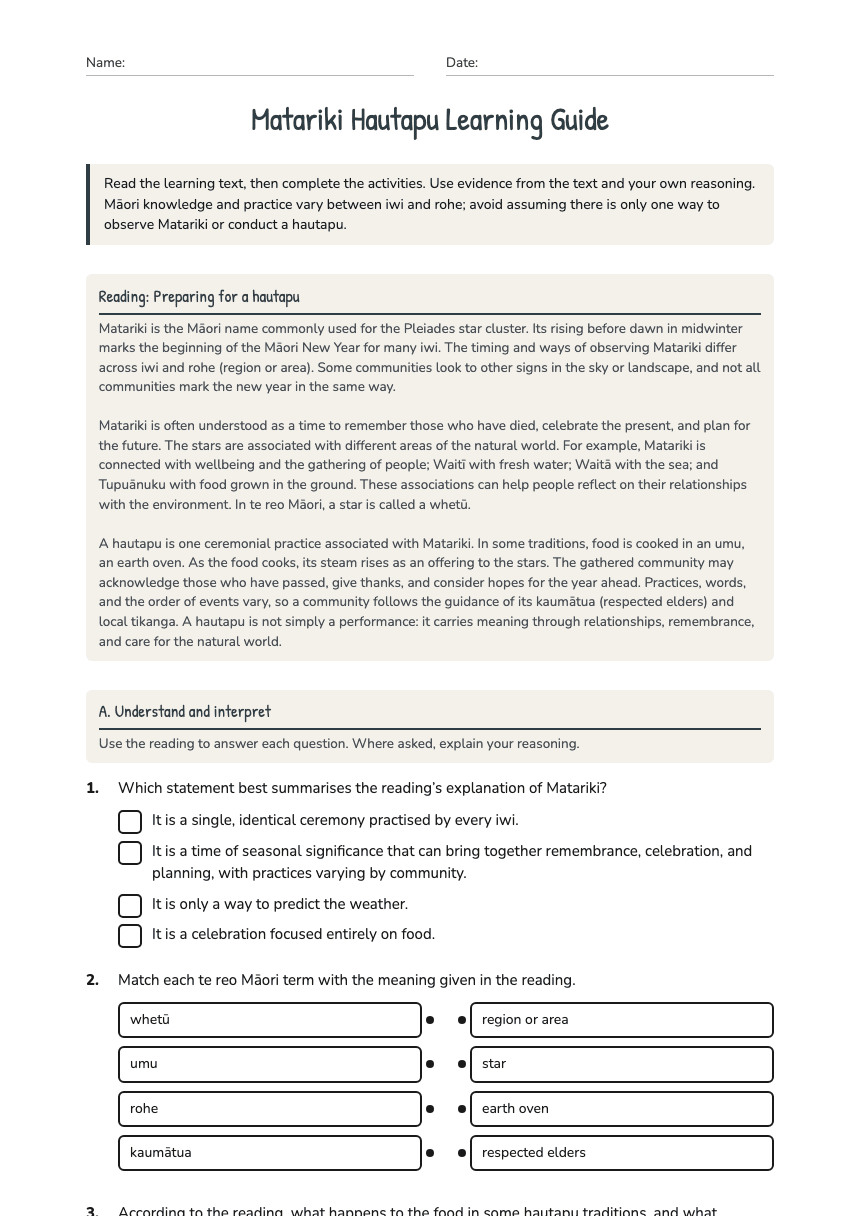
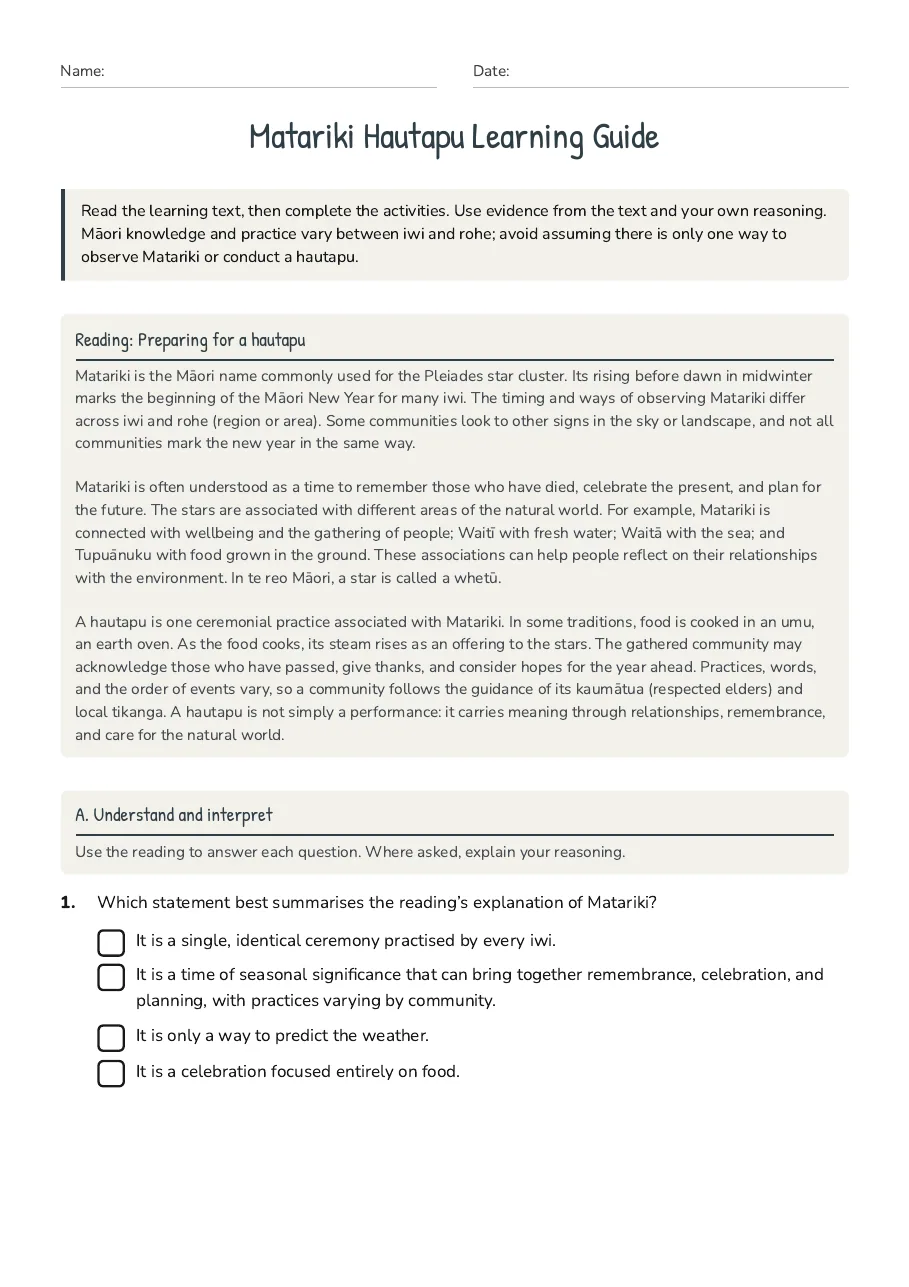
Reading: Preparing for a hautapu
Matariki is the Māori name commonly used for the Pleiades star cluster. Its rising before dawn in midwinter marks the beginning of the Māori New Year for many iwi. The timing and ways of observing Matariki differ across iwi and rohe (region or area). Some communities look to other signs in the sky or landscape, and not all communities mark the new year in the same way. Matariki is often understood as a time to remember those who have died, celebrate the present, and plan for the future. The stars are associated with different areas of the natural world. For example, Matariki is connected with wellbeing and the gathering of people; Waitī with fresh water; Waitā with the sea; and Tupuānuku with food grown in the ground. These associations can help people reflect on their relationships with the environment. In te reo Māori, a star is called a whetū. A hautapu is one ceremonial practice associated with Matariki. In some traditions, food is cooked in an umu, an earth oven. As the food cooks, its steam rises as an offering to the stars. The gathered community may acknowledge those who have passed, give thanks, and consider hopes for the year ahead. Practices, words, and the order of events vary, so a community follows the guidance of its kaumātua (respected elders) and local tikanga. A hautapu is not simply a performance: it carries meaning through relationships, remembrance, and care for the natural world.
A. Understand and interpret
Use the reading to answer each question. Where asked, explain your reasoning.
- It is a single, identical ceremony practised by every iwi.
- It is a time of seasonal significance that can bring together remembrance, celebration, and planning, with practices varying by community.
- It is only a way to predict the weather.
- It is a celebration focused entirely on food.
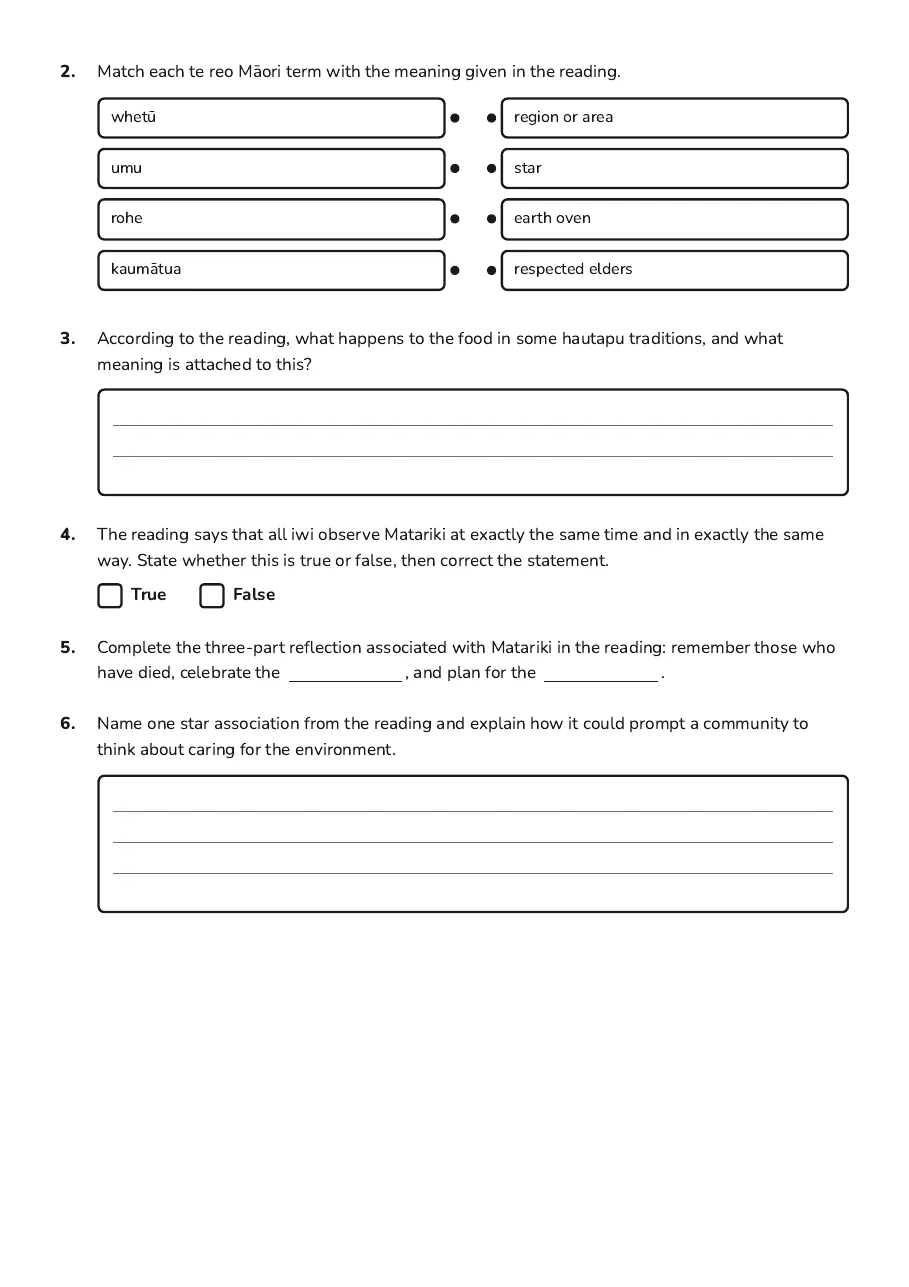
- whetū
- umu
- rohe
- kaumātua
- region or area
- star
- earth oven
- respected elders
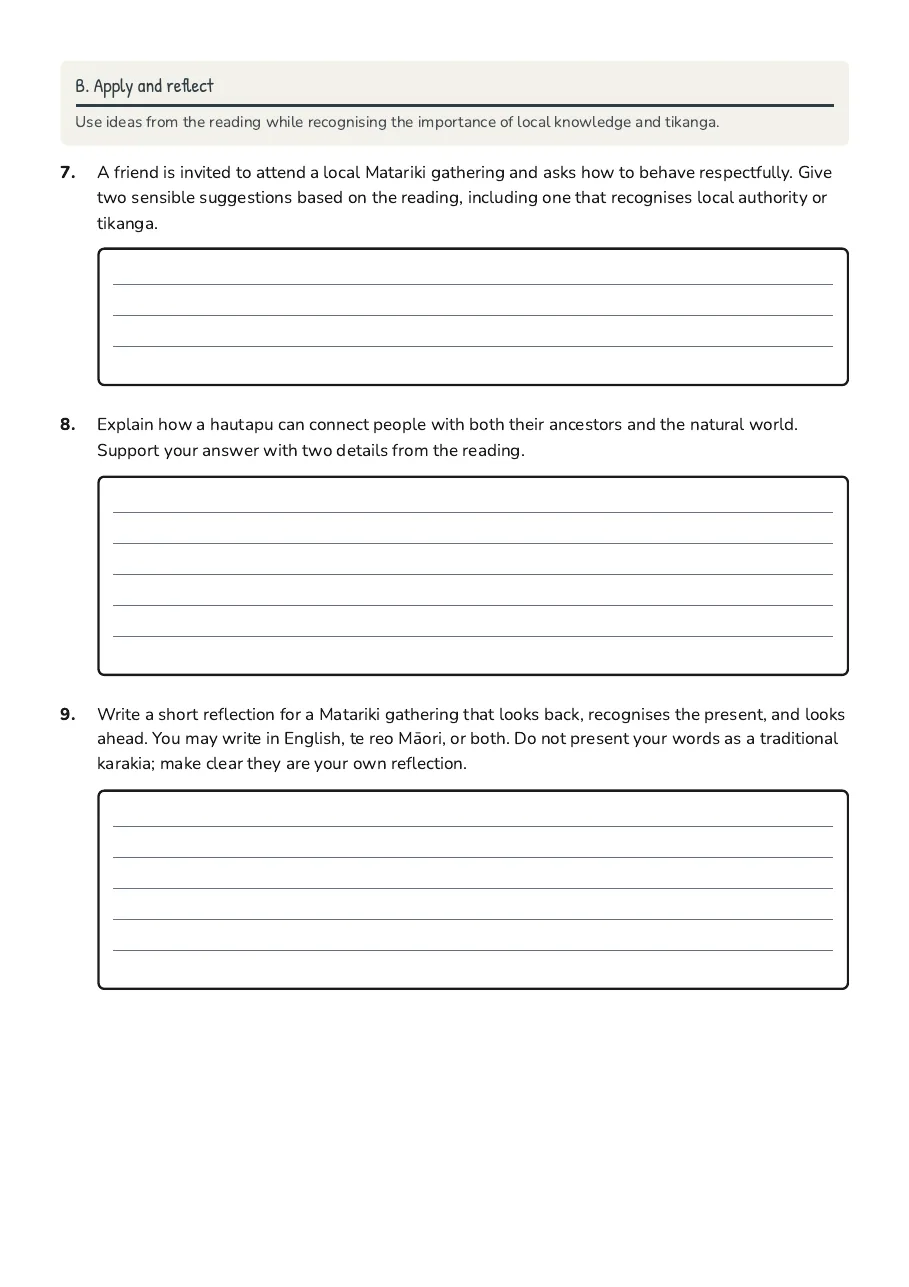
B. Apply and reflect
Use ideas from the reading while recognising the importance of local knowledge and tikanga.
3 printable pages
Page 1
Page 2
Page 3
About This Worksheet
Free in Kuraplan
Sign up free, grab the PDF, and customize it for your class.
Print-Ready
Formatted for standard paper. Clean layout, easy to read.
AI-Generated
Created with Kuraplan's AI, designed for real classroom use.
For Teachers & Parents
Use in classrooms, for homework, tutoring, or homeschool.
Need a custom version of this worksheet?
Kuraplan's AI generates custom worksheets in seconds — differentiated for every learner, aligned to your curriculum.
Generate Custom Worksheets — FreeMore Te Reo Māori Worksheets
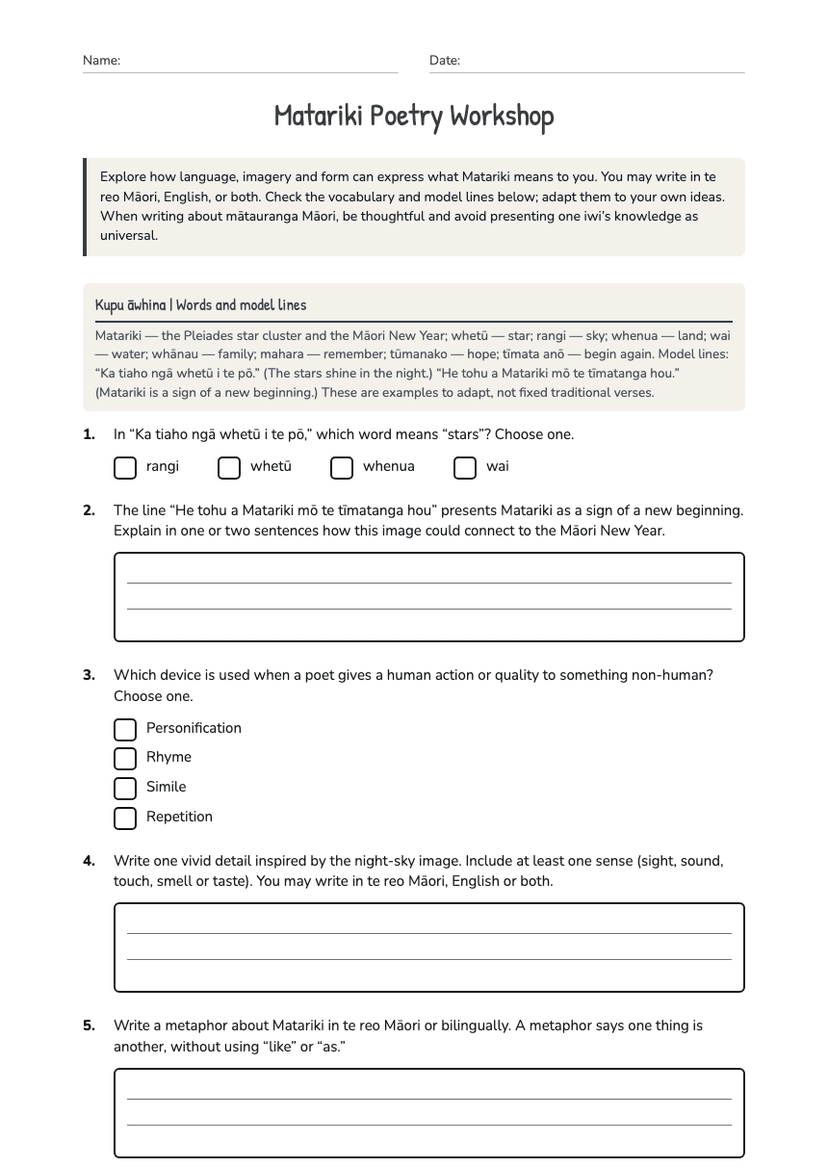
Matariki Poetry Workshop
Free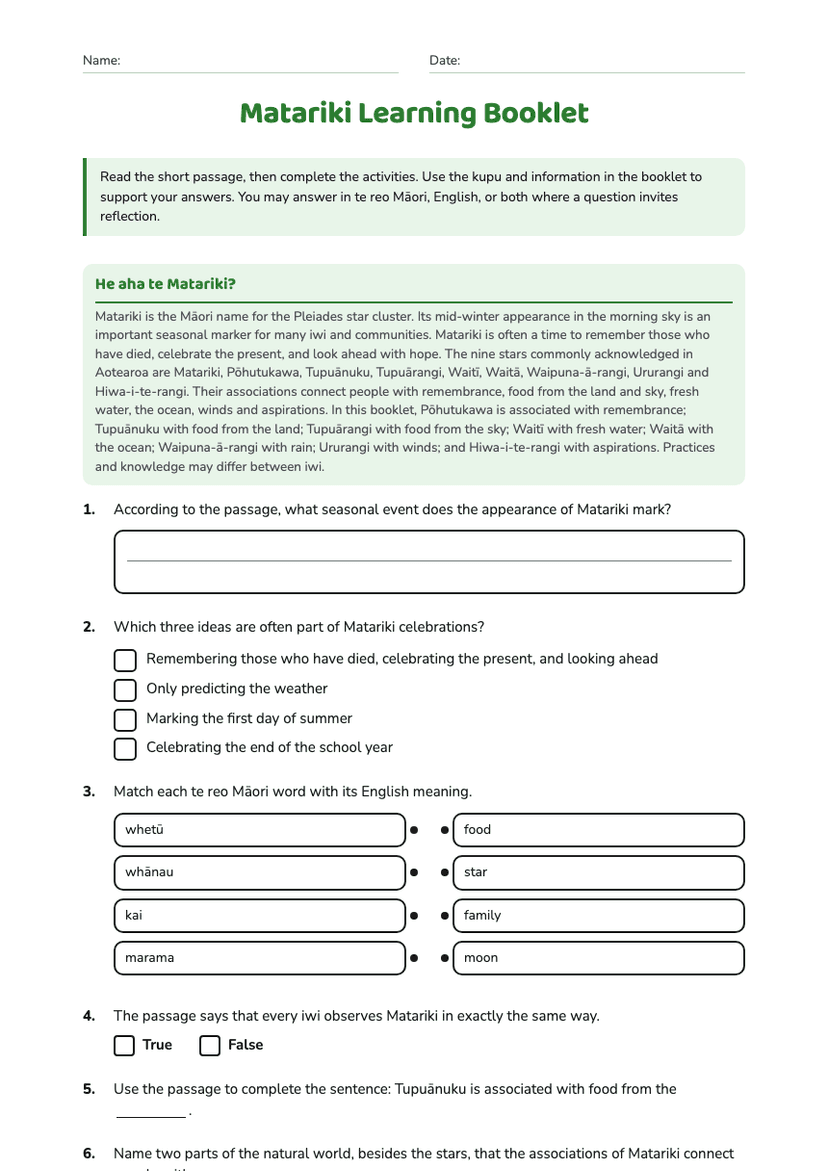
Matariki Learning Booklet
Free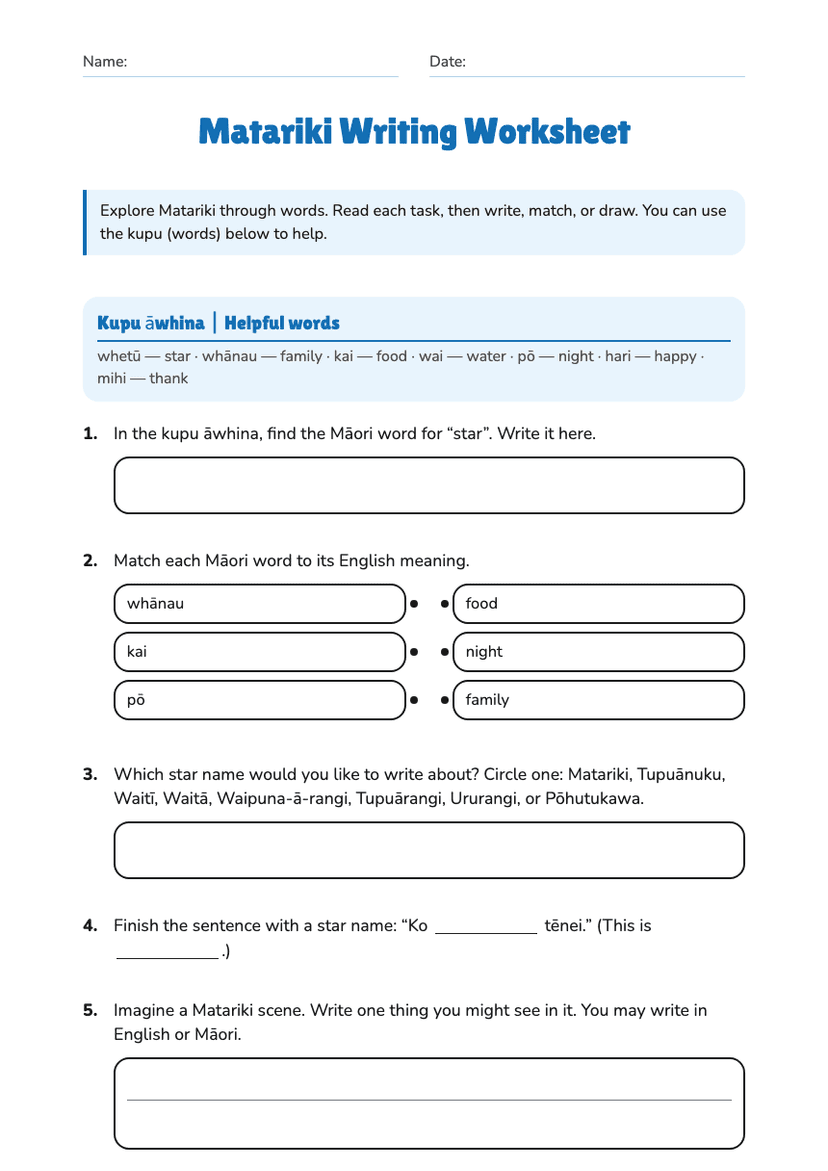
Matariki Writing Worksheet
Free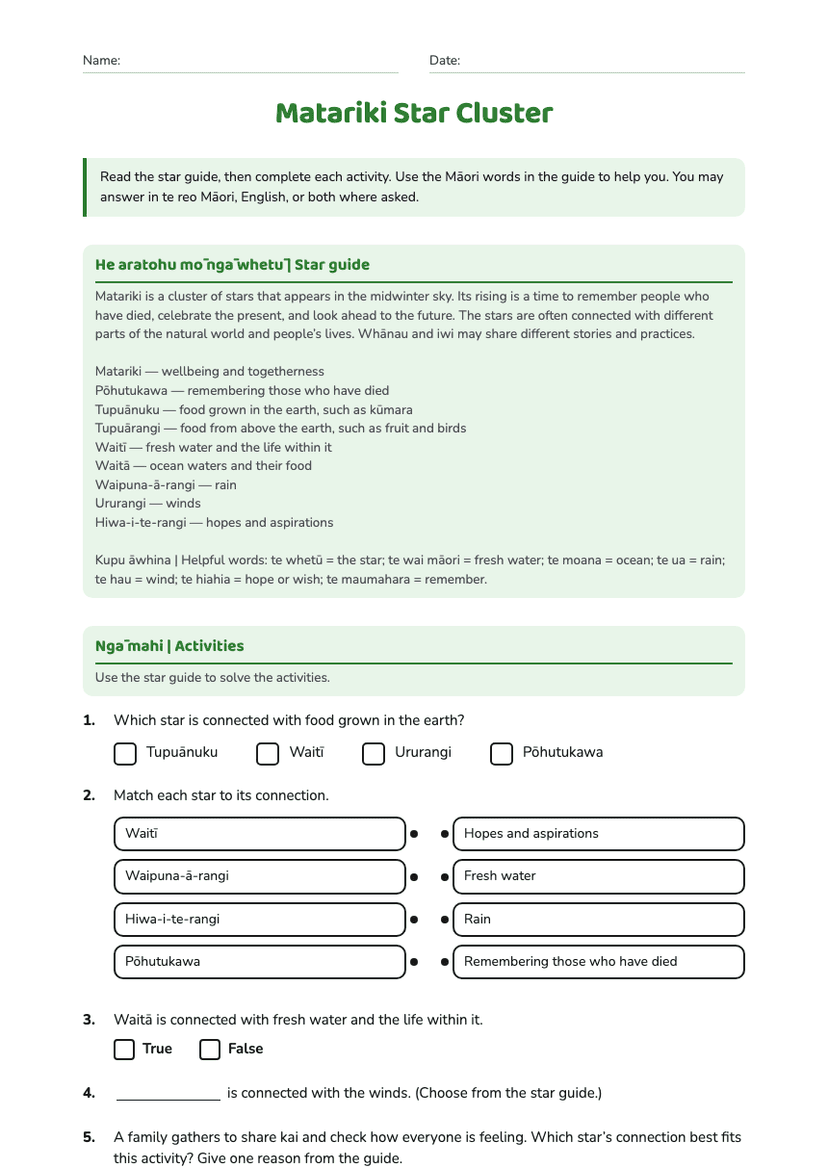
Matariki Star Cluster
Free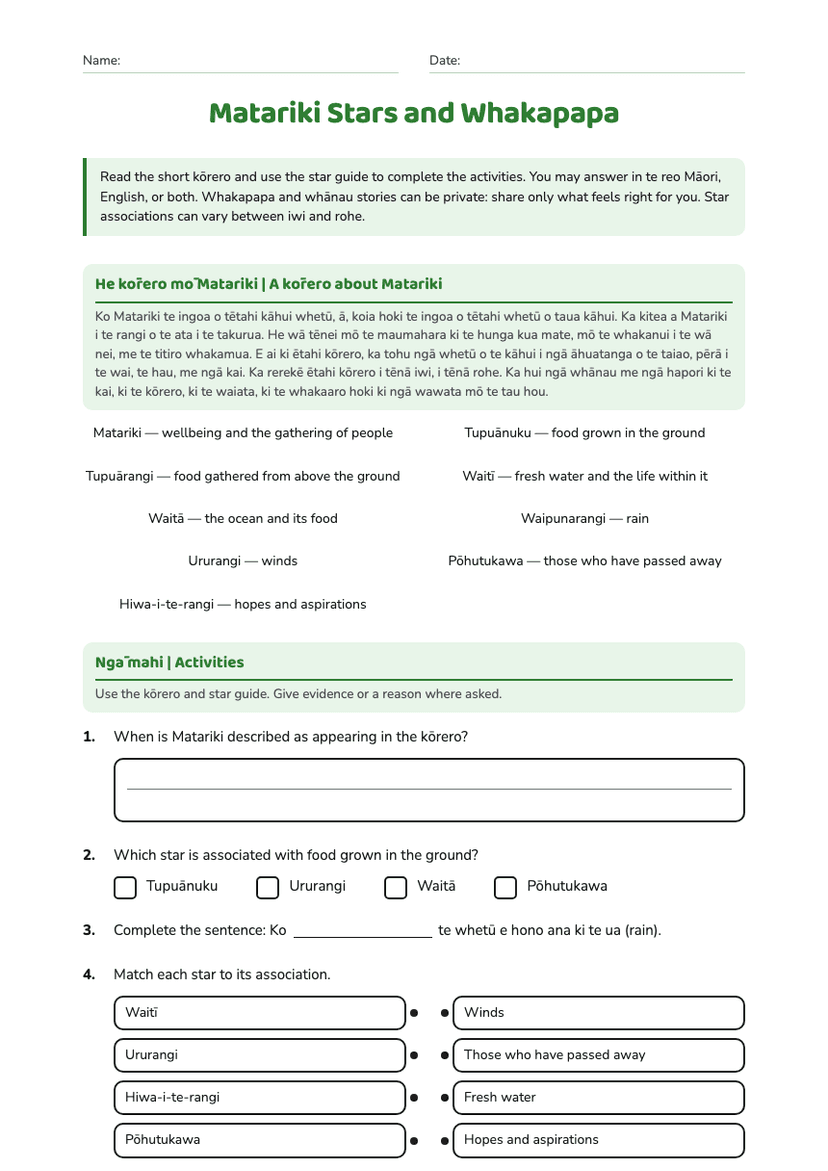
Matariki Stars and Whakapapa
Free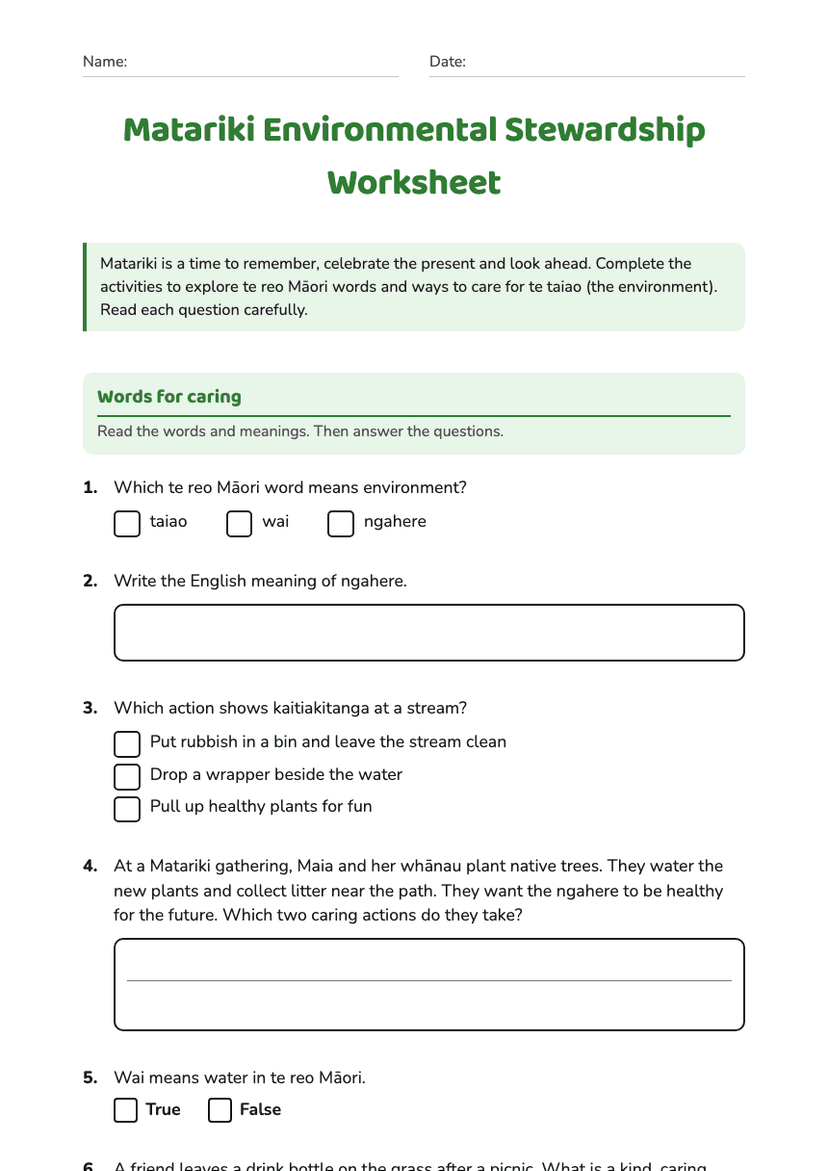
Matariki Environmental Stewardship Worksheet
Free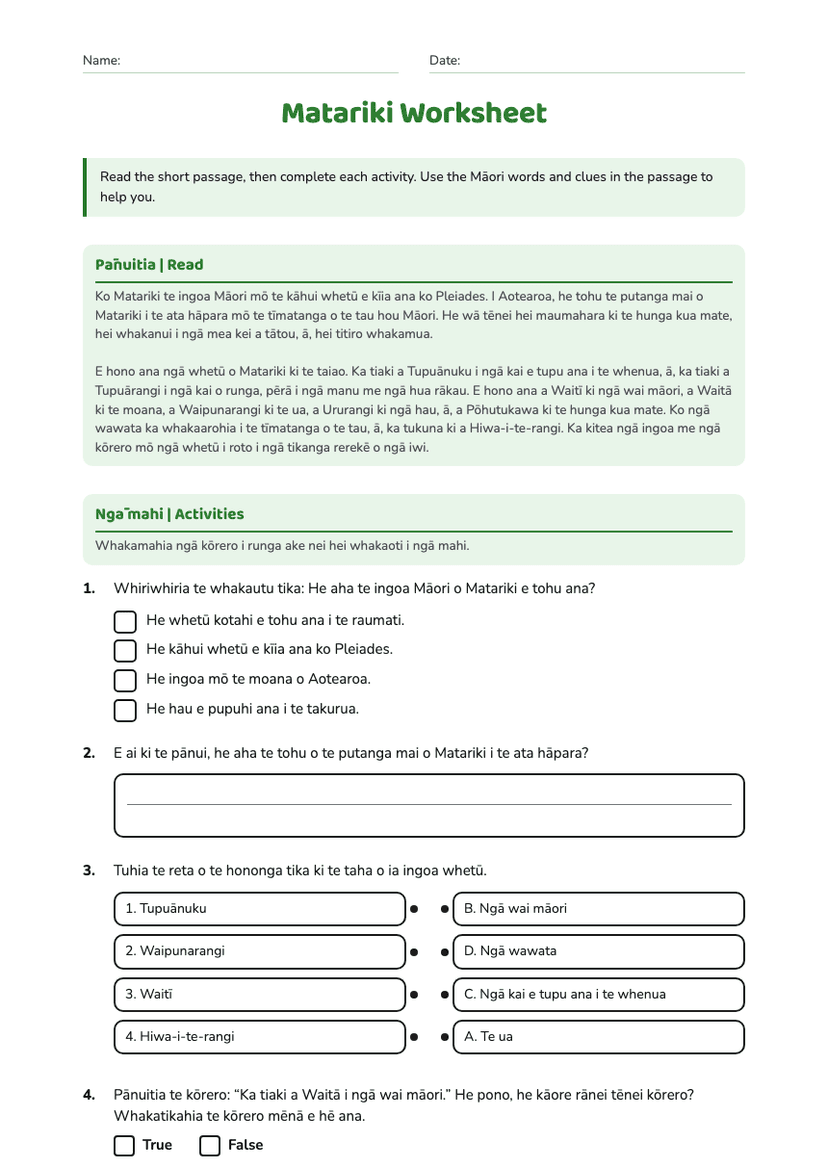
Matariki Worksheet
Free