MathsFreePrintable

Measurement Error Analysis Project

A free maths worksheet ready for your classroom. Open in Kuraplan to grab the print-ready PDF, customize it for your students, or generate a fresh version in seconds.
Measurement Error Analysis Project worksheet preview
Name:Date:

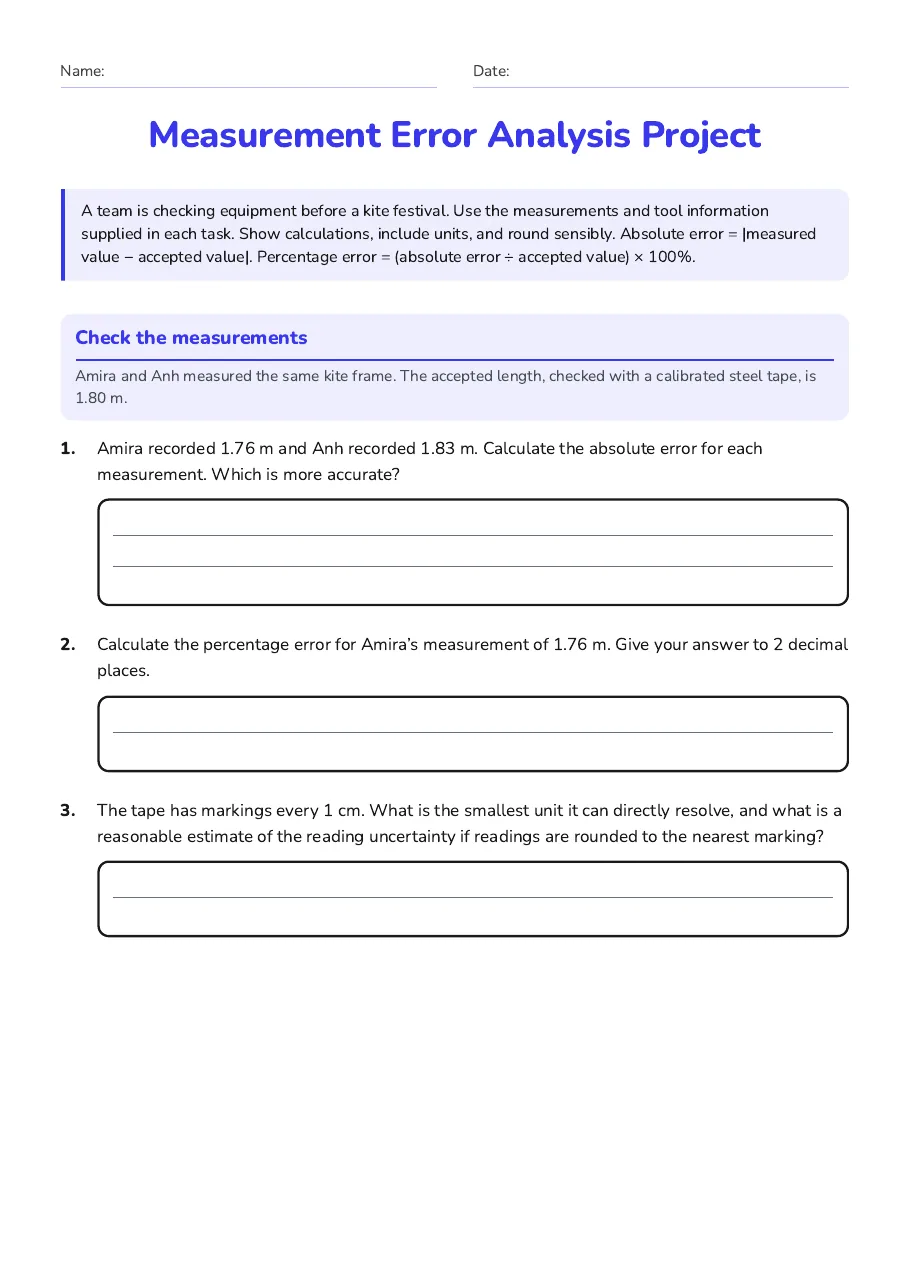
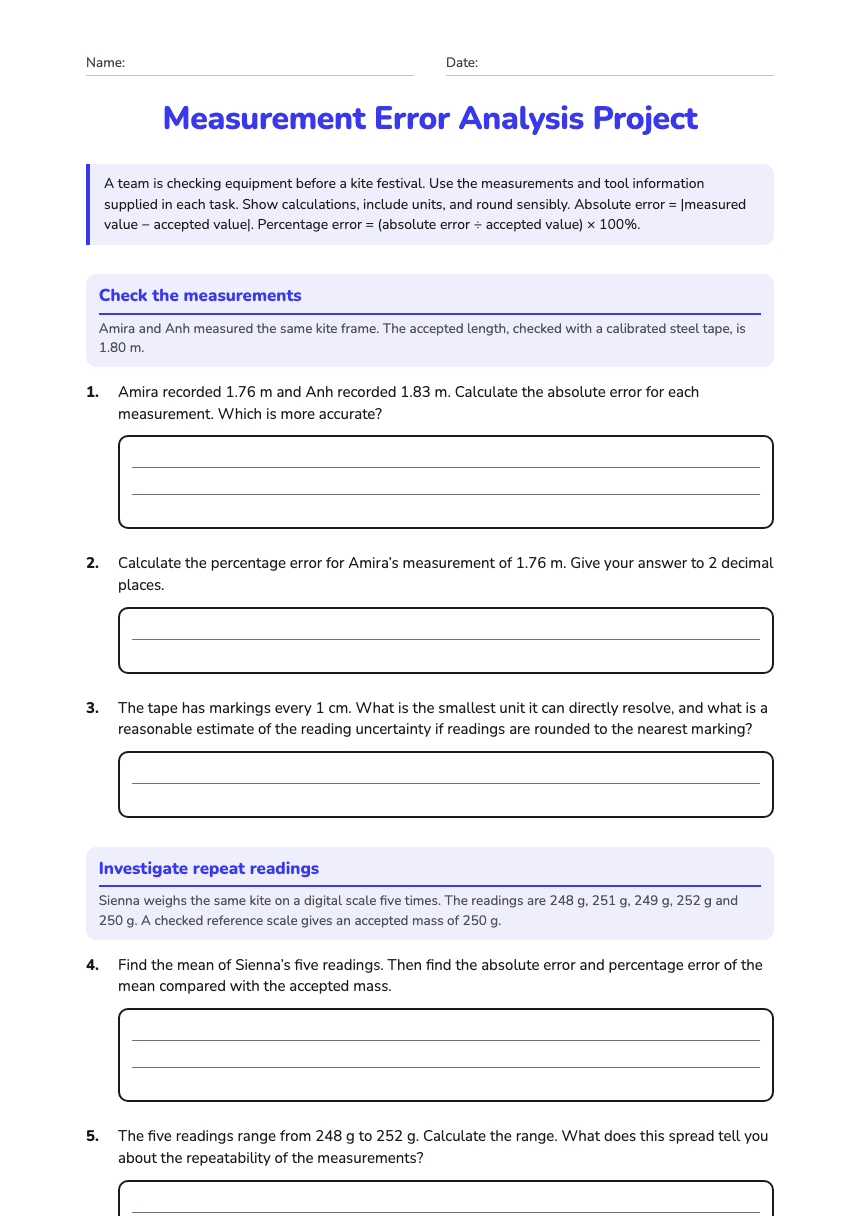
Measurement Error Analysis Project

A team is checking equipment before a kite festival. Use the measurements and tool information supplied in each task. Show calculations, include units, and round sensibly. Absolute error = |measured value − accepted value|. Percentage error = (absolute error ÷ accepted value) × 100%.

Check the measurements

Amira and Anh measured the same kite frame. The accepted length, checked with a calibrated steel tape, is 1.80 m.

1.Amira recorded 1.76 m and Anh recorded 1.83 m. Calculate the absolute error for each measurement. Which is more accurate?
2.Calculate the percentage error for Amira’s measurement of 1.76 m. Give your answer to 2 decimal places.
3.The tape has markings every 1 cm. What is the smallest unit it can directly resolve, and what is a reasonable estimate of the reading uncertainty if readings are rounded to the nearest marking?

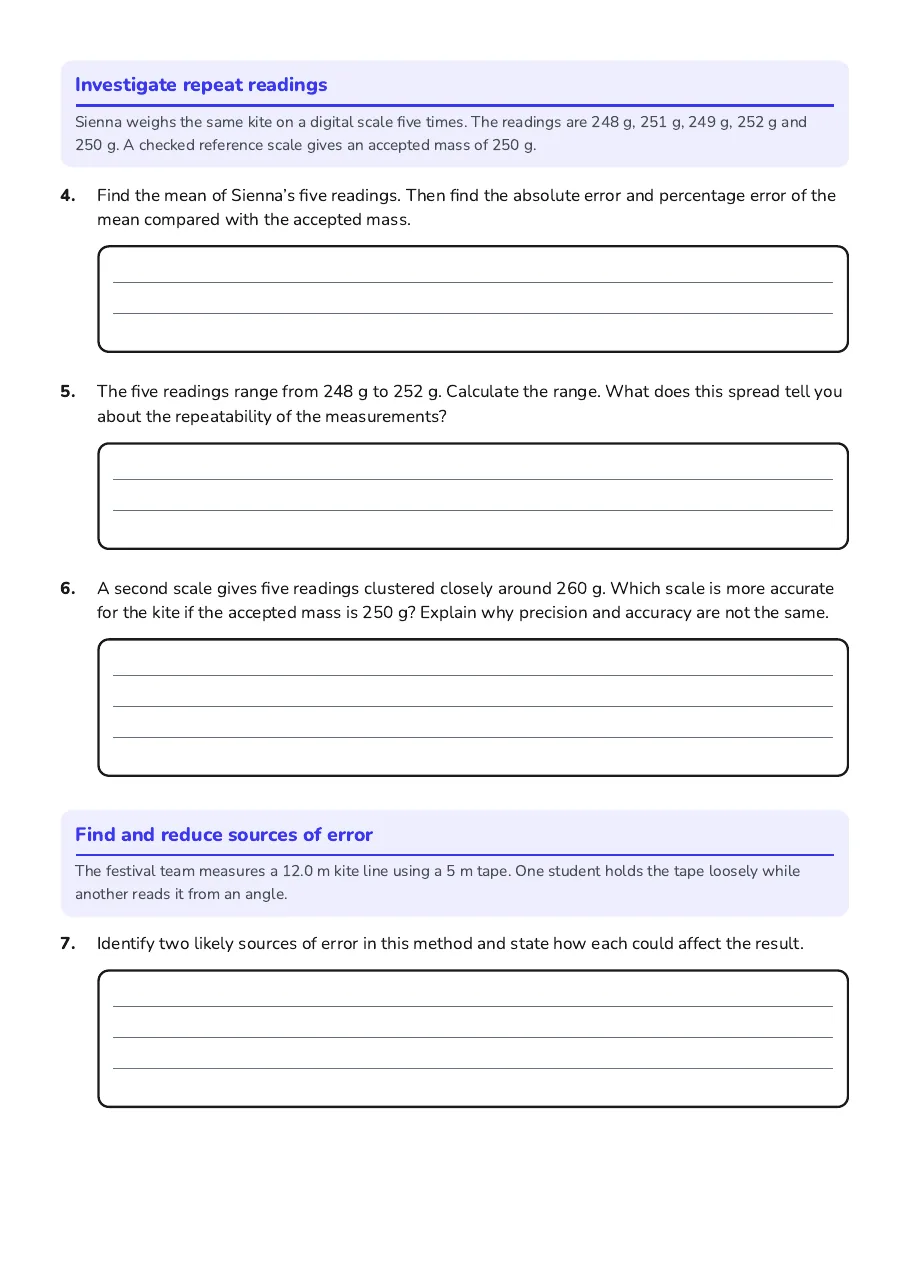
Investigate repeat readings

Sienna weighs the same kite on a digital scale five times. The readings are 248 g, 251 g, 249 g, 252 g and 250 g. A checked reference scale gives an accepted mass of 250 g.

4.Find the mean of Sienna’s five readings. Then find the absolute error and percentage error of the mean compared with the accepted mass.
5.The five readings range from 248 g to 252 g. Calculate the range. What does this spread tell you about the repeatability of the measurements?
6.A second scale gives five readings clustered closely around 260 g. Which scale is more accurate for the kite if the accepted mass is 250 g? Explain why precision and accuracy are not the same.

Find and reduce sources of error

The festival team measures a 12.0 m kite line using a 5 m tape. One student holds the tape loosely while another reads it from an angle.

7.Identify two likely sources of error in this method and state how each could affect the result.
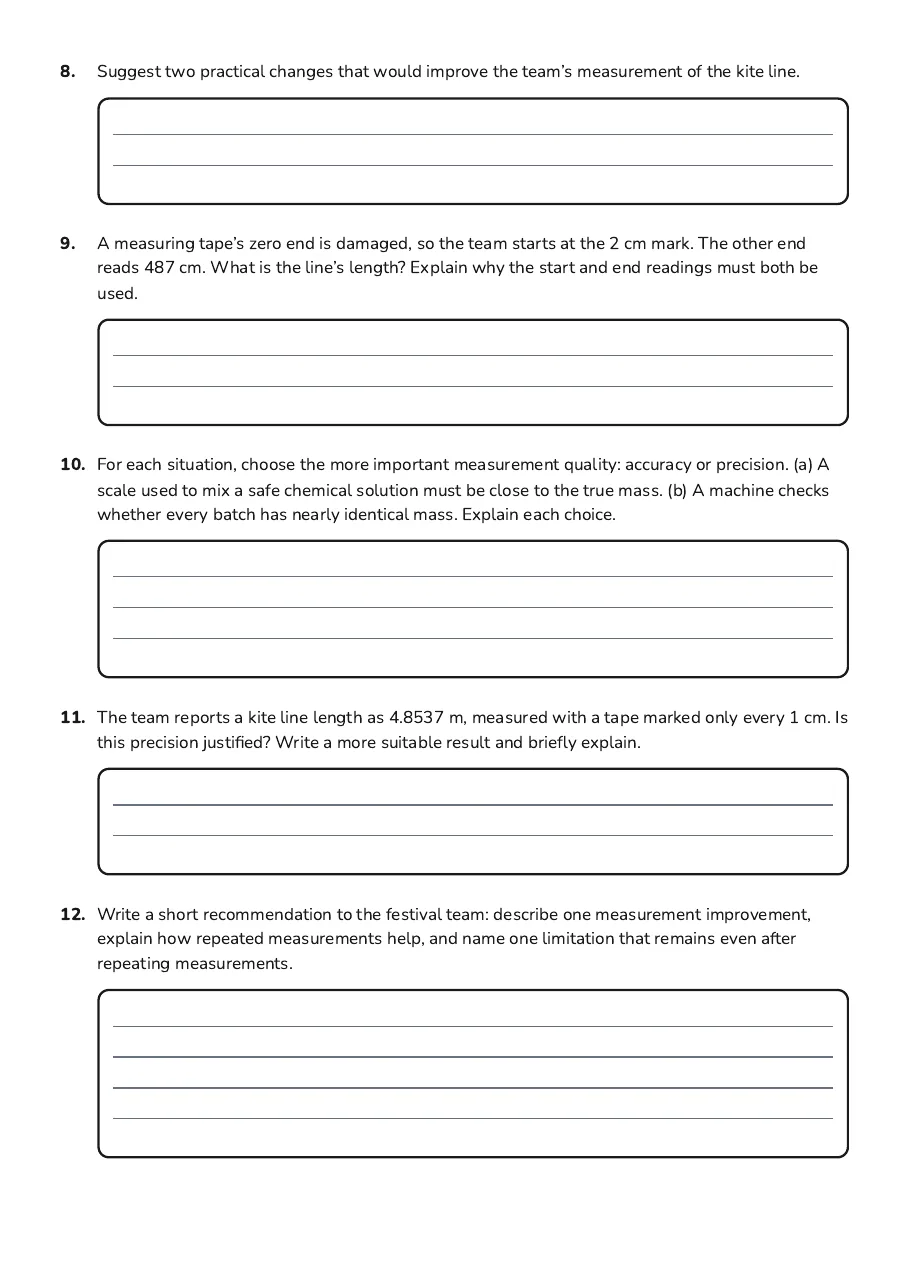
8.Suggest two practical changes that would improve the team’s measurement of the kite line.
9.A measuring tape’s zero end is damaged, so the team starts at the 2 cm mark. The other end reads 487 cm. What is the line’s length? Explain why the start and end readings must both be used.
10.For each situation, choose the more important measurement quality: accuracy or precision. (a) A scale used to mix a safe chemical solution must be close to the true mass. (b) A machine checks whether every batch has nearly identical mass. Explain each choice.
11.The team reports a kite line length as 4.8537 m, measured with a tape marked only every 1 cm. Is this precision justified? Write a more suitable result and briefly explain.
12.Write a short recommendation to the festival team: describe one measurement improvement, explain how repeated measurements help, and name one limitation that remains even after repeating measurements.

3 printable pages

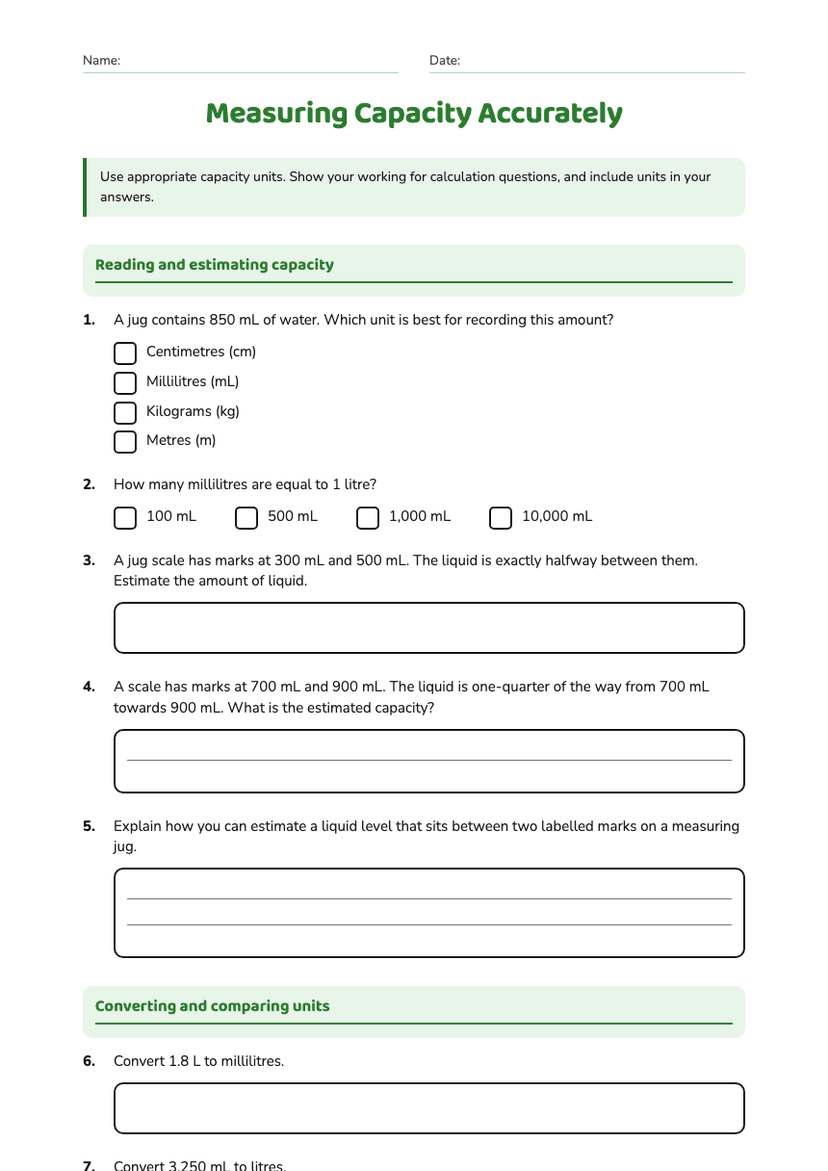
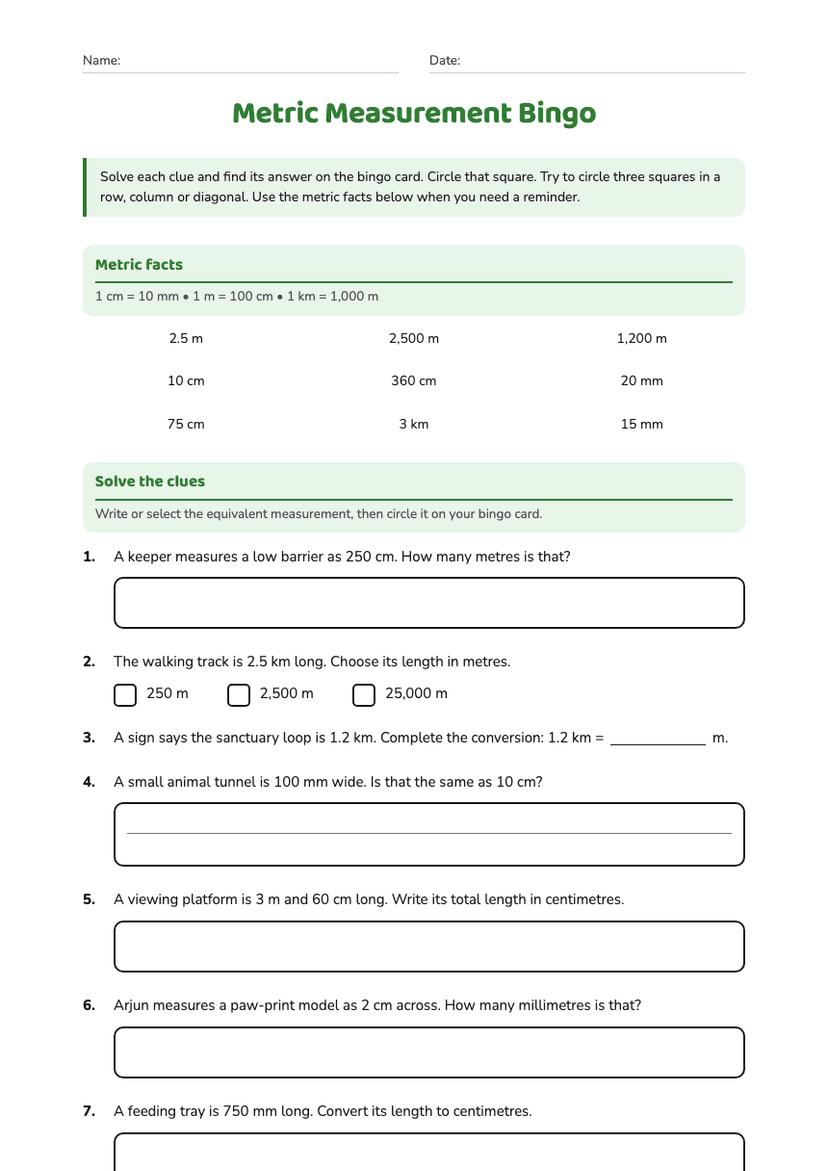
  • Measurement Error Analysis Project, page 1 of 3: Check the measurements

    Page 1

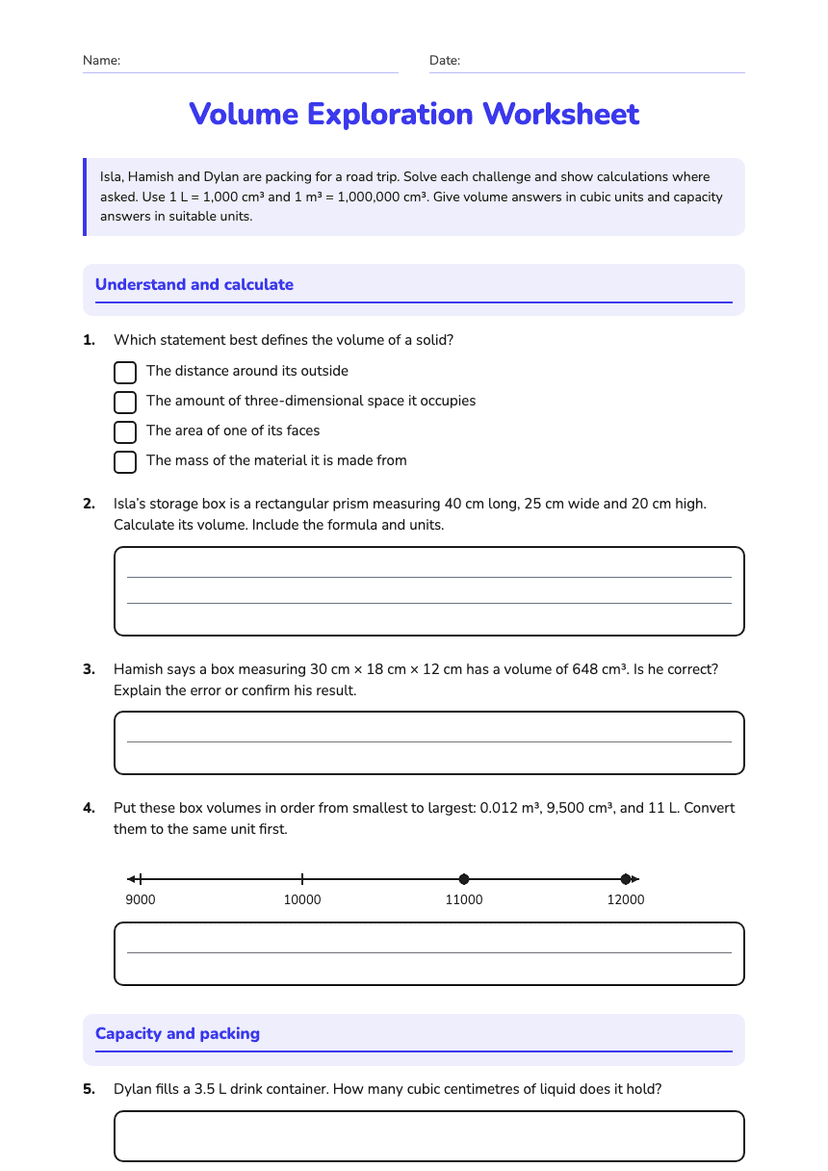
  • Measurement Error Analysis Project, page 2 of 3: Investigate repeat readings, Find and reduce sources of error

    Page 2

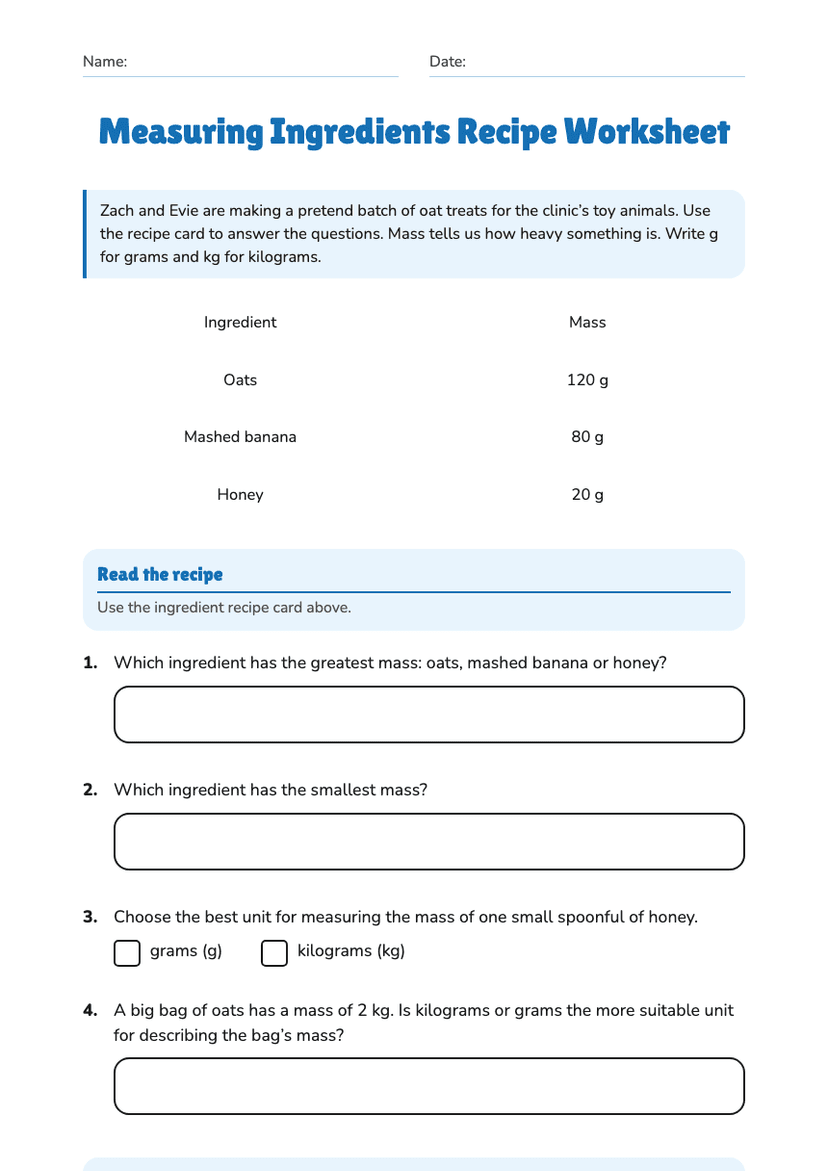
  • Measurement Error Analysis Project, page 3 of 3: 8. Suggest two practical changes that would improve the team’s measurement of the kite…

    Page 3

About This Worksheet

Free in Kuraplan

Sign up free, grab the PDF, and customize it for your class.

Print-Ready

Formatted for standard paper. Clean layout, easy to read.

AI-Generated

Created with Kuraplan's AI, designed for real classroom use.

For Teachers & Parents

Use in classrooms, for homework, tutoring, or homeschool.

Need a custom version of this worksheet?

Kuraplan's AI generates custom worksheets in seconds — differentiated for every learner, aligned to your curriculum.

Generate Custom Worksheets — Free
No credit card Curriculum-aligned Under 60 seconds