Medieval Metals Investigation
A free science worksheet ready for your classroom. Open in Kuraplan to grab the print-ready PDF, customize it for your students, or generate a fresh version in seconds.
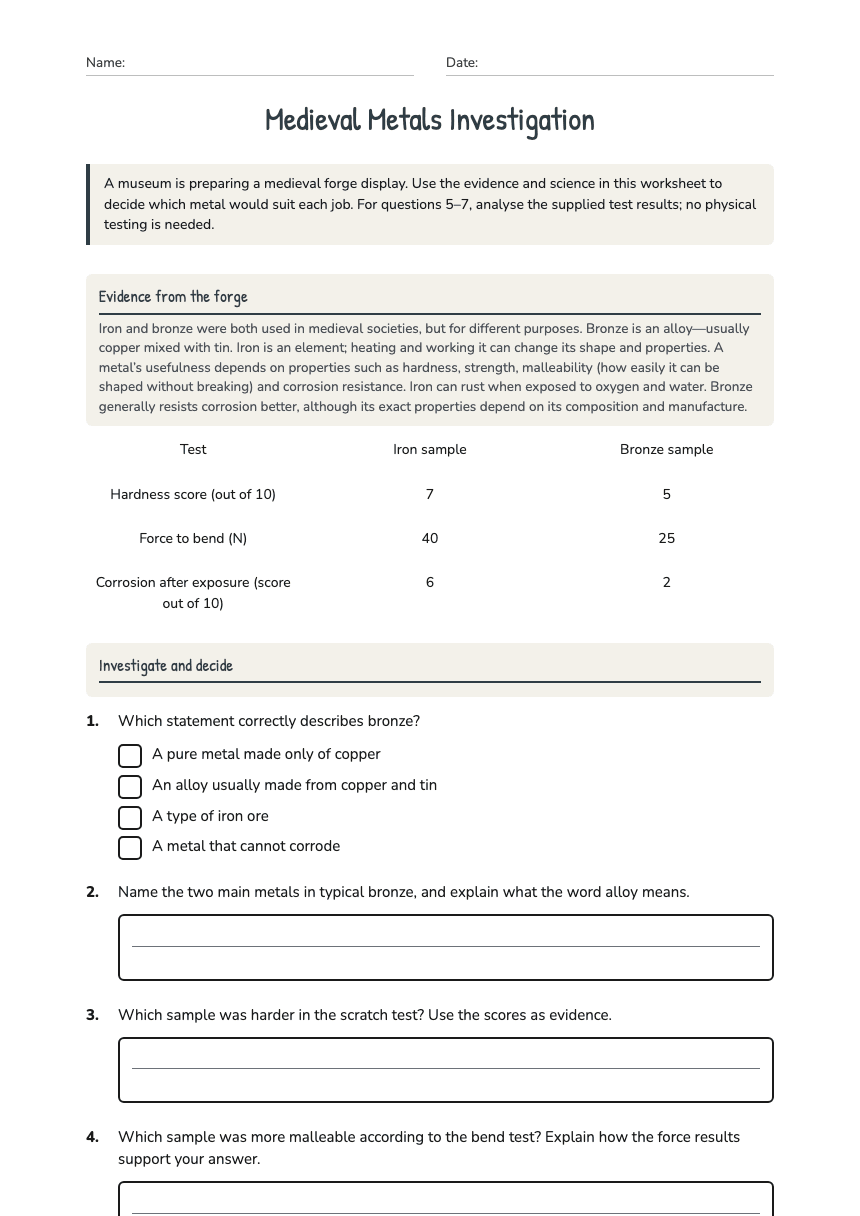
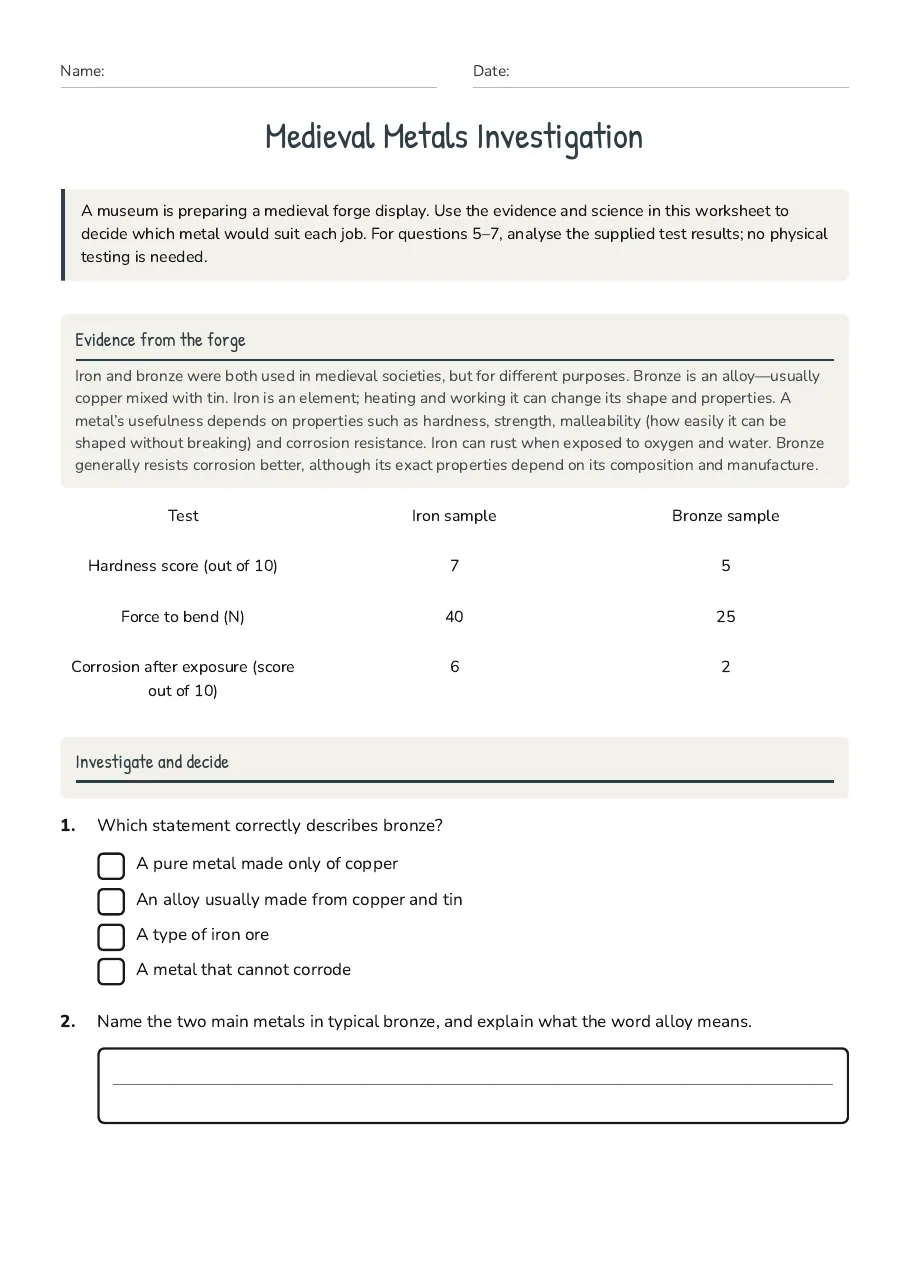
Medieval Metals Investigation
Evidence from the forge
Iron and bronze were both used in medieval societies, but for different purposes. Bronze is an alloy—usually copper mixed with tin. Iron is an element; heating and working it can change its shape and properties. A metal’s usefulness depends on properties such as hardness, strength, malleability (how easily it can be shaped without breaking) and corrosion resistance. Iron can rust when exposed to oxygen and water. Bronze generally resists corrosion better, although its exact properties depend on its composition and manufacture.
Test
Iron sample
Bronze sample
Hardness score (out of 10)
7
5
Force to bend (N)
40
25
Corrosion after exposure (score out of 10)
6
2
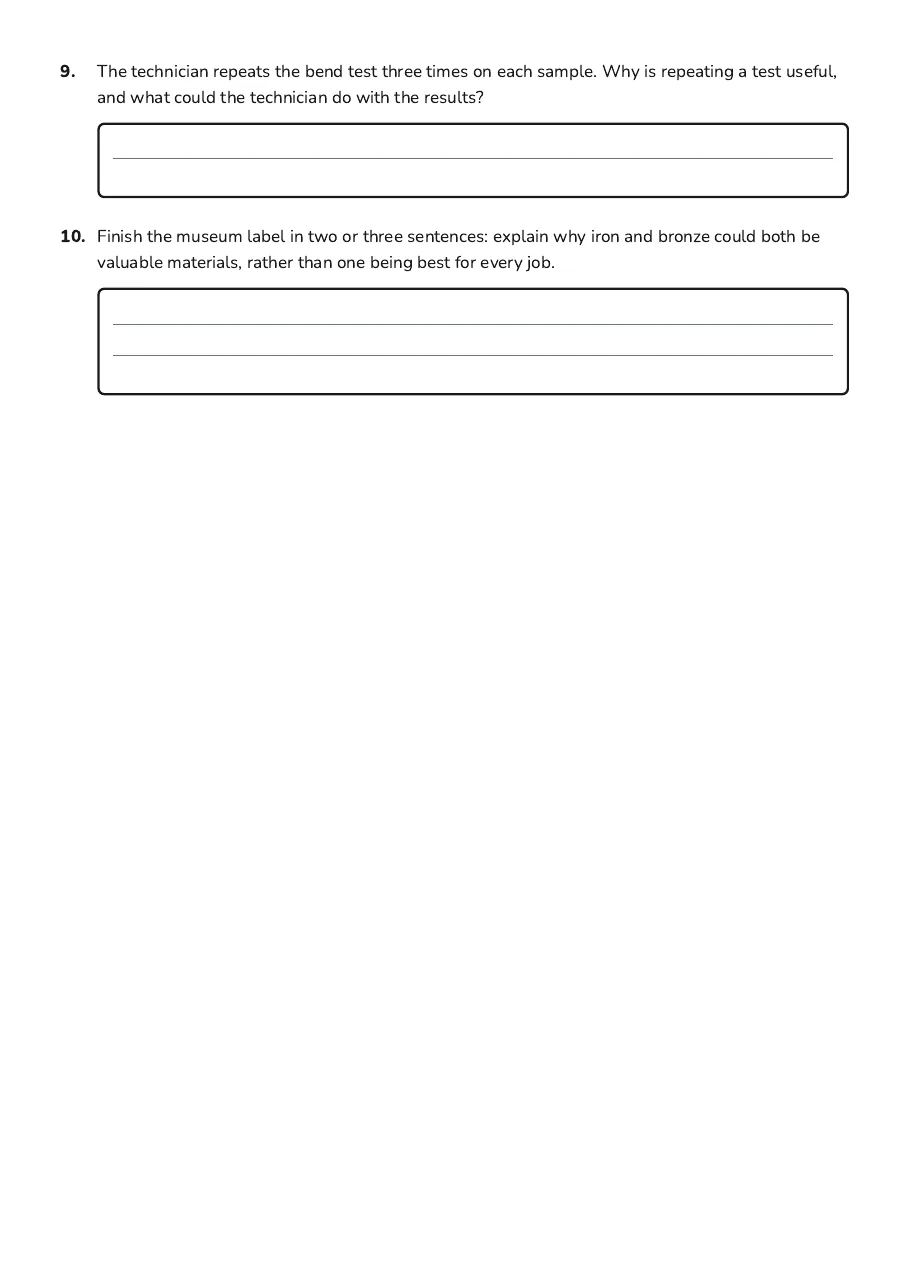
Investigate and decide
- A pure metal made only of copper
- An alloy usually made from copper and tin
- A type of iron ore
- A metal that cannot corrode
3 printable pages
Page 1
Page 2
Page 3
About This Worksheet
Free in Kuraplan
Sign up free, grab the PDF, and customize it for your class.
Print-Ready
Formatted for standard paper. Clean layout, easy to read.
AI-Generated
Created with Kuraplan's AI, designed for real classroom use.
For Teachers & Parents
Use in classrooms, for homework, tutoring, or homeschool.
Need a custom version of this worksheet?
Kuraplan's AI generates custom worksheets in seconds — differentiated for every learner, aligned to your curriculum.
Generate Custom Worksheets — FreeMore Science Worksheets
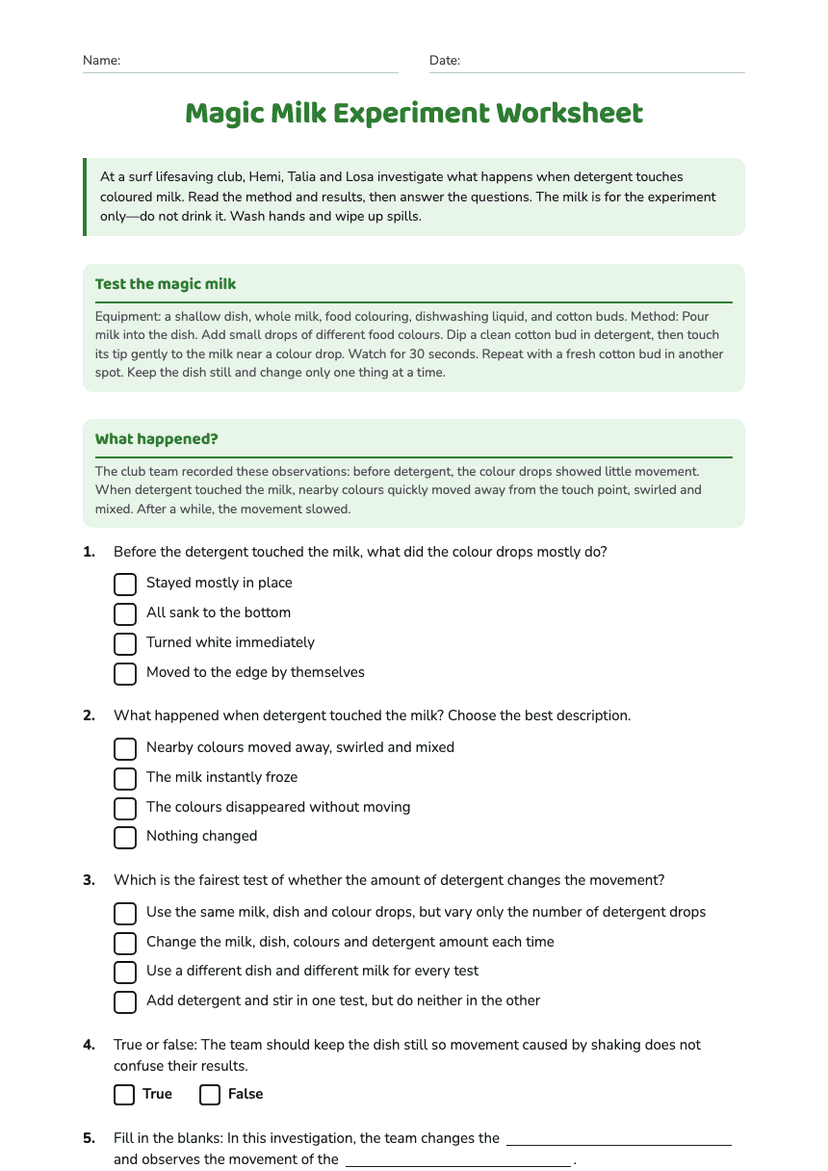
Magic Milk Experiment Worksheet
Free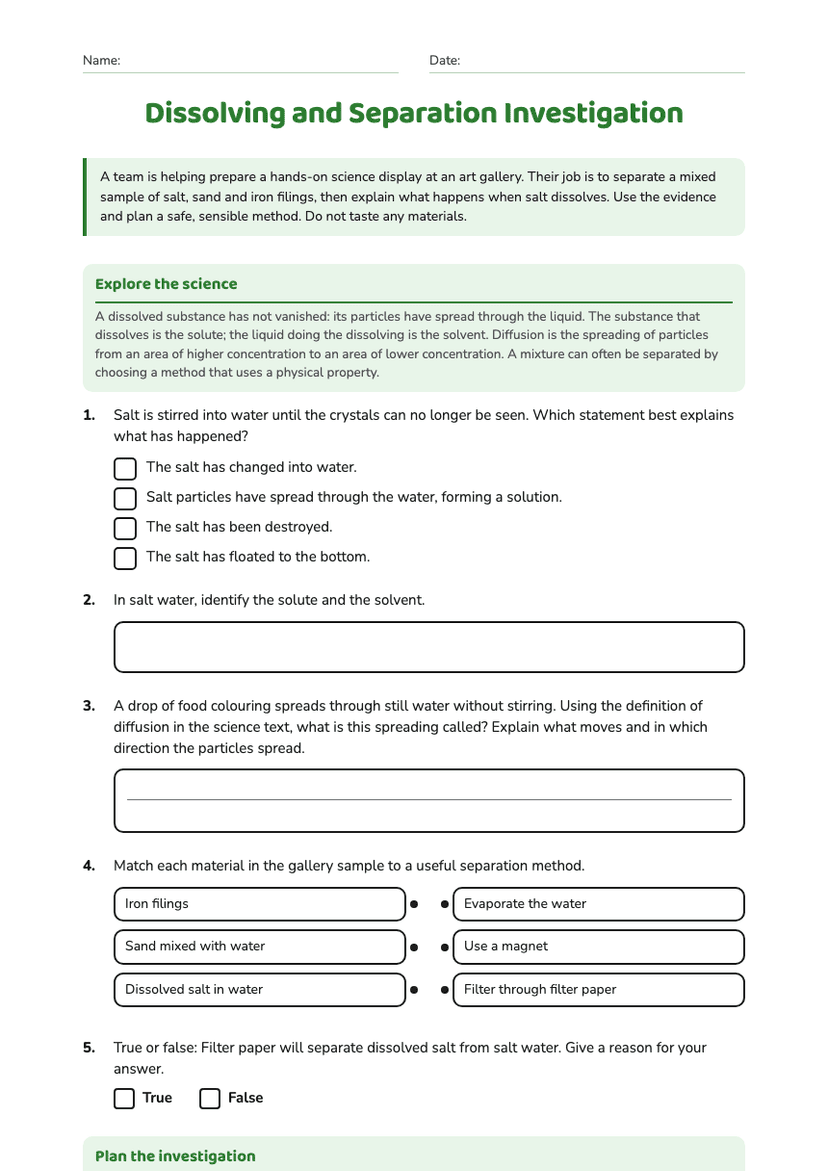
Dissolving and Separation Investigation
Free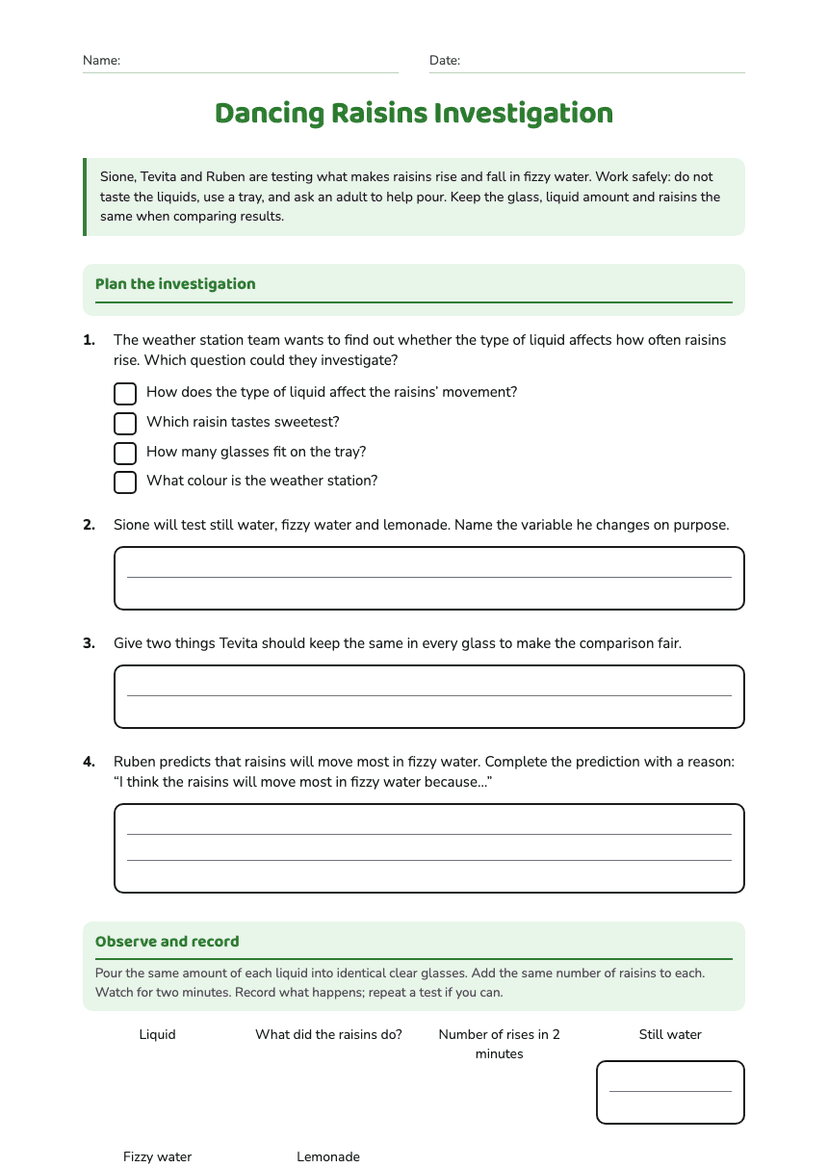
Dancing Raisins Investigation
Free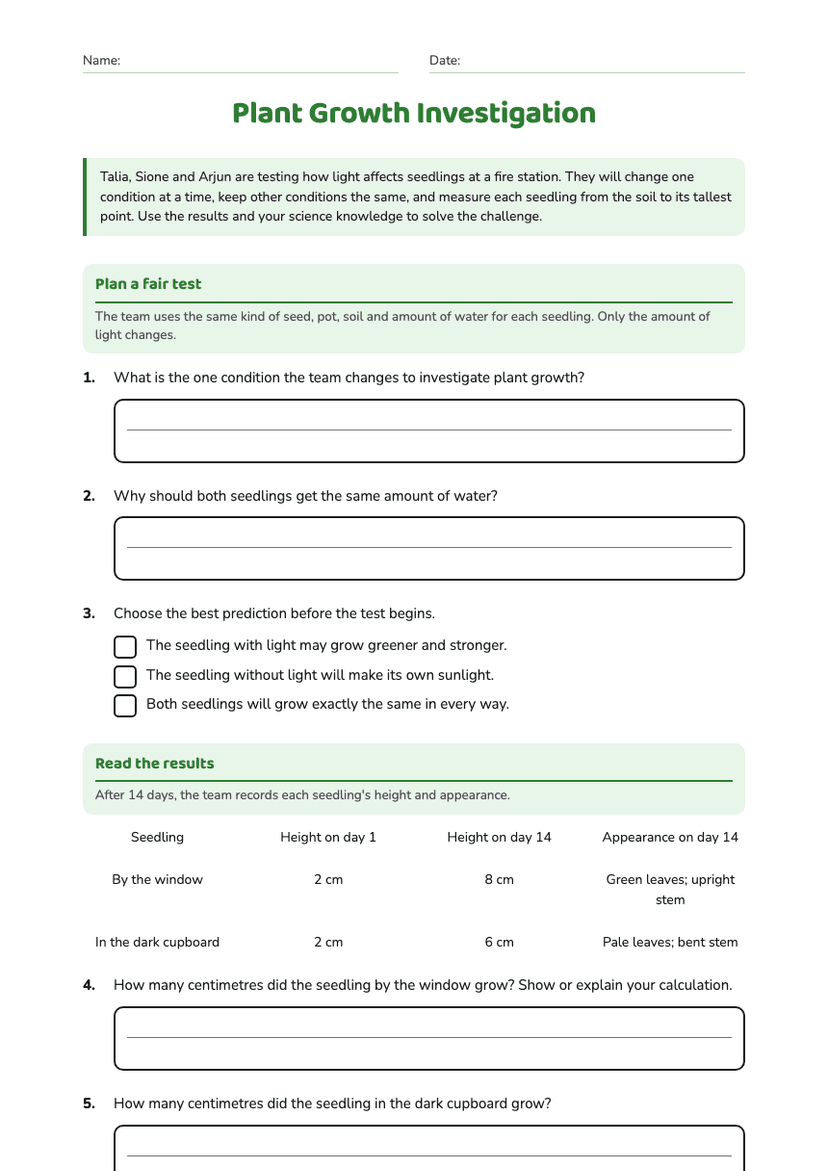
Plant Growth Investigation
Free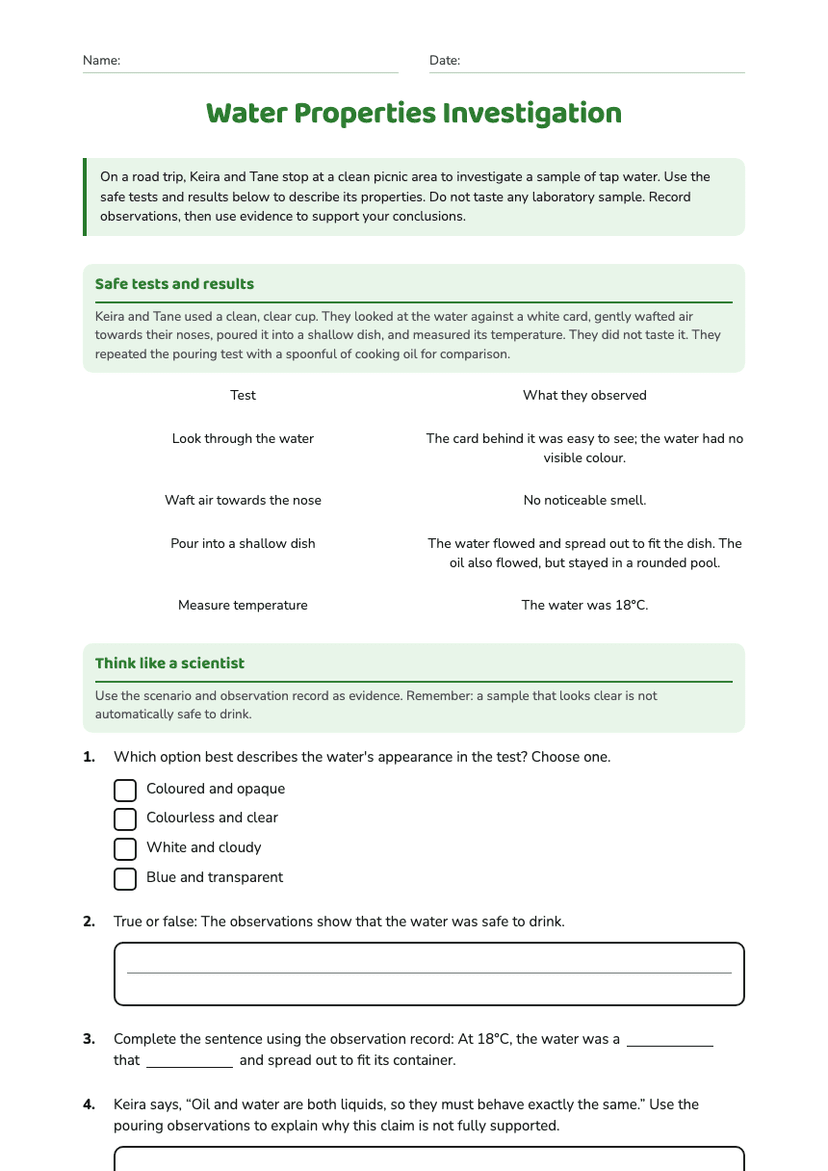
Water Properties Investigation
Free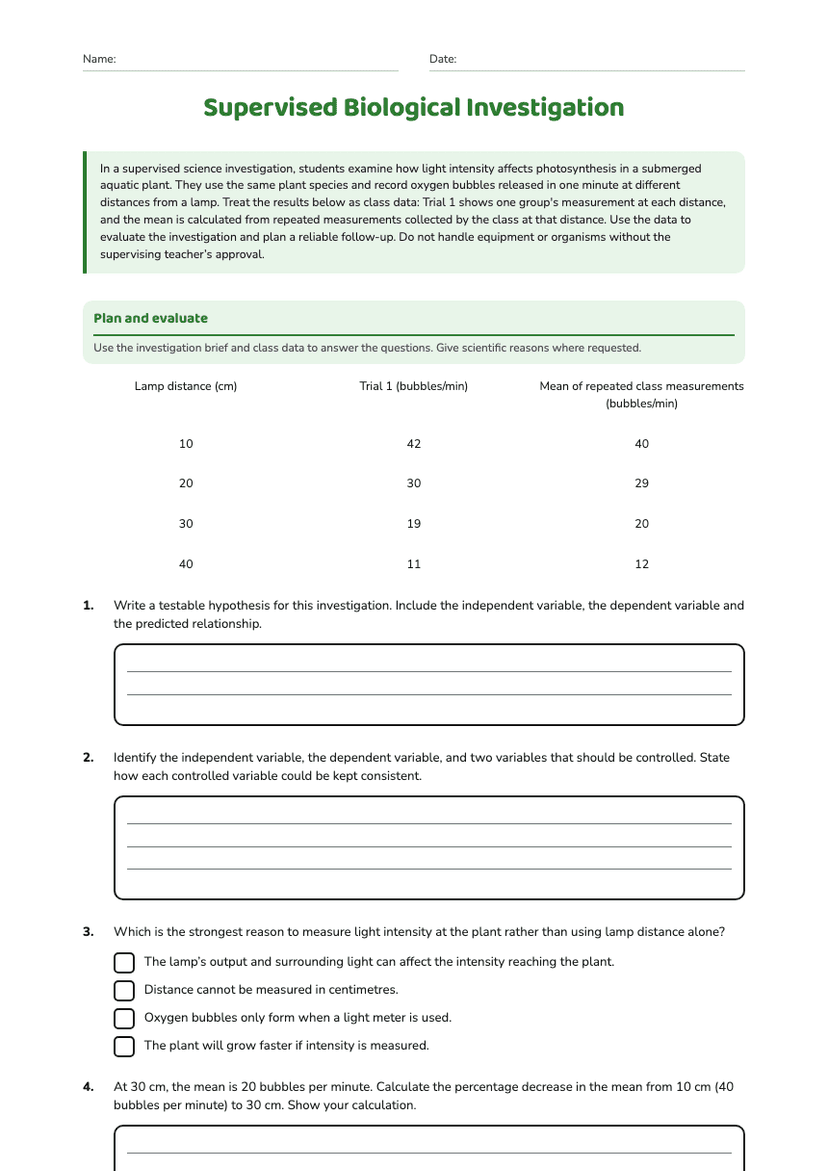
Supervised Biological Investigation
Free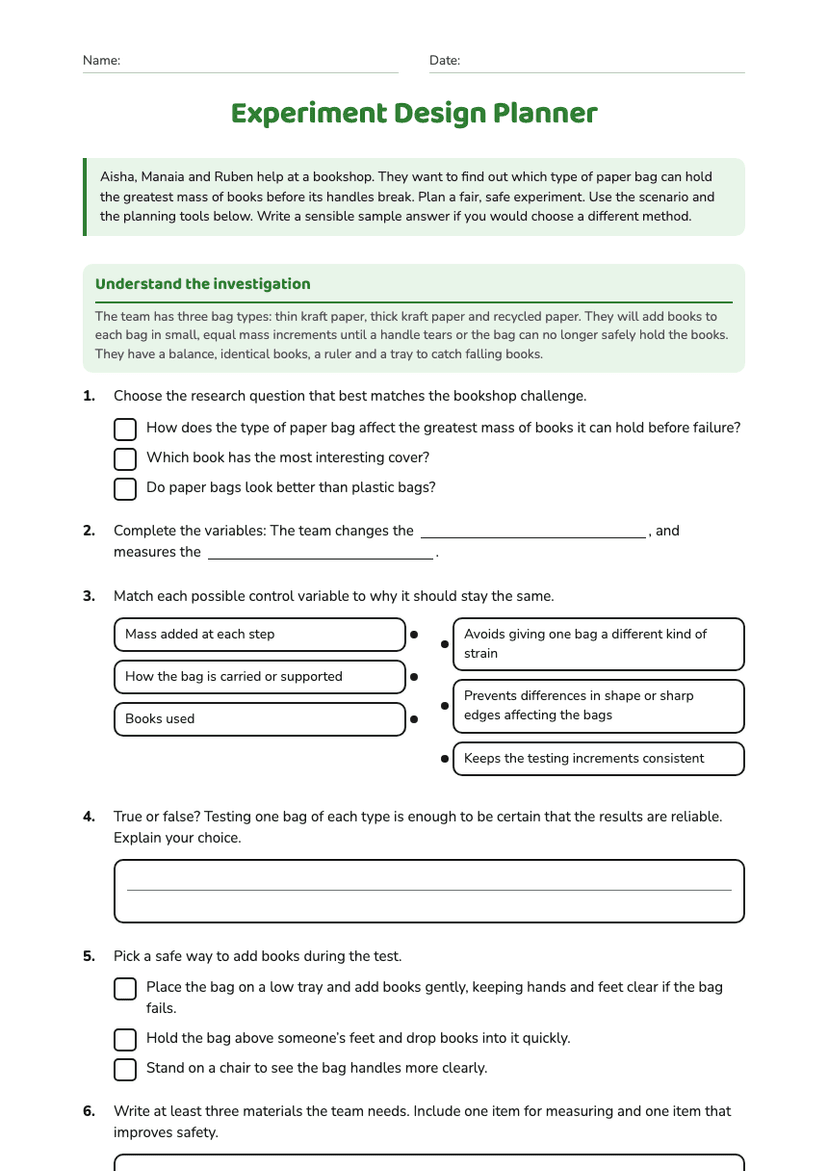
Experiment Design Planner
Free