Māori Family Pronouns
A free te reo māori worksheet ready for your classroom. Open in Kuraplan to grab the print-ready PDF, customize it for your students, or generate a fresh version in seconds.
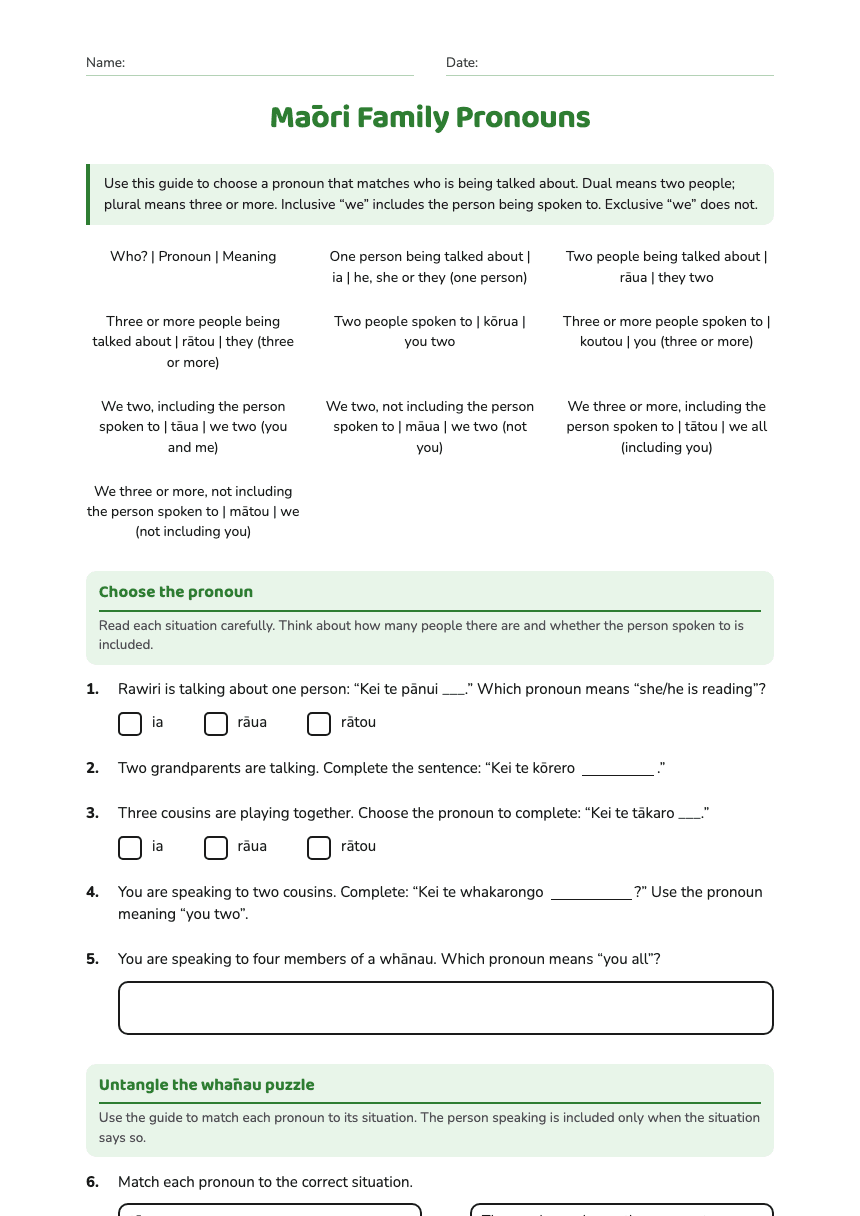
Māori Family Pronouns
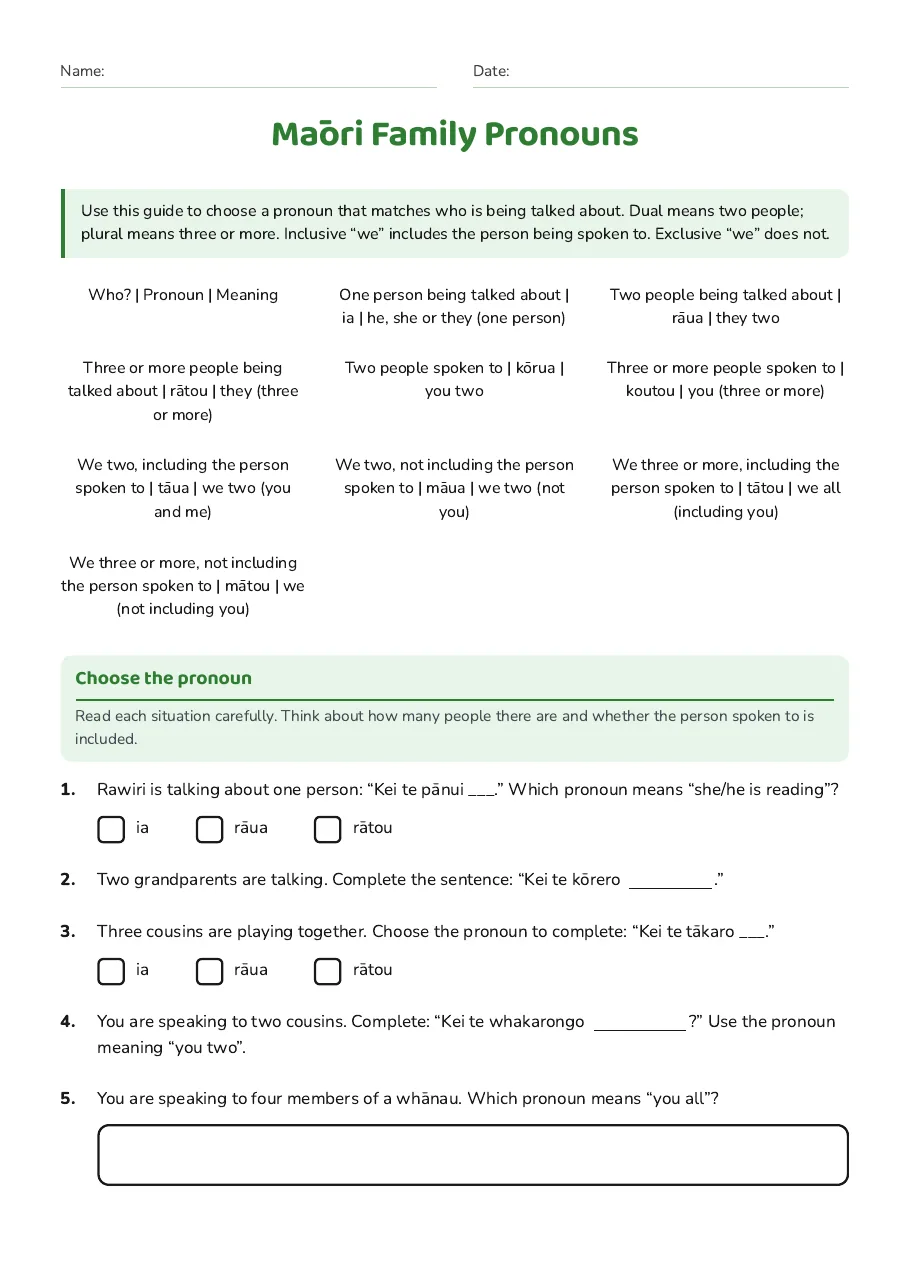
Who? | Pronoun | Meaning
One person being talked about | ia | he, she or they (one person)
Two people being talked about | rāua | they two
Three or more people being talked about | rātou | they (three or more)
Two people spoken to | kōrua | you two
Three or more people spoken to | koutou | you (three or more)
We two, including the person spoken to | tāua | we two (you and me)
We two, not including the person spoken to | māua | we two (not you)
We three or more, including the person spoken to | tātou | we all (including you)
We three or more, not including the person spoken to | mātou | we (not including you)
Choose the pronoun
Read each situation carefully. Think about how many people there are and whether the person spoken to is included.
- ia
- rāua
- rātou
- ia
- rāua
- rātou
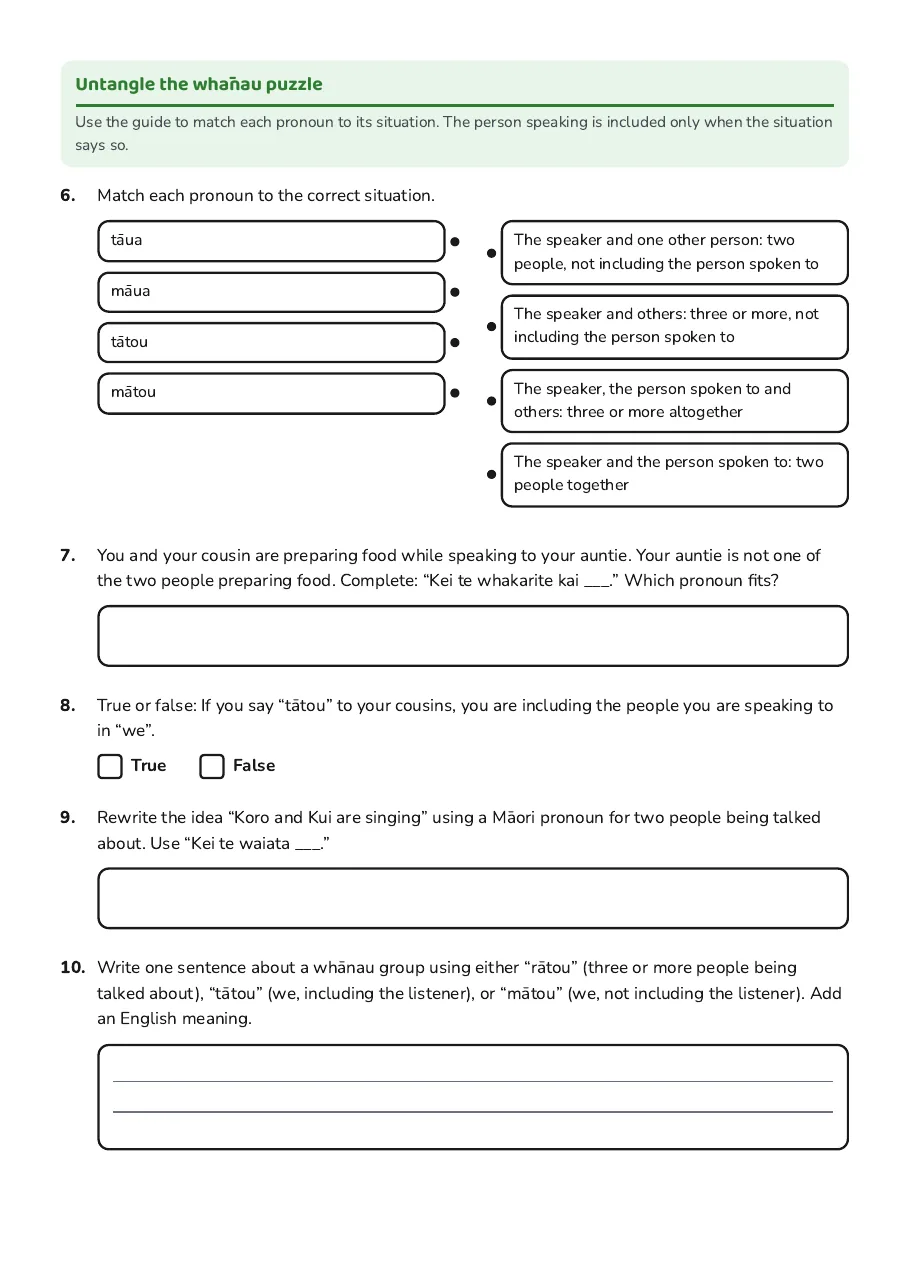
Untangle the whānau puzzle
Use the guide to match each pronoun to its situation. The person speaking is included only when the situation says so.
- tāua
- māua
- tātou
- mātou
- The speaker and one other person: two people, not including the person spoken to
- The speaker and others: three or more, not including the person spoken to
- The speaker, the person spoken to and others: three or more altogether
- The speaker and the person spoken to: two people together
2 printable pages
Page 1
Page 2
About This Worksheet
Free in Kuraplan
Sign up free, grab the PDF, and customize it for your class.
Print-Ready
Formatted for standard paper. Clean layout, easy to read.
AI-Generated
Created with Kuraplan's AI, designed for real classroom use.
For Teachers & Parents
Use in classrooms, for homework, tutoring, or homeschool.
Need a custom version of this worksheet?
Kuraplan's AI generates custom worksheets in seconds — differentiated for every learner, aligned to your curriculum.
Generate Custom Worksheets — Free